© Shutterstock
 Votre guide Ryo
Visiting Luxembourg with Kids in 2026: Old Town, Castles, and Nature at a Child's Pace
Visiting Luxembourg with kids means first discovering a country that fits in the palm of your hand — yet good luck fitting everything into a single weekend. Between the ramparts that plunge sharply down into the Pétrusse valley and the herons fishing quietly at the foot of the Grund district, the Grand Duchy surprises with its contrasts: a capital of around 135,000 inhabitants packed with spectacular elevation changes, surrounded by a hinterland where medieval castles appear around almost every village. Ryo's audio-guided tour of Luxembourg City lets you tackle the old town without getting lost in the staircases of the Grund, stroller or no stroller.
On the agenda in this guide: a medieval castle where Victor Hugo stayed during his exile, free public transport across the entire country since 2020, an animal park open since the 1950s, and a Little Switzerland of Luxembourg riddled with sandstone caves that requires no particular fitness level. Add in the abbeys of Echternach and Clervaux, villages nestled along winding rivers, a converted former steelworks, and a thermal center for winding down at the end of your trip. You'll also find a three-day itinerary, a realistic budget, and answers to the questions every parent asks before setting off. Everything you need to build a program that genuinely alternates heritage, nature, and fun — rather than a list of monuments to tick off between two naps in the car.
Exploring Luxembourg City with Kids
The capital is best explored like a multi-level city: the Ville Haute plateau rises about 70 meters above the valley floors of the Alzette and the Pétrusse, and it's that elevation change that makes the walk memorable for children used to flat cities. You can cover the highlights on foot in half a day, using the public elevators and funicular that spare you the long climbs with a stroller.
The Old Town, the Casemates du Bock, and the Grand Ducal Palace
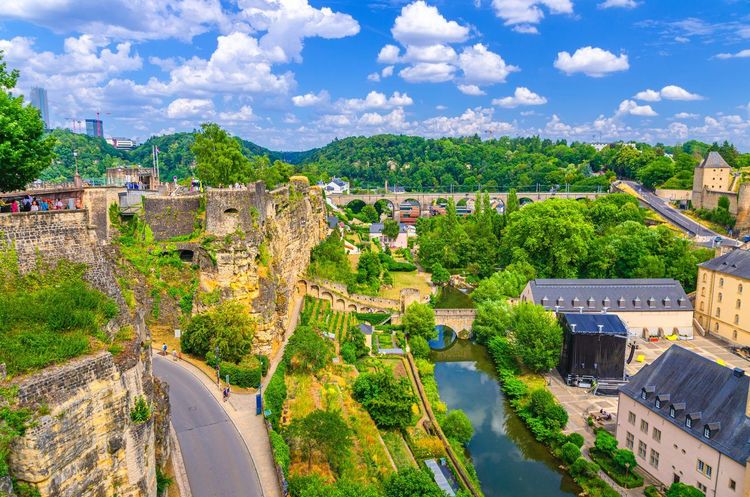
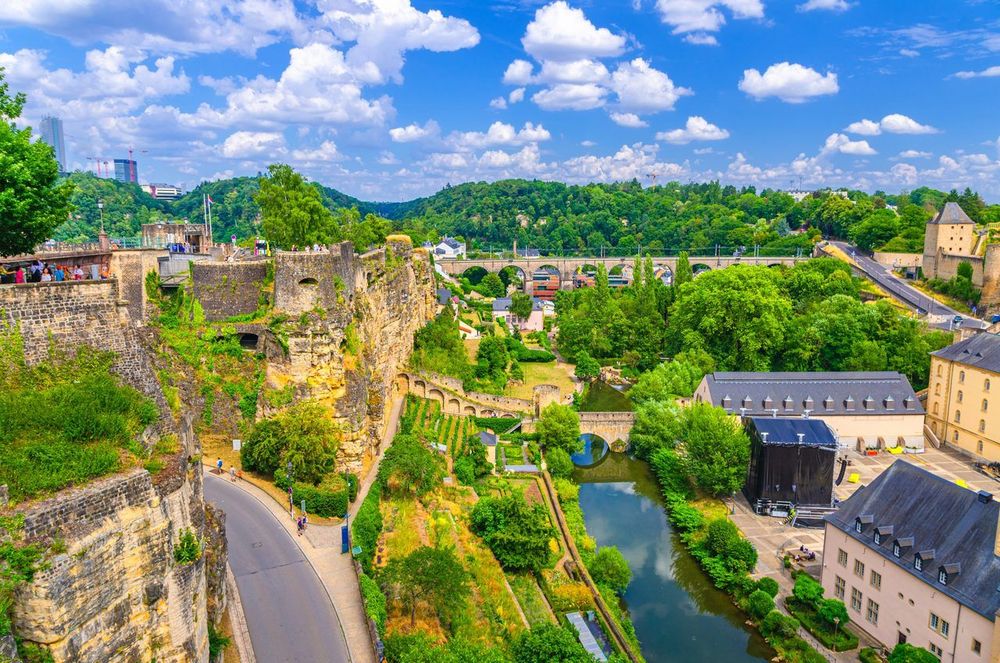
Everything begins at the Bock promontory, where Count Sigefroi founded the city in 963 by establishing a castle on an impregnable rocky spur. Only a few remnants of that first castle survive, but it was beneath that same rock that the Casemates du Bock developed from 1644 under Spanish rule: a network of underground galleries that once stretched over 23 kilometers, housing barracks, kitchens, stables, and workshops. The fortifications and the old town have been on the UNESCO World Heritage List since 1994.
What do kids remember most? The arrow slits that open directly onto the void, with a bird's-eye view of the Grund some forty meters below. Allow about an hour for the visit and check opening dates before you come, as the site closes part of the year and is regularly undergoing works. Some narrow staircase sections are not stroller-friendly: the surface route, via the Chemin de la Corniche, lets you bypass these sections without missing any of the panorama.
As you step back into the open air, the Chemin de la Corniche runs along the cliff for a few hundred meters. It's nicknamed "the most beautiful balcony in Europe," which is debatable but gives you an idea of the view: the rooftops of the Grund, the Saint-Jean church, and the ramparts stretching all the way to the Neumünster Abbey. The walkway is flat, stroller-friendly, and wide enough to let little ones run ahead without crossing a single car.
A few streets away, the Grand Ducal Palace displays its 1572 Renaissance façade, adorned with finely sculpted arcades. The Grand Duke's official residence is only open for visits in summer, on pre-booked time slots, generally from mid-July to early September. For the rest of the year, the sentinel pacing back and forth in front of the door is often enough to intrigue younger visitors. Nearby, Notre-Dame Cathedral houses the tombs of the sovereigns in its crypt — a curiosity that tends to fascinate children aged eight to ten. For lunch, Place Guillaume II hosts its market on Wednesday and Saturday mornings, surrounded by terraces where service is quick.
On the other side of the valley, on the Kirchberg plateau, the Mudam (Grand Duke Jean Museum of Modern Art) occupies a building designed by Ieoh Ming Pei, built on the foundations of Fort Thüngen. It offers children's workshops at weekends and during school holidays: a great option if the weather turns rainy, and a striking contrast with the ramparts seen that morning. If your children enjoy museums, our selection of the must-see museums in Luxembourg will help you choose your next one.
The Grund District and the Pfaffenthal Panoramic Elevator
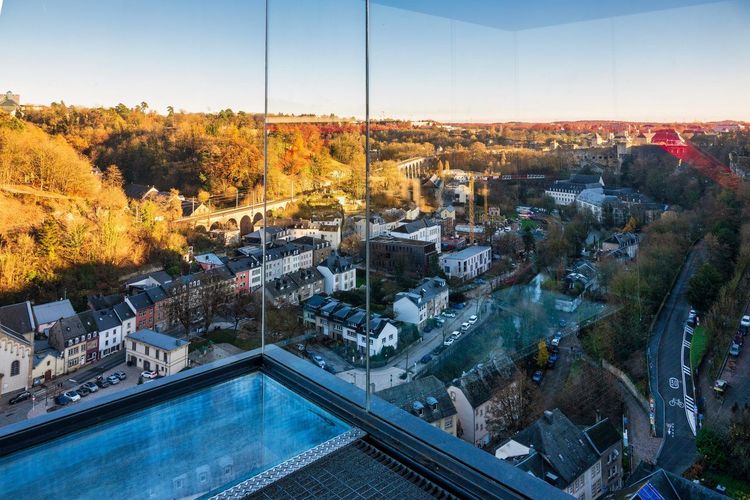
To reach the lower districts without wearing out your legs, try the Pfaffenthal panoramic elevator, opened in 2016: a free glass cabin, 71 meters of elevation swallowed in a few seconds, and a view that takes the breath away of children and parents alike. It connects the Ville Haute, at the level of Parc Pescatore, to the Pfaffenthal district nestled along the Alzette. It's arguably the cheapest and most memorable attraction in the city for a child under ten.
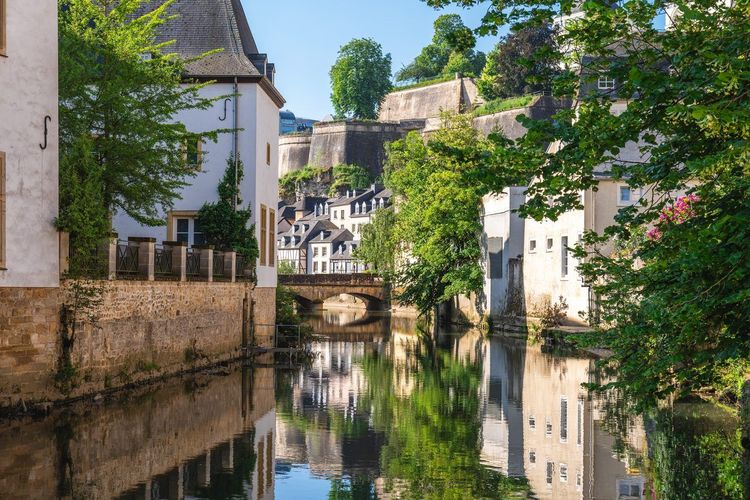
The Grund district (Luxembourg, rated 4.7/5 on Google from 1.5K reviews) is most easily reached via the public elevator at the plateau du Saint-Esprit, or on foot down the ramps from the Corniche. At the bottom, the Alzette winds between colorful houses, old mills, and sections of the Wenzel wall fortifications. The Neumünster Abbey, converted into a cultural center, regularly hosts concerts and exhibitions open during the day. The riverbanks are ideal for a picnic, with a few shaded benches and ducks well accustomed to snack crumbs.
Good news for anyone dreading a drawn-out school-style visit: the Ryo audio-guided tour of Luxembourg strings together 19 audio stops along a 5.5 km loop (around 2h15), from the Dent Creuse and the Casemates du Bock all the way to the cathedral, the Grand Ducal Palace, and the viewpoints over the Grund. Each stop delivers a short anecdote, perfect for turning the walk into a treasure hunt.
Castles to Visit with Kids: from the Most Iconic to the Most Hidden
With more than a hundred castles and fortified ruins across a territory the size of a single French department, Luxembourg delivers on a simple promise: whatever region you choose, a keep is never far away. Vianden draws the most international attention, but Bourscheid, Clervaux, Beaufort, and a few more discreet ruins round out the picture nicely if you're staying longer than two days.
Vianden Castle: the Country's Medieval Star
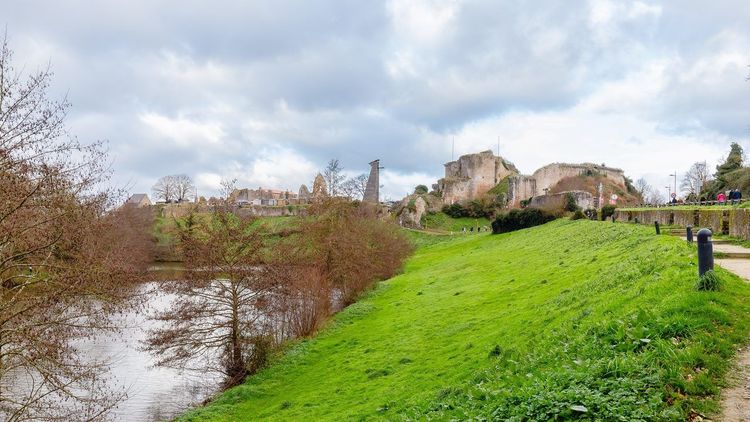
If only one castle could make your list, it would be this one. Perched on a rocky spur, Vianden Castle ranks among the largest fortified residences in Western Europe, with a silhouette that dominates the entire Our valley. Sold off piece by piece and left in ruins in the 19th century, it was rebuilt by the Luxembourg state from 1977 onward, making it one of the best-restored sites in the country. A detail that appeals to literature-loving teenagers: Victor Hugo stayed in Vianden during his exile in 1871, and the house where he lodged, on the banks of the Our, has become a small museum displaying several of his drawings.
The clever bonus is the chairlift that climbs from the bank of the Our to a viewpoint above the castle, from where you walk back down to the entrance: a welcome alternative when legs are already protesting. On site, you'll explore the knights' hall, the two-level chapel, and the armory rooms, while local legends send shivers down younger spines. Allow an hour and a half on site, plus time to stroll through the lower town. In early August, a medieval festival animates the castle with jousting and costumed demonstrations — a good reason to time your visit for that period.
Bourscheid, Clervaux, and Beaufort: Other Castles Not to Miss
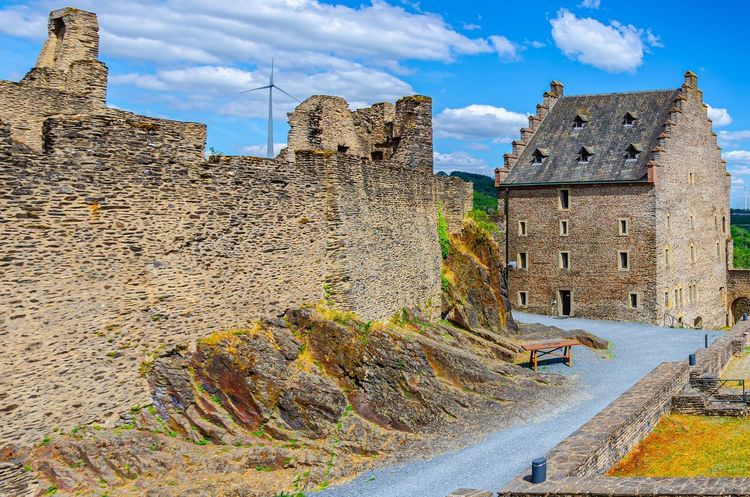
Bourscheid Castle occupies a promontory rising more than 150 meters above the Sûre valley, with a curtain wall flanked by towers that you can walk around freely. Less crowded than Vianden, it lends itself to a relaxed late-morning visit, often with no queue at all, and the on-site audio guide brings the life of the garrison to life in a very vivid way.
In Clervaux, two visits combine neatly into one day. The castle houses The Family of Man, Edward Steichen's photographic exhibition inscribed on the UNESCO Memory of the World Register, which speaks to all ages through its universal look at the great stages of life. Children often prefer the neighboring rooms: scale models of the country's castles and a Battle of the Bulge museum with uniforms and objects from the winter of 1944. On the hillside, Clervaux's Saint-Maurice Abbey, built in 1910 in a Neo-Romanesque style inspired by Cluny, still houses a Benedictine community and a small exhibition on monastic life.
Finally, Beaufort Castles (Chemin du Château, L-6310 Beaufort, rated 1/5 on Google from 1 review) offer a striking contrast: ivy-covered medieval ruins perfect for playing knights stand right next to a perfectly preserved 1649 Renaissance castle. The village also produces Cassero, a blackcurrant liqueur strictly for adults, which children can swap for a local juice during the break. More off the beaten track, Turelbaach Castle retains only a few vegetation-covered sections of wall — a curiosity for those who enjoy extending the route from ruin to ruin away from the tourist circuit. And if the weather calls for a backup plan, Ryo's article on the best activities to do in Luxembourg lists plenty of other options.
Nature and Fresh Air: Mullerthal and the Red Lands
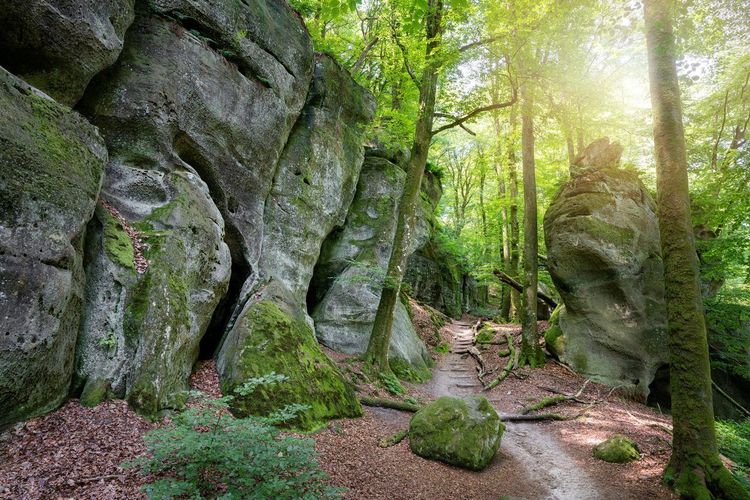
Luxembourg hides two very different natural faces, and both lend themselves to walks with children without any insurmountable elevation changes.
To the northeast, the Luxembourg Little Switzerland (Mullerthal) owes its name to its sandstone formations sculpted by erosion: narrow crevices, caves, and moss-covered arch rocks all year round. The Mullerthal Trail (Berdorf, Luxembourg, rated 4.9/5 on Google from 581 reviews) breaks down into three loops totaling 112 kilometers, but you don't need to tackle more than a short section. Around Berdorf, the Wolf's Gorge (Wolfsschlucht) can be walked in about an hour from Echternach, and the Schiessentümpel waterfall, with its small stone bridge, can be discovered in just a few minutes from the nearby car park. The terrain is uneven but poses no real danger for children who are used to walking. Bring closed-toe shoes: the rocks stay damp even in summer, in the shade of the forest.
For the more adventurous, the Berdorf rocks are also among the country's best-known climbing spots, and several clubs offer introductory sessions from around age eight. Alternatively, just explore the Huel Lee, a cave carved into the sandstone where you can still make out the marks left by ancient millstone cutters: children enjoy hunting for the traces left by the stonemasons.
To the south, the scenery changes dramatically. The Minett region, nicknamed the red lands after the color of the iron ore extracted there for over a century, was recognized as a UNESCO Biosphere Reserve in 2020 for nature's reconquest of former mining land. A hike through the red lands takes you past old ore wagons, galleries, and mine faces. At Fond-de-Gras, the Train 1900, pulled by a steam locomotive, runs on Sundays from May to September, and the Minièresbunn mining train descends into a gallery: both delight visitors of almost any age. The neighboring nature reserves, with their ponds formed in old mine pits, speak easily to children curious about why the earth beneath their feet is red.
Abbeys and Picturesque Villages Around the Country
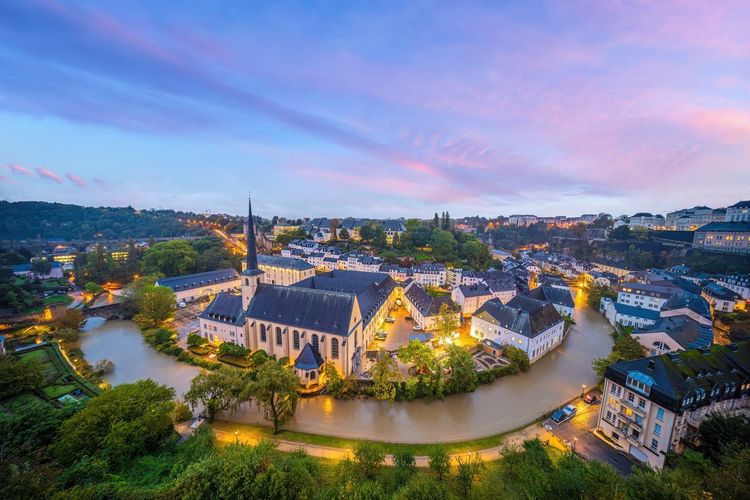
Two excursions lend themselves particularly well to a half-day outing without pushing the pace.
Echternach, the country's oldest town, is organized around its Benedictine abbey founded in 698 by Saint Willibrord, an Anglo-Saxon monk who came to evangelize the region. The basilica preserves a Carolingian crypt where the saint rests, and the town is known for its dancing procession on Whit Tuesday, inscribed on the UNESCO Intangible Cultural Heritage list. History enthusiasts can push on to the Roman villa, a ten-minute walk from the center. On the shores of Echternach Lake, pedal boats, mini-golf, and playgrounds turn the heritage visit into a thoroughly playful afternoon.
Further west, the village of Esch-sur-Sûre sits on a peninsula formed by a tight meander of the river, dominated by the ruins of a 10th-century castle. The dam built in the 1950s created Haute-Sûre Lake, the heart of a nature park where the bases at Insenborn and Lultzhausen rent out canoes and paddleboards, with supervised beaches in season. Just above, the Burfelt viewpoint (Insenborn, Luxembourg, rated 4.7/5 on Google from 382 reviews) offers one of the finest views over the lake's bends, reachable in a few minutes' walk from the car park, with a forest discovery center nearby. Cobblestone streets in the morning, water activities in the afternoon: the combination works beautifully.
Parks, Museums, and Leisure Designed for Kids
Between heritage visits, the country has several addresses designed to keep young and old entertained, some of them enjoyed by generations of Luxembourgers.
Parks and Outdoor Adventures for Kids
Bettembourg's Parc Merveilleux has been welcoming visitors since the 1950s and remains a benchmark for locals themselves. You'll encounter animals from five continents, a trail dotted with life-size fairy-tale sets, a small train, ponies, and several play areas spread along the route. Allow a full half-day; there's on-site catering, and the park is generally open from April to mid-October.
To the east, Grevenmacher's butterfly garden sets up its tropical greenhouse on the banks of the Moselle: hundreds of butterflies fly freely around you in a humid warmth that makes a pleasant contrast to a cool spring day. Open from April to October, it also lets you observe chrysalises and hatching depending on the season. For more physical adventures, the Edouard André municipal park and Parc de Merl in the capital offer free playgrounds and lawns, perfect for a spontaneous break between two visits.
Museums and Popular Festivals
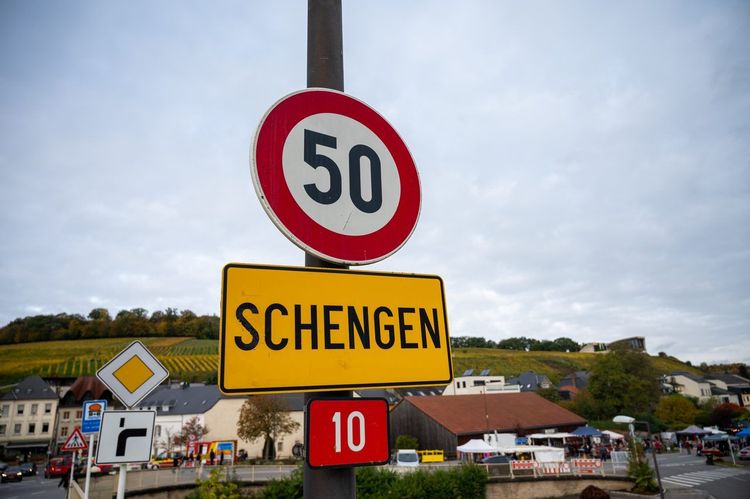
At the tripoint between Luxembourg, France, and Germany, the Schengen European Museum (Waistrooss, L-5445 Schengen, rated 4.4/5 on Google from 2,298 reviews) tells the story of the birth of the free-movement area in an interactive way — signed here in 1985 aboard the boat Princess Marie-Astrid, moored on the Moselle. Touchscreens and hands-on objects make the subject far more engaging than a civics class, and the visit wraps up in about an hour, an ideal format between two stops on the wine route.
If your stay falls in late August or early September, the Schueberfouer transforms the Glacis in the capital into a massive funfair — a tradition dating back to 1340, when John the Blind, Count of Luxembourg, granted the right to hold an annual fair there. Thrill rides for the older kids, carousels for the little ones, stalls selling gromperekichelcher (potato fritters), and a Ferris wheel make for an evening very different from the rest of the program. Another tip for keeping up the pace: break up the Ryo audio-guided tour of Luxembourg City into ten-to-fifteen-minute segments between activities, each audio being self-contained.
Discovering Luxembourgish Gastronomy
Local cuisine turns out to be more child-friendly than you might expect, as long as you choose wisely. Bouneschlupp, a green bean soup with bacon and potatoes, is a safe bet even for cautious palates. Kachkéis, a spreadable melted cheese, is served on country bread — a snack that parents and children alike enjoy as an impromptu afternoon treat. The national dish, judd mat gaardebounen (smoked pork collar with broad beans), is better suited to adults, but you'll find it on the menu of almost every traditional brasserie.
On the sweeter side, quetschentaart (plum tart) appears everywhere in late summer, and the capital's pastry shops readily serve regional cakes at teatime. For more, the article Top 10 Culinary Specialties in Luxembourg details the addresses where you can try them, including the bakeries that keep alive the Bretzelsonndeg tradition — the mid-Lent Sunday when sweethearts give each other a sweet pretzel.
The Moselle wine route, which runs along the German border for about 42 kilometers between Schengen and Wasserbillig, also works as a family outing: grape juice for the children while you sample local rieslings and crémants, a picnic facing the hillsides at Remich or Grevenmacher, and short cave visits that welcome children readily. The riverside promenade at Remich makes for a gentle end to the day.
If you're passing through Grevenmacher, the Bernard-Massard cellars offer guided tours of the galleries where crémant ages, with an underground route that always intrigues younger visitors. And from May to September, several boats cruise the Moselle between Remich, Schengen, and Grevenmacher: an hour's sailing is enough to watch the terraced vineyards roll by without anyone getting restless. The Saturday morning markets on Place Guillaume II are, finally, the best place to put together a local picnic, with sourdough bread, smoked charcuterie, and seasonal fruit.
Relaxing at the Mondorf-les-Bains Thermal Center
Toward the end of a trip, a rest stop is often just what's needed, and the Mondorf-les-Bains Thermal Domain (Avenue des Bains, L-5601 Mondorf-les-Bains, rated 4.4/5 on Google from 3,996 reviews) answers that need perfectly. The spring was discovered in the early 1840s during a drilling operation intended to find rock salt, and the thermal center opened to the public in 1847. Today, the aquatic complex offers heated indoor and outdoor pools, jacuzzis, and swimming lanes.
Before coming with children, check the age-based access conditions and the time slots open to them, as some areas remain reserved for adults. Day passes remain affordable compared to large urban spas, and the landscaped park surrounding the domain is perfect for a quiet late-afternoon stroll. It's a stop that traditional guides rarely highlight, yet it rounds off a walking-heavy trip perfectly.
Mondorf is about a twenty-minute drive from the capital, and the free bus connects it like everywhere else in the country. The spa village itself, with its Belle Époque villas and vast park planted with rare species, deserves a short walk. You can also combine a swim with a stop at Schengen and the Moselle, just a quarter of an hour away, for a last relaxed day before the drive home.
Suggested Itinerary: a 3-Day Weekend in Luxembourg
Here is how to string the highlights together over three days, keeping transfers short and leaving room for the unplanned breaks that tired children always demand.
Day 1: Luxembourg City on Foot
The morning is devoted to the Ville Haute: the Casemates du Bock at opening time to beat school groups, then the Chemin de la Corniche, and the Grand Ducal Palace toward the end of the morning. Have lunch on Place Guillaume II, where the terraces fill up quickly even on weekdays. In the afternoon, head down to the Grund via the Saint-Esprit elevator, unwind along the Alzette, then treat yourself to the Pfaffenthal panoramic elevator on the way back up. If the children are still asking for a playground, the municipal park is ten minutes away. All in all, count about 5 kilometers of walking, very manageable with young children thanks to the many possible breaks. This first day follows almost exactly the route of the Ryo audio-guided tour: its 2h15 of listening spread comfortably across the day, and the loop can start from any point.
Day 2: Nature and Traditions in the North
An early departure toward Vianden, about 50 minutes' drive from the capital, to enjoy the castle before the midday crowds, chairlift included. After lunch in the lower town, head to Mullerthal, half an hour away: a short loop around Berdorf and the Wolf's Gorge is enough to give a convincing taste of the Luxembourg Little Switzerland without tiring everyone out. Late in the afternoon, Echternach is just a few minutes away, with its lake and pedal boats to close out the day. Distances stay modest, leaving a real buffer if a child falls asleep in the car between stops.
Day 3: from an Enchanted Park to Giants of Steel
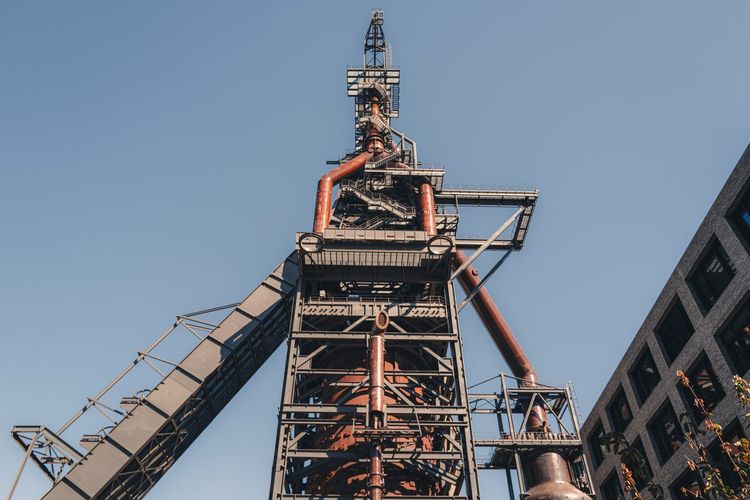
Morning at Bettembourg's Parc Merveilleux, about 25 minutes south of the capital, to close the trip on a playful note after two more heritage-focused days. The afternoon shifts to a completely different face of the country: the Belval blast furnaces (Avenue du Rock'n'Roll, L-4361 Esch-sur-Alzette, rated 4.6/5 on Google from 269 reviews), steel giants preserved at the heart of a new university district, tell the story of Luxembourg's steel industry in spectacular fashion. Blast furnace A can be visited and offers a striking view from its platform. The site is a few minutes from Belval-Université station, handy if you're heading home by train.
Have a week rather than a weekend? Slot in Bourscheid and Beaufort between days 2 and 3, add a day in Esch-sur-Sûre for canoeing and the Burfelt viewpoint, a morning at Fond-de-Gras, and finish with an afternoon at Mondorf-les-Bains before the journey home.
Practical Tips for Planning Your Luxembourg Trip with Kids
Before packing the bags, a few practical points will save you from unpleasant surprises once you arrive.
Getting There and Getting Around (Free Transport, Luxembourg Card)
To reach the country, Luxembourg-Findel Airport serves most major European cities, and the central station connects directly to the French, Belgian, and German rail networks. From Paris, the TGV takes just over two hours — often more comfortable with young children than a flight followed by a transfer. Since 1 March 2020, trains, trams, and buses have been completely free throughout the country (except first class on trains), an argument that genuinely lightens your budget compared to neighboring capitals. For the north — Vianden or Clervaux — a car remains more practical, if only to carry car seats and a stroller without depending on connections.
The Luxembourg Card completes the picture: valid for one, two, or three days, it grants free entry to several dozen museums, castles, and attractions across the country, with a family version that works well for two adults and up to three children. It pays for itself from just two paid admissions per day, which matches the pace of the itinerary described above.
Budget, Accommodation, Language, and Best Season
On the accommodation side, the capital has most of the supply, with furnished apartments often more practical than a hotel room for four people, especially around the train station and the Ville Haute, both well connected to the free transport network. In the north, gîtes, campsites, and small hotels around Vianden, Clervaux, or Haute-Sûre Lake let you break up the journey if you're staying more than three days.
Budget between €150 and €220 per day for four people including accommodation, moderate dining costs, and entries partly covered by the Luxembourg Card; car rental, if needed, adds around thirty euros per day before fuel.
On the language front, Luxembourgish remains the national language, but French and German are official languages, taught from primary school and understood everywhere, and English is widely spoken in the tourism sector. No language barrier to worry about, even in the villages of the north.
As for the best time to visit, spring and early autumn offer pleasant temperatures for walking, while summer is essential for water activities around Esch-sur-Sûre and the larger leisure parks, most of which close in winter. A useful detail when children scatter through the alleyways: the Ryo audio guide works offline without using data, helping you navigate the old town without relying on GPS at every corner.

FAQ
Is it worth visiting Luxembourg with kids?
Yes, as long as you look beyond the financial capital image: between medieval castles, free public transport across the entire country, and historic leisure parks like the one in Bettembourg, the country packs a variety of activities rarely matched in such a compact territory.
How much time should you plan to visit Luxembourg with kids?
A three-day weekend is enough to cover the capital, an iconic castle like Vianden, and a nature break. A week gives you time to add abbeys, the industrial south, Haute-Sûre lake, and the thermal center without rushing from one site to the next.
How do you get to Luxembourg with children?
The train is often the easiest option from France, Belgium, or Germany, with a direct arrival at the central station. Findel Airport works well for longer journeys, about twenty minutes from the city center by free bus.
Where should you stay in Luxembourg with kids?
The capital has most of the family-friendly accommodation, especially around the train station and the Ville Haute, both well connected to the free public transport network. Apartments with kitchenettes make mealtimes easier for younger children, and a few options in the north allow you to break up a longer stay.
What budget should you plan for a trip to Luxembourg with kids?
Budget between €150 and €220 per day for four people including accommodation, taking into account free transport and entries covered by the Luxembourg Card; car rental, if needed for the north, is extra at around thirty euros per day before fuel.
When is the best time to visit Luxembourg with kids?
Spring and early autumn offer the best conditions for castles and hiking trails, while summer is better suited to water activities and the Parc Merveilleux, which is busier during peak season.
What language is spoken in Luxembourg?
Luxembourgish is the national language, and French and German are also official languages. English is widely understood, including in rural areas, which makes everyday interactions — from restaurants to museum ticket desks — straightforward.
Conclusion: a Small Country, Big Memories
When all is said and done, Luxembourg lends itself to a trip of variable geometry: three days are enough for a solid overview combining old town, medieval castle, and nature; a week lets you add waterside villages and the thermal center at a leisurely pace. What strikes you once you're there is the logistical ease: short distances, free transport, and multilingual signage that never leaves anyone lost for long.
For your first steps in the capital, launch the Ryo audio-guided tour of Luxembourg City: 19 audio stops between the casemates, the Corniche, and the Grand Ducal Palace, to listen to at your own pace, however many days you have.