© Shutterstock
 Votre guide Ryo
Sydney and Its Surroundings: The Complete Guide to Activities in 2026
Activities in Sydney and surroundings surprise those who think they know the city through its postcards alone. They stretch far beyond the Harbour Bridge and the Opera House: natural pools sculpted into volcanic rock at low tide, sand dunes thirty metres high a two-hour drive away, vineyards producing internationally recognised Semillon, and wild dolphins that frequent the same bay all year round. To dive into the city from day one without a paper map or guidebook, the Ryo audio tour La Ville d'Émeraude leads you from Circular Quay through the laneways of the Rocks, with the stories and anecdotes that turn a stroll into a genuine discovery.
This guide to activities in Sydney and surroundings covers both what to see in Sydney itself — the Opera House, the beaches, the creative neighbourhoods — and the essential day trips within a 250-kilometre radius: the UNESCO-listed Blue Mountains, the Royal National Park with its Figure Eight Pool and Wedding Cake Rock, Jervis Bay renowned for Australia's whitest sand, and the Port Stephens dunes where dolphins pass through all year long. Allow a minimum of five to seven days to cover all of this, and even then you'll go home with a list of things to come back and do.
Sydney: The Harbour's Must-Sees
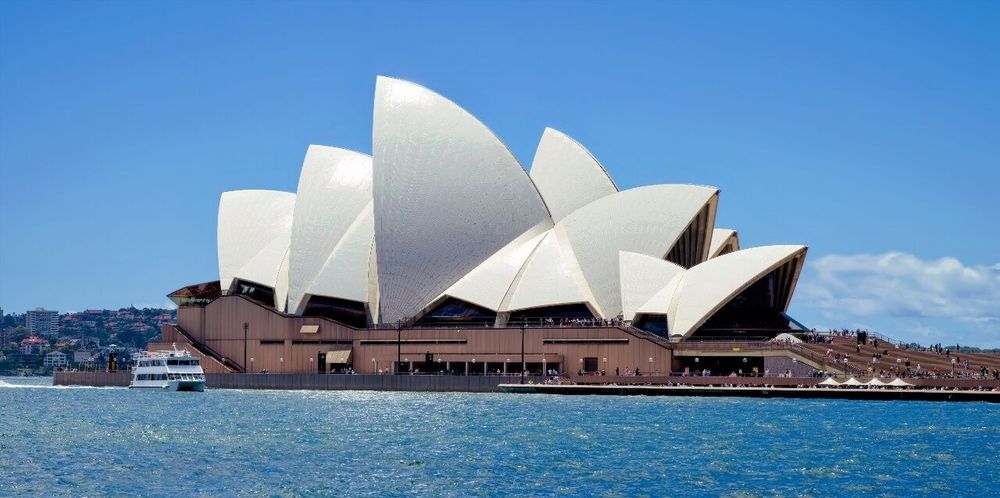
The first thing you see arriving at Circular Quay is the white silhouette of the Sydney Opera House backlit against the bay. It almost looks too good to be real, and yet there it is, five minutes from the station. Inaugurated in 1973 after fourteen years of construction and countless political controversies, Jørn Utzon's building has been a UNESCO World Heritage Site since 2007. The exterior and esplanades are freely accessible; to visit the interior, guided tours start from 9am and last about an hour.
Fifty metres away on foot, the Harbour Bridge has closed the panorama of the bay since 1932. At 134 metres tall, this steel arch bridge remains one of the largest in the world. You can cross it on foot or by bike for free, but the experience that truly leaves a mark is the BridgeClimb: a guided ascent to the top of the arch, open to children from the age of 8. The view over the bay, the Opera House, and the CBD skyscrapers is well worth the 180 to 300 AUD depending on the time slot chosen.
Between the two landmarks, the Rocks neighbourhood is the colonial cradle of Sydney. This is where the first British convicts landed in 1788. The cobbled laneways, sandstone warehouses converted into galleries, and 19th-century pubs form a dense and pleasant area to explore on foot. The Rocks Market, every weekend from 10am to 5pm, brings together artisans and local producers beneath the old trees of George Street.
The Royal Botanic Garden spreads across 30 hectares just behind the Opera House. Free entry, bay views, centuries-old fig trees, and colonies of grey-headed flying foxes (impressive with their one-metre wingspan): it makes an ideal green pause right in the centre before resuming the trail of museums and wharves. At peak tourist hours, the garden absorbs the crowds effortlessly thanks to its size.
The Museum of Contemporary Art (MCA) occupies an Art Deco façade directly on Circular Quay. Entry is free for the permanent collections, and the rooftop café terrace offers one of the best free views of the Opera House and the bridge. Ten minutes' walk to the east, the Museum of Sydney traces the founding of the city on the remains of the earliest colonial buildings, with archaeological excavations visible through a glass floor.
Finally, if you have an evening to devote to the bay, the ferry to Kirribilli or Mosman from Circular Quay offers a perspective on the skyline that you can only find from the water. A standard ferry ticket with an Opal card costs around 8 AUD (flat rate across the network) and the crossing takes about fifteen minutes. It is the very definition of value-for-view in Sydney. Circular Quay is also a stop on our Emerald City audio-guided tour, a 7.4 km loop around the harbour.
Sydney's Beaches: Bondi, Manly, and Coogee
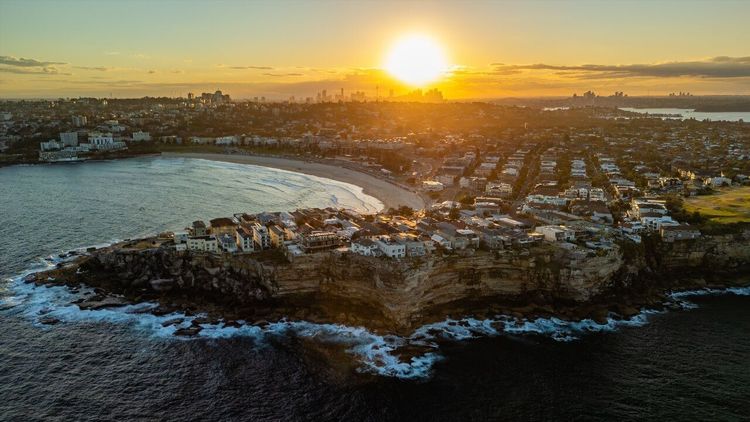
Bondi Beach is probably the most photographed beach in Australia. With its kilometre of golden sand lined by a white concrete promenade, it draws local surfers at dawn as much as families in the late afternoon. The water is patrolled by the Bondi Lifeguards between the yellow and red flags, within which swimming is mandatory. The beach is 9 km east of the CBD, accessible by bus from Circular Quay (route 333, about 30 minutes).
Bondi is more than just the beach. The neighbourhood above it is one of Sydney's most vibrant: flat white cafés, surf concept stores, Thai and Japanese restaurants on Campbell Parade, and the Saturday morning market at the local primary school (Bondi Markets, 9am–4pm) featuring local designers. Arriving at Bondi around 7:30am to avoid the midday crowds is advice every Sydneysider will spontaneously give you.
Manly Beach is in a different league. Accessible by ferry from Circular Quay in 30 minutes — a crossing that already makes you want to stay — this 1.5 km beach on the northern peninsula is noticeably more peaceful than Bondi. The Corso, a pedestrian street linking the wharf to the beach, is lined with fish and chip shops and ice cream parlours. On the bay side, the water is generally calm and ideal for children; on the ocean side, the rollers attract experienced surfers.
Coogee Beach (Coogee NSW 2034, rated 4.7/5 on Google with 2,983 reviews), 4 km south of Bondi, is often overlooked — but that's a mistake. Less exposed to the prevailing wind and better sheltered by its northern cliffs, it draws more families and lap swimmers. Wylie's Baths, a saltwater sea bath dating from 1907, sits on the cliff above the beach and remains open year-round for an entry fee of around 8 AUD.
More discreet, the beaches of Balmoral (bay side, calm water, perfect for young children) and Bronte (between Bondi and Coogee, a saltwater rock pool, very local atmosphere) are worth the detour if you have more than a day to explore the Sydney coastline. Bronte is also an alternative starting point for joining the Coastal Walk without passing through Bondi's crowds.
Coastal Walk from Bondi to Coogee
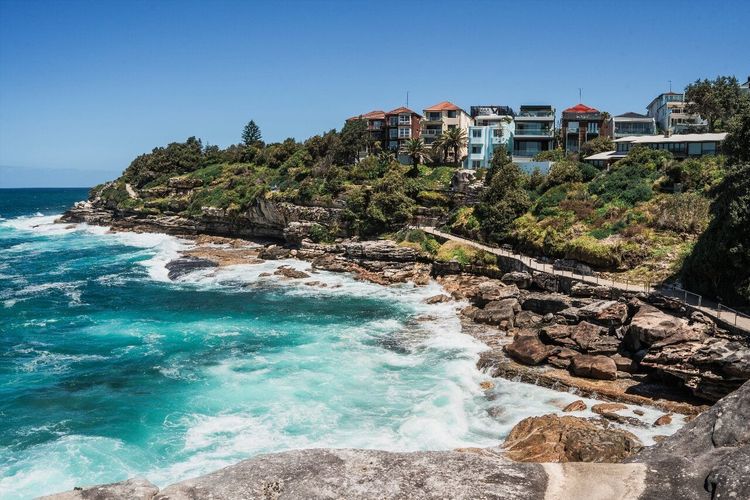
The Bondi to Coogee Coastal Walk (Notts Avenue, Bondi Beach NSW 2026, rated 4.8/5 on Google with 3,394 reviews) is perhaps the best free urban walk in Australia. Six kilometres of clifftop trail hugging the sandstone headlands, linking five successive beaches (Bondi, Tamarama, Bronte, Clovelly, Coogee) with views over the Pacific Ocean at every turn. The distance takes 1h30 to 2h at a steady pace, but allow double if you stop at the intermediate beaches.
The walk begins at the southern end of Bondi Beach, at the Bondi Icebergs saltwater pool. The first cliffs rise directly above the ocean at 20 to 30 metres height. At Tamarama, nicknamed 'Glamarama' by locals, the beach is small but the waves are among the most powerful on the route: swimming is banned in strong winds.
The Bronte-Clovelly section is the most visually spectacular: the path passes above Bronte Baths (a free rock sea pool), crosses a clifftop cemetery overlooking the waves, then descends to the calm lagoon of Clovelly, where families snorkel in a cove protected by nets. Finishing at Coogee, sitting on the beach with a flat white, then catching the bus back to Bondi: that's a very Sydney way to spend a morning.
Taronga Zoo and Australian Wildlife
The Taronga Zoo is no ordinary zoo. Perched on the heights of Mosman on the north shore of the bay, it is home to more than 4,000 animals representing some 350 species, with one of the most iconic backdrops in the world — a sweeping view of the Harbour Bridge and the Opera House. Open since 1916, it is one of Australia's oldest zoos, and probably one of the only ones where giraffes have a major city skyline as their permanent horizon.
You can get there from Circular Quay by ferry (15 minutes), then by cable car that climbs directly to the entrance from the wharf. The combined ferry + zoo + cable car ticket (Wild Pass) costs around 55 AUD for adults, 33 AUD for children. A full day is well justified: koalas, wombats, Tasmanian devils, platypuses (in a specialised low-lit enclosure), kangaroos, and a particularly well-documented section on prehistoric Australian fauna.
Animal presentations take place at set times — check the programme at the entrance on arrival. The 'Free Flight Birds' session lets you watch Australian raptors in free flight above the bay. Arriving at opening time (9am) gives you the best chance of seeing the koalas active: they sleep for around 20 hours a day, but are generally awake in the early morning.
If you are looking for a cheaper and more intimate wildlife experience, the Featherdale Wildlife Park in Blacktown (detailed below) offers hands-on encounters with koalas and kangaroos for roughly half the price.
Cultural Activities: Museums, Neighbourhoods, and Street Art
Sydney is not only a city of beaches and maritime panoramas. Its neighbourhoods each have a strong cultural identity, and the museum offer is one of the best in Oceania. To understand how the city was built around its bay and how each neighbourhood has evolved since British colonisation, the Ryo tour Au fil de ses quartiers is an excellent entry point before setting out to explore at your own pace.
Newtown is the most striking example of this urban diversity. Just 4 km west of the CBD, King Street is packed with independent bookshops, vegan cafés, alternative art galleries, and cocktail bars hidden behind painted shopfronts. The murals covering the side laneways make Newtown one of the street art capitals of the southern hemisphere. The neighbourhood is both very local and very welcoming for visitors who stray from the usual tourist circuit.
The Darling Harbour precinct houses several major museums west of the CBD. The Australian National Maritime Museum (partially free entry) traces the country's maritime history from the canoes of the first inhabitants to the submarines of the Second World War — the HMAS Ovens submarine can be visited from the inside. Nearby, IMAX Sydney screens films on Australia's largest screen for an experience that appeals to children and adults alike.
Surry Hills and Redfern, just south of Central Station, are Sydney's two most rapidly transforming neighbourhoods. Surry Hills is home to commercial galleries, award-winning restaurants, and the studios of several Australian fashion labels. Redfern, long a marginalised neighbourhood, has become a centre of contemporary Aboriginal culture: several galleries there exhibit art and craft from First Nations peoples within a strong community context.
The White Rabbit Gallery (30 Balfour St, Chippendale NSW 2008, rated 4.6/5 on Google with 2,407 reviews) in Chippendale houses the world's largest private collection of contemporary Chinese art — free entry, a zen atmosphere, and a vegetarian restaurant in the building. It is one of Sydney's most surprising cultural addresses, virtually unknown to mainstream tourist circuits. Exhibitions rotate approximately every six months. Darling Harbour and the National Maritime Museum, further west, are stops on our audio walking tour through the neighbourhoods.
Sydney by Boat and Water Activities
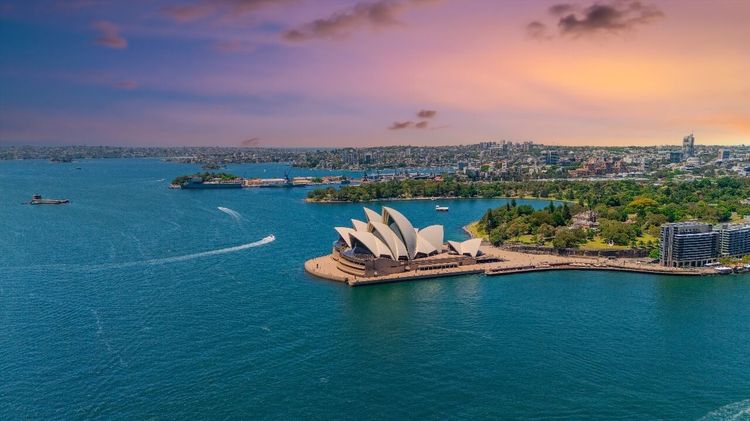
Sydney Harbour is a water playground in its own right. Beyond the public ferries that form the daily commute of thousands of Sydneysiders, several operators offer experiences specifically designed for visitors. Harbour cruises from Circular Quay last between 1 and 3 hours depending on the operator, with or without commentary on the landmarks; expect to pay between 30 and 80 AUD per person.
For divers and snorkellers, the sites around Shelly Beach (north side of Manly) and Clovelly are accessible directly from the shore without special equipment: clear waters, gropers, rays, and occasionally harmless baby reef sharks. Dive clubs organise guided outings from Manly and Cronulla for certified divers.
Sea kayaking in the harbour from Balmain or Lavender Bay is another way to find yourself face-to-face with the Opera House and the Bridge from the water. Hourly rentals are available without certification in the protected zones of the inner harbour. Surfing, finally, is practised at Bondi, Manly, Maroubra, and Cronulla, with beginner surf schools at each of these beaches from 70 AUD for a two-hour lesson.
Food and Drink: Sydney's Flavours and Markets
Sydney is one of the Pacific's major gastronomic destinations. Its cuisine reflects successive waves of immigration — British, Italian, Greek, Lebanese, Vietnamese, Chinese, Japanese — built on a foundation of exceptional Australian produce: seafood from the east coast, New South Wales lamb, aged cheeses from the Hunter Valley. To go further on local flavours by neighbourhood, our Ryo guide to Sydney's culinary specialities details the addresses and dishes you absolutely must try.
The Sydney Fish Market (Bank St, Pyrmont NSW 2009, rated 4.3/5 on Google with 18K reviews) in Pyrmont — the second largest fish market in the southern hemisphere with 15,000 tonnes of seafood sold each year — is the city's most lively spot in the morning. The auctions start at 5:30am; for visitors, the ideal time is between 8am and 11am. Port Stephens oysters, lobsters, barramundi, bugs (a local slipper lobster): the choice is staggering and prices remain reasonable when buying directly from the fishmongers.
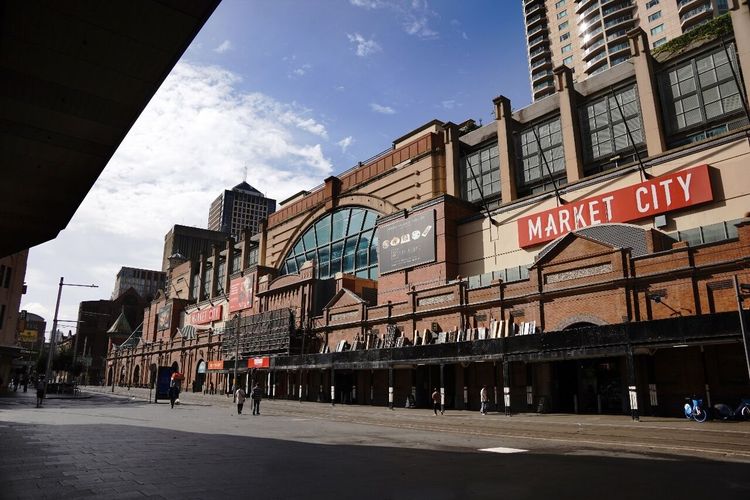
Paddy's Markets in Haymarket (Thursday to Sunday, 10am–6pm) blends Asian grocery stalls, crafts, and souvenirs in a market hall that has existed since 1869. More upscale, the Carriageworks Farmers Market in Eveleigh (every Saturday, 8am–1pm) brings together regional producers, cheesemakers, sourdough bakers, and roasters in a former industrial site converted into a cultural space.
Day Trip to the Blue Mountains
Just two hours west of Sydney by train from Central Station (Blue Mountains line towards Katoomba, around 12 AUD one way), the Blue Mountains are the most spectacular day trip you can take from the city. Listed as a UNESCO World Heritage Site since 2000 as part of the Greater Blue Mountains Area, they owe their name to a permanent blue haze caused by the evaporation of essential oils from eucalyptus trees — an optical phenomenon visible to the naked eye from any lookout.
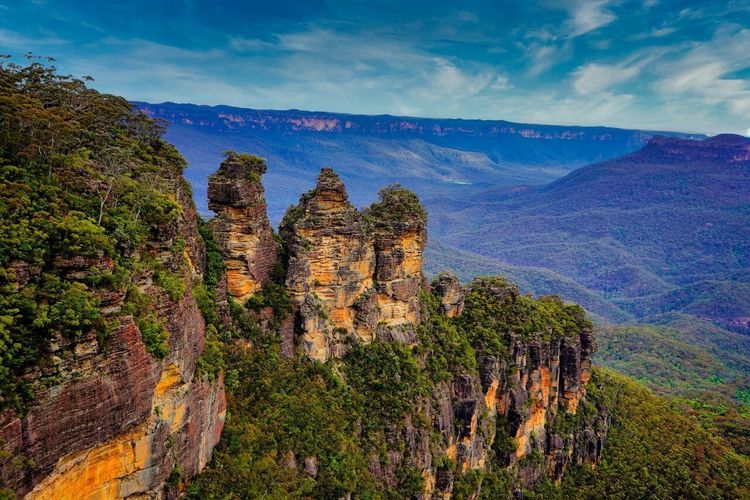
The natural starting point is Katoomba, at 1,010 metres altitude. The Echo Point Lookout is the viewpoint overlooking the Three Sisters, a sandstone formation rising 922 metres above the floor of the Jamison Valley. According to Gundungurra legend, three young women were turned to stone to protect them from a Bunyip, a water monster in Aboriginal mythology. The view at sunset, when orange light strikes the cliffs, remains unforgettable even for those who return.
Several signposted walking trails leave from Katoomba without need of a guide. The Grand Canyon Walk (4.5 km, 2 to 3 hours, intermediate level) descends into a damp gully thick with giant ferns and moss, follows waterfalls, and climbs back up through a tunnel carved into the rock. The Prince Henry Cliff Walk (20 km, 5 to 6 hours, flat but demanding in distance) follows the ridge from Katoomba to Wentworth Falls, passing seven successive lookouts over the valley.
For those who prefer to avoid long walks, Scenic World (Violet St & Cliff Dr, Katoomba NSW 2780, rated 4.5/5 on Google with 23,265 reviews) brings together three attractions in Katoomba: the Scenic Railway (billed as the 'world's steepest passenger railway' with a gradient of 52°), a suspended canopy walkway (Scenic Walkway, 2.4 km), and a panoramic gondola (Scenic Cableway). The all-inclusive pass costs around 40 AUD per adult.
Leura, 3 km east of Katoomba, is a quieter village with its flowering Victorian gardens, cafés in century-old buildings, and antique shops. It is a good alternative if Katoomba is too crowded on a summer weekend. In austral winter (June to August), the Blue Mountains are occasionally dusted with light snow — a rare and disorienting experience for those visiting Australia from Europe while expecting eternal summer.
A few kilometres further north, Jenolan Caves houses one of the world's oldest limestone cave systems, with stalactites and stalagmites formed over hundreds of millions of years. Guided tours last from 1 to 3 hours depending on the difficulty level chosen. The road leading there from Katoomba passes through a Blue Mountains forest that is absolutely silent, virtually tourist-free — one of the most unspoiled spots in the region.
Royal National Park: Figure Eight Pool and Wedding Cake Rock
Just 30 kilometres south of Sydney, the Royal National Park is the second oldest national park in the world, established in 1879 — just one year after Yellowstone in the United States. Across its 16,000 hectares of coastal heath, fern forests, and sandstone cliffs dropping into the ocean, two sites have become iconic photographic landmarks of the Australian east coast.
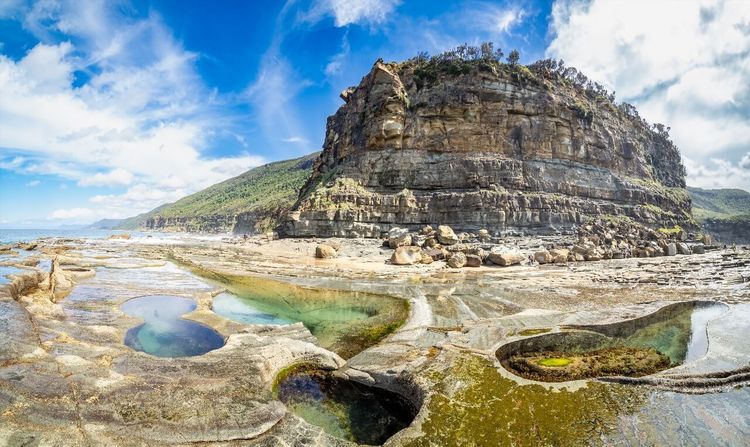
The Figure Eight Pool is a natural figure-of-eight shaped pool carved into volcanic rock by centuries of marine erosion. It is only accessible at low tide, from the Garawarra Farm car park by following the Coast Track southward (approximately 4 km return, 1h30 walk over rocky terrain). Access is regulated by the national park: an online booking system was introduced after several accidents during rough seas. Check the NSW National Parks website before setting out — in peak season, low-tide time slots sell out within hours of being released.
The Wedding Cake Rock (Royal National Park NSW 2232, rated 4.3/5 on Google with 1,267 reviews) is a white sandstone block shaped like a wedding cake, balanced spectacularly above the waves at 20 metres height. Accessible from the same area via a short trail (about 30 minutes from the car park), visitors have been prohibited from approaching within 50 cm of the edge since 2015 due to the risk of collapse — geologists from the University of Wollongong have estimated that the formation could topple into the ocean within the coming decades. But even viewed from the safety distance, the formation is breathtaking.
To reach the Royal National Park from Sydney without a car, the Cronulla line train from Central Station (about 1 hour) serves Cronulla, from where a ferry crosses the Port Hacking River to Bundeena in 30 minutes. From Bundeena, several Coast Track trails are accessible on foot. It is the most pleasant option and avoids any parking headaches on a busy weekend.
Palm Beach and the Ku-ring-gai Peninsula
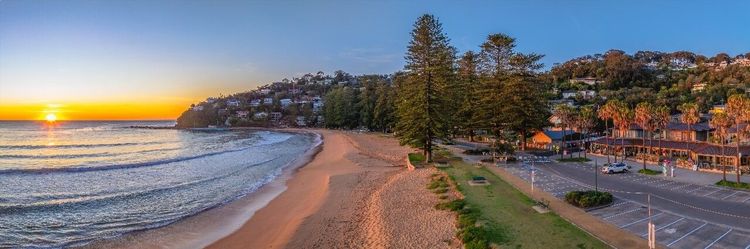
Located 50 kilometres north of the CBD, Palm Beach is both the beach of Sydney celebrities and the outdoor filming location for the Australian series Home and Away since 1988. It is also one of the most beautiful beaches on the northern coast, with the Pacific Ocean on one side and the calm waters of Pittwater Basin on the other. A local ferry connects Palm Beach to Manly by crossing Pittwater (about 40 minutes, 35 AUD), a picturesque alternative to driving back towards the city.
The peninsula that Palm Beach crowns is part of Ku-ring-gai Chase National Park (McCarrs Creek Rd, Terrey Hills NSW 2084, rated 4.7/5 on Google with 5K reviews), listed in part for its Guringai rock engravings, some several thousand years old. The Aboriginal Heritage Walk trail (West Head, 3 km, 1h30) passes several engraving sites and offers views over Pittwater and Broken Bay. It is a rare combination on this coast: spectacular natural landscape and direct access to the spiritual heritage of the first inhabitants.
For those travelling by car, Mona Vale Road to Palm Beach passes less frequented beaches — Newport, Bilgola, Avalon — each worth a thirty-minute stop. The Barrenjoey House café at Palm Beach, run by a local family for decades, serves a brunch that alone justifies driving to the tip of the peninsula.
Featherdale Wildlife Park
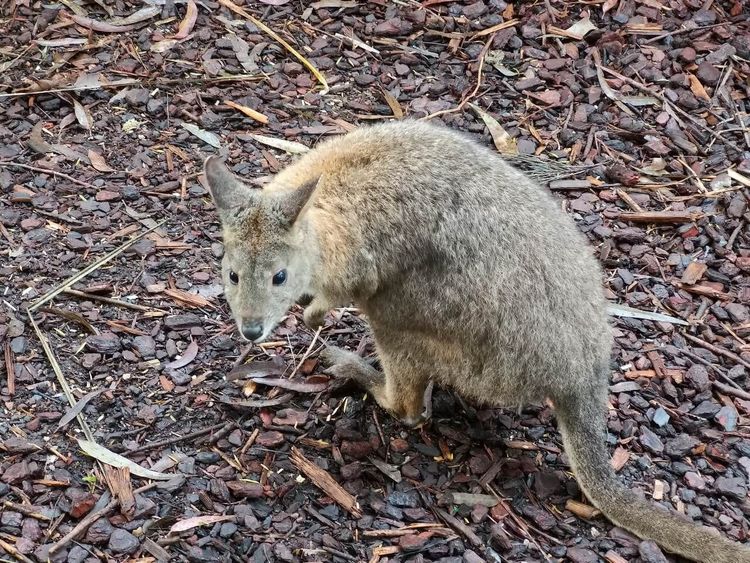
Located in Blacktown, 40 minutes west of the CBD, the Featherdale Wildlife Park (217-229 Kildare Rd, Doonside NSW 2767, rated 4.4/5 on Google with 12,927 reviews) is the best place in the region to interact directly with Australian wildlife. Unlike the large zoos, the animals here roam in open enclosures accessible to visitors: you can hand-feed kangaroos, get within a few centimetres of koalas, and observe Tasmanian devils, wombats, dingoes, and freshwater crocodiles in spaces that make close-up viewing easy.
Entry is around 35 AUD per adult (half price for children), compared to 55 AUD and above at Taronga Zoo. The park is accessible by train from Central Station (Western line, Blacktown stop) then by local bus. For families with young children, it is often the most memorable wildlife experience of the entire Sydney stay.
Port Stephens, Anna Bay, and the Hunter Valley
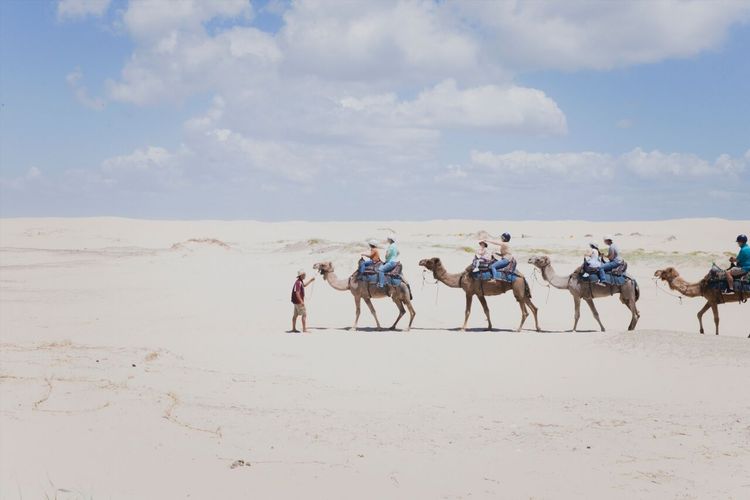
About two and a half hours north of Sydney on the A1, the Port Stephens region packs three radically different experiences into a single area: wild dolphins living permanently in the bay, some of the largest sand dunes in the southern hemisphere, and virtually deserted beaches outside the summer peak season.
Nelson Bay is the main access point. Dolphin-watching boat trips are offered by several operators from the harbour (around 65 AUD, 2 hours, with virtually guaranteed sightings year-round since around a hundred bottlenose dolphins, Tursiops truncatus, permanently reside in the bay). Some outings also include snorkelling in the reef zones off Broughton Island.
The Stockton Bight Sand Dunes (James Patterson Street, Anna Bay NSW 2316, rated 4.7/5 on Google with 361 reviews) are the longest coastal dunes in the southern hemisphere: 32 kilometres of shifting sand between Anna Bay and Stockton Beach, reaching heights of up to 30 metres in places. Sandboard rentals for sliding down the slopes, or guided quad bike and 4WD tours, are offered by several operators in Anna Bay. The experience is both absurd and magnificent — the dunes feel like they belong to the Sahara rather than the Australian coast.
Just 45 minutes by road west of Nelson Bay, the Hunter Valley is Australia's oldest wine-producing region. Viticulture has been established here since 1820, and the valley's roughly 150 estates produce internationally recognised Semillon and Shiraz. Pokolbin is the central village, surrounded by wineries open for tastings — often included or available for 5 to 15 AUD. The Hunter Valley's restaurants are of a remarkable standard, with some featuring in national gastronomic rankings.
Combining Port Stephens in the morning (dolphins and dunes) with the Hunter Valley in the afternoon makes for an excellent day if you have a hire car. Plan a night on-site to enjoy vineyard terrace dinners at sunset — which turns the day trip into a proper short break.
Kangaroo Valley and Jervis Bay
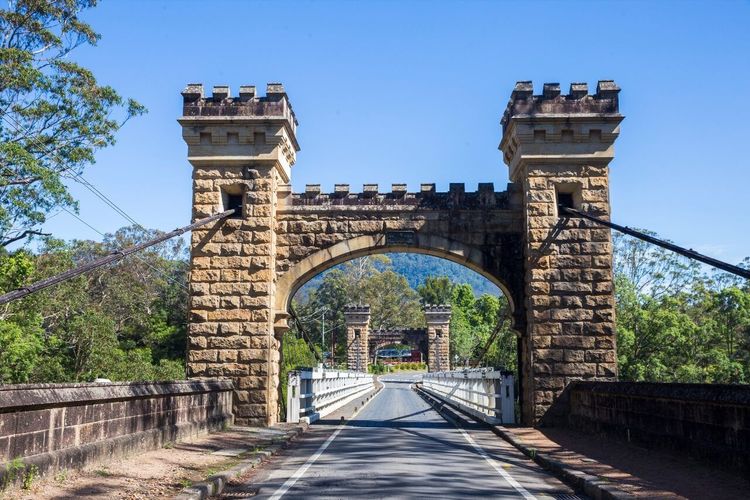
About two hours south of Sydney, Kangaroo Valley is one of the most picturesque valleys in New South Wales. The village of Kangaroo Valley itself — a few hundred inhabitants, local craft shops, and the Hampden Bridge (a covered suspension bridge dating from 1898, one of the last of its kind in Australia) — is a starting point for hikes through fern forests and kayak rentals on the Kangaroo River. Wombats roaming freely at dusk along the roadside are a regular sight here, without even looking for them.
Continuing south, Jervis Bay is often cited as mainland Australia's most beautiful bay. Hyams Beach in particular features in the Guinness World Records for having the world's whitest sand — a quartz sand so fine it squeaks underfoot. The bay is protected by the Jervis Bay National Park, which shelters a significant population of pelicans, dolphins, and — between June and November — humpback whales migrating along the coast.
Huskisson (Nowra Rd, Huskisson NSW 2540, rated 4.6/5 on Google with 2K reviews) is the bay's main village: a few waterfront restaurants, a Sunday market, and kayak hire for exploring the mangrove coves. The White Sands Walk (7 km, 2 hours) links Huskisson to Hyams Beach along the shoreline with swimming spots throughout. During whale migration season, boat trips from Huskisson allow you to watch humpback whales from less than two hundred metres away.
Jervis Bay can be done as a day trip from Sydney, but a night on-site transforms the experience: the sunrise over Hyams Beach, when no one else is there yet, is one of those images that justifies travelling all the way to Australia.
Practical Tips for Exploring Sydney and Its Surroundings
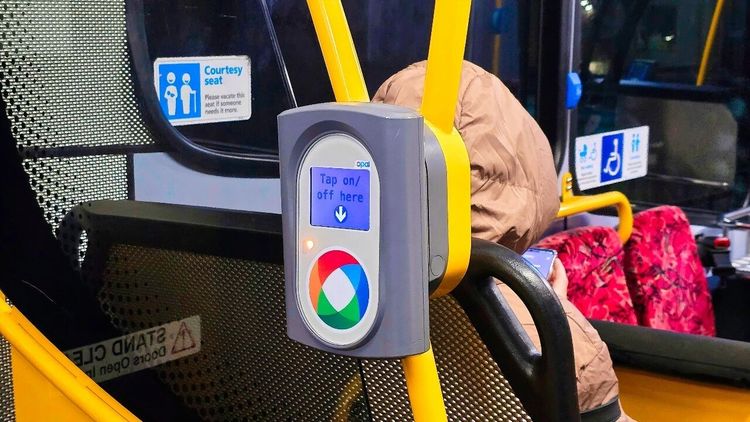
Getting around Sydney. The public transport network runs on the Opal card, a contactless card that covers trains, buses, ferries, and light rail. A weekly spending cap of 50 AUD applies automatically: beyond that, public transport rides are free until the following Monday. This is a significant advantage for visitors staying more than four days in the city. Ferries are often faster than buses for crossing the harbour.
The Ryo app offers two audio walking tours in Sydney: 'La Ville d'Émeraude' to discover the historic centre around the harbour, and 'Au fil de ses quartiers' for the creative neighbourhoods beyond the CBD. It is a way to combine free exploration with in-depth cultural context, without a physical guide.
For day trips, the train is sufficient for the Blue Mountains (Katoomba) and the Royal National Park (via Cronulla). For Port Stephens, Jervis Bay, Kangaroo Valley, Palm Beach, and the Hunter Valley, a hire car is strongly recommended. Major rental companies have desks at the airport and in the CBD; budget 50 to 80 AUD per day for a standard vehicle.
When to visit. Austral spring (September to November) offers the best conditions: mild temperatures (18 to 24°C in Sydney), national parks in flower, whales migrating along the coast. Australian summer (December to February) is hot (25 to 35°C) and very busy, especially at Bondi and Manly — book accommodation and popular activities (BridgeClimb, dolphin tours) several weeks in advance. Winter (June to August) is mild in Sydney (12 to 18°C) but sometimes rainy; it is the low tourist season, prices drop, and the beaches are deserted.
Budget. Sydney is an expensive city. Allow 80 to 100 AUD per person per day for hostel dorm accommodation, 130 to 200 AUD for a private room in a B&B or mid-range hotel. Meals range from 15 to 30 AUD at a casual restaurant; a brunch in Bondi rarely comes to less than 20 AUD per person. Free activities — botanic gardens, beaches, the Coastal Walk, national galleries — help offset costs.
Currency and practicalities. The Australian dollar (AUD) is the local currency. Credit cards are accepted everywhere, including contactless payments on public transport. The time difference with France is +9h in austral winter (June–August) and +10h in summer. The country code is +61 and Sydney's area code is (02).



FAQ
What is the best time to visit Sydney and its surroundings?
Austral spring, from September to November, offers the best conditions: pleasant temperatures (18 to 24°C), rare rainfall, whales migrating along the south coast, and flowering vegetation in the national parks. Summer (December to February) is the high season — warm and bright, but very crowded and more expensive for accommodation, especially near the beaches. Austral autumn (March to May) is an excellent alternative: temperatures are still warm (20 to 25°C), crowds thin out noticeably, and accommodation prices drop. Winter (June to August) is mild and dry in Sydney, ideal for long hikes in the Blue Mountains or the Royal National Park.
How many days do you need to explore Sydney and its surroundings?
Allow at least 5 days for the city's must-sees and one or two nearby day trips (Blue Mountains, Royal National Park). To include Port Stephens, the Hunter Valley, Jervis Bay, and Kangaroo Valley, plan for 8 to 10 days. Sydney itself can easily fill 3 full days between museums, beaches, markets, and neighbourhoods to explore. If you have less time, prioritise the historic harbour circuit on day one, Bondi and the Coastal Walk on day two, and the Blue Mountains on day three.
How do you get around from Sydney without a car?
The Opal network (train, bus, ferry) covers the city well and allows you to reach the Blue Mountains by train to Katoomba (2h, 12 AUD), the Royal National Park by train to Cronulla then by ferry to Bundeena, and Manly by ferry from Circular Quay. For more distant destinations such as Port Stephens, Jervis Bay, Kangaroo Valley, and the Hunter Valley, a hire car is practically essential. Private tourist coaches also serve the Blue Mountains and the Hunter Valley from Sydney with guided commentary included, for those who prefer to avoid driving.
Are the Blue Mountains worth the trip from Sydney?
Yes, without hesitation. A return train journey to the Blue Mountains in a single day (2h each way, 12 AUD) is probably the best value-for-time day trip from Sydney. The spectacle of the Three Sisters at Echo Point, the blue haze in the Jamison Valley, and the trails through the sandstone cliffs are on a scale that nothing in Sydney's immediate surroundings can match. On weekdays, the site is noticeably less crowded than on a fine-weather weekend, and the trails are almost deserted before 9am.
Are there free activities in Sydney?
Many. The beaches (Bondi, Manly, Coogee, Balmoral) are free and accessible by public transport. The Royal Botanic Garden and Hyde Park gardens are free. The Bondi-Coogee Coastal Walk (6 km) is entirely free. The Museum of Contemporary Art (permanent collections), the State Library of NSW, the Art Gallery of New South Wales (permanent collections), and the Australian Museum (partially) cost nothing or next to nothing. Local markets — Bondi Markets on Saturday, Carriageworks Farmers Market, the Rocks Market at the weekend — are free to enter. Walking across the Harbour Bridge is free.
How do you access the Figure Eight Pool in the Royal National Park?
The Figure Eight Pool is accessible from the Garawarra Farm car park on Lady Wakehurst Drive. The return trail takes approximately 1h30 over coastal rocky terrain. Access is only possible at low tide — plan to be there within 2 hours either side of low tide to stay safe and have water in the pool. A mandatory booking system is in place online on the NSW National Parks website: time slots are limited and sell out very quickly on fine-weather weekends. Sturdy walking shoes with grip soles or water shoes are strongly recommended on the rocks. Back in the city, our audio walking tour links Circular Quay to the Harbour Bridge with no booking at all.
Conclusion
Sydney and its surroundings form an exploration territory that stretches hundreds of kilometres in every direction — from the Blue Mountains to the west to the deserted beaches of Jervis Bay to the south, from the dolphins of Port Stephens to the north to the Royal National Park right on the city's doorstep. The wealth of activities is such that a week is still not enough to exhaust the possibilities.
To immerse yourself in Sydney from day one, the Ryo audio guide La Ville d'Émeraude leads you through the historic harbour, from Circular Quay through the laneways of the Rocks, with the stories and context that turn a walk into a genuine discovery. Enjoy your stay — Sydney is the kind of city you visit for the first time, and start planning to revisit before you've even left.