
Créé par Romane, le 4 juin 2026
Votre guide Ryo
The 5 Best Ski Resorts in Austria to Discover
© Shutterstock
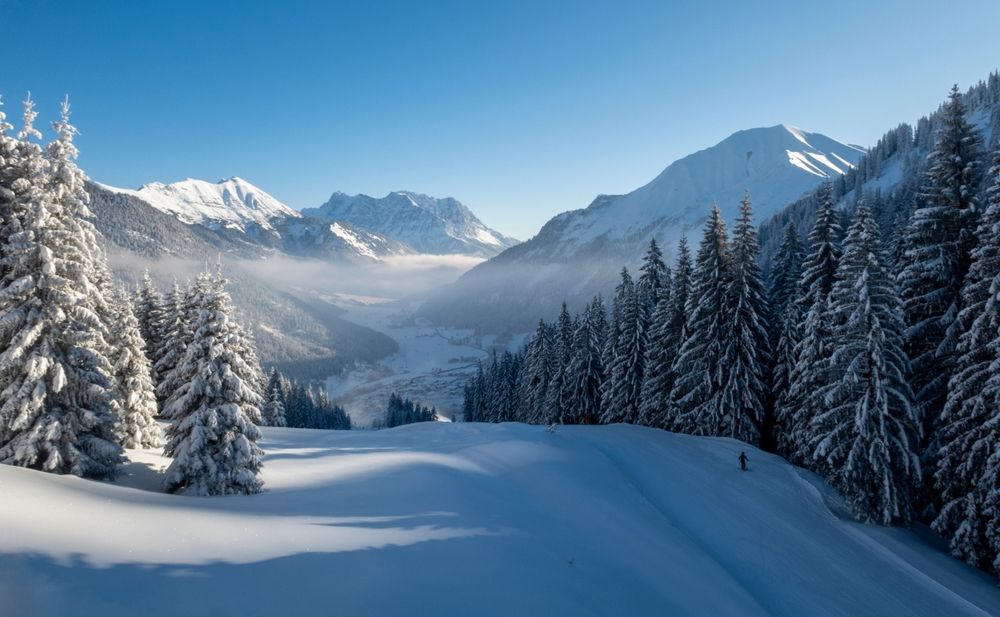
Austria is undoubtedly one of Europe's most coveted ski destinations. With its breathtaking Alpine landscapes, modern infrastructure, and preserved authenticity, the country attracts millions of skiers from around the world every year. Whether you're a beginner or expert, a fan of groomed runs or off-piste terrain, Austrian ski resorts offer an incomparable experience. Discover our selection of the 5 best ski resorts in Austria to plan your next mountain getaway.
1. St. Anton am Arlberg: The Birthplace of Alpine Skiing
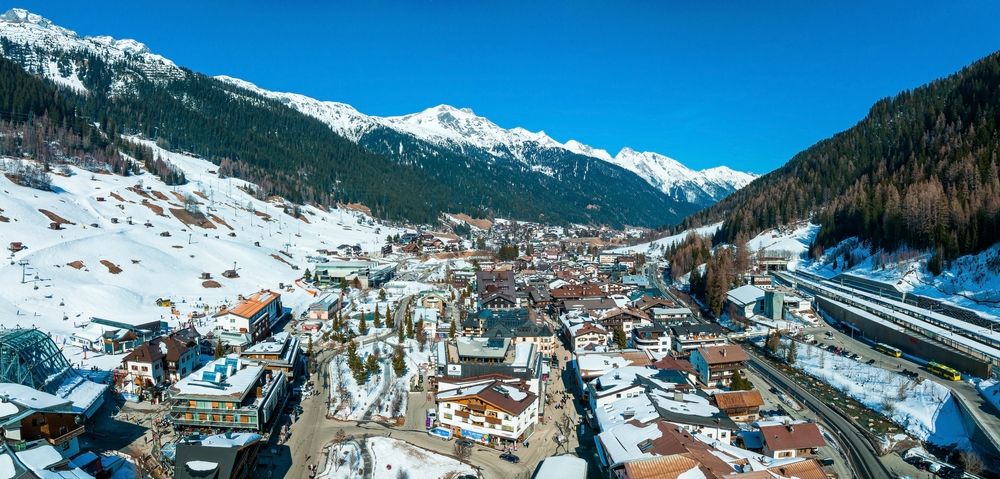
St. Anton am Arlberg is much more than a simple ski resort: it's a true winter sports legend. Located in the Tyrol region, this iconic resort is part of the gigantic Ski Arlberg domain, considered Austria's largest connected ski area with 300 kilometers of slopes and 85 lift systems.
Founded at the beginning of the 20th century, St. Anton is the birthplace of modern alpine skiing. It was here that Hannes Schneider developed the Arlberg technique, revolutionizing skiing practice worldwide. Today, the resort continues this tradition of excellence and attracts the most demanding skiers.
The ski area extends between 1,304 and 2,811 meters altitude, offering an impressive vertical drop of 1,507 meters. Off-piste enthusiasts will be delighted with 200 kilometers of secure open terrain, while skiers of all levels will appreciate the variety of groomed slopes. The resort benefits from exceptional snow conditions with an average of 9 meters of snow per season, guaranteeing optimal conditions from December to late April.
Après-ski in St. Anton is as legendary as its slopes. The village comes alive from 3 PM with its mythical bars like the Mooserwirt and Krazy Kanguruh, offering a unique festive atmosphere in the Alps.
2. Ischgl: The Ibiza of the Austrian Alps
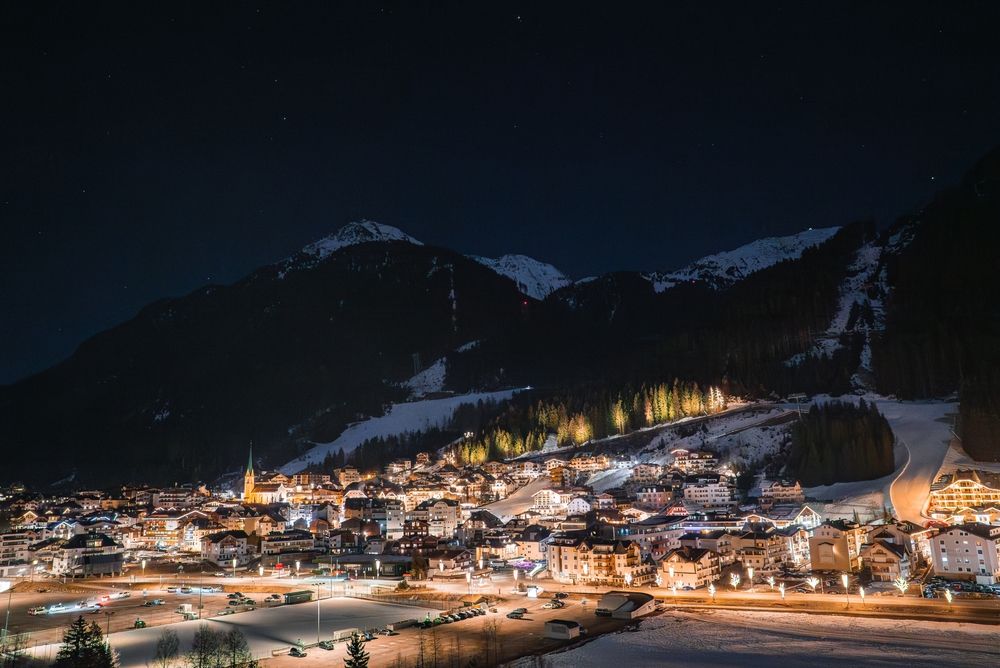
Ischgl, nicknamed "the Ibiza of the Alps," is an upscale ski resort that perfectly combines quality skiing with vibrant nightlife. Located in the Paznaun valley in Tyrol, about 90 minutes from Innsbruck, this resort is part of the cross-border Silvretta Arena domain that extends to the Swiss resort of Samnaun.
With 239 kilometers of slopes spread across 78 descents, Ischgl offers exceptional terrain for all levels. The ski area is mainly situated between 2,000 and 2,872 meters altitude, guaranteeing optimal snow conditions from late November to early May. The resort has 45 ultra-modern lift systems, including several detachable gondolas allowing fast and comfortable ascents.
What distinguishes Ischgl is its unique atmosphere. The resort is famous for its season opening and closing concerts that attract international stars. Skiers also appreciate the exceptional quality of après-ski with renowned establishments like the Kuhstall and Trofana Alm. The village itself, situated at 1,377 meters altitude, has preserved its Tyrolean charm while offering modern and luxurious infrastructure.
Freeriders will find their paradise with numerous off-piste itineraries, particularly in the Palinkopf and Greitspitz sectors. The resort also offers two snowparks equipped with more than 30 modules and a permanent half-pipe for freestyle enthusiasts. Don't forget to take advantage of duty-free shopping in Samnaun, the Swiss tax-free zone accessible directly from the slopes!
3. Sölden: The Kingdom of Glaciers
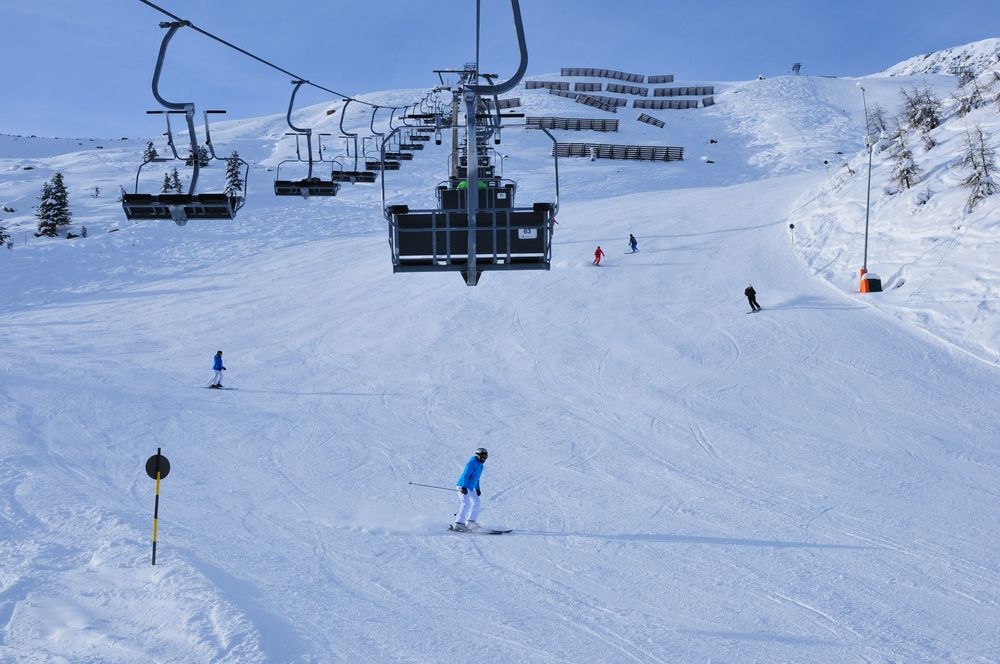
Sölden, located in the magnificent Ötztal valley in Tyrol, is one of Austria's most impressive ski resorts. Renowned for hosting the Alpine Ski World Cup each autumn, Sölden offers an exceptional domain extending over 144 kilometers of slopes between 1,350 and 3,340 meters altitude.
What makes Sölden unique is its "BIG 3" label: it's the only resort in Austria where three peaks over 3,000 meters are accessible by lift systems. The Gaislachkogl (3,058 m), Tiefenbachkogl (3,250 m), and Schwarze Schneide (3,340 m) offer spectacular panoramas over the Ötztal Alps. Observation platforms have been built at each summit, allowing visitors to admire more than 250 peaks over 3,000 meters.
The resort has two glacier areas, Rettenbach and Tiefenbach, which guarantee skiing from late September to early May. The 31 ultra-modern lift systems serve 40 varied slopes: half are blue runs, ideal for beginners and intermediate skiers, while the other half is divided between red runs (60%) and black runs (40%), offering challenges for all levels.
Sölden also offers 3.8 kilometers of night skiing slopes and two equipped snowparks. Speed enthusiasts will appreciate the Stanton Arlberg, a technical black run, while families will enjoy the wide blue slopes of the Giggijoch sector. The resort also became internationally known thanks to the James Bond film "Spectre," whose spectacular scenes were filmed on the Sölden glacier.
After a day on the slopes, Sölden offers lively après-ski with typically Tyrolean bars and restaurants. The village, although modern, has preserved its Alpine authenticity.
4. Kitzbühel: Elegance and Prestige
Kitzbühel embodies luxury and tradition in the Austrian skiing world. This legendary Tyrolean resort, founded more than 750 years ago, has become one of the world's most prestigious winter sports destinations. Its famous KitzSki domain, voted Austria's best ski area with 4.9 out of 5 stars, extends over 233 kilometers of slopes served by 58 lift systems.
Kitzbühel's reputation largely rests on the legendary Hahnenkamm downhill, particularly the Streif slope, considered one of the most difficult and dangerous in the world. Every January, this slope hosts a World Cup race that attracts tens of thousands of spectators who come to admire the world's best skiers challenge this vertiginous slope with its maximum 85% gradient.
The domain consists of four distinct sectors connected by free shuttles: Hahnenkamm, Kitzbüheler Horn, Jochberg, and Pass Thurn. The 60 slopes offer a balanced distribution with 25 blue runs, 27 red runs, and 8 black runs, totaling 179 kilometers of skiing. In case of low snowfall, 119 kilometers are covered by one of the Alps' most efficient artificial snow systems.
Kitzbühel also stands out for its preserved medieval village, with colorful facades and cobbled streets lined with luxury shops and gourmet restaurants. The resort has the highest concentration of starred restaurants in Tyrol. Après-ski is refined, like the famous Londoner and Praxmair, meeting places for the international jet set.
For night skiing enthusiasts, 4 kilometers of slopes are illuminated in the evening. The season extends on average for 150 days, from late October to early May.
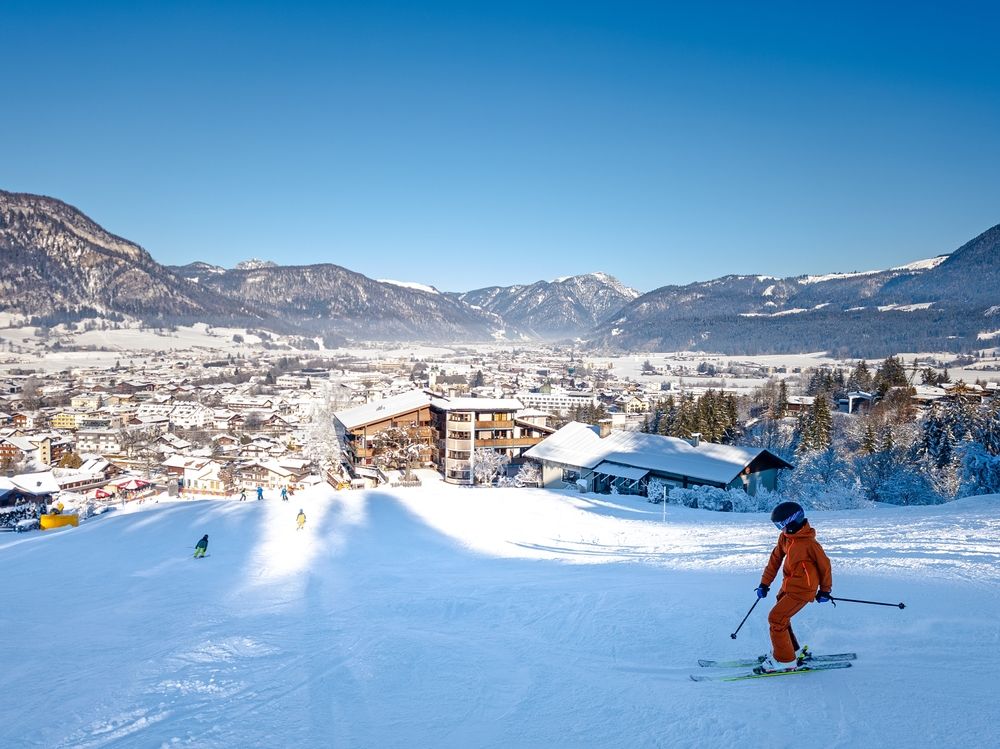
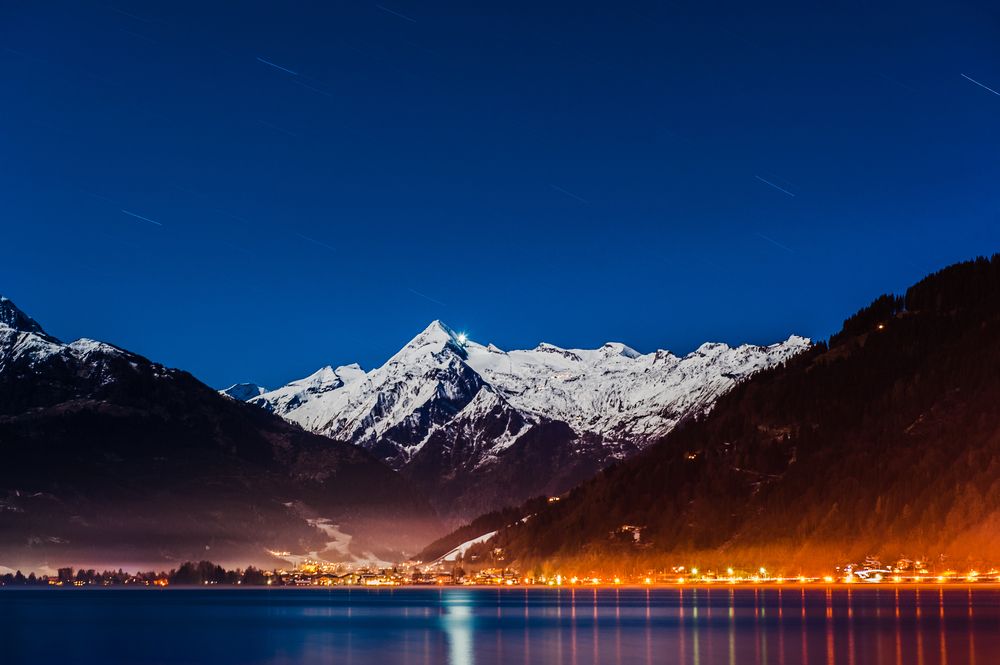
5. Zell am See-Kaprun: Paradise by the Lake
Zell am See-Kaprun offers a unique experience in Austria: skiing with a view of a majestic alpine lake. This resort in the Salzburg region combines three complementary ski areas totaling 408 kilometers of slopes served by 121 modern lift systems. A single ski pass gives access to this entire vast skiing territory.
The first sector, Schmittenhöhe, directly overlooks Lake Zell and offers exceptional panoramas of the Austrian Alps. With its 77 kilometers of slopes, this family domain is ideal for skiers of all levels. The wide blue and red runs allow you to enjoy the view while skiing in excellent conditions.
The second sector, Kitzsteinhorn, is the region's glacial jewel. Culminating at 3,029 meters, this glacier guarantees quality skiing from October to June. The Kitzsteinhorn's 61 kilometers of slopes are particularly appreciated by good skiers and freeriders, with five marked off-piste itineraries and four equipped snowparks. The glacier also houses the Ice Arena, Austria's highest snowpark, and the Gipfelwelt 3000, a panoramic platform with revolving restaurant.
The third sector, Maiskogel, is the family domain par excellence with its gentle slopes and infrastructure adapted for children. This more modest mountain perfectly complements the offer by providing secure beginner areas and fun zones for the youngest.
What distinguishes Zell am See-Kaprun from other Austrian resorts is its exceptional setting by Lake Zell. In winter, the frozen lake transforms into a natural ice rink, and the promenade along the shores offers a moment of relaxation after skiing. The old town of Zell am See, with its Romanesque church and traditional houses, has preserved all its authentic charm.
The region also offers numerous complementary activities: snowshoe hiking, ice skating, paragliding, and even visits to the impressive Krimml Falls, Europe's highest, accessible in winter. To discover the region's cultural richness, don't miss visiting Salzburg, Mozart's city, located about an hour's drive away. The Ryo itinerary will allow you to explore this magnificent baroque city at your own pace, as a perfect complement to your ski vacation.
In conclusion, Austria establishes itself as a destination of choice for all winter sports enthusiasts. Whether you seek the authenticity of St. Anton am Arlberg, the festive atmosphere of Ischgl, the glacial landscapes of Sölden, the prestige of Kitzbühel, or the enchanting setting of Zell am See-Kaprun, each resort offers a unique and unforgettable experience. The modern infrastructure, exceptional snow conditions, and Tyrolean hospitality make Austrian ski resorts essential destinations for your next mountain getaway.
FAQ: Everything You Need to Know About Austrian Ski Resorts
What is the best time to ski in Austria?
The ski season in Austria generally runs from early December to late April. Resorts equipped with glaciers, like Sölden and Zell am See-Kaprun, even offer skiing from October to June. For the best snow conditions, favor January and February. Christmas and February school holidays are the busiest periods.
What is the average price of a ski pass in Austria?
A daily pass price varies between €50 and €80 depending on the resort and period. Multi-day passes and season passes allow for significant savings. Large resorts like St. Anton (Ski Arlberg) offer passes around €80 per day, while more family-oriented resorts display more accessible rates.
Are Austrian ski resorts suitable for beginners?
Absolutely! All major Austrian resorts have renowned ski schools and secure beginner areas. Zell am See-Kaprun and Sölden are particularly recommended for beginners with their numerous blue runs and adapted learning spaces. Austrian instructors are recognized for their teaching skills and most speak English and French.
How to get to Austrian ski resorts from France?
Several options are available: flying to Innsbruck, Salzburg, or Munich, followed by shuttle or rental car transfer (1h to 2h depending on the resort), train to Innsbruck or Salzburg with local connections, or car from France (allow 8 to 10h from Paris). Many companies offer direct buses from major French cities during the winter season.
Which resort to choose for après-ski in Austria?
Ischgl and St. Anton am Arlberg are the undisputed queens of Austrian après-ski. Ischgl offers a festive atmosphere with its concerts and trendy bars, while St. Anton provides the most traditional and lively après-ski in the Austrian Alps. Kitzbühel offers a more chic and sophisticated atmosphere, with its elegant bars and gourmet restaurants.