
Créé par Emilie, le 7 mai 2026
Votre guide Ryo
© Shutterstock
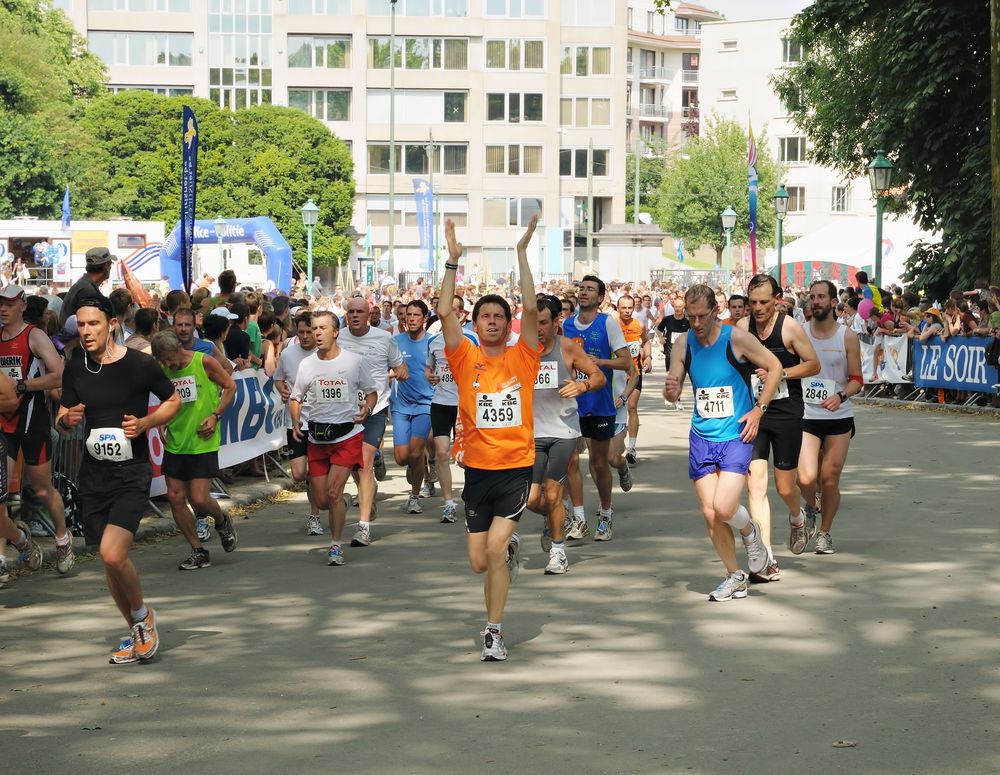
The Brussels Marathon stands as one of Europe's most emblematic races, offering runners a unique experience combining sporting performance and cultural discovery. Since its first edition in 1984, this legendary event has transformed the streets of the European capital into a veritable open-air museum, where every kilometer reveals the architectural treasures and fascinating history of Brussels.
This legendary race doesn't just challenge your physical limits: it invites you on an extraordinary journey through the soul of Brussels, from the majestic Grand-Place to the gardens of the Royal Palace, passing by the iconic Atomium and the Koekelberg Basilica. Discover why the Brussels Marathon is much more than just a sporting event, but a true immersion into European history and culture.
1. History and origins of the Brussels Marathon
The Brussels Marathon, officially known as the Brussels Airport Marathon, was born in 1984, following in the tradition of Europe's great urban races. This first edition, won by Belgian runner Dirk Vanderherten, marked the beginning of a sporting adventure that would transform the Belgian capital into a theater of marathon achievements.
For over 40 years, this AIMS (Association of International Marathons and Distance Races) certified event has established itself as an unmissable appointment on the international calendar. The Brussels Airport Marathon attracts nearly 8,000 participants from around the world each year, drawn by a unique course that marries historical heritage with European modernity.
The originality of this race lies in its ability to showcase Brussels from a completely new angle. Unlike traditional urban marathons, the Brussels course takes you beyond the historic center to explore the richness of the surrounding municipalities, creating a cultural as well as sporting experience.
2. An exceptional route through iconic monuments
The Brussels Marathon offers you an exceptional 42.195-kilometer journey through the most beautiful monuments of the European capital. The start is given from the emblematic De Brouckère square, the beating heart of Brussels with its Belle Époque facades and constant animation.
From the first kilometers, you dive into history with the passage through the Annie Cordy tunnel, Belgium's longest road tunnel, before discovering the majestic Basilica of the Sacred Heart of Koekelberg (Place de la Basilique 1, 1083 Koekelberg, rated 4.2/5 on Google for 3,200 reviews). This imposing Art Deco basilica, the world's fifth largest church, offers a striking architectural spectacle to runners.
Download the audio-guided circuit to discover Brussels on foot and independently
To deepen your discovery of the Belgian capital, the Ryo Brussels itinerary accompanies you in a complete exploration of the city. This 6.2-kilometer route, punctuated by 25 captivating audio guides, reveals the secrets of the "Belle of Europe" in 2h40 of visiting. From the Grand-Place to the European quarter, passing through the royal galleries and the gardens of Mont des Arts, let yourself be guided by passionate stories that bring Brussels' exceptional heritage to life.
The marathon course continues toward unexpected natural gems, like the Ganshoren marshes, a true oasis of greenery and calm where birdsong resonates in the heart of the urban area. This bucolic interlude offers runners a striking contrast with the urban environment.
After the legendary "30th kilometer wall" near Notre-Dame de Laeken church, you reach the Heysel plateau, famous for its emblematic monuments. The Atomium (Square de l'Atomium, 1020 Laeken, rated 4.0/5 on Google for 16,000 reviews) stands majestically, symbol of the 1958 World's Fair and marvel of futuristic architecture representing an iron crystal magnified 165 billion times.
3. Architectural treasures along the route
The Brussels Marathon transforms every runner into an architectural explorer, revealing the exceptional stylistic diversity of the Belgian capital. The course crosses centuries of history, from Brabantine Gothic to contemporary modernism, offering a true life-size architecture course.
Although not directly crossing the historic heart, the marathon allows you to admire from afar the Grand-Place (Grand-Place, 1000 Brussels, rated 4.6/5 on Google for 35,000 reviews), jewel of UNESCO World Heritage since 1998. This paved rectangular square, surrounded by baroque guild houses from the 17th century, constitutes one of Europe's most beautiful architectural ensembles.
The route also takes you past the Cathedral of Saints Michael and Gudula, a masterpiece of Brabantine Gothic art whose construction spans from the 12th to the 15th century. Its soaring towers and facade adorned with delicate sculptures testify to the artistic richness of medieval Brussels.
Architectural modernity is not forgotten with the passage in front of the Palace of Justice, imposing 19th-century neoclassical building, and the discovery of contemporary quarters that illustrate Brussels' urban dynamism. For an in-depth exploration of these wonders, don't hesitate to follow the Ryo visit itinerary which reveals all the architectural secrets of the capital.
4. Immersion into European history
The Brussels Marathon offers a unique immersion into European history, transforming every kilometer into a living history lesson. By running through the capital's streets, you follow in the footsteps of the Dukes of Brabant, Burgundian masters, Spanish sovereigns and Austrian emperors who shaped Brussels' identity.
The passage near the European quarter recalls that Brussels has housed European Union institutions since the 1950s. This European dimension gives the marathon special symbolism: running in Brussels means treading on the ground where the continent's future is being shaped.
Royal monuments also punctuate the course, bearing witness to Belgian monarchical history. The proximity of the Royal Palace, Brussels Park and Laeken gardens evokes nearly two centuries of Belgian dynasty reign, since independence in 1830.
This historical richness is fully revealed during your post-marathon exploration of Brussels thanks to the Ryo audio-guided circuit, which unveils the anecdotes and secrets of each emblematic monument in the city.
5. Cultural diversity at the heart of the race
The Brussels Marathon perfectly illustrates the cultural diversity that characterizes the Belgian capital. By crossing the ten Brussels municipalities that make up the route, you discover a kaleidoscope of traditions, languages and cultural influences that make this cosmopolitan metropolis so rich.
This diversity is reflected in the architecture, with the harmonious mix between Flemish, Walloon and international buildings. The passage in front of the Japanese Tower and Chinese Pavilion in Laeken park even brings an oriental exotic touch, testimony to the universal exhibitions that marked Brussels' history.
Local gastronomy also accompanies runners throughout the course, with refreshment stands offering Belgian specialties: waffles, chocolates and craft beers to celebrate the arrival. This culinary dimension adds an authentic flavor to the marathon experience.
The international atmosphere of the marathon also reflects Brussels' status as European capital, attracting runners from all continents united by passion for running and cultural discovery.
6. Green spaces, lungs of the capital
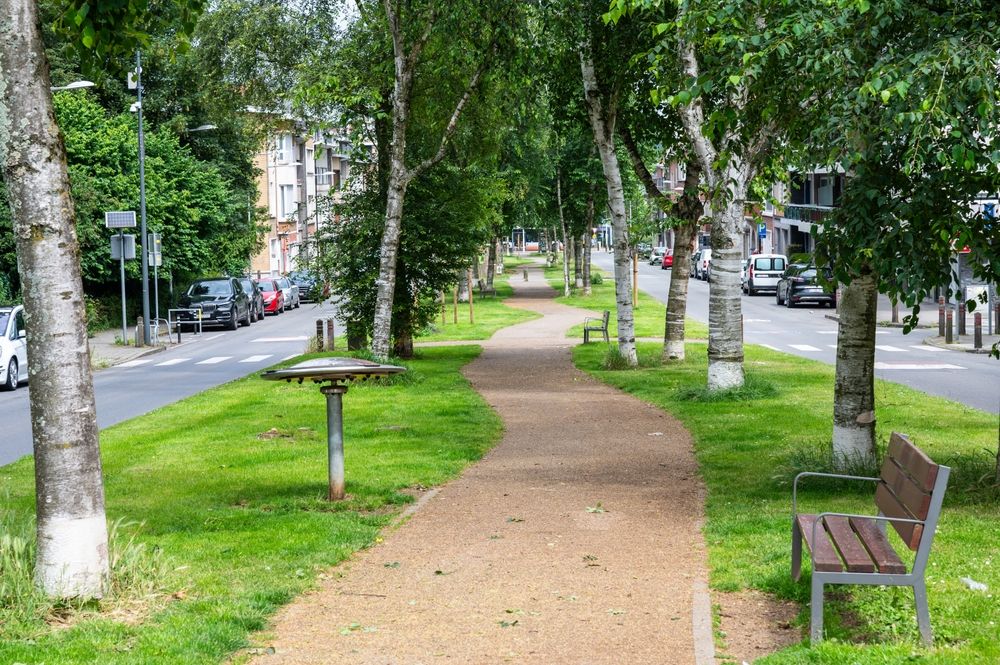
One of the most pleasant surprises of the Brussels Marathon lies in discovering the numerous green spaces that punctuate the route. Contrary to preconceived ideas about large metropolises, more than half of the Brussels region consists of green spaces, offering runners refreshing visual breaks.
The Ganshoren marshes constitute a true natural jewel at the heart of the course. This urban nature reserve, with its ponds, lush vegetation and diverse fauna, offers a striking contrast with the urban environment. Birdsong accompanies runners in this unexpected haven of peace.
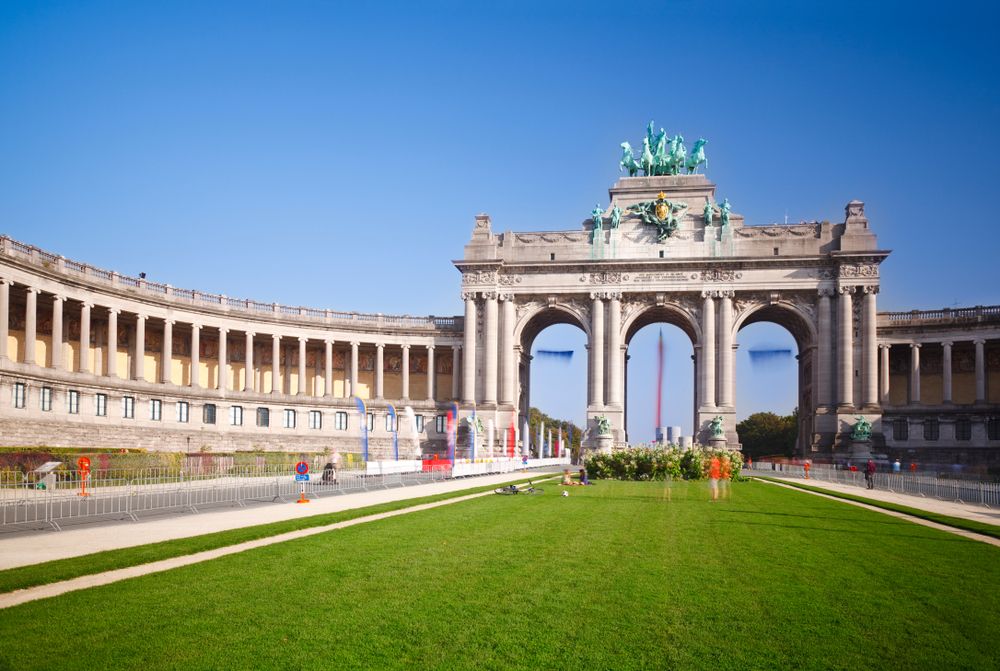
Cinquantenaire Park, with its 30 hectares of carefully maintained green spaces, represents one of the marathon's highlights. Created in 1880 to celebrate the fiftieth anniversary of Belgian independence, this majestic park houses prestigious museums and the Cinquantenaire Triumphal Arch, architectural masterpiece by Charles Girault.
These green lungs allow runners to recover while admiring Brussels' natural beauty. To discover other emblematic green spaces of the capital, the Ryo itinerary guides you through the gardens of Mont des Arts and the hidden squares of the historic center.
7. A majestic finish at Place des Palais
The apotheosis of the Brussels Marathon takes place on the prestigious Place des Palais, facing the Royal Palace (Place des Palais 1, 1000 Brussels, rated 4.3/5 on Google for 2,800 reviews). This grandiose finish, charged with emotion and symbols, magnificently crowns the effort of the 42.195 kilometers covered.
The Royal Palace, official residence of Belgian sovereigns, deploys its majestic neoclassical facade before exhausted but triumphant runners. Built in the 19th century by architect Tilman-François Suys and enlarged under the reign of Leopold II, this symbol of Belgian monarchy offers an exceptional setting to celebrate the accomplished performance.
Place des Palais, with its French gardens and homogeneous architecture, creates a solemn and festive atmosphere that deeply marks finishers. This arrival at the heart of Belgian royal power gives a particular dimension to sporting success, transforming each marathoner into an ambassador of this unique experience.
The emotion of crossing the finish line in this exceptional historical setting remains engraved in the memory of all participants, making the Brussels Marathon much more than just a race: a true initiatory journey to the heart of Europe.
8. The technical challenges of the course
The Brussels Marathon presents particular technical characteristics that make it a stimulating challenge for runners of all levels. With a positive elevation gain of 335 meters, this demanding course requires specific preparation and thoughtful tactical management of effort.
The course profile is characterized by significant climbs, notably toward the Koekelberg Basilica and the Heysel plateau, alternating with technical descents that stress different muscle groups. This topographical variety makes the race particularly enriching from a sporting standpoint.
Underground passages, like the Annie Cordy tunnel and the Cinquantenaire tunnel, add a unique psychological dimension to the event. These segments protected from weather conditions offer a particular atmosphere and allow runners to focus on their rhythm.
Despite these technical challenges, the Brussels Marathon remains accessible thanks to excellent marking, regular refreshments every 5 kilometers, and the presence of experienced pacers. This professional organization allows everyone to fully experience the Brussels adventure, regardless of their performance.
9. The festive atmosphere and Brussels public
The exceptional atmosphere of the Brussels Marathon constitutes one of its major assets, transforming each edition into a true popular celebration. The Brussels public, renowned for its warmth and hospitality, embraces the event and massively encourages runners throughout the course.
From the early morning hours, the streets are adorned in marathon colors. Families, friends and simple onlookers position themselves at strategic locations to create a wall of vocal support that literally carries runners toward the finish. This collective energy transcends nationalities and unites participants and spectators in unique sporting communion.
Musical entertainment regularly punctuates the course, with local groups, bands and DJs maintaining an upbeat rhythm. This live soundtrack perfectly accompanies the discovery of monuments and neighborhoods crossed, creating a complete sensory experience.
The post-race extends the celebration with festivities on Place des Palais, where runners and companions gather to share the emotion of the moment. This legendary Belgian conviviality makes the Brussels Marathon as much a human as sporting event.
10. Half marathon and other distances: a complete offering
The Brussels Marathon offers a complete range of distances adapted to all runner profiles, from novice to experienced marathoner. This diversity allows each participant to experience Brussels according to their capabilities and personal objectives.
The Brussels half marathon, with its 21.0975 kilometers and 250-meter elevation gain, offers an excellent compromise between sporting challenge and tourist discovery. This course allows discovering emblematic sites like the Atomium, King Baudouin Stadium and Josaphat Park, with a spectacular passage through the Cinquantenaire tunnel.
The 7-kilometer race offers a more accessible but equally enriching experience, focused on Europe's political heart. Starting on rue de la Loi, this compact course crosses the Cinquantenaire tunnel and Montgomery square before joining the finish at Place des Palais.
The one-kilometer Kids Run allows the youngest to participate in the adventure, creating a complete family event. This intergenerational dimension strengthens the popular aspect of the Brussels Marathon and encourages transmission of running passion.
In conclusion, the Brussels Marathon represents much more than just a sporting event: it's a true cultural immersion at the heart of Europe. This unique race transforms each participant into a privileged explorer of the Belgian capital, revealing its architectural treasures, millennial history and exceptional cultural diversity. From the Ganshoren marshes to Place des Palais, passing by the Atomium and Koekelberg Basilica, every kilometer covered enriches your understanding of this fascinating metropolis. To extend this discovery and explore Brussels in depth, don't hesitate to follow the Ryo itinerary which will reveal all the secrets of the "Belle of Europe".
FAQ about the Brussels Marathon
When does the Brussels Marathon take place?
The Brussels Airport Marathon generally takes place in autumn, traditionally in early November. The next edition is scheduled for Sunday, November 2, 2025, starting from De Brouckère square and finishing at Place des Palais.
What is the difficulty level of the Brussels Marathon?
With a 335-meter elevation gain, the Brussels Marathon is considered moderately difficult. The course presents several significant climbs but remains accessible to well-prepared runners. Technical passages like tunnels add tactical interest to the race.
What monuments can you see during the race?
The course crosses numerous emblematic sites: the Koekelberg Basilica, the Atomium, the Japanese Tower, the Chinese Pavilion, Cinquantenaire Park, rue de la Loi (European quarter), and ends facing the Royal Palace. Although not directly passing through the Grand-Place, the marathon offers a complete discovery of Brussels heritage.
How to register for the Brussels Marathon?
Registration generally opens several months before the race on the official Brussels Airport Marathon website. It's recommended to register quickly as the event often sells out. Different rates are offered depending on registration date and chosen distance.
How much does registration for the Brussels Marathon cost?
Rates vary according to distance and registration period: approximately €85-95 for the marathon, €35-43 for the half marathon, and €19-24 for the 7km. Prices generally increase as the registration deadline approaches.