
Créé par Romane, le 7 mai 2026
Votre guide Ryo
© Shutterstock
In the heart of Belgian forests, in the small municipality of Châtillon located in Luxembourg province, was hidden one of Europe's most mysterious and fascinating spectacles: a huge cemetery of abandoned cars. This enigmatic site, which went around the world thanks to photographers and urban exploration enthusiasts, tells a disturbing story mixing war legends, historical reality and contemporary mystery.
1. The mysterious origins of the Châtillon car cemetery
The story of the mysterious car cemetery in Châtillon begins in the years following World War II. According to the most widespread urban legend, these hundreds of American vehicles would have been abandoned by soldiers stationed in Belgium as part of NATO after 1945. Unable to repatriate their personal cars to the United States due to prohibitive maritime transport costs, these military personnel would have chosen to hide them in this remote forest of the Belgian Ardennes, perhaps hoping to recover them one day.
However, local residents contest this romantic version of events. According to them, it would be more prosaically an old dumping ground for cars manufactured after the war, abandoned by individuals or local dealers. This less poetic explanation does not detract from the spectacular character of the site which counted, at its peak, no less than 500 vehicles from different eras.
2. The location of the abandoned car cemetery
The mysterious car cemetery in Châtillon was located in the Châtillon section, belonging to the municipality of Saint-Léger, in Luxembourg province in Wallonia. More precisely, it was found in a private forest near rue d'Ahérée, in southeastern Belgium, not far from the French border. This region of the Belgian Ardennes, known for its dense forest landscapes and history linked to ancient forges, offered the perfect setting for this unusual spectacle.
Saint-Léger and its surroundings, including Châtillon and Meix-le-Tige, evolve at the heart of an impressive forest setting where the past was closely linked to the history of forges and metallurgy. This historical industrial region perhaps partly explains why such an automotive dumping ground could emerge in these remote lands.
Download the audio-guided circuit to discover Brussels on foot and independently
Although Châtillon is located in a remote region of the Ardennes, the Belgian capital Brussels remains the ideal gateway to explore Belgium and its mysteries. Thanks to our audio-guided itinerary, discover the cultural and historical richness of Brussels before setting out to discover the country's hidden secrets. The Ryo application allows you to visit Brussels independently and interactively, an excellent base for your exploration of Belgium.
3. The automotive cemetery's peak: 500 ghost vehicles
At its peak, in the 1980s and 1990s, the mysterious car cemetery in Châtillon counted four distinct sites housing together nearly 500 abandoned vehicles. These automobiles, mainly American models from the 1950s to 1970s, created a striking spectacle in the middle of vegetation that gradually invaded them. Among the most represented brands, there were Ford, Chevrolet, Buick, and other American manufacturers of the era.
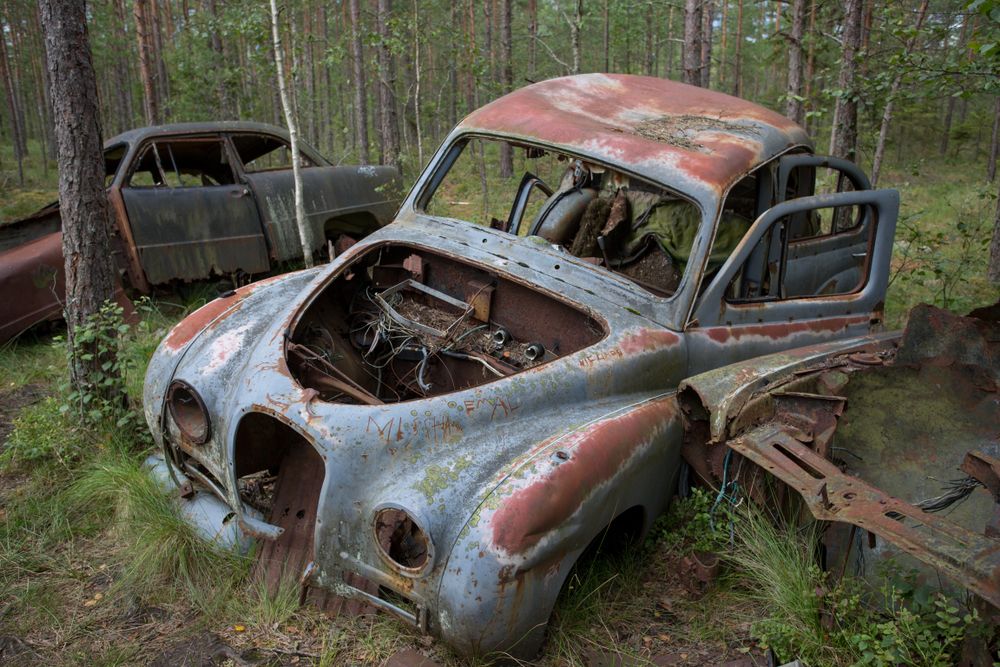
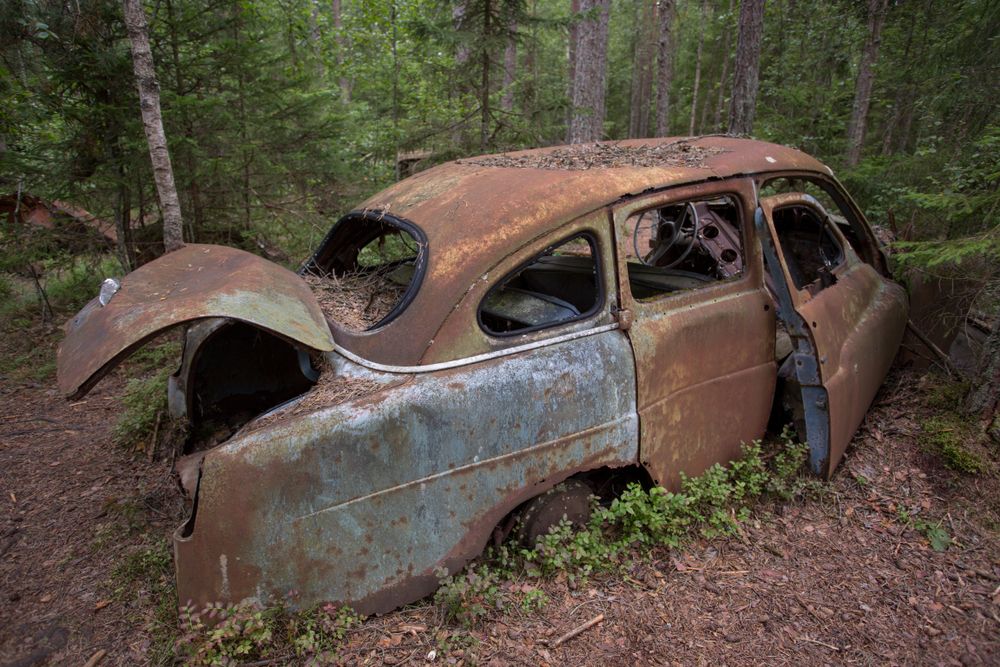
The cars, abandoned for decades, offered a fascinating apocalyptic tableau. Eaten by rust, invaded by moss and vines, they seemed to be an integral part of the forest. Some were piled on top of each other, others lined up like in an eternal traffic jam, creating an atmosphere worthy of a post-apocalyptic science fiction film. This surreal scene attracted photographers, urban explorers and curious people from around the world, transforming this forgotten place into a true clandestine tourist attraction.
4. The worldwide discovery and urban explorers' enthusiasm
The notoriety of the mysterious car cemetery in Châtillon exploded with the advent of Internet and social media. The first spectacular photographs, massively distributed in the early 2000s, went around the world and transformed this secret site into a viral phenomenon. From professional photographers to urban exploration enthusiasts (urbex), everyone rushed to immortalize this unique spectacle in Europe.
The most striking images showed entire rows of abandoned cars, as if frozen in an eternal traffic jam in the heart of the forest. Nature had reclaimed its rights: trees growing through open hoods, moss covering bodywork, vines winding around bumpers. This symbiosis between abandoned automotive industry and wild vegetation created a romantic and melancholic aesthetic that fascinated the global public.
5. Environmental problems and private property
Despite its aesthetic and tourist appeal, the mysterious car cemetery in Châtillon posed serious environmental problems. Automotive fluids (motor oil, coolant, residual gasoline) slowly flowed into the forest soil, risking contamination of groundwater and the local ecosystem. Batteries, tires and other toxic components also represented a threat to surrounding fauna and flora.
Moreover, the site was located on private property, which complicated legal access for visitors. The landowner, faced with a constant influx of urban explorers and curious onlookers, had to deal with repeated damage and intrusions. This uncomfortable situation for all protagonists would precipitate the end of this mythical place.
6. Progressive looting and collectors
Over the years, the mysterious car cemetery in Châtillon suffered progressive looting that considerably reduced its attractiveness. Collectors of vintage automotive parts, attracted by this open-air gold mine, came to recover the most precious elements: steering wheels, headlights, hubcaps, brand emblems, and other vintage accessories highly sought after in the automotive restoration market.
This systematic spoliation emptied vehicles of their most interesting components, leaving behind increasingly dilapidated carcasses. The best-preserved cars were even entirely evacuated by enlightened amateurs, progressively reducing the number of vehicles present on the site. From 500 automobiles originally, there remained only about a hundred in the early 2000s, then only a few dozen before the definitive disappearance of the site.
7. The end of an era: the 2010 cleanup
The story of the mysterious car cemetery in Châtillon ended in 2010, when authorities ordered the complete cleanup of the site for environmental reasons. The landowner, threatened with a 250 euro fine per abandoned vehicle, was forced to have the last automotive carcasses that remained in his forest evacuated.
This decision, although justified from an ecological point of view, marked the definitive end of a unique phenomenon in Europe. The last cars were scrapped or recovered by collectors, forever erasing this extraordinary spectacle that had marked the imagination of millions of people around the world. Today, only photographs still testify to the existence of this mythical place.
8. The cultural and photographic heritage of the site
Although the mysterious car cemetery in Châtillon has disappeared, its cultural heritage endures through the thousands of photographs that continue to circulate on the Internet. These images, which have become iconic, symbolize contemporary fascination with abandoned places and the melancholic beauty of industrial decay. The site has become a reference in the world of urban exploration and abandonment photography.
Professional and amateur photographers who immortalized this place created a true artistic gallery testifying to nature's capacity to reclaim its rights over human creations. These works continue to inspire artists, writers and filmmakers, feeding collective imagination around lost civilizations and contemporary mysteries.
9. Châtillon today: what remains of the mystery?
Today, the municipality of Châtillon has regained its tranquility of old. The forest that housed the mysterious car cemetery has naturally regenerated, progressively erasing traces of this automotive occupation. Only a few insiders still know the exact location of this former dumping ground that became legendary, and vegetation has reclaimed its rights over this territory that has become wild again.
For visitors wishing to discover this region of the Belgian Ardennes, Châtillon now offers other more conventional tourist attractions. One can discover the Fourneau David, testimony to local steel industry, as well as the Virgin's fountain. The region retains its authentic charm and invites discovery of Wallonia's industrial and natural history.
10. Visiting the region: from Châtillon to Brussels
For history and mystery enthusiasts, the Châtillon region deserves a detour during a stay in Belgium. Located about 200 kilometers southeast of Brussels, this Ardennes region offers magnificent forest landscapes and fascinating industrial heritage. The Ryo itinerary allows you to discover the wonders of the Belgian capital before exploring the secrets of deep Wallonia.
Discovering Brussels constitutes an excellent starting point for understanding Belgian history and its contemporary mysteries. The Ryo application guides you through the capital's 25 unmissable places, thus preparing you to better understand the legends and realities that dot Belgian territory, as was the mysterious car cemetery in Châtillon.
In conclusion, the mysterious car cemetery in Châtillon remains one of the most fascinating phenomena of contemporary Belgium. Between urban legend and historical reality, this exceptional site marked collective imagination and continues to fuel dreams of exploration and discovery. Although it has disappeared today, its memory endures in global photographic memory and in the hearts of all those who had the chance to discover it. To extend your exploration of Belgian mysteries, let yourself be guided by the Brussels visit itinerary and discover the hidden riches of this country of a thousand surprises.
Frequently asked questions
Does the Châtillon car cemetery still exist?
No, the mysterious car cemetery in Châtillon was completely cleaned up in 2010 for environmental reasons. The last vehicles were evacuated by the landowner on order of authorities, definitively ending this unique spectacle in Europe.
Where exactly was the car cemetery located?
The site was located in a private forest near rue d'Ahérée, in the Châtillon section belonging to the municipality of Saint-Léger, Luxembourg province, in Wallonia (Belgium). It was situated in the southeast of the country, not far from the French border.
How many cars did the cemetery contain at its peak?
At its peak in the 1980s-1990s, the mysterious car cemetery in Châtillon counted about 500 abandoned vehicles distributed over four distinct sites. These automobiles, mainly American models from the 1950s to 1970s, created a striking spectacle in the heart of the Ardennes forest.
What is the true origin of these abandoned cars?
Two theories oppose each other: the urban legend evokes cars abandoned by American soldiers after World War II, while local residents speak rather of an old automotive dumping ground used after the war. The truth probably mixes these two explanations, with vehicles abandoned at different times for various economic reasons.