
Créé par Emilie, le 15 mai 2026
Votre guide Ryo
© Shutterstock
Vancouver sits at one of the genuinely rare intersections on Earth: a major city where you can ski in the morning, paddle a kayak in the afternoon, and eat some of the finest sushi outside of Japan by evening. The mountains aren't a backdrop here, they're part of the daily life of the people who live between them and the Pacific Ocean. Whether you've booked a week or a long weekend, the Ryo audio guide for Vancouver is the best way to start, you'll hear stories that most visitors never find in a guidebook.
In this guide: a forest park with 1,000 acres of old-growth trees right inside city limits, a suspension bridge swaying 70 metres above a canyon carved by glaciers, a public market that has operated without interruption since 1915, and a gondola ride with views stretching from Howe Sound all the way to Vancouver Island on a clear day. These 25 things to do in Vancouver cover every neighbourhood and every budget, including several that cost nothing at all.
1. Explore Stanley Park
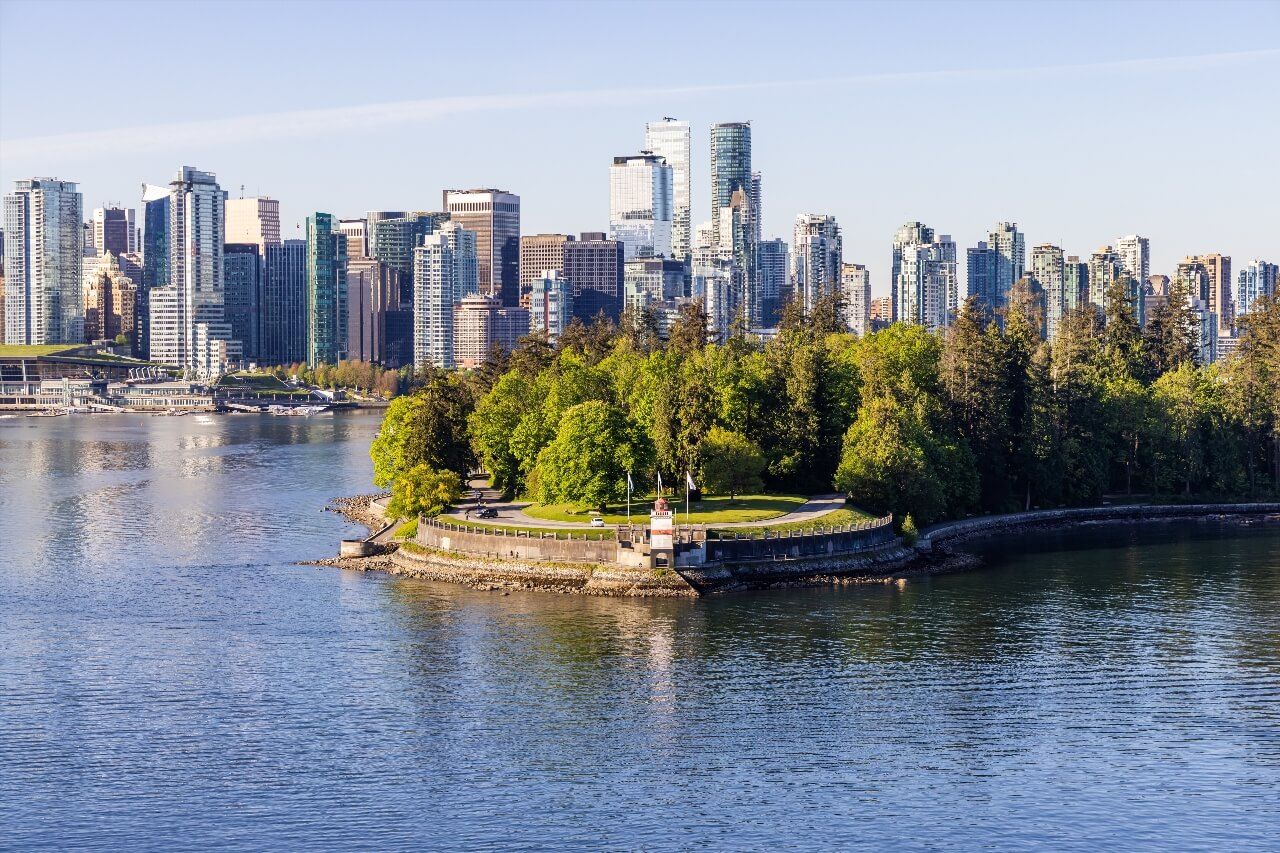
Stanley Park (Stanley Park Drive, Vancouver BC V6G 3E2, rated 4.8/5 on Google (85K reviews)) is not merely a city park, it is one of the largest urban forests in North America, covering 404 hectares of old-growth Douglas fir, western red cedar, and Sitka spruce on a peninsula almost completely surrounded by water. Created in 1888, it predates the city that grew around it and remains the single most-visited attraction in British Columbia.
The park rewards those who leave the seawall behind and push deeper into the interior. The Lost Lagoon, a tidal flat converted into a freshwater lake in 1916, attracts herons, beavers, and geese year-round. The Hollow Tree, a giant western red cedar with a trunk wide enough to park a car inside, has survived windstorms and human traffic for centuries. Totem poles at Brockton Point, six carved by Indigenous artists from different First Nations, stand against a backdrop of the North Shore mountains.
The Vancouver Aquarium sits inside the park and houses over 70,000 animals, including beluga whales, Pacific giant octopus, and sea otters rescued from Alaskan oil spills. Tickets run around $45 for adults. If you'd rather stay outside, the horse-drawn carriage tours that circle the park have been running since 1894 and remain one of the most atmospheric ways to cover ground without rushing.
The Prospect Point viewpoint at the park's northern tip overlooks Lions Gate Bridge and the Burrard Inlet shipping lanes; freighters wait here for their berth at the port of Vancouver, sometimes a dozen at a time, anchored against the backdrop of the North Shore mountains. The Second Beach outdoor pool, heated and Olympic-sized, opens from May to September and is a less obvious alternative to the Kitsilano Pool. Beaver Lake, a small freshwater body deep in the park's interior, is the kind of place where you can hike for forty minutes without hearing traffic, a rare quality so close to a downtown core. Budget at least three hours to see the park properly, most visitors who arrive thinking two hours is enough end up staying all afternoon.
2. Walk the Vancouver Seawall
At 22 kilometres, the Stanley Park Seawall is the longest uninterrupted waterfront path in North America. It traces the edge of the park before continuing through Coal Harbour, past Canada Place, and eventually connecting to the False Creek path that winds around to Kitsilano. The full loop from downtown and back covers roughly 28 kilometres, a serious day out by foot or an excellent afternoon by bicycle.
The stretch between Sunset Beach and the Burrard Bridge is particularly striking in the early morning, when the mountains reflect off the water and the city traffic has not yet built. Cyclists and pedestrians share the path but on clearly marked separate lanes; rental bikes and e-bikes are available at multiple points along the route. The views of the North Shore mountains and Lions Gate Bridge from the seawall's western edge are the kind that stop people mid-stride every time, regardless of how often they've walked it before.
Go on a weekday if you can. Summer weekends see the seawall crowded to the point where the experience loses something. Even a grey November morning on the water's edge, with the freighters anchored in English Bay and the mountains disappearing into cloud, has its own appeal.
3. Granville Island Public Market
Granville Island began its life as a sandbar, artificially extended and industrialised in the 1910s to house foundries, sawmills, and a chain manufacturing plant. By the 1970s it was derelict. The federal government converted it into a mixed-use arts and market district, and it opened to the public in 1979. It has been one of the most successful urban regeneration projects in Canadian history ever since.
The Public Market (1689 Johnston St, Vancouver BC V6H 3R9, rated 4.6/5 on Google (24 599 avis)) is the heart of the island. It operates every day of the year and hosts around 300 vendors, many of whom have been selling from the same stall for decades. The fish counter at The Stock Market carries Dungeness crab pulled from the Pacific the same morning. The cheese hall at Oyama Sausage, which is actually a charcuterie, despite the name, has attracted a waiting list for its dry-cured salami since the 1980s. The Terra Breads loaves come out of the oven early; arrive before 10am to catch the best of them.
Beyond the market, the island has a working theatre, a cement plant that still operates in the industrial section, a kids' market that genuinely entertains children rather than simply extracting money from parents, and a network of studios where glass-blowers, jewellers, and printmakers work and sell. The False Creek Ferries run small wooden boats across the water to downtown every few minutes, it is one of the most enjoyable $5 journeys in the city.
Granville Island is free to enter. Parking is notoriously frustrating; take the ferry or cycle.
4. Cross the Capilano Suspension Bridge
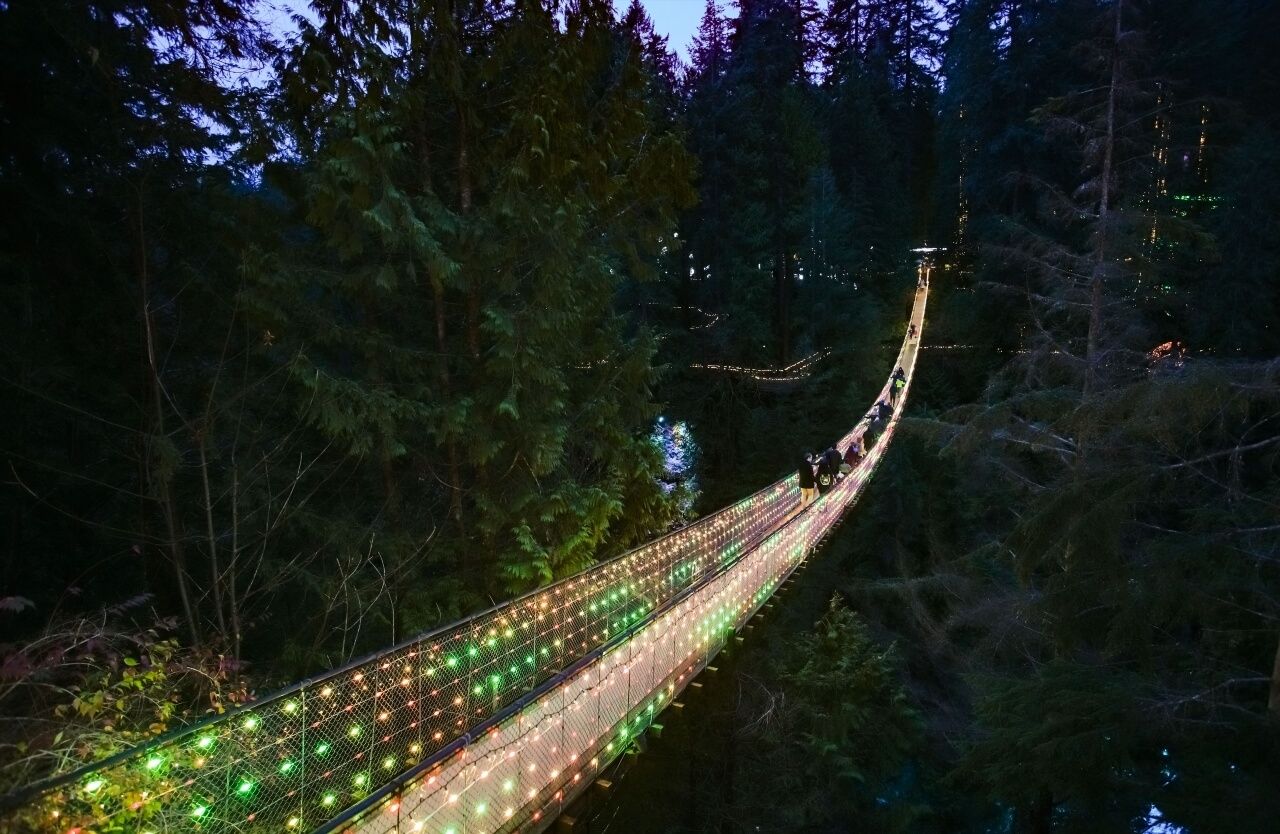
The Capilano Suspension Bridge stretches 136 metres across the Capilano River canyon at a height of 70 metres, high enough that the river below looks like a grey thread through the rocks. The bridge itself is relatively recent in its current form (rebuilt multiple times since its 1889 original), but the canyon it crosses is genuinely ancient: the walls of compressed sediment on either side date back to glacial retreats around 10,000 years ago.
The ticket price, around $70 for adults as of 2026, gives access to the full park complex, which includes the Treetops Adventure: seven smaller suspension bridges attached to eight 250-year-old Douglas firs, with the platforms sitting up to 33 metres above the forest floor. The Cliffwalk extends along the canyon wall on a narrow cantilever walkway with glass-bottomed sections and views straight down to the river. First Nations cultural guides are stationed throughout the park and give context about Coast Salish territorial history that most visitors would otherwise miss entirely.
A free shuttle bus runs from Canada Place downtown to the bridge entrance every twenty minutes in peak season, which removes one of the biggest practical hassles of getting to the North Shore without a car. The on-site Story Centre in the original 1911 trading post building covers the bridge's history through the early twentieth-century postcards and souvenirs that fed its first wave of mass tourism. The trout pond near the entrance is stocked with rainbow trout that visitors can feed.
Book online in advance, weekend queues at the gate in July and August can run to 45 minutes. The park is lit up during the Canyon Lights winter event (November through January), when more than a million bulbs transform the canyon and the treetops walkway into something genuinely spectacular on a cold evening.
5. Wander Gastown
Gastown is the oldest neighbourhood in Vancouver, named after «Gassy Jack» Deighton, a saloon keeper who arrived by canoe in 1867 and built the city's first tavern on the strength of a barrel of whisky and a promise of free drinks. The Steam Clock at the corner of Water and Cambie streets is the most photographed object in the neighbourhood, it runs on steam heat from an underground system and whistles every quarter hour. It was built in 1977, which surprises visitors expecting something Victorian.
The cobblestone streets and red brick warehouse facades are the real draw. Water Street has been renovated into a strip of independent restaurants, design studios, and vintage shops. The side streets, Carrall Street in particular, retain enough raw edge to remind you that Gastown has not been entirely sanitised. The neighbourhood borders the Downtown Eastside, one of the most complex urban poverty situations in Canada, which gives the area a social texture that some guidebooks omit.
The best time to visit is early evening, when the light turns warm on the brick facades and the restaurants open their doors. The Steam Clock whistles as the last tourists photograph it, and the neighbourhood becomes something approaching a real place rather than an attraction. The Ryocity audio walk through Gastown sits the neighbourhood in the broader story of Vancouver's birth, which is the kind of historical detail that turns a five-minute photo stop into something worth a full hour.
6. Vancouver Art Gallery
The Vancouver Art Gallery occupies the former provincial courthouse on Robson Square, a neoclassical building with a copper-domed roof dating from 1906. The collection spans more than 12,000 works, with particular strength in BC artists and the largest public collection of works by Emily Carr anywhere in the world. Carr's paintings of coastal rainforest and Pacific Northwest Indigenous art are among the most singular bodies of work produced in twentieth-century Canada.
Special exhibitions rotate every few months and regularly attract international loans from major institutions. General admission runs around $28 for adults, with free admission on Tuesday evenings. The bookshop on the ground floor is worth half an hour on its own for anyone with an interest in Canadian art history, Indigenous cultural objects, or contemporary Pacific Northwest photography.
The Gallery is currently planning a move to a new purpose-built building near Cambie and Georgia Streets, construction timelines have shifted several times, but the current Robson Square location remains open throughout 2026.
7. Ride the Grouse Mountain SkyRide
Grouse Mountain (6400 Nancy Greene Way, North Vancouver BC V7R 4K9, rated 4.6/5 on Google (16 272 avis)) looms over North Vancouver at 1,231 metres above sea level, and on a clear day the view from the summit encompasses the entire Lower Mainland: downtown Vancouver, the Fraser Delta spreading south toward the US border, Vancouver Island across the Strait of Georgia, and, on exceptional days, the white cone of Mount Baker in Washington State.
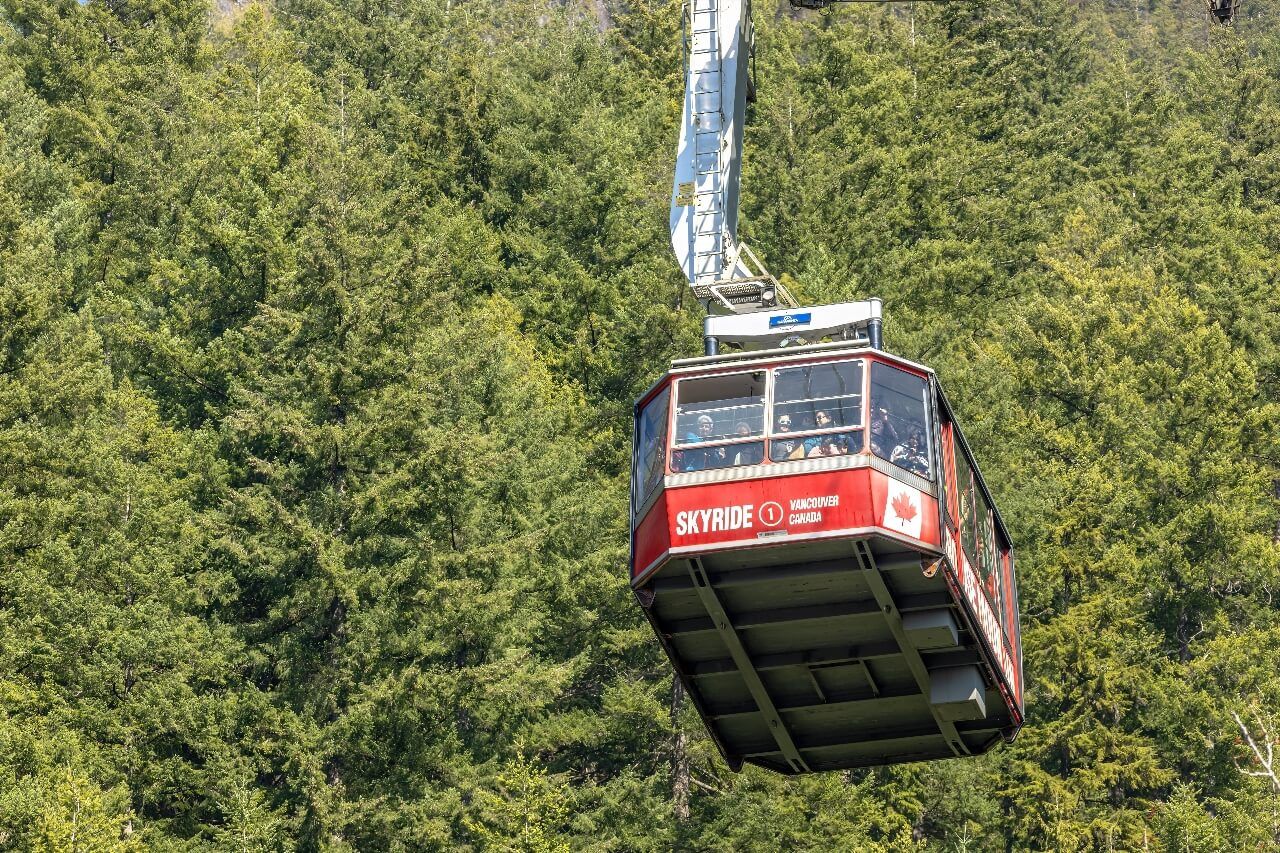
The SkyRide gondola carries visitors from the base to the Plateau in eight minutes and runs year-round. In summer, the summit offers a lumberjack show that has been running since 1953 and provides an absorbing look at the logging culture that built the province, as well as a grizzly bear refuge where two orphaned bears named Grinder and Coola have lived since 2001. Paragliding launches from the ridge on calm days, and the alpine restaurant serves local seafood with that extraordinary panorama as a backdrop.
In winter, Grouse transforms into a ski area with night skiing available until 11pm, a somewhat surreal experience when the city grid sparkles below. Adult lift tickets run around $79. The SkyRide alone (without skiing) is approximately $65 for adults, and the price includes access to the lumberjack show, the bear refuge, and the alpine viewing decks.
For those who want to earn the view, the Grouse Grind, a 2.9km trail climbing 853 metres in vertical gain, is one of the most punishing urban hikes in Canada. The average time up is around 90 minutes; the record is under 24 minutes. The trail is one-way only; the descent is by gondola, and you'll be charged a small download fee at the summit kiosk. Do not attempt the Grind without water and proper footwear, and check the trail status before setting out: it closes regularly for maintenance and during storms. The BCMC Trail runs parallel to the Grind and is the quieter, less crowded alternative for hikers who want the climb without the foot traffic. The Ryo Vancouver Ryocity audio guide includes a stop that places Grouse in the wider context of the North Shore's logging and recreation history, which adds depth to what otherwise feels like a straightforward tourist gondola.
8. Swim at Lynn Canyon Park
Lynn Canyon Park (3663 Park Rd, North Vancouver BC V7J 3G3, rated 4.8/5 on Google (11 701 avis)) is the answer to a question many visitors ask: is there a suspension bridge in Vancouver that doesn't cost $70? There is. Lynn Canyon has a free suspension bridge spanning 50 metres across Lynn Creek, a forest ecology centre with hands-on exhibits about Pacific temperate rainforest ecosystems, and a series of swimming holes carved by the creek into smooth granite that fill with turquoise snowmelt water by late June.
The 30 Foot Pool is the most popular swimming spot and gets genuinely crowded on hot weekends. The water temperature hovers around 14-16°C even in August, cold enough to be bracing, clear enough to see the bottom. The trails beyond the main canyon lead deeper into second-growth forest where the Douglas firs reach diameters of more than a metre even without old-growth status.
Parking fills quickly on summer weekends. The canyon is served by bus from Lonsdale Quay, take the route up to avoid the parking frustration entirely. The park is free; the ecology centre has a small suggested donation.
9. Visit the Museum of Anthropology at UBC
The Museum of Anthropology at the University of British Columbia is, by most accounts, the finest museum of Indigenous art and culture in North America. Arthur Erickson's 1976 building was designed specifically around the collection, the Great Hall's soaring concrete and glass walls were conceived to flood totem poles and house posts with natural north light, replicating something of the coastal conditions in which they were originally created.
The Haida and Coast Salish objects in the Great Hall include several poles carved in the nineteenth century that rank among the most technically accomplished works of sculpture produced anywhere on the continent. The Multiversity Galleries display more than 10,000 objects in open storage, ceramic vessels from dozens of world cultures arranged in taxonomic rows that can be pulled out and examined closely. The Bill Reid Rotunda holds Reid's most famous work, «The Raven and the First Men», a 4.9-tonne yellow cedar sculpture depicting the Haida creation myth.
Admission is $23 for adults, free on Thursday evenings. The museum sits on the traditional territory of the Musqueam people, who remain actively involved in the institution's programming. Allow at least two hours; the serious visitor will want three. The surrounding UBC campus and the Wreck Beach clifftops are a short walk away.
10. Spend a Morning at Kitsilano Beach
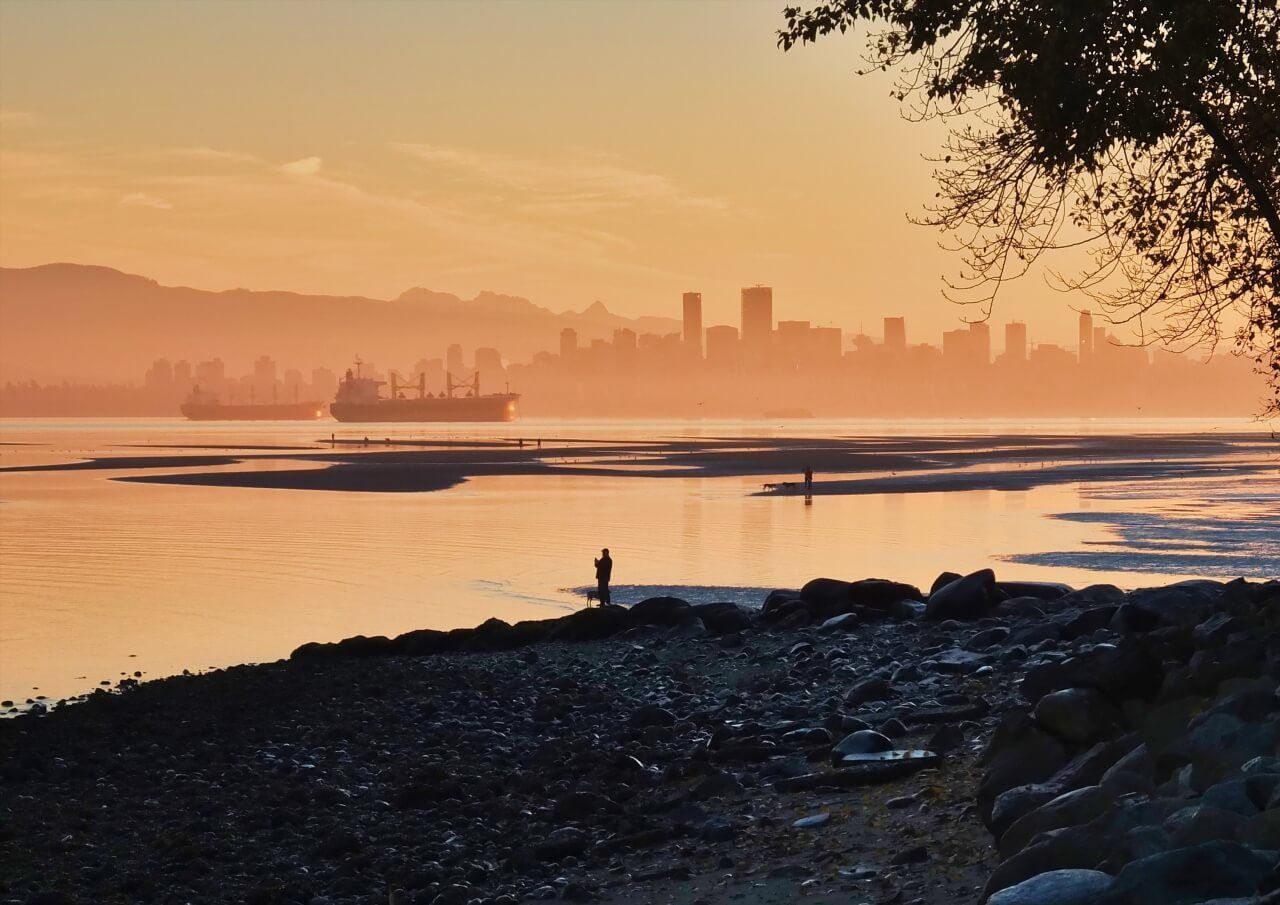
Kitsilano Beach (1499 Arbutus St, Vancouver BC V6J 5R1, rated 4.7/5 on Google (8 780 avis)), «Kits» to anyone who lives in Vancouver, faces south across English Bay toward the North Shore mountains and is the most reliably sociable stretch of sand in the city. The Kitsilano Pool, an outdoor saltwater pool opened in 1931, is the longest swimming pool in Canada at 137 metres. It operates from late May to mid-September, and on a warm afternoon it combines views of the mountains with something that feels less like a municipal facility and more like a setting from another era.
The beach itself is sandy and relatively sheltered, with water that warms to swimable temperatures in July and August. Volleyball nets are set up throughout summer. The cafes along Cornwall Avenue are among the best casual breakfast spots in the city, the neighbourhood has always had an informal, unhurried quality that makes it particularly good for a slow morning rather than a packed itinerary.
Kitsilano is a short walk from the Vanier Park museum complex, which houses the Vancouver Museum and the H.R. MacMillan Space Centre, worth combining if you have children or a genuine interest in Pacific Northwest natural history.
11. Kayak into Deep Cove
Deep Cove (4320 Gallant Ave, North Vancouver BC V7G 1L2, rated 4.7/5 on Google (11K reviews)) sits at the head of Indian Arm, a fjord that extends 40 kilometres north from Burrard Inlet between walls of forested mountain that show almost no sign of human settlement for most of its length. The village itself is small, a handful of cafes, a bakery famous for its cinnamon rolls (the queue on summer mornings wraps around the block), and a kayak rental shop, but it is the access point for what may be the best urban-adjacent paddling anywhere in Canada.
Rental kayaks from Deep Cove Outdoors or Takaya Tours cost around $50-70 for a half-day. You can paddle out to Jug Island in roughly 90 minutes from the dock, following the fjord walls past rock faces streaked with mineral deposits and forests that come down to the waterline. Seals are common. Eagles are reliably overhead. The silence, once you've paddled far enough from the cove, is considerable.
The Quarry Rock hike begins at the cove: a 4.5km round trip through old-growth forest that gains 180 metres in elevation and ends at a rocky outcrop with a panoramic view of the fjord. It is one of the most-photographed views in the region. Arrive before 9am on weekends to have any chance of the viewpoint to yourself.
12. Science World at TELUS World of Science
Science World (1455 Quebec St, Vancouver BC V6A 3Z7, rated 4.5/5 on Google (15 668 avis)) occupies the geodesic dome built for Expo 86, the 1986 World's Fair that transformed Vancouver's downtown waterfront. The dome sits on the False Creek shoreline at the east end of the seawall, visible from most of downtown, and has remained one of the most recognisable buildings in the city for forty years.
The exhibits are aimed primarily at children and families, but the Omnimax Theatre, a wraparound dome cinema showing documentary films about natural wonders, functions well for adults as well. The current permanent exhibition includes a hands-on section on the science of sports (timed to the 2026 FIFA World Cup, which Vancouver is co-hosting) and a newly renovated gallery on climate systems that is more honest about complexity than most science centre exhibits on the topic.
Admission is around $32 for adults, $22 for children. The building's design, 47 metres in diameter, 1,516 triangular panels, was considered structurally innovative in 1985 and still draws architects from around the world.
13. The Dr. Sun Yat-Sen Classical Chinese Garden
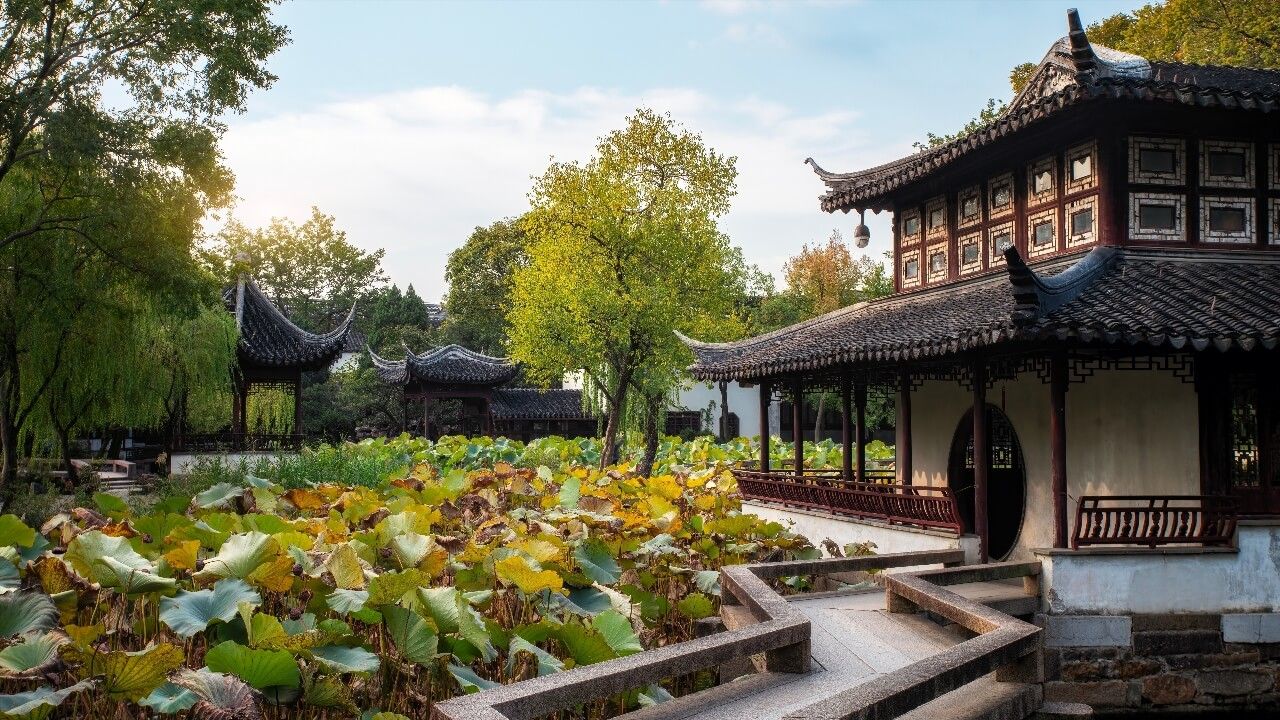
The Dr. Sun Yat-Sen Classical Chinese Garden (578 Carrall St, Vancouver BC V6B 5K2, rated 4.2/5 on Google (5 636 avis)) in Chinatown is the first authentic classical Chinese garden ever built outside of China. It was constructed in 1986 by 52 artisans brought from Suzhou, the city in Jiangsu Province whose Ming-dynasty scholars' gardens became the model for the form, using materials and techniques unchanged for six centuries. No power tools were used in the construction.
The garden covers roughly half a hectare and compresses an experience of contemplative space that Ming scholars designed to represent the balance between contrasting forces: rough limestone from Lake Tai and smooth water, open sky and covered corridors, dense planting and empty courtyard. The limestone rocks, porous, water-worn formations that in classical Chinese aesthetics represent mountains, were imported from the bottom of Lake Tai in Jiangsu Province, where centuries of erosion have given them the deeply pitted texture the Ming scholars prized.
The free city park adjacent to the garden (Dr. Sun Yat-Sen Park) shares a wall and offers a glimpse of the design without the entrance fee. But the paid garden, with its guided tours explaining the symbolic language of each plant and rock placement, is one of the most underrated cultural experiences Vancouver offers. Admission is $22 for adults. Evening lantern tours operate in summer and rank among the most atmospheric experiences in the city.
14. Wreck Beach
Wreck Beach (Trail 6, NW Marine Dr, Vancouver BC V6T 1Z1, rated 4.7/5 on Google (1 217 avis)) is clothing-optional and runs for 7.8 kilometres along the base of the cliffs below the University of British Columbia campus. The descent involves a 500-step wooden staircase down the cliff face; the climb back is the reminder that nothing this good comes entirely without effort. Vendors sell food and drinks from coolers carried up and down the stairs through summer, and the beach faces west across the Strait of Georgia toward Vancouver Island, which gives it the best sunset views in the region. Arrive before noon on a hot Saturday.
15. VanDusen Botanical Garden
VanDusen Botanical Garden (5251 Oak St, Vancouver BC V6M 4H1, rated 4.7/5 on Google (13 384 avis)) covers 22 hectares in the Cambie corridor, on land that was once the Shaughnessy Golf Course. It opened in 1975 and now holds over 7,500 plant species from around the world, organised by geographic origin or habitat type rather than purely by taxonomy. The Elizabethan maze, clipped cedar hedges that take most adults around ten minutes to solve, is one of those minor pleasures that adults enjoy more visibly than they'd like to admit.
The garden is at its best in late May and June when the rhododendron collection peaks, and again in December when the Festival of Lights transforms the grounds into an illuminated landscape of extraordinary ambition. Tickets for the Festival of Lights sell out weeks in advance. The Visitor Centre, designed by local firm Perkins and Will, was built to LEED Platinum standards and won multiple Canadian architectural awards. Admission is around $15-22 depending on season. The on-site cafe serves light lunches using produce grown in the kitchen garden.
16. Queen Elizabeth Park
Queen Elizabeth Park (4600 Cambie St, Vancouver BC V5Y 2M4, rated 4.7/5 on Google (15 410 avis)) sits on Little Mountain, the highest point in Vancouver proper at 167 metres above sea level. The city park service converted two former basalt quarries, dug for early road-building material, into sunken gardens during the 1930s, creating a landscape of terraced beds and reflecting pools where blasting once cleared rock.
The views from the summit parking lot take in the downtown skyline and the North Shore mountains in a single frame. The park is free, and the wedding parties posing for photos on summer Saturdays are a free entertainment in themselves.
17. Lonsdale Quay Market
The SeaBus crossing from Waterfront Station in downtown Vancouver to Lonsdale Quay (123 Carrie Cates Court, North Vancouver BC V7M 3K7, rated 4.4/5 on Google (7 685 avis)) takes 12 minutes and costs the same as a regular transit fare, roughly $3 with a Compass Card. It is one of the most underrated things to do in Vancouver, partly because the crossing itself is the experience: a passenger catamaran traversing the full width of Burrard Inlet with the North Shore mountains ahead and the downtown towers behind.
Lonsdale Quay at the North Vancouver end is a public market that has run continuously since 1986. The lower floor has fresh produce, seafood, and a string of food stalls. The upper floor has independent retail shops, a brewery, and a viewing deck over the inlet. The North Shore neighbourhood behind the market is worth exploring on foot, Lonsdale Avenue heading north is less touristy than the waterfront and has some of the best Vietnamese and Korean food in Greater Vancouver at prices that reflect rents significantly lower than downtown.
18. FlyOver Canada
FlyOver Canada (999 Canada Place, Vancouver BC V6C 3T4, rated 4.5/5 on Google (8 228 avis)) is a flight simulator ride on the Canada Place pier. Riders sit suspended in front of a giant spherical screen while a film takes them on a simulated aerial journey across the country, from BC's coastal fjords to the Maritimes and the Arctic. The seats tilt and pitch in sync with the footage; mist, scent, and wind are added at the right moments.
The ride lasts about eight minutes; the full experience with pre-show runs 20-25 minutes. Tickets are around $30 for adults. It's entirely indoor, which makes it particularly good on rainy days. Book online to avoid queueing.
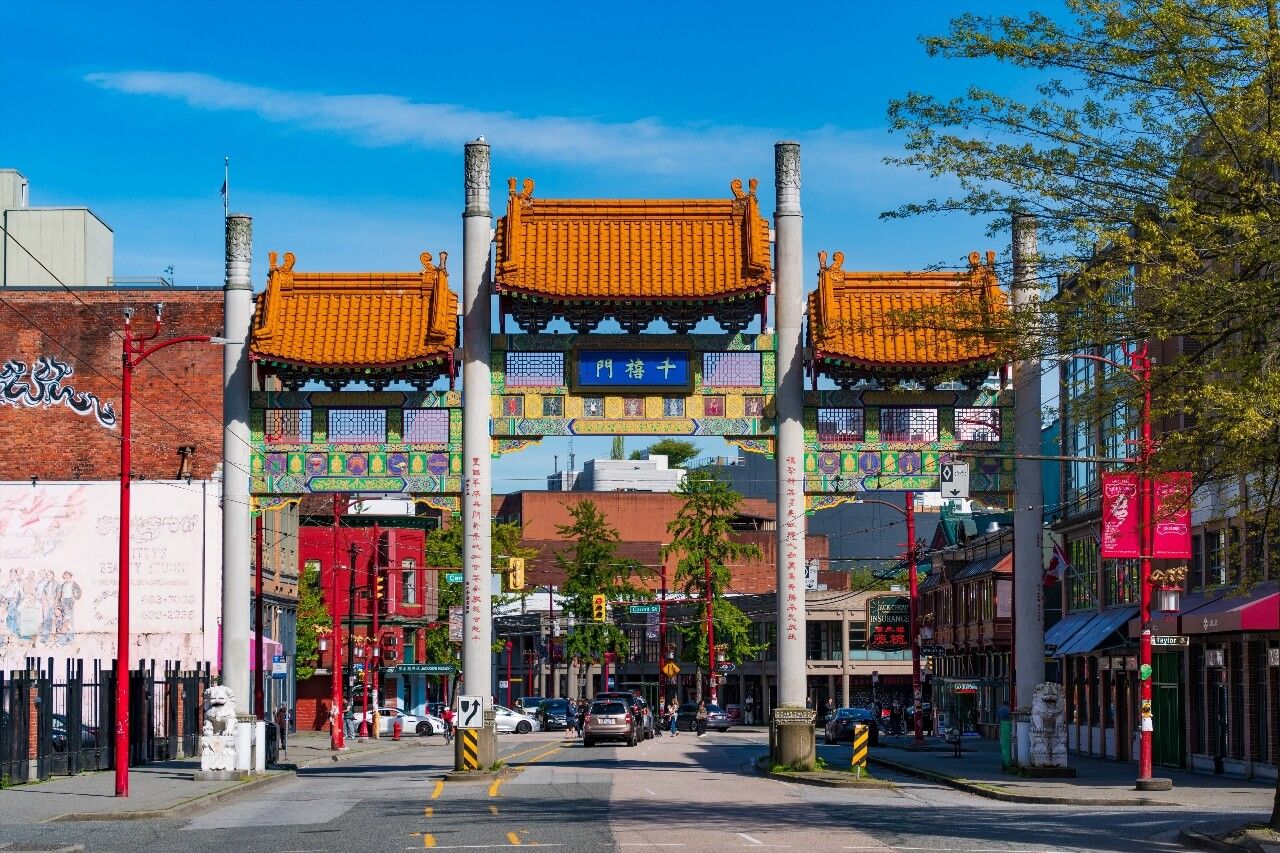
19. Chinatown and the Strathcona District
Vancouver's Chinatown is the third-largest in North America, behind San Francisco and New York, and represents a community that predates the city's incorporation in 1886. At its peak in the mid-twentieth century it was a self-contained city-within-a-city with its own hospitals, schools, and benevolent societies. The Sam Kee Building on West Pender Street, built in 1913 and measuring just 1.8 metres wide at its upper floor (the ground floor is even narrower at 1.50 metres), was constructed as an act of spite after the city expropriated most of the lot for road widening, it holds the Guinness record as the narrowest commercial building in the world.
The Chinatown Night Market runs on summer weekends along Keefer Street and draws thousands of visitors for street food, pop-up vendors, and live music. The district has undergone significant change in recent years, with many long-standing businesses displaced by rising rents; visiting now means seeing a neighbourhood in transition rather than a static cultural monument.
Bordering Chinatown to the east, Strathcona is Vancouver's oldest residential neighbourhood, with a concentration of Victorian houses from the 1890s and 1900s that survived the redevelopment that erased most of the city's early housing stock. The community gardens along Prior Street are among the longest-running in Canada.
20. Ski or Snowshoe at Cypress Mountain
Cypress Mountain (6000 Cypress Bowl Rd, West Vancouver BC V7S 2L4, rated 4.5/5 on Google (7 064 avis)) is the closest of the three ski areas on the North Shore, sitting at 1,440 metres at its summit and reachable from downtown Vancouver in around 45 minutes by car. It hosted the freestyle skiing and snowboard events at the 2010 Winter Olympics, and the venue infrastructure from those games, including the halfpipe, remains in use.
For non-skiers, the Yew Lake Trail is a 2.5km snowshoe loop through subalpine forest, accessible without previous experience, with views of Howe Sound from the ridge. In summer, the Black Mountain Loop is a 6km alpine hike with viewpoints that rival any in the North Shore range. Day-lift tickets run around $80-100.
21. Explore Yaletown
Yaletown (Mainland St & Hamilton St, Vancouver BC V6B 2T9, rated 4.4/5 on Google (5K reviews)) occupies the former Canadian Pacific Railway loading yards in the south end of downtown. The loading docks are still visible along Hamilton and Mainland Streets, repurposed as restaurant patios where you sit on what used to be a truck bay. The conversion from warehousing to residential and commercial loft accelerated around Expo 86 and is now complete. The neighbourhood connects directly to the False Creek seawall and the dog-friendly path around the water.
22. Mount Pleasant and the Vancouver Mural Festival
Mount Pleasant is the neighbourhood that best represents what Vancouver looks like when it's not performing for tourists. The stretch of Main Street between Broadway and 33rd Avenue has independent bookshops, Filipino bakeries, Vietnamese pho counters, record stores, and coffee roasters occupying the kinds of storefronts that disappeared from most North American cities in the 1990s.
Since 2016, the Vancouver Mural Festival has commissioned over 400 works on building exterior walls across the neighbourhood and beyond, creating one of the densest public art districts in Canada. The murals range from hyper-detailed photo-realism to large-scale abstract work; a self-guided walking map is available from the festival's website and takes around two hours to cover the core area. The festival itself runs in August and includes live painting, talks, and music.
Mount Pleasant is also where the Ryo audio walking experience, the Vancouver Ryocity guide, picks up some of its best neighbourhood-level detail about how the city has changed and the communities that have shaped it.
23. BC Place Stadium
BC Place (777 Pacific Blvd, Vancouver BC V6B 4Y8, rated 4.5/5 on Google (14 081 avis)) is the largest stadium in western Canada, with a retractable roof and 54,500 seats across the upper and lower bowls. The original air-supported dome from 1983 was replaced in 2011 with the current cable-supported retractable fabric roof, which can open or close in roughly 20 minutes.
The stadium will host seven matches of the 2026 FIFA World Cup between June and July 2026, including Canada's two group-stage games. Outside tournament dates, the BC Sports Hall of Fame and Museum on the east side of the building is open independently of stadium events.
24. Bloedel Conservatory
The Bloedel Conservatory (4600 Cambie St, Vancouver BC V5Y 2M4, rated 4.6/5 on Google (8 548 avis)) stands at the summit of Queen Elizabeth Park in a triodetic aluminium dome 43 metres in diameter, filled with the year-round warmth and humidity of a tropical environment. Over 500 plants and more than 100 free-flying birds share the space, including macaws, cockatoos, and birds of paradise that will occasionally land on your shoulder if you stand still long enough.
The conservatory was built in 1969 and was very nearly demolished in 2009 when budget cuts threatened its existence. A public campaign saved it. The irony is that the campaign made more people aware of the conservatory's existence than the preceding forty years of regular operation had. It now attracts over 200,000 visitors per year. Admission is around $7.50, the best-value hour in Vancouver, particularly on a cold grey day when the warmth and colour inside hit with immediate effect.
The Ryo Vancouver audio guide includes stops near Queen Elizabeth Park that put the conservatory and its neighbourhood in the context of how the city grew south from downtown during the postwar decades.
25. Sea to Sky Gondola in Squamish
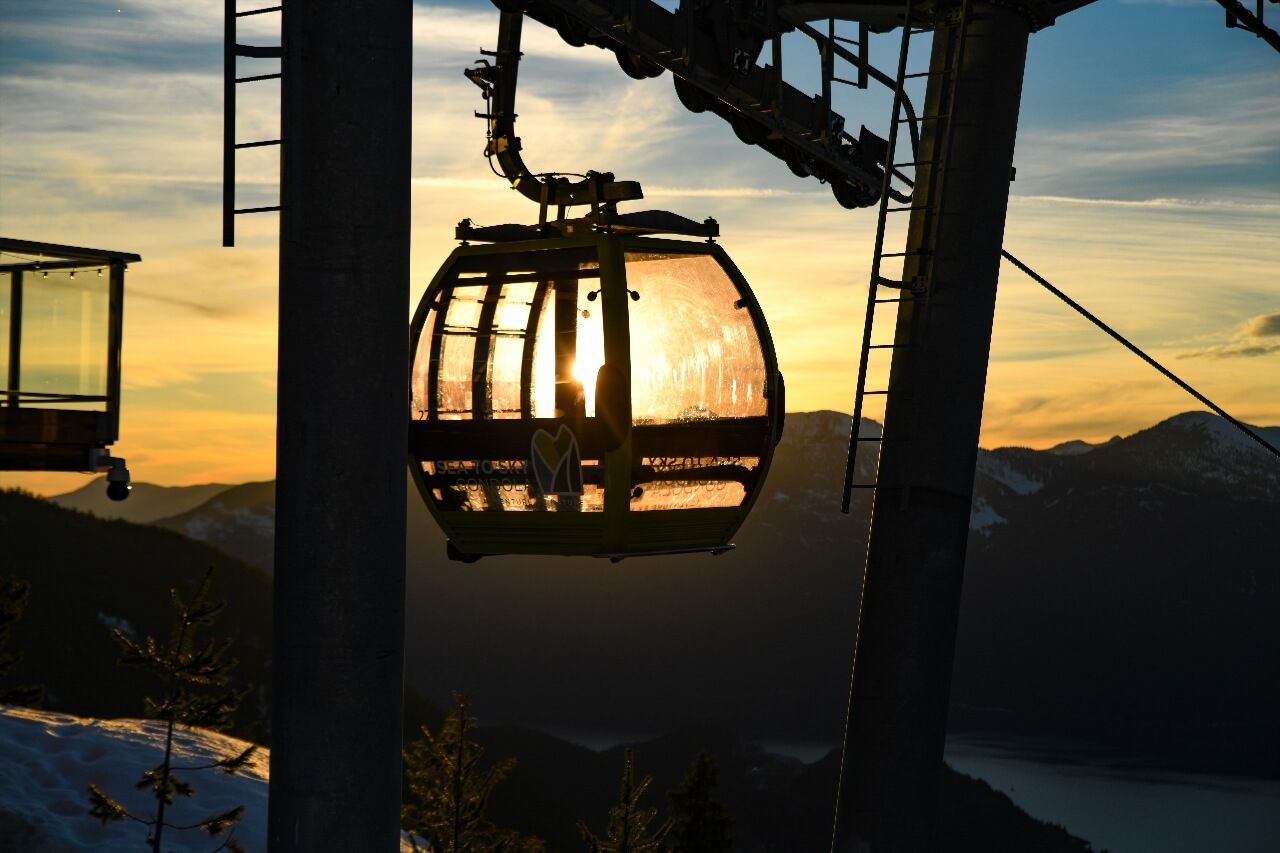
The Sea to Sky Gondola (37800 BC-99, Squamish BC V8B 0G7, rated 4.7/5 on Google (12 383 avis)) is technically outside Vancouver, it sits in Squamish, a 40-minute drive north along Highway 99, but it belongs on any list of things to do from Vancouver because the combination of scenery and accessibility is essentially unmatched in the region. The gondola rises 885 metres from the valley floor to the Summit Lodge in under ten minutes, and the view at the top is one of the most dramatic mountain panoramas accessible without serious hiking anywhere in British Columbia.
The gondola was built in 2014 and vandalized by cable-cutting in 2020, but rebuilt and reopened in 2021 with improved infrastructure. It now handles around 300,000 visitors per year. Tickets cost around $65-70 for adults. At the summit, the Spirit Trail leads to a viewpoint over Howe Sound that most visitors cite as a better perspective than the gondola station itself, it requires a 45-minute round-trip walk on boardwalked trail through subalpine meadow. The Chief Overlook Trail branches off to views of the Stawamus Chief, a 652-metre granite dome that is the second-largest granite monolith in the world and the epicentre of rock climbing culture in Western Canada.
The Sea to Sky Highway between Vancouver and Squamish is itself an experience, the route follows Howe Sound, a fjord whose walls rise steeply from tidewater, for much of its length. Shannon Falls Provincial Park, a short stop just before reaching the gondola base, has a 335-metre waterfall that drops in three tiers from the granite walls above and is one of the highest in the province. The viewing area is reached by a five-minute boardwalk path from the parking lot, which makes it an obvious add-on for anyone already driving up.
Whistler is another hour beyond Squamish, and the highway continues to operate as one of the most scenically concentrated driving routes in North America. The route was widened and partly rebuilt for the 2010 Olympics and remains one of the safest as well as the most beautiful stretches of mountain road on the Pacific coast. If you have a car and a clear day, this drive alone justifies the journey north. Stop at Britannia Beach on the way back south for the Britannia Mine Museum, where a former copper mine has been converted into a National Historic Site with underground train tours that descend into the original tunnels.
FAQ
What is the best time of year to visit Vancouver?
July and August offer the driest, warmest weather, temperatures typically reach 22-26°C and rain is relatively rare. June and September are nearly as good, with smaller crowds and slightly lower accommodation prices. Spring (April-May) brings cherry blossoms but also significant rainfall. Winter skiing on the North Shore is excellent between December and March, and the city remains relatively mild by Canadian standards, snowfall in downtown Vancouver is uncommon.
Is Vancouver expensive to visit?
Vancouver ranks among the most expensive cities in Canada for accommodation. Budget hotels and hostels start around $80-120 per night; mid-range options run $180-300. Restaurants are comparable to similar cities in western Europe. However, several of the best experiences in the city are free: the seawall, Stanley Park, Lynn Canyon, Wreck Beach, Chinatown, and the public spaces of Granville Island all cost nothing. A Compass Card loaded with transit fares will get you most places you need to go for a few dollars per trip.
How do you get around Vancouver without a car?
Vancouver's public transit system, operated by TransLink, covers the city well with the SkyTrain, buses, and the SeaBus ferry. A single-zone Compass Card fare covers most of the attractions in this list. The seawall and cycling infrastructure make the city very bikeable. The North Shore mountains require a bus connection or a car for full access; the gondola bus service to Grouse Mountain runs from downtown during peak season.
What are the best free things to do in Vancouver?
Stanley Park and the seawall are free. Lynn Canyon Park and its suspension bridge are free. The beaches (Kitsilano, Wreck Beach, English Bay) cost nothing. Dr. Sun Yat-Sen Park adjacent to the paid garden is free. The Vancouver Mural Festival walking route is free. The Museum of Anthropology waives admission on Thursday evenings. Canada Place's public spaces and the viewing areas over Burrard Inlet are free. Vancouver is a more affordable city than its reputation suggests if you plan around free and low-cost options.
Is Vancouver safe for tourists?
Vancouver is generally safe for visitors. The Downtown Eastside, east of Gastown and Chinatown, has a high concentration of people experiencing homelessness and addiction, it is not dangerous in the conventional sense but can be distressing if you're unprepared for the scale of the situation. Exercise normal urban awareness in that area. The North Shore hiking trails present more genuine risk: mountain weather changes quickly, trails are sometimes unmarked, and the search and rescue services respond to preventable incidents regularly. Tell someone your plan before heading into the backcountry.
Conclusion
Vancouver rewards the visitor who goes beyond the obvious. Stanley Park and the seawall are unmissable, but so are the fjord silence of Indian Arm, the Suzhou-crafted garden in Chinatown, and the view from the Sea to Sky Gondola summit on a morning when the clouds sit below you. This is a city where the mountains are not decoration, they are participants in daily life, visible from almost every street corner, and accessible within an hour from any hotel lobby.
If you want to understand Vancouver the way the people who live here do, its history, its neighbourhoods, its contradictions, the Ryo Vancouver audio guide is the tool built for exactly that. Start at the water. Follow the Ryo app wherever it leads. The city will reveal itself on foot.