© Shutterstock
 Votre guide Ryo
Typical Chilean Dishes: The 12 Culinary Specialties You Absolutely Must Try (2026)
Ask a Chilean what they eat on Sundays, and they'll say "cazuela" without hesitation — a meat, vegetable, and corn broth that simmers for hours, a direct legacy of Mapuche cuisine. If you're looking for the quintessential typical Chilean dish, that's probably where you should start. Chilean gastronomy is one of the least-known in Latin America, often overshadowed by Peru or Argentina, and yet: between the Pacific Ocean, the Andes, and Patagonia, Chile has one of the most varied food geographies on the continent. From the fried empanadas of the north to the mariscos of the central coast, through the corderos (lamb) of Patagonia and the grape chichas of the wine-growing heartland, the typical dishes of Chile tell 500 years of blending between indigenous cultures and Spanish influences. This article explores the 12 unmissable culinary specialties, with their origins, regional variations, where to find them in Santiago, and how to recognize them in a market or local restaurant. If you're planning a trip, the Ryo audio-guided tour of Santiago between Sea and Mountains takes you through the markets and gastronomic neighborhoods of the capital.
Empanadas: Much More Than a Snack
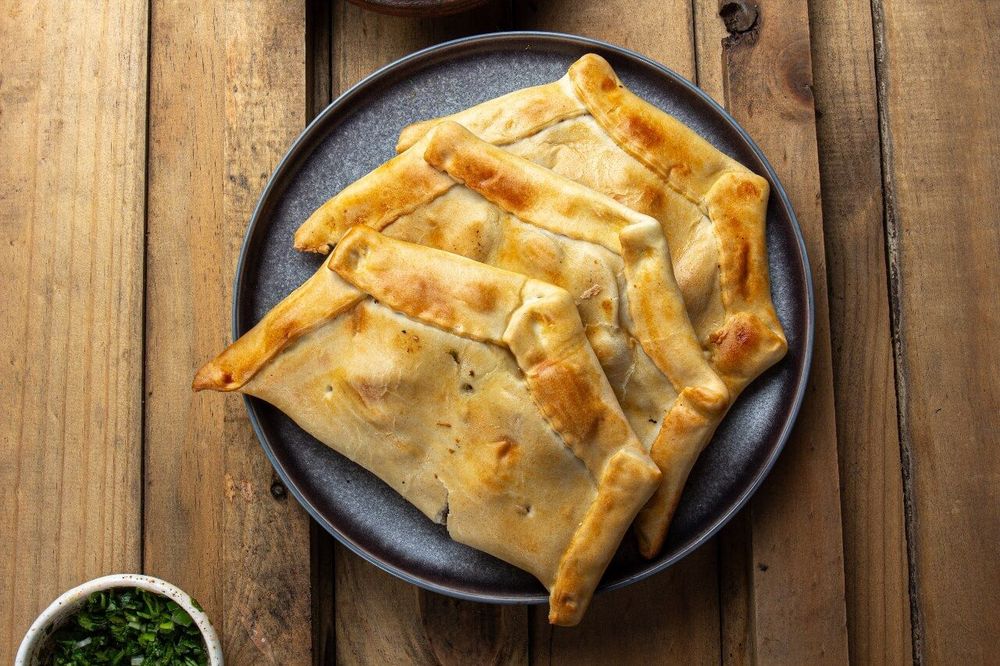
Few typical Chilean dishes are as universally shared as the empanada. You'll find them on every street corner, in neighborhood bakeries, covered markets, supermarkets, and high-end restaurants — but not all are created equal. The Chilean empanada stands out from its Latin American cousins with its generous size (often 15 to 20 cm long) and its signature filling: the pino, a mixture of minced beef, onions, black olives, a hard-boiled egg, and raisins. This sweet-savory-spicy blend, flavored with cumin and paprika, is a national hallmark.
Two cooking techniques coexist and yield two very different experiences. The empanada al horno is baked in the oven, with a golden, crispy, slightly flaky crust — this is the festive version, the one prepared for September 18th (Fiestas Patrias). The empanada frita is plunged into boiling oil: the dough is thinner, more supple, the filling juicier, and the whole thing burns your fingers if you don't wait. In Santiago, the Barrio Italia neighborhood is full of small specialized shops. The mariscos (seafood) variant, with mussels, clams, or crab, is particularly popular on the coast.
A practical tip: a good empanada al horno should feel heavy in the hand. If it seems too light, the filling has been rationed. Expect to pay between 1,500 and 2,500 Chilean pesos each at a standard bakery (approximately €1.50 to €2.50). In gourmet restaurants, some chefs reinvent the filling with mushrooms, goat cheese, or smoked salmon — variations that work, but stray from tradition.
Cazuela: The Sunday Slow-Cooked Dish
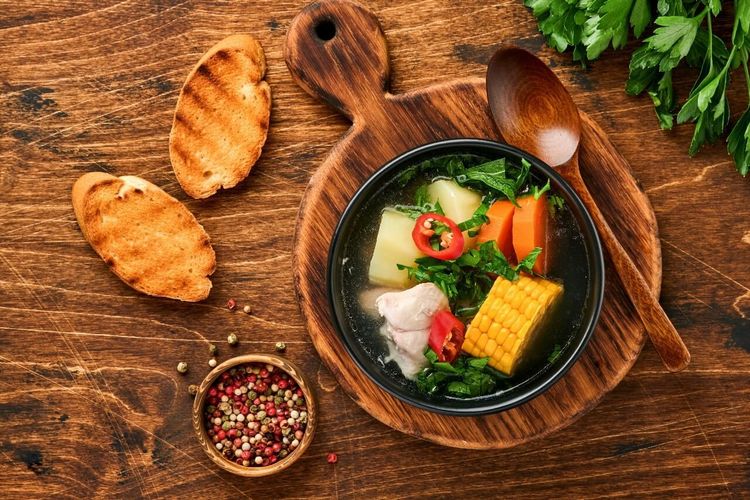
The cazuela is undoubtedly the typical Chilean dish most deeply rooted in domestic culture. It is the Sunday lunch dish, the one grandmother has been preparing since 6 in the morning, and whose aroma fills every room. Its origin is Mapuche — the indigenous peoples of central-southern Chile were already cooking meat and vegetable broths in clay pots long before the arrival of the Spanish.
The basic recipe combines a bone-in cut of meat (chicken, beef, or pork, depending on the season and budget) with seasonal vegetables cut into large pieces — carrots, potatoes, pumpkin — and a whole corn cob, which lends a slightly sweet flavor to the broth. Rice or pasta is sometimes added near the end of cooking. The broth itself is the soul of the dish: it is consumed separately, as a starter or alongside the plate in a bowl. The meat and vegetables follow.
There are significant regional variations. Cazuela de vacuno (beef) is the most common in the center of the country. On the coast, cazuela de mariscos replaces meat with clams, mussels, and shrimp. In Patagonia, you'll find cazuela de cordero, made with local lamb and aromatic herbs such as wild oregano. In wine-growing regions, some recipes add a glass of red wine to the broth at the end of cooking.
In Santiago, you'll find excellent cazuelas in neighborhood restaurants called fuentes de soda — a kind of informal Chilean brasserie. Covered markets such as the Mercado Central and the Vega Central also offer daily cazuelas at very reasonable prices. Expect to pay between 3,500 and 6,000 pesos for a full bowl with bread.
Asado: The Chilean Barbecue, a Serious Business
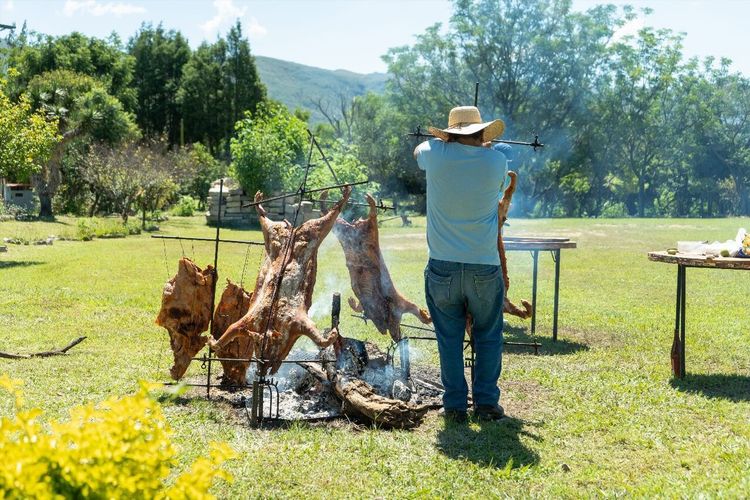
The asado is both a dish and a social ritual. In Chile as in Argentina, it refers to a meat barbecue, but the Chilean version has its own codes. Charcoal (not gas) is used exclusively, cooking is slow, and the grill master — always tacitly designated as the best in the group — takes their role very seriously. An asado is prepared with family or friends on weekends, often on Saturday evenings or Sunday afternoons.
Chileans' favorite cuts of meat are lomo vetado (marbled ribeye), costillas (beef ribs), and pollo (whole chicken butterflied flat, known as pollo a la parrilla). It is always accompanied by an ensalada chilena — fresh tomatoes, thinly sliced onions, cilantro, olive oil, and salt — as well as homemade bread and pebre, the national hot sauce made from garlic, chili, tomatoes, and cilantro.
The pebre deserves its own mention. This condiment sauce appears on every Chilean table, from the most modest restaurant to a family dinner. There are dozens of variations, more or less spicy, with or without avocado, but the base remains constant. If you find it too hot, chancho en piedra (literally "pig in stone") is a milder version, made from tomatoes and garlic crushed on a stone grinder.
In Santiago restaurants, asado is offered as lunch or dinner menus. The neighborhoods of Providencia and Las Condes are home to several well-regarded parrillas (grills). If you visit Santiago on a weekend, look for neighborhood restaurants offering a Sunday asado — the atmosphere is as worthwhile as the meat itself.
Pastel de Choclo: The Chilean Corn Gratin
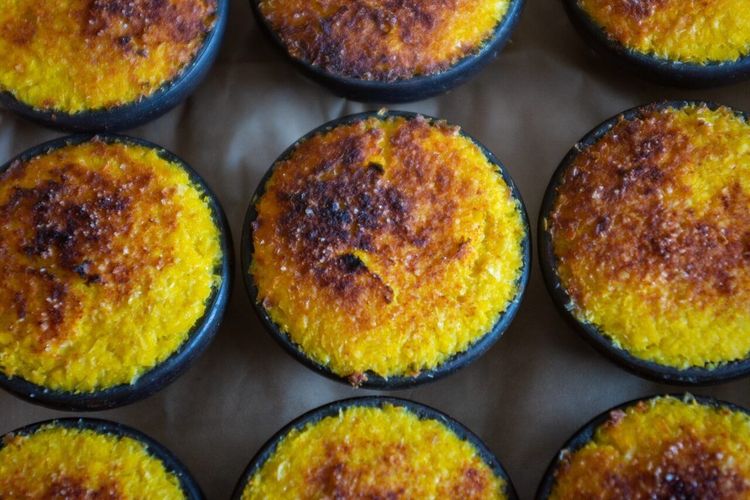
The pastel de choclo is one of the most representative typical Chilean dishes of the country's mixed culinary heritage: a base of pino (the empanada filling — beef, onions, olives, hard-boiled egg) topped with a thick layer of fresh corn blended with basil, then oven-baked until the surface lightly caramelizes. The result hovers between a gratin and a savory flan, with that characteristic tension between the sweetness of the corn and the savory spiciness of the meat.
The recipe fits into the long Chilean tradition of corn as a staple food. The Mapuche grew choclo (fresh corn in Mapudungun) long before the arrival of the Spanish conquistadors, who later introduced beef, olives, and eggs. The current dish is therefore a culinary synthesis of that encounter, prepared in a clay casserole dish called a paila.
Depending on the family, shredded chicken, raisins, or sugar may be sprinkled over the corn crust before baking, further accentuating the sweet-savory character. Vegetarians can find meatless versions with cheese and vegetables at modern restaurants in Santiago.
This is essentially a summer dish (January to March in the Southern Hemisphere), as it requires fresh corn. Outside the season, some restaurants use frozen corn — the result is acceptable but loses in flavor. If you visit Santiago between December and March, don't miss the chance to order a pastel de choclo at a fuente de soda.
Humitas: The Chilean Tamales
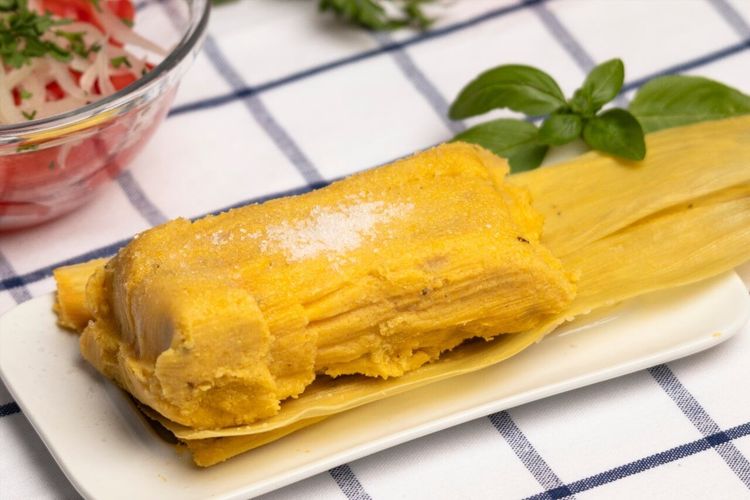
Humitas are the Chilean version of tamales: fresh corn dough seasoned with basil, salt, and sauces, wrapped in the corn husk leaves themselves and steamed or boiled. Lighter and less fatty than Mexican tamales (no lard in the dough), they are generally served plain or with a tomato sauce.
Like pastel de choclo, humitas are a seasonal dish tied to the availability of fresh corn. They are prepared as a family in a collective ritual: each member peels the leaves, crushes the corn, fills and ties the little parcels. The smell of corn and basil that fills the kitchen during this preparation is one of the most powerful childhood memories for many Chileans.
They can be found at markets and street stalls in summer for a modest price (approximately 800 to 1,200 pesos each). In Santiago's popular markets such as the Vega Central, they are part of the market workers' lunch, served hot with tomato salsa.
Chupe de Mariscos: The Soup of the Sea
Chile has more than 6,400 kilometers of coastline, which explains the central role of seafood in the national cuisine. Chupe de mariscos is the most representative preparation of this maritime heritage: a creamy, thick soup made with cream, milk, cheese, stale bread (which acts as a thickener), and a generous selection of seafood — shrimp, mussels, clams, crab, squid.
The result is rich, almost luxurious, with a texture between a soup and a gratin. It is often served in a small clay casserole dish passed through the oven, with a golden gratin cheese crust on top. It is a Sunday or special-occasion dish, rarely eaten on weekdays.
In Santiago, the Mercado Central remains the essential address for chupe de mariscos. The ground-floor stalls offer set menus with a starter (ceviche or empanada de mariscos), chupe, and dessert at a fixed price. Arrive before 1 pm if possible to avoid the wait.
Locos: The Chilean Abalone, a Threatened Treasure
Locos are Chilean abalones (Concholepas concholepas), single-shelled mollusks harvested from the rocks of the Pacific coastline. Their firm, slightly briny flesh is considered one of the country's most prized culinary specialties — and one of the most expensive, due to strict fishing quota regulations.
Traditionally, locos are boiled and served cold with homemade mayonnaise or a green cilantro-based sauce. They can be found in seafood restaurants, coastal markets, and sometimes in supermarkets in jars or vacuum packs. The harvest is subject to annual quotas to protect the species, which came close to depletion in the 1980s after intensive overfishing.
If you want to try locos in Santiago, opt for the seafood restaurants around the Mercado Central. The price is high (1,800 to 3,000 pesos per unit) but the flavor justifies the investment.
Sopaipillas: Santiago's Street Food
The sopaipilla is one of Chile's most popular street foods, sold by street vendors throughout Santiago from the first chills of autumn (April–May). It is a disc of dough made from wheat flour and cooked pumpkin (which gives it an orange color and a slight sweetness), fried in oil. The texture is soft on the inside, slightly crispy on the outside.
Sopaipillas are eaten two ways. Plain with pebre, they are the quick street snack, sold for 200–300 pesos each from a tin cart. With chancaca (thick cane sugar syrup flavored with cinnamon and orange zest), they become sopaipilla pasada, a sweet version served in a bowl of warm syrup, consumed in cold weather as a winter comfort food.
In Santiago, sopaipilla vendors appear in the streets in the evening as soon as the temperature drops. In the neighborhoods of Barrio Brasil and around the Plaza de Armas, they are easy to find after 6 pm. It is an authentic street experience, very different from restaurants, and one of the first things Chileans abroad say they miss.
Desserts and Sweets: Leche Asada, Brazo de Reina, and Mote con Huesillo
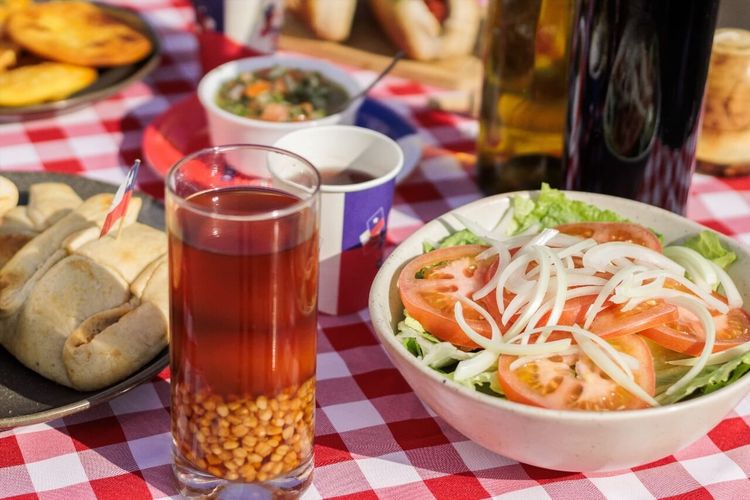
Chilean desserts are less well known outside the country than the main dishes, but they deserve attention. Mote con huesillo is the most distinctive: a cold drink-dessert made from cooked hulled wheat (mote) and a dehydrated peach (huesillo) rehydrated in a sweet, slightly tart syrup. It is Santiago's summer refreshment, sold in large glass containers at street stalls. The combination surprises at first — wheat grains in a peach syrup — but wins you over by the second sip.
Leche asada is more accessible to European palates: a baked custard made with eggs, whole milk, sugar, and a hint of vanilla. The surface is caramelized with sugar; the texture is creamy without being as light as a French flan. You'll find it in virtually every fuente de soda in Santiago.
Brazo de reina (literally "queen's arm") is a rolled sponge cake filled with guava jam or manjar, the Chilean dulce de leche, made by slow-cooking sweetened condensed milk. The latter is ubiquitous in Chilean pastry: spread on bread, stuffed into alfajores, mixed into ice creams. Chilean manjar is more liquid and less sweet than the Argentine version, with a slightly caramelized flavor.
Pisco Sour and Chicha: The Typical Drinks of Chile
The dispute between Chile and Peru over the origin of pisco is one of the continent's great diplomatic and gastronomic battles. Both countries claim the grape brandy, produced in geographically adjacent regions. What is certain is that the Chilean pisco sour exists in a well-defined form: lime juice, pisco, sugar, and crushed ice, without egg white (unlike the Peruvian version). The result is drier, less frothy, and very refreshing.
Chicha is the festive drink par excellence, especially present during the Fiestas Patrias (September 17–18). It is a fermented grape juice, mildly alcoholic, which can range from nearly non-alcoholic to quite strong depending on the degree of fermentation. It is served cold in ramadas (temporary wooden and fern structures erected for national celebrations) with sopaipillas and empanadas.
The terremoto (earthquake) is a classic Santiago cocktail: very sweet white wine (usually pipeño, a rustic local wine), vanilla ice cream, and grenadine. Its name comes from the effect it has on your legs after the second glass. It can be found in bars and fondas in Santiago's historic center, particularly around the Quinta Normal.
Where to Try Typical Chilean Dishes in Santiago
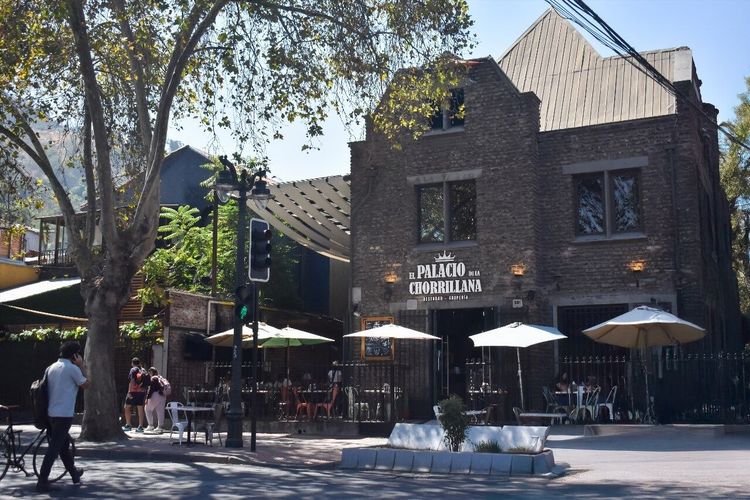
Santiago is a city where local gastronomy coexists with a highly developed international food scene. For typical Chilean dishes, here are the addresses and types of places to prioritize.
The Mercado Central remains the city's gastronomic landmark. Inaugurated in 1872 in a metal-framed building, it brings together dozens of restaurants and fishmongers on the ground floor. The central stalls are the most touristy and tend to overcharge — prefer the tables along the sides, where prices are more reasonable and the clientele more local. This is the address for fresh seafood, chupes, ceviches, and cazuelas de mariscos.
The Vega Central, just across the Río Mapocho from the Mercado Central, is the city's great popular market — less touristy, noisier, much cheaper. The first-floor stalls serve complete daily menus (soup, main course, drink) for under 3,000 pesos. This is the place for cazuela, seasonal humitas, and fruit at unbeatable prices.
The fuentes de soda — those small retro-style neighborhood restaurants — are the ideal address for home-style dishes: pastel de choclo, cazuela, bistec a lo pobre (steak with fried eggs and onions). Fuente Alemana is an institution founded in 1954, famous for its hot beef sandwiches and timeless atmosphere — a must-visit to understand the Chilean fuente de soda experience.
For a more modern experience, the neighborhoods of Barrio Lastarria and Barrio Italia (Av. Italia, Santiago de Chile, rated 4.5/5 on Google from 1,281 reviews) are home to restaurants where Chilean chefs reinvent traditional cuisine with seasonal produce and contemporary techniques. This is where you'll find salmon and avocado empanadas or vegetarian pasteles de choclo, in a refined setting.
If you'd like to explore the city while discovering its gastronomic and historical culture, the Ryo audio guide of Santiago between Sea and Mountains offers a route through the historic neighborhoods and iconic markets of the capital. You can also check out our article on the best things to do in Santiago, Chile to complete your itinerary.
When to Travel and How to Plan
The Chilean culinary calendar directly influences what you'll find on your plate. The austral summer (December to March) is the best time for dishes made with fresh corn: pasteles de choclo, humitas, grilled choclo. Seafood is available year-round, with a quality peak between May and September. The Fiestas Patrias in September (17–18) is the moment when popular gastronomy reaches its full festive dimension, with asados, empanadas, chicha, and terremotos served in the ramadas.
For budget planning, expect to spend between 5,000 and 12,000 pesos for a full meal at a fuente de soda or local restaurant. Markets (Vega, Mercado Central) allow you to have lunch for under 3,500 pesos. Gourmet restaurants in Barrio Lastarria generally exceed 20,000 pesos per person. To connect these culinary stops to the city's major sites, the Ryo audio guide accompanies you from one neighborhood to the next and places each market within the history of Santiago.
FAQ
What is the most well-known typical Chilean dish?
The empanada is probably the most well-known Chilean specialty outside the country's borders. Filled with pino (minced beef, onions, olive, hard-boiled egg, raisins), it is eaten baked or fried. The cazuela, a meat and vegetable broth, is the ultimate family dish and better represents the everyday cooking of Chilean households.
What is cazuela in Chile?
The cazuela is a simmered broth of meat (chicken, beef, or pork) with whole vegetables, potatoes, carrot, pumpkin, and a corn cob. Of Mapuche origin, it is the quintessential Sunday dish in Chile. The broth is consumed separately as a soup, then the meat and vegetables are served on the plate. There are seafood (mariscos) variations on the coast and lamb (cordero) versions in Patagonia.
What do Chileans drink with their meals?
The pisco sour is the national cocktail — grape brandy, lime juice, sugar, and ice. Without the egg white of the Peruvian version, it is drier and very refreshing. Chicha (fermented grape juice) is the drink of national celebrations. On a daily basis, Chileans drink their own wine (Chile ranks among the world's top ten producers) or mote con huesillo, a cold drink made from wheat and dried peach.
Is Pastel de Choclo Available Year-Round?
Traditional pastel de choclo is made with fresh corn, which is only available during the austral summer (December to March). Outside this season, some restaurants use frozen or canned corn — the dish is still good but loses in flavor and texture. If you visit Chile between April and November, focus on cazuelas, empanadas, and seafood dishes.
What is the difference between Chilean asado and Argentine asado?
Both barbecues share the same basic technique (charcoal, slow cooking) but differ in the details. Chilean asado gives a prominent place to pork, chicken, and bone-in cuts, while the Argentine version focuses more on large cuts of beef. The accompaniments also differ: Chileans always serve ensalada chilena (tomatoes, onions, cilantro) and pebre (spicy salsa), while Argentines opt for chimichurri. The conviviality and social ritual are identical.
Where can you eat typical Chilean dishes in Santiago without going wrong?
For an authentic and affordable experience, prioritize the Mercado Central (seafood, chupes, cazuelas), the Vega Central (full daily menus for under 3,500 pesos), and neighborhood fuentes de soda. Fuente Alemana is an institution founded in 1954. For a modern take on Chilean cuisine, the restaurants of Barrio Lastarria and Barrio Italia offer contemporary versions of the classics. In all seasons, the Mercado Central is the essential starting point for any gastronomic exploration of Santiago.
Chilean Cuisine: Between Tradition and Modernity
The typical dishes of Chile form a culinary heritage at the crossroads of several worlds: the maritime richness of 6,400 kilometers of coastline, the agricultural tradition of the central valley, the Mapuche legacy of corn-based preparations, and the Spanish contribution of meats and spices. This cuisine, long overshadowed by its Peruvian and Argentine neighbors, is today gaining visibility thanks to a new generation of chefs who reinvent the classics with local produce and modern techniques.
If you're planning to visit Santiago, don't limit your exploration to restaurants — markets, street stalls, and fuentes de soda are often where Chilean cuisine is most alive. The Ryo audio-guided tour of Santiago between Sea and Mountains guides you through the iconic neighborhoods and landmarks of the capital with audio commentary, for a journey that is as cultural as it is gastronomic.