
Créé par Romane, le 13 juin 2026
Votre guide Ryo
Krk Island in Croatia: Complete Guide to See Everything in 2026
© Shutterstock
Krk Croatia: these two words capture the largest island in the Kvarner Bay, long nicknamed the 'great forgotten island' of the Adriatic, an unfair reputation given it concentrates landscapes of rare diversity across just 405 km². Roman ramparts plunging into the sea, a milky white pebble beach ranked among Europe's most beautiful, vineyards clinging above cliffs, a karst cave lined with stalactites: Krk Island has no postcard pretensions, and that's precisely what makes it an honest destination.
This guide covers the entire island, the fortified town of Krk, the seaside village of Baška, the streets of Vrbnik perched on cliffs, the Franciscan monastery on Košljun islet, the secret beaches of the north, as well as practical logistics to organize your stay. You'll also find the best starting points to explore the Croatian coast beyond Krk, from the Split Ryocity by Ryo to Dubrovnik.
Krk in Croatia: Why This Island Is Worth the Trip
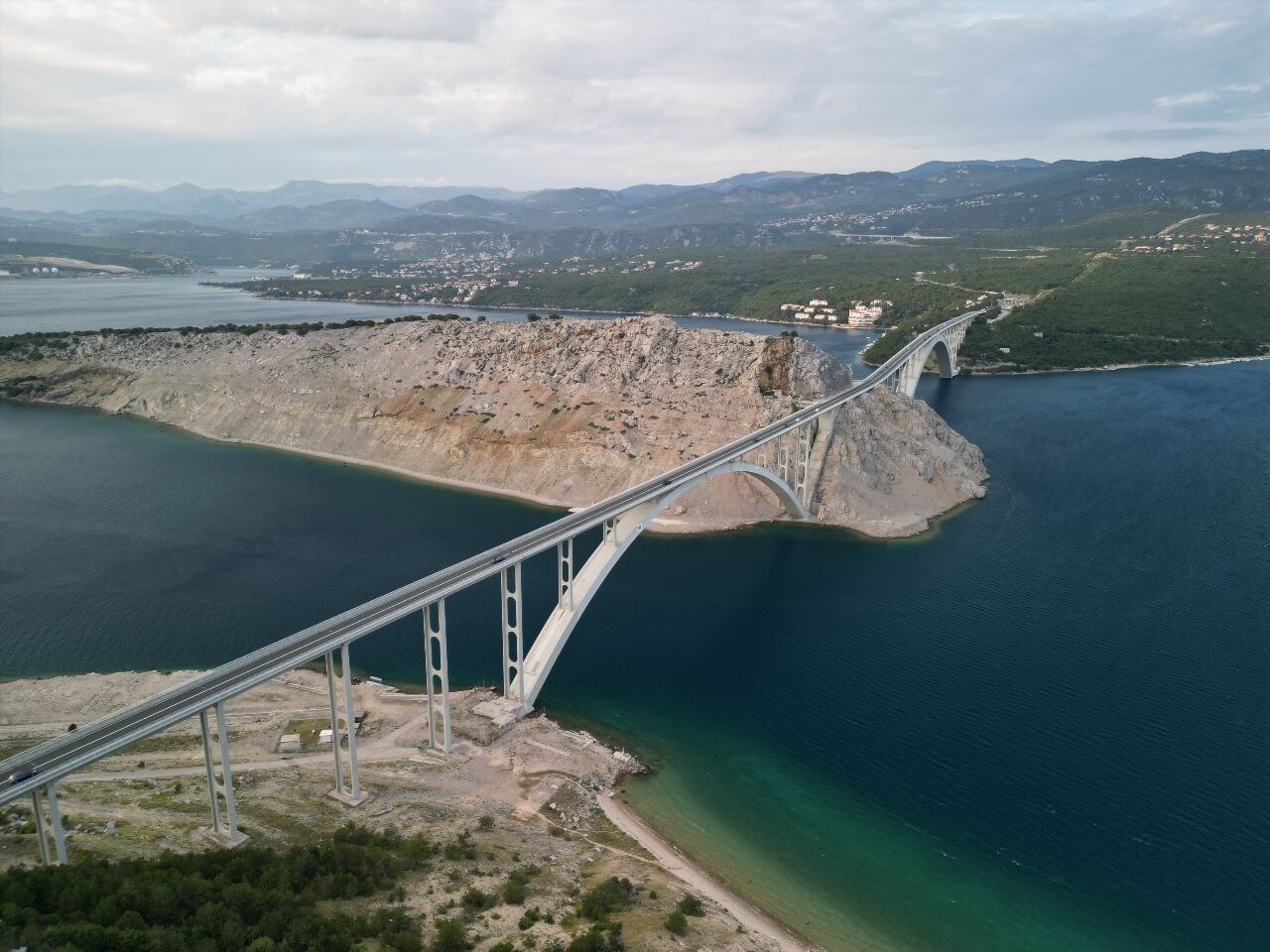
Krk Island is the largest Croatian island by area (405 km², neck and neck with Cres according to official measurements), but it's also one of the most accessible: a 1.4 km road bridge has connected it to the mainland since 1980, sparing it the ferry constraint. This particularity makes it an island reachable by car from Zagreb in 2.5 hours, from Rijeka in 45 minutes.
Geographically, Krk belongs to Kvarner Bay, an enclosed gulf between the Istrian peninsula and the Dalmatian coast, protected from prevailing winds and bathed in water warmer than the Mediterranean in summer. The Kvarner remains less known than southern Dalmatia, which translates into still reasonable prices and tourist attendance significantly less saturated than in Hvar or Brač.
Krk has been inhabited since the Neolithic. The Liburnians, Romans, Frangipanis (a powerful noble family that ruled the island from the 12th to 15th centuries) and finally Venice have left visible traces in the fortified town. The Cathedral of the Assumption rests partly on 5th-century paleochristian foundations, the rampart towers date back to Roman times, and the old town's streets have barely changed since the Serene Republic.
Another singularity of Krk: the island is one of the great cradles of Glagolitic writing, the medieval Slavic alphabet derived from the work of brothers Cyril and Methodius in the 9th century. The Baška Tablet (Baščanska ploča), an inscribed stone dating from around 1100 and now preserved at the Croatian Academy of Sciences and Arts in Zagreb, was discovered here, in Jurandvor. Replicas mark several villages on the island.
The territory is divided into seven municipalities: Krk, Baška, Vrbnik, Punat, Omišalj, Malinska-Dubašnica and Dobrinj. Each has its personality, Krk town for history, Baška for beaches, Vrbnik for wine, Punat for the marina, Dobrinj for the perched villages of the north. A stay of 5 to 7 days is enough to cover everything without rushing.
How to Pronounce Krk and Geographic Landmarks
The question comes up in all searches: Krk is pronounced 'Kerk', with a rolled 'r' characteristic of South Slavic languages. The 'r' plays the role of vowel here, a phonetic phenomenon common in Croatian (we find the same principle in the word 'trg', the square). For French speakers, an acceptable approximation is 'Krrk', with a slight vibration of the 'r'.
The island measures approximately 38 km from north to south and 20 km from east to west at its widest point. The northern part, around Omišalj and Malinska, is green and wooded with pines. The center opens onto limestone hills and vineyards. The south, around Baška, reveals a more arid, almost strictly Mediterranean landscape, with coves between white cliffs.
The Rijeka Airport is actually located on Krk Island, in Omišalj, making it an uncommon case: an international airport situated on an island and primarily serving a mainland city.
How to Get to Krk Island
The Krk Bridge (Krčki most, 51521 Punat, Croatia, rated 4.6/5 on Google for 614 reviews), inaugurated in 1980, remains the main access route from the mainland. At 1,430 meters long, it's one of the world's longest concrete bridges; it connects the area around Kraljevica, south of Rijeka, to the northern tip of the island, near Omišalj. Good news for the budget: the bridge toll was abolished on June 15, 2020. Passage is now completely free, in both directions, which wasn't the case in many old guides.
From Zagreb, count about 2.5 hours via the A1/A6 highway to Rijeka, then the coastal road to the bridge. From Ljubljana (Slovenia), the journey is about 2 hours. From Trieste (Italy), 1.5 hours. The route is well signposted once past Rijeka on the A7.
For those coming without a car, long-distance bus lines connect Zagreb and Rijeka to several municipalities in Krk. The Autotrans company operates regular connections from Zagreb to Krk town and Baška (duration: 3-4 hours depending on the stop). In Rijeka, local buses serve the island several times daily.
There is no regular ferry from Split or Dubrovnik directly to Krk. Travelers going up the coast from Dalmatia usually pass through Rijeka by bus or car, or take a Jadrolinija ferry from Split to Zadar, then the road north.
Once on the island, car remains the most practical way to get from village to village. Inter-municipal buses exist but are infrequent off-season. In July-August, seasonal shuttles connect Krk town to Baška and Punat.
Krk Town: Between Ancient Ramparts and the Adriatic
The town of Krk (simply called 'Krk grad' in Croatian) is the island's capital. With its 3,000 inhabitants or so in the center (just over 6,000 for the entire municipality), it concentrates the densest historical heritage on the island in a perimeter that can be walked entirely on foot in less than two hours.
The ramparts are the logical starting point. Part of the enclosure wall dates back to Roman antiquity, when the town was called Curicum and served as a municipality. The Frankopan towers (named after the Frangipanis, the medieval lords of the island) were reinforced over these foundations in the Middle Ages. Today, Kamplin Tower and Clock Tower overlook the port and can be visited for a modest sum, 2 to 4 € depending on the season.
The heart of the old town is Vela Placa Square, a small paved esplanade surrounded by palaces with ochre and pink facades. This is where the morning market is held, and this is where you best understand the superimposition of eras: under your feet, Roman traces; before you, a Venetian loggia; behind, the cathedral bell tower.
The Cathedral of the Assumption (Katedrala Uznesenja Blažene Djevice Marije) deserves an extended stop. It was built from the 12th century on the foundations of a 5th-century paleochristian basilica, itself built on ancient Roman baths. The nave floor reveals several archaeological levels, and fragments of ancient mosaic can still be glimpsed. Free entrance most of the time; a few euros donation suggested.
Just next door, Saint Quirinus Chapel (Crkva sv. Kvirina), dedicated to the town's patron saint, is a beautiful Romanesque ensemble built on two levels. The cathedral treasury, displayed upstairs, preserves goldsmithery pieces, illuminated manuscripts and a famous silver icon of the Virgin called 'in gold', one of the island's treasures.
The port of Krk (Riva, 51500 Krk, Croatia, rated 4.7/5 on Google for 661 reviews), meanwhile, is a lively marina in the evening. The walk along the quay (locals say 'riva') is the island's social ritual in season. Seafood restaurants line up from the harbourmaster's office to the pebble beach of Dražica, a few minutes' walk from the old town.
One last practical detail: wandering through Krk town costs nothing. The only paid entries are the towers and the cathedral treasury (2-4 €). Plan the morning for the old town and the afternoon for the beach.
Baška and the Beach That Made the Island Famous
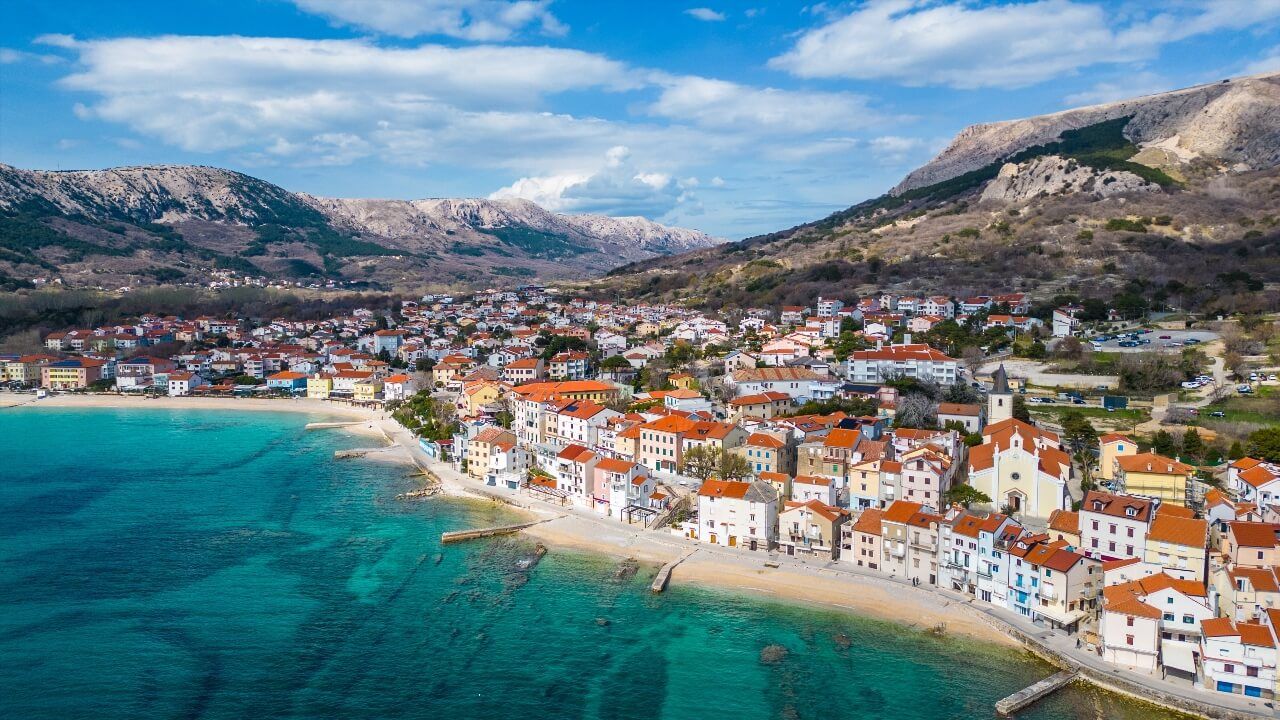
Baška is to Krk what Bondi is to Sydney: the name everyone knows before even setting foot on the island. Vela Plaža beach, nearly 2 km of white pebbles in a perfect arc at the foot of the mountains, regularly features in rankings of Europe's most beautiful beaches. This is no marketing exaggeration, you'll see from the first glance from the promenade.
What distinguishes Vela Plaža from other great Croatian beaches is its mineral backdrop: the bare reliefs of the peninsula, almost devoid of vegetation, fall toward the beach and create a striking contrast with the turquoise sea in the foreground. In high season, the beach is very busy: arrive before 9am or after 5pm to appreciate it in relative calm.
The old village of Baška is separated from the beach by about 1.5 km. Its white streets with red geraniums, small restaurant terraces and baroque church of the Holy Trinity form a quieter ensemble than the waterfront. 2 km from the village, in Jurandvor, the small Church of Saint Lucy preserves the replica of the Baščanska ploča, the famous Glagolitic tablet carved around 1100. The original, discovered here in 1851, is now preserved at the Croatian Academy of Sciences and Arts in Zagreb: it's the oldest known text mentioning a Croatian king, Zvonimir, and one of the founding monuments of the Croatian language.
For those who love more discreet coves, several beaches are accessible on foot from Baška following the coastal path. Oprna beach (about 45 minutes walk from Baška, or accessible by water taxi in summer) is a cove surrounded by cliffs, without facilities: bring water and an umbrella. Bunculuka beach (Bunculuka, 51523 Baška, Croatia, rated 4.7/5 on Google for 170 reviews), just west of the campsite of the same name, is more developed and suitable for families with young children.
Staying in Baška for a week is a valid strategy if you come mainly for the sea. The municipality has a good offer of rental apartments, supermarkets, several seafood restaurants and a pharmacy. Outside July-August, prices drop by 30 to 40% and the beach regains almost total serenity.
Biserujka Cave: Stalactites and Underground Coolness
The Biserujka Cave (Rudine, 51500 Dobrinj, Croatia, rated 4.1/5 on Google for 4,362 reviews) is one of the most accessible natural curiosities on Krk. It's located in the municipality of Dobrinj, in the northeast of the island, a few hundred meters from the village of Rudine. It's a classic karst cave, carved in the white limestone that forms the backbone of the entire island, and richly decorated with concretions.
The developed route runs for about a hundred meters of galleries, with an elevation change of only about ten meters, making it accessible to almost everyone. The guided tour lasts about 30 minutes and descends to a large hall (the 'Great Hall') decorated with stalactites, stalagmites and limestone draperies. Some formations take on brown or amber tints due to oxides present in the rock, a detail that guides like to point out with their flashlight beam.
The temperature inside remains constant, around 15°C year-round, with very high humidity. In midsummer, it's almost an attraction in itself: entering the cave when it's 35°C outside produces an immediate cooling effect. Bring an extra layer if you're sensitive to cold.
Entry is around 7-8 € for adults (indicative price, to be verified on site), with reduced rates for children. The cave is mainly open from late spring to autumn; off-season, access is restricted. The path from the parking lot is marked and presents no particular difficulty.
Vrbnik: Wines, Streets and Cliffs Over the Adriatic
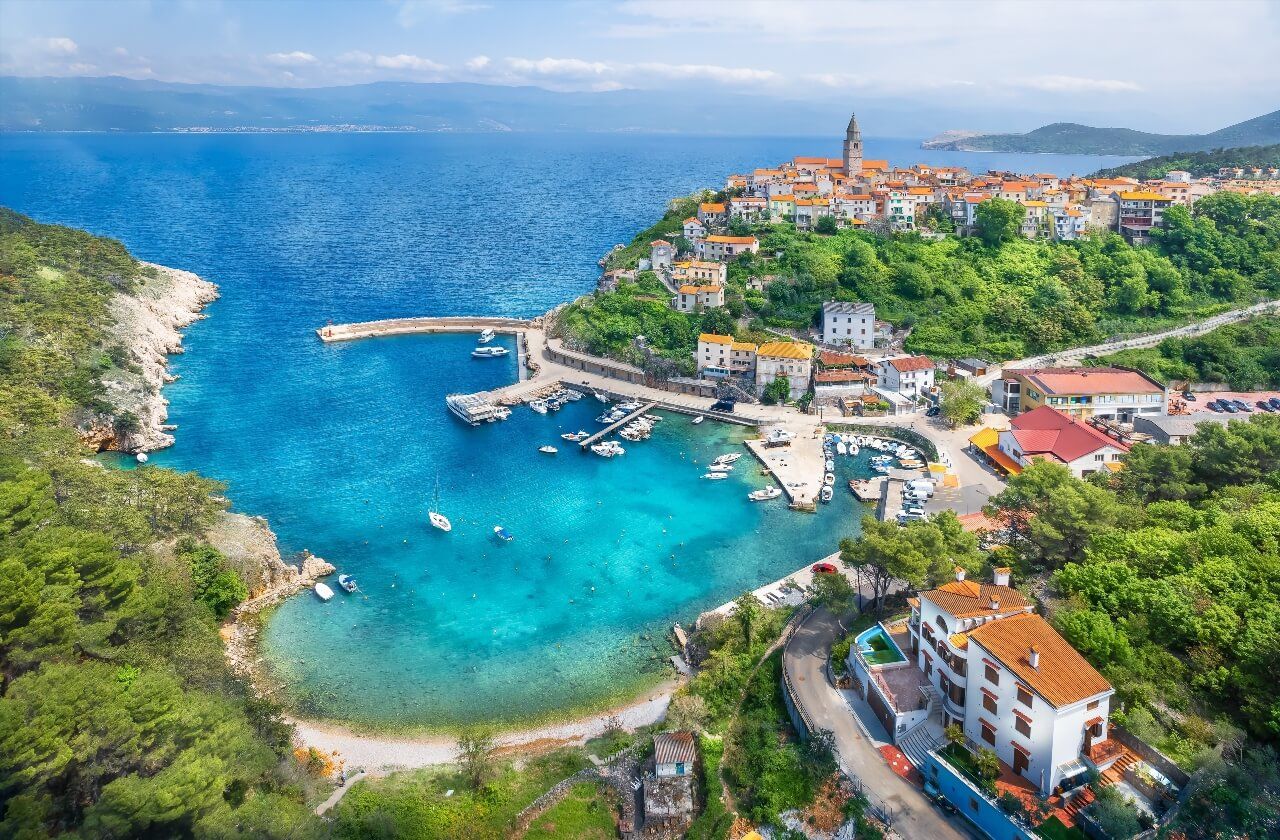
Vrbnik (Vrbnik, 51516 Vrbnik, Croatia, rated 4.6/5 on Google for 720 reviews) is the most spectacularly perched village on Krk. Perched on a limestone cliff 48 m above the Adriatic, it overlooks a clear view of the Kvarner Bay, the mainland coasts to the north and the island of Cres to the west. On clear days, frequent here, you can make out the Velebit peaks on the horizon.
The village has about 1,000 inhabitants in the municipality, but the historical core accommodates far fewer and fills up in summer. Its streets are so narrow that some only allow one person to pass at a time: locals speak of 'Klančić', reputed among the narrowest streets in Europe, barely a few dozen centimeters wide. The comparison isn't scientifically verifiable, but go through it anyway, the experience is worth the trip.
But Vrbnik is mainly about Žlahtina, a dry white wine produced on this terroir for centuries. The grape variety of the same name is an indigenous variety that produces lively wines, slightly mineral, with citrus and dry herb notes. The PZ Vrbnik wine cooperative vinifies much of the local production, and you can buy bottles directly at unbeatable prices (5-8 € for a standard bottle, double that in a Zagreb supermarket). Renowned producers like Gospoja or Šipun offer more ambitious cuvées.
Tasting is often possible directly at the producers', not always by appointment, but it's better to call ahead off-season. Pair the Žlahtina with pršut (local dry ham) and island sheep cheese: the combination is an honest introduction to Kvarner cuisine.
Vrbnik also has a parish church of the Assumption, a living Glagolitic heritage (the medieval Slavic script of which the island is one of the cradles) and a parish library that preserves precious ancient manuscripts. Vrbnik beach, at the foot of the cliff, is accessible via a steep staircase but worth the detour: you can swim in water that's often calmer and warmer than on the southern beaches, sheltered from the bora.
Plan 2 to 3 hours to explore the village on foot, lunch in a konoba (local tavern) and leave with a few bottles of Žlahtina.
Punat and Košljun Monastery
Punat is a marina municipality on the island's east coast, known mainly for two things: its sheltered bay, one of the best protections for sailing boats on the entire eastern Adriatic coast, and the islet of Košljun (Košljun, 51521 Punat, Croatia, rated 4.6/5 on Google for 454 reviews), visible from the port, a few hundred meters from shore.
Košljun is a small entirely wooded islet that houses a Franciscan monastery established at the end of the 15th century, on the site of an older Benedictine monastery. The complex includes a richly decorated church, a quiet cloister planted with cypresses and laurels, and a museum-library that preserves ancient Mediterranean maps, incunabula and rare liturgical objects.
To get there, small water taxis leave from Punat port all day from May to October (5-minute crossing, count a few euros round trip). The monastery guided tour is provided by the brothers themselves; count 45 minutes to 1 hour. Museum entry is around 5 €.
The monastery garden cultivates medicinal plants in the Franciscan tradition. The brothers sell some local products in a small shop: liqueurs, honey and artisanal soaps. Nothing essential, but it's a way to support the community.
Around Punat, several small pebble beaches are accessible on foot or by bike from the village. Punat beach itself, shaded in the morning, is the kind of place ideal for reading quietly, away from the bustle of Baška.
Dobrinj and Omišalj: The Island Away From Beaches
The municipalities of Dobrinj and Omišalj (Omišalj, 51513 Omišalj, Croatia, rated 4.3/5 on Google for 210 reviews) occupy the north and northeast of the island, where most tourists don't venture. That's precisely their appeal.
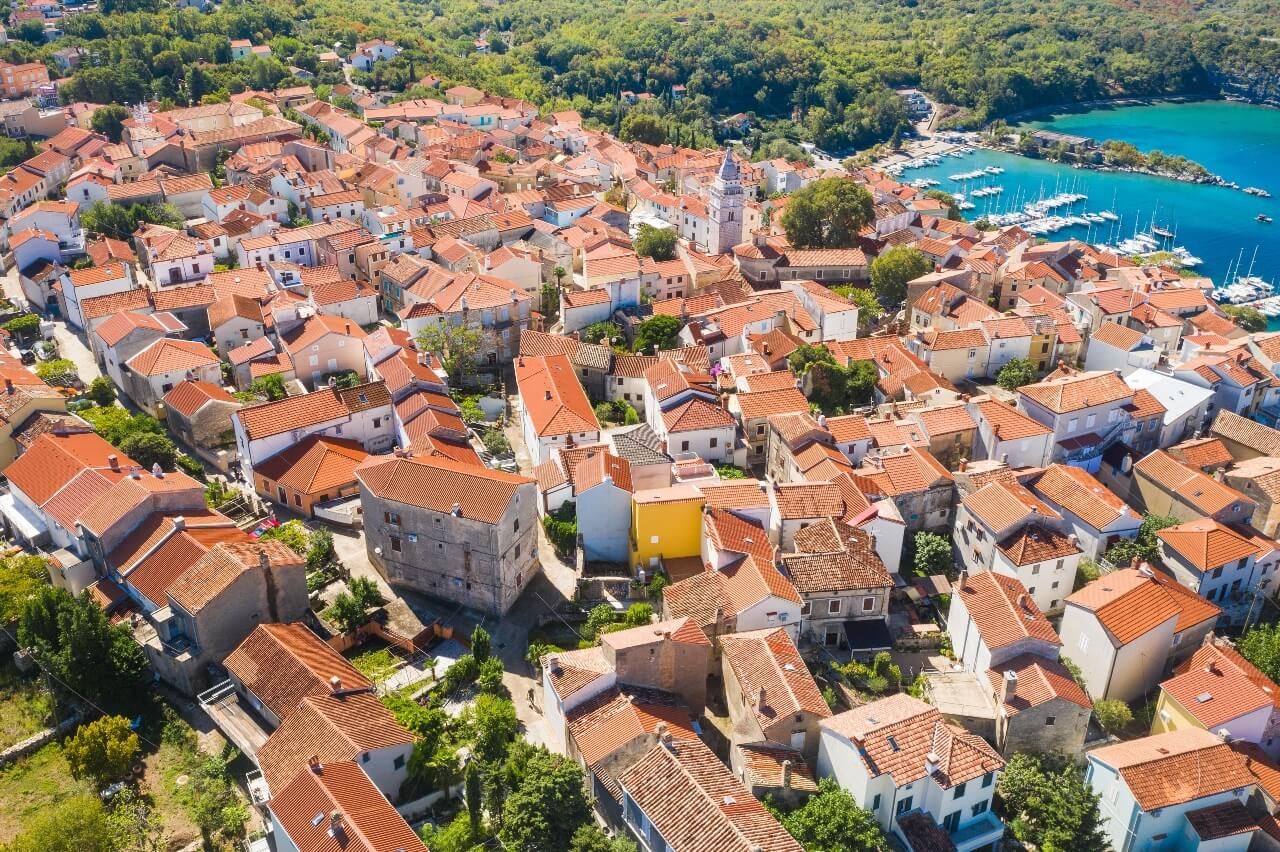
Omišalj is one of the oldest villages on Krk, perched on a hill overlooking Kvarner Bay and the Krk bridge. The parish church (Crkva sv. Marije) and medieval core are worth a look, but it's mainly the panorama from the village edge, over the sea and mainland coast, that alone justifies the detour.
Dobrinj is even less frequented. This medieval village is built in height around its church, in the typical style of Adriatic perched villages. It's in its municipality's territory that the Biserujka cave is located (see above), as well as several olive oil and sheep cheese producers that can be met directly.
These two municipalities offer a version of Krk that seems unchanged for decades: no large hotel complexes, old-fashioned campsites under the pines, secondary roads almost empty even in August.
The Most Beautiful Beaches of Krk Island
Krk offers a diversity of beaches that few islands of the same size can match. Pebbles, sand, rocky slabs, wild coves or equipped beaches: the choice depends on what you're looking for.
Vela Plaža in Baška remains the undisputed reference. Its white pebbles over nearly 2 km are the island's postcard. For water quality, clarity and the mountainous environment framing the beach, it's unique in the region.
Stara Baška (Stara Baška, 51521 Punat, Croatia, rated 4.5/5 on Google for 320 reviews) is a wild beach at the end of a narrow road from the village of Soline, in the southwest of the island. It's accessible by car or scooter, via several kilometers of small road from the main axis. The effort is rewarded with a cove surrounded by scrubland, surprisingly preserved even in high season.
Klimno is a small seaside resort on the northeast coast, with a fine pebble beach in a sheltered bay. The water is slightly warmer than in Baška due to shallow depth. Less spectacular, but the neighboring bay of Soline is also reputed for its marine mud, which regulars come to apply for its supposed virtues.
Soline (Dobrinj municipality) is known for its shallow bay with muddy bottom and former salt marshes, a curiosity where rare halophytic plants grow. The water is calm and warm over a long distance: perfect for children.
Finally, several small rocky coves hide north of Krk town, accessible on foot from the port in about twenty minutes. They're not all marked on maps, but residents frequent them gladly, for water that's deep from the first meters and absolutely clear.
A beach map is available at the tourist offices in Krk town and Baška: it indicates naturist beaches (FKK), equipped beaches and wild coves. A digital version also exists on the island's tourist office website.
Activities and Water Sports: Diving, Kayaking, Sailing
Krk Island is a serious destination for water sports, less publicized than Istria but equally well equipped. The Kvarner seabed is renowned for its clarity (visibility up to 30 m in calm weather) and biodiversity.
Scuba diving is the flagship activity. Several clubs operate from Krk town and Baška and offer trips for beginners as well as PADI certifications. The most interesting sites include a World War II wreck near Plavnik islet, rocky drop-offs at 25-40 m depth between Krk and Cres, and underwater caves accessible to experienced divers.
Sea kayaking is perfectly suited to the island's coastline profile, with its numerous coves otherwise inaccessible. Several providers offer daily rentals (around 35-50 € for a double kayak) or guided excursions with swimming stops. The two-day tour around the north of the island, with overnight camping, is a popular option for experienced kayakers.
Sailing benefits from the Kvarner, an exceptional body of water. The marina at Punat is one of the largest in Croatia, with several hundred wet and dry berths. Weekly sailboat charters are available from Punat or Krk town. The bora (northeast wind) can be violent in all seasons, but also creates very sporty sailing conditions appreciated by experienced skippers.
For hiking enthusiasts, several marked trails cross the island. The Baška-Stara Baška trail (south coast) follows the cliff with constant sea views. Other routes connect Vrbnik to neighboring villages through vineyards and olive groves, away from tourist traffic. The Krk tourist office distributes free topographic guides for these routes.
Cycling is possible but demanding: the terrain is hilly and secondary roads often narrow. Mountain bikes and electric bikes are available for rent in Krk town and Baška (15-30 €/day), a good option to connect two or three villages during the day.
When to Go to Krk: The Best Seasons
Krk enjoys a Mediterranean climate tempered by the proximity of the Dinaric Alps. Summers are hot and dry (25-33°C from June to September), winters mild but windy (8-14°C from December to February). Rain is rare from May to September; precipitation is concentrated mainly in autumn and winter.
June and September are the ideal months to visit the island if you come for the beaches. The sea is already warm (22-24°C in June, 25-26°C in September), the July-August crowds are absent and prices drop by 20 to 30%. Restaurants and shops are all open.
July and August represent high season, with its advantages (entertainment, local festivals, water sports in full swing) and disadvantages: crowded beaches, prices at their highest, reservations necessary several weeks in advance for decent accommodations.
May and October are suitable for a cultural or hiking stay. The weather is pleasant but uncertain, and some restaurants or activities operate with reduced hours or remain closed.
The bora, the northeast wind, can blow violently at any time of year, including midsummer. It rarely lasts more than 48 hours and leaves behind an absolutely blue sky and exceptional visibility.
Where to Stay on Krk Island
Krk's accommodation offer essentially consists of holiday apartments for direct rental, small family hotels and campsites. Large international chains are little present, which maintains relatively competitive prices compared to other Croatian destinations.
Krk town is the most versatile base. There are several 3-4 star hotels near the port where Hotel Bor is a safe choice for families), a good density of short-term rental apartments, and all services within a restricted perimeter. Average prices: 80-150 € per night for a two-person apartment in high season.
Baška is the natural choice if you come mainly for the beach. Apartments there are slightly more expensive than in Krk town in July-August, but you gain in seaside immersion. Several campsites are located directly on the seafront around Baška.
Vrbnik is a less conventional option, for those who prefer sleeping in an authentic village. The offer is limited (a few rental apartments, no large hotel), but prices are among the most gentle on the island for an irreproachable setting. Warning: access roads to Vrbnik are narrow and parking spaces limited.
Camping: the island has about a dozen campsites of varying quality. Camping Bunculuka (Bunculuka, 51523 Baška, Croatia, rated 4.3/5 on Google for 1,415 reviews) in Baška is well equipped (snack bar, direct sea access) but lively in high season. Camping FKK Politin, near Krk town, is a renowned naturist campsite, in a pine forest setting by the water.
For a stay of 1 to 2 nights, accommodations around Omišalj are well placed geographically, minutes from the bridge and Rijeka airport, even if they're less lively than Krk town or Baška.
Excursions From Krk to the Dalmatian Coast
Krk is an excellent starting point to explore the major cities of the Croatian coast. Most visitors limit their stay to the island, but a few extra days allow understanding coastal Croatia in all its diversity.
Split is the most visited city in Dalmatia and the second in Croatia by population. It's about 3.5 hours drive from Krk town via the A1 highway. Its historic heart is Diocletian's Palace, which Emperor Diocletian had built for his retirement at the beginning of the 4th century: a fortress in which an entire city developed over the centuries. Inhabitants still live there today, and cafés and restaurants occupy the palace galleries and cellars. To explore Split with an audio guide that retraces two millennia of urban history, the Split audio-guided tour by Ryo is an excellent resource.
Trogir is about thirty kilometers northwest of Split, about 25 minutes by car. It's a medieval town inscribed on the UNESCO World Heritage list, entirely built on a small islet connected to the mainland by bridges. The Cathedral of Saint Lawrence and its Romanesque portal by master Radovan are among the finest examples of medieval art in the Adriatic. Trogir is often visited in half a day from Split, but deserves a night if your schedule allows. The Trogir audio guide by Ryo lets you explore the old town at your own pace, without a human guide.
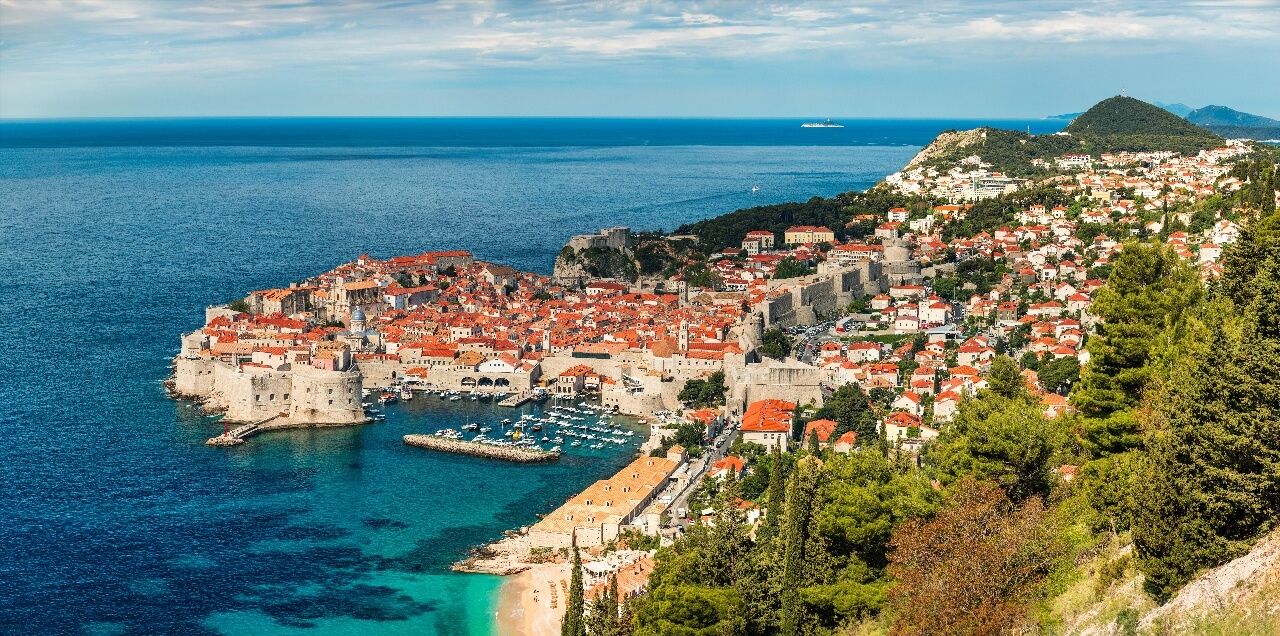
Dubrovnik is the most distant destination from Krk, 5.5 to 6 hours drive down the coast via the A1, then the coastal road. The distance deters many travelers from making this connection, but those who risk it don't regret it. The old town (Stari Grad), its ramparts, the Stradun and its palaces are among the most intense urban experiences in the Mediterranean. Note that Dubrovnik welcomes millions of visitors per year: plan your visit early morning or late afternoon. The Dubrovnik Ryocity covers 18 audio points on a 2.5 km route in the heart of the old town.
Between Krk and Split, the city of Zadar deserves a stop. About 2 hours from Krk, it's often underestimated: its Sea Organ (a natural instrument that plays thanks to waves) and its Greeting to the Sun (a light installation on the quay) are two unique experiences. The Ryo article on Croatia's top 10 must-sees provides a useful overview for planning a broader coastal itinerary.
FAQ
Do you need a passport to go to Croatia from France?
No. Since January 1, 2023, Croatia is a member of the Schengen area. French citizens (and those from other EU countries) can enter Croatia with their national identity card in valid condition. A passport is not required, but bring it if you plan to pass through Bosnia and Herzegovina (for example on the coastal stretch between Split and Dubrovnik).
What is the best time to visit Krk Island?
June and September offer the best compromise: warm sea, reduced crowds and lower prices than July-August. June is slightly cooler (water around 22°C), September remains summery with water at 25-26°C. For hiking and culture, May and October are pleasant, but some accommodations and activities are closed or have reduced hours.
Is Krk Island suitable for family travel with young children?
Yes, particularly. The beaches of Soline (shallow bottom), Klimno and Bunculuka are very suitable for young children. Most accommodations offer equipped apartments with kitchens. Supermarkets are present in Krk town, Baška and Malinska. Doctors and pharmacy are available in Krk town.
What currency is used in Croatia?
Since January 1, 2023, Croatia has adopted the euro as its official currency. The kuna is no longer in circulation. Card payments are accepted in almost all tourist shops, restaurants and hotels. Bring some cash for small merchants, certain parking lots and direct vendors.
Are there waterfalls to see near Krk?
Krk itself has no waterfalls on its territory. However, the Krka waterfalls (Krka National Park) are accessible in 2.5 to 3 hours drive from Krk town. Plitvice National Park, the country's most famous for its lakes and terraced waterfalls, is about 3.5 hours from Krk. The Skradinski Buk waterfall at Krka is often mentioned in searches combining 'Krk' and 'waterfall', probably due to confusion between the two names.
How to get around Krk Island without a car?
Inter-municipal buses connect the main villages (Krk town, Baška, Malinska, Punat) several times a day in summer. Frequency drops to 2-3 rotations per day off-season. For coves and isolated villages, a car remains practically essential. Scooter rental (30-50 €/day) is a popular alternative for couples and solo travelers. Taxis exist but are few: better to have a local driver's number or use a booking app.
Conclusion
Krk in Croatia keeps a rare promise: an accessible island, historically rich, with truly beautiful beaches, without having yet completely succumbed to overtourism. From the medieval old town of Krk to the vineyards of Vrbnik, from Baška beach to Biserujka cave, the island offers enough diversity for a dense week's stay, or two weeks if you take time to wander.
To extend along the Croatian coast, the Dubrovnik Ryocity by Ryo takes you through 18 listening points in the UNESCO-listed old town, and the Trogir audio-guided tour by Ryo unveils one of the most intact medieval towns of the Adriatic. Krk Island can be the first stop of a broader coastal itinerary, or a destination in its own right. In both cases, it proves worthy of its discreet reputation.