© Shutterstock
 Votre guide Ryo
Things to Do in Zadar in 2026: 18 Must-Have Experiences
In Zadar, the sun doesn't just set — it plays music. Every evening, dozens of passersby stop dead on the quay to listen to waves transformed into chords by an organ buried beneath the stone pavement, before sitting in a circle on a glass disc that lights up as night falls. This Dalmatian port city, long overshadowed by Split and Dubrovnik, nonetheless packs three thousand years of history onto a peninsula you can cross on foot in twenty minutes. What to do in Zadar when you have a day, a weekend, or a full week? The question deserves careful consideration, as the city expertly balances Roman ruins, Byzantine art, and near-deserted beaches just ten minutes from the center.
Behind the UNESCO-listed Venetian ramparts, five wells still feed a 16th-century cobbled square, a Roman forum serves as a playground for neighborhood children, and a museum houses one of the richest collections of ancient glass in Europe. Add islands reachable by ferry in twenty minutes, a covered market where fishermen still negotiate their catches at dawn, and two national parks less than two hours away by road — and you have an ideal base for a four-day stay in Dalmatia, beach included. Before leaving, many travelers plan their route with the Ryo audio guide, which puts every alleyway in its historical context as you walk.
1. Getting Lost in the Old Town and Its Roman Grid
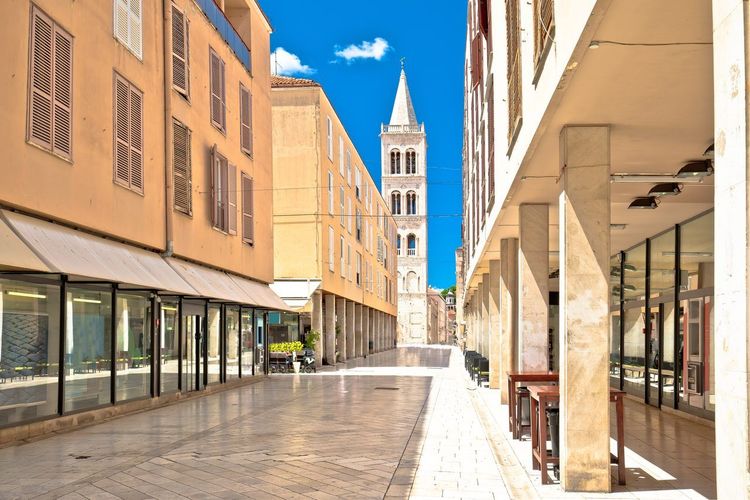
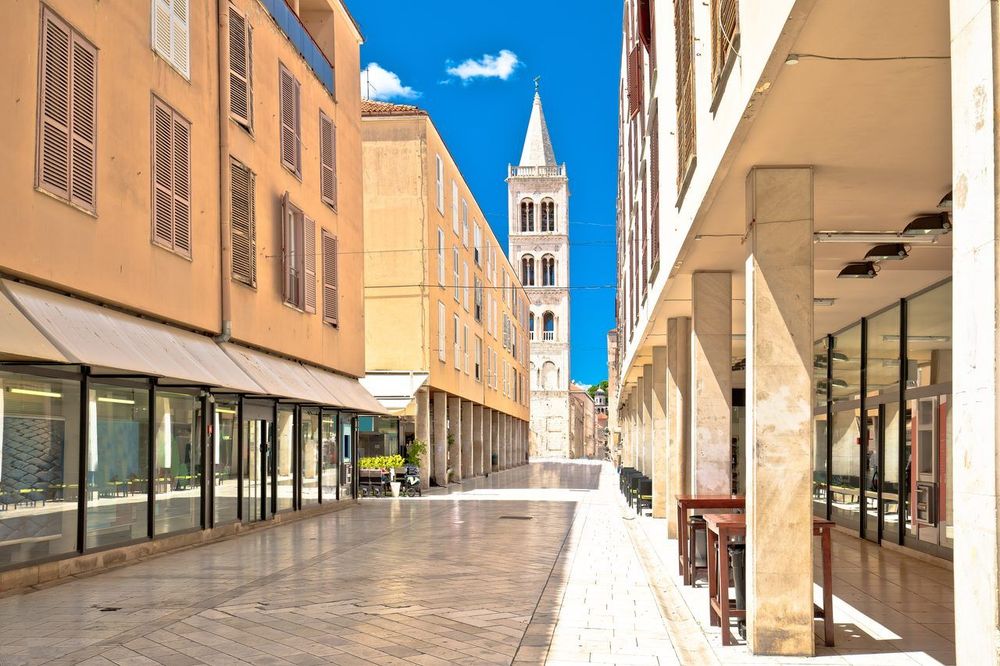
The old town's grid layout dates back to the Roman colony of Iader, founded in the 1st century BCE. The perpendicular streets branching off from the Kalelarga, the main artery paved with white limestone polished by centuries of footsteps, still trace the grid laid out by Roman surveyors. In the evening, this street fills with families doing the corso, the traditional Dalmatian pre-dinner stroll.
Along this route you'll encounter Gothic façades, Renaissance balconies, and contemporary bar signs, layered without apparent logic but with undeniable charm. Allow an hour to wander without a specific goal, ducking into the inner courtyards that are often open to the public during the day. Look up regularly: many lintels still bear the coats of arms of patrician families or half-erased Latin inscriptions, discreet remnants of centuries of Venetian rule over the city.
2. Listening to the Sea Organ, the Instrument That Put Zadar on the Map
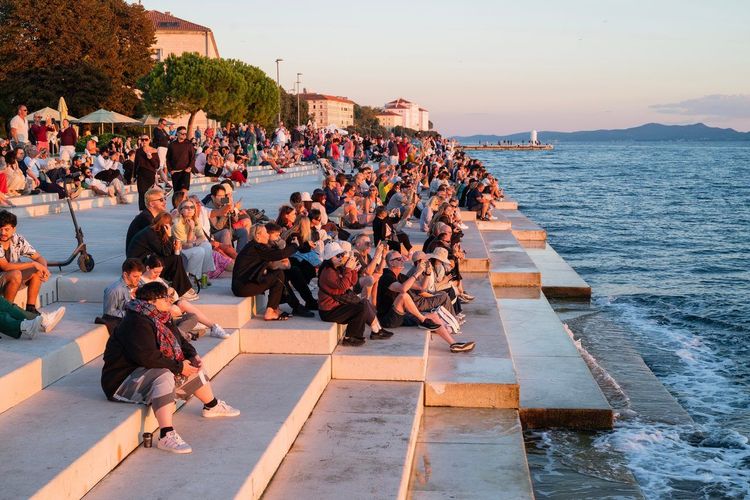
Built in 2005 by architect Nikola Bašić on the western quay of the peninsula, the Sea Organ (Obala kralja Petra Krešimira IV, 23000 Zadar, rated 4.7/5 on Google with 72,447 reviews) (Morske orgulje) transforms wave motion into chords through a system of thirty-five pipes buried beneath stone steps. The air pushed by the swell produces notes whose combination varies with wind strength and tide: no two listening sessions are alike.
The steps descend directly into the water, allowing you to sit almost at sea level and feel the vibrations beneath you as much as hear them. Alfred Hitchcock reportedly described the sunset viewed from this quay as the most beautiful in the world during a visit in the 1960s — an anecdote local guides love to repeat, though they can't always pin down the exact source.
Come ideally an hour before sunset: the crowd builds gradually and the best spots, right at water level, fill up early. A Ryo audio guide tour devotes several minutes to the acoustic engineering of the installation, helpful for understanding why the sound changes so much from one day to the next.
3. Marveling at Pozdrav Suncu, the Greeting to the Sun
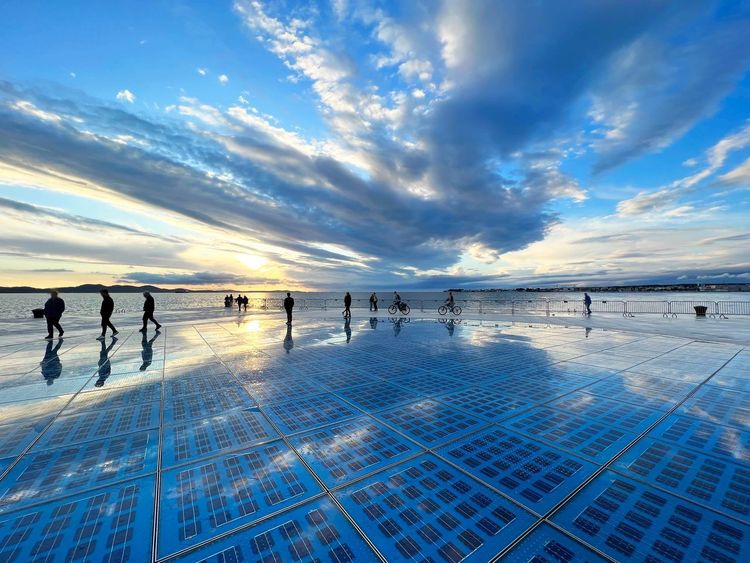
Just a few meters from the organ, a disc of three hundred solar glass panels forms the Greeting to the Sun (Pozdrav Suncu (Obala kralja Petra Krešimira IV, 23000 Zadar, rated 4.6/5 on Google with 5,039 reviews)), installed in 2008. During the day, the panels store solar energy; at nightfall, they release it as a light show synchronized with the rhythm of the waves captured by the neighboring organ.
The disc measures twenty-two meters in diameter and sits flush with the ground, allowing you to walk across it. Locals settle in a circle after dinner, often with a beer bought from one of the quay kiosks, to watch the colors cycle late into the evening. It is probably the most photographed scene in the city, yet it remains surprisingly quiet compared to other Adriatic tourist hotspots.
4. Climbing to the Top of the Cathedral of St. Anastasia's Bell Tower
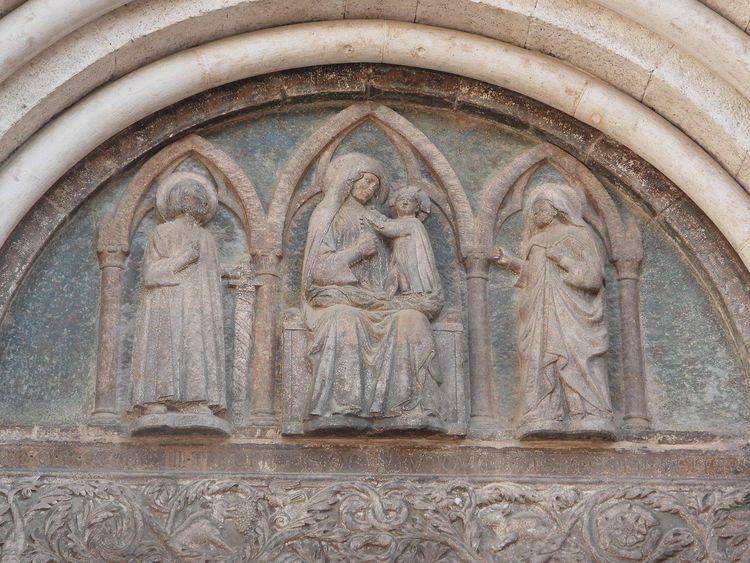
The Cathedral of St. Anastasia (Trg svete Stošije 2, 23000 Zadar, rated 4.6/5 on Google with 2,706 reviews) (Katedrala svete Stošije), the largest Romanesque church in Dalmatia, dates primarily from the 12th century, though older foundations go back to the 5th century. Its three-portal façade and sculpted rose windows bear witness to a construction project spread over several generations of Venetian and local craftsmen.
The adjoining bell tower, completed only in the late 19th century by English architect Thomas Graham Jackson to plans inspired by Venetian Gothic, can be climbed today for a few euros (Croatia adopted the euro in January 2023; the kuna is no longer in use). Be prepared for a workout: the narrow staircase has nearly two hundred steps and narrows as you approach the top. The view, however, makes the effort worthwhile: it takes in the red-tiled rooftops of the old town, the outline of the islands offshore, and on clear days, the first ridges of the Velebit massif closing off the horizon to the east.
5. Discovering the Church of St. Donatus, a Byzantine Circle Built on a Roman Forum
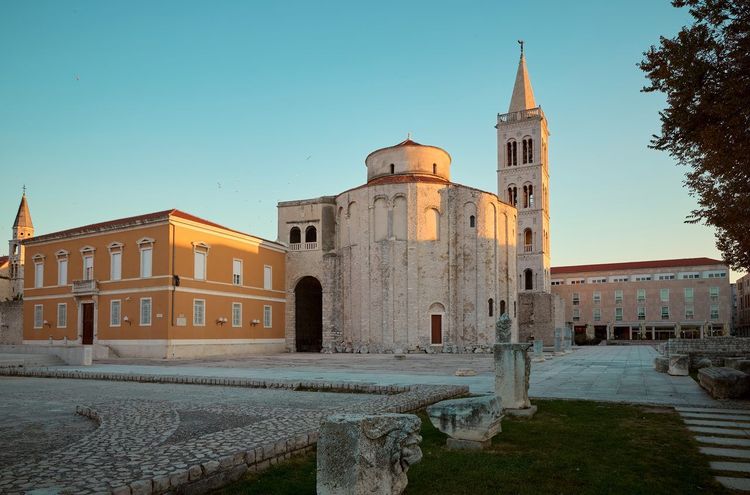
The Church of St. Donatus (Šimuna Kožičića Benje 2, 23000 Zadar, rated 4.6/5 on Google with 10,946 reviews) (Crkva svetog Donata), dating from the 9th century, features an unusual circular plan inherited from pre-Romanesque Byzantine architecture. The building literally rests on the remains of the Roman forum: fragments of ancient columns and lintels reused in its foundations are still visible from inside.
The exceptional acoustics of the circular space make it the stage every summer for Zadar's medieval and Renaissance music festival. If your visit coincides with a concert, book ahead: the venue rarely seats more than a hundred people.
6. Walking across the Open-Air Roman Forum
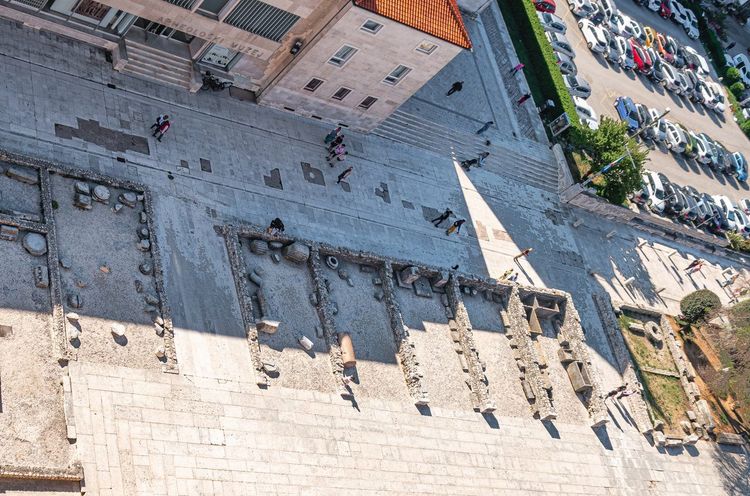
The Roman Forum of Zadar, laid out between the 1st century BCE and the 3rd century CE, remains the largest surviving example of its kind on the entire eastern Adriatic coast. A solitary column, said by local tradition to have served as a pillory in the Middle Ages, still stands amid limestone slabs worn smooth by two thousand years of foot traffic.
The site is unfenced: children play football between carved stone blocks, giving these ancient ruins an everyday vitality that is quite rare for a monument of this significance.
7. Lingering at Five Wells Square
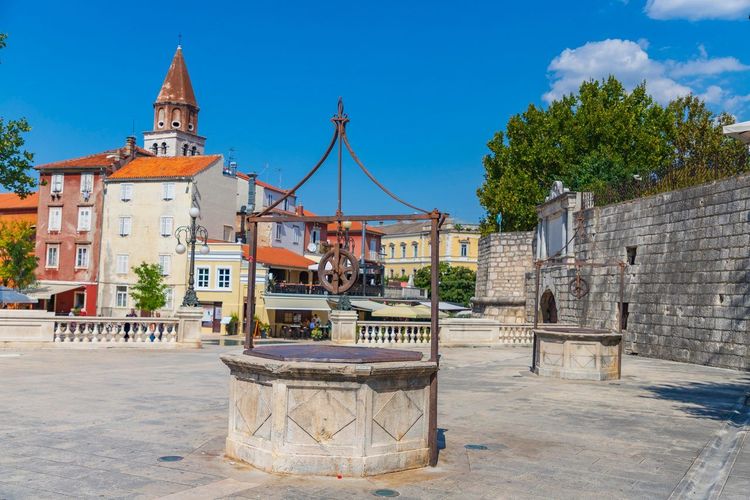
Built in 1574 by the Venetians to store drinking water in anticipation of an Ottoman siege that never came, Five Wells Square (Ulica pet bunara, 23000 Zadar, rated 4.6/5 on Google with 3,601 reviews) (Trg pet bunara) takes its name from the five aligned wells that once supplied the entire walled city.
The wells were sealed in the early 20th century for hygiene reasons, but the square has kept its terraced park and surrounding ramparts, today a popular spot for an evening stroll.
8. Strolling along the Riva and the Marina
The Riva promenade runs the entire length of the peninsula's waterfront, from the Sea Organ quay to the marina where sailboats and yachts lie at anchor. It is where Zadar's residents come to run in the morning and meet friends at sunset.
Several café terraces line this quay, with a direct view of the moored boat masts. You can also rent a kayak there to paddle alongside the sea-facing ramparts, offering a different perspective on the old town. In the late afternoon, settle onto a bench facing the open water: it is one of the few spots in the center where you can watch the sun sink over the archipelago while maritime shuttles return to port, engines idling and decks full of passengers.
9. Shopping at the Zadar Covered Market
The covered market (Sokolska ulica 3, 23000 Zadar, rated 4.5/5 on Google with 9,246 reviews) (Gradska tržnica), set just outside the old town gates, opens as early as 6 a.m. Fishermen unload their catch directly from the nearby port, while local market gardeners offer figs, olives, and tomatoes according to the season.
Look out for cheese from the island of Pag (paški sir), aged with sea salt and herbs cured by sea spray — a specialty not easily found outside Croatia. The local olive oil, often sold directly by producers without an official label, is also worth lingering over.
Come before 9 a.m. to experience the market at its most authentic, before cruise ship groups arrive mid-morning. Right next door, the fish market (ribarnica) is worth a detour for its stalls of sea bream, sea bass, and squid caught the previous night, sold at auction in fast-paced, good-humored Croatian.
10. Walking along the UNESCO-Listed Venetian Ramparts
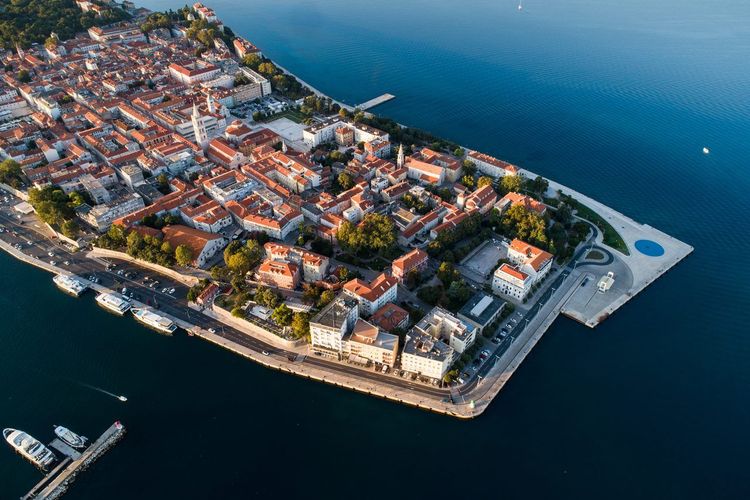
Inscribed in 2017 on the World Heritage List as part of the Venetian defensive works from the 15th to 17th centuries, the ramparts of Zadar once encircled the entire peninsula to protect it from Ottoman incursions.
The Land Gate (Ulica Zrinsko-Frankopanska, 23000 Zadar, rated 4.8/5 on Google with 297 reviews) (Kopnena vrata), the main monumental entrance, still bears a sculpted Lion of St. Mark above its arch, a symbol of Venetian dominance over the city for nearly four centuries.
11. Swimming at Kolovare Beach
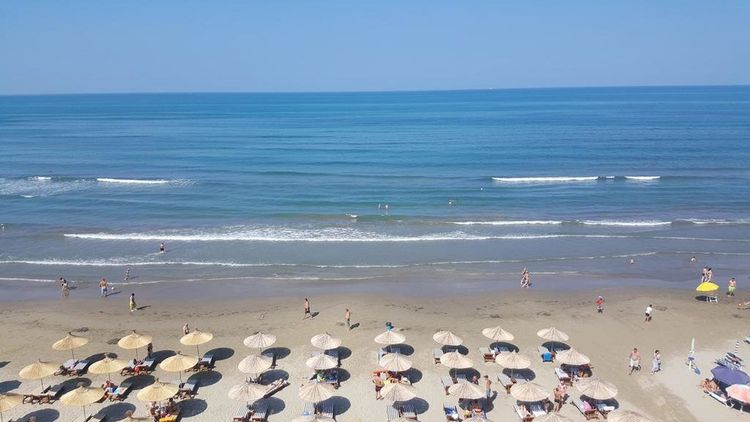
Ten minutes on foot from the old town, Kolovare Beach (Ulica Petra Ljubića, 23000 Zadar, rated 4.3/5 on Google with 8,749 reviews) offers easy access to a generally calm and clear sea, with views of the island silhouettes offshore.
The shoreline, mostly rocky with a few patches of fine gravel, is well suited to families thanks to its gentle slope. Beach cabins, showers, and several beach bars line the promenade throughout the summer season. Bring water shoes if you're sensitive to pebbles, and come in the morning rather than the afternoon: the cove fills up quickly and the few shaded spots under the pines are claimed early.
12. Taking the Ferry to the Island of Ugljan
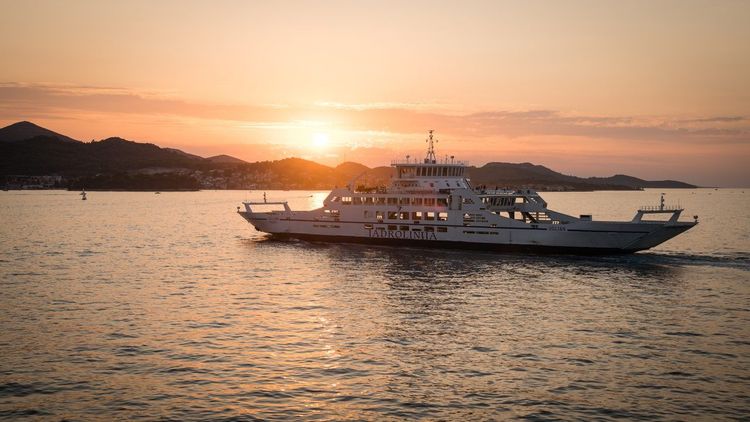
Just twenty-five minutes of crossing separate the port of Zadar from the island of Ugljan, nicknamed the green island for its centuries-old olive groves planted on hillsides. Ferries run every hour in season, making a day trip possible with no advance booking.
From the village of Preko, a trail climbs in forty-five minutes to Sveti Mihovil Fortress (Ugljan, 23275 Ugljan, rated 4.7/5 on Google with 2,270 reviews), whose 13th-century ramparts overlook the entire Zadar archipelago. The panorama from the battlements, over the dozens of islets scattered below, is reason enough in itself to make the climb on a clear day.
13. Sailing among the 89 Islands of the Kornati National Park
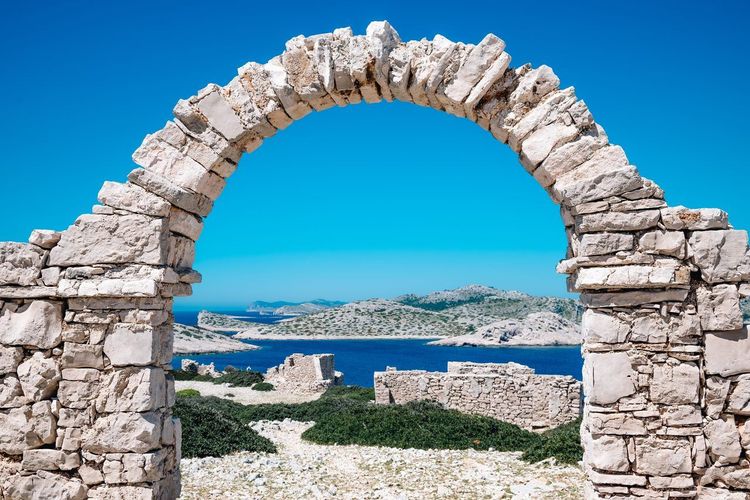
The Kornati National Park, protected since 1980, encompasses eighty-nine limestone islands and islets almost entirely devoid of vegetation, creating a lunar landscape unique in the Mediterranean. Most excursions departing from Zadar last a full day and often include lunch on board or at an isolated fishermen's konoba on one of the inhabited islands.
The Kornati cliffs, known as crowns by local sailors, sometimes drop sheer for more than eighty meters directly into an almost unreal blue sea. Organized boat trips generally make a stop near the islet of Mana for an open-water swim, far from any visible shore.
You can also explore the archipelago by private sailboat or by renting a motorboat without a license for smaller vessels — an option that gives you more freedom over the itinerary and the coves you choose. Bear in mind that you'll need settled weather: swells can rise quickly in this exposed stretch of the Adriatic.
Diving enthusiasts will appreciate the protected seabed around the islets, where fishing has been banned since the park was established. Several Zadar-based clubs offer beginner dive trips combined with a visit to the archipelago, a way to discover the Kornati from a different angle than a standard tourist cruise.
14. Immersing Yourself in the Royal History of Nin
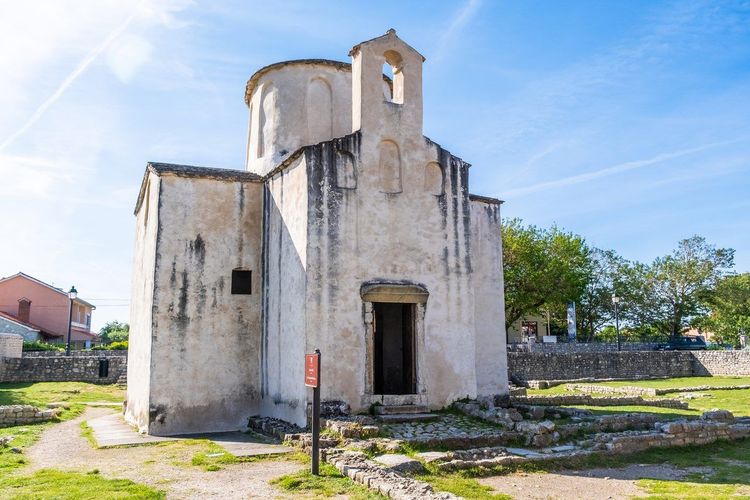
About twenty kilometers north of Zadar, Nin claims the title of Croatia's oldest royal city, the cradle of the first sovereigns of the 9th century. Its tiny Church of the Holy Cross (Sveti Križ), built in the 9th century and less than eight meters long, competes with other European sanctuaries for the title of world's smallest cathedral. A short distance away, on an artificial mound at the city gates, the Church of St. Nicholas served as the coronation site for Croatian kings, who would present themselves on horseback at its four cardinal points — an image that has remained powerful in the national imagination.
Nin is also known for its therapeutic mud baths, fed by the shallow lagoon surrounding the old town. Locals coat themselves in mud on nearby beaches — an ancient local tradition that tourists are happy to adopt in summer. The surrounding salt flats, worked since Roman times, still produce a salt prized for its purity.
15. Hiking through the Gorges of Paklenica National Park

A little over an hour's drive from Zadar, Paklenica National Park unfolds two limestone canyons — Velika and Mala Paklenica — cut between walls that often exceed four hundred meters in height. The site attracts both family hikers and seasoned climbers, with more than four hundred equipped climbing routes.
The main trail, which follows the dry canyon bed in summer, leads in about two hours to Anica Kuk peak, the starting point for many technical ascents. Wear sturdy walking shoes: the canyon floor remains rocky and can be slippery after rain, even in peak tourist season.
16. Booking a Day Trip to Plitvice Lakes
About two hours' drive from Zadar, Plitvice Lakes National Park (Plitvička jezera 17, 53231 Plitvička Jezera, rated 4.8/5 on Google with 128,517 reviews), a UNESCO World Heritage Site since 1979, strings together sixteen turquoise lakes connected by waterfalls and wooden walkways suspended just above the water. It is the most in-demand day trip from Zadar, far ahead of the Kornati or Paklenica in booking volumes.
The limestone pools form naturally through tufa deposits, a still-active process that slightly alters the course of the waterfalls from year to year. The colors range from pale turquoise to deep green depending on the water's mineral content and the angle of the sun — a particularly spectacular phenomenon in late morning.
Book your entry ticket online several days in advance during high season: the park limits the number of simultaneous visitors on the trails to protect the ecosystem. Allow a full day including travel, departing early to avoid the tour coaches that arrive in large numbers mid-morning.
Autumn, between late September and mid-October, offers golden light on the surrounding beech forests and noticeably fewer visitors than July or August, without detracting in any way from the beauty of the site.
17. Admiring the Collection at the Museum of Ancient Glass
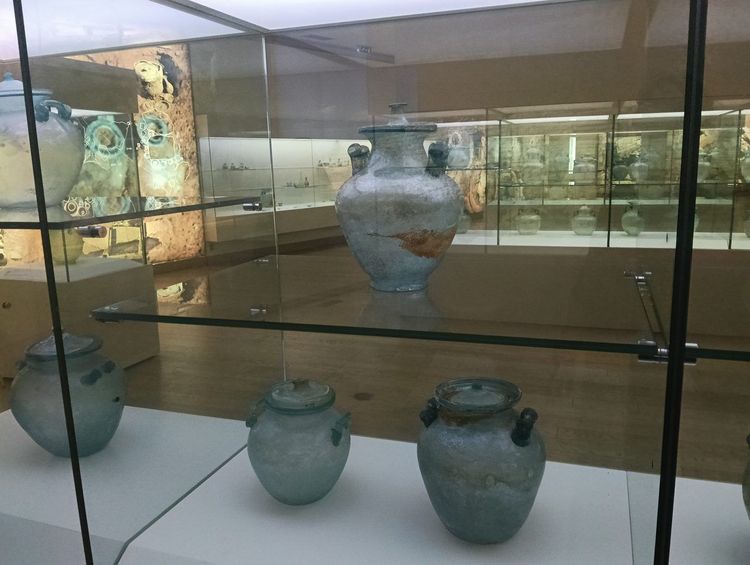
Housed in the Cosmacendi Palace, the Museum of Ancient Glass (Poljana Zemaljskog odbora 1, 23000 Zadar, rated 4.5/5 on Google with 859 reviews) (Muzej antičkog stakla) holds one of the most significant collections of Roman glassware in Europe, largely sourced from excavations carried out in the necropolises of the Zadar region.
A glassblowing workshop, visible through a glazed gallery, lets you watch craftsmen reproduce Roman techniques two thousand years old. Allow an hour for the full visit, including the demonstration if it happens to be running during your time there. The shop sells reproductions blown on site — a more personal souvenir than the fridge magnets sold along the seafront.
18. Tasting Dalmatian Cuisine and Enjoying Zadar's Nightlife
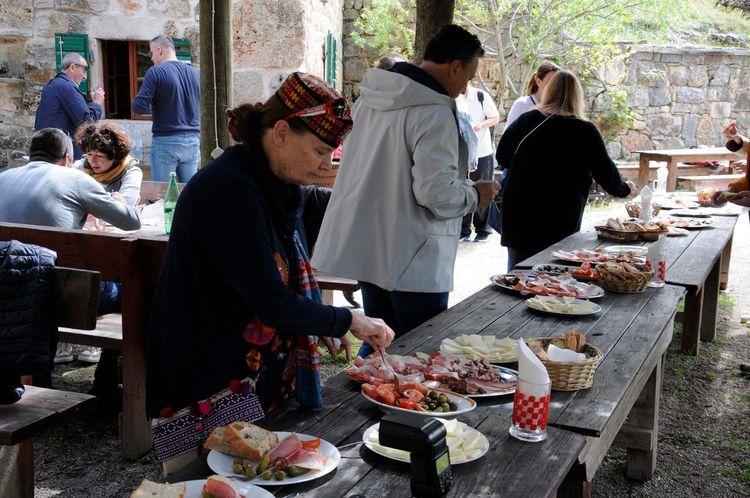
Konoba — traditional family restaurants — serve the bulk of local cuisine: black cuttlefish ink risotto, octopus slow-cooked under a peka for hours, or a simple grilled fish drizzled with olive oil and served with blitva, the wild chard typical of the Croatian coast.
As evening falls, nightlife centers on the Riva terraces and a handful of cocktail bars tucked into the old town's alleyways — more low-key than lively on weeknights. On weekends the atmosphere shifts noticeably: several clubs on the outskirts host electronic music nights that extend the region's festival reputation, inherited from the major music events organized every summer along the Zadar coastline.
If you prefer a quieter evening, a night walk along the ramparts with the Sea Organ as your soundtrack remains the option most faithful to the spirit of the city. Many visitors combine this stroll with the Ryo app, which highlights illuminated monuments and their history along the way.
FAQ
How many days do you need to visit Zadar?
One day is enough for the old town, the Sea Organ, and the Greeting to the Sun. Allow two days to add a beach and an island, and four days to combine Zadar, Paklenica, Nin, and a trip to Plitvice Lakes at a relaxed pace.
What can you do in Zadar for free?
The old town, the Roman Forum, Five Wells Square, the Riva, and listening to the Sea Organ are all free. Only the entrance to certain religious monuments, the Glass Museum, and national parks require a fee.
What is the best time to visit Zadar?
May, June, and September offer an already warm sea and moderate crowds. July and August concentrate nightlife and festivals, but also larger crowds and higher accommodation prices.
How do you get to Zadar from France?
Seasonal direct flights connect several French cities to Zadar airport between April and October. Outside of peak season, you generally need to connect through Split, Zagreb, or another European capital.
Where should you stay in Zadar?
The old town concentrates most of the charming accommodations, within walking distance of everything. The Borik neighborhood, more residential, is better suited to families seeking peace and proximity to the beaches.
What can you do in Zadar in the evening?
The Sea Organ and the Greeting to the Sun at sunset, followed by dinner on a Riva terrace, make up a typical evening. On weekends, clubs on the outskirts take over until the early hours of the morning.
In Summary: Zadar, a Stopover Best Savored at Walking Pace
Zadar is best visited without hurrying, at the pace of stone steps polished by the waves and alleyways where layers of history pile up without ever quite disappearing. Whether you stay a single day between two stopovers or a full week to fan out toward nearby islands and national parks, this Dalmatian city always has an experience in reserve — often free of charge and rarely overcrowded.
To plan your own itinerary, the Ryo audio guide remains a simple way to connect these eighteen experiences without retracing your steps through the same alleyway twice, while still leaving room for improvisation at an unexpected market stall or terrace. Slot the Sea Organ in at the end of the day, keep one morning free for an island and another for a national park — that balance best captures what Zadar offers to anyone who takes the time to listen.