
Créé par Emilie, le 14 mai 2026
Votre guide Ryo
© Shutterstock
Prague does not ease you in gently. The moment you cross Charles Bridge at dawn, the city announces itself: spires cutting the mist, the Vltava sliding silently below, and the faint bells of St. Vitus drifting down from the hill. Few European capitals pack this density of medieval, Baroque, and Art Nouveau architecture into a single walkable centre, and fewer still do so while remaining genuinely affordable compared to Paris, Amsterdam, or Vienna. Whether you're here for a long weekend or a full week, the Czech capital rewards curiosity at every turn. Ryo's Prague audio guide takes you through the city's layered history street by street, uncovering the stories behind the facades that most visitors walk straight past. From an astronomical clock that has been ticking since 1410, to a television tower wrapped in crawling bronze babies, to a monastery library that looks like a stage set for a Baroque opera, the 25 things to do in Prague listed here span the iconic, the overlooked, and the genuinely unmissable.
1. Explore Prague Castle
Prague Castle stands as the largest ancient castle complex in the world, covering a staggering 70,000 square metres across a hilltop in Hradčany. The Guinness Book of Records lists it at roughly 570 metres long and 130 metres wide on average, an oblong polygon that is less a single building than an entire walled town: a Gothic cathedral, three churches, a royal palace, gardens, galleries, and the golden cobblestones of Golden Lane all enclosed within the same fortified perimeter. Construction began in the 9th century and has never truly stopped; each dynasty added its own architectural signature, which is why you find Romanesque foundations beneath Gothic towers topped with Baroque flourishes.
Ticketing was overhauled by the official castle administration for 2026 and is simpler than older guidebooks suggest. The Basic Tour ticket (around CZK 450 for adults, CZK 300 concession, CZK 950 family) is the one most visitors want: it bundles the Old Royal Palace, St. George's Basilica, Golden Lane and Daliborka Tower, and St. Vitus Cathedral into a single two-day pass. The separate Permanent Exhibitions ticket (CZK 300) covers the Picture Gallery, the Story of Prague Castle exhibition, the Mihulka Powder Tower and the Rosenberg Palace. Tickets are sold at the Information Centres in the Second and Third Courtyards, and you can book the parcours audioguidé de Prague through Ryo to layer the historical commentary onto your visit at your own pace.
Golden Lane is where the castle reveals its quieter side: a row of colourful 16th-century houses that once sheltered castle guards and artisans, and where Franz Kafka famously spent the winter of 1916-1917 writing in the tiny number 22. The views from the castle ramparts are the best in Prague: the terracotta rooftops of Malá Strana cascade down toward the river, with the Old Town's skyline of towers rising beyond. Arrive before 9am to beat the tour groups that fill the courtyard by mid-morning. The castle grounds (courtyards, gardens, and the surrounding lanes) are free to wander; tickets are only required for the interior buildings.
2. Walk Across Charles Bridge
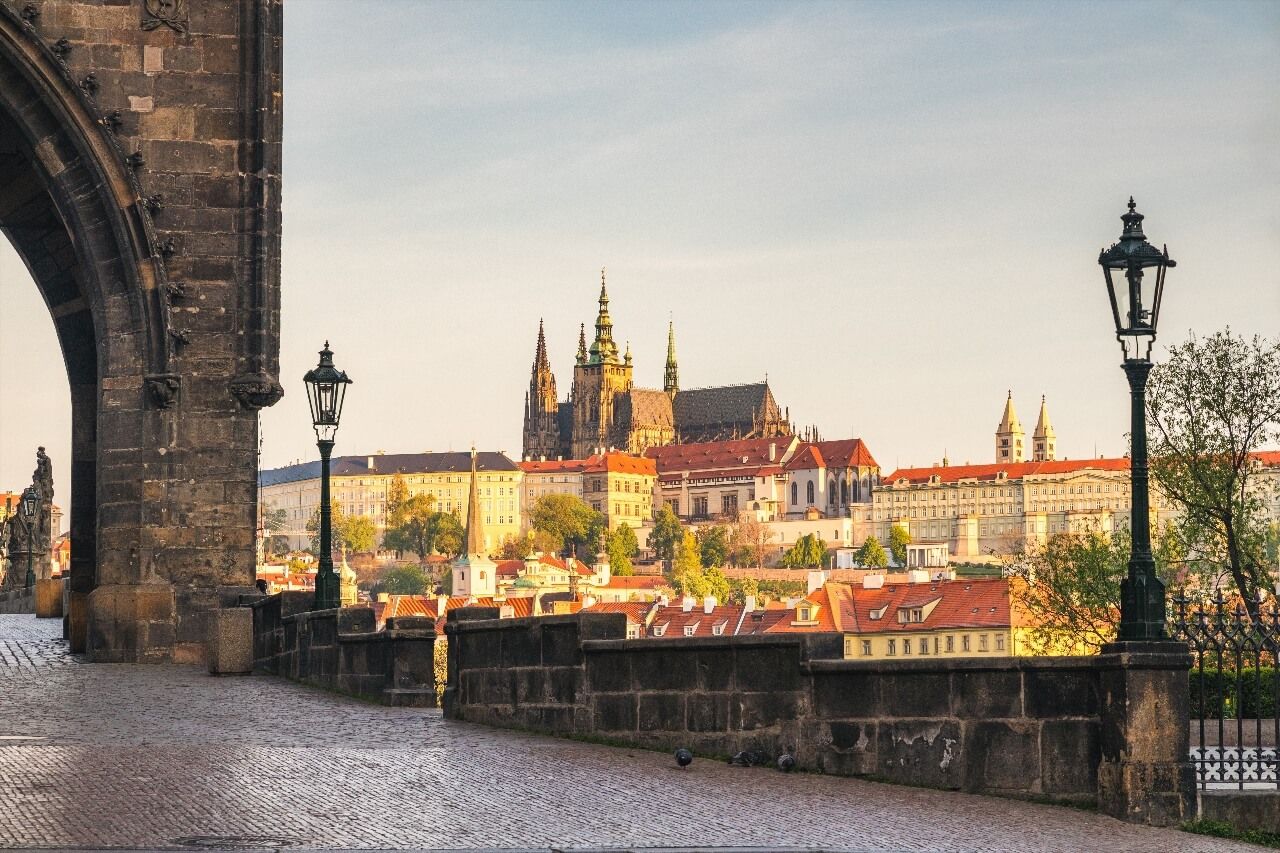
Built between 1357 and the early 15th century under the reign of Charles IV, Charles Bridge is lined with 30 Baroque statues of saints, carved between 1683 and 1928 in successive waves. Most of what you see today are high-quality replicas: the originals are protected from pollution in the Lapidarium of the National Museum, but the effect at sunrise is no less extraordinary. The bridge stretches 516 metres across the Vltava River, connecting Old Town to Malá Strana, and has been the city's symbolic crossing point for six centuries.
The statue of St. John of Nepomuk, a gilt bronze figure depicting the martyred priest thrown from the bridge in 1393 on the orders of King Wenceslas IV, is said to bring good luck to those who touch the polished bronze relief at its base. The spot is worn smooth by millions of hands. The Ryocity Prague audio walk covers the bridge's full statue-by-statue narrative if you want the legends without flagging down a guide.
Timing is everything here. By 10am, the bridge becomes a slow procession of tour groups and souvenir vendors. By 6am it belongs to the runners and the photographers. Come at dusk for a different kind of magic: the lanterns switch on, the castle glows amber on the hill, and the Vltava turns molten bronze below.
3. Stand Before the Astronomical Clock
Old Town Square is Prague's living room, a vast cobbled expanse ringed by Gothic churches, Baroque palaces, and the famous City Hall tower from whose southern wall the Astronomical Clock (Orloj) has been performing its hourly show since 1410. That makes it the third-oldest astronomical clock in the world and the oldest still in operation, the work of horologist Mikuláš of Kadaň and Charles University professor Jan Šindel.
The clock face is a masterpiece of medieval cosmology: it tracks solar time, lunar phases, the positions of the sun and moon in the zodiac, and the old Bohemian time system simultaneously. Every hour on the hour, the clock animates: a procession of the Twelve Apostles moves across the two small windows above the dial, a skeleton representing Death rings a bell, and a rooster crows to mark the end of the sequence. The show lasts about 90 seconds and draws enormous crowds. For the best view, position yourself at the edge of the square to the left rather than directly below, where the crush is worst.
Beyond the clock, Old Town Square holds the Church of Our Lady before Týn, its twin Gothic towers, 80 metres tall and perpetually wrapped in scaffolding, have defined the Prague skyline for 600 years. The square also contains the Jan Hus Memorial, a massive bronze monument to the Czech religious reformer burned at the stake in 1415.
4. Visit St. Vitus Cathedral
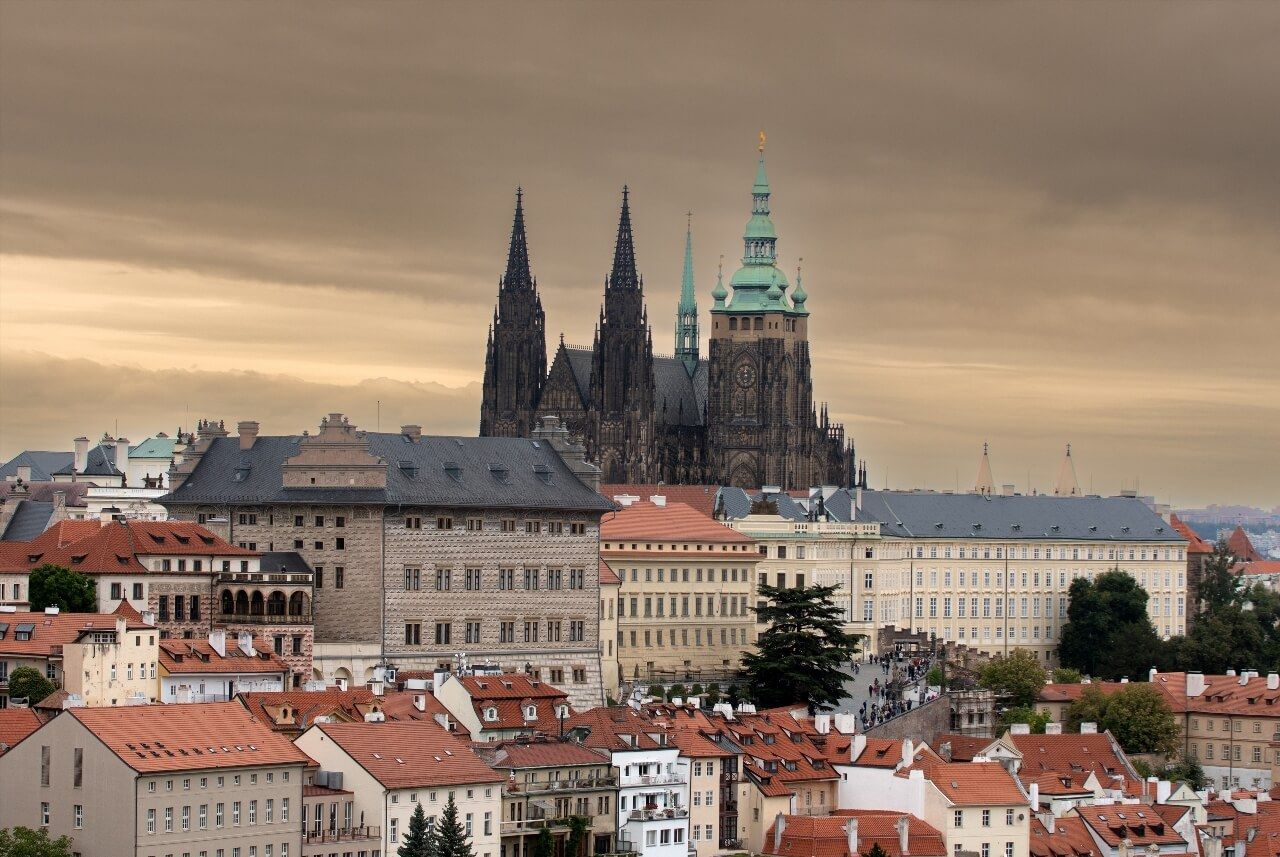
You could spend an entire morning inside St. Vitus Cathedral and still not exhaust it. The construction of this Gothic cathedral began on 21 November 1344, when the seat of Prague was elevated to an archbishopric, and was not formally consecrated until 1929, nearly six centuries of building, which explains the bewildering mix of architectural styles within a single structure. The nave is pure High Gothic, soaring 33 metres high. The Mucha Window in the north transept, designed by Czech Art Nouveau master Alphonse Mucha in 1931, splashes the interior with jewel-toned light every afternoon.
The cathedral sits within Prague Castle and entry to the nave is included in the standard Basic Tour ticket. But the real rewards are in the details: the Royal Crypt beneath the choir holds the remains of Bohemian kings and Holy Roman Emperors including Charles IV; the St. Wenceslas Chapel (closed to the public, viewable only through an iron gate) is encrusted with nearly 1,400 semi-precious stones and fragments of its patron saint's skull; and the Great South Tower, accessible for an extra fee, gives you arguably the finest close-up view of Prague's rooftops anywhere in the city.
Go on a weekday afternoon when the light is best through Mucha's window and the nave is comparatively quiet.
5. Discover the Jewish Quarter (Josefov)
The Jewish Quarter, or Josefov, is one of the best-preserved Jewish districts in Central Europe, and also one of the most emotionally affecting places in Prague. The neighbourhood takes its name from Emperor Joseph II, who lifted many restrictions on Jewish residents in 1781, but the community here dates back to the 10th century. What survives today within a remarkably compact area includes six synagogues, a Renaissance-era Town Hall, and the Old Jewish Cemetery), where more than 12,000 gravestones are stacked in layers up to 10 deep because the community had so little space to expand. An estimated 100,000 people are buried beneath that small patch of ground.
The Pinkas Synagogue is the most sobering of the six: its interior walls are inscribed with the 77,297 names of Bohemian and Moravian Jewish victims of the Holocaust, each name accompanied by a date of birth and date of death. Adjacent rooms display drawings made by children in the Terezín concentration camp during World War II. The memorial was designed by Václav Boštík and Jiří John between 1954 and 1959, painted over during the Communist era, and meticulously restored after 1989.
The Spanish Synagogue stands at the opposite emotional register: its Moorish Revival interior, completed in 1868, is one of the most ornate rooms in the entire city, a riot of gilded arabesques and turquoise tilework. A combined ticket covering all six synagogues and the cemetery costs around CZK 500 and is available online (recommended, the queues at the box office can be brutal in summer). The Ryocity Prague audio guide treats Josefov as a self-contained chapter, which helps if you want context without an in-person tour group.
6. Climb Petřín Hill
Petřín Hill rises steeply from the western bank of the Vltava, offering a forested green lung in the middle of an otherwise urban city. The hill's summit, at 318 metres above sea level, holds the Petřín Lookout Tower (Petřínské sady, 118 00 Prague, rated 4.5/5 on Google (35 176 avis)), a roughly 60-metre steel structure modelled on the Eiffel Tower at a 1:5 ratio and built in 1891 for the Jubilee Exhibition. The views from the top extend across the entire city and, on clear days, well beyond into the Bohemian countryside.
You can reach the top either by the funicular railway (the Lanová dráha, running every 10-15 minutes for the price of a standard metro ticket) or on foot via winding paths through apple orchards and rose gardens. The Mirror Maze near the summit is a charming throwback to 19th-century fairground entertainment, small, slightly absurd, and genuinely entertaining if you have children in tow.
Spring is the peak season on Petřín: the cherry blossoms along the southern paths rival those of much more celebrated destinations, and the hillside fills with locals having picnics rather than tourists checking off a sight. Avoid the funicular on sunny weekends, the queues can stretch back 30 minutes.
7. Stroll Wenceslas Square
Despite the name, Wenceslas Square is not really a square, it is a broad, 750-metre-long boulevard sloping gently downhill through the New Town toward the Old Town. It has been the stage for some of the most significant moments in Czech history: the declaration of Czechoslovak independence in 1918, the Prague Spring of 1968, and the Velvet Revolution of 1989 all played out here.
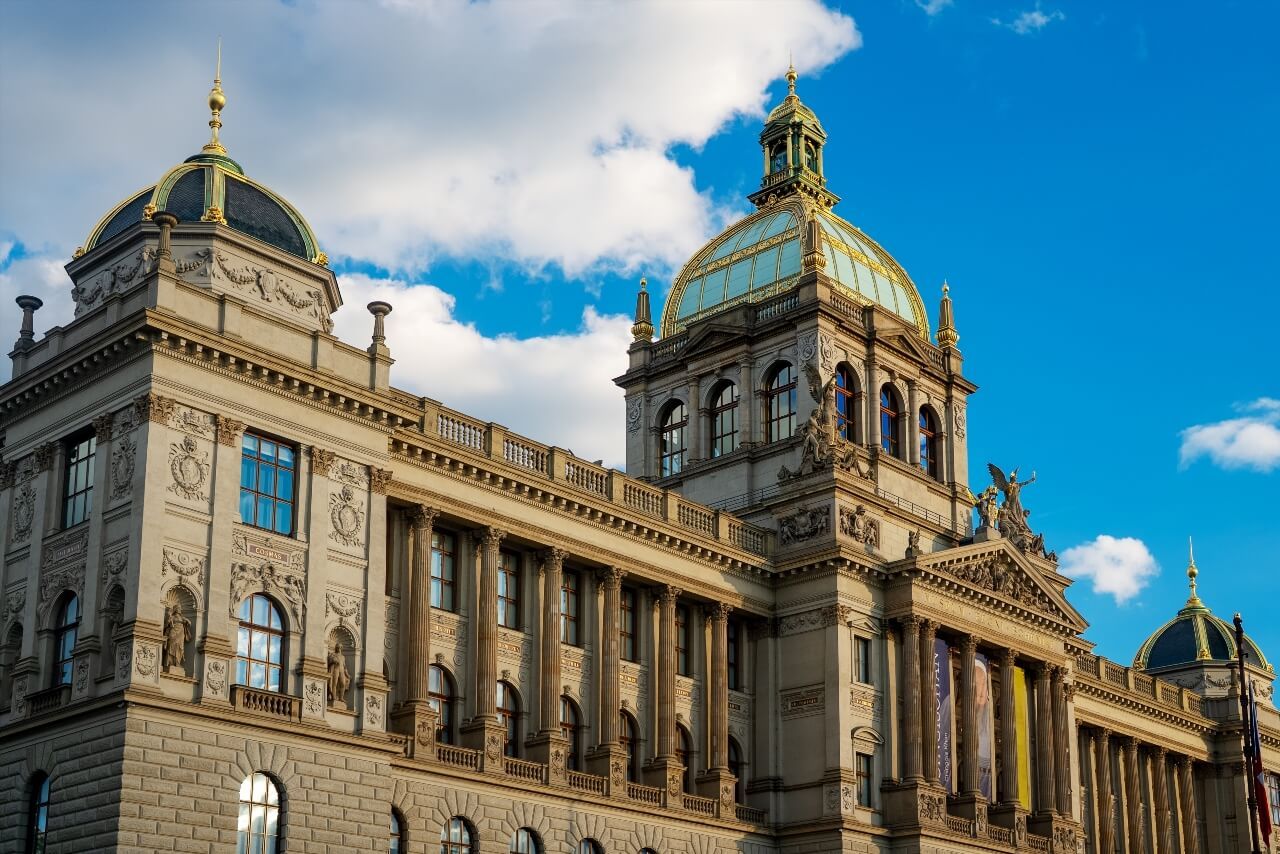
At the upper end stands the National Museum, an imposing Neo-Renaissance building whose facade still bears bullet scars from Soviet tanks in August 1968. In front of it, the equestrian statue of St. Wenceslas has been a gathering point for Czechs for over a century. In January 1969, student Jan Palach set himself on fire here in protest against the Soviet occupation; a small memorial marks the spot below the statue.
Today the square is part shopping boulevard, part history lesson. The arcades on either side conceal a network of pasáže (covered passages) worth exploring, particularly Lucerna Palace and Světozor, both lined with independent shops, cafés, and art house cinemas.
8. Visit Vyšehrad Fortress
Vyšehrad (V Pevnosti 159/5b, 128 00 Prague, rated 4.7/5 on Google (29K avis)) is Prague's other castle, older in legend than Prague Castle itself, though the current structures are mostly 17th-century Baroque fortifications built over earlier medieval foundations. It sits on a rocky promontory above the Vltava, about 3 kilometres south of the Old Town, and remains blissfully under-visited compared to the main castle complex.
The grounds are free to enter and make for a wonderful afternoon wander: the Basilica of St. Peter and St. Paul, with its Neo-Gothic twin spires, dominates the hilltop. Next to it, the Vyšehrad Cemetery is the final resting place of many of Bohemia's greatest artists and intellectuals, composer Antonín Dvořák, painter Alfons Mucha, and novelist Karel Čapek (who coined the word « robot ») are buried here, beneath some of the most elaborately carved tombstones you will see anywhere in Europe.
From the Vyšehrad ramparts, the panoramic views of the Vltava valley and Prague's emerging modern skyline to the south are quite different from those at Prague Castle: less postcard-perfect, perhaps, but more honest about the city as it actually exists today.
9. Wander Malá Strana
Caught between Prague Castle above and Charles Bridge below, Malá Strana (Malostranské náměstí, 118 00 Prague, rated 4.7/5 on Google (14K avis)) (the Lesser Town) is the most Baroque neighbourhood in a city full of Baroque neighbourhoods. Its cobbled streets wind between pastel-painted palaces, embassy gardens, and some of Prague's most atmospheric cafés and wine bars. The whole quarter has the slightly hushed, conspiratorial feel of a place that knows it is beautiful and does not need to advertise the fact.
The Church of St. Nicholas on Malostranské náměstí is the centrepiece, its enormous dome and tower dominate the neighbourhood skyline, and the interior is one of the most overwhelmingly lavish Baroque spaces in Central Europe. Admission costs around CZK 100. In summer, evening concerts of chamber music are held here regularly, the acoustics amplified to something extraordinary by those soaring frescoed vaults.
Wander the side streets rather than the main tourist drag along Mostecká. Nerudova Street, climbing steeply toward the castle, is lined with 18th-century house signs (Prague numbered its houses by signs rather than numbers until the 18th century): look for the Two Suns, the Golden Horseshoe, and the Three Fiddles.
10. Find the John Lennon Wall
Since the 1980s, the John Lennon Wall on Velkopřevorské náměstí has served as an unofficial shrine to peace and Czech resistance to authoritarian rule. It began as a single portrait of Lennon painted by an unknown artist after his 1980 assassination; the communist authorities repeatedly whitewashed it, and by the following morning it had always been repainted. The wall outlasted the regime, and the entire surface today is a layered palimpsest of graffiti, lyrics, and messages in dozens of languages. Photograph it early or late, when tour coaches are not parked directly in front.
11. See the Dancing House
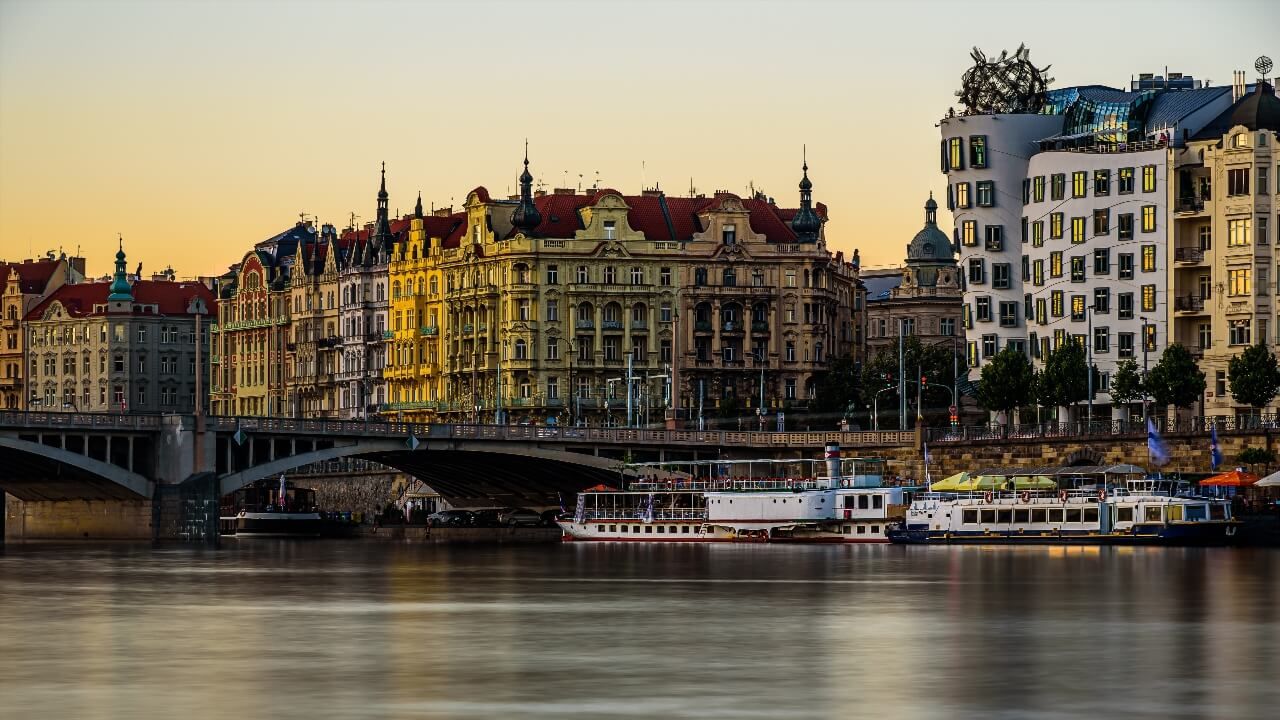
The Dancing House (Rašínovo nábřeží 80, 120 00 Prague, rated 4.3/5 on Google (68 021 avis)) (Tančící dům) is Prague's most architecturally provocative building, a 1996 collaboration between Czech architect Vlado Milunič and Frank Gehry whose curved, organic forms were nicknamed « Fred and Ginger » after the dancing duo. The rooftop Glass Bar is open to visitors for a modest fee and offers an unobstructed view across the Vltava toward the Old Town, far quieter than Petřín or the castle. Come at dusk when the embankment lanterns are just beginning to warm up.
12. Gaze Up at the Žižkov Television Tower
Built between 1985 and 1992 during the final years of communist Czechoslovakia, the Žižkov Television Tower (Mahlerovy sady 1, 130 00 Prague, rated 4.4/5 on Google (23 280 avis)) rises 216 metres above the neighbourhood of Žižkov and has been polarising opinion ever since. It is ugly, say its detractors, an oversized concrete rocket ship planted in a residential quarter with no architectural context. It is fascinating, say its defenders. Both sides have a point.
What neither side disputes is the view from the observation deck at 93 metres: a 360-degree panorama of Prague that extends far beyond what you see from the castle or Petřín. On a clear day, you can trace the full bend of the Vltava from Vyšehrad in the south to the northern suburbs.
The tower's most famous feature was added in 2000: ten large bronze-coloured baby sculptures by Czech artist David Černý, crawling across the tower's three supporting pillars. The originals were removed for restoration in 2017 and replaced with identical duplicates in 2019. Černý described them as commenting on the surveillance state; others see them simply as unsettling. Inside the tower, a hotel room with floor-to-ceiling windows occupying the observation level lets you spend the night suspended above the city, one of Prague's more unusual accommodation options.
13. Spend a Morning at the National Museum
The National Museum (Národní muzeum) reopened in October 2018 after an eight-year renovation that restored its Neo-Renaissance facade and completely modernised the interior while preserving the institution's original grandeur. It anchors the upper end of Wenceslas Square and is the country's most visited museum, holding nearly 14 million objects across natural history, Czech history, art, archaeology, music, and librarianship, of which around seven million were physically relocated during the rebuild, the largest movement of museum collections in Czech history.
The main building's ceremonial staircase hall alone justifies the entrance fee: a soaring atrium lined with allegorical paintings and busts of Bohemia's intellectual heroes. For first-time visitors, the permanent historical collection covering Czechoslovak independence, World War II, and the communist era is particularly well-presented, more honest about the difficult chapters than many state museums tend to be.
Admission costs around CZK 250 for the main building. The connected New Building (formerly the Federal Assembly) houses temporary exhibitions and has a separate ticket.
14. Marvel at Strahov Monastery
Strahov Monastery was founded in 1143 and has occupied its hilltop position above Malá Strana for nearly nine centuries. The Premonstratensian monks who run it today have preserved what is arguably the most beautiful Baroque library in Central Europe: the Theological Hall and the Philosophical Hall, two rooms that look so perfect they are almost difficult to believe are real rather than stage-set reconstructions. Across the wider library, around 200,000 volumes are catalogued, one of the most valuable and best-preserved historical collections in Europe.
The Theological Hall was established between 1671 and 1679 by architect Giovanni Dominik Orsi, who also designed its ceiling stucco. It now holds more than 18,000 volumes bound in matching brown leather along vaulted shelves, with a painted ceiling by Siard Nosecký allegorising the pursuit of wisdom. The Philosophical Hall, with its Classicist vaults completed in 1794, is even larger: more than 60,000 volumes rise beneath a ceiling fresco by Franz Anton Maulbertsch depicting the spiritual journey of mankind, painted in just six months. Both halls can be viewed from behind a low barrier (you cannot enter freely, but the view from the entrance is sufficient to understand why this library appears on nearly every list of the world's most beautiful rooms).
The monastery also holds a picture gallery with a small collection of Baroque and Mannerist paintings, and a cabinet of curiosities featuring, among other objects, the mummified remains of sharks, whales, and an alleged dodo. The brewery within the complex (Klášterní pivovar Strahov) serves its own amber and dark lagers in a vaulted hall, arguably the most atmospheric place to drink a beer in Prague. The Ryo audio guide for Prague covers the climb up from Malá Strana, the brewery, and the library halls in a single linked sequence.
15. Take a Boat Trip on the Vltava
The Vltava River runs through the heart of Prague for 31 kilometres within the city limits, and seeing the city from the water gives you an entirely different perspective on its skyline. Several operators run boat cruises from the embankment near the Old Town Bridge Tower, ranging from one-hour panoramic tours (around CZK 350-450) to evening dinner cruises with live music.
For a more independent experience, paddleboat and kayak rentals are available at several points along the river, particularly at Slovanský ostrov (Slavonic Island, reachable from the National Theatre embankment) and at the southern end of Náplavka. A two-person paddleboat for one hour costs around CZK 200-250. The views of Charles Bridge, Prague Castle, and the Malá Strana waterfront from water level are quite unlike anything you get from a viewpoint on land.
Evening river cruises with a Czech dinner are a reliable option for a special night out: the combination of the castle lit up against the dark sky and the reflection of the bridge towers on the water is reliably magical, even for the most jaded traveller.
16. Book a Beer Spa
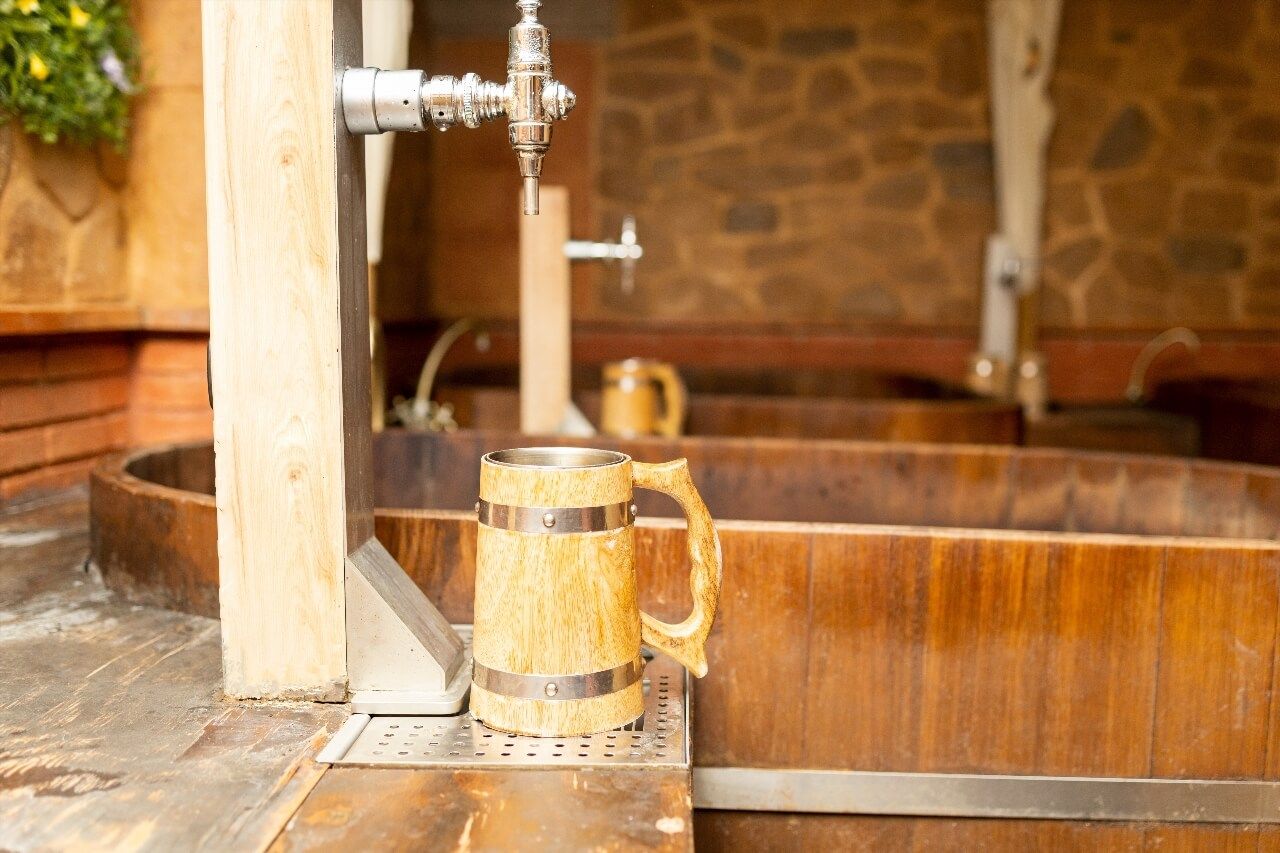
Czech Republic has the highest beer consumption per capita in the world and has held that title for over three decades running. The figure peaked at around 184 litres per person in 2021 and has since settled to roughly 128 litres in 2023, still nearly double the second-place finisher (Austria, around 98 litres). Prague has built an entire tourism industry around this drinking culture, and the beer spa is one of its more memorable expressions: you lie in a large wooden tub filled with a mixture of warm water, yeast, hops, and malt extract, while an unlimited tap of Czech beer from the accompanying dispenser keeps your glass full.
Manufaktura and Beer Spa Bernard (Náměstí Republiky 5, 110 00 Prague, rated 4.7/5 on Google (594 avis)) are two of the better-regarded operators in the city, both within walking distance of Old Town Square. A standard 45-minute session for two costs roughly CZK 1,800-2,400, which includes the unlimited beer element. The treatment is genuinely relaxing (hops have mild sedative properties; the warm water does the rest) and the novelty factor is high. If you are sensitive to alcohol, ask the operator to swap in a non-alcoholic Czech lager, most spas now accommodate this without fuss.
Book in advance for weekends, these experiences sell out consistently from April through October. The beer spa cluster around Nový Svět near Prague Castle tend to be slightly less touristy and better value than those directly in Old Town. Pair the session with a meal at a traditional pivnice afterwards: hops on hops on hops, but somehow it works.
17. Eat Your Way Through Prague
Czech cuisine has a reputation, not always flattering, for being heavy, meat-centric, and beige. The reality in Prague in 2026 is considerably more interesting. The city has developed a serious food culture alongside its traditional dishes, with a new generation of chefs running tasting menus that draw on Bohemian and Moravian terroir rather than borrowing from Paris or Vienna. A good food tour covers both the old and the new without sacrificing either.
Svíčková (beef sirloin in a root vegetable cream sauce with bread dumplings and a dollop of cranberry jam) is the dish that defines Czech cooking for many visitors, rich, slow-braised, and deeply satisfying. Trdelník (a spiral pastry grilled over charcoal and dusted with cinnamon sugar) is technically Slovak in origin but has become Prague's most photographed street food. Bramboráky (potato pancakes with garlic and marjoram, sold from market stalls for about CZK 50 a piece) are a far more authentic local snack, and chlebíčky (open-faced sandwiches piled with ham, egg, fish, and pickle) are the Czech lunchtime staple you find in every deli window.
For the full experience, the area around Naplavka Farmers' Market on Saturday mornings is the best starting point: local producers selling aged cheeses, smoked meats, pickled vegetables, and fresh pastries from around 8am to 2pm. The covered Havelské tržiště market in Old Town has been operating since the 13th century, selling flowers and produce on weekdays, tourist trinkets mixed with fresh vegetables on weekends. Guided food tours operating out of Old Town Square typically last 3 hours and cost around CZK 900-1,200 per person; the better operators end at a Czech beer hall rather than a souvenir shop.
18. Attend a Classical Music Concert or Opera
Prague has a serious classical music tradition and an extraordinary stock of venues to perform it in. The Prague State Opera (Legerova 75, 120 00 Prague, rated 4.8/5 on Google (4 449 avis)) (Státní opera Praha), built in 1888, is one of the finest Neo-Rococo opera houses in Europe, all gilded plasterwork, crimson velvet, and chandeliers, and tickets for evening performances cost a fraction of what you would pay in Vienna or Milan. Seats start from around CZK 300 for standing positions; good mid-stall seats typically run CZK 600-1,200.
The Rudolfinum, a Neo-Renaissance concert hall on the Vltava embankment completed in 1885, is home to the Czech Philharmonic and offers a more intimate setting for orchestral music. Chamber music concerts are held almost nightly in churches and palaces across the city, in St. Nicholas Church in Malá Strana, in the Clam-Gallas Palace in Old Town, and in the Spanish Hall of Prague Castle, with tickets often sold on the door.
Book your opera or concert tickets before you travel if you have a specific performance in mind, the State Opera and Rudolfinum sell out weeks in advance for popular programmes.
19. Explore Lucerna Palace
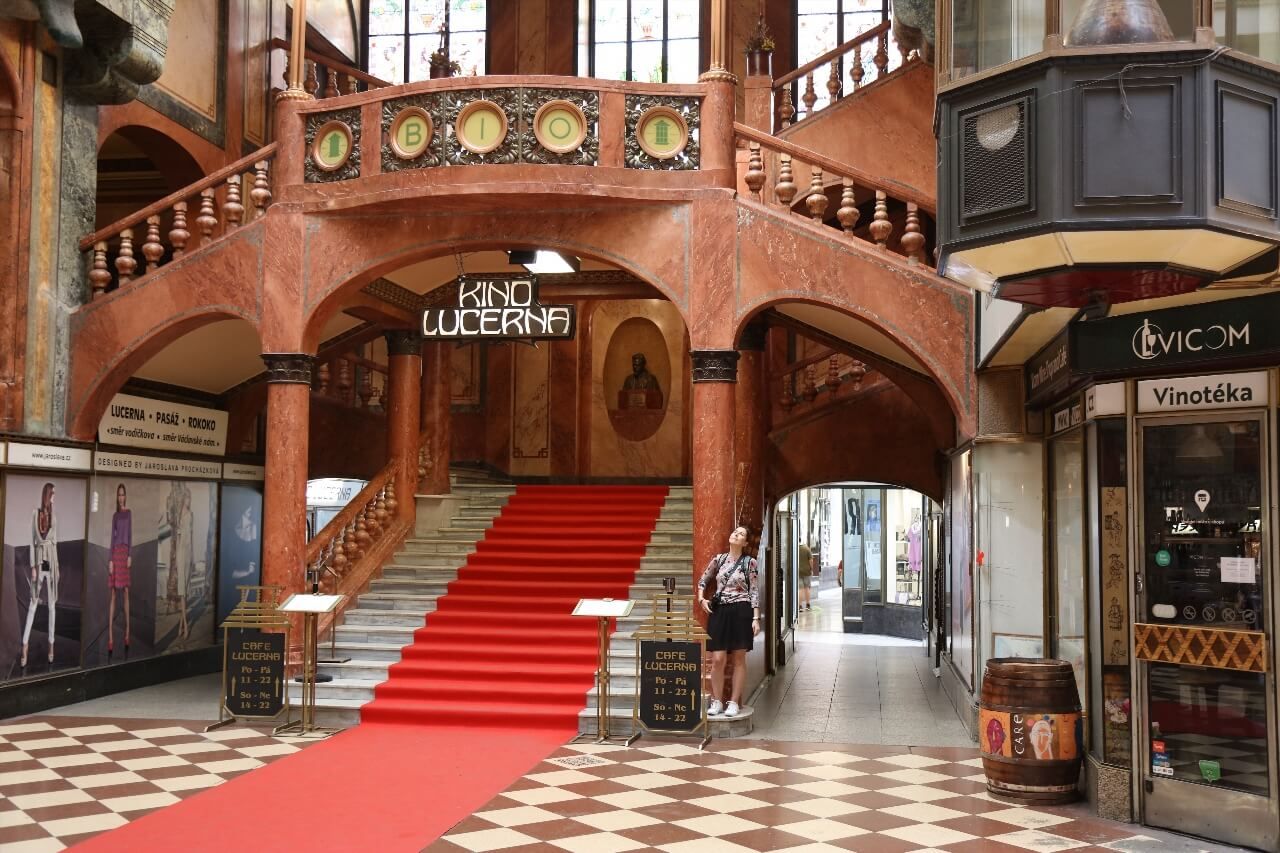
Lucerna Palace (Štěpánská 61, 110 00 Prague, rated 4.3/5 on Google (3 135 avis)) (Palác Lucerna), built between 1907 and 1921 by Václav Havel Sr., grandfather of the future playwright-president, is the city's oldest shopping arcade and one of its loveliest architectural secrets. In the atrium hangs David Černý's upside-down equestrian statue, in which St. Wenceslas rides his horse hanging dead beneath him, a deliberate inversion of the heroic statue outside the National Museum nearby. Downstairs, the Lucerna Music Bar hosts cheap live music most nights (tickets CZK 100-200) and famously loud 1980s and 1990s video parties at weekends.
20. Visit Prague Zoo
Prague Zoo (U Trojského zámku 3/120, 171 00 Prague, rated 4.8/5 on Google (67 754 avis)) has been ranked among the top zoos in the world by TripAdvisor in multiple recent surveys, and the assessment is not unreasonable. Spread across 58 hectares on a hillside above the Vltava in the Troja district, it holds nearly 700 species and is particularly celebrated for its breeding programmes, it was instrumental in saving the Przewalski horse from extinction, and its Kinský Garden holds the largest captive herd of these horses in Central Europe.
The zoo is open 365 days a year and is accessible by bus (line 112 from Holešovice metro station) or by a pleasant riverboat service from the city centre during the summer months. Allow a full half-day minimum, the grounds are extensive and the terrain involves significant climbing. The Indonesian jungle pavilion, the African house, and the elephant valley are the three highlights for most visitors. Admission is around CZK 300 for adults.
21. Discover Kampa Island
Kampa Island is a sliver of land formed by the Čertovka millstream splitting off from the Vltava in Malá Strana, a quiet, slightly otherworldly neighbourhood of gardens, mills, and waterside restaurants separated from the main flow of tourist traffic by nothing more than a narrow channel. The southern end opens onto Kampa Park, a riverside garden where locals come to sit on the grass and watch the river, one of Prague's most genuinely relaxing spaces.
At the northern tip, Museum Kampa occupies a converted 17th-century mill and holds the most important collection of Central European modern art in Prague: works by František Kupka (one of the pioneers of abstract painting) and Otto Gutfreund fill the permanent galleries, alongside temporary exhibitions of contemporary Czech art. Admission is around CZK 220. Outside the museum, a rotating installation of large-scale sculptures, most famously, the giant bronze-coloured crawling babies by David Černý (matching those on the television tower), punctuates the riverside lawns.
22. Walk the Náplavka Riverbank
Náplavka (Náplavka, 120 00 Prague, rated 4.7/5 on Google (109 avis)) is the embankment stretching south from Palacký Square along the right bank of the Vltava, and it functions as the closest thing Prague has to a neighbourhood living room. On Saturday mornings it hosts the city's best farmers' market; on summer evenings the steps down to the water fill with young Praguers drinking wine from plastic cups and watching the boats pass. Permanently moored houseboats-turned-bars line the stretch between Palacký Bridge and Jiráskovo Bridge, serving cold beer and grilled food from floating terraces, an informal local scene the Old Town tourist circuit never shows.
23. Day Trip to Kutná Hora
Kutná Hora is the single best day trip from Prague, lying about 65 kilometres east-southeast and accessible by direct train in under an hour (most services from Prague's main station, Praha hl. n., take 41 to 49 minutes, with trains roughly every hour throughout the day). This medieval silver-mining town was, in the 14th century, the second most important city in Bohemia: its silver funded the Bohemian kingdom and shaped the region's history for 200 years. The legacy is a UNESCO World Heritage-listed town centre that receives a fraction of the visitors it deserves, perhaps 200,000 a year for the ossuary alone compared to the millions on Charles Bridge.
The main draw is the Sedlec Ossuary), also known as the Bone Church, a small Roman Catholic chapel decorated entirely with the bones and skulls of an estimated 40,000 to 70,000 people. The bones were arranged in 1870 by a local woodcarver, František Rint, into a series of increasingly elaborate decorations: garlands of skulls along the vaulted ceiling, a central chandelier containing at least one of every bone in the human body, and the Schwarzenberg coat of arms rendered in femurs and tibias. It is genuinely astonishing, less grotesque in person than in photographs, more meditative than macabre.
The town also holds the Cathedral of St. Barbara (Barborská, 284 01 Kutná Hora, rated 4.7/5 on Google (12K avis)), a late Gothic cathedral begun in 1388 and dedicated to the patron saint of miners; its flying buttresses support a tent-like series of vaulted chapels that makes it one of the most distinctive Gothic structures in Central Europe. Allow a full day if you want to see both sites at a relaxed pace, and pack a picnic for the walk between Sedlec and the upper town, which takes about 30 minutes through quiet residential streets that very few day-trippers ever experience.
24. Experience Czech Café Culture
Czech café culture developed in a different tradition from its Viennese or Parisian cousins, shaped by the communist era's habit of using cafés as spaces for dissident conversation, literary readings, and political argument. The result is a network of literary cafés that feel genuinely lived-in rather than staged for tourism. Café Louvre (Národní 1022/22, 110 00 Prague, rated 4.6/5 on Google (22 804 avis)) on Národní třída (open since 1902, frequented by Kafka and Einstein) and Kavárna Slavia across the river from the National Theatre (1884, all Art Deco mirrors and river views) are the two essentials. Coffee and a slice of kolache come in around CZK 80-100 each.
25. Explore Vinohrady and Žižkov
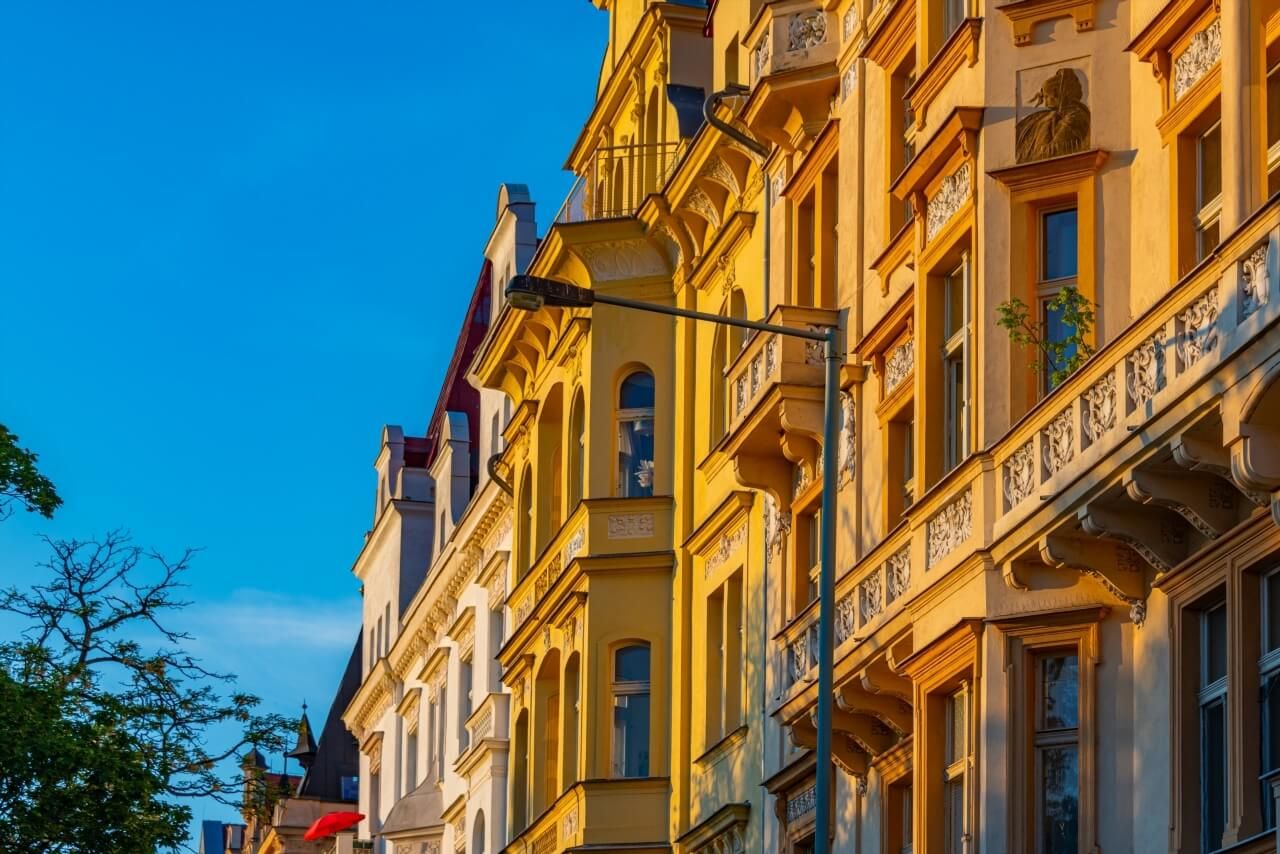
Vinohrady and Žižkov are the two neighbourhoods that Prague residents most consistently recommend to visitors looking to escape the tourist circuit, and with good reason. Vinohrady (the name translates as « vineyards ») is a late 19th-century bourgeois district of broad tree-lined avenues, Art Nouveau apartment buildings, and excellent independent restaurants. Žižkov, adjoining it to the north, has a more working-class, bohemian character, home to the television tower, a famously high concentration of pubs per capita, and the National War Memorial on Vítkov Hill, which houses a colossal equestrian statue of the Czech hero Jan Žižka and a museum of 20th-century Czech history.
Náměstí Míru (Náměstí Míru, 120 00 Prague, rated 4.6/5 on Google (9K avis)) (Peace Square), the central square of Vinohrady, is anchored by the Church of St. Ludmila, a Neo-Gothic structure completed in 1893 whose twin towers closely echo those of Týn Church in Old Town. The surrounding streets hold some of the best non-tourist-facing restaurants in the city, try anything along Mánesova or Blanická streets for a meal that bears no relation to what is being served within 500 metres of Charles Bridge.
FAQ
How many days do you need to visit Prague?
Three days is the comfortable minimum for first-time visitors, enough to cover Prague Castle, the Old Town, Malá Strana, and at least one neighbourhood beyond the tourist centre. Four or five days allows you to add Vyšehrad, a day trip to Kutná Hora, and proper time for the Jewish Quarter. A week gives you enough time to genuinely inhabit the city rather than just photograph it.
When is the best time to visit Prague?
May, June, and September are the best months: warm enough for outdoor terraces, long daylight hours, and the summer crowds not yet at their worst (July and August bring very high tourist volumes and higher prices). Prague in winter, particularly around Christmas, is spectacular if cold: the Christmas markets on Old Town Square and Wenceslas Square are among the best in Central Europe, and the city's many heated cafés and pubs make the cold feel like an asset rather than a problem.
Is Prague expensive for tourists?
Prague is significantly cheaper than Western European capitals. A good meal with beer in a non-tourist restaurant typically costs CZK 200-350 per person (€8-14). A half-litre of beer in a local pub is CZK 40-60 (€1.60-2.40). Museum admissions average CZK 200-300. The main tourist sites (castle, Jewish Quarter) are where prices are closest to Western European levels. Accommodation runs from around CZK 500 for a hostel dorm to CZK 2,000-4,000 for a mid-range double.
What currency is used in Prague?
The Czech Republic has not adopted the euro. The currency is the Czech koruna (CZK). In May 2026, 1 EUR ≈ 25 CZK and 1 USD ≈ 23 CZK approximately. Some tourist-facing businesses accept euros, but always at an unfavourable rate. Use Czech crowns for everything if you can. Exchange at a bank or use an ATM on arrival, the private exchange booths near Old Town Square typically offer very poor rates.
How do you get around Prague?
The historic centre is extremely walkable, most of the top sights cluster within a 2-kilometre radius of Old Town Square. Prague's public transport system (metro, tram, and bus) is efficient, clean, and cheap: a 24-hour pass costs CZK 120. The metro has three lines (A, B, C) covering the main areas. Trams are particularly useful for reaching Malá Strana, Vinohrady, and Žižkov. Avoid taxis hailed on the street; use Bolt or Liftago apps instead.
Is Prague safe for tourists?
Prague is generally very safe. Pickpocketing is the main risk, concentrated on Charles Bridge, in Old Town Square, and in metro carriage line A (the tourist line). Use a money belt or inside zip pocket in these areas, and keep bags zipped. The area around Wenceslas Square has more nightlife-related minor incidents late at night, but serious crime targeting tourists is rare.
Prague rewards the curious traveller. Beyond the famous skyline, which is, genuinely, as extraordinary as the photographs suggest, it is a city that has survived the Habsburgs, two world wars, four decades of communism, and the Velvet Revolution with its architecture largely intact and its character sharply defined. Ryo's Prague audio guide brings that layered history to life as you walk: stories of the astronomers and alchemists who passed through these streets, the architects who shaped its squares, and the ordinary Praguers who have lived within its walls for a thousand years. Whether you have three days or a full week, Prague is one of Europe's most rewarding cities to explore on foot, and with Ryo's Prague Ryocity, you won't miss the stories that give each stone its meaning.