
Créé par Emilie, le 20 juin 2026
Votre guide Ryo
The Little Mermaid of Copenhagen: History, Visit and Surroundings in 2026
© Shutterstock
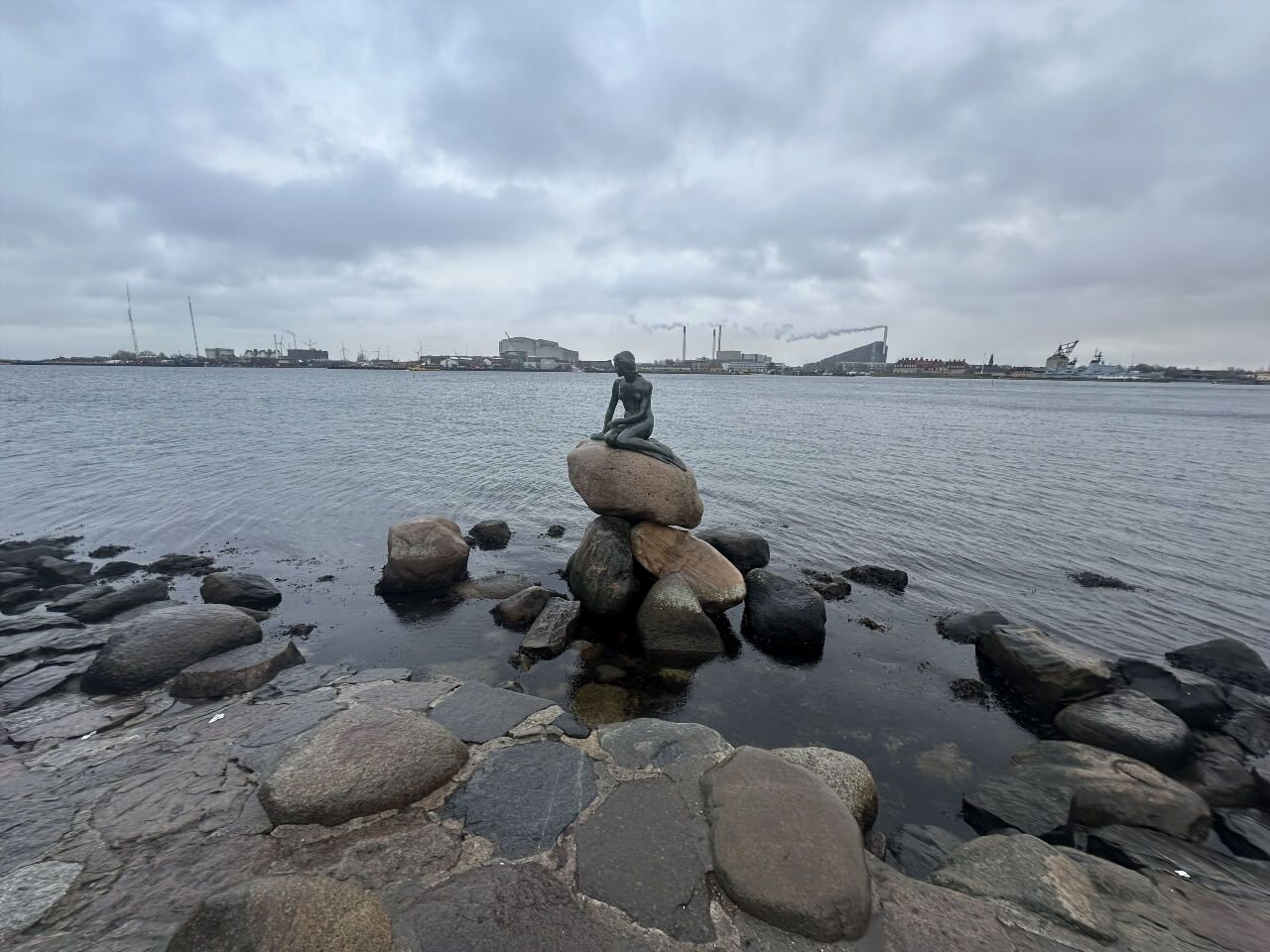
She measures barely 1.25 meters. Regularly vandalized, decapitated, painted red, drowned under political slogans, she has nevertheless traveled to Shanghai to represent Denmark. The Little Mermaid Copenhagen remains the attraction that millions of visitors come to seek each year by the water, even if it means leaving surprised by her discretion. It is perhaps the most famous sculpture in the world that doesn't look like what one imagined. This guide tells you everything: her history, her exact measurements, how to access it from the city center, the best angles to photograph it, and how to organize a complete morning in this Danish port district. To explore the rest of the city, the Ryo audio guide The Scandinavian Pearl takes you on 8 km through the iconic neighborhoods.
A Statue Born From Passion: The History of the Little Mermaid
It all began in 1909, at the Royal Opera of Copenhagen. Carl Jacobsen, wealthy brewer of the Carlsberg dynasty and founder of the Glyptotek museum, attended a ballet inspired by Hans Christian Andersen's tale. The principal dancer, Ellen Price, made such a strong impression on him that he immediately commissioned a work in her image. He contacted sculptor Edvard Eriksen, who accepted, on one condition: his wife, Eline, would pose for the body, as Ellen Price refused to pose nude.
Eriksen worked for two years on the sculpture. He cast the mermaid in bronze, sitting on a granite rock at the harbor entrance. On August 23, 1913, the work was inaugurated discreetly, without public ceremony. Jacobsen offered it to the city of Copenhagen, which became the owner. The Eriksen family retained the image rights, a detail that would have its importance later.
From the first decades, the statue attracted crowds. In the 1930s, it was already identified as the main symbol of the Danish capital on postcards. Yet it is not an imposing monument, nothing spectacular at first glance. Its strength comes from something else: a melancholic posture, a position at water level that forces you to approach, an intimate presence that contrasts with the triumphant statues of major European cities.
Today, the sculpture is among the most photographed monuments in the world. It also appears prominently in lists of 'tourist disappointments,' and yet visitors continue to flock. This paradox says something essential about the relationship between myth, expectation and reality in contemporary tourism.
Hans Christian Andersen: The Tale That Started It All
Without Andersen, no statue. The tale 'Den lille Havfrue' (The Little Mermaid (Langelinie, 2100 Copenhagen, rated 4.1/5 on Google for 37,098 reviews)) was published in 1837, in a collection for children. The author, native of Odense but adopted by Copenhagen, tells the story of a mermaid who renounces her marine world to join that of humans, out of love for a prince. The ending is not the one Disney would popularize 152 years later: in Andersen's version, the heroine does not win the prince, she dissolves into sea foam.
This tragic ending is essential to understand the posture of Eriksen's work. The melancholy he expresses in bronze is not accidental, it faithfully translates the atmosphere of the original tale, this acceptance of sacrifice without reward. Andersen was inspired, according to some biographers, by his own unrequited love experiences.
The city honors its writer everywhere: his statue sits on the Town Hall square, his former apartment in Nyhavn is marked by a plaque, and his natal museum in Odense attracts thousands of visitors each year. The harbor sculpture remains however his most visible legacy on an international scale.
Symbol, Vandalism and Travels: A Statue Like No Other
The Little Mermaid has a troubled history. The first act of vandalism dates from April 1964: the head was sawed off during the night, and was never found. Eriksen had fortunately kept the original mold; a new head was cast and reattached the same year. In 1984, it was the right arm that was severed, then recovered and resealed. In 1998, new decapitation. In 2003, the work was torn from its rock with explosives and thrown into the harbor.
These repeated acts seem motivated by very different reasons: political activism for some, search for notoriety for others, or simple symbolic rejection of mass tourism. Danish authorities ended up installing surveillance cameras, and a submerged barrier in the water makes nighttime approach more difficult.
Beyond vandalism, the statue has also 'traveled.' In 2010, for the Shanghai World Expo, Denmark decided to send it to China, a first: the version visible at the harbor left its rock for six months, replaced by a video installation by artist Ai Weiwei. The decision caused an uproar in the Danish press. In 2016, a copy was exhibited during the Milan Expo. These diplomatic journeys illustrate the symbolic weight of the work: it is no longer a simple local statue, it has become an object of national soft power.
The image rights also posed problems. The Eriksen family long demanded royalties for any commercial reproduction. For decades, it was forbidden to publish photos of the mermaid without paying. It was only after the work entered the public domain, 70 years after the sculptor's death, that the question was partially resolved, although legal subtleties persist depending on usage.
The Statue in Numbers: Size, Weight, Materials
Some concrete data to calibrate your visit:
- Height: 1.25 meters (without the rock)
- Weight: 175 kilograms
- Material: cast bronze, patinated by time and sea air
- Rock: natural granite, partially submerged at high tide
- Year of Creation: 1913
- Sculptor: Edvard Eriksen (1876-1959)
- Owner: city of Copenhagen
The smallness of the work is often cited as the main 'disappointment.' This reaction is understandable: low-angle photos magnify it considerably. Seen in real life, from the Langelinie promenade, it appears almost fragile. It is precisely this contrast between worldwide reputation and physical discretion that makes it a fascinating tourist object to analyze.
How to Get to the Little Mermaid: Access and Location
The statue is installed on the Langelinie promenade, in Copenhagen's northern port district, about 2.5 km from the city center. The exact address is Langelinie, 2100 Copenhagen Ø.
By Bus: line 26 departs from the Town Hall (Rådhuspladsen) and stops at 'Folke Bernadottes Allé', count 20 minutes. From there, 10 minutes on foot along the harbor.
On Foot: from Nyhavn (the colorful canal), the walk takes 25 to 30 minutes along the waterfront. This is the recommended option: the route is pleasant, you walk along the Citadel fortifications (Kastellet) and arrive from the east side, with morning light.
By Bike: Copenhagen is a city of bikes. The Langelinie promenade is accessible from the center in less than 15 minutes. Bike-sharing stations (Donkey Republic, Bycyklen) are available near Nyhavn.
The Citadel as Junction Point: if you have time, enter the Kastellet (the 17th-century star fortress, free entrance) before reaching the rock. The sculpture is located a few hundred meters north of the citadel, by the water.
To organize your day in Copenhagen around this district, the Ryo audio guide The Scandinavian Pearl covers 29 points of interest over 8 km, including this harbor section.
Best Hours to Visit (and Photograph) the Statue
The statue is accessible 24/7, and entry is free. But the chosen moment radically changes the experience.
Early Morning (7am-9am): this is the ideal window. Few people, low light on the bronze, reflections in the harbor water. In summer, the sun rises early in Copenhagen (before 5am in June), giving exceptional photographic conditions from dawn. The east-facing face catches the morning light well.
On Weekdays: even in high season (July-August), a Tuesday or Wednesday morning guarantees crowd-free access. On weekends, dozens of people take turns constantly for photos.
What They Don't Tell You: the sculpture is surrounded by water on three sides, the rock only being accessible from behind from the promenade. For a photo without tourists, frame tightly isolating the figure against the sea background: a telephoto lens or your smartphone's portrait mode is enough.
In Winter: the Langelinie promenade is almost deserted from November to March. The low light and mist over the harbor give photos of different quality, more dramatic. Dress warmly, the north wind can be violent.
Around the Statue: Langelinie and the Harbor Promenade
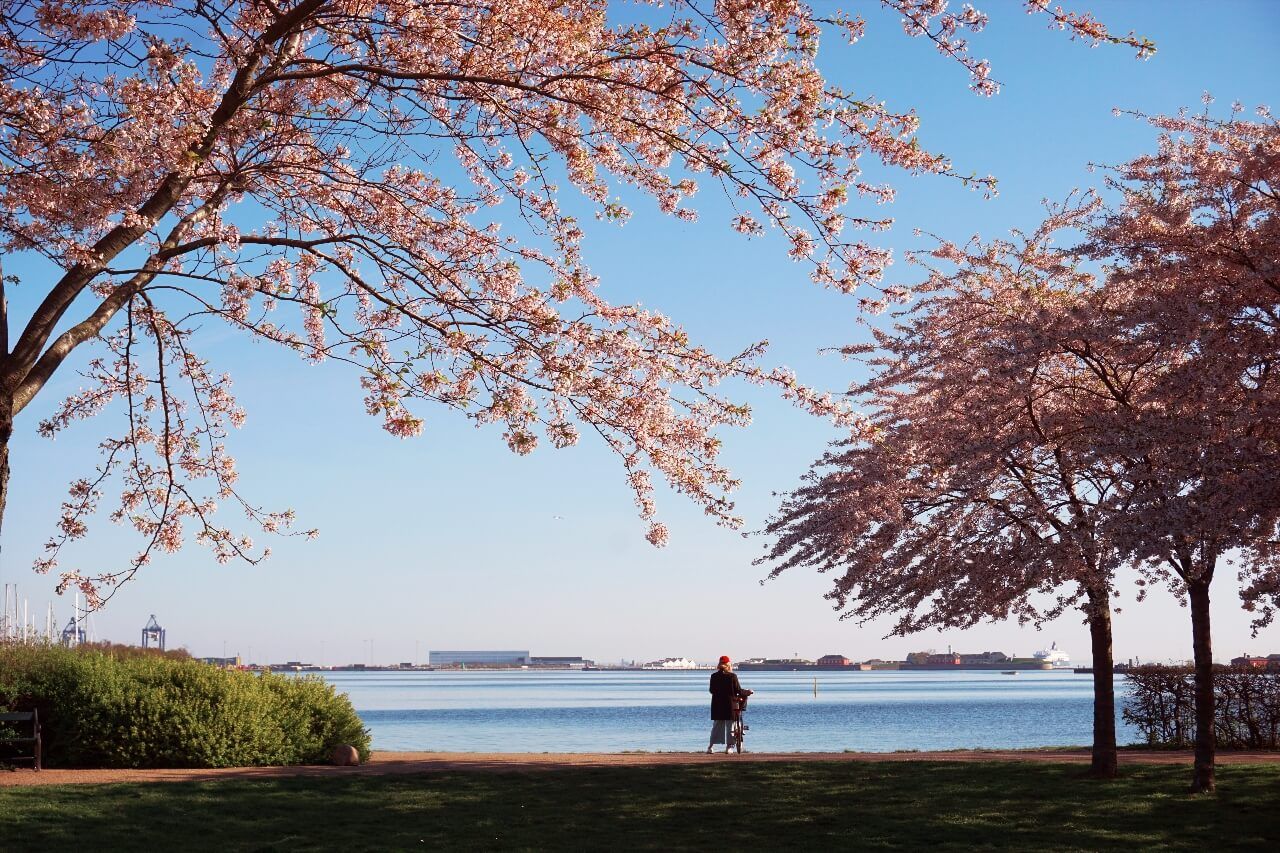
The Langelinie promenade extends about 2 km north of the rock. It is one of Copenhagen's most pleasant public spaces, frequented by local joggers and families on weekends.
Just to the south, the Kastellet is a five-pointed star fortress, built in 1626 under Christian IV. It is still partially active (it's a military base), but the moats and ramparts are freely accessible. One hour is enough to walk around it; the weeping willows that line the moats are particularly beautiful in spring.
Between the two is the Gefion Fountain (Churchillparken, 1263 Copenhagen, rated 4.6/5 on Google for 2,883 reviews) (Gefionspringvandet), inaugurated in 1908. It represents the Nordic goddess Gefjun plowing the earth with oxen: according to legend, she thus created the island of Zealand where Copenhagen is located. Large and animated, it contrasts with the sobriety of the mermaid a few hundred meters away.
A little further south, the Danish Resistance Museum (Frihedsmuseet) traces the German occupation and resistance between 1940 and 1945. Access is free. In 2013, the original building burned down; reconstruction lasted until 2020. The current museum, modernized, is one of the best documented in Europe on the period.
This ensemble (statue, Kastellet, Gefion, Resistance Museum) forms a very coherent half-day, with no transport needed between stages. For essential activities beyond this district, consult the top things to do in Copenhagen.
Copenhagen on Foot From the Little Mermaid: 5 Steps to the Center
From the rock, Copenhagen's historic center is accessible in 30 to 40 minutes on foot along the waterfront. Here is a logical itinerary that links sites without doubling back.
Step 1, Langelinie: starting point. Plan 20 minutes on site, more if you're photographing. Don't look for water access: the view from the elevated promenade is the best.
Step 2, Gefion Fountain and Kastellet: 10 minutes walk south. Spend 45 minutes at the fortress if you enter, 10 minutes if you just walk around the outside.
Step 3, Nyhavn: the colorful canal is 25 minutes walk south of Kastellet. It's the tourist heart of the city: café terraces, historic moored sailboats, orange and ochre facades. The house at number 20 is where Hans Christian Andersen lived part of his life. Avoid lunch time if you're looking for tranquility.
Step 4, Amalienborg Palace: 5 minutes walk from Nyhavn, Amalienborg Palace is the official residence of the Danish royal family. The octagonal courtyard is freely accessible. The changing of the guard takes place daily at noon when the sovereign is in residence.
Step 5, Marble Church and Frederiksstaden District: between Amalienborg and Nyhavn, the Marble Church (Frederiks Kirke) is an imposing baroque church whose dome rivals that of the Pantheon in Rome. Free visit, dome climb possible on weekdays for a panoramic view of the district.
This itinerary represents about 4 km of walking in total, with stops. It integrates perfectly into the day covered by Ryocity Copenhagen The Scandinavian Pearl: 29 commented points of interest over 8 km, 3h30 of audio-guided tour at your own pace.
Where to Eat and Drink Near the Little Mermaid
The Langelinie area is essentially residential and port-related, with few restaurants directly on site. Good addresses are concentrated around Nyhavn, 20 minutes walk away.
On Site and at Langelinie: the Langelinie Pavillonen (Langelinie Allé 18, 2100 Copenhagen, rated 4.3/5 on Google for 281 reviews) is a gourmet restaurant with terrace facing the harbor, but it caters to a high budget (meals from 150 DKK for lunch, about 20 €). For a quick coffee or sandwich, street vendors are present in summer along the promenade.
At Nyhavn: the terraces at numbers 17, 19 and 21 are the most popular. Prices reflect the location, count 120-180 DKK for a main course (16-25 €). For a more affordable smørrebrød (traditional Danish open sandwich), turn to the bakeries on adjacent streets (Toldbodgade, Store Strandstræde).
Around Amalienborg: the café Kafferiet (Esplanaden 44) is a local address appreciated for brunch and specialty coffee. More authentic atmosphere than Nyhavn, reasonable prices.
Practical note: Copenhagen is expensive. Plan 120-200 DKK per person for a simple meal in this area (excluding drinks). Grocery stores (Netto, Aldi) allow you to compose a picnic for the Langelinie promenade, practical in summer.
FAQ
Where Exactly Is the Little Mermaid Located in Copenhagen?
The statue is installed on the Langelinie promenade, in the northern port district, at the address Langelinie, 2100 Copenhagen Ø. It is located about 2.5 km from the city center (Nyhavn), or 25 to 30 minutes on foot along the waterfront. The GPS point is: 55.6929° N, 12.5992° E.
What Is the Size of the Little Mermaid of Copenhagen?
The sculpture measures 1.25 meters in height and weighs 175 kilograms. It is made of bronze, sitting on a partially submerged granite rock. Its small size often surprises visitors accustomed to low-angle photos that visually magnify it.
Is the Visit to the Little Mermaid Free?
Yes, access is completely free, 24/7, 365 days a year. The statue is located on a public promenade by the harbor, at Langelinie. There is no ticket, no barrier, no reservation required.
What Is the History of the Little Mermaid?
The work was commissioned in 1909 by brewer Carl Jacobsen, inspired by a ballet based on Hans Christian Andersen's tale (1837). Sculpted by Edvard Eriksen, it was inaugurated on August 23, 1913 and offered to the city of Copenhagen. It has suffered several acts of vandalism (beheadings in 1964 and 1998, removal in 2003) and traveled to Shanghai in 2010 for the World Expo.
What Is the Best Time to Visit the Little Mermaid?
Early morning (between 7am and 9am) on weekdays is the best window, year-round. In summer, the morning light is ideal for photos. In winter, the promenade is almost deserted and the harbor atmosphere takes on a more melancholic character, faithful to the spirit of Andersen's tale.
Conclusion
Copenhagen's Little Mermaid is a lesson in tourist relativity: smaller than expected, more damaged than told, but more loaded with history than imagined. Behind 1.25 meters of patinated bronze hide a passionate commission, a tale with a tragic ending, decades of symbolic vandalism and diplomatic tensions around image rights. None of this is visible at first glance from the Langelinie promenade.
As often in the Danish capital, what matters is what you put into the visit. Come early, take time to walk along the harbor from Nyhavn, cross Kastellet, and let the Ryo audio guide The Scandinavian Pearl enrich each step of your day with anecdotes that the signs don't tell.