
Créé par Romane, le 7 mai 2026
Votre guide Ryo
© Shutterstock
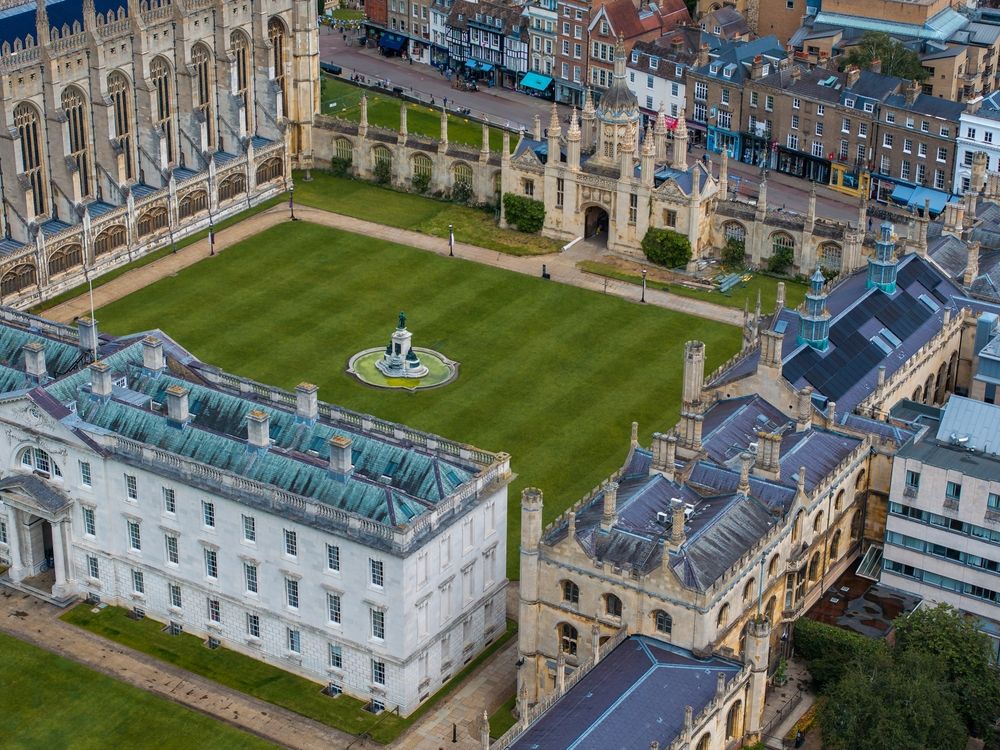
Founded in 1209, Cambridge University is one of the oldest and most prestigious academic institutions in the world. Nestled in the heart of a charming British town just 80 kilometers north of London, it attracts thousands of visitors each year who come to admire its centuries-old colleges, Gothic chapels, and verdant gardens. Between majestic medieval architecture and age-old traditions, visiting Cambridge University offers a unique experience that immerses you in eight centuries of intellectual history. From the illustrious Trinity College and King's College to romantic punting on the River Cam, through exceptional museums and historic libraries, this university city reveals its exceptional heritage at every street corner. Whether you're passionate about history, an admirer of Gothic architecture, or simply curious to discover the unique atmosphere of this legendary city, Cambridge promises an unforgettable visit through its cobbled streets and majestic courtyards.
1. King's College and its Gothic Chapel
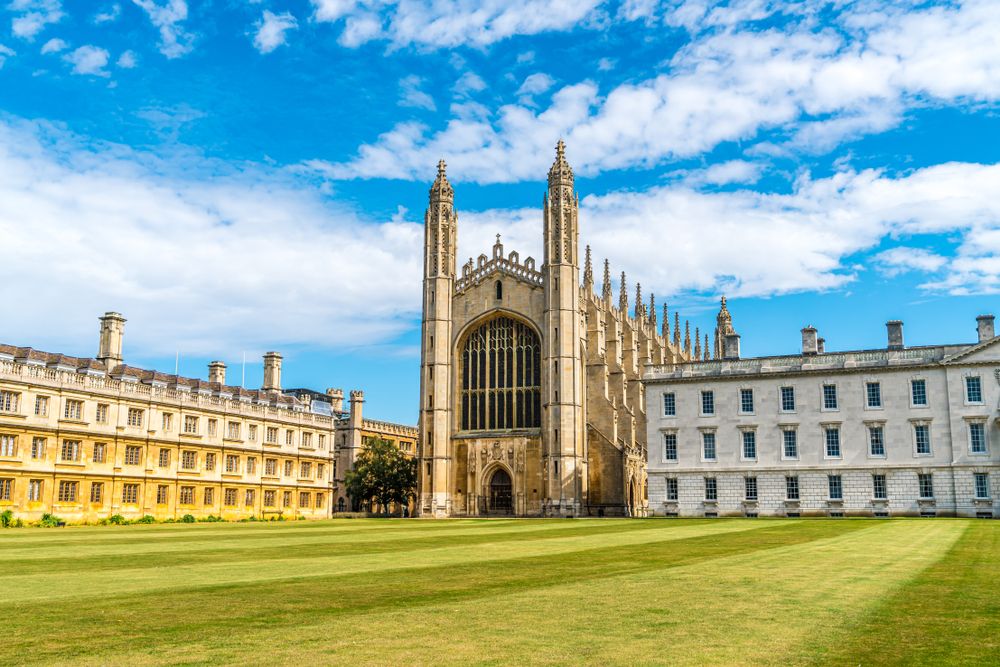
It's impossible to visit Cambridge University without starting with King's College, a true architectural gem founded in 1441 by King Henry VI. Its perpendicular Gothic chapel, completed in 1544 after nearly a century of work, is universally considered one of England's most beautiful medieval buildings. Upon entering its doors, you'll be immediately struck by the majesty of its fan vault, a masterpiece of architectural virtuosity that seems to defy the laws of gravity.
The immense 16th-century stained glass windows flood the interior with colored light, telling biblical scenes with exceptional richness of detail. Rubens' Renaissance altarpiece, 'The Adoration of the Magi,' adds an incomparable artistic touch to this Gothic sanctuary. Each Christmas, the chapel hosts the famous Festival of Nine Lessons and Carols, broadcast worldwide since 1928. The college gardens, which extend to the River Cam, offer a bucolic setting to stroll through after the visit.
Practical information: King's College (King's Parade, Cambridge CB2 1ST, rated 4.7/5 on Google for 18,000 reviews). Adult ticket: £11, reduced: £8.50. Hours vary by season, check before your visit as the college may close during academic events.
2. Trinity College and the Wren Library
Founded in 1546 by King Henry VIII, Trinity College is the largest and wealthiest of Cambridge's colleges. Passing through its monumental Great Gate transports you into a world of academic grandeur. The Great Court, a vast 16th-century inner courtyard, is the largest university court in the world and served as the backdrop for the famous opening scene of the film 'Chariots of Fire.' This majestic court, bordered by historic buildings, exudes a solemn atmosphere conducive to reflection.
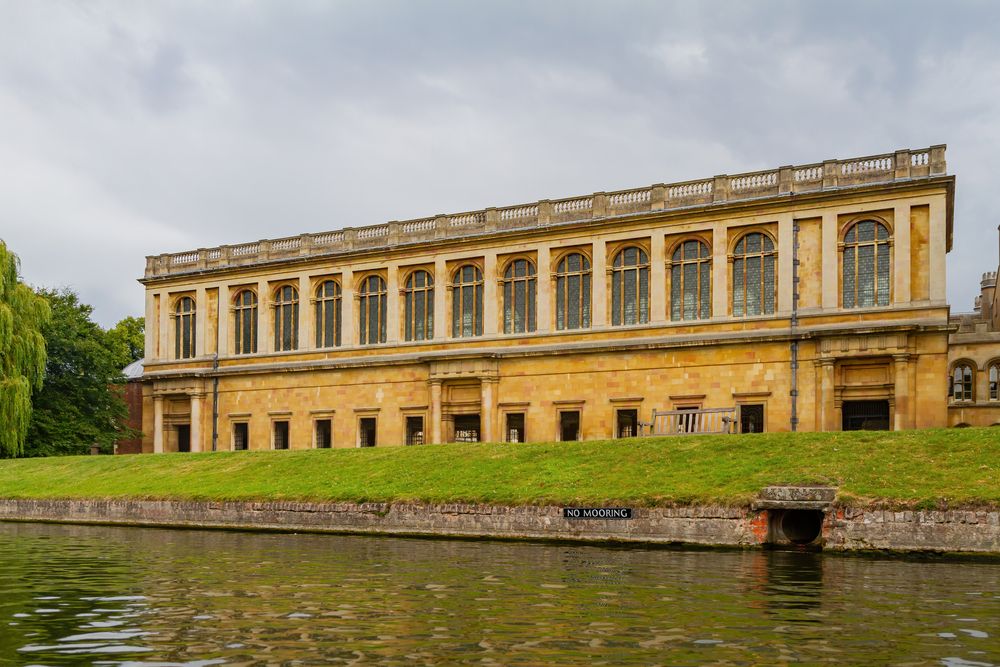
The Wren Library, designed in 1695 by the famous architect Christopher Wren, is the jewel of the college. This baroque library houses priceless treasures, including original manuscripts by Isaac Newton, one of Trinity's most illustrious students. Among other famous alumni are Lord Byron, philosopher Bertrand Russell, and quantum physicist Niels Bohr. The library also preserves autograph letters by William Shakespeare and rare books that testify to the exceptional intellectual heritage of this institution.
Practical information: Trinity College (Trinity St, Cambridge CB2 1TQ, rated 4.6/5 on Google for 7,500 reviews). Variable admission fee, generally around £5 for courtyard access. The Wren Library is accessible free of charge on certain days.
3. St John's College and the Bridge of Sighs
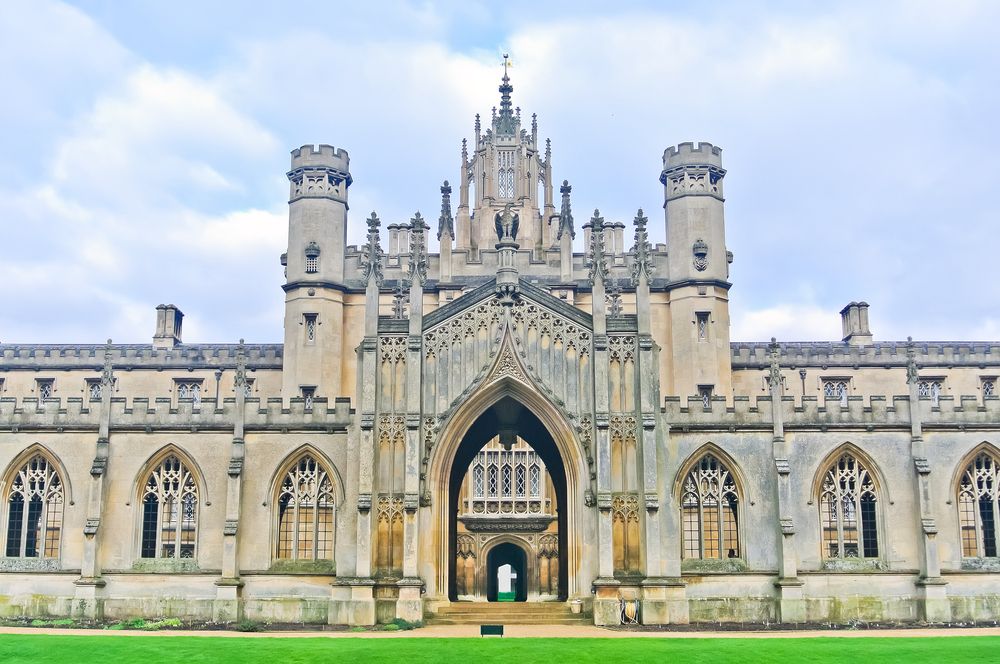
Established in 1511, St John's College is distinguished by its architectural richness that spans the centuries. Exploring its different courts, you'll discover a fascinating journey through the history of British architecture, from Tudor to neo-Gothic. The college counts among its alumni numerous Nobel Prize winners and illustrious personalities who have marked British history.
The famous Bridge of Sighs, built in 1831, is undoubtedly the most photographed monument in Cambridge. This covered passage adorned with Gothic windows connects two college buildings over the River Cam. Contrary to legend, this bridge has no connection to Isaac Newton, but its name was given by Queen Victoria during her visit in 1847, struck by its resemblance to the Venetian bridge of the same name. The view from the river, during a punting excursion, offers a romantic perspective of this emblematic bridge. The college chapel, with its Victorian stained glass, and the magnificent entrance portal also deserve a visit during your stay.
Practical information: St John's College (St John's Street, Cambridge CB2 1TP). Adult admission: approximately £10. Hours: generally 10am-3:30pm, but may vary.
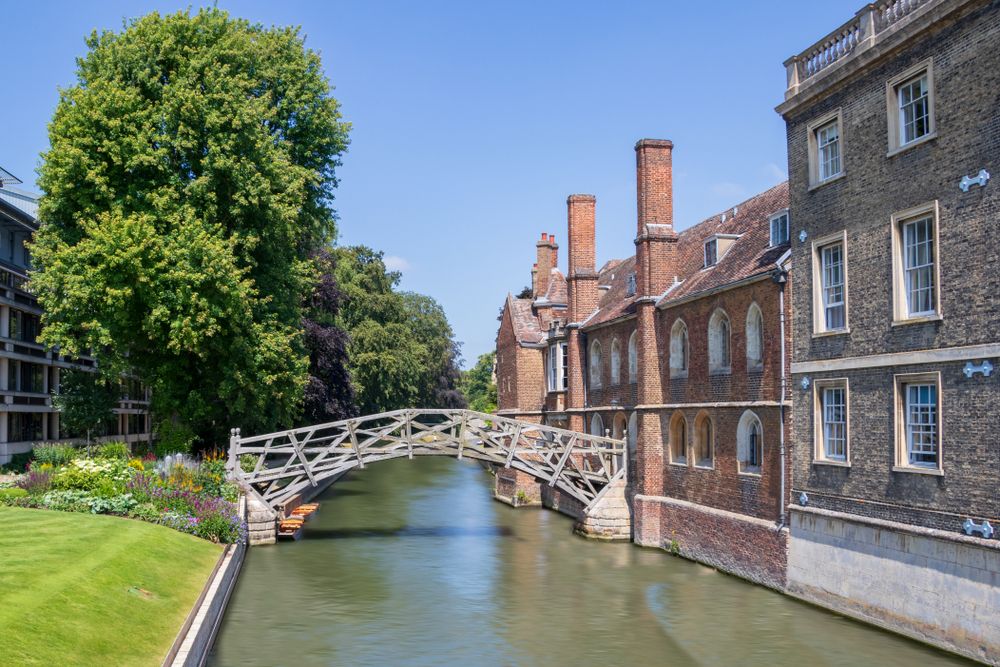
4. Queens' College and the Mathematical Bridge
Founded in 1448 by Margaret of Anjou then refounded in 1465 by Elizabeth Woodville, Queens' College (note the apostrophe after the 's', symbolizing the two queens) offers a magnificent panorama of architectural evolution at Cambridge. Its buildings harmoniously blend medieval, Tudor and baroque styles, creating an ensemble of rare aesthetic coherence. The medieval court, with its characteristic red timber framing, is among the most picturesque in Cambridge.
The Mathematical Bridge, built in wood in 1749, fascinates with its ingenious design. Legend claims that Isaac Newton designed the plans without using nails or bolts, and that students dismantled it then clumsily reassembled it by adding metal fixings. This story, while amusing, is completely false: Newton died in 1727, 22 years before the bridge's construction. Nevertheless, this tangential arch bridge remains a fascinating engineering feat. The chapel and gardens bordering the Cam pleasantly complete the visit to this peaceful college.
Practical information: Queens' College (Silver Street, Cambridge CB3 9ET, rated 4.6/5 on Google for 3,200 reviews). Adult admission: approximately £5.
5. The Fitzwilliam Museum
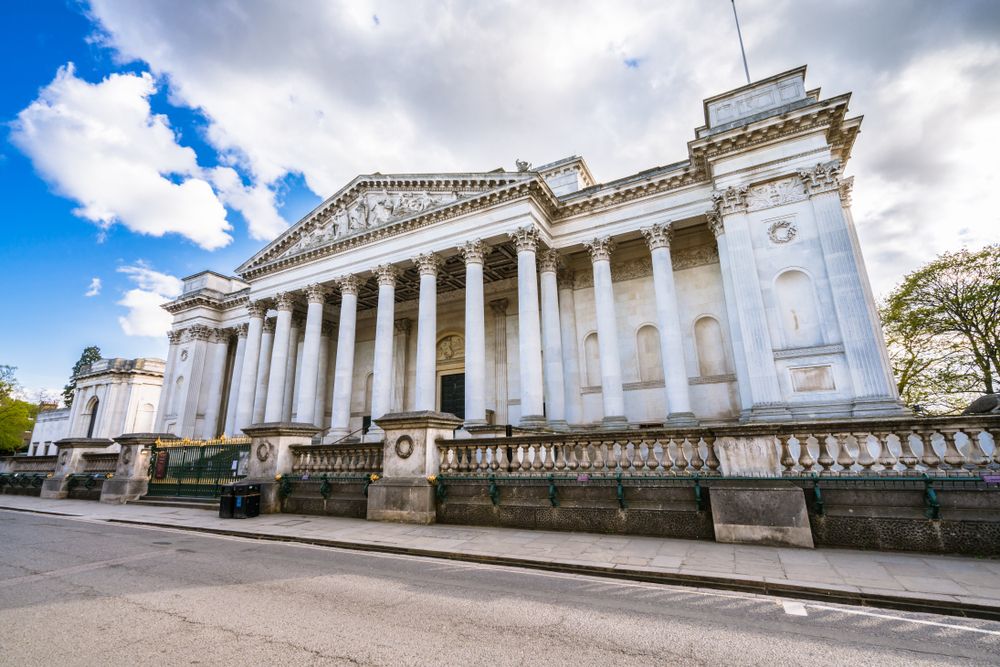
Inaugurated in 1848, the Fitzwilliam Museum is Cambridge University's main art and antiquities museum. Located on Trumpington Street, this majestic neoclassical building designed by architect George Basevi houses exceptionally rich collections. Free admission allows everyone to discover this cultural treasure that rivals the greatest British museums.
The museum galleries contain works by European masters such as Monet, Picasso, Rubens, Titian and Rembrandt. The collection of Egyptian antiquities, illuminated manuscripts, Asian ceramics and decorative art objects impresses with its diversity and quality. The rooms dedicated to British applied arts, with their porcelain, silverware and period furniture, testify to British artistic refinement through the centuries. The museum regularly organizes high-quality temporary exhibitions that further enrich the visit.
Practical information: Fitzwilliam Museum (Trumpington Street, Cambridge CB2 1RB, rated 4.7/5 on Google for 12,000 reviews). Free admission. Hours: Tuesday-Saturday 10am-5pm, Sunday 12pm-5pm, closed Mondays.
6. Punting on the River Cam
Download the audio guide tour to discover Oxford on foot and independently
While Cambridge doesn't yet have a Ryo audio guide circuit, its neighboring and rival city Oxford offers a complete itinerary to discover the other great British university city. With 26 commented points of interest, this route allows you to explore Oxford in complete autonomy, from historic colleges to emblematic monuments, while enjoying fascinating anecdotes about this legendary city.
Punting on the River Cam represents the quintessential Cambridge experience. These flat-bottomed boats, propelled using a long pole pushed against the riverbed, offer a unique perspective on the 'backs,' those verdant gardens that extend behind the main colleges. This tradition dates back to the 19th century and remains a popular leisure activity for both students and visitors from around the world.
Floating along the water, you'll glide under the Mathematical Bridge of Queens' College, past the majestic facades of King's College, Trinity College, St John's College and Clare College. The Bridge of Sighs reveals itself at its most photogenic angle from the river. You can choose between renting your own punt and trying the delicate art of piloting (harder than it looks!), or opting for a guided tour with an experienced 'chauffeur' who will tell you the history of the places while skillfully maneuvering the pole. This approximately 45-minute cruise is an unforgettable moment of relaxation and offers exceptional photographic opportunities.
Practical information: Several companies offer rentals and guided tours from Silver Street or Magdalene Bridge. Rates: approximately £30-35 per hour for rental, £15-20 per person for a shared guided tour.
7. The Senate House
Built between 1722 and 1730 according to plans by architect James Gibbs, the Senate House embodies the ceremonial heart of Cambridge University. This elegant neoclassical building hosts the annual university degree ceremonies, perpetuating age-old traditions in sumptuous surroundings. Its imposing white facade and harmonious proportions make it one of the finest examples of Palladian architecture in Cambridge.
The interior, though rarely accessible to the public outside official ceremonies, testifies to the institution's grandeur with its carved woodwork and stained glass. Located near Gonville and Caius College and Great St Mary's Church, the Senate House integrates perfectly into the historic urban fabric of central Cambridge. The lawn surrounding it, the Senate House Lawn, is a preferred gathering place for students during exams and academic events. Even seen from the outside, the Senate House impresses with its majesty and reminds visitors of the prestige and academic tradition that have characterized Cambridge for eight centuries.
Practical information: Senate House (Senate House Passage, Cambridge CB2 1TN). Generally closed to the public except for special events. Exterior view freely accessible.
8. Cambridge University Botanic Garden
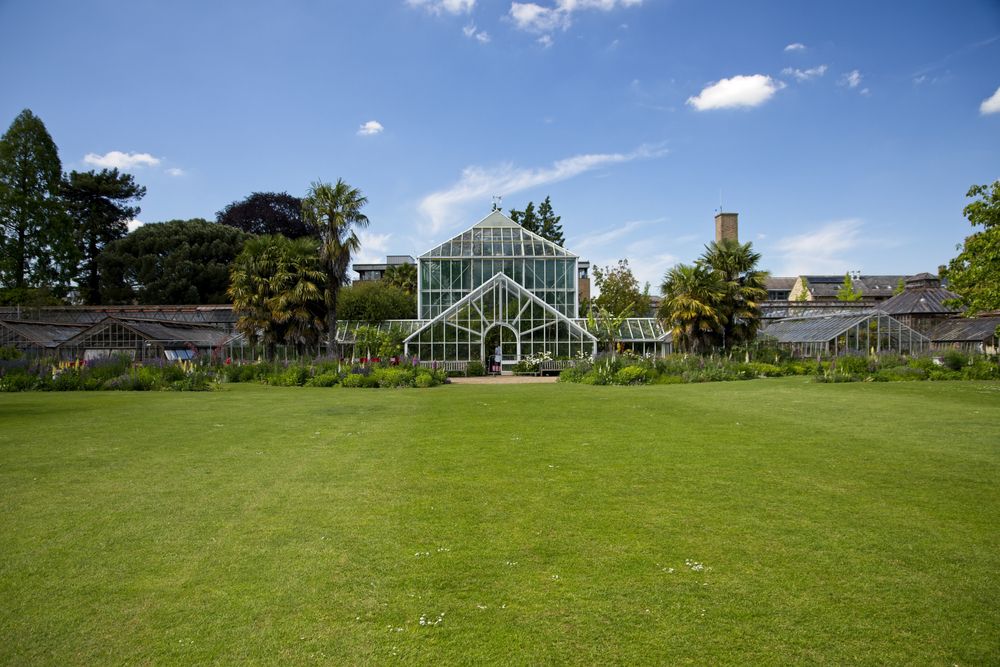
Inaugurated in 1846, Cambridge University Botanic Garden extends over 16 hectares just a few minutes' walk from the city center. This internationally renowned botanical garden brings together more than 8,000 plant species from around the world, offering a space for relaxation, wonder and scientific research. The thematic collections allow you to travel through climates and continents without leaving Cambridge.
The Victorian greenhouses house lush tropical plants, desert cacti and rare orchids in carefully controlled atmospheres. The outdoor gardens present species organized by botanical family, use (medicinal, aromatic plants) or geographical origin. The rock garden, the fragrant winter garden and the arboretum with its century-old trees offer peaceful walks in all seasons. Themed guided tours and educational workshops are regularly organized for botany enthusiasts. Located near the railway station, this green haven is an ideal refreshing stopover for nature lovers after exploring the stone colleges.
Practical information: Cambridge University Botanic Garden (1 Brookside, Cambridge CB2 1JE, rated 4.7/5 on Google for 9,500 reviews). Adult admission: approximately £7-8. Hours: 10am-6pm in summer, 10am-4pm in winter.
9. The Round Church
Built around 1130, the Round Church (officially the Church of the Holy Sepulchre) is one of four medieval circular churches still existing in England. Its unique Norman architecture, inspired by the Church of the Holy Sepulchre in Jerusalem, testifies to the influence of the Crusades on European religious architecture. The central rotunda, supported by eight massive pillars, creates a harmonious and unusual interior space.
A rectangular choir was added in the 15th century to enlarge the building and meet the needs of a growing congregation. Today, the church houses a fascinating information center about Cambridge's religious history and the spiritual and intellectual evolution of the university city. The exhibitions trace a thousand years of Christianity in Cambridge, from the first Saxon churches to the contemporary era. Located in the heart of the city, between Bridge Street and Sidney Street, the Round Church is a precious witness to Cambridge's medieval past, reminding us that the city existed long before the founding of its university.
Practical information: Round Church (Bridge Street, Cambridge CB2 1UB, rated 4.5/5 on Google for 1,200 reviews). Paid admission (approximately £3-4) including access to the exhibition.
10. Cambridge University Library
Founded in 1424, Cambridge University Library is one of the oldest and most prestigious university libraries in the world. It now preserves more than eight million documents, including precious medieval manuscripts, incunabula (books printed before 1500), historic scientific archives and modern collections in all fields of knowledge. As a legal deposit library, it automatically receives a copy of every book published in the United Kingdom.
The current building, erected in 1934, features an imposing 48-meter high storage tower that dominates the Cambridge landscape. Its 1930s functionalist architecture contrasts with the Gothic buildings of the colleges, but testifies to the university's continuous modernization. Researchers from around the world come to consult the exceptional holdings of this library, which notably possesses manuscripts by Charles Darwin, Isaac Newton and many other scholars who have marked the history of science. Temporary exhibitions allow the general public to discover certain treasures usually reserved for accredited researchers.
Practical information: Cambridge University Library (West Road, Cambridge CB3 9DR). Access reserved to university members for consultation, but temporary exhibitions open to the public.
How to get to Cambridge?
Cambridge is located approximately 80 kilometers north of London, making it a perfect day trip from the British capital. The train remains the most practical and fastest way to reach Cambridge. Direct trains run regularly from London King's Cross and take approximately 50 minutes to 1 hour to reach Cambridge station. Tickets generally cost between £15 and £30 depending on the time and if you book in advance.
From Stansted Airport, located just 45 kilometers away, you can take a direct train (approximately 30 minutes) or a National Express bus (approximately 50 minutes). If you arrive from other London airports like Heathrow or Gatwick, first take the train to King's Cross then change for Cambridge. By car, Cambridge is accessible via the M11 motorway from London, but parking in the city center is limited and expensive. It's recommended to use the Park & Ride car parks on the city's periphery, which offer regular shuttle service to the center at advantageous rates. Once there, Cambridge is ideally discovered on foot or by bike, the city being very compact and largely pedestrian in its historic center.
What is the best time to visit Cambridge?
The best time to visit Cambridge extends from May to September, when the weather is most pleasant and days are longest. Spring (April-May) offers the enchanting spectacle of the college gardens in bloom, with cherry trees and magnolias that color the historic courtyards. Summer (June-August) enjoys the most pleasant temperatures, ideal for punting on the Cam, but it's also high tourist season with significant crowds.
Autumn (September-October) is also an excellent period, with fewer tourists, still mild temperatures and magnificent autumn colors that adorn the parks and gardens. Moreover, it's the beginning of the academic year, when the student atmosphere is at its peak. Winter (November-March) is quieter and less expensive, but some colleges may have reduced opening hours, and the weather can be cold and rainy. However, visiting Cambridge under snow or during Christmas illuminations offers a magical atmosphere. Note that during exam periods (May-June) and university holidays, some colleges may close their doors to visitors or have limited access.
How much time to plan for visiting Cambridge?
For a first discovery of Cambridge, a full day allows you to visit the main colleges (King's College, Trinity College, St John's College), go punting on the Cam and stroll through the historic center. If you wish to explore several colleges more deeply, visit museums like the Fitzwilliam Museum, relax at the Botanic Garden and fully enjoy the unique atmosphere of the city, plan for two days. This will also allow you to discover Cambridge at a more leisurely pace, lunch in a traditional pub and perhaps attend a concert in one of the college chapels. For those passionate about academic history or architecture, a three-day stay is not too much to explore all the colleges, museums and historic sites without rushing. Don't forget that Cambridge lends itself wonderfully to strolling: taking time to sit in a café, observe the ballet of cyclists or read in a park is an integral part of the Cambridge experience.
In conclusion, visiting Cambridge University represents much more than a simple tourist excursion: it's an immersion into eight centuries of academic excellence, scientific innovations and preserved traditions. From majestic Gothic chapels to libraries overflowing with literary treasures, from peaceful medieval courts to the romantic banks of the Cam, every corner of this legendary university city tells a fascinating story. Whether you're captivated by architecture, passionate about history, an art lover or simply curious to discover the unique atmosphere that has nurtured so many geniuses, Cambridge will seduce you with its timeless charm. Taking time to stroll through its cobbled streets, admire its centuries-old colleges and try punting on the river will leave you with lasting memories. To complete your discovery of the great British university cities, don't hesitate to also explore Oxford, Cambridge's eternal rival, thanks to the Ryo audio guide circuit that will allow you to discover its 26 points of interest in complete autonomy.
Frequently Asked Questions
Can you visit Cambridge colleges for free?
Most Cambridge colleges charge admission for visitors, with rates generally between £5 and £11 per college. King's College is the most expensive (£11), while others like Queens' College or Trinity College are less expensive (around £5). A few colleges remain free or ask for a voluntary contribution. Hours and rates may vary according to season and academic events. It's recommended to check up-to-date information on official websites before your visit. Some libraries, like Trinity College's Wren Library, are free at certain hours.
What is the difference between Oxford and Cambridge?
Oxford and Cambridge are the two oldest and most prestigious British universities, often grouped under the term 'Oxbridge.' Oxford, founded in the 12th century, is slightly older than Cambridge (1209). Oxford has a more urban and cosmopolitan atmosphere, with a larger city, while Cambridge offers a more intimate and bucolic setting with its River Cam suitable for punting. Architecturally, Oxford favors Gothic and baroque styles, while Cambridge presents more Renaissance and neoclassical architecture. Both rival in academic excellence, but Oxford is historically more associated with humanities and politics, while Cambridge particularly excels in science and mathematics. The rivalry between the two universities, notably during annual sporting competitions, is an integral part of their identity.
Should you book tickets in advance to visit Cambridge?
For King's College, online booking is strongly recommended, especially in high season (April-September) and during weekends, as the number of daily visitors is limited. Other colleges generally accept visitors without reservation, but may close during academic events, exams or ceremonies. For punting, you can book in advance to guarantee a spot at the most popular hours, although on-site rental is often possible. Museums like the Fitzwilliam Museum are free and don't require reservations. If you plan to visit several colleges, arrive early in the morning to avoid crowds of tour groups that usually arrive around 11am.
Are Cambridge colleges accessible to people with reduced mobility?
Accessibility varies considerably from one college to another due to the age of the buildings. Medieval structures often present obstacles such as narrow stairs, irregular cobblestones and low doors. King's College and Trinity College have improved their accessibility with ramps and elevators in some areas, but complete access remains limited. The Fitzwilliam Museum has wheelchair access and elevators. Cambridge Botanic Garden offers paved paths suitable for wheelchairs. It's recommended to contact the colleges directly before your visit to know the specific amenities. Cambridge city center, largely pedestrian with cobbled streets, can present challenges for mobility, but more accessible alternative routes exist.