
Créé par Romane, le 14 mai 2026
Votre guide Ryo
© Shutterstock
Helsinki is a city that earns its reputation quietly. No sweeping boulevards, no postcard clichés splashed across every travel magazine, just granite coastlines, Art Nouveau facades, and a culture built on honesty and design. The Finnish capital sits on a peninsula flanked by the Baltic Sea on three sides, which means water is never far away and the light in summer turns the whole city gold after 10 pm. If you are trying to figure out the best things to do in Helsinki, you will find the list runs deeper than the usual cathedral-and-market formula. Start your exploration with the Ryo audio guide to Helsinki's Scandinavian getaway circuit, it puts context behind the facades before you even step through the door.
The city packs genuine surprises into a walkable footprint. There is a 300-year-old sea fortress sitting on islands 15 minutes by ferry from the harbour, and it houses a restaurant, a brewery, and a working community. There is a church blasted into solid bedrock so acoustically perfect that international orchestras record albums here. An underground museum whose exhibitions literally disappear below street level. A public sauna on the waterfront where you can swim in the Baltic between rounds. This guide covers 25 experiences across architecture, food, design, islands, and culture, enough to fill three full days in Helsinki and still leave reasons to return.
1. Helsinki Cathedral & Senate Square
Helsinki Cathedral (Unioninkatu 29, 00170 Helsinki, rated 4.6/5 on Google (13 672 avis)) stands on the edge of Senate Square like the city's own punctuation mark, white neoclassical facade, green copper dome, a broad flight of steps always dotted with people from dawn until dark. Construction finished in 1852 and the building functions as the main Lutheran cathedral of Helsinki, though most visitors come as much for the steps as the interior.
The square itself is one of the best places in the city to absorb the architectural language of Helsinki, the Government Palace, the University of Helsinki, and the National Library ring the space in a controlled neoclassical symmetry that the city planner Carl Ludwig Engel designed in the early 19th century. Sit on the steps in the morning before the tour groups arrive and the square is nearly yours alone. The interior of the cathedral is worth ten minutes of your time: plain, bright, and unexpectedly moving in its restraint.
2. The Rock Church (Temppeliaukio)
Temppeliaukio, known universally as the Rock Church, is one of those rare buildings that photographs cannot quite prepare you for. Architects Timo and Tuomo Suomalainen won a design competition in 1961 with a proposal to excavate directly into a granite outcrop in the Töölö district and cover the resulting bowl with a copper-ribbed dome. The result opened in 1969 and has been disrupting visitor expectations ever since.
From street level, almost nothing signals what is inside, a low circular entrance flanked by rough stone, easy to walk past. Once through the door, the scale of the excavation hits you: the raw rock walls rise up to 13 metres at the highest point, lit by a continuous band of 180 skylights running around the base of the dome. The copper ceiling overhead catches the light differently depending on the season, bright and diffuse in summer, warm and amber in the low-angled winter sun.
The acoustic properties of the space are legendary. The curved rock walls and the shallow dome create near-perfect natural resonance, which is why the church regularly hosts concerts and why several classical recordings have been made here. If you visit during a rehearsal, stay as long as they will let you.
Practically: the church is open daily but closes during services and concerts. Arrive early in the morning or after 4 pm to avoid the bulk of group tours. Entry costs around €5 for adults. The neighbourhood around Temppeliaukio is worth wandering, the Töölö area has good cafés and independent bookshops within a few blocks.
3. Suomenlinna Sea Fortress
Few cities anywhere in the world have an 18th-century sea fortress sitting on six islands 15 minutes by ferry from the main harbour. Suomenlinna is precisely that, a UNESCO World Heritage Site since 1991, still inhabited by about 800 people year-round, and one of the most complete examples of Nordic military architecture anywhere in Europe.
The fortress was begun by the Swedish Empire in 1748 as a bastion against Russian expansion. Finland passed from Swedish to Russian control in 1809, and the fortress changed hands along with the country, functioning at various points as a military base, a prison, and a garrison town. What makes Suomenlinna unusual today is that it is neither a ruin nor a museum-piece, it is a living neighbourhood with schools, restaurants, a brewery, and a contemporary art museum, all distributed across a landscape of turf-covered ramparts and cannon emplacements.
The HSL ferry from Market Square runs year-round every 15-20 minutes and is included in your standard Helsinki public transport day ticket, no separate fare needed. Once on the island, the six-museum pass (around €8) gives access to the Suomenlinna Museum, the Coastal Artillery Museum, the Toy Museum, and three others. The Ryo Helsinki audio guide includes a dedicated chapter on the fortress, useful if you want commentary on the ramparts as you walk them rather than reading plaques. Budget at least three to four hours: the islands are bigger than they look from the water, and the walkways around the outer ramparts, with long sea views in both directions, invite you to slow down.
In summer, the fortification walls become picnic spots. In winter, if the sea freezes, which it does in cold years, you can walk across to smaller adjacent islands. The Suomenlinna Brewery and Restaurant operates year-round and serves food in a vaulted cellar that was, until relatively recently, a military warehouse.
4. Market Square (Kauppatori)
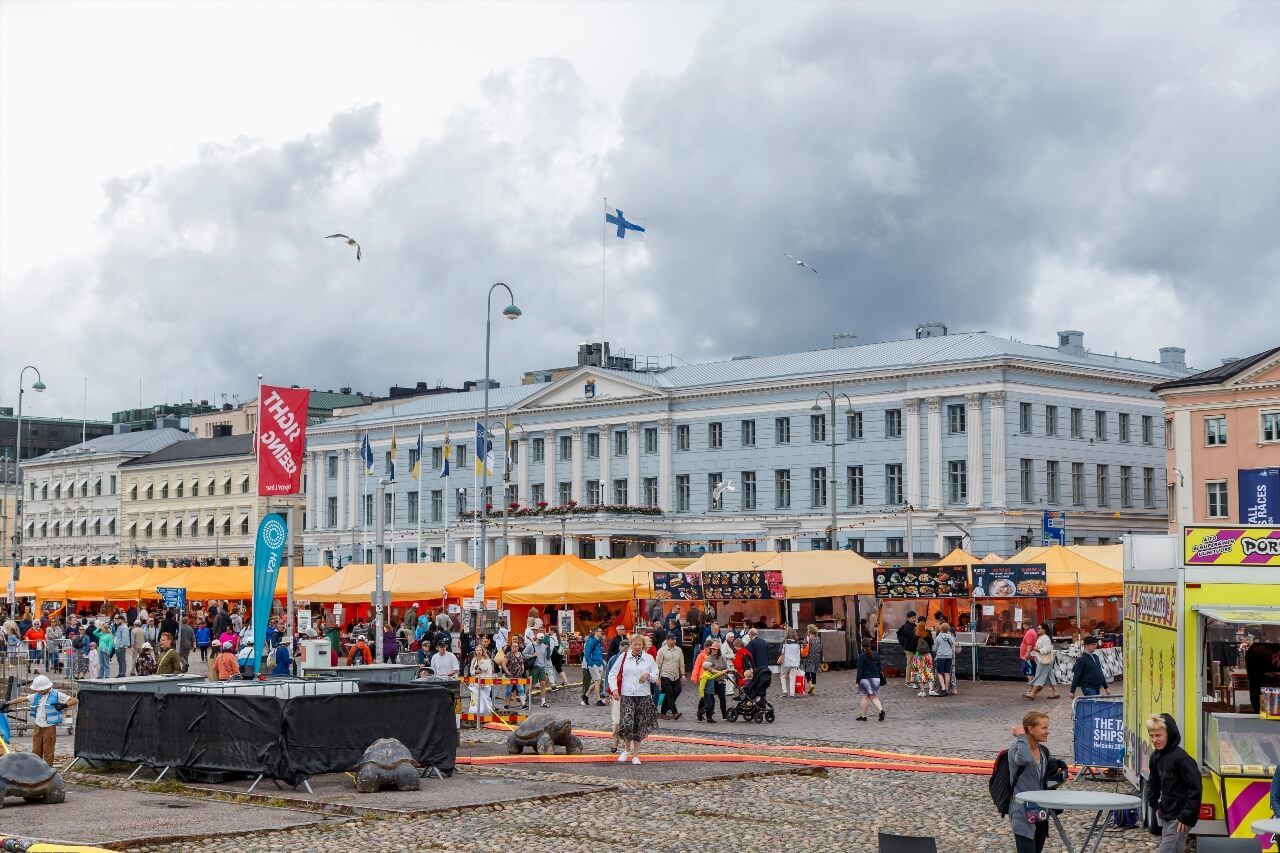
Kauppatori, the harbour market square, has been the beating commercial heart of Helsinki since the city was founded. Today it is simultaneously a working market, a transit hub, and an outdoor living room.
In summer, the orange-canopied stalls sell salmon grilled over open fires, cloudberry jam, fresh strawberries, reindeer hides, and handmade jewellery in the same square where the ferry to Suomenlinna departs. Winter strips away most of the stalls but brings the Christmas market, which runs through December and fills the square with mulled wine and hand-crafted wooden goods.
Two things worth doing here: eat a lohikeitto (creamy salmon soup) from one of the harbour stalls, it costs around €8-10 and is one of the best quick lunches in the city. Then walk to the edge of the pier and look back at the Cathedral and the Uspenski Cathedral simultaneously framing the skyline from opposite sides. That view, at golden hour, is the one you remember.
5. Amos Rex Museum
Amos Rex (Mannerheimintie 22-24, 00100 Helsinki, rated 4.4/5 on Google (4 633 avis)) opened in 2018 and immediately redefined what a contemporary art museum in Helsinki could look like. The building sits under Lasipalatsi Square in the centre of the city, its defining feature is a series of bulging skylights that push up through the plaza pavement, giving the underground galleries natural light while creating a sculptural landscape on the street above.
The underground halls span 2,200 m² and are deliberately column-free, giving curators room to stage immersive, large-scale installations that smaller galleries cannot accommodate. The museum rotates major exhibitions several times a year, recent shows have included immersive digital art experiences and large survey exhibitions of international artists that would otherwise only reach Helsinki via touring shows to Stockholm or Copenhagen.
The street-level plaza is worth visiting even on days you skip the museum. People sit on the curved dome-skylights, children run across them, and the whole composition feels like a public artwork in its own right. Book tickets in advance for major exhibitions, Amos Rex sells out regularly during popular shows. The museum shop is one of the best design shops in the city for books and prints.
6. Design District & Design Museum
Helsinki's Design District covers roughly 25 streets in the southern part of the city centre, officially mapped and signed with small diamond logos on the pavements. It contains more than 200 shops, studios, galleries, and restaurants concentrated in about a 15-minute walk.
The Design Museum anchors the district. Founded in 1873, making it one of the oldest design museums in the world, it holds a permanent collection tracing Finnish design from the late 19th century to the present. The Marimekko prints, Aalto furniture, Iittala glassware, and Nokia product history sections give you a compressed but genuinely illuminating account of how design became the language through which Finland presented itself to the world. Temporary exhibitions on the upper floors usually cover contemporary international design.
For browsing without a fixed destination, the streets between Fredrikinkatu and Iso Roobertinkatu reward slow walking, and the Ryocity audio walk for Helsinki threads through several of these blocks if you would rather follow a curated route than wander. Small independent studios sell ceramics, textiles, and jewellery from Finnish designers who are largely unknown outside the country. Prices are not bargain-bin, but the quality justifies them.
7. National Museum of Finland
The National Museum of Finland (Mannerheimintie 34, 00100 Helsinki, rated 4.4/5 on Google (6 224 avis)) (Kansallismuseo) occupies a National Romantic building completed in 1916, designed to look like a Finnish medieval church crossed with a castle, granite tower, carved relief friezes, and a ceiling fresco by Akseli Gallen-Kallela in the main entrance hall that depicts scenes from the Kalevala, Finland's national epic.
The permanent collection spans Finnish prehistory through to the 20th century, with strong sections on the Swedish period, the Russian Grand Duchy era, and Finland's path to independence in 1917. The Kalevala fresco alone is worth the entrance fee, Gallen-Kallela painted it in a matter of weeks in 1928 as a kind of artistic manifesto, and it has lost none of its force. Allow 90 minutes for a thorough visit; the children's areas and interactive stations make it accessible for families.
8. Helsinki Art Museum (HAM)
HAM occupies the Tennispalatsi building, a 1939 functionalist sports and entertainment complex that was repurposed as the city art museum in 1998. The permanent collection concentrates on Finnish art from the 20th century, with a notable public art inventory that extends across Helsinki's streets and parks.
For visitors without a lot of time, HAM is a good one-hour stop: smaller and more focused than the Ateneum (the national fine art gallery), it rewards browsing through decades of Finnish figurative and abstract painting without the crowd pressure of a flagship institution. Entry is free for under-18s.
9. Uspenski Cathedral
Uspenski Cathedral is the largest Orthodox church in Western Europe, built in 1868 in the red-brick Russian Byzantine style on a rocky promontory overlooking the harbour. From the water approaching Market Square, its 13 golden domes make it unmistakable.
Inside, the iconostasis, the ornate screen of icons separating the nave from the sanctuary, and the ceiling frescos create an atmosphere dramatically different from Helsinki's Lutheran churches. Entry is free. The visit takes about 20 minutes, but the exterior view from the harbour rocks below the cathedral is worth a photograph from multiple angles, especially in late afternoon when the brick glows orange.
10. Esplanadi Park & the City Centre
Esplanadi Park (Pohjoisesplanadi, 00130 Helsinki, rated 4.5/5 on Google (13 795 avis)) is a long, tree-lined boulevard running east-west through the heart of Helsinki, bookended by the harbour at one end and the Swedish Theatre at the other. It functions as the city's living room in a way that few European city parks manage, not a formal garden, not a grand promenade, but a genuinely comfortable public space where people eat lunch, listen to free concerts, walk dogs, and sit on benches reading.
The two streets flanking the park, Pohjoisesplanadi and Eteläesplanadi, host the city's best shops, including the Marimekko flagship, Moomin character shop, and several Finnish design stores. The bandstand in the middle of the park runs free concerts on summer evenings. In winter, the trees are lit and the park takes on an entirely different but equally appealing quietude. If you walk the full length of Esplanadi and back, you have seen the commercial heart of central Helsinki in about 45 minutes.
11. Allas Sea Pool
Allas Sea Pool (Katajanokanlaituri 2a, 00160 Helsinki, rated 4.2/5 on Google (3 739 avis)) opened in 2016 on the South Harbour, within sight of Market Square and the ferry terminal for Suomenlinna. It is, depending on your perspective, either the most Helsinki thing imaginable or the most unexpected: a complex of outdoor pools, two heated, one unheated with direct Baltic Sea water, built on floating pontoons in the harbour, open year-round.
In summer, Allas functions as a beach club: people swim, sunbathe on the decks, eat at the harbourside restaurant, and watch the cruise ships and ferries move in and out of the harbour. In winter, it becomes a Nordic ritual, you heat up in the sauna facilities inside, then step out to the unheated Baltic pool, then return to the sauna. Water temperature in February can drop to 2-3°C. The sensation is violent and immediate and, after the second round, strangely addictive.
Day passes are available from around €15-18, sauna sessions additional. The on-site café and bar serve good coffee and Finnish snacks. Go on a weekday morning in summer to avoid the weekend queues that form around the sauna.
12. Seurasaari Open-Air Museum
Seurasaari is an island connected to the mainland by a footbridge, about 4 km from the city centre, and it contains one of Finland's most complete open-air museums. Over 80 historic wooden buildings, farmhouses, a manor house, a parsonage, working-class cottages, were collected from across Finland from the late 19th century onwards and reassembled on the island.
From late May to early September, guides in period costume demonstrate traditional crafts and open the interiors of the buildings for visitors. Outside the official season, the island grounds remain free to walk year-round, the buildings are shuttered but the island itself, with its forest trails and shoreline, is one of the calmest places in Helsinki. Midsummer Eve celebrations at Seurasaari are a national event: a bonfire is lit over the water, boats gather in the sound, and the crowds that come mark the solstice in a way that has continued unbroken for over a century.
Bus 24 from the city centre takes about 25 minutes. Budget 2 hours for a proper visit during the open season.
13. Linnanmäki Amusement Park
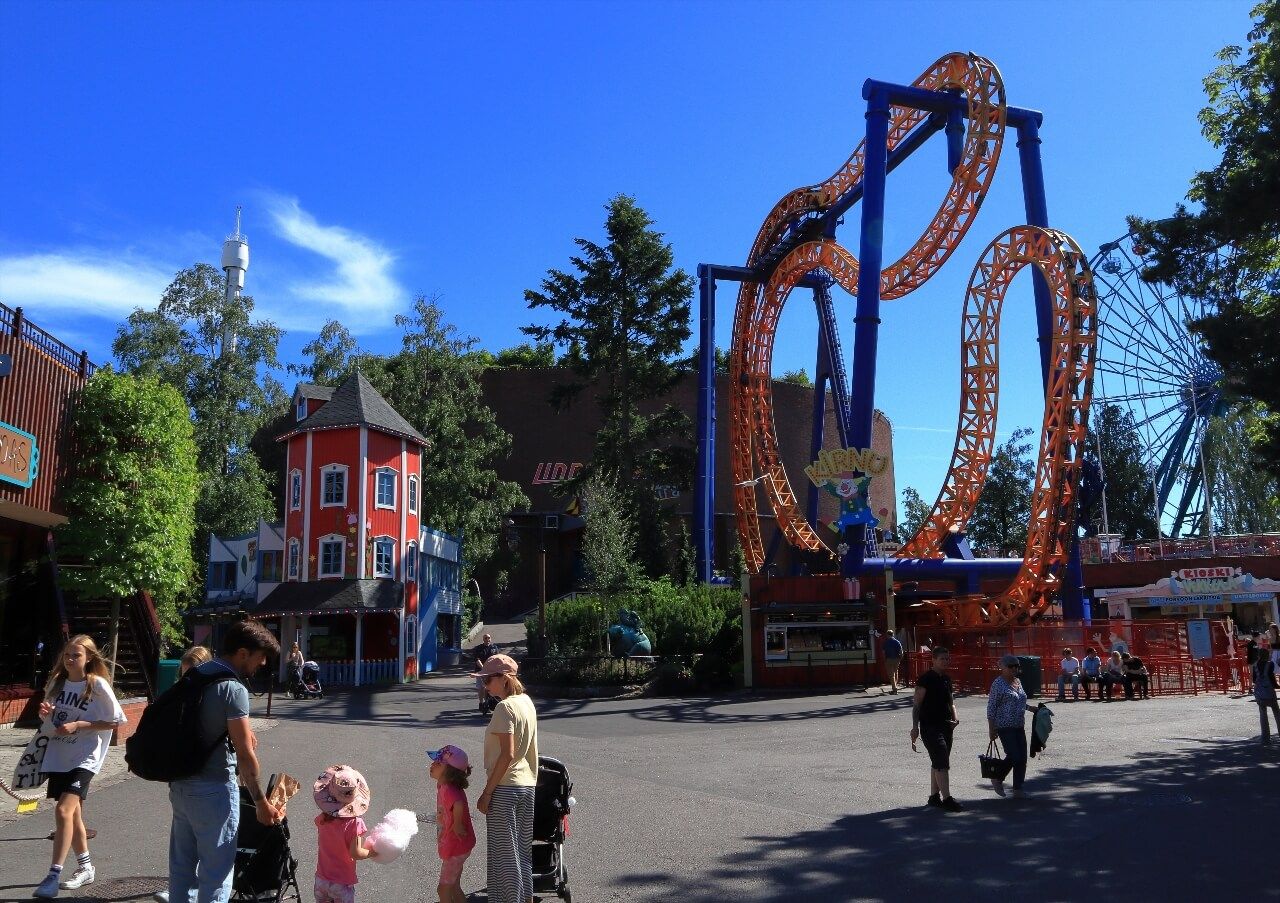
Linnanmäki has been Helsinki's amusement park since 1950, and the wooden roller coaster, Vuoristorata, still running on its original 1951 track, is among the oldest continuously operating wooden coasters in Europe. The park sits on a forested ridge in the Alppila district, about 2 km from the city centre.
Entry to the park grounds is free; rides cost per-ride or with a wristband. The amusement park is run by the Finnish Children's Foundation, so the profits fund children's welfare, a fact that gives even a routine rollercoaster ride a certain civic satisfaction. The season runs from late April to mid-October, with special Halloween and autumn events in September.
14. Helsinki Zoo (Korkeasaari)
Korkeasaari Zoo (Mustikkamaa, 00570 Helsinki, rated 4.3/5 on Google (13 985 avis)) occupies its own island in the eastern part of Helsinki harbour, reached by ferry from Market Square (summer) or by bridge from the mainland (year-round). Founded in 1889, it is one of the oldest zoos in the Nordic countries and houses over 150 animal species across a forested island landscape.
The island setting is genuinely unusual for a major European zoo, the animals live in enclosures that feel embedded in the natural Finnish landscape rather than arranged in a flat grid. The Amur leopard and snow leopard enclosures are among the most visited; the zoo participates in the European conservation programme for both species. The island ferry from Market Square runs in summer and is itself a pleasant 15-minute harbour crossing. Year-round, bus lines and the footbridge from Kulosaari make the zoo accessible without the ferry.
15. Sibelius Monument & Töölö
The Sibelius Monument (Mechelininkatu, 00250 Helsinki, rated 4.4/5 on Google (7 679 avis)) in Sibelius Park, on the shore of Töölönlahti Bay, is one of the more striking pieces of public sculpture in Helsinki, sculptor Eila Hiltunen's 1967 work consists of over 600 hollow steel pipes welded into an organ-like wave form, plus a separate portrait medallion of the composer's face mounted on a boulder.
The monument is in the Töölö neighbourhood, which is worth exploring beyond just the park. The area around Töölönlahti Bay is a continuous green loop of paths connecting the Finlandia Hall, the National Museum, the Olympic Stadium, and the Opera House, you can walk the whole circuit in about an hour. The bay itself turns gold in autumn and hosts migrating birds in spring and autumn. Jean Sibelius, Finland's most celebrated composer, died in 1957 at age 91, and the monument, controversial when unveiled, is now one of the most photographed objects in the city.
16. Oodi Central Library
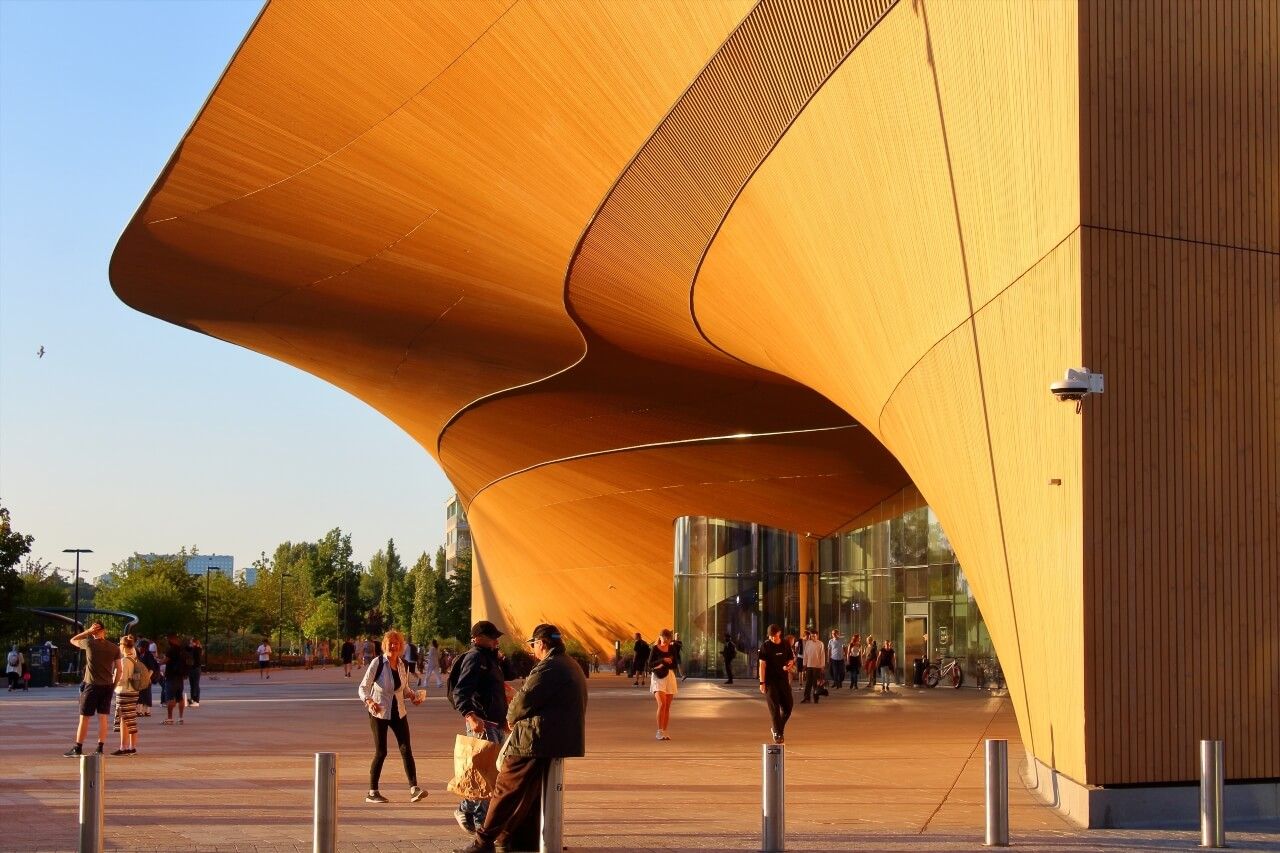
Oodi opened on 5 December 2018, on the eve of Finnish Independence Day, and was named Public Library of the Year 2019 by the IFLA (International Federation of Library Associations) at its world congress in Athens. The building sits directly across the street from the Finnish Parliament, and the siting is deliberate: the architects Ala Architects described the library as a civic counterpart to the parliament building, a house for democracy's raw material.
The exterior, a long curved form in white and glass, elevated on a slender ground floor, is striking from outside but the interior is better. The three floors contain a working library, a recording studio, a 3D printing lab, a cinema, an urban workshop with tools available for free use, several cafés, and one of the best rooftop terraces in central Helsinki. Everything in the building is free to use, including the equipment in the urban workshop and the recording studio (with advance booking). On a rainy day in Helsinki, Oodi is the finest building in the city to spend two hours.
17. Hakaniemi Market Hall
Hakaniemi Market Hall (Hämeentie 1A, 00530 Helsinki, rated 4.3/5 on Google (7 132 avis)) (Hakaniemen kauppahalli) is a two-story indoor market in the Hakaniemi district, about 1.5 km east of the city centre. Built in 1914, it is one of the few surviving traditional Finnish market halls, a red-brick building with an upper floor for textiles and crafts and a ground floor dedicated to food.
Where Market Square attracts tourists, Hakaniemi still draws locals for their weekly shopping. The fish counter runs along the rear wall, smoked vendace (muikku), Baltic herring prepared a dozen ways, fresh pike-perch. The deli stalls carry Finnish cheeses, cold cuts, and open-faced sandwiches. Eat at one of the lunch counters on the upper floor for a quick, cheap, and genuinely local meal: soups and mains run €8-12. Hakaniemi is a 15-minute walk from Senate Square or a short tram ride on lines 6T or 9.
18. Löyly & the Finnish Sauna Culture
The Finnish sauna is not a wellness amenity. It is a social institution, the place where Finns have traditionally made decisions, welcomed guests, and marked the passage of seasons. Finland has an estimated 3.3 million saunas for a population of 5.5 million, which means the sauna-to-person ratio is essentially one-to-two. To visit Helsinki without experiencing a sauna is to skip the deepest cultural layer of the city.
Löyly is the most-visited public sauna in Helsinki, opened in 2016 on the Hernesaari waterfront about 2.5 km west of Market Square. The building, designed by Avanto Architects, is a continuous wooden structure that cascades in terraces down to the water, with saunas inside and direct access to the Baltic Sea outside for swimming. The design won multiple architecture awards and was instrumental in a broader revival of public sauna culture in the city.
There are three saunas inside Löyly: a smoke sauna, a wood-burning sauna, and an electric sauna, each at different temperatures and with a slightly different atmosphere. The smoke sauna is the one worth prioritising; the slow combustion process produces a softer, less aggressive heat than electric saunas, and the ritual of preparing it (it takes 8 hours to heat properly) means it only runs on selected days. Check the calendar on the Löyly website before you visit.
The waterfront restaurant at Löyly is good, particularly for grilled fish, though it gets busy on summer evenings. Löyly requires advance booking for sauna sessions, especially on weekends. Tickets run around €19-24 depending on the session length.
For a more traditional experience, Kotiharjun Sauna in the Kallio district has been running since 1928, it is a neighbourhood wood-fired sauna that has never been renovated into a design object, and the contrast with Löyly is instructive. Regulars and visitors mix easily; the social rules are relaxed; the heat is honest.
A few practical notes on Finnish sauna etiquette that visitors often miss: you sit on a small towel or paper cover, not directly on the wood; you go in nude in single-sex saunas and in a swimsuit in mixed-sex ones; you do not photograph inside; and you do not rush. Locals will often sit through three or four rounds with cold dips or rests in between, and a complete sauna visit at Löyly or Kotiharju easily runs two hours from arrival to departure. The cold dip between rounds is not optional in the cultural sense, even if you are not jumping into the Baltic in winter, a cold shower will reset the heat and let you go back in. Allow time, eat lightly before, and hydrate during. The experience makes more sense once you stop measuring it in minutes.
19. Day Trip to Porvoo
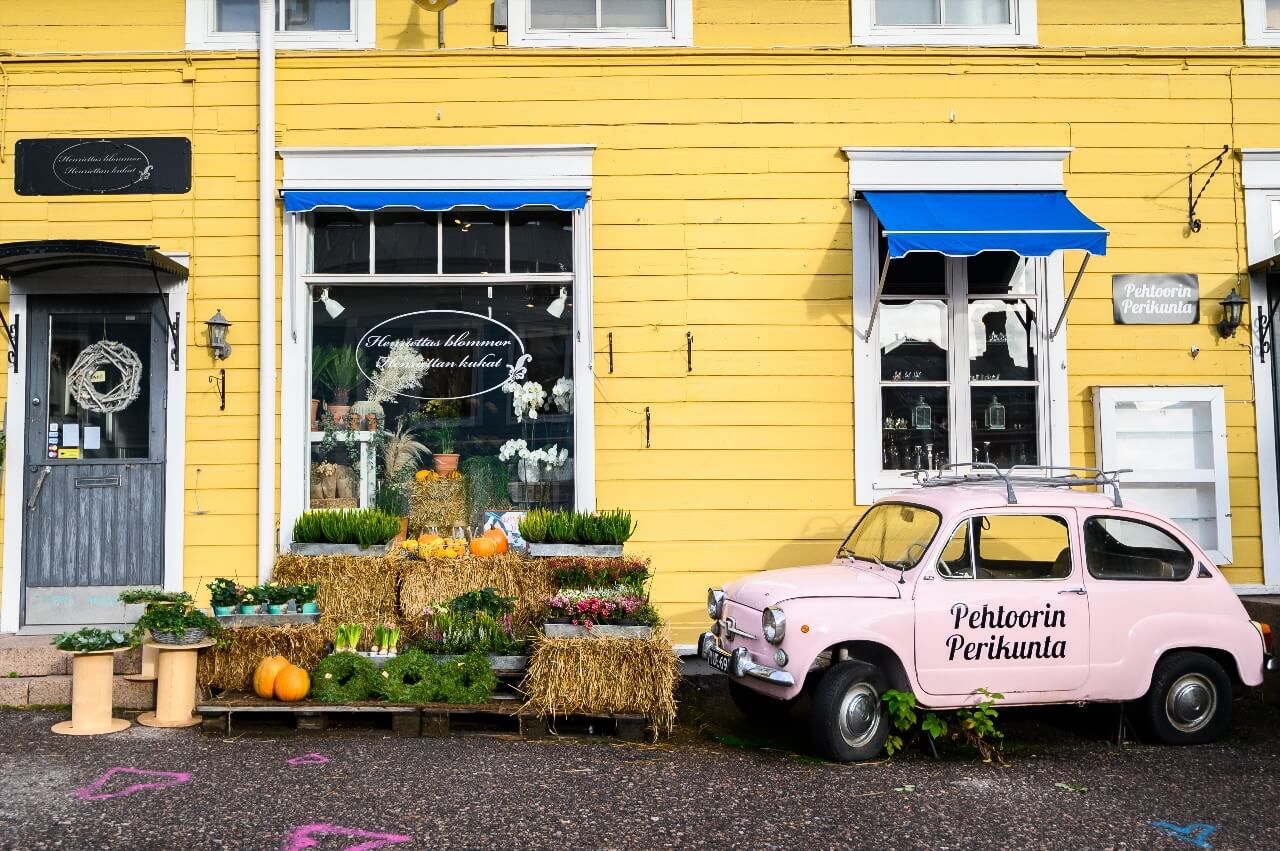
Porvoo is one of the oldest towns in Finland, 50 km east of Helsinki along the King's Road, and the combination of a medieval stone church, a riverfront of 18th-century red wooden warehouses, and a town centre that has resisted modernisation makes it the most popular day trip from Helsinki, and one of the few genuinely rewarding ones.
The red-ochre wooden storehouses along the Porvoonjoki river are the iconic image, they were originally used to store goods unloaded from trading ships and are now occupied by cafés, galleries, and small shops. The Porvoo Cathedral on the hill above was first built in the 13th century and has been rebuilt after fires several times; the current structure dates largely from the 15th century with later additions. Finland's national poet Johan Ludvig Runeberg lived in Porvoo for most of his adult life, and his house is preserved as a museum.
Two options for getting there: bus from the Kamppi terminal (about 50 minutes, €7-10), or a summer ferry from the Helsinki harbour that takes 3.5 hours and sails through the outer archipelago. The ferry is the more leisurely choice and turns the transit into part of the experience. Porvoo works well as a half-day excursion, arrive mid-morning, eat lunch at one of the river-side cafés, and return in the afternoon.
20. Kamppi Chapel of Silence
Kamppi Chapel (Simonsgatan 7, 00100 Helsinki, rated 4.4/5 on Google (3 827 avis)) sits in one of the busiest commercial squares in Helsinki, surrounded by a shopping centre, a bus terminal, and relentless urban traffic, which makes the experience inside it startling. The exterior is a smooth, oval form in spruce, pale and almost featureless, shaped like an inverted boat hull.
Inside, the space is oval, the walls curve upward to a narrow skylight, and the only furnishings are wooden benches. There is no entrance fee and no denomination requirement, the chapel is managed jointly by the Evangelical Lutheran and Orthodox congregations of Helsinki as a shared space for quiet in the city. Services and formal worship do not take place here. It is open during shopping hours and tends to be nearly empty even in peak tourist season.
21. Finlandia Hall
Finlandia Hall (Mannerheimintie 13e, 00100 Helsinki, rated 4.3/5 on Google (2 745 avis)), designed by Alvar Aalto and completed in 1971, stands on the shore of Töölönlahti Bay adjacent to the National Museum. It is the most significant piece of Aalto architecture you can visit in Helsinki, the white Carrara marble cladding, the asymmetric roof planes, and the auditorium interior are all characteristic of his mature style.
The building functions as a congress and event centre, which means public access depends on the schedule. When no events are running, the lobby and foyer spaces are often open to walk through. The exterior and the surrounding lakeside promenade are always accessible. The Candlelight Concerts series runs at Finlandia Hall several times a year and offers one of the better opportunities to see the auditorium from the inside while also experiencing a performance.
22. Eat at a Helsinki Restaurant
Helsinki's restaurant scene has undergone a structural transformation in the last decade. The city now holds a strong Michelin lineup, Palace carries two stars and is the only two-star restaurant in Finland, while Olo, Grön, Demo, Finnjävel Salonki, and The Room by Kozeen Shiwan all hold a single star, and a broader ecosystem of Nordic-Finnish cooking goes well beyond formal fine dining.
Grön, in the Punavuori neighbourhood, is the most discussed: a vegetable-forward tasting menu built around Finnish produce and fermentation, with a format that changes with the seasons. Chef Toni Kostian has been developing the menu since 2015 and the restaurant holds one Michelin star. Book at least three weeks in advance for dinner; the lunch counter has shorter lead times.
For something less formal but equally worthwhile, Ravintola Sea Horse (Kapteeninkatu 11, 00140 Helsinki, rated 4.4/5 on Google (1 884 avis)) in the Kaartinkaupunki district has been serving traditional Finnish food since 1934, liver casserole, Baltic herring, elk stew, in an interior that looks exactly as it did when it opened. It is one of the few places in Helsinki where you can eat food that tastes genuinely rooted in the national tradition rather than filtered through contemporary Nordic aesthetics.
For lunch on a budget, the market halls (Hakaniemi, Old Market Hall) offer the fastest access to Finnish food at reasonable prices. The lounas (lunch special) culture, a fixed menu of soup, main, salad, and coffee for €10-14, operates across most Helsinki restaurants on weekdays and is one of the city's practical pleasures.
23. Coffee Culture: Fazer Café & Beyond
Finland consistently ranks first or second in the world for per-capita coffee consumption. Helsinki takes this seriously. The city's café culture is not borrowed from Vienna or Paris, it has its own specific character: quieter, more solitary, oriented toward work and reading rather than performance.
Fazer Café (Kluuvikatu 3, 00100 Helsinki, rated 4.4/5 on Google (5 889 avis)) on Kluuvikatu has been the flagship of the Karl Fazer confectionery company since 1891. The interior, long mirrored room, marble counters, glass pastry cases, looks much as it did a century ago, and the signature Fazer Blue chocolate (launched in 1922) is sold here alongside coffee and freshly baked pastries.
Beyond Fazer, the independent café scene in Kallio, Kruununhaka, and Punavuori is worth exploring. Lehtovaara on Mechelininkatu is a Helsinki institution dating to the 1930s; Cafè Succès near the Design Museum has been baking its almond cake (succès) to the same recipe since the 1950s. Helsinki coffee is typically served black and strong, and the cultural expectation is that a café visit lasts as long as you need it to.
24. Island Hopping: Lonna & Pihlajasaari
Beyond Suomenlinna, Helsinki has a broader archipelago of islands accessible by public ferry or city water transport. Two are particularly worth visiting for different reasons.
Lonna is a small island 10 minutes by ferry from Market Square, historically a pilot station, now a summer destination with a sauna, a terrace restaurant, and swimming from the rocks. The island fits about 200 people comfortably, which means it never becomes the crowded destination that Suomenlinna can be in July.
Pihlajasaari, 15 minutes from Ruoholahti by summer ferry, is the city's unofficial beach island, two connected islands with sandy beaches, a kiosk, changing facilities, and enough room to find a quiet corner even on summer weekends. Locals claim the water is clean enough to swim in from June to late August, and based on the number of people in it on any given summer afternoon, that claim appears to be accurate. The nudist beach on the western shore of the larger island has been there since the 1930s and operates without fanfare or signage, you simply round the headland and it becomes clear.
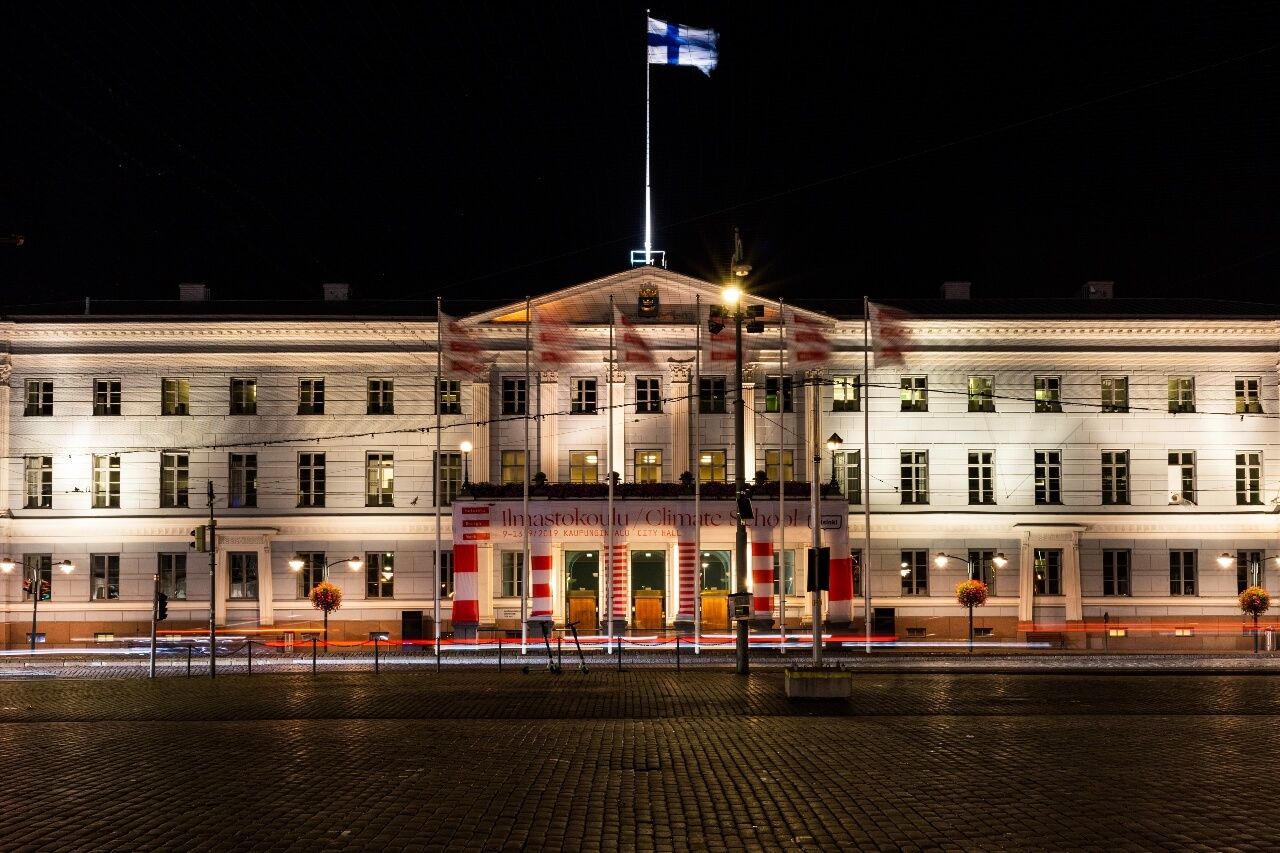
25. Helsinki by Night
Helsinki's relationship with darkness depends entirely on the season. In June, the sun barely sets, civil twilight persists until midnight and the sky never fully darkens. In December, the sun rises around 9:30 am and sets just after 3 pm, leaving the city in a 16-hour darkness that Finns navigate with lighting, saunas, and a cultural equanimity about winter that visitors often find either bewildering or inspiring.
In summer, the white nights change the character of the city entirely. Restaurants keep outdoor terraces open past midnight. People sit on the harbour rocks at 11 pm in full daylight. The light is horizontal and golden from late afternoon onwards, and the city that looks quietly composed in ordinary daylight reveals something looser and more celebratory under the midnight sun.
For nightlife in the conventional sense, the Kallio district (Hämeentie, 00530 Helsinki) (northeast of the city centre) is the most concentrated area of bars and live music venues. It is less architecturally distinguished than the centre but more genuinely local, the bars range from divey Soviet-era holdovers to newer cocktail places, and the density of venues on Vaasankatu and Fleminginkatu means you can cover several in an evening on foot. Maxine and On the Rocks are among the most consistently busy live music venues. The tram network runs until around midnight; after that, night buses cover the main routes. If you want a daytime overview before the city flips into its nightlife mode, the Ryocity audio guide is the cleanest way to compress the architectural and historical context into a single walk.
FAQ
What is the best time of year to visit Helsinki?
Summer (June to August) offers the most comfortable weather, long daylight hours, and the widest range of outdoor activities, market stalls, island ferries, and open-air pools are all in full operation. However, late autumn and early winter (November to January) have their own appeal: the darkness is dramatic, sauna culture is at its most relevant, and the city is far less crowded. Christmas markets in December and Midsummer in late June are the two peak cultural events that are worth timing a visit around.
How many days do you need in Helsinki?
Two full days covers the major highlights at a reasonable pace: the cathedral, Senate Square, Rock Church, Suomenlinna, Market Square, and one or two museums. Three to four days lets you explore beyond the obvious itinerary, the design district, sauna culture, a day trip to Porvoo, and the smaller islands. Helsinki is a compact city; most attractions are within walking distance or a short tram ride from the centre.
Is Helsinki expensive?
Yes, by global standards. Helsinki is consistently ranked among the most expensive cities in Europe for food and accommodation. A restaurant meal will typically cost €20-30 per person for a main course and a drink; a hotel in the centre runs €150-250 per night for a standard room. That said, several major attractions have low or no entry fees, Oodi Central Library, Esplanadi Park, Kamppi Chapel, and many outdoor activities cost nothing. The HSL day ticket (around €9) covers all public transport including the Suomenlinna ferry.
Do people in Helsinki speak English?
Yes, widely and well. Finland consistently produces some of the highest English proficiency scores in Europe in EF tests. In hotels, restaurants, museums, and shops, you can conduct all interactions in English without difficulty. Helsinki has a significant Swedish-speaking minority, around 5% of the population, so you will see Finnish and Swedish on all public signage, but for practical travel purposes, English is universally understood.
Is Helsinki safe?
Helsinki is one of the safest capital cities in Europe by most crime indices. Violent crime is rare; petty theft is uncommon compared to other major European cities. The main practical caution is road safety when cycling, the cycling infrastructure is excellent but intersections with trams require attention. Tap water is some of the best in the world and safe to drink directly from any tap in the city.
How do you get around Helsinki?
The best combination is walking and public transport. The city centre is compact enough to cover on foot, Senate Square to the Rock Church is a 20-minute walk. The tram network is the fastest way to reach outer districts; lines 2, 3, and 4 cover the main tourist corridors. The Helsinki Card (1, 2, or 3-day versions) covers public transport and entry to many attractions and can represent good value if you are visiting multiple fee-based sites. A single HSL ticket costs €3.20; a 24-hour ticket costs around €9.
Conclusion
Helsinki rewards curiosity more than most cities. The obvious stops, the Cathedral, the Rock Church, Suomenlinna, hold up under scrutiny, but the city's real character is in the things between: the sauna ritual, the open-plan library with a recording studio anyone can book, the market hall lunch counter in Hakaniemi, the ferry to an island with a centuries-old fortress that is also someone's home. Start with the Ryo Helsinki audio guide to get the historical and architectural context before your first walk, and let the rest unfold from there. Three days in Helsinki is not enough, but it is a very good start.