
Créé par Emilie, le 20 juin 2026
Votre guide Ryo
Visit the Îles Sanguinaires in Corsica
© Shutterstock
What if your next travel destination was Corsica? Don't miss the chance to set foot (or both feet) on the Îles Sanguinaires near Ajaccio!
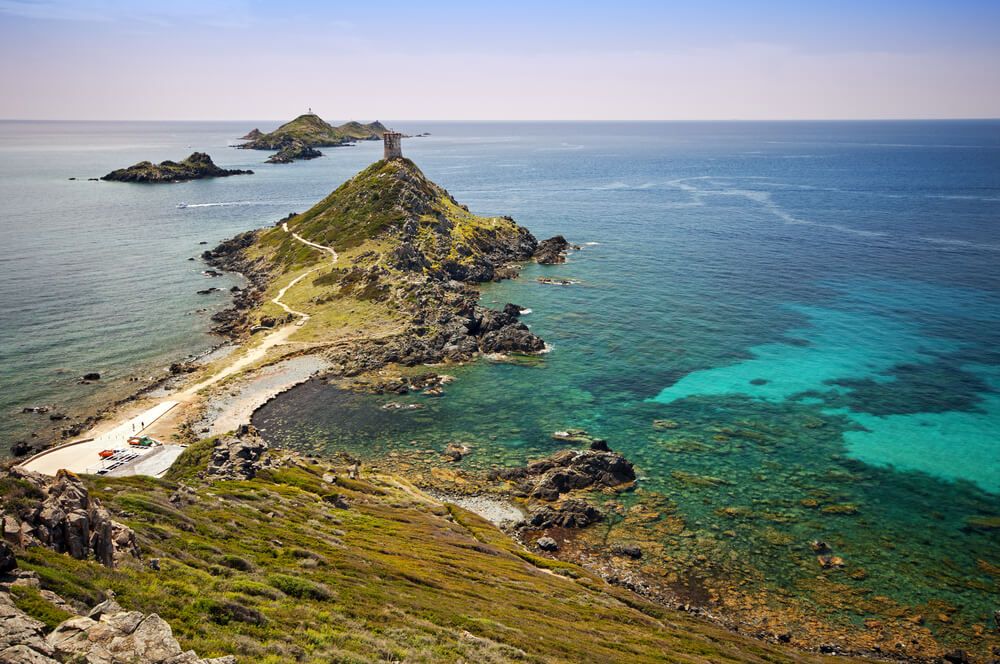
Within a short radius around the Corsican capital, an archipelago of 4 islets appears on the horizon. Land ho, land ho sailors, these are our famous Îles Sanguinaires! At the announcement of their name and as we approach their shores, a few shivers take hold of us. Could it be fear? If so, trade it for excitement. This island chain is a thousand leagues away from frightening you. Its thing is rather wonder galore!
A remarkable built heritage, exceptionally rich fauna and flora, breathtaking sunsets, no wonder poets and novelists have made them their source of inspiration.
Alphonse Daudet testified in his letters "Imagine a wild and blood red island with a lighthouse at one end and an old Genoese tower at the other... Another beautiful place I found to dream and be alone." With these words, there's no point resisting any longer. Let's weigh anchor for an end-of-the-world visit to the Îles Sanguinaires.
1. Let's get acquainted
4 islets (and 1 rock)
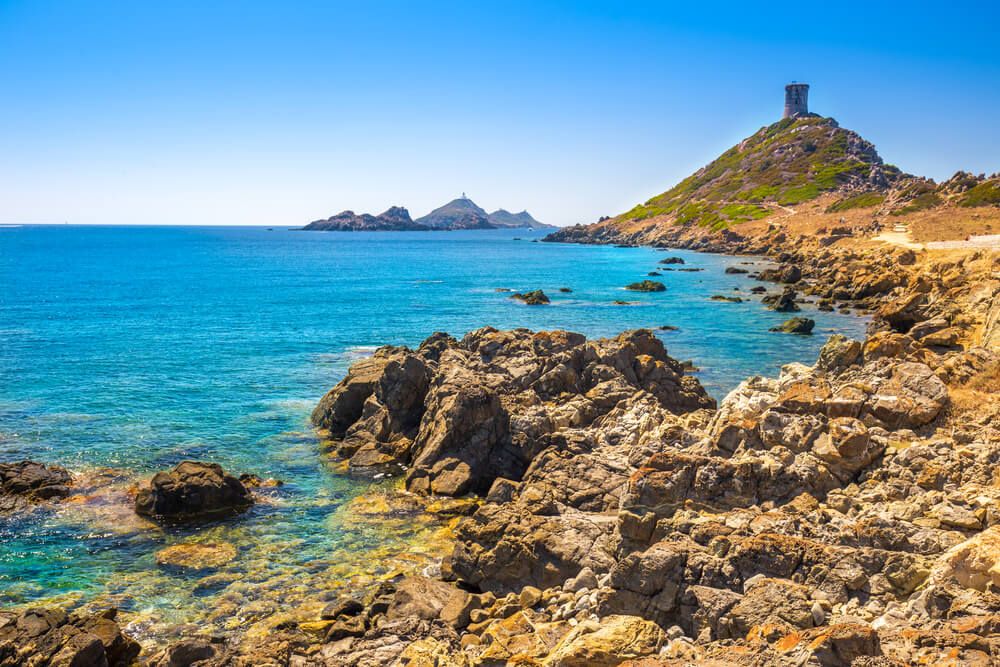
"Figurehead" of the Gulf of Ajaccio, in southern Corsica, the Sanguinaires are an archipelago of magmatic origin that extends off the coast of Pointe de la Parata.
In total, 4 islets and 1 rock make up the strength of this classified and protected site:
- Mezu Mare (or Grande Sanguinaire): The main islet
- Cormorans Island (or Isolotto)
- Cala d'Alga
- Porri
Technically, the count is correct. But a small bare rock called U Sbiru, located between Porri Island and Cormorans Island, often comes to swell the ranks.
Why Sanguinaires?
If you too are asking yourself this big question, know that you're embarking straight into deep and mysterious waters. For the simple and good reason that there isn't one, but several theories about the origin of the name given to this sublime natural and maritime site. So, before you launch into improbable scenarios, on the border between Peter Pan and Pirates of the Caribbean, discover the 5 explanations that feed this unsolved part of mystery day after day:
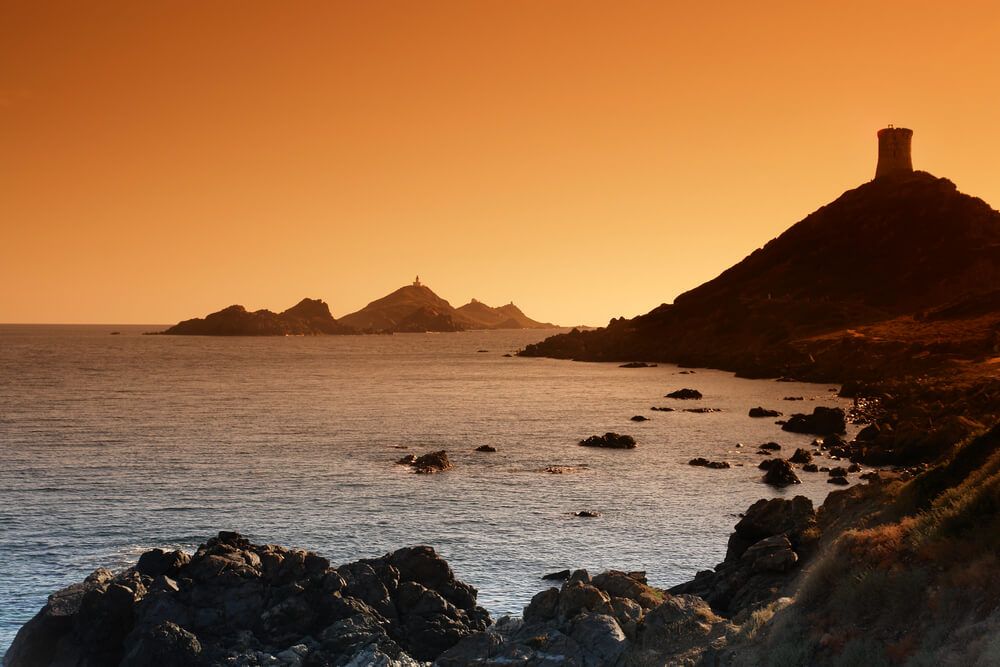
When the sun makes its last rays shine, the magmatic rock of the Îles Sanguinaires adorns itself with a dark red light. By definition, the color of blood. A dazzling spectacle whose reputation is no longer to be made with visitors.
Among all the plant species that make the Îles Sanguinaires a natural area of remarkable floristic interest, there is the Frankenia. More than its pink flowers, it's the leaves of this perennial plant that create all the magic of the show. In autumn, their green color gradually turns bright red, covering the archipelago with a thick colored plant carpet.
It is said that in the 16th century, the archipelago already appeared on the geographical maps of the bishopric under the name "Sagonares insulae". That is the "Sagonnaires" islands to announce the city of Sagone in Corse-du-Sud. Over time, the name has been deformed to become the one we know today: the Îles Sanguinaires.
In the 19th century, the main islet Mezu Mare becomes a sanitary post. A lazaretto is built on its heights as a quarantine space to fight against the plague. Several coral fishermen, returning from Africa, will be its residents. Their blood, black under the effect of the disease, will lead the inhabitants of the "Island of Beauty" to nickname them "I Sanguinari".
2. Archipelago logbook: first appearances, key dates...
Austere, even hostile, intriguing, even worrying, the Îles Sanguinaires took time to convince man to come and venture into their territory.
Don't ask us precisely when the first frequentations of the archipelago date back to, because here again the enigma remains. The only information available on this subject are the numerous travel accounts that certain poets and/or playwrights were kind enough to share with us. Among the most popular, we cannot forget The Lighthouse of the Sanguinaires, a short story from Letters from My Windmill written by Alphonse Daudet.
In the 16th century, a tower was built at the highest point of Grande Sanguinaire (formerly called "Sanguinera di Fuori" or "Sanguinera di Mare") by Genoese. This time, no room for doubt, there is indeed human presence on these pieces of wild land.
In the 18th century, Mezu Mare is converted into a huge sanitary post on which a lazaretto is built. In this way, all coral fishermen returning from Africa, contaminated by the plague, are directed to this establishment for mandatory quarantine.
From 1865 to 1955, a semaphore (combat post) is established on the central islet to monitor maritime approaches and signal any enemy activity.
The year 1870 marks the appearance of the lighthouse, one of the major attractions of the site, 80 meters above sea level.
3. What to see, what to do on the Îles Sanguinaires?
From natural heritage...
Considered a little corner of paradise, in the middle of Mediterranean waters, the Îles Sanguinaires present fauna and flora as rare as it is for such a small surface. Translation, the setting is magnificent!
In total, 150 rare or endemic plant species are listed just on Mezu Mare. This is the case of the spectacular fly-eating arum, observable only in 3 places in the world and whose smell is more nauseating than captivating. Or the wild leek that gave its name to the islet Porri.
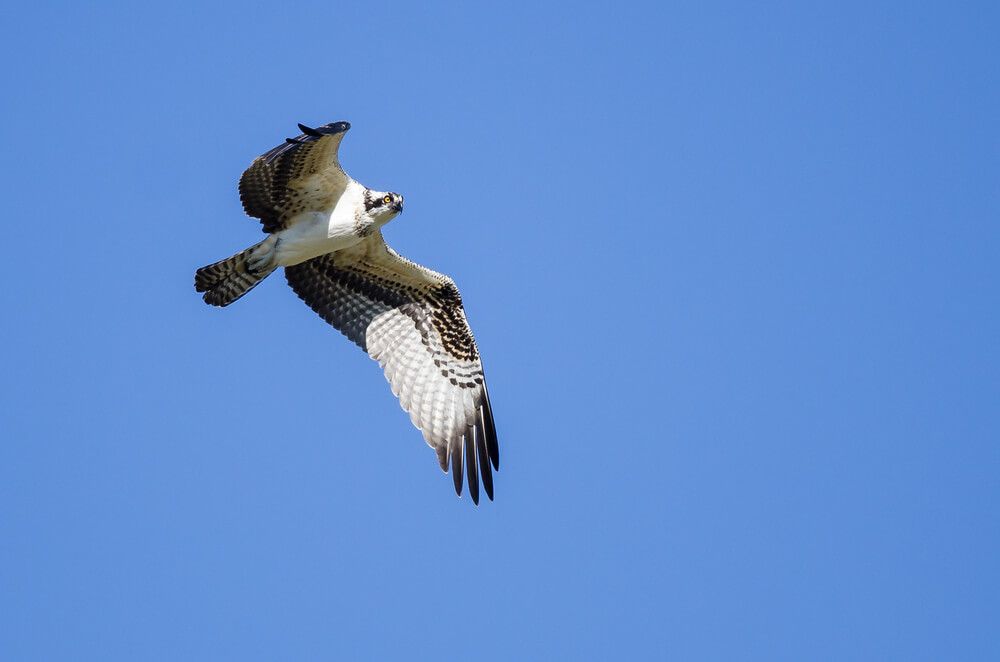
On the animal species side, the site also has surprises. Notably by its impressive colony of seabirds (including the yellow-legged gull) and raptors (involving the peregrine falcon, the red kite and the osprey mainly installed on Parata).
Due to its exceptional wild character, increasingly exposed to a massive number of visitors, the Îles Sanguinaires have received several recognitions aimed at their preservation: Natural area of ecological, faunal and floristic interest (ZNIEFF), Natura 2000 Site, Grand Site de France Label...
...To built heritage
Plunging into the tranquility of the Îles Sanguinaires, Ajaccians and visitors on a walk discover a family of unsuspected vestiges that contribute to the renown of the archipelago's landscape.
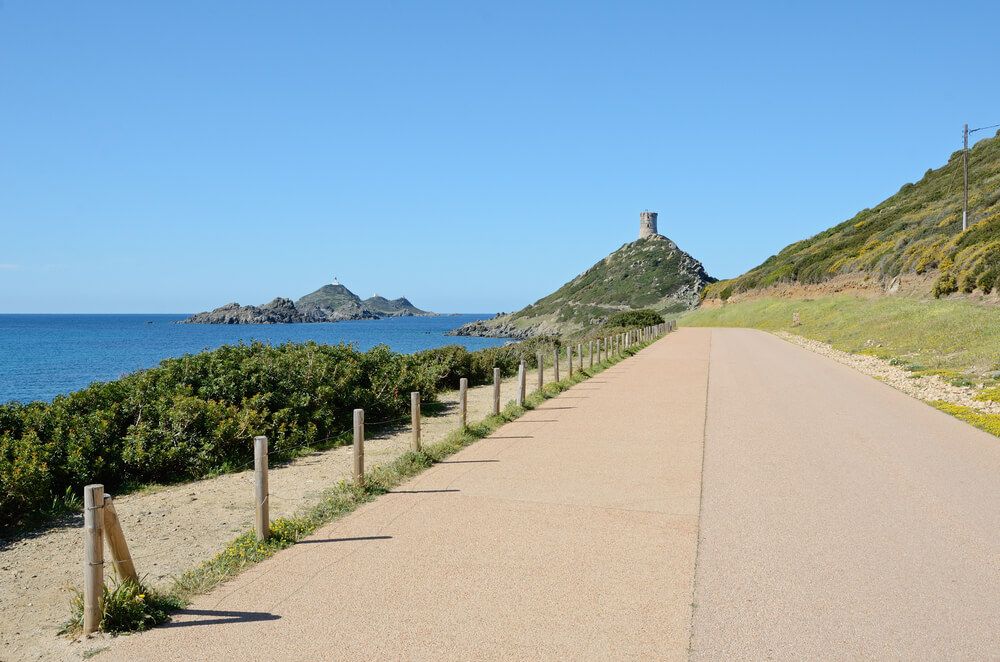
- The Genoese Tower of Parata: Tower built in 1550 by Giacomo Lombardo, Genoese master mason. It rises 60 meters above the sea.
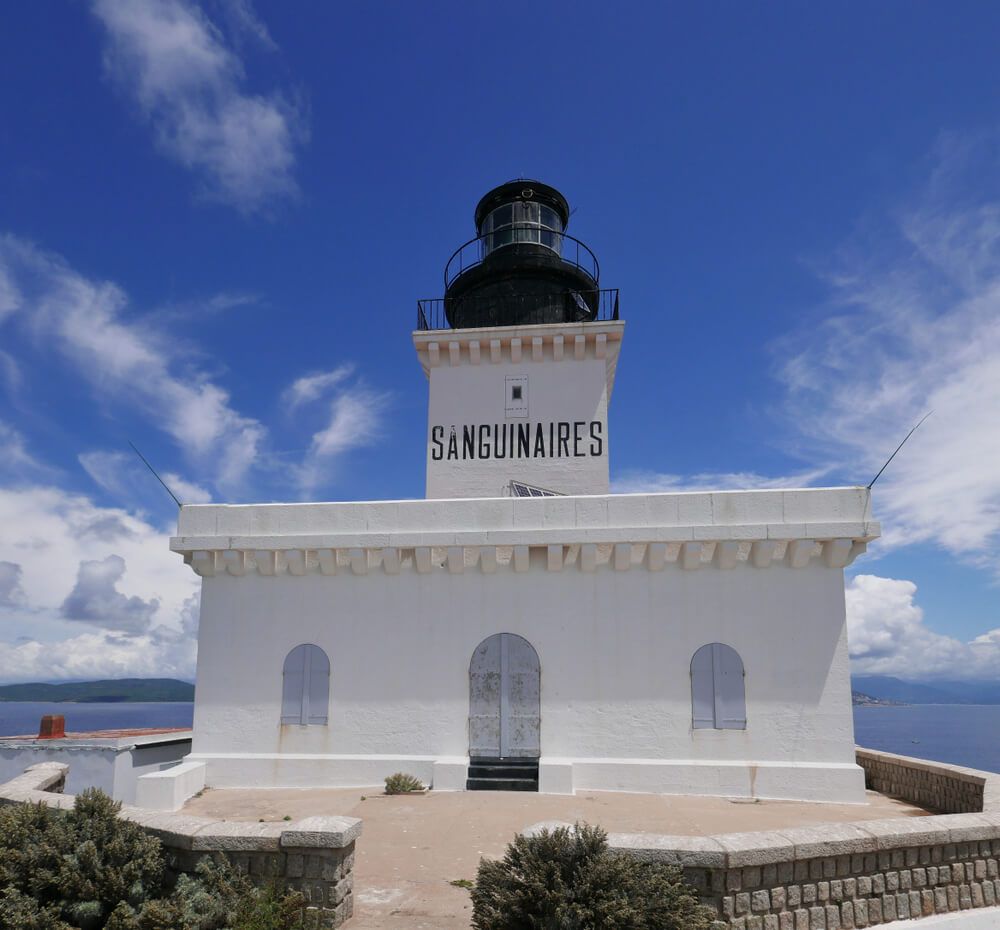
- The Lighthouse of the Sanguinaires: Main attraction of the island built in 1838 and visited in 1863 by French author Alphonse Daudet. When it was automated in 1985, the guardians of the building were the last residents of the archipelago.
- The semaphore of Mezu Mare: Located on the island of the same name, this combat post was in service between 1865 and 1955 to keep an eye on the Gulf of Ajaccio and surroundings.
- The lazaretto: Built in 1806 and active for 9 years, it once allowed to accommodate sailors and fishermen in quarantine before penetrating on dry land.
- The Tower of Castellucio: Well preserved, but difficult to access, this fortification is located at the extreme south of Mezu Mare.
- The Chapel of Saint-Antoine: Located at the entrance of the peninsula, this 1954 chapel still holds mass every Sunday.
4. All aboard! Yes, but how? And at what price?
Now that we know a little better the history and natural universe of the Îles Sanguinaires, we have only one single and unique thing left to do: Drop anchor there!
In reality, the archipelago is closer to the Corsican coasts than it appears. Depending on the time you have ahead of you, where you are, the time of day and the money you have left in your pocket, several ways to visit this insular haven of peace present themselves to you.
Reaching the Grand Site
Let's start with the cheapest option: walking!
- From Ajaccio: Route des Sanguinaires RD111 (2h30 journey)
- From Bois des Anglais: Sentier des crêtes (4h30 journey)
- On four wheels: 15/20 minutes by car via Route des Sanguinaires RD111
- On two wheels: 40 minutes by bike via Route des Sanguinaires RD111
- By public transport: Muvistrada Bus Line 5: departure at Place de Gaulle/ arrival at Parata. Price of single adult ticket: 1€
Going directly on site
- From Ajaccio port: Boat excursion with a stop on Mezu Mare (30-40 min journey). Count around thirty euros on average for an adult fare and half price for children.
- From Ajaccio port: Skipper rental (12 seats) for a more exclusive and private crossing. Count minimum 50 euros per person with outing, swimming in a cove and tasting of Corsican products).
You want to make the crossing to the islands even more unforgettable, but you don't know how. Look no further by treating yourself to a jet-ski trip!
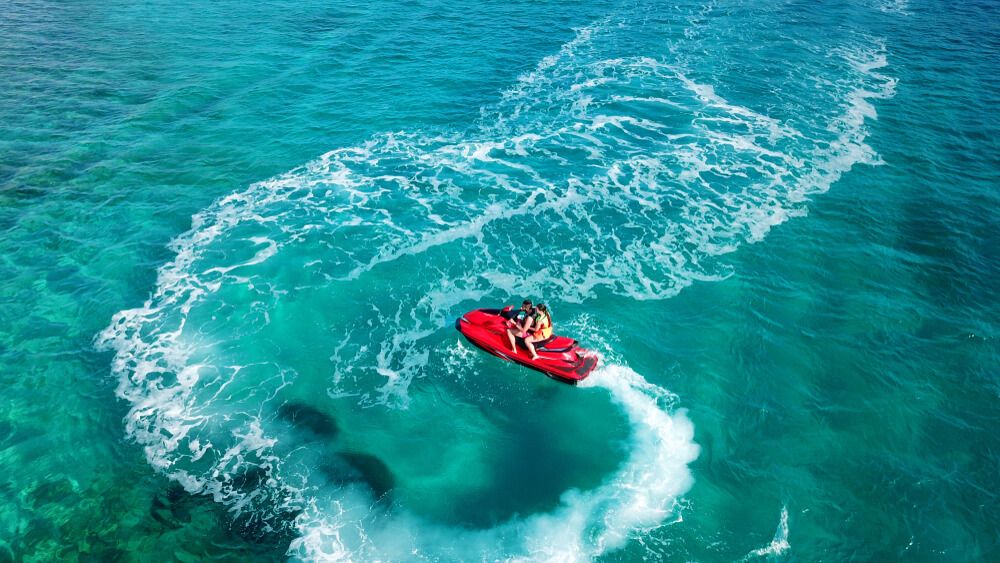
After a small financial sacrifice of around 115 to 130€, on average, here you are going full throttle for a fantastic ride, heading to the Îles Sanguinaires.
Moreover, depending on the company you choose, you can even enjoy a diving session on site. The best of the best!
Aaaah sunsets... These superb end-of-day phenomena that we never tire of. To such a level that they flood the photo galleries of our smartphones. Do you recognize yourself in this last sentence? Well with the Îles Sanguinaires, you're going to be served like kings.
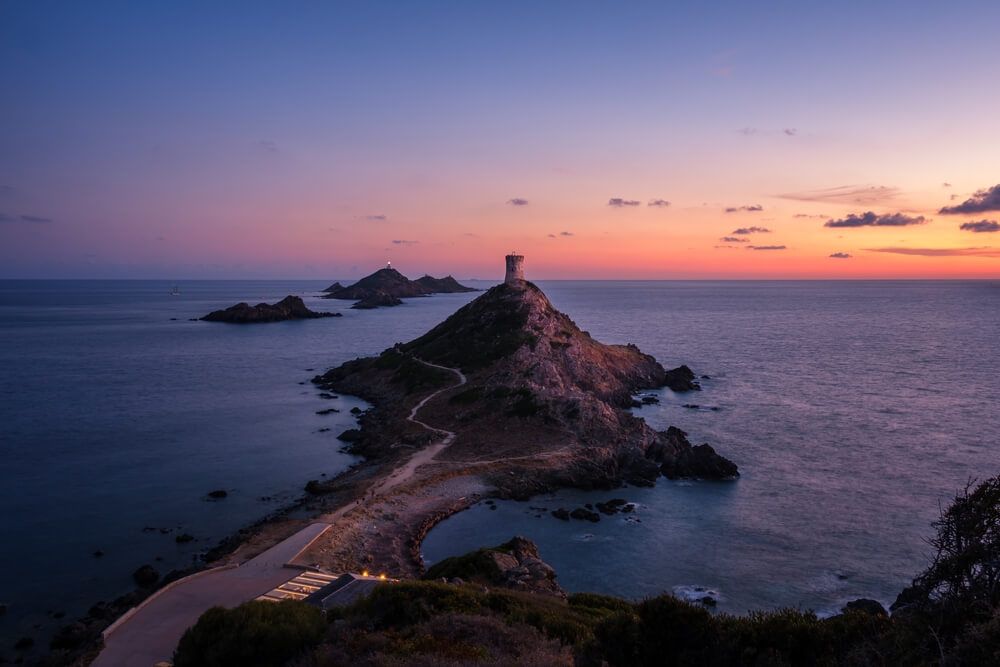
In all seasons, as soon as twilight invites itself on the archipelago, a play of light between sky and sea operates. Red, orange, purple, pink, are all the colors that the last rays of the sun deliver to us in a wonderful spectacle conducive to escape, imagination and romance.
To attend it, reserve your place with one of the boat companies offering evening excursions, departing from Ajaccio or Porticcio, for around forty euros on average. Magical moment guaranteed!
In conclusion
You will have understood, the Îles Sanguinaires, although small, are full of wonders. Whether under a reddish light or thick fog. Their perched structures, their rare plants, their feathered "inhabitants" and their abrupt landscapes continuously offer a real spectacle. Whoever dares to venture there, inevitably leaves touched by so much wild beauty, classified and protected! So when are you setting sail?