© Shutterstock
 Votre guide Ryo
What to Do in the Luberon in 2026: Must-See Park and Village Highlights
The Luberon has fascinated visitors for decades, yet most leave without truly discovering everything there is to do in the Luberon beyond Gordes and the abbey of Sénanque. The Parc Naturel Régional du Luberon covers 185,000 hectares between the Vaucluse and the Alpes-de-Haute-Provence, encompasses 77 communes and peaks at 1,125 metres at Mourre Nègre. Beneath its ridges lie gorges where you squeeze between walls just 60 centimetres apart, mines with 40 kilometres of galleries carved from ochre since Roman times, and a karst spring that can release up to 630 million litres of water per day in spring. This massif deserves far more than a single photo-stop between Gordes and the lavender fields.
This region offers a far broader range of experiences than the usual circuit of hilltop villages: a Cistercian abbey founded in 1148, still home to monks today, a Colorado of red ochre formations just 40 minutes from Avignon, and a dry-stone vernacular heritage unrivalled anywhere in France. Our Ryo article on the secret villages of the Luberon rounds out this overview with five lesser-visited addresses, well worth keeping in mind for days when the car parks at Gordes are overflowing.
The Hilltop Villages: Gordes, Roussillon and the "Most Beautiful Villages"
The Luberon has five communes officially listed among the « Plus Beaux Villages de France »: Gordes, Roussillon, Ménerbes, Lourmarin and Ansouis. Alongside these distinguished villages are equally spectacular gems without an official label, such as Bonnieux, Lacoste and Oppède-le-Vieux. Each has its own distinct personality, and driving past them without stopping would mean missing the very heart of what makes this area special.
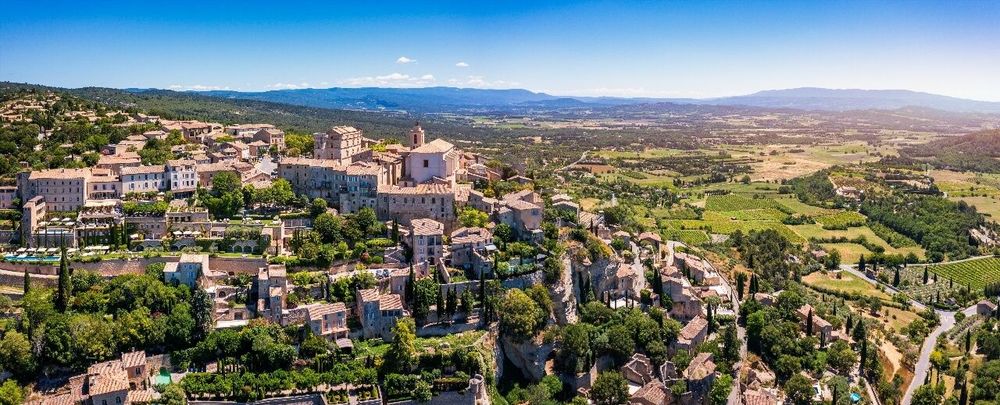
Gordes holds the top spot in the collective imagination, and the view from the D15 at sunset fully justifies its reputation. The village climbs a limestone outcrop at 375 metres above sea level, its ashlar stone houses clustered around a 16th-century Renaissance château. Arrive at the lower car park before 9 a.m. in July to have the lanes almost to yourself. Allow two hours for a relaxed visit including the château and the church of Saint-Firmin.
Roussillon plays in an entirely different chromatic register. The entire village is built from ochre, and its houses have been repainted in the 17 natural shades of local stone, ranging from straw yellow to ox-blood red. Its Sentier des Ocres (2 km, approximately 1 hour, paid entry) runs along the cliffs of the former quarry: a geological spectacle as striking as the Colorado Provençal, yet accessible to children from the age of 5 or 6. The late-afternoon light intensifies the contrasts dramatically.
Bonnieux rewards the climb up to its 12th-century Romanesque church, surrounded by century-old cedar trees planted in the 19th century to stabilise the hillsides. The sweeping view across to Lacoste, dominated by the ruins of the Marquis de Sade's château, makes the effort worthwhile. Ménerbes, a few kilometres away, owes its worldwide fame to Peter Mayle, whose novel A Year in Provence (1989) put the village on the map for millions of readers abroad. The Tuesday market remains one of the most authentic in the Vaucluse. Even more discreet, Oppède-le-Vieux is divided into two parts: the lower section, still inhabited, and the upper section, abandoned in the 18th century, which can be explored half in ruins among the foliage.
Lacoste is worth a stop for its narrow lanes and for the panorama from the château, bought and restored by fashion designer Pierre Cardin, who hosts an annual festival of art and music there each summer, drawing international artists.
Lourmarin closes this tour at the southern gateway. Its château, built from 1526 onwards, is the first Renaissance-style château south of the French Alps. It can be visited on a guided tour lasting around one hour, featuring collections of period furniture and contemporary art. Albert Camus is buried in the village's small cemetery, just a short walk from the Friday morning market. With the audio guides on the Ryo app, you will discover the stories and anecdotes hidden in these lanes that the official information boards never reveal.
The Abbey of Notre-Dame de Sénanque
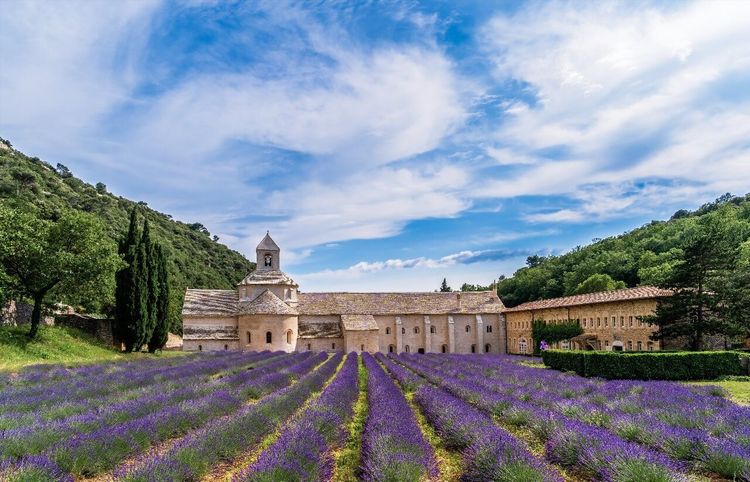
Three kilometres north of Gordes, a winding road descends into a small valley where the abbey of Notre-Dame de Sénanque (D177, 84220 Gordes, rated 4.5/5 on Google with 8,782 reviews) nestles, one of the three « Provençal sisters » of the Cistercian order alongside Silvacane and Le Thoronet. Founded in 1148, it is still inhabited today by a community of monks following the Rule of Saint Benedict. This is not a museum site: it is a working abbey, and that difference is felt immediately in the atmosphere of silence and austerity that pervades the enclosure.
The iconic scene — a grey limestone Romanesque façade set against a backdrop of violet lavender — occurs only for a few weeks each year, between late June and mid-July depending on the season. Outside this window, the abbey remains magnificent, with its aromatic plant cultivation and medicinal garden. Guided tours of the interior provide access to the cloister and the abbey church, stripped of all ornamentation in keeping with Cistercian tradition. The shop sells the monks' own products: honey, lavender, mead and abbey beer. Arrive early in the morning or late in the day to avoid the coach parties that crowd in during the height of July.
The Colorado Provençal of Rustrel
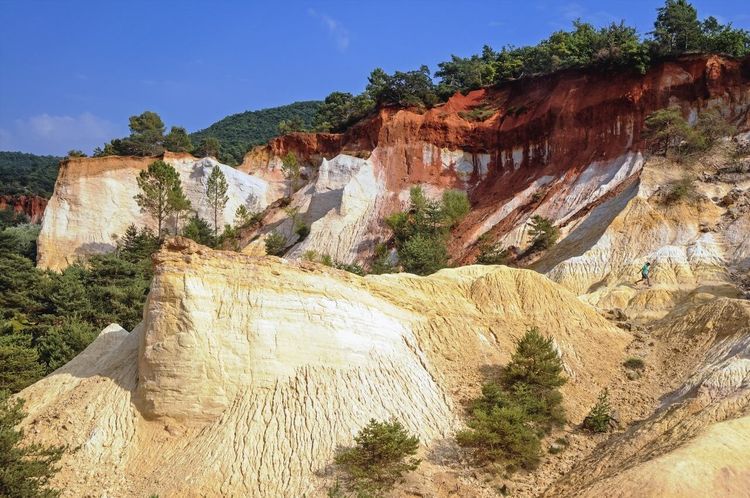
An hour east of Gordes, the Colorado Provençal (Route du Colorado, 84400 Rustrel, rated 4.5/5 on Google with 12,238 reviews) in Rustrel surprises visitors who have only seen it in photographs. The reality is larger, quieter and more untamed than the images suggest: formations of sandstone and clay shaped by erosion and centuries of ochre extraction, their colours shifting from lemon yellow to brick red depending on the light. The site offers four marked trails ranging from 3 to 6 kilometres.
The « Grand Circuit » (6 km, 2h30, moderate elevation gain) is the most complete: it passes through the fairy chimneys, the broad expanses of red sand and the hills with their alternating white, ochre and brown strata. Access to the site is free, but the paid car park below is unavoidable on busy days. Set off in the morning in summer: the raking light colours the formations with an intensity impossible to find in the middle of the day, and the heat on the ridges remains bearable before 11 a.m. Two restaurants in the village of Rustrel serve regional set menus to round off the half-day.
The Mines de Bruoux in Gargas
The Mines de Bruoux (Route des Mines de Bruoux, 84400 Gargas, rated 4.7/5 on Google with 3,504 reviews), in Gargas, rank among the most surprising and least-known experiences the Luberon has to offer passing visitors. These galleries, dug for ochre extraction in the 19th century on sites already worked in the Gallo-Roman period, extend for 40 kilometres, of which 2 kilometres are open to visitors, in a partial darkness pierced only by the group's lamps.
The temperature inside is a constant 12–13 °C year-round, making it a welcome refuge during Provençal heatwaves. Inside, the ochre sandstone pillars left in place to support the vaults create a hypnotic, repeating geometry tinted with every hue of the rock. Visits are exclusively guided group tours (duration: 1h15, adult ticket approximately €10). Online booking is strongly advised in July–August, as group capacity is limited. Bring closed-toe shoes and a warm layer even in the height of summer.
The Lavender Fields and the Musée de la Lavande
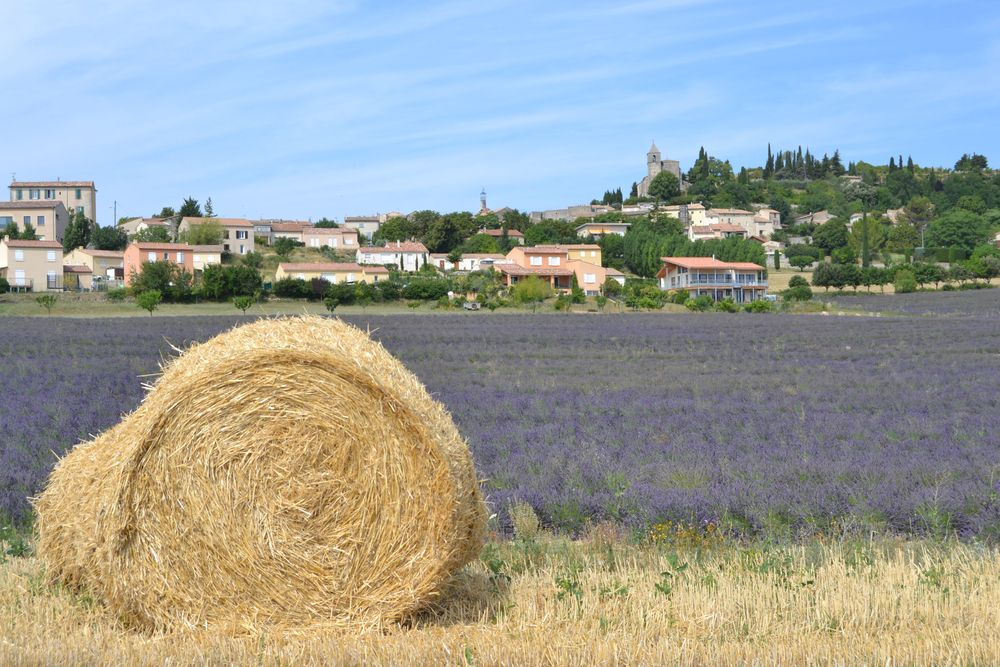
Lavender is to the Luberon what the sea is to the Côte d'Azur: omnipresent, but unevenly beautiful depending on the location and the time of year. The Claparèdes plateaux (between Bonnieux and Buoux) and the fields near the abbey of Sénanque offer the most photogenic panoramas in the park. Flowering generally runs from mid-June to early August, peaking in colour during early July.
In Coustellet, the Musée de la Lavande (Route de Gordes, 84220 Coustellet, rated 4.3/5 on Google with 3,864 reviews) traces the history of lavender cultivation from its wild origins to industrial distillation, with a working distillery on view during the harvest period. Entry costs around €7 per adult and includes a tasting. A good option for overcast days, or for understanding why fine lavender and lavandin smell different — a distinction every Luberon local will point out within two minutes of conversation.
L'Isle-sur-la-Sorgue and Fontaine-de-Vaucluse
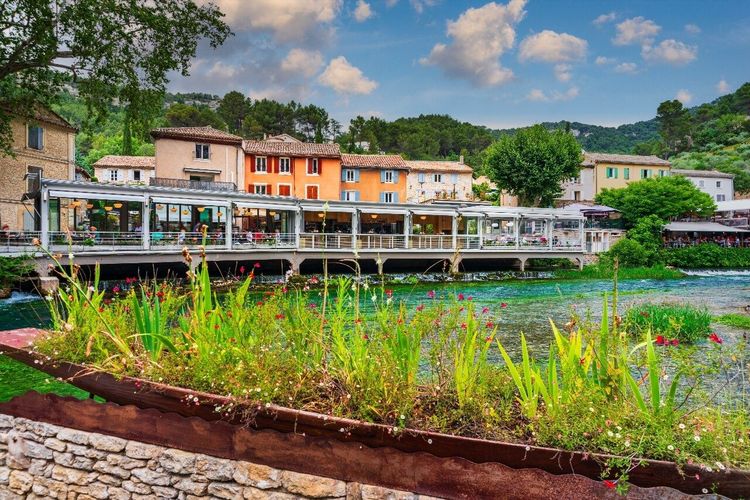
L'Isle-sur-la-Sorgue and Fontaine-de-Vaucluse (Site de la Fontaine, 84800 Fontaine-de-Vaucluse, rated 4.6/5 on Google with 3,119 reviews) form a natural pairing that visitors often combine in a single day. The two sites lie 6 kilometres apart, linked by a road that follows the Sorgue, a turquoise river fed by the spring.
L'Isle is known for two things: its Sunday morning market, one of the largest in Provence (crafts, food and antiques year-round), and its 300 antique dealers that make the town the second capital of the antiques trade in France after Paris. Wooden water wheels still turn on the arms of the Sorgue that flow through the historic centre, and the waterside café terraces are perfect for a mid-visit break.
At Fontaine-de-Vaucluse, the spring is a geological phenomenon in its own right. Fed by a network of karst faults draining rainwater across 1,115 km² of limestone plateau, it can discharge up to 630 million litres of water per day in spring. In summer the pool calms, but retains an otherworldly blue-green colour. The village below is home to a Petrarch museum (the poet lived here for several years in the 14th century) and restaurants, some of which enjoy a direct view over the river.
The Gorges du Regalon
Little known to mainstream guides, the Gorges du Regalon (D973, 13700 Cheval-Blanc, rated 4.7/5 on Google with 229 reviews) are one of the best short hikes in the Luberon. These deep limestone gorges open on the southern flank of the massif, a few kilometres from Cheval-Blanc. The trail follows the bed of the stream, which is dry for most of the year, and at certain points requires squeezing between walls just 60 centimetres apart.
The out-and-back hike takes 2 to 3 hours depending on pace. It is accessible to children aged 8–10 and above in good physical condition, provided they wear walking shoes suited to rocky terrain. Avoid it entirely in case of rain or thunderstorms: the stream can rise very rapidly in the narrowest sections. Access is free with no ticketing, and parking is available roadside at the entrance to the gorges. This is the kind of experience to recommend to anyone who wants to step off the Luberon's usual well-trodden circuit.
The Mourre Nègre Hike
The Mourre Nègre (Sommet Mourre Nègre, 84240 Auribeau, rated 4.8/5 on Google with 55 reviews) is the roof of the Luberon: 1,125 metres above sea level, with a 360-degree panorama in clear weather. From the summit you can make out the Ventoux to the north, the Alpilles to the west and the Sainte-Victoire to the south-east; on days with a northerly wind, the sea is visible on the horizon. The most popular starting point is the col de la Ligne (770 m), reachable by car from Auribeau or Cucuron, which limits the elevation gain to 355 metres.
The ascent takes 1h30 to 2 hours, the descent a little less. The trail is well marked but exposed to the sun: bring a hat, water and sun protection between June and September. Autumn remains the best season for this hike: the colours of the downy oak and cedar forest clothe the hillsides, the heat is moderate and the light is remarkable. The telecommunications masts that crown the summit are quickly forgotten once you are standing before the panorama.
Vineyards and AOC Luberon Wine Cellars
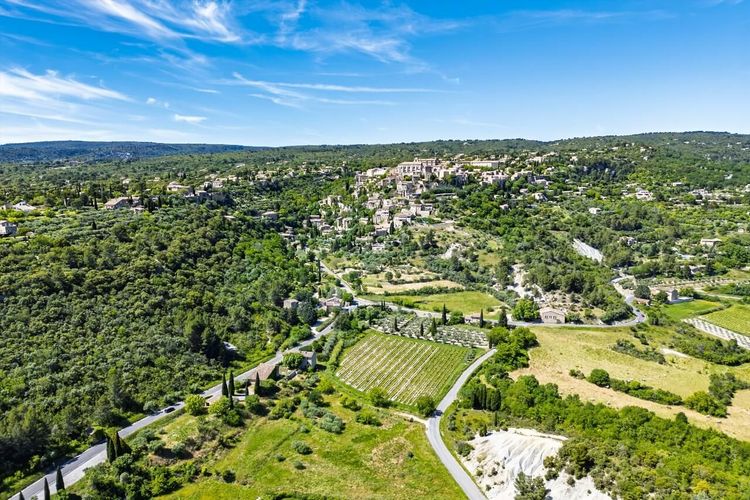
The AOC Luberon, created in 1988, today encompasses around 3,500 hectares of vines spread across 36 communes. The white wines, blends of Grenache Blanc, Clairette and Roussanne, are the most characteristic of the appellation: fresh and aromatic, they pair perfectly with seasonal Provençal cuisine. The reds, more structured, draw primarily on Syrah and Grenache.
Private cellars offer free or low-cost tastings, most without reservation outside July–August. Château Val Joanis in Pertuis, Château La Canorgue in Bonnieux and the cooperative cellar Les Vignerons du Luberon are among the most accessible for passing visitors. A day devoted to the Luberon Wine Route, by car with a designated driver, pairs naturally with stops in the villages and a long lunch on a terrace in the shade of plane trees.
Unusual Heritage: Bories, Mills and Troglodyte Houses
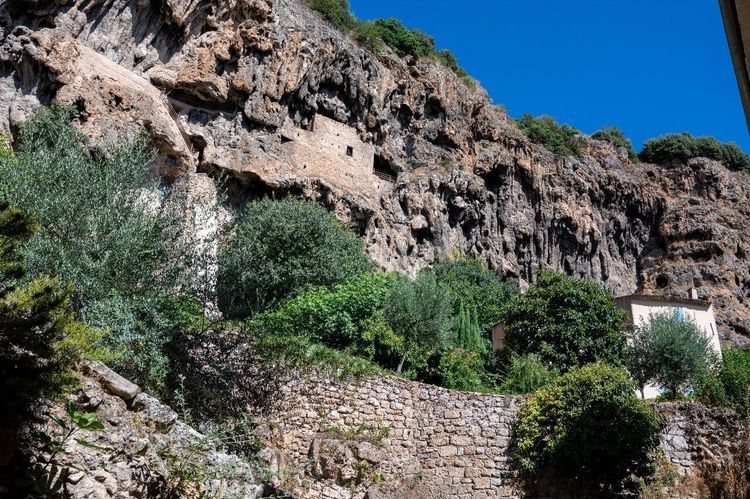
The Luberon is home to a vernacular heritage unrivalled in France, which hurried visitors too often overlook in favour of the classic village circuit.
The bories are dry-stone huts built without mortar using a technique dating back to Antiquity, although most surviving examples date from the 17th and 18th centuries. More than 3,000 have been recorded within the park's territory. The Village des Bories (Route des Bories, 84220 Gordes, rated 4.2/5 on Google with 4,865 reviews) in Gordes, a listed historic monument, brings around twenty of them together within an educational enclosure that helps visitors understand how these temporary shelters for shepherds and farmers once functioned. Entry is paid (approximately €7) and the visit takes about one hour on foot, with explanations covering construction techniques and agricultural uses.
The olive oil mills represent another local speciality. The Luberon falls within the area of the AOP Huile d'Olive de Haute-Provence, and working mills open to the public during the pressing season, mainly from November to January. The communes of Cucuron and Lauris retain remarkable mills, some dating from the 17th century. Olive festivals are held there in autumn, with tastings of new-season oils and local producers' markets.
The troglodyte houses may be the most striking surprise the region has to offer. In Gordes, in the cliffs beneath the village, dwellings carved directly into the limestone were inhabited until the early 20th century. In Viens and several communes of the Grand Luberon, partially preserved troglodyte barns and sheepfolds bear witness to an ingenious adaptation to the terrain. These sites, off the usual tourist routes, are often discovered while hiking or on the advice of locals from nearby villages.
Practical Tips for Visiting the Luberon
When to Come
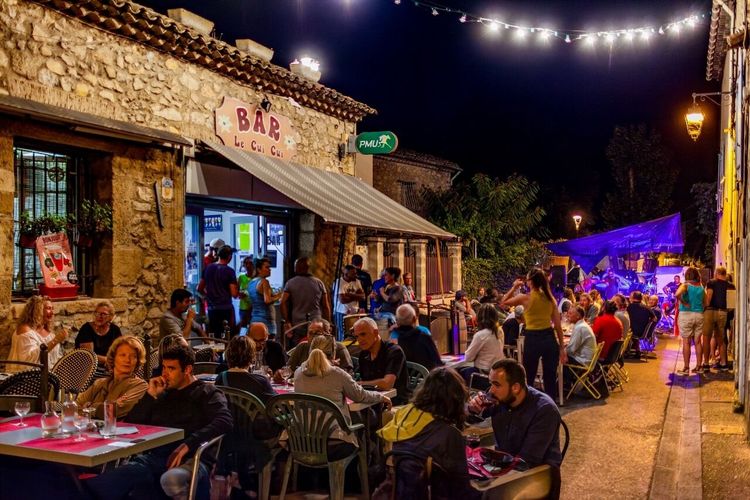
Each season has its own logic in the Luberon. Spring (May–June) is the ideal period for hikers: vegetation in full bloom, rivers at normal flow, pleasant temperatures without the heatwave. July concentrates peak tourist numbers and the lavender flowering, with car parks at Gordes and Roussillon full by 10 a.m., but a festive atmosphere and magnificent markets. August is best avoided for those sensitive to heat and queues. Autumn (September–October) is a revelation for regulars: raking golden light, mushroom and truffle markets, cellars open after the harvest, villages almost deserted on weekdays. Winter offers a peaceful Luberon with few closures, accommodation available without advance booking and frost-covered landscapes along the ridges of the Grand Luberon.
Getting Around
A car is essential. The hilltop villages are served by no regular public transport, apart from a few seasonal coach routes from Avignon or Aix-en-Provence. Paid car parks exist in all the main villages (€3 to €5 for a half-day in summer). Cycling is possible on the valley-floor roads (D900, D901) but the climbs to the hilltop villages are steep. Hiring an electric mountain bike, available in Apt, Cucuron and at several gîtes, transforms inter-village connections. Plan your hiking itinerary in advance by consulting our Ryo guide to the Parc Naturel Régional du Luberon, which details the routes and distances between the main sites.
Where to Stay
The most typical accommodation is a rural gîte or a Provençal mas rented by the week in summer, with hundreds of options between Apt, Bonnieux and Lourmarin on short-term rental platforms. Campsites among the pine forests (around Buoux and Sivergues in particular) offer an immersive experience in the wilder Luberon at reasonable prices. For accommodation in a village with shops and restaurants within walking distance, Lourmarin and Apt offer the widest range of hotels in the area. In July–August, book at least three months in advance: demand far outstrips available supply.
Indicative Budget
A typical day costs relatively little. Most natural sites are free (Colorado Provençal excluding parking, Gorges du Regalon, Mourre Nègre) or modestly priced: €3–4 for the Sentier des Ocres in Roussillon, €7 for the Village des Bories, around €10 for the Mines de Bruoux, €8 for the Château de Lourmarin (Rue du Temple, 84160 Lourmarin, rated 4.5/5 on Google with 4,660 reviews), €7 for the Musée de la Lavande. The abbey of Sénanque invites a voluntary contribution. The main budget item remains accommodation, especially in high season.
FAQ
What is the best season to visit the Luberon?
Spring (May–June) offers the best balance between landscape beauty and crowd levels, with lush vegetation and ideal temperatures for hiking. July is the most spectacular period for lavender (especially at the abbey of Sénanque) but also the busiest: packed car parks and essential reservations. Autumn, from mid-September to November, is favoured by regulars for its golden light, forest colours and the tranquillity that returns to the villages during the week.
How Much Time Should I Plan to Visit the Luberon?
A weekend allows you to cover the most iconic sites: Gordes, Roussillon, the abbey of Sénanque and L'Isle-sur-la-Sorgue. For a complete exploration of the Parc Naturel Régional, plan 5 to 7 days combining the villages of the Petit Luberon (Bonnieux, Ménerbes, Oppède-le-Vieux) and the Grand Luberon (Cucuron, Mourre Nègre), the natural sites (Colorado Provençal, Gorges du Regalon, Mines de Bruoux) and at least one local market in your itinerary.
Do I Need a Car to Visit the Luberon?
Yes, a car is almost essential. Public transport links between the hilltop villages are very limited throughout the year. A partial alternative exists in high season with coach tours from Avignon or Aix-en-Provence, but these restrict schedules and visit durations. An electric bicycle is a good option for connecting two villages less than 15 kilometres apart along valley-floor roads.
What Activities Are Suitable for Children in the Luberon?
The Gorges du Regalon (suitable from ages 8–10 in good physical condition), the Colorado Provençal on shorter circuits, the Mines de Bruoux with their underground galleries, the Sentier des Ocres in Roussillon and the Provençal markets all work very well for families. In July–August, avoid visiting châteaux or museums during the heat of the afternoon and favour outdoor activities early in the morning, before the heat sets in.
Which Markets Should I Not Miss in the Luberon?
The Sunday market in L'Isle-sur-la-Sorgue is the most iconic, with its antique dealers and producers operating year-round. The Apt market (Saturday morning) remains the most authentic for local products: candied fruits, lavender, goat's cheese and Luberon wines. The markets in Lourmarin (Friday morning) and Cucuron (Tuesday morning) are more intimate and less touristy, and better reflect the daily life of the region.
There is so much to do in the Luberon that the region resists any attempt at reduction. It offers as much to those seeking wild hiking as to those who prefer to wander between antique dealers and markets under the plane trees. Its richness lies precisely in this diversity: limestone gorges and lavender plateaux a few kilometres apart, medieval villages and contemporary wine cellars, secret Provence and picture-postcard Provence coexisting without friction.
To prepare your stay and explore each site at the best pace, the Ryo app offers audio guides to accompany your discovery, from the lanes of Gordes to the trails of the Grand Luberon. Rather than the official information boards, you will find the stories that only the locals still know — the ones that turn a beautiful trip into a lasting memory.