

Créé par Emilie, le 20 juin 2026
Votre guide Ryo
Visit the Luberon Regional Natural Park
© Shutterstock
In the heart of Provence, the Luberon Regional Natural Park stretches like a jewel case of preserved nature where perched villages, lavender fields and ochre mountains compose an authentic Provençal tableau. Between Vaucluse and Alpes-de-Haute-Provence, this exceptional territory houses villages classified among the Most Beautiful in France, breathtaking natural sites and thousand-year-old cultural heritage. Whether you are passionate about hiking, lover of picturesque villages or seeking authenticity, visiting the Luberon Regional Natural Park promises total immersion in the Provençal art of living.
The Luberon Regional Natural Park in a few words
Created in 1977, the Luberon Regional Natural Park extends over nearly 185,000 hectares between the departments of Vaucluse and Alpes-de-Haute-Provence. This exceptional territory houses 77 communes and has about 180,000 inhabitants distributed among perched villages, isolated hamlets and Provençal bastides. Recognized as a Biosphere Reserve by UNESCO since 1997, the park is distinguished by the richness of its biodiversity with more than 1,800 plant species, 135 species of nesting birds and 2,300 species of butterflies.
The Luberon massif is divided into three distinct entities: the Petit Luberon to the west, the Grand Luberon to the east with Mourre Nègre culminating at 1,125 meters, and the eastern Luberon. Between these reliefs nestle fertile valleys planted with vines, orchards and lavender fields, offering these emblematic landscapes that have inspired many artists and writers. Visiting the Luberon Regional Natural Park means discovering a territory where preserved nature and cultural heritage harmoniously combine to create an exceptional destination.
How to get to Luberon Park
By car
The car remains the most practical way to explore the Luberon Regional Natural Park and fully enjoy the freedom offered by this territory with multiple villages. From Paris, count about 7 hours drive via the A6 highway then A7. Take exit 24 (Avignon Sud) or exit 25 (Cavaillon) depending on your final destination. From Lyon, the journey takes about 3 hours via A7.
To visit the Luberon Regional Natural Park from Marseille, count 1h15 drive via A7 then A51 towards Aix-en-Provence. The D900 departmental road crosses the park from east to west and constitutes a major axis to discover the villages. The roads are winding but well maintained, offering spectacular panoramas at each turn.
By train and bus
The nearest TGV stations are Avignon TGV (50 km from Apt) and Aix-en-Provence TGV (60 km from Lourmarin). From Paris, count 2h40 to Avignon TGV. ZOU! regional bus lines then connect the stations to the main communes of the park. Line 915 connects Avignon to Apt via Cavaillon, Coustellet and Gordes. Line 909 serves Cadenet and Lourmarin from Aix-en-Provence.
For those who wish to visit Avignon before reaching Luberon, the City of Popes constitutes an excellent gateway. The city offers numerous audio-guided tours allowing to discover its heritage before leaving to explore the perched villages of the park.
By plane
Marseille-Provence airport, located in Marignane, is about 60 km from Luberon. Bus connections and shuttles allow to reach Aix-en-Provence, then continue by bus to the park. Avignon-Provence airport, smaller, mainly welcomes charter flights and is located 40 km from Apt.
The unmissable perched villages
1. Gordes, the suspended jewel
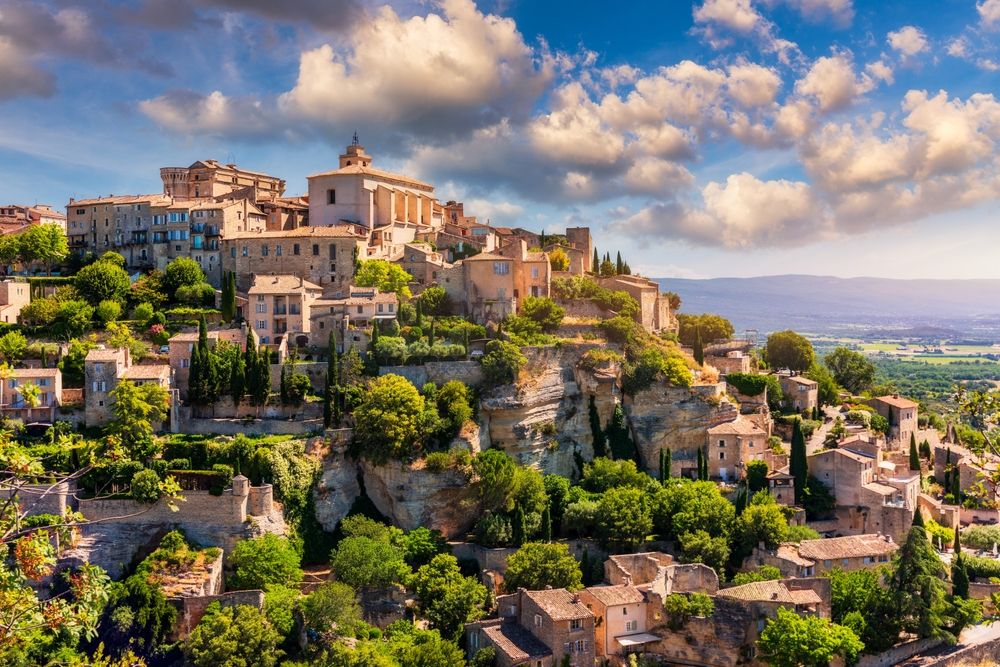
Perched at 340 meters altitude on a rocky promontory of the Monts de Vaucluse, Gordes is undoubtedly one of the most photographed villages in France. Classified among the Most Beautiful Villages of France, this medieval town reveals its dry stone houses that seem to stack on top of each other, offering a striking architectural spectacle. At the top stands the Renaissance castle which today houses the town hall and the Pol Mardsen museum.
Strolling through the cobbled streets, you will discover art galleries, craftsmen's workshops and Provençal boutiques. From the different viewpoints, the panorama embraces the entire valley up to Luberon. A few kilometers away, don't miss Sénanque Abbey and the Village des Bories, two emblematic sites of local heritage.
2. Roussillon and its flamboyant ochres
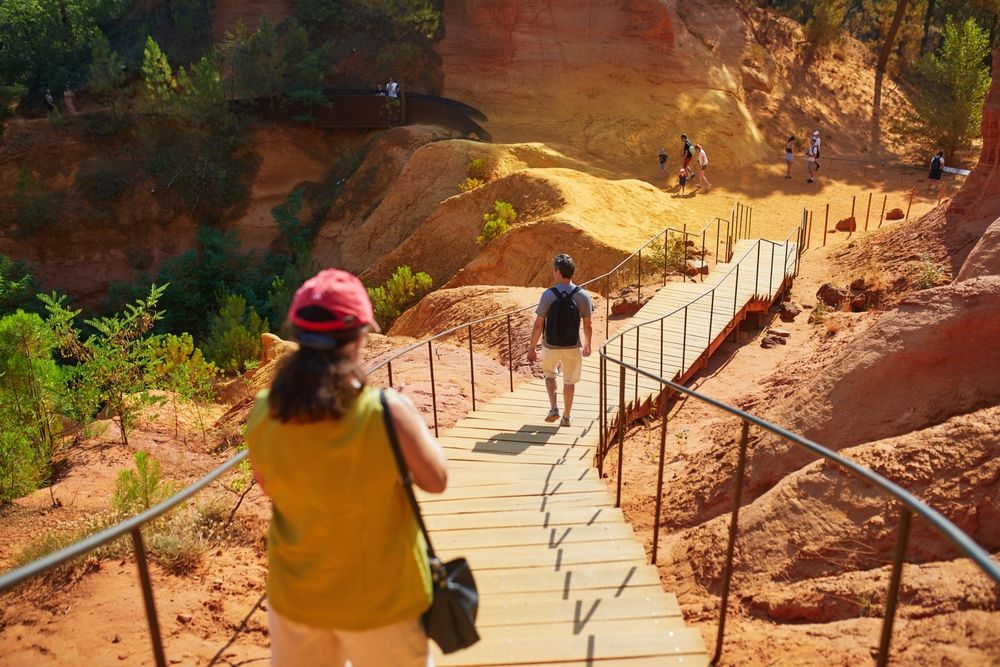
Roussillon owes its worldwide fame to its ochre cliffs with hues ranging from pale yellow to scarlet red. Also classified among the Most Beautiful Villages of France, this village offers a chromatic spectacle unique in the world. The facades of the houses match the colors of the surrounding ochre, creating perfect harmony with the landscape.
The Ochre Trail, accessible in the heart of the village, allows wandering between the former quarries with spectacular geological formations. The trail takes about 45 minutes and reveals landscapes worthy of the American Colorado. To extend the experience, visit Ôkhra – Ochre Ecomuseum which traces the history of this mining exploitation that made Roussillon's wealth until the mid-20th century.
3. Ménerbes, character village
Stretched on a rocky spur like a ship's bow, Ménerbes is also part of the Most Beautiful Villages of France. This history-laden village notably welcomed Pablo Picasso in the 1950s. The 16th century citadel, the 14th century Saint-Luc church and the belfry with its campanile clock testify to a rich past.
Ménerbes houses two unusual museums: the Corkscrew Museum at Domaine de la Citadelle, which presents a unique collection of more than 1,000 corkscrews, and the Truffle and Wine House of Luberon, temple of local gastronomy. The paved alleys invite strolling, revealing exceptional panoramas over the valley at every street corner.
4. Bonnieux, balcony over Luberon
Bonnieux climbs in amphitheater on the north slope of Luberon, offering plunging views over the Vaucluse plateau and Luberon. The village is discovered by climbing its stairs bordered by high houses up to the upper church, true belvedere over the entire region. The old 12th century church, partly Romanesque, is worth the detour for its sculpted capitals.
The Bakery Museum, installed in a former 17th century bakery, traces the history of bread and Provençal bakery traditions. Bonnieux also constitutes an excellent starting point to discover Pont Julien, remarkable Roman bridge with three perfectly preserved arches, located a few kilometers from the village.
5. Lourmarin, Provençal elegance
Last of the five Most Beautiful Villages of France in Luberon, Lourmarin is distinguished by its refined and cosmopolitan atmosphere. Nestled at the southern foot of the massif, the village is organized around shaded alleys bordered by plane trees, babbling fountains and welcoming terraces. The Renaissance castle, one of the first of this style built in Provence, can be visited and regularly hosts cultural exhibitions.
Lourmarin has attracted many artists and writers, including Albert Camus who lived there the last years of his life and rests in the village cemetery. The Friday morning market, one of the most renowned in Luberon, brings together local producers and artisans in an authentically Provençal atmosphere.
6. Lacoste, village of the marquis
Dominated by the imposing ruins of the Marquis de Sade's castle, Lacoste offers a wilder face preserved from mass tourism. The steep alleys wind between stone houses up to the castle vestiges that crown the village. From the heights, the view embraces the Calavon valley and extends to Mont Ventoux on clear days.
The village was partly restored by fashion designer Pierre Cardin who organizes an opera and theater festival each summer in the stone quarries. The Saint-Trophime church, built in the 17th century, deserves a visit for its characteristic bell tower and wrought iron campanile.
7. Oppède-le-Vieux, ghost village
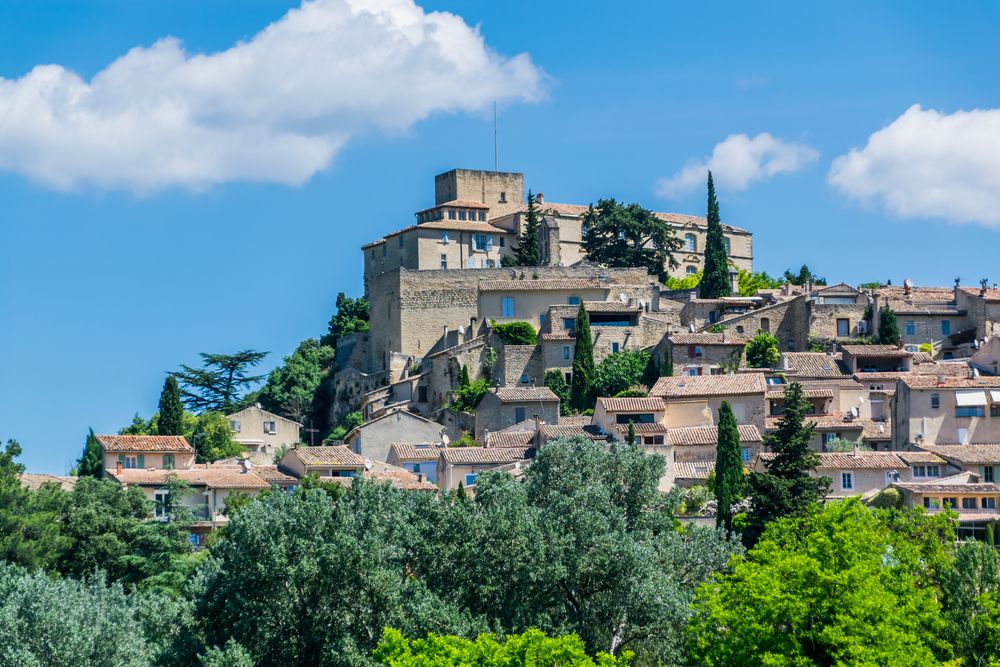
Oppède-le-Vieux offers a unique experience with its medieval ruins clinging to a rocky peak. Abandoned in the 19th century when inhabitants descended to settle in the plain, the village was partly restored in the 1950s by a group of artists and architects. The paved alleys lead to the castle vestiges and Notre-Dame d'Alidon church perched at the summit.
The climb to the ruins requires some effort but the reward is worth it: exceptional panorama over Luberon and a timeless atmosphere. Some artists' and craftsmen's workshops have settled in the restored houses, perpetuating the artistic vocation of the place.
8. Apt, capital of Luberon
Largest city in the park with its 12,000 inhabitants, Apt constitutes an unmissable passage to visit the Luberon Regional Natural Park. This former Roman city developed in the heart of the Calavon valley and remains today the economic capital of the territory. Sainte-Anne Cathedral, Romanesque building remodeled several times, houses the relics of Saint Anne and constitutes an important pilgrimage site.
On Saturday mornings, Apt hosts one of the most beautiful markets in Provence which invades the streets and squares of the historic center. You will find all the local products: candied fruits for which the city has been renowned since the 14th century, lavender honey, goat cheeses, olives, AOC Luberon wines and handcrafted objects. The Museum of Industrial Adventure traces the history of local industries: ochre, candied fruits and earthenware.
Exceptional natural sites
1. The Provençal Colorado
Located in the commune of Rustrel, the Provençal Colorado offers a breathtaking geological spectacle. These former ochre quarries exploited until 1992 have created a flamboyant-colored landscape that evokes the landscapes of the American Far West. Two marked trails allow exploring this unique site: the Sahara Circuit (1 hour) and the Fairy Chimneys Circuit (3 hours).
The rock formations sculpted by erosion create chimneys, needles and cliffs with hues varying from white to purple red according to sunlight. The site has paid access from March to November and offers parking at the entrance. Plan good shoes and be careful, ochre pigments stain clothes indelibly!
2. Sénanque Abbey Notre-Dame
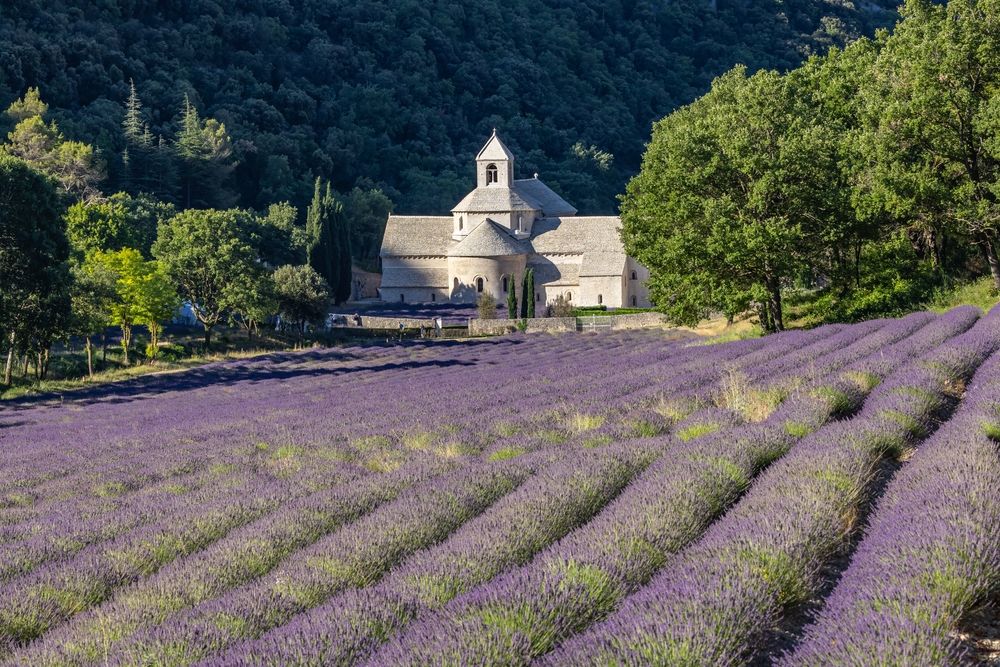
Nestled in an isolated valley a few kilometers from Gordes, Sénanque Abbey constitutes one of the most beautiful Cistercian ensembles in Provence. Founded in 1148, this still active abbey houses a community of monks who perpetuate the rule of Saint Benedict. The Romanesque building of remarkable architectural purity can be visited part of the year.
The spectacle becomes magical from mid-June to mid-July when the lavender fields surrounding the abbey are in bloom. The purple rows unfold in front of the blonde stone facade, creating one of the most famous postcards of Provence. Beware, attendance is high during this period. To fully enjoy the site, favor a visit early in the morning or late afternoon. Access is only on foot from the parking located 500 meters away.
3. The cedar forest of Petit Luberon
Planted in 1862 over 250 hectares, the Atlas cedar forest offers an exceptional forest setting in the heart of the limestone massif. Accessible from Bonnieux or Lacoste, this remarkable site culminates at 700 meters altitude and offers several shaded hiking trails. The discovery trail (1.2 km) allows admiring centenary cedars with impressive dimensions.
Picnic tables and rest areas are arranged to enjoy the coolness of the place, particularly appreciated in summer. The forest also houses rich fauna with the presence of wild boars, deer and numerous birds. Educational panels line the trails and explain the history of the place as well as the particular ecosystem of this Mediterranean forest.
4. The Régalon gorges
Located between Cheval-Blanc and Mérindol, the Régalon gorges constitute a spectacular geological curiosity. This narrow fault 200 meters long slips between two cliffs that can reach 60 meters high and sometimes spaced only 80 centimeters apart. The hike in the gorges requires some agility to cross rocky passages and wet areas.
The complete course (6 km loop) takes about 2h30 and offers remarkable viewpoints over the Luberon massif. The entrance to the gorges proper represents only a portion of the circuit but constitutes the highlight of the show. The site is accessible all year but not recommended in case of rain or storm due to sudden flood risks.
5. Mourre Nègre
Highest point of Luberon at 1,125 meters altitude, Mourre Nègre offers a 360-degree panorama over all of Provence. Several hiking routes allow reaching the summit, the most accessible starting from Auribeau (10 km round trip, 4 hours). The trail crosses the oak forest then the gorse moors before reaching the rocky ridge.
At the summit, an orientation table helps identify the different visible massifs: Mont Ventoux to the north, Sainte-Victoire to the east, Alpilles chain to the southwest and, on clear days, the Mediterranean and Alpine peaks. Mourre Nègre also marks the boundary between Vaucluse and Alpes-de-Haute-Provence. Plan water and sun protection as the summit is exposed.
6. La Bonde pond
Located between Cabrières-d'Aigues and La Motte-d'Aigues, La Bonde pond constitutes the largest body of water in Luberon with its 35 hectares. Created in the 12th century by the monks of Silvacane Abbey to supply their mills, this artificial pond is today a popular place for walks and relaxation. A 6 km trail makes the complete tour through vegetation of reeds and willows.
The site houses remarkable ornithological fauna with more than 150 bird species recorded: herons, ducks, grebes and, occasionally, flamingos. Two observatories allow admiring them without disturbing them. Swimming is not allowed but regulated fishing is possible in certain areas. An arranged parking and picnic tables make La Bonde pond an ideal place for a family outing.
Outdoor activities
1. Hiking
The Luberon Regional Natural Park has more than 500 km of marked trails crossing all types of landscapes. The GR 92, which crosses the park from east to west over 120 km, constitutes the major itinerary for experienced hikers. Divided into several stages, it connects Cavaillon to Forcalquier passing through the main perched villages and offers exceptional panoramas over the massif.
For shorter hikes, many circuits are proposed around each village. The Ochre trail in Roussillon (1 hour), the Castelas loop in Bonnieux (2 hours) or the windmills circuit in Goult (1h30) allow discovering local heritage while enjoying nature. The Park Houses in Apt and La Tour d'Aigues provide detailed maps and topoguides to prepare your outings.
2. Cycling and mountain biking
The varied relief of Luberon makes it an ideal playground for cyclists of all levels. The V57 Cycle Route – Tour du Luberon offers a 236 km cycling itinerary that makes the complete tour of the massif mainly using small roads with low traffic. Divided into stages, this course allows connecting the main villages and tourist sites while pedaling through vineyards, orchards and lavender fields.
For mountain bike enthusiasts, the Park offers a network of technical trails and paths. The mountain bike stations of Apt, Buoux and Forcalquier offer marked courses of different levels. The descent from Mourre Nègre will delight experienced mountain bikers while the tour of La Bonde pond is perfectly suitable for families. Many rental shops offer classic mountain bikes and electric bikes to facilitate access to the massif.
3. Rock climbing
Luberon has several renowned climbing sites, including the Buoux cliffs which are among the most beautiful climbing routes in France. This mythical site offers more than 450 routes of all levels on exceptional quality limestone. The cliff extends over 2 km with heights varying from 15 to 120 meters. All climbing styles are represented: slab, overhang, cracks and big walls.
Other sites allow practicing climbing in the park: the Rustrel cliffs near the Provençal Colorado, the Sivergues sector for sport climbing or the Volx routes in eastern Luberon. Climbing schools offer initiations and courses supervised by qualified instructors. Beginning climbers will also find several artificial structures in the main cities of the park.
4. Equestrian activities
Discovering Luberon on horseback offers a unique perspective on Provençal landscapes. Several equestrian centers offer rides and treks adapted to all levels. One-hour rides allow gentle initiation while multi-day treks take experienced riders through the massif with accommodation in equestrian lodges.
The marked equestrian trails total more than 200 km through forests, scrublands and villages. The Great Equestrian Trail GRE Tour du Luberon makes the complete tour of the massif in one week. The Luberon stables in Ménerbes, the Bonnieux equestrian center or the Ranch de la Garrigue near Apt offer services and accommodations for horses and riders.
5. Aerial sports
The reliefs and thermals of Luberon create ideal conditions for free flight. The Buoux site welcomes hang gliders and paragliders who take off from the plateau to fly over the gorges and valley. Tandem paragliding baptisms are offered by several schools, providing an unforgettable experience and spectacular aerial views over the massif.
For a more contemplative discovery, several companies offer hot air balloon flights over Luberon. At sunrise, these magical flights allow admiring perched villages, lavender fields and ochre reliefs from the sky. The flights of about one hour traditionally end with a champagne toast in the vineyards.
Cultural and gastronomic heritage
1. Provençal markets
Visiting the Luberon Regional Natural Park without strolling through its markets would be missing the Provençal soul. Each village organizes its weekly market where local producers, artisans and market gardeners meet in a friendly atmosphere. The Apt market, every Saturday morning, is among the most important with more than 300 exhibitors who invade the historic center.
In Lourmarin, the Friday market attracts a chic and cosmopolitan clientele in the shaded alleys. That of Gordes, on Tuesday morning, offers an exceptional setting with a view over the valley. Cucuron hosts its market on Tuesday in front of the famous rectangular basin bordered by plane trees. The markets of Bonnieux (Friday), Roussillon (Thursday) and Cadenet (Monday) also allow stocking up on local products: goat cheeses, lavender honey, olives, tapenades, AOC Luberon wines and seasonal fruits.
2. Culinary specialties
Luberon cultivates authentic gastronomy rooted in Provençal terroir. The candied fruits of Apt perpetuate a tradition dating back to the 14th century, when the Avignon popes particularly appreciated these delicacies. Several confectioneries perpetuate this know-how and can be visited, like Maison Aptunion or Kerry Confectioneries.
The black truffle of Ventoux, the "black diamond", is harvested from November to March and is the subject of a specialized market in Apt every Saturday morning in season. Lavender honey, AOC Banon goat cheeses, AOP Provence olive oil and AOC Luberon wines compose a remarkable taste palette. Don't miss tapenade, anchoïade and fruits and vegetables full of sun that make the richness of the stalls.
3. The Luberon wine route
The AOC Luberon, obtained in 1988, extends over 3,000 hectares of vineyards distributed over 36 communes. Wine estates offer tastings and cellar visits to discover the varied terroirs of the massif. The fruity reds, fresh rosés and aromatic whites reflect the diversity of soils and exposures of the territory.
Among the remarkable domains, let's mention Château de Mille in Apt, Château de l'Isolette in Bonnieux, Château La Canorgue in Bonnieux (which served as a setting for Ridley Scott's film "A Good Year") or Domaine de la Citadelle in Ménerbes. Most cellars are open for visits by appointment and offer commented tastings to understand the specificities of the appellation.
4. Historical sites
Beyond the villages, Luberon conceals numerous historical sites testifying to thousand-year-old human occupation. Pont Julien, built by the Romans around 3 BC, still spans the Calavon with its three elegant arches. Perfectly preserved, this work of art supported automobile traffic until 2005 and testifies to Roman genius.
The Village des Bories near Gordes presents a unique ensemble of dry stone huts, witnesses of traditional rural architecture. These mortarless constructions, some dating back to the 17th century, sheltered shepherds and agricultural tools. The site can be visited freely and allows understanding ancestral dry stone construction techniques, classified as UNESCO Intangible Cultural Heritage.
The numerous windmills that crown the hills, the fountains that sing in village centers, the washhouses and oratories line the trails and tell the daily history of Luberon inhabitants through the centuries.
Where to stay in Luberon Park
1. Charming hotels
Luberon has several exceptional establishments for a refined stay. La Bastide de Marie in Ménerbes, a 5-star hotel nestled among the vines, offers an authentic Provençal setting with spa and gourmet restaurant. Le Capelongue in Bonnieux, also 5-star, seduces with its traditional architecture and Michelin-starred table run by chef Édouard Loubet.
For more accessible budgets, many 2 and 3-star hotels offer quality services: Hotel des Voyageurs in Apt, Mas de l'Olivier in Gargas or Hotel Le Clos du Buis in Bonnieux combine Provençal charm and family welcome. Count between 80 and 150 euros per night for a mid-range hotel.
2. Bed and breakfasts
Bed and breakfasts constitute an excellent option to discover Provençal hospitality and exchange with inhabitants. Many farmhouses and bastides have been restored and transformed into charming guesthouses offering personalized rooms, table d'hôtes and wise advice to explore the region. Prices generally vary between 80 and 180 euros per night with breakfast.
Favor establishments labeled "Gîtes de France" or "Clévacances" which guarantee a level of comfort and services. Many bed and breakfasts have swimming pools, very appreciated during hot Provençal summer days. Advance booking is strongly advised, particularly in high season from May to September.
3. Seasonal rentals
For family stays or with friends, renting a house or gîte offers independence and conviviality. The park has hundreds of rentals ranging from studio to Provençal farmhouse that can accommodate about ten people. Rates range from 400 euros per week for a small apartment in low season to more than 3,000 euros for a beautiful property with pool in summer.
Specialized platforms like Gîtes de France, Clévacances or local agencies offer a wide choice. Make sure to choose accommodation central to your interests to limit daily travel, as Luberon is an extended territory where distances can be deceptive.
4. Campings
For outdoor enthusiasts, about fifteen campings are distributed over the park territory, offering varied services from simple municipal camping to 4-star establishments with entertainment and complete facilities. Camping des Sources in Gordes, Camping Luberon Parc in Apt or Camping de la Durance in Cadenet offer pitches and mobile homes in a natural setting.
Rates start around 15 to 20 euros per night for a tent pitch in low season and can reach 50 euros in high season. Mobile homes are generally rented by the week with prices ranging from 300 to 800 euros depending on the period and standing. Some campings also offer unusual accommodations: yurts, tipis or tree houses.
Practical information
1. When to visit Luberon Park
Each season offers its particular face to visit the Luberon Regional Natural Park. Spring (April-May) reveals radiant nature with flowering cherry trees, poppy fields and ideal temperature for hiking (15-25°C). Villages regain their calm after winter without yet knowing summer crowds.
Summer (June-August) corresponds to high tourist season. Lavender fields are in bloom from mid-June to mid-July, offering the sought-after emblematic landscapes. Temperatures can however exceed 35°C and perched villages are very crowded. Favor visits early morning or late afternoon.
Autumn (September-October) probably constitutes the best period with its mild temperatures, golden lights and vineyards adorned with warm colors. Markets overflow with seasonal products: truffles, mushrooms, chestnuts. Winter, calmer, reveals an authentic Luberon where villages regain their local rhythm, even if some shops and restaurants close from November to March.
2. How much time to plan
A 2-3 day weekend allows discovering the main perched villages and emblematic sites: Gordes, Roussillon, Sénanque Abbey and Provençal Colorado constitute an already well-filled program. To visit the Luberon Regional Natural Park more thoroughly including hikes, cellar visits and relaxation moments, one week represents the ideal duration.
This allows alternating active days and rest moments, taking time to stroll through markets, lunch leisurely on terraces and soak up the Provençal rhythm. Hiking enthusiasts can dedicate 10 days to cover the GR 92 in its entirety with gîte stops. Whatever the duration, avoid planning too busy a program: Luberon is savored by taking your time.
3. Park Houses
Two Park Houses welcome visitors to provide information, maps, topoguides and personalized advice. The Apt Park House, installed in the former Récollets convent, also houses the Geology Museum and administrative headquarters. That of La Tour-d'Aigues occupies the castle stables and presents temporary exhibitions on natural and cultural heritage.
These spaces also offer a shop where to find local products labeled "Park Values", books on the region and handcrafted objects. Stay advisors can help you build your itinerary according to your interests and inform you about current events: guided tours, conferences, nature workshops.
4. Good conduct rules
The Luberon Regional Natural Park is a protected natural space where some rules are necessary to preserve biodiversity and tranquility of places. Stay on marked trails to avoid trampling fragile vegetation and avoid disturbing fauna. Dogs must be kept on leash, particularly during nesting period (April-June) and in grazing areas.
Fire is strictly forbidden from April to September due to fire risks. Take your waste with you and respect private properties by closing gates and barriers. In summer, check access conditions to the forest massif: certain sectors may be closed by prefectural decree in case of high fire risk. These precautions guarantee the sustainability of this exceptional territory for future generations.
Frequently Asked Questions (FAQ)
Can you visit Luberon Park in one day?
Technically yes, but it would be a real shame! One day allows discovering 2-3 perched villages like Gordes and Roussillon, but Luberon deserves taking time to explore it. To fully appreciate the park's diversity, its landscapes, activities and art of living, plan at minimum a 3-day weekend, ideally one week.
What is the best period to see lavender in bloom?
Lavender fields are in full bloom from mid-June to mid-July, with a peak generally around July 14th. The exact period varies slightly according to altitude and year's climatic conditions. Sénanque Abbey and the Valensole plateau (just east of Luberon) offer the most spectacular landscapes. Beware, it's also the most crowded period.
Is Luberon Park suitable for children?
Absolutely! The park offers numerous family activities: easy walks like the Ochre Trail in Roussillon, supervised swimming at La Bonde pond, fun visits to the Lavender Museum or Village des Bories. Some villages organize treasure hunts. Favor short and shaded hikes in summer, and plan water and hats for everyone.
Do you need a car to visit Luberon Park?
The car remains the most practical way to explore Luberon in complete freedom, as villages are scattered and public transport limited. However, solutions exist for travelers without vehicle: local car rental, VTC, electric bike for athletic people, or fixed stay in a village with walking discovery of surroundings. Bus lines serve main communes from Avignon and Aix-en-Provence.
Where to find local Luberon products?
Weekly markets constitute the best source to directly meet producers: Apt on Saturday, Lourmarin on Friday, Gordes on Tuesday. Park Houses offer a shop of products labeled "Park Values". Many wine estates, honey, goat cheese and olive oil producers open their doors for direct sales. Village delicatessens also offer a beautiful selection of local products.
In conclusion, visiting the Luberon Regional Natural Park offers much more than a simple tourist trip: it's an immersion in a territory where preserved nature dialogues with thousand-year-old cultural heritage. From perched villages classified among the most beautiful in France to ochre landscapes of Provençal Colorado, from perfumed lavender fields to centenary cedar forests, every corner of Luberon tells a story and invites contemplation. Whether you are passionate hiker, lover of art and architecture, epicurean gourmet or simply seeking Provençal authenticity, Luberon will seduce you with its diversity and unique art of living. Take time to stroll through colorful markets, taste local wines facing the sunset, get lost in cobbled alleys: this is how you will discover the true soul of this exceptional territory. To best prepare your stay and discover Avignon, gateway to the park, let yourself be guided by Ryo audio-guided tours that will make you discover all the secrets of this bewitching region.