
Créé par Romane, le 20 juin 2026
Votre guide Ryo
Guédelon Castle: Complete Visit Guide 2026
© Shutterstock
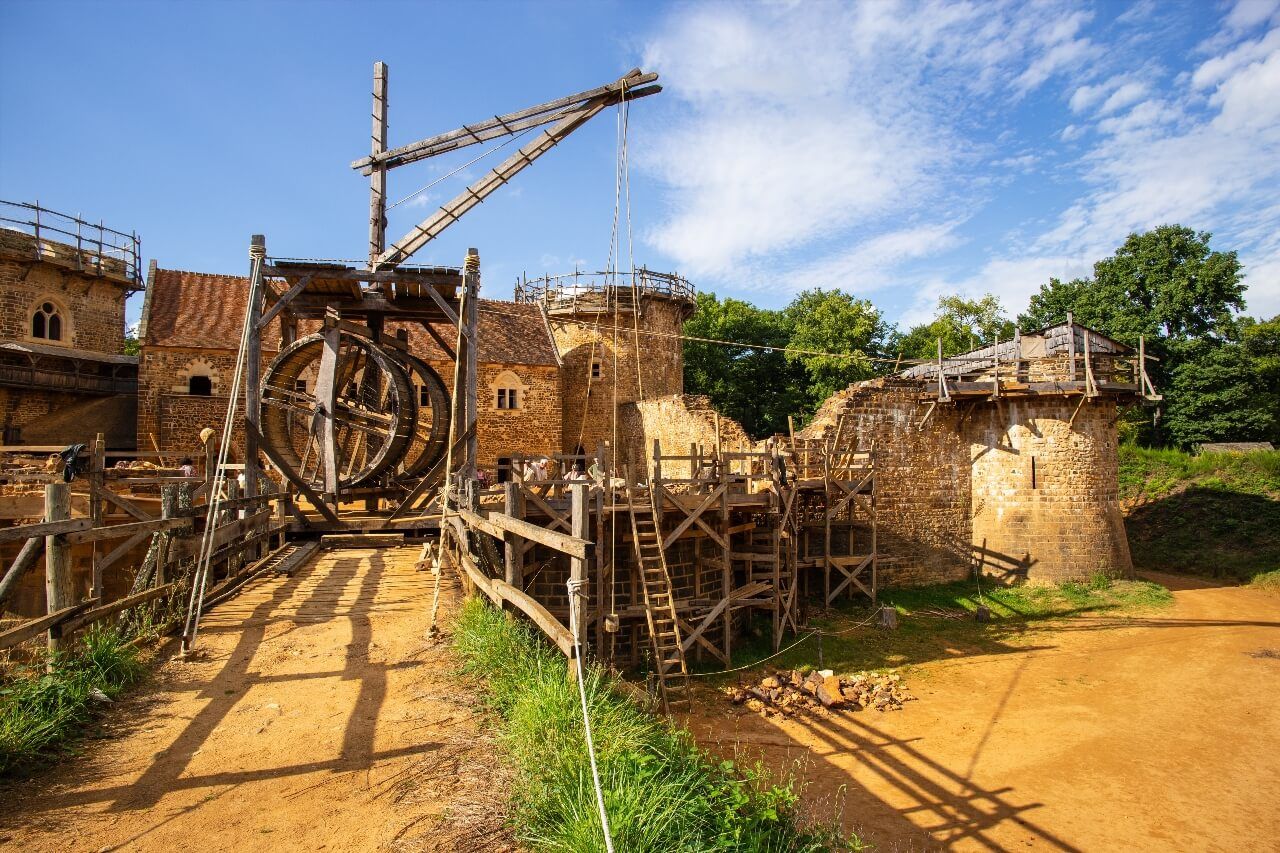
Deep in a former sandstone quarry in Yonne, masons cut stone by hand, carpenters square beams with axes, rope makers braid hemp on a wooden wheel. No reenactment, no movie set: Guédelon castle is a real 13th-century fortress that has been rising from the ground since 1997, built stone by stone using only period materials and techniques. Visiting Guédelon castle means observing live one of the world's most important experimental archaeological sites, and undoubtedly Burgundy's strangest tourist attraction.
This guide gathers everything you need to know before coming: the project's history, workshops not to miss, the best time slots by season, practical information on rates and access, and stops to combine in Puisaye. Whether you come with curious children or for an immersion in medieval craftsmanship, Guédelon castle deserves a full half-day, without rushing.
A 13th-Century Castle Built in the 21st Century
The idea seems crazy: launch in 1997 the construction of a medieval castle using only locally available materials and documented 13th-century techniques. Yet this is what Michel Guyot, owner of neighboring Saint-Fargeau castle, and Maryline Martin, project director since the beginning, undertook in a former sandstone quarry in Guédelon forest, in the commune of Treigny-Perreuse-Sainte-Colombe (formerly Treigny), in Yonne.
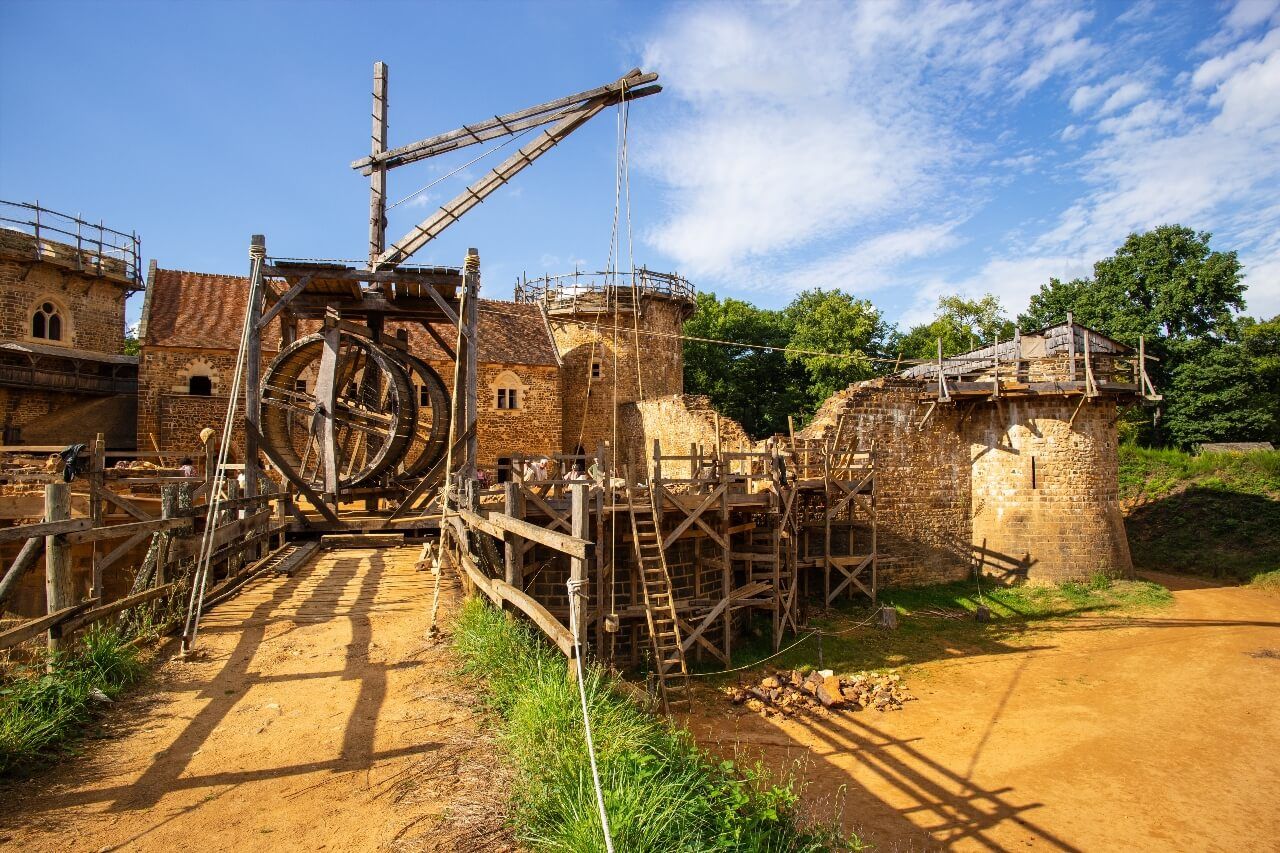
The chosen model is a Philippian castle, a type of fortress standardized under Philippe Auguste's reign, whose architecture Guédelon castle (Lieu-dit Guédelon, 89520 Treigny-Perreuse-Sainte-Colombe, rated 4.7/5 on Google for 16,758 reviews) reproduces as it was built around 1228: quasi-square plan, four round corner towers, a more massive keep and a gatehouse. Examples survive in France - Dourdan, Yèvre-le-Châtel, Druyes-les-Belles-Fontaines, visible about twenty kilometers from Guédelon. This deliberate choice of a well-documented model allows checking each construction hypothesis against archives or archaeological comparisons.
After more than twenty-seven years of work, the construction site is in its final phase. The four towers have reached their final height, the curtain walls are nearly complete, and teams now focus their efforts on interior fittings: chapel, great seigneurial hall, painted ceilings, interior woodwork. The theoretical completion date lies between 2030 and 2035, depending on work pace and available funding. For regulars who return after a few years, the castle is noticeably different with each visit, which is precisely part of the site's interest.
How the Construction Site Works
Guédelon castle is not a museum. It's primarily a research program in experimental archaeology: by building the castle, teams test hypotheses about medieval techniques, compare their results with historians and archaeologists worldwide, and publish their conclusions. More than 50 researchers of different nationalities have participated in scientific exchanges around the site since its creation.
The principle: learn by doing. When teams wanted to understand how medieval masons built their barrel vaults, they tried several documented methods, measured results, analyzed any cracks and adapted. This approach has already produced concrete knowledge about lime mortar resistance, implementation of corbelled scaffolding (the famous 'putlog holes' visible in ancient masonry), or how stone cutting was guided without modern instruments.
Year-round, the site employs about forty people distributed among several workshops. In high season, between 45 and 70 people work simultaneously on site - masons, stone cutters, carpenters, tilers, blacksmiths, quarrymen, rope makers, carters, plus an educational team that welcomes visitors and runs workshops.
The Water Mill, the Other Experimental Construction
About 500 meters on foot from the castle, in the heart of Guédelon forest, teams have reconstructed a water mill based on a 9th-century mill plan discovered during archaeological excavations. Powered by a paddle wheel fed by a millrace, it operates a stone millstone that actually grinds grain into flour, exactly like the medieval mills that dotted the region's waterways.
This construction extends the castle's approach: test documented techniques and draw concrete lessons. Mechanism framework, wooden gear cutting, wheel adjustment - everything was done on site with the construction site's tools. The walk to the mill, through woods, provides a pleasant and often calmer break than the site's heart, not to be missed if you have a full half-day.
Medieval Trades in Action
This is the heart of the experience. Observing craftsmen work according to eight-century-old methods is both spectacular and very concrete. Workshops are spread throughout the site; in several of them, it's possible to chat directly with the craftsmen.
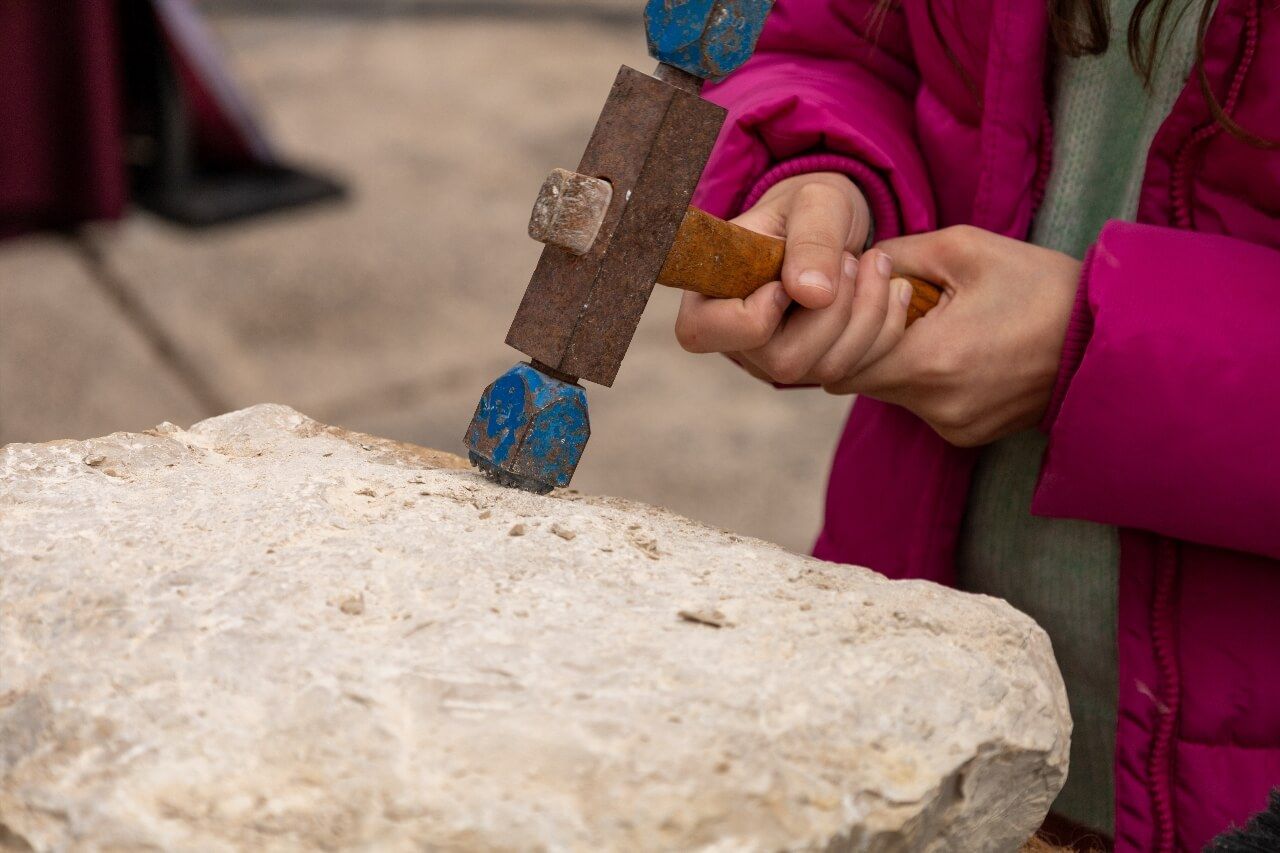
The quarry and stone cutting occupy a central place. All sandstone used in construction comes from the adjacent quarry, operated as an open pit. Cutters shape cut stones, arch voussoirs, keystones, corner quoins, with tools forged on site - the polka, chisel, hammer. Each stone is measured with wooden templates, as in the 13th century.
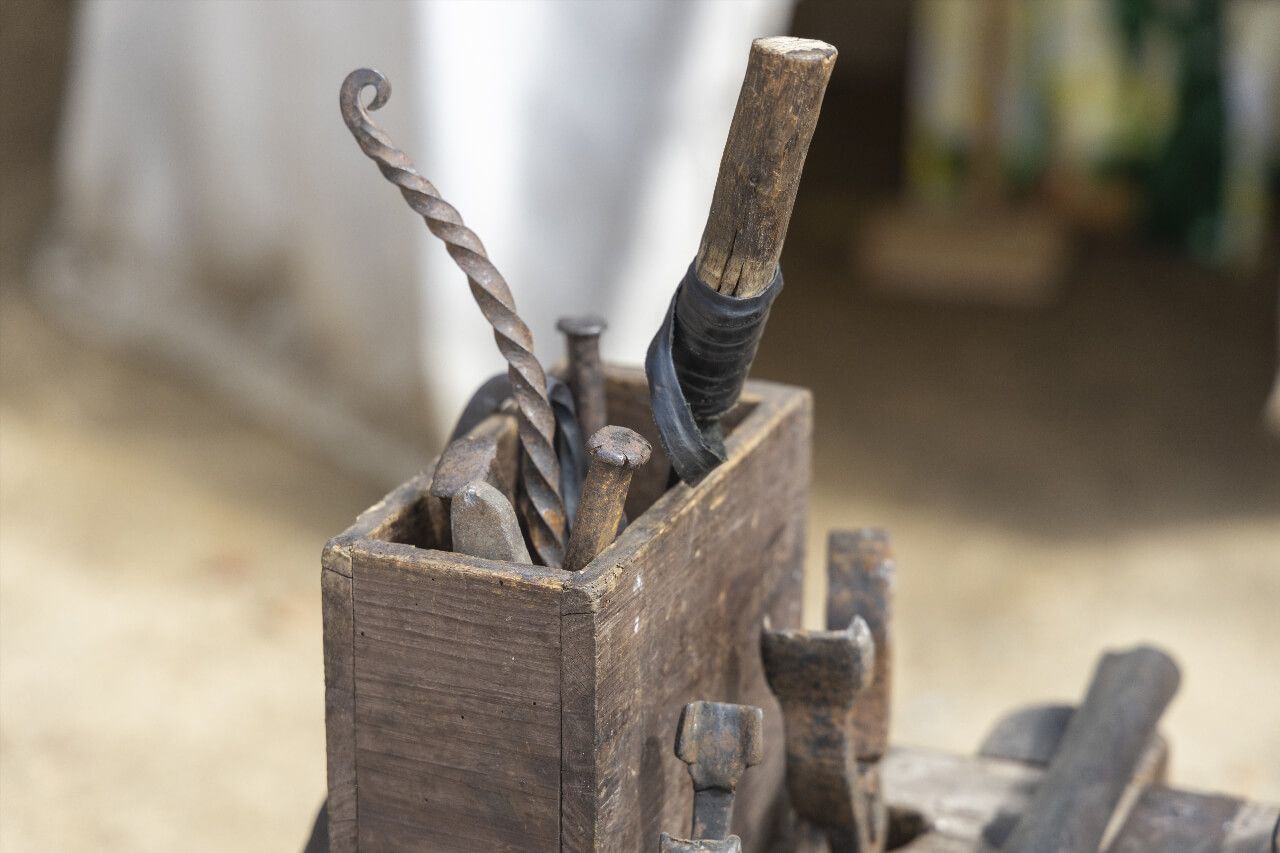
The forge is the most impressive workshop for non-initiates. The blacksmith manufactures or repairs all the site's tools on site: stone cutter chisels, carpenter cramps, door hardware, hand-forged nails. The bellows, operated manually, produces the heat necessary for metalwork. Archaeological pieces recovered from excavations serve as direct models.
Carpentry represents another highlight. Carpenters square logs with axes, the technique called adzing, and assemble pieces by rabbeting and mortise-and-tenon joints, without a single nail. Wood comes from the neighboring forest, managed according to the site's needs. Teams have reconstructed a flexible pole arch that allowed sawing boards lengthwise, without mechanical saw.
Tile making and pottery occupy a workshop away from the main castle. Flat tiles, ridge tiles, painted floor tiles and cooking pots are all shaped from local clay, air-dried and fired in a wood kiln reconstructed from archaeological models.
Rope making completes the list of permanent workshops. Rope makers spin local hemp on a toupin, a horizontal wooden wheel, to produce construction ropes, straps and twines used daily. Observing this work for a few minutes is enough to understand why rope was precious material in the Middle Ages: each meter represents significant work time.
One last workshop deserves attention: vault layout. Before casting a vault, medieval masons drew its profile on slate using ropes and wooden squares, according to geometric procedures transmitted from master to journeyman. Guédelon's animators reconstruct these layouts and explain their logic, one of the site's most enlightening demonstrations.
The Visit Step by Step: What You Really See
The visit is entirely free, no imposed circuit. Explanatory panels mark each workshop; costumed mediators circulate on site in high season and answer questions.
Upon entering, you first walk along the quarry on the left, a cut in red sandstone about twenty meters deep, with traces of wedges and picks still visible in the rock. Just after, the stone cutting workshop, often the most active in the morning when cutters attack fresh blocks from the quarry.
The castle itself is discovered by climbing toward the inner courtyard. The entrance gate is in place, a round-arched vaulted passage flanked by two towers, and visitors move freely in accessible spaces: the chapel (whose painted plasters are being completed), the great seigneurial hall on the residence's first floor, and the walkway atop the curtain walls. The view from the ramparts over the forest and workshops below is worth the trip alone.
Plan for 2.5 to 3 hours for a complete visit without rushing. If you want to attend explanations in each workshop and chat with journeymen, allow 3.5 hours. With children participating in educational activities, the day is easily filled.
A practical tip: arrive in the morning at opening. Between 10 AM and 1 PM, the quarry and stone cutting workshops are most active. Afternoons, carpenters and blacksmiths take over. In July-August, the site can welcome 3,000 visitors per day - coming at opening radically changes the experience.
Guédelon With Children
Guédelon castle is one of the rare heritage sites where children watch without getting bored, because something really happens before them. Seeing a mason perched on corbelled scaffolding place a 200kg lintel with a windlass crane, or watching a blacksmith plunge a red-hot chisel into the water trough, is concrete and spectacular at any age.
Educational workshops are included in the admission ticket in high season. Animators generally offer stone cutting initiations on soft sandstone blocks, clay molding and geometric layout games like those masons used to draw their vaults. Recommended age ranges vary by activity.
A game booklet is available at the entrance for children from 7 years old, with puzzles related to different workshops. The terrain is partly unpaved: an all-terrain stroller is more suitable than a standard urban stroller.
Seasons and Crowds: When to Visit Guédelon
Period choice radically changes the experience. In July-August, the castle welcomes up to 3,000 people daily, all workshops run at full capacity and educational activities are on the daily program. The downside: entrance queues, parking saturated by 11 AM, and difficulty approaching craftsmen for real conversation.
The months of May, June and September offer the best quality-experience ratio. The site is fully active, craftsmen are available to chat, and you move around without jostling. In April and October-November, some workshops operate at reduced pace and opening days decrease - the site is generally closed certain Tuesdays and Wednesdays outside school holidays. Check the calendar on guedelon.fr before blocking your dates.
History and craftsmanship enthusiasts will often prefer a spring or autumn visit, when low sun lights the cut stones differently and workshops aren't saturated with visitors. An app like Ryo can complement this type of heritage visit by offering audio-guided tours of nearby towns like Auxerre or Sens.
Practical Information: Hours, Rates, Access
2026 Hours: the site opens from April 2nd to November 1st. In low season (April, May, June, October, November): 10 AM to 5:30 PM, until 6 PM on Saturdays and holidays. In high season (July-August): 9:30 AM to 6:30 PM. Closed the rest of the year, even though construction continues. Consult guedelon.fr for exact dates and any exceptional closures.
2026 Rates: adult around 19 to 21 euros, child 5-17 years 13 to 15 euros, student and reduced rate around 16 euros, free for under 5s. Group rates (from 20 people) and family packages exist - check details on the ticket office before buying online.
Access: Guédelon castle is located in the commune of Treigny-Perreuse-Sainte-Colombe (89520), in Yonne:
- 25 km from Saint-Fargeau (D965 from Briare or Châtillon)
- 55 km from Auxerre (N151 to Toucy, then D965)
- 170 km from Paris (A6 toward Lyon to Nitry, then secondary roads)
There are no direct public transport connections to the site. A car is essential. Free parking is available on site.
On Site: shop (books, reproductions, medieval items), catering area with hot meals in high season. Picnic tables are available outside the site.
Where to Eat and Sleep Around Guédelon
Puisaye is a rural area - accommodation options concentrate in surrounding villages and in Saint-Fargeau, half an hour away by car.
For sleeping, rural gîtes abound in the communes of Treigny-Perreuse-Sainte-Colombe, Moutiers-en-Puisaye and Rogny-les-Sept-Écluses: count 60 to 90 euros per night for a 4-person gîte in peak season. Bed and breakfasts are rare but often well-maintained. The nearest hotel is in Saint-Fargeau, 23 km away.
For eating, the site restaurant offers decent but basic catering in July-August. Outside the site, Saint-Fargeau concentrates the best options: several restaurants serve regional Burgundian menus - snails, Charolais beef, Yonne cheeses. In Rogny-les-Sept-Écluses, several guinguettes open seasonally along the Briare canal, in a pleasant setting.
The Surroundings: What to Do in Puisaye
Guédelon castle is located in the heart of Puisaye, a natural region of forests, ponds and terracotta villages spanning Yonne and Loiret. One day isn't enough to explore it all; plan two days if coming from afar.
Saint-Fargeau castle (Rue du Château, 89170 Saint-Fargeau, rated 4.5/5 on Google for 5,187 reviews) stands as the first stop after Guédelon. It's one of Burgundy's largest medieval fortresses: five horseshoe towers, an immense lower courtyard, and a sound and light show on July-August Friday and Saturday nights, with equestrian cascades, flames and a ten-century history review. Michel Guyot, its owner, is one of Guédelon's founders.
The Colette museum in Saint-Sauveur-en-Puisaye traces the universe of the writer, author of 'Claudine' and 'The Ripening Seed,' born in this village in 1873. Her birthplace, labeled 'House of the Illustrious,' is open for small group visits and provides a pleasant literary stop, a few kilometers from Guédelon.
Druyes-les-Belles-Fontaines deserves an hour's detour. The ruins of Druyes' Philippian castle, contemporary to what Guédelon seeks to reconstruct, offer a striking comparison between the authentic medieval building and its twin under construction. The village spring feeds a natural pool open in summer.
For canal lovers, Rogny-les-Sept-Écluses allows seeing the seven-lock staircase built in early 17th century under Henri IV, now disused but remarkably preserved. The Briare canal runs along several ponds and offers beautiful walks on foot or by bike.
Finally, if you wish to extend your stay toward the Loire, the towns of Gien, Briare and Sancerre are less than an hour away. The Ryo app offers audio-guided tours of several Centre-Val de Loire region destinations to complete a multi-day circuit.
FAQ
How Long Does It Take to Visit Guédelon Castle?
Plan for 2.5 to 3 hours for a complete and leisurely visit. If you want to attend demonstrations in several workshops and chat with the craftsmen, allow 3.5 hours instead. With children participating in educational workshops, the visit can easily exceed 4 hours. Morning is the best time to see the stone cutting workshops at their peak activity.
Is Guédelon Open Year-Round?
No. The site is open from April to November only, generally from April 2nd to November 1st. The rest of the year, construction continues but is not accessible to the public. In high season (July-August), the site is open 7 days a week. Outside summer, the site may be closed certain Tuesdays and Wednesdays outside school holidays - check guedelon.fr.
Can You Visit Guédelon Castle With Young Children?
Yes, without hesitation. The site is particularly suitable for families with children from 5-6 years old. The sensory dimension of the visit - forge noise, hemp smell, vibration of mallets on stone - easily captures attention. Educational workshops are included in the admission ticket in high season. Note that the terrain is partly unpaved: prefer an all-terrain stroller.
When Will Guédelon Castle Be Completed?
The estimated completion date is between 2030 and 2035. After more than twenty-seven years of construction, the main structure (towers, curtain walls, residence) is nearly complete. Teams are now working on interior fittings: chapel, great hall, painted ceilings, woodwork. Some exterior amenities like medieval gardens are also underway.
Is Guédelon Castle Worth the Detour From Paris?
Yes, provided you include it in a one to two-night stay in Puisaye. At 170 km from Paris (about 1h45 by car), the visit naturally combines with Saint-Fargeau castle and the Colette museum in Saint-Sauveur-en-Puisaye. The site is unique in France: no other construction site in the world reconstructs a medieval castle at this scale and with this scientific rigor. For medieval history or craftsmanship enthusiasts, ## Conclusion
Guédelon castle is a fortunate anomaly in the French tourist landscape: an active construction site, a living scientific laboratory and an exceptional visitor site united in one place. Seeing craftsmen work stone, wood, metal and clay according to 13th-century methods, being able to ask them questions and observe their gestures up close - this is what makes this visit unforgettable. If you're planning a stay in Puisaye or Burgundy, block a full day for Guédelon, combine with Saint-Fargeau and Druyes, and let yourself be surprised by the deliberate slowness of the construction. For those who wish to deepen their regional discovery with an audio guide, the Ryo app covers several Centre and Burgundy destinations with audio-guided Ryo tours designed to explore at your own pace.