
Créé par Emilie, le 4 juin 2026
Votre guide Ryo
What are the most beautiful villages to visit in Yonne?
© Shutterstock
Yonne, a Burgundian department located less than two hours from Paris, reveals exceptional heritage through its picturesque villages. Between prestigious vineyards, medieval cities and UNESCO-listed monuments, this region offers remarkable diversity to lovers of authenticity. Let yourself be guided to discover the most beautiful villages of Yonne, true gems of Bourgogne-Franche-Comté.
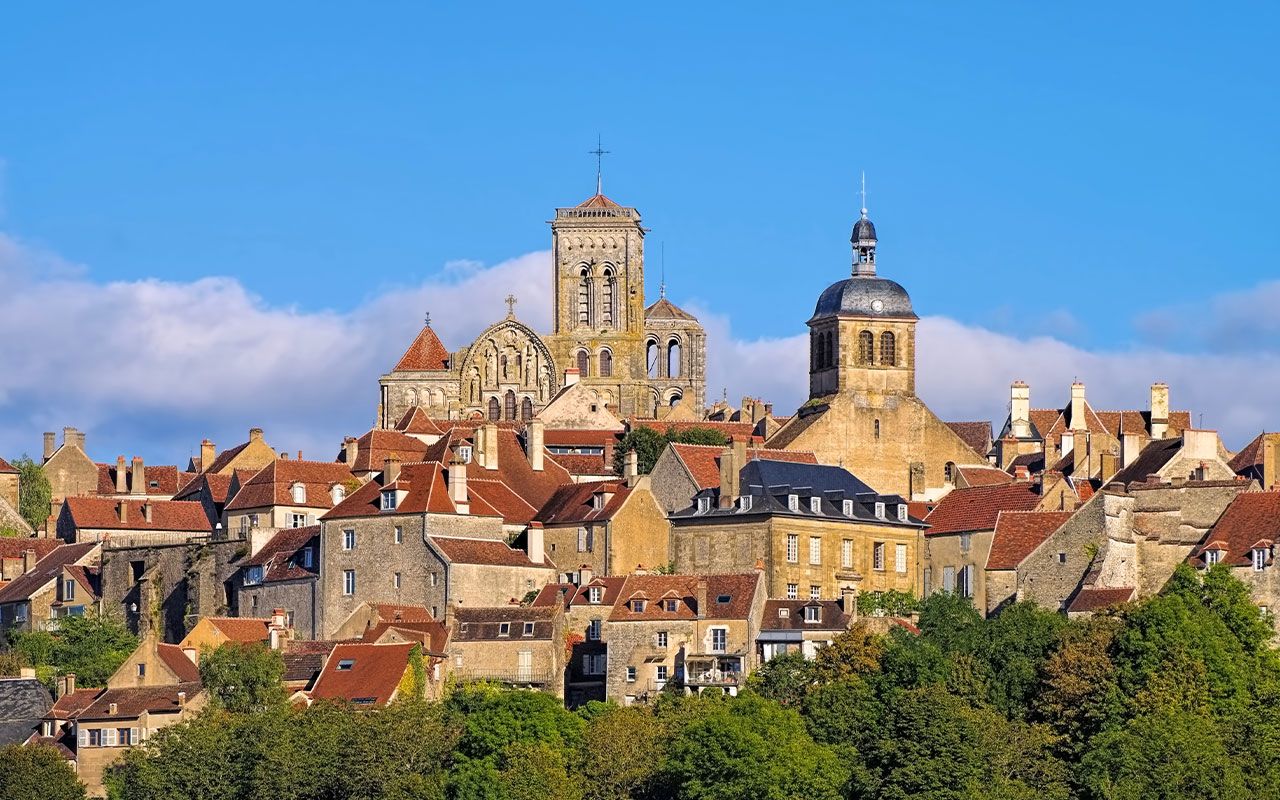
1. Vézelay, jewel of UNESCO World Heritage
Perched on its eternal hill, Vézelay majestically dominates the landscapes of Morvan. This exceptional village, classified among the Most Beautiful Villages of France, owes its fame to the Basilica Sainte-Marie-Madeleine (24 Rue Saint-Pierre, 89450 Vézelay, rated 4.7/5 on Google for 5290 reviews), a masterpiece of Romanesque art inscribed on the UNESCO World Heritage List.
The basilica, restored in the 19th century by Viollet-le-Duc, constitutes a major pilgrimage site since the 12th century and marks the departure of one of the four French routes to Saint-Jacques-de-Compostelle. Its Romanesque sculptures, notably the tympanum of the narthex, are among the most beautiful in France.
The cobbled streets of Vézelay, lined with winegrower houses and Renaissance mansions, invite strolling. Each stone tells the story of this spiritual city that welcomed Bernard de Clairvaux and inspired numerous writers like Romain Rolland or Georges Bataille.
2. Noyers-sur-Serein, a preserved medieval setting
Nestled in a meander of the Serein, Noyers-sur-Serein offers a journey through time with its 14th-century ramparts and perfectly preserved watchtowers. This village classified among the Most Beautiful Villages of France reveals remarkable architectural heritage.
The squares of Petite-Étape-aux-Vins, Marché-au-Blé and Grenier-à-Sel bear witness to past commercial prosperity. The half-timbered houses of the 15th century, like the Renaissance house of the Golden Fleece, create striking architectural harmony.
The walk on the ramparts offers panoramic views over the Serein valley and allows admiring the Notre-Dame church of the 15th century. The village also houses craftsmen and galleries that perpetuate local traditions.
3. Chablis, symphony between vineyards and heritage
World-renowned for its exceptional white wines, Chablis harmoniously combines wine tradition and architectural richness. This "Golden Gate of Burgundy" flourishes in the heart of one of France's oldest vineyards.
The Collegiate Saint-Martin, built in the 13th century, impresses with its Cistercian sobriety. The Obédiencerie, a former 9th-century monastery, now houses cellars that perpetuate Chablis' millennial wine tradition.
The village streets reveal heritage closely linked to viticulture: vaulted cellars, winegrower houses and ancient wine presses punctuate the discovery. The Sunday morning market animates the cobbled streets and allows tasting Burgundian specialties.
4. Auxerre, between history and modernity
Cultural capital of Burgundy, Auxerre displays its exceptional heritage along the banks of the Yonne. The Saint-Étienne cathedral, with its unique 68-meter tower, dominates the city with its Gothic silhouette.
The Saint-Germain Abbey, founded in the 5th century, houses a unique Carolingian crypt in Europe and exceptional frescoes. The Marine quarter, with its half-timbered houses and Gallo-Roman remains, tells the city's millennial history.
Download the audio-guided tour to discover Auxerre on foot and independently
The Ryo itinerary of Auxerre guides you through 21 points of interest over 3.1 km, for a complete discovery in 1h15. From Saint-Germain abbey to the Yonne quays, passing by the cathedral and half-timbered houses, this audio-guided itinerary reveals all the secrets of Cadet Roussel's city. Let yourself be guided in your visit thanks to this complete circuit of Auxerre which will unveil the soul of this Burgundian city.
5. Montréal, small feudal jewel
Perched on a hill overlooking the Serein valley, Montréal seduces with its preserved medieval character. This Small Character City of less than 200 inhabitants concentrates remarkable architectural heritage.
The collegiate Notre-Dame, restored by Viollet-le-Duc, constitutes a jewel of Burgundian Gothic art. Its 16th-century carved stalls and Renaissance stained glass deserve a thorough visit.
The three fortified enclosures, houses with mullioned windows and studded doors evoke the time when Montréal controlled the valley. The main street, lined with ancient houses, naturally leads to the collegiate that overlooks the village.
6. Irancy, authentic village of the Auxerre vineyard
Nestled between vine slopes and cherry orchards, Irancy embodies the Burgundian art of living. This village of 300 inhabitants, birthplace of architect Soufflot (designer of the Pantheon), reveals exceptional wine heritage.
The winegrower houses, built without courtyards and equipped with vaulted cellars, testify to perfect adaptation to vine cultivation. The narrow streets reveal sundials, mullioned windows and staircase turrets.
The village produces one of the rare red wines of Yonne, made from Pinot Noir grape variety. Family cellars and estates perpetuate centuries-old traditions in a preserved bucolic setting.
7. Châtel-Censoir, village with two faces
Crossed by the Yonne and the Nivernais canal, Châtel-Censoir reveals a double character: fortified upper city and river port. This village of 640 inhabitants preserves its ramparts and fortified gate.
The 9th-century collegiate, with its Merovingian crypt, constitutes one of the oldest religious buildings in Burgundy. The 18th-century houses of the upper town contrast with the port animation below.
Local legend evokes the Fairies' Cave, located in the Vaulabelle woods, where fairy creatures came to draw water from the Réchim fountain. This popular tradition adds a mysterious dimension to the village.
8. Saint-Sauveur-en-Puisaye, on Colette's trail
Birthplace of novelist Colette, Saint-Sauveur-en-Puisaye cultivates the literary memory of its illustrious child. This Character City of Bourgogne-Franche-Comté offers a 37-stage route on the writer's trail.
The castle-museum, dominated by the 12th-century Saracen tower, presents Colette's life and work. The birthplace, located rue de l'Hospice, can be visited and evokes the author of "Sido"'s childhood.
The wash houses of Petit Saint-Jean and Gerbaude, where Colette came to draw water, punctuate the discovery. The village regularly organizes literary events that honor her memory.
9. Druyes-les-Belles-Fontaines, medieval fortress
Dominated by the imposing ruins of its fortress, Druyes-les-Belles-Fontaines amazes with the quality of its medieval heritage. This Character City preserves seven remarkable sites and four historic monuments.
The fortress, perched on its rocky promontory, offers exceptional panorama over the Yonne valley. The 12th-century Romanesque Saint-Romain church presents a remarkable sculpted portal.
The village takes its name from the springs that gush at the foot of limestone cliffs. The 1883 viaduct, accessible to pedestrians, constitutes a modern viewpoint over the entire site.
10. Villeneuve-sur-Yonne, royal bastide
Founded in 1163 by Louis VII the Young, Villeneuve-sur-Yonne preserves its medieval bastide plan. This fortified town testifies to the royal will to protect the borders of the Capetian domain.
The Notre-Dame church, with its cathedral appearance, dominates the urban ensemble with its Gothic silhouette. Its impressive dimensions testify to the ambition of medieval builders.
The fortified gates of Sens and Joigny, remnants of Philippe Auguste's enclosure, still frame the historic center. The Saint-Nicolas bridge, spanning the Yonne, allowed control of commercial exchanges.
By touring these exceptional villages of Yonne, you will discover the richness of Burgundian heritage in all its diversity. Each village reveals its unique character, between wine tradition, medieval architecture and French art of living. The Ryo itinerary accompanies you in this discovery, revealing the authentic soul of these preserved territories.
What is the best period to visit the villages of Yonne?
The ideal period extends from May to October, with a peak of attraction in September-October for autumn colors and harvest. Spring offers gentle light and green landscapes, while summer allows full enjoyment of festivals and local entertainment.
How to move between the villages of Yonne?
The car remains the most practical means to explore these villages, allowing discovery of rural landscapes at your own pace. Marked cycling circuits connect certain villages, notably in the vineyard. Public transport serves the main towns like Auxerre, Sens and Avallon.
What culinary specialties to discover in Yonne?
Yonne gastronomy combines Burgundian traditions and local specialties: Burgundy snails, Chablis sausage, cheese gougères, and of course the prestigious wines of Chablis, Irancy and Saint-Bris. Local markets also offer Chavignol goat cheeses and Gâtinais honey.