
Créé par Romane, le 25 juin 2026
Votre guide Ryo
The Most Beautiful Villages Around Bastia: 12 Getaways in 2026
© Shutterstock
Just a few kilometers from the port of Bastia, Corsica transforms completely. Genoese buildings and lively quays give way to dry-stone alleyways, Saracen towers overlooking the sea, and villages so silent you can hear cicadas between the church bells. Within a 50-kilometer radius of the city, twelve communes concentrate everything Corsica has to offer at its most authentic: baroque architecture, terraced vineyards, preserved fishing harbours, and vertiginous headlands above the Tyrrhenian Sea. With the Ryo audio guide tour of Bastia as your starting point, you have an ideal base from which to explore each of these villages — some reachable in twenty minutes, others requiring half a day to fully appreciate their hidden corners. This guide covers the villages of Cap Corse, the Conca d'Oro, and the hinterland, with distances from Bastia, the best times to visit, and what the brochures don't tell you.
Erbalunga, the Fishing Village that Painters Never Left
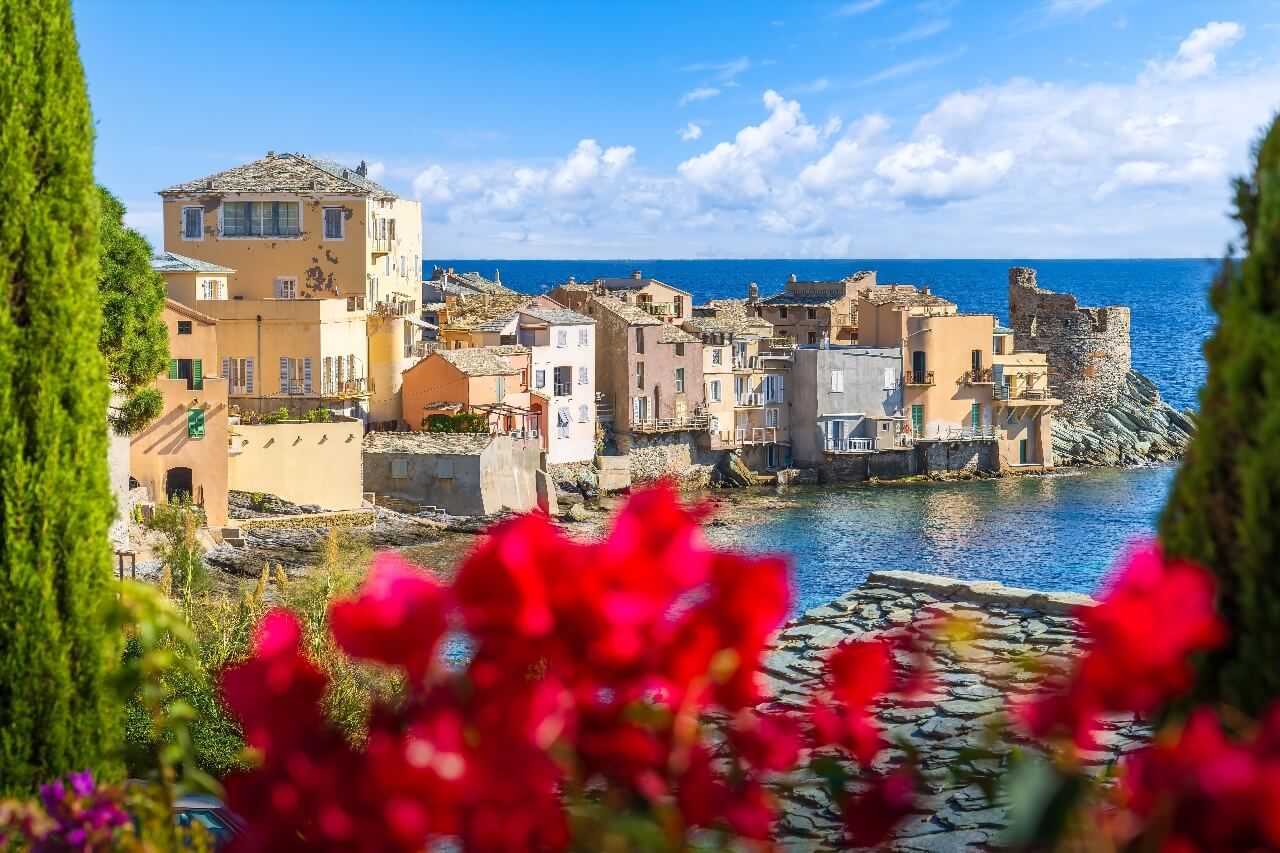
Just 8 kilometers north of Bastia, Erbalunga (Village d'Erbalunga, 20222 Brando, rated 4.7/5 on Google with 1,243 reviews) is often the first village discovered when heading up the eastern coast of Cap Corse. And it would be a mistake to treat it as a mere stopover: this village easily deserves two hours of leisurely exploration, sketchbook in hand or not.
The village is organized around a tiny old harbour enclosed by a 16th-century Genoese tower, partly collapsed into the sea. It is this partial ruin, with its reflection in the turquoise harbour water, that has made Erbalunga photographically famous. Tall houses with ochre and pale yellow facades crowd together to the tip of the rocky peninsula, and restaurant terraces look directly onto the fishing boats. In summer, you need to arrive before 9:30am or after 5pm to walk through the alleyways without encountering dense crowds.
The village belongs to the commune of Brando, whose hinterland conceals several hilltop hamlets — Morsiglia, Pietracorbara, Pozzo — that can be explored on foot from Erbalunga along marked trails. Erbalunga's own beach is small and pebbly, but the water is remarkably clear. Several fish restaurants offer seafood platters and local lobster; prices are high in season, but the quality matches.
From Bastia, the road hugs the coastline with views of the Tuscan archipelago on clear days. By bicycle, the journey takes about an hour from the city centre along a partially developed cycle path — a pleasant option to avoid the summer parking problems.
Nonza, the Village Suspended Above Black Cliffs
Nonza (Village de Nonza, 20217 Nonza, rated 4.7/5 on Google with 2,891 reviews) is probably the most spectacular village in Cap Corse, and one of the most surprising on the entire island. The first glimpse from the road descending toward it is enough to understand why: the white and ochre village appears perched on the edge of a black schist cliff, 40 meters above a dark pebble beach constantly battered by the Mediterranean.
From Bastia, allow 55 kilometers via the D81, about one hour's drive. The village belongs to the commune of the same name and has around a hundred year-round residents. Its characteristic black colour does not come from volcanic rock, as is often assumed, but from the residue of an old asbestos quarry operated on the heights until 1965: it is these industrial waste materials carried by the sea that give the beach its anthracite hue, often photographed as the strangest in the Mediterranean.
The Genoese tower of Nonza, perched at the highest point of the village, offers a panorama covering the entire western coast of Cap Corse. You can climb it in ten minutes from the main square. Next to the tower, the church of Santa Giulia houses 17th-century baroque frescoes in very good condition — one of the few church interiors in the Cap that is truly accessible to the public (open 9am to 6pm in summer). The village fountain, according to local legend, is said to have healed Saint Julia in the 2nd century: residents still mention it with quiet pride.
To descend to the beach, a steep path cuts about forty steps into the cliff face. The beach itself, 800 meters long, is lightly frequented due to its difficult access — a welcome advantage in July and August. Pack sandals rather than flip-flops for walking on the pebbles.
Nonza pairs well with Centuri — the two villages are 20 kilometers apart on the western coast of the Cap, and together make for a great half-day excursion from Bastia.
Centuri, the Lobster Port with Green Rooftops
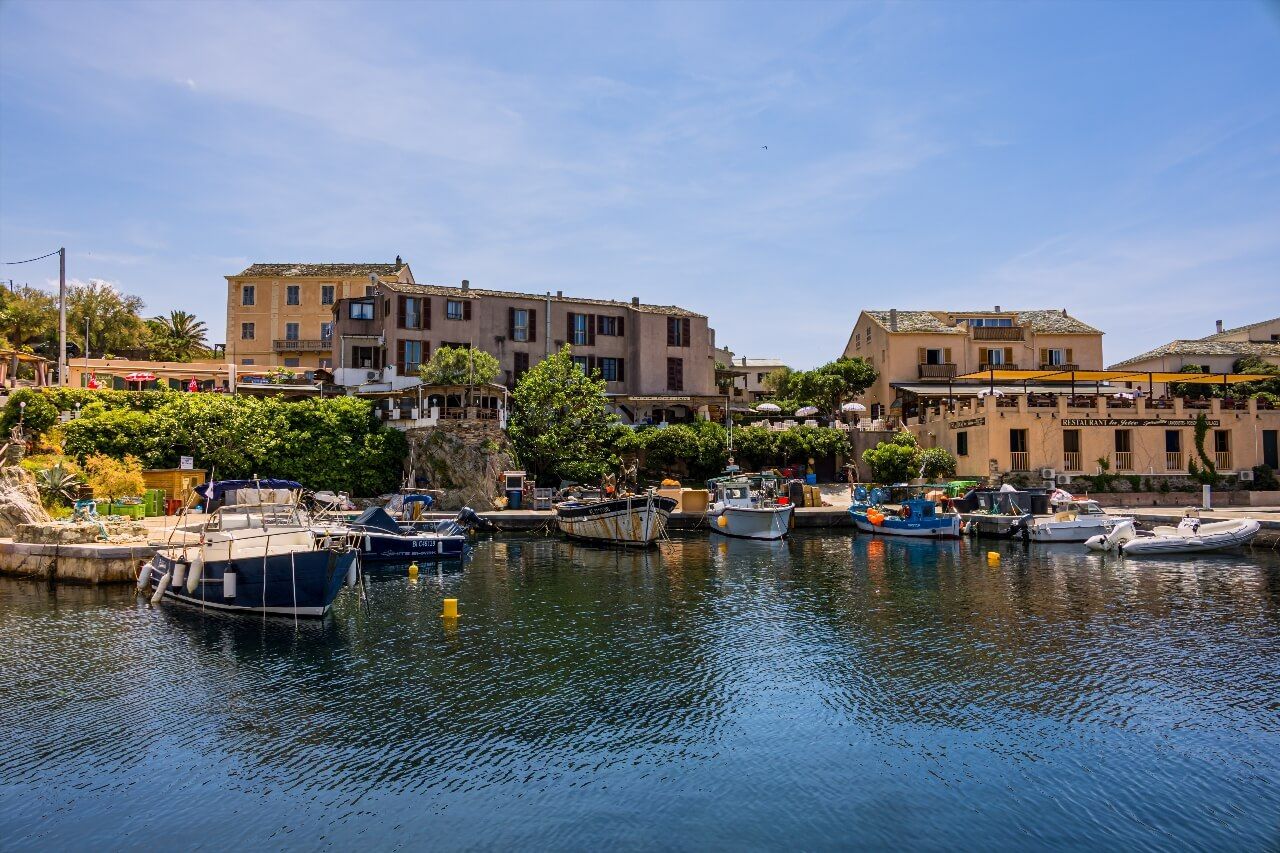
At the tip of Cap Corse, 60 kilometers from Bastia, Centuri (Port de Centuri, 20238 Centuri, rated 4.6/5 on Google with 1,578 reviews) is one of the few genuine artisanal fishing ports still in operation on the island. Around 80 boats operate here, a large proportion dedicated to red lobster fishing — a speciality that has built the village's gastronomic reputation well beyond Corsica.
The village is built around a natural harbour protected by a small island, Capense, connected by a breakwater. The houses with roofs of green serpentinite — this local stone cut into tiles — give Centuri a unique colour found nowhere else in Corsican heritage. Some of these houses date from the 16th and 17th centuries and have retained their original facades despite successive restorations.
The harbour square is home to six or seven restaurants serving grilled lobster, bisque, or "à la centurina" (cooked with tomatoes and maquis herbs). Prices range from 45 to 75 euros for a full lobster menu, but the freshness of the produce justifies the investment if you're only there once. Avoid the most visible restaurants from the quay — the best addresses are tucked away in the side streets, known to Bastia locals who come on Sundays.
For hikers, the coastal trail toward Mute (3 km to the north) offers a bird's-eye view of the harbour from the heights of the cape. Bring water and allow about 2 hours round trip.
Patrimonio, the Vineyards and Limestone Towers
Just 20 kilometers from Bastia in the direction of Saint-Florent, Patrimonio (Village de Patrimonio, 20253 Patrimonio, rated 4.5/5 on Google with 876 reviews) is Corsica's first AOC wine appellation, created in 1968. The village itself, perched on a white limestone hill amid the vineyards, is small — 700 year-round residents — but its viticultural identity makes it a unique stop on any tour of the villages around Bastia.
The torre (menhir statue) of Patrimonio is the first thing you notice on approach: a Bronze Age carved menhir statue displayed in an open-air museum right at the village entrance. It dates from around 900 BC and depicts a stylised human figure, one of the best preserved on the island alongside those of Filitosa in the south.
The San Martin church at the heart of the village is a 17th-century baroque building constructed in local limestone. Its white facade contrasts sharply with the surrounding maquis and vineyard landscapes, and it is frequently photographed from the approach roads. Inside, several painted works merit attention, notably an 18th-century painting depicting Saint Martin sharing his cloak.
For wine tastings, around ten estates welcome visitors without prior reservation between May and September. Domaine Orenga de Gaffory and Domaine Gentile are the most acclaimed, offering muscats and reds of great refinement. Expect to pay 8 to 15 euros per bottle depending on the vintage — reasonable prices for a quality AOC.
Patrimonio also hosts a nationally renowned classical guitar festival every summer in July, attracting musicians from around the world to this setting of vineyards and white limestone.
Pino, the Secret Balcony Above the Tyrrhenian Sea
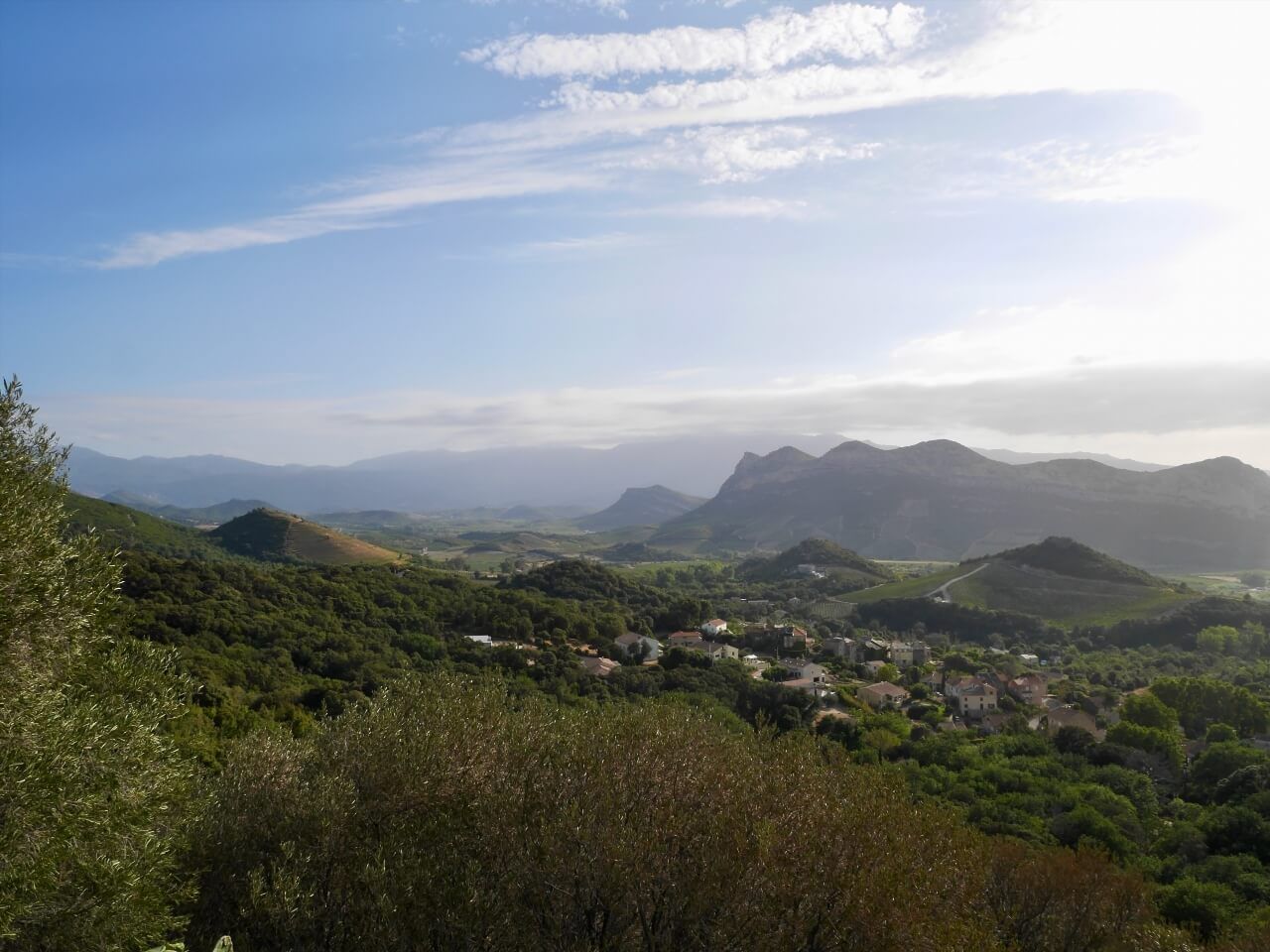
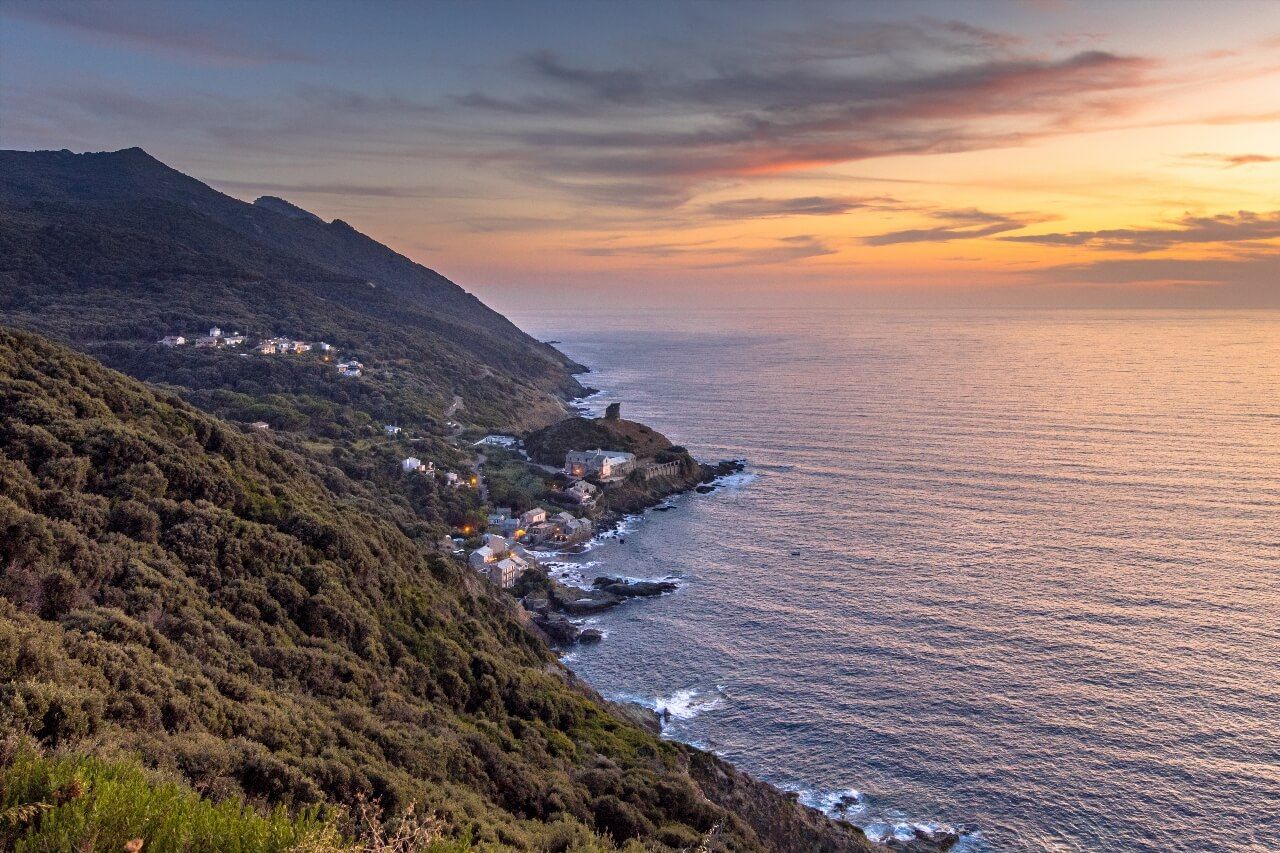
Pino is a village you discover almost by accident, while heading up the western coast of the Cap. 52 kilometers from Bastia, it clings to a steep slope facing the sea, with views stretching on clear days as far as the island of Elba and sometimes the Tuscan coast.
The village has fewer than 200 permanent residents and has no beach directly accessible from its alleyways. But its 16th-century Franciscan convent, restored in the 19th century, is one of the best maintained on the Cap: its shaded cloister and church are open to visitors from May to October. Nearby, the cemetery of Pino holds the graves of a dozen families from the Corsican diaspora who returned from Puerto Rico and Cuba in the 19th century — the headstones bear witness to a migratory history that is often overlooked.
The road through Pino is so narrow that motorhomes cannot pass, which protects the village from summer overcrowding. From the main square, a steep path descends to a rocky cove perfect for swimming: allow 25 minutes going down and 35 minutes to climb back up.
Pino is ideally visited after Nonza and Centuri, travelling anticlockwise from Bastia, to complete the Cap loop at your own pace.
Saint-Florent, the Chic Harbour 30 Kilometers from Bastia
At the gateway to the Nebbio, Saint-Florent is technically a town of 1,800 inhabitants rather than a village, but its size and atmosphere make it an unmissable stop on any circuit around Bastia. At 30 kilometers via the col de Teghime, it is the most accessible excursion from the Corsican capital.
Saint-Florent's marina is packed with sailboats and catamarans in summer, and its quays come alive until midnight with fish restaurants and nautical fashion boutiques. This chic seaside atmosphere has earned it since the 1980s the nickname "the Corsican Saint-Tropez" — a reputation that attracts as many visitors as it irritates locals.
But Saint-Florent also has a lesser-known historical side: the Nebbio Cathedral, just outside the town centre, is a masterpiece of Pisan Romanesque art built in the 12th century. Its beige limestone facade, with its blind arcades and stylised animal carvings, is one of the finest in Corsica after the cathedral of La Canonica, near Bastia. It can be visited free of charge and is a 10-minute walk from the harbour.
From Saint-Florent, a shuttle boat departs twice daily (in high season) for the Loto beach and the Saleccia beach, two of the island's most beautiful white sand beaches, accessible only by sea or dirt track. The crossing costs around 15 euros return and can be booked at the harbour on the morning of travel.
The col de Teghime, on the road between Bastia and Saint-Florent, offers a 360-degree panorama over both coasts of Corsica: the Tyrrhenian Sea to the east, the Gulf of Saint-Florent to the west. Allow 10 minutes to stop here at sunset.
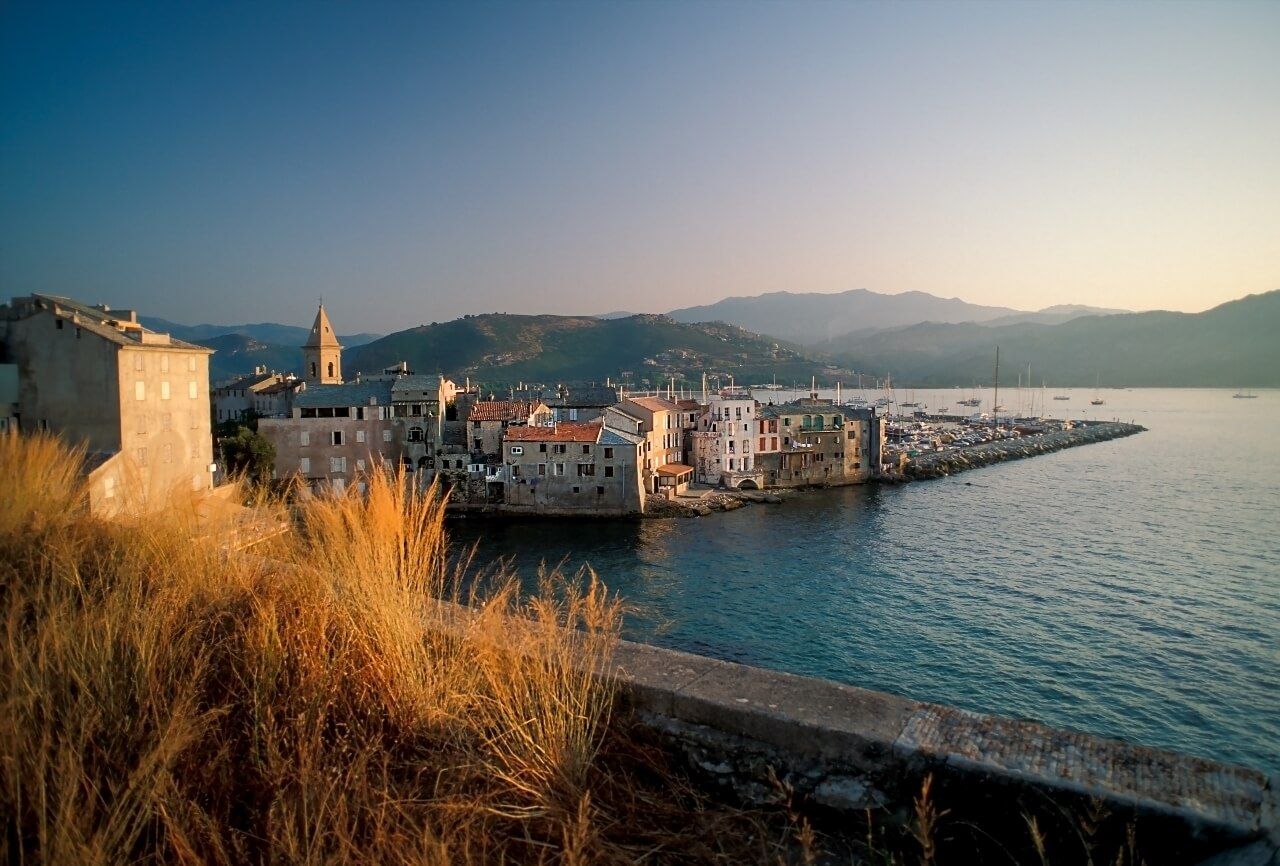
Santa Maria di Lota and the Conca d'Oro: Bastia's Balcony Villages
Less than 15 kilometers from Bastia, the villages of the Conca d'Oro form a little-known heritage ensemble: five communes perched in the immediate hinterland of the city, facing the Tuscan archipelago, each endowed with stone architecture and its own distinct identity.
Santa Maria di Lota (Village de Santa Maria di Lota, 20200 Santa Maria di Lota, rated 4.4/5 on Google with 287 reviews) is the most accessible: 10 kilometers from the port of Bastia, its terraces offer a sweeping view over the city and the sea. The village is made up of several hamlets — Miomo, Pietranera, Silgaggia, Pozzo — each with its own chapel and grey schist houses. The baroque chapel of San Quilico in Silgaggia dates from the 17th century and preserves a painted altarpiece of rare quality.
San Martino di Lota is 12 kilometers from Bastia and sits even higher: the village served as the summer residence of the bishops of Bastia for several centuries, and its terraced gardens still bear witness to that prosperous era. From the main square, the panorama stretches along the coastline as far as Erbalunga to the north.
The other villages of the Conca d'Oro — Ville-di-Pietrabugno, Santo Pietro di Tenda, Ste-Marie-Sicché — each merit a stop for their granite fountains, traditional wash houses, and communal bread ovens still visible in the alleyways. A 12-kilometer circular walk links these villages along a marked trail starting from the Bastia tourist office.
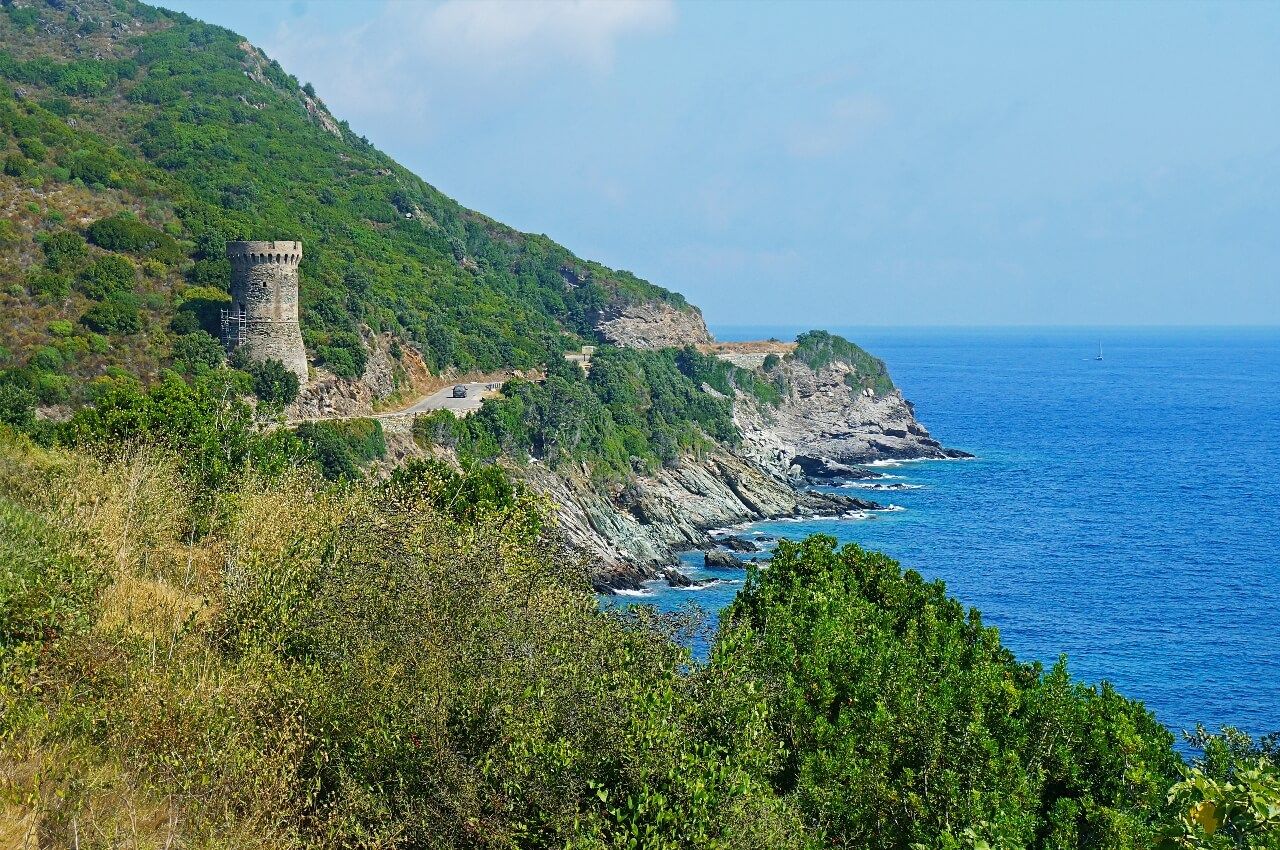
Sisco, Between Maquis and Medieval Towers
Just 15 kilometers north of Bastia on the eastern coast of the Cap, Sisco (Village de Sisco, 20233 Sisco, rated 4.3/5 on Google with 198 reviews) is a sprawling commune encompassing several hamlets in a steep valley descending to the sea. The village of Sisco proper sits on higher ground, set back from the small pebble beach that borders the coastal road.
The main attraction of Sisco is the fortified church of San Michele, built on the ruins of a medieval castellu. The 12th-century structure was fortified several times and retains architectural elements from four different periods, all visible in the same facade. The interior houses several ex-votos and a 15th-century bell. The climb to the church from the lower village takes 20 minutes on a paved path.
The Sisco valley is also one of the best spots in Cap Corse for observing migratory birds in autumn — golden orioles, redstarts and lesser kestrels stop over in the centuries-old olive trees in September and October. Birdwatching hikers will find a richness often absent from the usual tourist hotspots.
For swimming, the Sisco beach (or marine de Sisco) is a calm pebble beach, little known to passing tourists, with a single seaside restaurant serving grilled local fish.
Brando and Its Hillside Hamlets
Brando (Commune de Brando, 20222 Brando, rated 4.4/5 on Google with 143 reviews) is a commune that encompasses Erbalunga but extends mainly inland, up the slopes of Cap Corse. Several hamlets make up this territory: Morsiglia, Pietracorbara, Pozzo and Silgaggia are among the most rewarding to explore if you want to venture off the main roads.
Morsiglia, at 600 meters altitude, has around forty year-round residents. Its baroque church and black granite houses give the hamlet an end-of-the-world atmosphere, reinforced by the almost complete absence of tourist signage. In summer, a few rural gîtes offer charming accommodation for stays of two or three nights.
Pietracorbara, for its part, is known for its large sandy beach — one of the few on this eastern side of the Cap — and for its terraced citrus groves. The combination of sea and mountain is expressed here with particular clarity: from the beach, you can see the forested slopes rising immediately behind the coastal strip.
The commune of Brando is served by Haute-Corse buses from Bastia, but the frequency is low (2 to 3 services per day in summer). Having a vehicle is essential for exploring the inland hamlets.
Lama, the Medieval Village of the Ostriconi
Lama is 70 kilometers from Bastia via the D181, about 1h15 of driving in a south-westerly direction. This village, classified as a "green holiday resort", is one of the best preserved in northern Corsica, with an almost intact medieval architectural ensemble dating back to the 15th century.
The village is perched at 550 meters altitude above the Ostriconi valley, with an unobstructed view of Corsica's central mountain range. Its cobbled alleyways, schist houses and arches spanning the passages between buildings give the impression of a village spared from over-modern restoration — unlike some Mediterranean villages turned into living museums for tourists.
Lama is known across the island for its European Rural Cinema and World Festival, held every year in early August since 1994: open-air screenings in the alleyways, meetings with Corsican and mainland filmmakers, and a unique atmosphere that blends year-round residents with passing visitors. The Haute-Corse Tourist Office announces dates every spring.
Around the village, hiking trails allow you to reach Monte Astu (1,535 m) in a full day of sustained walking. For a shorter walk, the water mill trail (2 hours return, 200 m of positive elevation gain) follows a stream through shaded chestnut groves.
Lama is also a natural stop if you are exploring the Balagne region (Pigna, Belgodère, Speloncato), reachable in an additional 30 minutes of driving to the west.
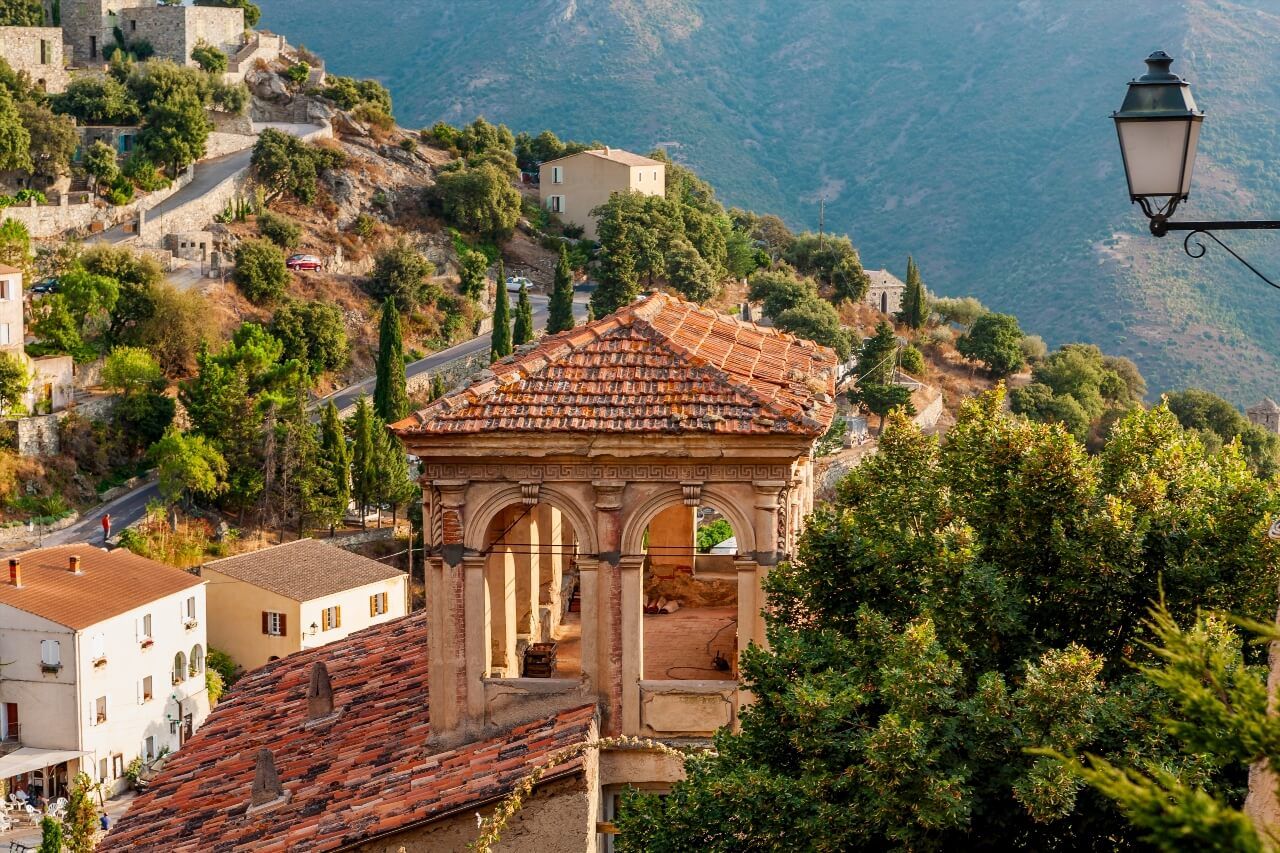
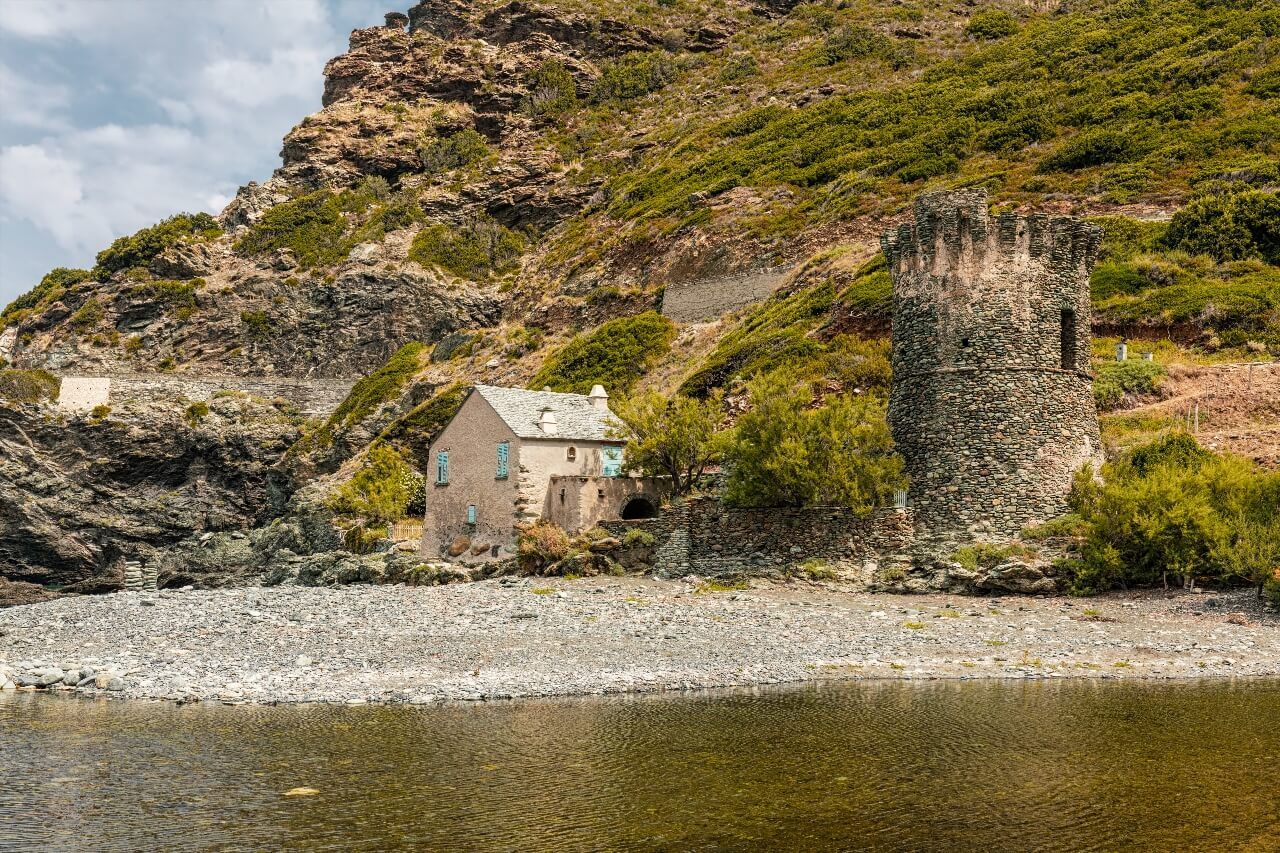
Olmeta-du-Cap, the Village at the End of the Customs Officers' Trail
Olmeta-du-Cap (Village d'Olmeta-du-Cap, 20217 Olmeta-du-Cap, rated 4.6/5 on Google with 13 reviews) is one of Cap Corse's best-kept secrets. 38 kilometers from Bastia on the eastern coast, this small village of 150 permanent residents is organised around a Romanesque church and a handful of schist houses that seem to have escaped the passage of time.
Olmeta's distinctive feature is its access to the customs officers' trail of Cap Corse — the famous northern Mare e Monti — which follows the coastline and links Olmeta to several neighbouring villages. From the village, a section of the trail descends to a rocky cove in 40 minutes: one of the finest wild swimming spots on the Cap, with no managed beach or lifeguard.
The village also hosts, in a restored old sheepfold, the workshop of a Corsican ceramicist who works with local clay and welcomes visitors on certain summer afternoons. This is the kind of address that appears on no official website — ask at the village grocery store to find out whether the workshop is open.
As with most Cap Corse villages, parking is non-existent and the alleyways are impassable for large vehicles. Park at the village entrance and continue on foot.
How to Organise Your Circuit from Bastia
Most of the villages in this guide fit into two distinct circuits from Bastia, each doable in a full day.
Cap Corse circuit (approximately 130 km, full day): Bastia → Erbalunga → Sisco → Brando → Pino → Centuri → Nonza → return via the col de la Serra. This complete loop of the cape is ideally done clockwise (eastern coast first) so that the sun is behind you at the end of the day in Nonza.
Nebbio and hinterland circuit (approximately 90 km, half-day or leisurely full day): Bastia → col de Teghime → Patrimonio → Saint-Florent → return via the Conca d'Oro. This circuit combines vineyards, Romanesque architecture and the landscapes of the Gulf of Saint-Florent.
For Lama, plan a dedicated day or include it in a longer stay with an overnight stop. The village is 70 km from Bastia, but the mountain pass roads make the journey longer than it appears.
The Ryo audio guide for Bastia, available on the app, features several points of interest in the city that you can combine with these excursions — starting or ending your day in the historic old town of Bastia. The Bastia Ryocity (21 audio stops, approximately 1h30 of walking) acts as a connecting thread between your various excursion days around the Cap.
When to Go and Practical Information
The best period for these getaways in Cap Corse and the Nebbio is May–June and September–October. Temperatures are pleasant (20–27°C), the roads of Cap Corse are passable without traffic jams, and the restaurants in villages like Centuri or Erbalunga are fully operational without being overcrowded.
July–August: peak traffic on the Cap roads. Some villages such as Erbalunga and Saint-Florent are packed between 11am and 4pm. Leaving before 9am or after 5pm remains the best strategy.
Winter (November–April): the majority of restaurants and gîtes are closed. The Cap roads can be slippery after rain. On the other hand, the villages are in their authentic everyday reality, and accommodation prices in Bastia are two to three times lower than in high season.
Transport: a rental car is essential for exploring most of these villages. Haute-Corse buses (Corsicar lines) serve Erbalunga, Saint-Florent and a few points along the Cap from Bastia, but not the most elevated villages.
FAQ
What are the most beautiful villages of Cap Corse around Bastia?
Nonza, Centuri, Pino and Erbalunga are the most photographed and most visited. Nonza stands out for its black pebble beach and Genoese tower; Centuri for its fishing port with green rooftops and lobster; Pino for its Franciscan convent and views over the Tyrrhenian Sea. Erbalunga, closer at 8 km, is ideal for a quick first visit from Bastia.
Can you visit the villages around Bastia without a car?
Partially. Erbalunga is accessible by bus from Bastia (Corsicar line, departing from the bus station, about 20 minutes). Saint-Florent is served by a seasonal shuttle. For the hilltop villages of Cap Corse (Nonza, Pino, Centuri) or the inland villages (Lama, Patrimonio), a rental car is essential. Budget between 40 and 60 euros per day in high season.
How far are the Cap Corse villages from Bastia?
Distances vary greatly depending on the location on the cape. Erbalunga is 8 km away (15 minutes), Santa Maria di Lota is 10 km, Patrimonio is 20 km. Nonza is 55 km (1 hour), Centuri is 60 km (1h15) and Pino is 52 km (about 1 hour). The D80 road of Cap Corse is winding and narrow, which explains why distances take longer than on the mainland.
Are there any typical Corsican villages labelled 'Plus Beaux Villages de France' around Bastia?
No, none of the villages in the immediate surroundings of Bastia appear in the national 'Plus Beaux Villages de France' label for Corsica. In Corsica, this official label only applies to Sant'Antonino, in the Balagne region (about 90–100 km from Bastia), and Piana, in the Gulf of Porto, much further south. This in no way diminishes the quality of the Cap Corse villages, which often benefit from superior architectural preservation.
Where can you eat well in Cap Corse and the Nebbio?
Centuri is the gastronomic reference of the Cap for grilled lobster (expect 50–70 euros per person). Erbalunga has several fish restaurants on the harbour (35–55 euros). Saint-Florent offers the widest choice with around ten addresses on the quays, ranging from lobster sandwiches to fine dining restaurants. Patrimonio is unmissable for Corsican wine tastings with boards of local charcuterie and cheeses.
Can you swim at the villages of Cap Corse?
Yes, but not everywhere in the same way. Erbalunga has a small pebble beach accessible on foot. Sisco has a calm pebble beach. Pietracorbara (commune of Brando) offers a large sandy beach. Nonza has a long, spectacular black pebble beach but with a steep approach. The wild coves around Olmeta-du-Cap and Pino are accessible on foot from the villages.
What is the best season for these excursions from Bastia?
May, June and September are the best months: ideal temperatures between 22 and 28°C, sea temperature of 21–23°C from June, roads passable without congestion. July and August remain pleasant but the most popular villages (Erbalunga, Centuri, Saint-Florent) are overcrowded between 11am and 4pm. Autumn, especially October, offers exceptional light on the Cap cliffs and significantly lower accommodation prices in Bastia.
Conclusion
From the black beach of Nonza to the vineyards of Patrimonio, from the alleyways of Erbalunga to the serpentinite rooftops of Centuri, the villages around Bastia form a territory of remarkable diversity across just 130 kilometers of road. Each village has its own identity, shaped by its geology, its history and its people — a richness you will appreciate all the more by taking the time to stop rather than rushing through everything in a single day.
Start with the Bastia Ryocity to immerse yourself in the Genoese architecture and harbour atmosphere of the Corsican capital, then venture out to these villages at your own pace and according to your interests. To deepen your stay, the article The Best Places to Visit in Haute-Corse complements this guide with other lesser-known stops in the region.