
Créé par Emilie, le 20 juin 2026
Votre guide Ryo
What to do in the Basque Country?
© Shutterstock
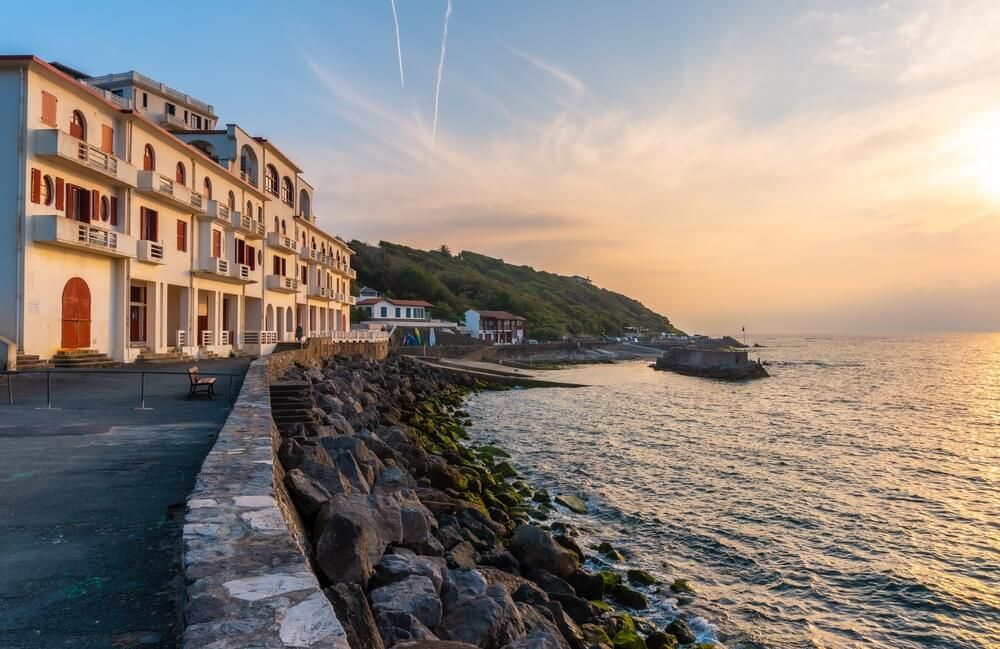
Located in the extreme southwest of France, bordered by Spain to the south and the Landes to the north, the Basque Country is known for its capital, Bayonne, the beaches of Biarritz, a haven for surfers, Saint-Jean-de-Luz between mountains and beach, Sare which has been classified among the most beautiful villages in France, and Saint-Jean-Pied-de-Port, a stop on the Camino de Santiago...
Traveling to the Basque Country means discovering its customs that are still deeply rooted, its dialect still widely spoken in the region, its gastronomy, and its legends. Sports and nature enthusiasts will not be left out, the very green landscapes are the counterpart of a relatively rainy climate throughout the year, but mild.
Celtic influence has strongly marked Basque culture, you will find menhirs and dolmens there like in Brittany! Between coast and mountains, set off to discover a country of character, but one that does not lack generosity.
Whether with family, friends, or solo, our tours will allow you to fully immerse yourself in this region that doesn't lack spice!
A multifaceted climate in the Basque Country
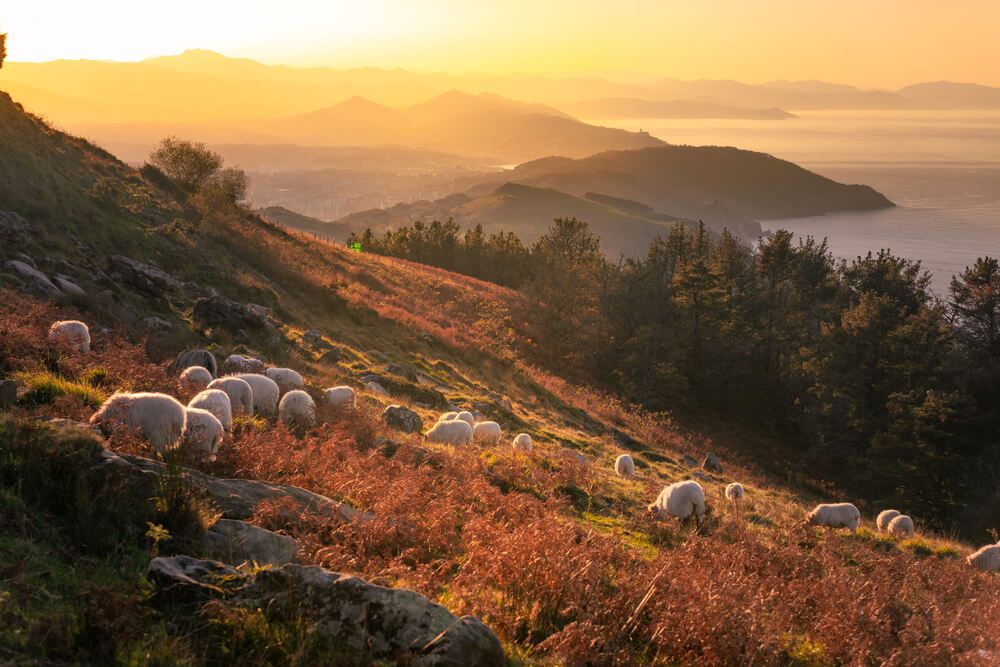
In the north of the Basque Country, on the French side, the climate is rather temperate and mild thanks to the Gulf Stream and the Pyrenean barrier, the average annual temperature is about 13°C. Winters are mild, as are autumn and spring, even though the latter tends to be rainy. Summer temperatures are not scorching.
In the south of the Basque Country, the vast Navarre combines several types of climates: a humid and cool climate from north to west, quite rainy, and in the south, it's desert.
It is therefore pleasant to visit the north of the Basque Country in summer and the first 15 days of September, and the south of Navarre in June as well as in September (or even October for the best years).
History of the Basque Country
The caves of Isturitz present very beautiful cave paintings dating from -35,000 years BC, subsequently, the Celtic people greatly marked the region with their imprint both in terms of language and materials used: aligned menhirs as well as dolmens testify to the importance of this culture in the mountains of Navarre, in the south of Guipuscoa and Biscay.
Upon their arrival, the Romans created a road, took control of the Basque ports, introduced the vine and exploited the ore. The "Vascons" who represented the largest ethnic group among the Basques, took refuge in the mountains upon their arrival and would only come down after the fall of the Roman Empire to found an independent and egalitarian society.
Then the invasion of the Goths brought Christianity which gave birth to all the traditional patron saint festivals of this region.
In the Middle Ages, the Basques were alternately French or Spanish, before becoming definitively French. From the 19th century, the feeling of nationalism developed at the same time as tourism. Numerous conflicts and extremist actions by armed independence groups, to which were added unkept promises from French president F. Mitterrand or the Spanish government, meant that appeasement could not occur before the end of the 90s.
Sports and leisure in the Basque Country
Very many activities are offered, some of which you will only find in the Basque Country:
What typically Basque activities can you do?
- Basque Pelota games,
- Cesta Punta, derived from the game of palm, the ancestor of tennis,
- Bare hand, pelota game without instrument,
- Chistera, pelota played with a wicker glove,
- Basque strength games (tug of war, lifting straw bales, long sawyers...),
- Bullfighting,
- Golf,
- Rugby!
Other activities in the Basque Country
As everywhere, you can do:
- Walking hikes, for example, along the Basque Corniche or in the mountains.
- Sea activities: surfing, parasailing, fishing, sea trips.
- But also mountain biking, climbing, rafting, and other whitewater sports.
What to do in the Basque Country?
From Bayonne to Saint-Jean-de-Luz, you'll be spoiled for choice.
1 – Visit Bayonne
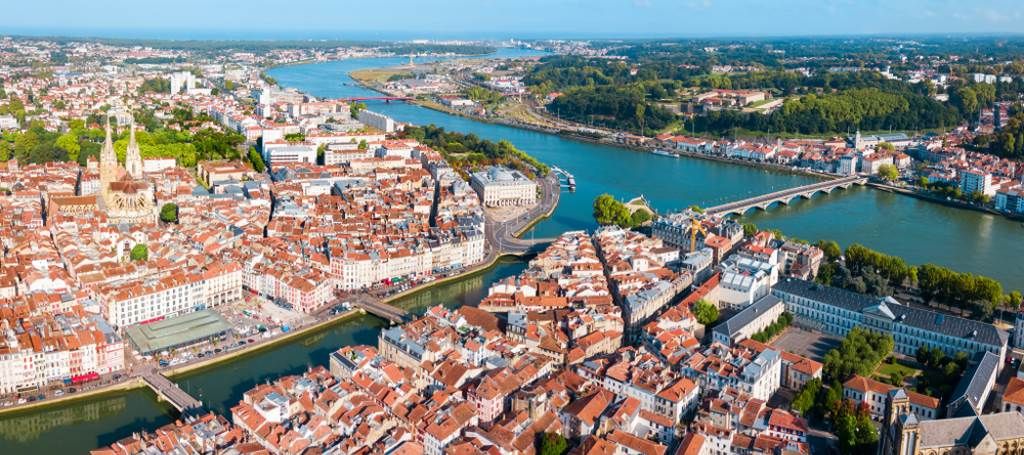
This city of Art and History can be visited without moderation in a well-preserved old center where half-timbered houses, Gothic art and Art Deco rub shoulders. The historic heart of Bayonne has several classified sites such as the Gothic cathedral Sainte-Marie, classified as World Heritage under the Santiago de Compostela routes, and listed as UNESCO world heritage.
To see: the chapel canvases and its superb stained glass windows, the cloister which houses remarkable sepultures.
- The Basque and History of Bayonne Museum,
- The Bonnat-Helleu Museum (fine arts museum),
- The Chocolate Workshop, with an exhibition of old machines, a view of the chocolate manufacturing and assembly premises. Chocolate tasting and sale on site,
- The Ham Museum Charcuterie Aubard,
- The Bayonne Arena from the 19th century,
- The French Beret, a must-see. Discover the different stages of making a beret in the only production in the Basque Country, where ancestral know-how and modern technologies complement each other.
- The Natural History Museum
- The Bayonne Festival in July...
2 – Visit Saint-Jean-de-Luz
Saint-Jean-de-Luz is distinguished by its shipowners' homes from the 17th and 18th centuries which testify to the wealth of the city. Also to see: the church of Saint-Jean-Baptiste and the church of Saint-Vincent.
- The lighthouses and Vauban's military fort magnificently enhance the coastline.
- The city is also renowned for its seaside tourism.
- The Louis XIV House is a testimony to the life of rich Luzien shipowner families of the 17th century.
- Its fishing port.
- Its artisanal shops.
- Take a break to taste the macaroons, mouchous (a sort of macaroons), kanougas (fondant caramels), and Basque cherry tart, specialties of the area.
3 – Visit Biarritz
The city of Biarritz has much to offer. A seaside resort since Empress Eugenie, wife of Napoleon III, fell in love with what was then just wild land, many tourists flock each year to discover the pearl of the Basque Country.
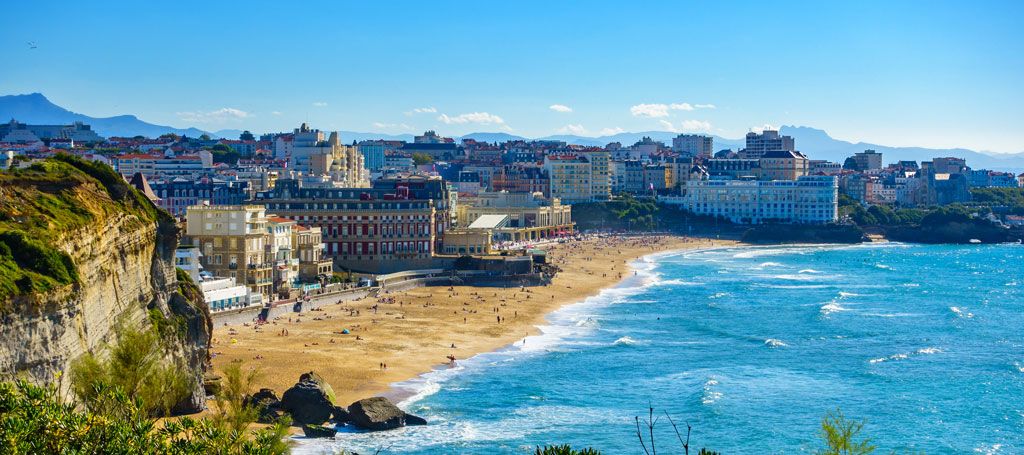
Formerly a fishing village that hunted whales, the installation of the imperial couple in their summer residence made it the place where one had to be seen by high society and crowned heads. Many sites are directly linked to the imperial couple:
- The church "Sainte Eugenie", its magnificent stained glass windows, its crypt and the Imperial Chapel
- Hotel du Palais (formerly "Villa Eugenie", the imperial couple's holiday residence)
- The Imperial Chapel
- The Rock of the Virgin, protector of fishermen, was built by order of the emperor to establish a refuge port. Access is via a footbridge built by Gustave Eiffel.
- The "Imperial Festivals", with balls, fireworks, country or sea excursions, which aimed to welcome diplomatic guests in the best possible way.
- The Ocean City: 3D animations that make you dive into the heart of the ocean, a 4D dynamic cinema, surf simulators, virtual reality masks that will make you either board a Seaborg or dive into the ocean while staying dry... You will learn a lot about the ocean in a fun way, an attraction for young and old.
- World-renowned surf beaches, Biarritz is the historic capital of surfing in Europe, it is known to be one of the best surf spots in the world.
- Seaside infrastructure, promenades, villas and palaces...
- Miramar Beach: less touristy than the Grande Plage, it is quieter and full of charm
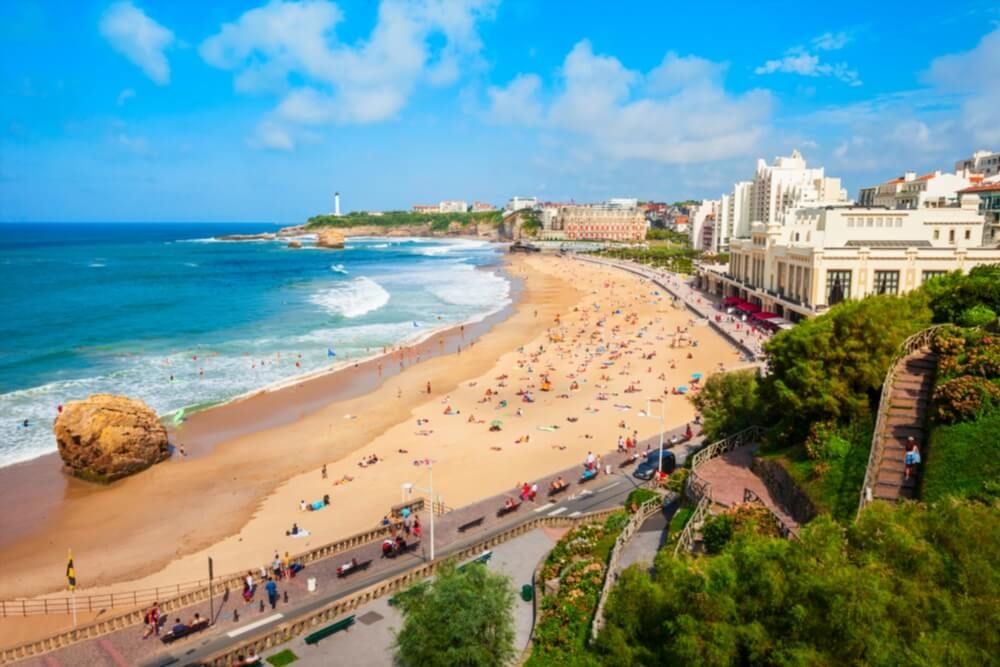
- Grande Plage: the most famous facing the Casino, you will enjoy a magnificent view of the lighthouse and Hotel du Palais
- Port-Vieux: small cove that has delighted families and children
- Côte des Basques: beach appreciated by surfers for its idyllic setting and its view
- Marbella Beach: it has managed to keep a wild character
- Milady Beach: its landscaped promenade and its handiplage point offers access to people with reduced mobility
4 – Visit Anglet
You will discover in Anglet, 5 km of fine sandy beaches, appreciated by surfers, it is where the World Surf League takes place in August. The Silver Coast or "Chambre d'Amour" is a place that attracts a large number of lovers with its cave and its magnificent view of the Atlantic...
5 – Visit Hendaye
On the border with Spain, this seaside resort is the 3rd marina in the region, you will find a very large number of nautical activities at Txingudi bay, in particular. Window shopping enthusiasts will not be left out with the many shops present in the city.
6 – Visit La Rhune
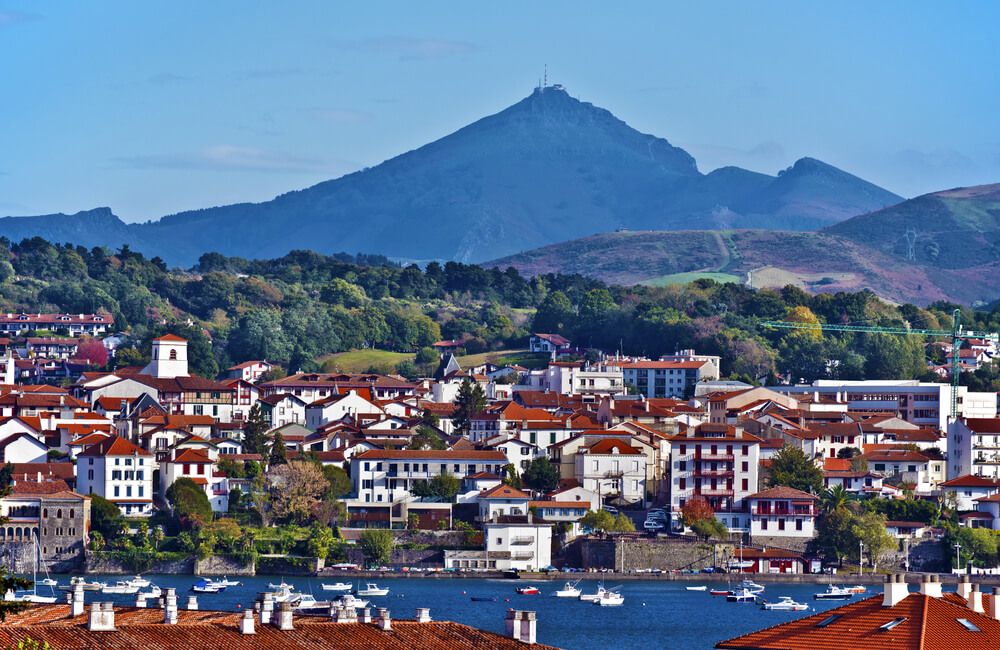
At 905 m altitude, in the heart of the peaks of the Pyrénées-Atlantiques, the Rhune massif offers a plunging view over the Basque Country and the ocean. Hiking enthusiasts will be in paradise, they will be able to observe in complete tranquility the manech sheep or the small Basque horse the pottok.
So that your circuit is complete, don't forget to take the railway line that connects France to Spain from Sare, aboard a vintage rack railway train. An unforgettable ascent that will transport you to ancient times.
7 – Discover the caves of Isturitz and Oxocelhaya
A 1-hour guided tour into prehistory and geology: engravings, plaques and clay constructions from the Paleolithic.
8 – Visit Villa Arnaga
This house built at the request of Edmond Rostand is a replica of old Basque farms with white and red facade, it is here that the characters of Cyrano de Bergerac and Jules Massenet were born. This classified historic monument opens onto a magnificent 15-hectare garden. Also to discover, the theatrical fresco made by Jean Veber.
9 – Visit Itxassou
This village is renowned for its cherries, the July event attracts thousands of tourists each year, as does its very particular setting between plains and mountains which gives it an almost supernatural aspect.
10 – Visit Espelette
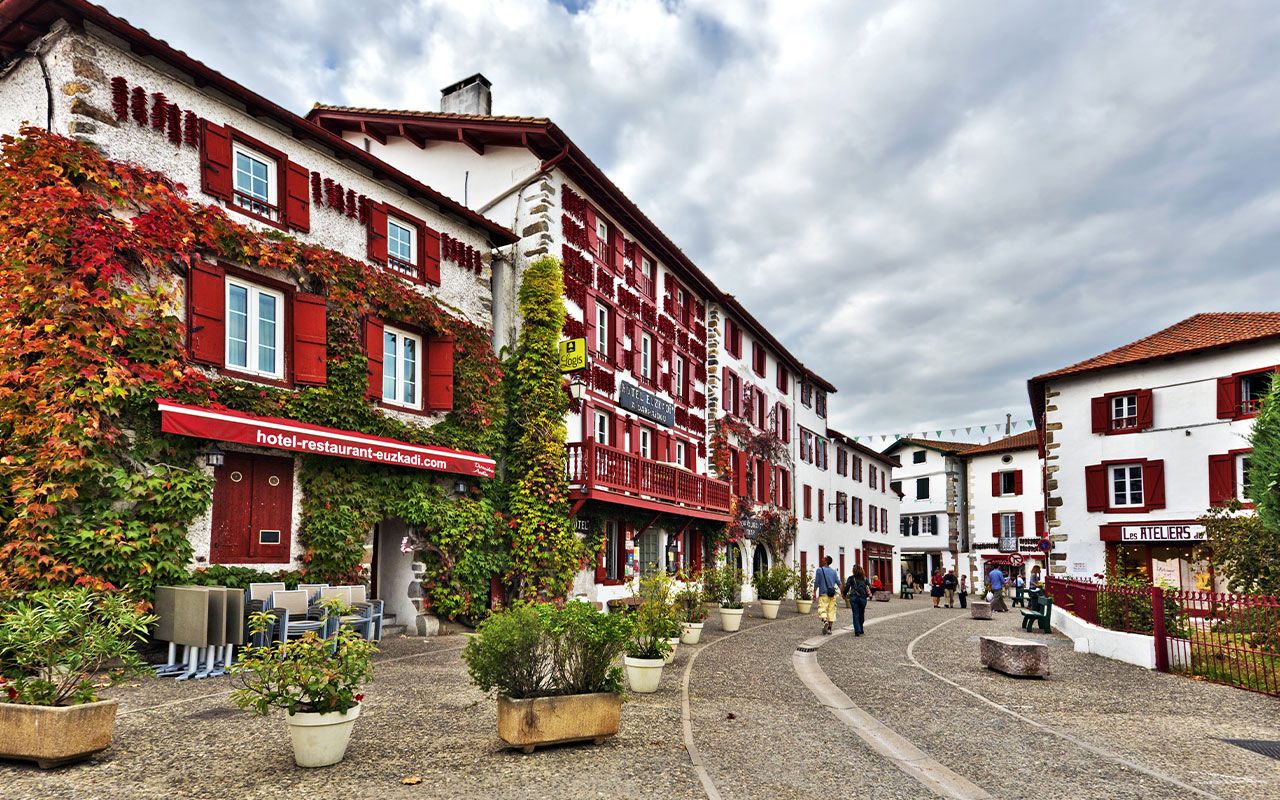
All those who love chili pepper surely know the one from Espelette! Many local specialties are based on this emblematic ingredient of the region. We enjoy strolling through the streets of Espelette, through the typical red and white houses, its small alleys, and its beautifully flowered balconies.
11 – Discover the Holzarte footbridge
If you're not afraid of heights, crossing this footbridge over the Olhadubi gorges at 180 m height won't be a problem for you! You will benefit from an exceptional view of the wild canyon. Then turn towards the Kakuetta gorges, the platforms lead you to the cave of the same name where you will admire huge stalactites and stalagmites.
Also to see:
- The Basque corniche,
- Urtubie Castle...
- The old whaling port of Guéthary
Festivals and events not to be missed in the Basque Country
Whether religious, cultural, or culinary, there are many events throughout the year in the Basque Country:
- The Saint-Vincent Festival in Ciboure and Hendaye at the end of January
- The Cider Festival in Bayonne in March or May.
- The Sea Festival in Guethary the last Sunday of May
- The Cherry Festival of Itxassou in June
- The Madeleine Festival in Saint-Palais from July 23 to 27
- The famous Bayonne Festival on the first Wednesday of August
- The Basque Strength Festival in Saint-Palais at the end of August
- The Patron Saint Festival of Urrugne in early September
- The Patron Saint Festival of Sare in mid-September
- The Guadalupe Festival in Hondarribia in September
- The Pepper Festival in Espelette on the last Sunday of October
- Basque Cake Festival on October 1st
- The Saint-Martin Festival in Biarritz in November
- The Pottocks Fair in Helette at the end of November.
- The SanFermines festival in July in Pamplona
- The Semana Grande in San Sebastian in August
- The San Martial festival in Irun at the end of June
- The Virgen Blanca festival in Vitoria Gasteiz in August
- The Carnival of Tolosa in March
- Olentzero, in the big cities of the Basque Country on the southern side, as Christmas approaches, it's the icon of the local Santa Claus
- The harvest festivals in Alava in mid-September
- The drum parade of San Sebastian on January 20
- The banderas de la concha in early September in San Sebastian.