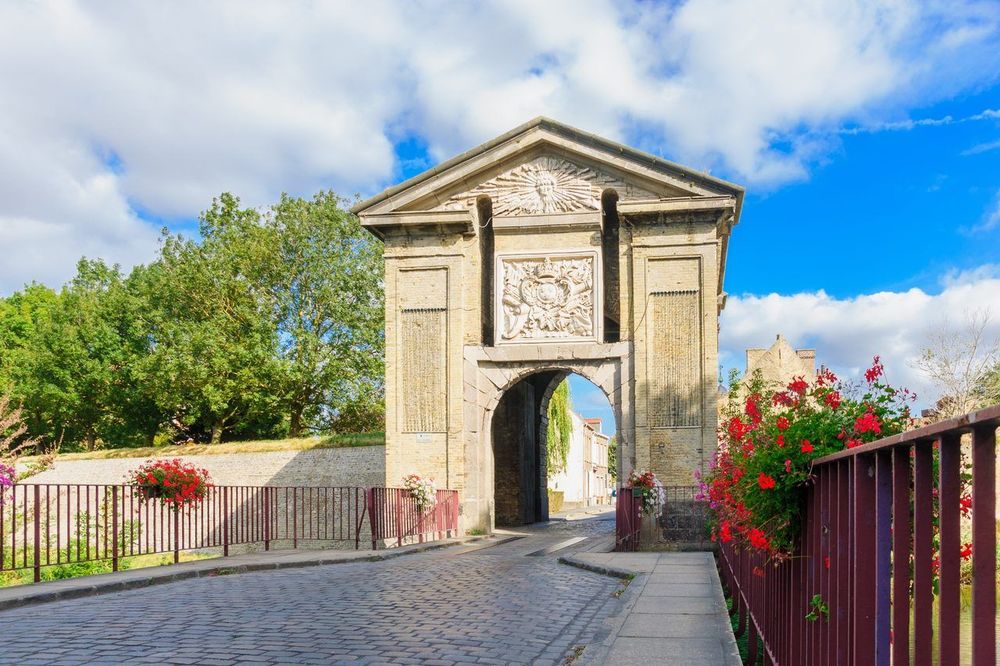
© Shutterstock
 Votre guide Ryo
What to Do in Bergues in 2026: 16 Experiences in the Fortified City of the North
On the Place de la République in Bergues, a fifty-bell carillon still chimes the hours from a belfry entirely rebuilt after 1944. This small fortified town in northern France, about ten kilometres from Dunkirk, has only around 4,000 inhabitants but boasts a remarkable defensive heritage, dominated by a belfry listed by UNESCO. Wondering what to do in Bergues is already an invitation to slow down: here, the essentials are discovered on foot, between ramparts, estaminets and Flemish facades.
Expect to encounter a carnival giant several metres tall, to taste a sausage made with Spanish spices whose recipe is jealously kept secret, and to recognise some of the locations from the film Bienvenue chez les Ch'tis, shot here in 2007. The belfry is climbed via 206 steps, the ramparts can be walked for nearly three kilometres, and a soft-rind cheese bearing the town's name is still enjoyed at a few local producers. Here are sixteen experiences to understand why this tiny town attracts so many heritage enthusiasts.
1. The Belfry of Bergues
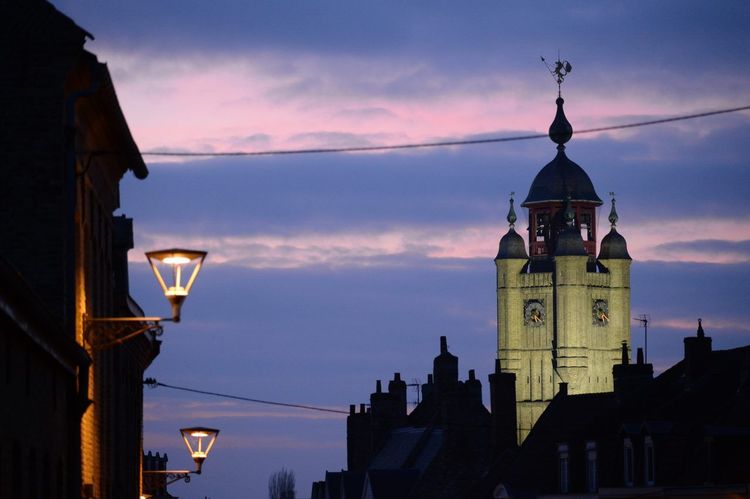
The Belfry of Bergues (Place de la République, 59380 Bergues, rated 4.6/5 on Google with 1,567 reviews) towers over the town from its height of 47 metres. Listed as a UNESCO World Heritage Site since 2005 as part of the Belfries of Belgium and France, the current structure is not, however, the one that the people of Bergues knew for centuries: the tower, rebuilt several times since the Middle Ages, was first set on fire in 1940 and then blown up by German troops on 16 September 1944, before being rebuilt between 1958 and 1961 with an identical silhouette but simplified decoration.
A carillon of 50 bells still marks the hours and plays short melodies, a role it already fulfilled when the belfry served as a watchtower controlling the town's entrances. You can climb the 206 steps of the spiral staircase to the top: the reward is a 360° panorama over the surrounding polders and the church spires of Flanders. The tourist office, based on the ground floor, organises guided ascents at set times during the high season. Allow 45 minutes for the full climb with commentary.
The current belfry follows the plan of the one built in the late 16th century, with its square silhouette topped by a golden lion serving as a weather vane, a recurring symbol of Flemish belfries. Inside, a permanent exhibition traces the history of the building through photographs taken before and after 1944, a contrast that gives a sense of the destruction the town suffered during the Second World War. It is also the best starting point for understanding the layout of the town: from the viewing platform, the bastioned outline that still encircles it can be read at a glance.
2. The Vauban Ramparts and the Fortified Belt
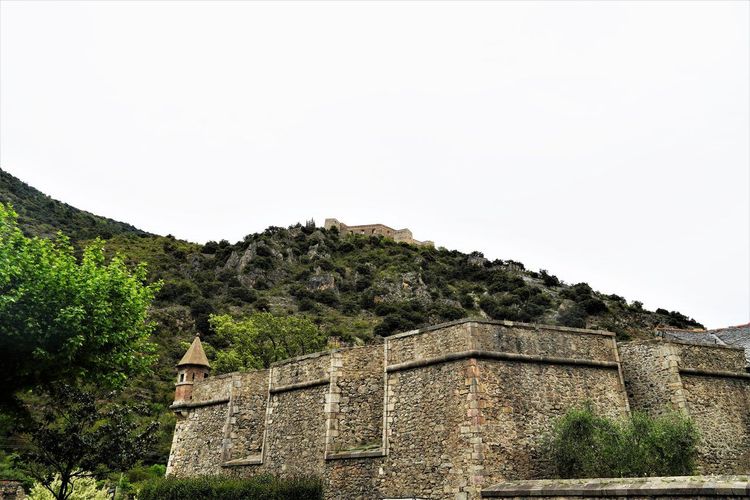
Bergues owes its current silhouette to Vauban, who redesigned between 1668 and 1699 an already ancient enclosure to make it one of the fortresses protecting the kingdom's northern border. Contrary to a common belief, the ramparts of Bergues are not among the twelve sites of the 'Vauban network' inscribed on the UNESCO list in 2008: only the belfry carries the world heritage label here. The fortifications nonetheless remain one of the best-preserved bastioned enclosures in northern France, encircling the town for nearly 3 kilometres between bastions, curtain walls and water-filled moats that are still fed today.
What strikes you on arrival is the scale: unlike better-known fortresses, Bergues has preserved its entire bastioned layout without any modern urban expansion encroaching upon it. The bastions bear names that tell the military history of the site, and some sections of curtain wall can be walked directly on foot or by bike. The moats, several tens of metres wide in places, served both for defence and for draining a naturally wet region criss-crossed with canals.
You can complete the full circuit in just over an hour at a leisurely pace, spotting the remains of postern gates and the cleared glacis that once provided an unobstructed field of fire. The interpretation panels installed along the route provide useful historical context to understand the defensive logic of the site without needing a guide.
3. The Porte de Cassel
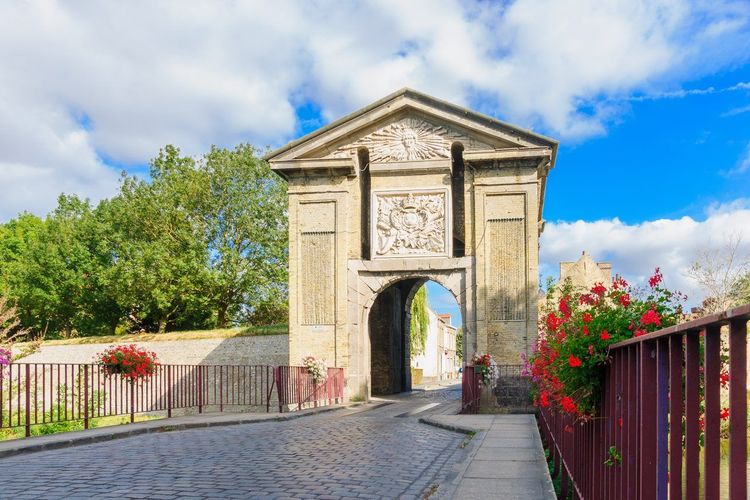
Among the town's four historic gates, the Porte de Cassel (Chemin des Remparts, 59380 Bergues, rated 4.5/5 on Google with 180 reviews) is one of the two that still stand today. Facing south, it marked the main entrance for those arriving from the interior lands of Flanders.
Its brickwork and blue stone construction remains well preserved, with a vaulted passageway that gives a fairly accurate sense of the size of convoys of the era. The gate serves as a convenient starting point for a walk along the ramparts, as it is just a few minutes on foot from the town centre and the Place de la République.
4. The Porte de Bierne and the Couronne d'Hondschoote
On the opposite side from the Porte de Cassel, the Porte de Bierne (Rue de Bierne, 59380 Bergues) opened onto the road leading towards Belgium and the northern polders. It has retained a more austere appearance, with firing openings still visible in the masonry.
Right beside it, the Couronne d'Hondschoote forms an outwork designed to protect this particularly exposed gate. It is one of the most complete elements of the Vauban system in Bergues: the different levels of earthworks designed to slow an assault before even reaching the main enclosure are clearly visible. A short walk from the gate allows you to walk around it without difficulty.
5. The Mont-de-Piété Museum
Housed in a former pawnbroking institution founded in the 17th century, the Mont-de-Piété Museum (Rue du Mont-de-Piété, 59380 Bergues, rated 4.3/5 on Google with 64 reviews) occupies one of the most richly decorated buildings in town, with a Flemish Renaissance facade featuring scrolled gables.
The collections include 17th-century Flemish and Dutch paintings, regional works from the 19th and 20th centuries, and a local history collection dedicated to the fortifications and life in the town before and after 1944. One room is specifically devoted to the reconstruction of the belfry, featuring original plans and archival photographs.
If you visit only one museum in Bergues, this one remains the most comprehensive for understanding the town's history beyond its outdoor monuments. The building itself is worth the visit: the pawnbroking hall, preserved in its original state, gives a concrete idea of how this Old Regime social assistance institution functioned. Allow one hour for the visit, a little more if you linger in the local history rooms.
6. The Church of Saint-Martin
The Church of Saint-Martin, a former abbey church turned parish church, presents a mix of styles that betrays its successive reconstructions: Gothic nave, classical elements and post-war restorations are layered without real unity, but with a certain charm.
Inside, some pieces of antique furnishings survived the destruction of 1944, including baptismal fonts and tombstones set into the floor. The building can be visited freely during the day, generally outside of services. Its tower, more discreet than the nearby belfry, remains a useful landmark for orienting yourself within the fairly compact network of lanes in the historic centre.
7. In the Footsteps of Bienvenue chez les Ch'tis
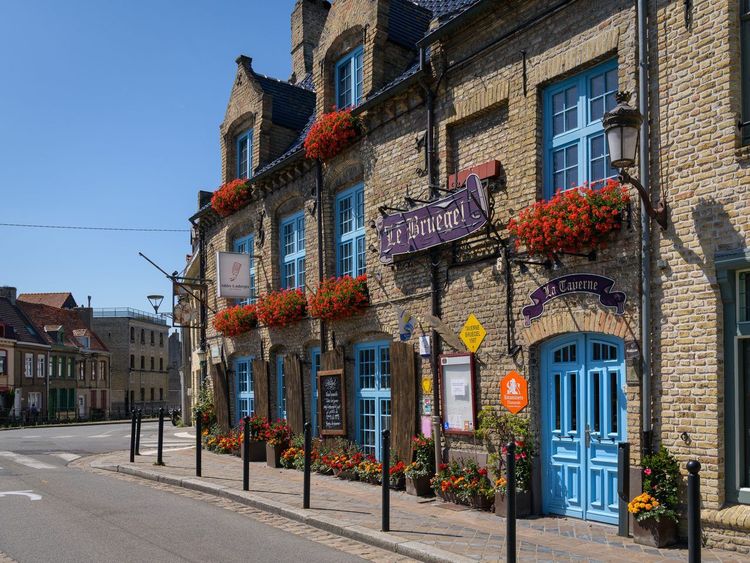
In 2007, the crew of Bienvenue chez les Ch'tis set up their cameras in Bergues for several weeks of filming. The success of the film — over 20 million admissions in France — durably linked its image to that of the town, to the point that many visitors now discover Bergues precisely for this reason.
The Place de la République, where several key scenes take place, remains the logical starting point for spotting the locations: the post office, certain facades along the main street, and of course the belfry itself, which appears on screen numerous times. A themed trail, sometimes locally nicknamed the 'Ch'ti tour', allows visitors to follow these filming locations at their own pace, map in hand or simply by strolling.
What few visitors know is that Bergues did not always welcome this fame with immediate enthusiasm: some residents feared a caricature of the region, before the popular success transformed this media exposure into a lasting tourism asset. Today, the tourist office readily offers a map of filming locations to visitors who ask for one. You will likely recognise several facades even without having seen the film recently: the town has changed very little since the shoot, which adds to the pleasure of recognition for those who have seen it.
8. Tasting the Bergues Sausage
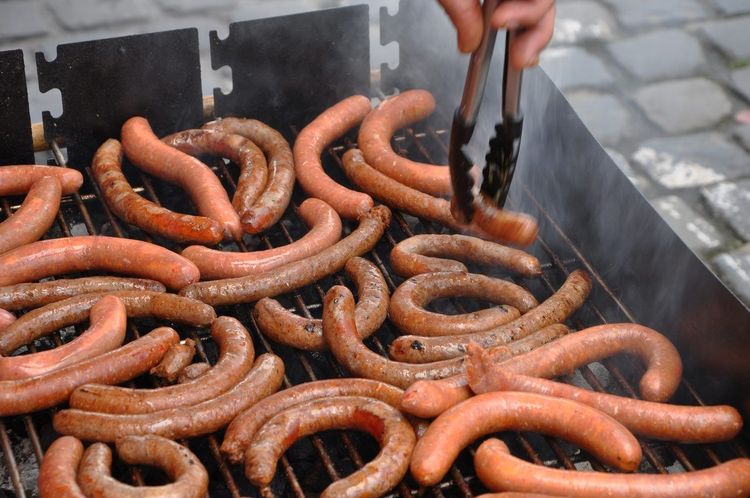
The Bergues sausage is the town's most emblematic speciality, an artisan charcuterie whose recipe, passed down from generation to generation, remains carefully kept secret. Its originality lies in its spices from Spain: tradition traces it back to the 16th century, when the fortified town, like all of Flanders, was under Spanish rule. Made from finely minced pork, it is distinguished by a smoking process that gives it its characteristic flavour, at once mild and lightly spiced.
Several charcuteries and estaminets in town offer it cooked or to take away raw to prepare yourself. You will also find it on the stalls of the Wednesday market, where local producers come to sell their products directly. For a first tasting, the version simply pan-fried with chips remains the most common preparation and the most faithful to local tradition. Some estaminets also serve it alongside a carbonnade or a potjevleesch, two other pillars of the Flemish table.
9. Vieux Bergues Cheese and Local Produce
Less well known than the sausage, Vieux Bergues is a soft, washed-rind cheese in the same family as Maroilles, produced by a few dairies in the region. Its ageing gives it a supple texture and a pronounced flavour, best reserved for lovers of characterful cheeses.
It can be found in food shops in the town centre and on certain market stalls. Paired with a regional beer and a slice of country bread, it makes a simple but representative snack from the Flemish countryside surrounding the town.
10. Estaminets and Good Restaurants
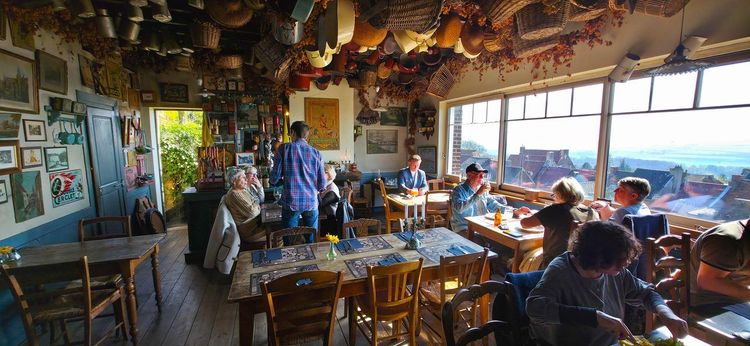
The word 'estaminet' refers to these traditional café-restaurants of northern France, where you will invariably find carbonnade, welsh and of course the local sausage. Bergues has several, mostly located around the Place de la République and in the surrounding streets, with dark wood decor, old posters and checked tablecloths that have changed little in decades.
These places often operate continuously from lunch to dinner, with a fairly short but generous menu, designed around hearty sauce-based dishes that warm you up after a winter walk along the ramparts. Service tends to be family-run, sometimes by the same family for several generations, giving these places a local rootedness that visitors notice quickly.
If you are looking for a lighter option, several bakeries and tea rooms in the centre offer simple menus featuring savoury tarts or waffles, a welcome alternative between two visits. Book ahead if possible at weekends in season, as tables at the most popular estaminets fill up quickly around midday.
11. The Monday Market
Every Monday morning, the Place de la République (59380 Bergues) transforms into a market where producers and travelling traders set up their stalls from dawn.
Cheeses, local charcuterie, seasonal fruit and vegetables sit side by side in a lively yet intimate atmosphere. It is a great opportunity to taste the Bergues sausage directly from a producer, or simply to observe local life well away from strictly tourist circuits.
12. The Bergues Carnival and Its Giant
The Bergues carnival brings together several thousand participants each year, generally in early spring: in 2025, nearly 25,000 people paraded through the streets of the small town. It is one of the last major events of the Dunkirk carnival season, with its bands of masquelours, colourful umbrellas held aloft and songs sung to the sound of fifes and drums.
At the heart of the festivities stands the Reuze Berguois, the town's giant, nicknamed 'the elector of Lamartine' in memory of the writer elected as member of parliament for Bergues in the 19th century. Carried by teams of men, he parades through the streets to the rhythm of brass bands. This tradition of processional giants in northern France has been recognised by UNESCO as an Intangible Cultural Heritage of Humanity since 2005. If your visit falls during this period, expect the town to be buzzing, with streets closed to traffic and an atmosphere that contrasts sharply with the usual calm of the town.
Outside of this period, the spirit of the carnival remains palpable through local shops and the residents' attachment to their Flemish traditions. The tourist office is happy to provide information on the exact dates of the upcoming edition, which vary from year to year according to the calendar.
13. The Ramparts Walk: A Practical Guide
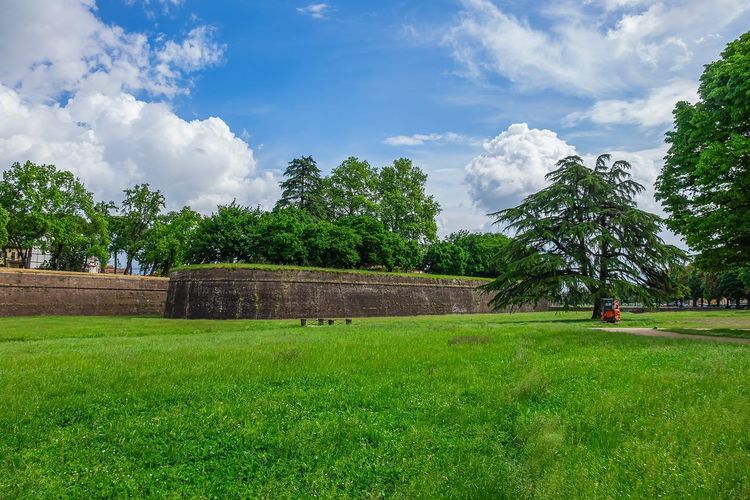
To make the most of the fortifications, the best approach is a full walk along the ramparts, accessible to all levels of fitness and achievable in just over an hour without stopping, or in half a day if you take the time to pause at each point of interest.
Start preferably at the Porte de Cassel, in the early morning: the low light is particularly effective at highlighting the bastions and their reflections in the moats. The path, generally flat and surfaced, runs successively past several bastions before reaching the Couronne d'Hondschoote, the most spectacular point of the circuit with its terraced earthworks.
The second half of the circuit gradually leads back towards the Porte de Bierne, with some more tree-lined stretches where trees planted in the 19th century on the glacis create a rural promenade atmosphere that contrasts with the site's original defensive purpose. You will also pass, midway, a direct access point to the windmill visible from the heights of the enclosure.
Some visitors choose to do the circuit by bike rather than on foot, which brings the journey time down to around thirty minutes; the paths are generally passable, although some grassy sections require a little more care after rain. Wear sturdy shoes in any case, and try if possible to avoid the hottest hours in summer, as shade is limited in places along the more exposed sections.
14. The Public Garden
The Bergues Public Garden (also known as the Groenberg Garden) is set on the historic site of the former Saint-Winoc Abbey. Nestled on the heights of the town, this lush green space offers a shaded stroll dominated by the Square Tower and the Pointed Tower, iconic remnants of the medieval monastery.
A true haven of peace blending nature and heritage, the park features walking paths, children's playgrounds, and direct access to the trails along the Vauban ramparts.
15. The Town Hall
Bergues Town Hall, located on Place de la République opposite the belfry, stands out with its elegant Flemish Renaissance-style architecture.
Rebuilt between 1863 and 1870 according to the plans of architect Auguste Outters, the building is notable for its blue limestone facade (Soignies stone), whose blue-gray hue contrasts with the traditional yellow brick of the rest of the town. Its facade notably features a bust of Alphonse de Lamartine, who served as MP for the Bergues constituency from 1833 to 1839.
16. Walks and Cycling in the Surroundings of Bergues
Beyond the ramparts, the surrounding countryside lends itself well to a cycling or walking outing along the canals that criss-cross this part of maritime Flanders. Several marked routes leave the town towards nearby villages, through a flat and open polder landscape dotted with isolated farms and church spires that punctuate the horizon.
You can hire a bike from certain shops in the centre to reach the canals of Bourbourg or la Colme, just a few kilometres away. These outings offer a pleasant counterpoint to a visit to the historic centre, especially in the late afternoon when the low light gives the polders a particular atmosphere. Allow one to two hours for a relaxed return trip depending on your chosen destination.
FAQ
What can you do in Bergues in one day?
One day is enough for the essentials: climbing the belfry, walking the ramparts through the two historic gates, visiting the Mont-de-Piété museum, and having lunch at an estaminet on the Place de la République. Add the Ch'ti tour if time allows.
How much time should you plan to visit Bergues?
Half a day is enough to see the main highlights of the town centre and ramparts. A full day allows time to visit the museum, have lunch on-site, and add a walk through the surrounding countryside.
Where can you park in Bergues?
Several free car parks are located just outside the historic centre, particularly near the old gates. The town centre itself is largely pedestrianised and easily explored on foot from these car parks.
What is the culinary speciality of Bergues?
The Bergues sausage, a charcuterie made with Spanish spices and a closely guarded secret recipe, remains the speciality most associated with the town. Vieux Bergues cheese, a soft, washed-rind cheese, rounds out the local gastronomic offering.
Is Bergues the town from the film Bienvenue chez les Ch'tis?
Yes, a large part of the filming took place in Bergues in 2007, notably on the Place de la République and around the belfry. A walking trail now allows visitors to spot the main filming locations.
When does the Bergues carnival take place?
The carnival generally takes place in early spring, with the giant Reuze Berguois at the heart of the festivities. It is one of the last major carnivals of the Dunkirk season; exact dates vary each year and are announced by the tourist office.