
Créé par Romane, le 24 juin 2026
Votre guide Ryo
The Most Beautiful Villages Around Bordeaux to Visit in 2026
© Shutterstock
Gironde is more than its illuminated quays and lively Chartrons district. Less than an hour from Bordeaux, a dozen villages seem to have stopped in time: medieval towns encircled by ramparts, bastides perched on wine-covered hillsides, oyster hamlets where locals still eat shellfish by the water's edge. These are the villages that hold the most unexpected discoveries for travellers who take the time to leave the city. To explore Bordeaux itself before heading out, the Ryo audio guide of Bordeaux covers 29 points of interest in 2h30, ideal for starting your stay on foot. Then comes the moment to take the car or the train, heading to Saint-Émilion and its bell towers, Blaye and its Vauban bastions, Soulac and its Belle Époque facades slowly swallowed by sand. These beautiful villages around Bordeaux each deserve at least half a day, and some a full one.
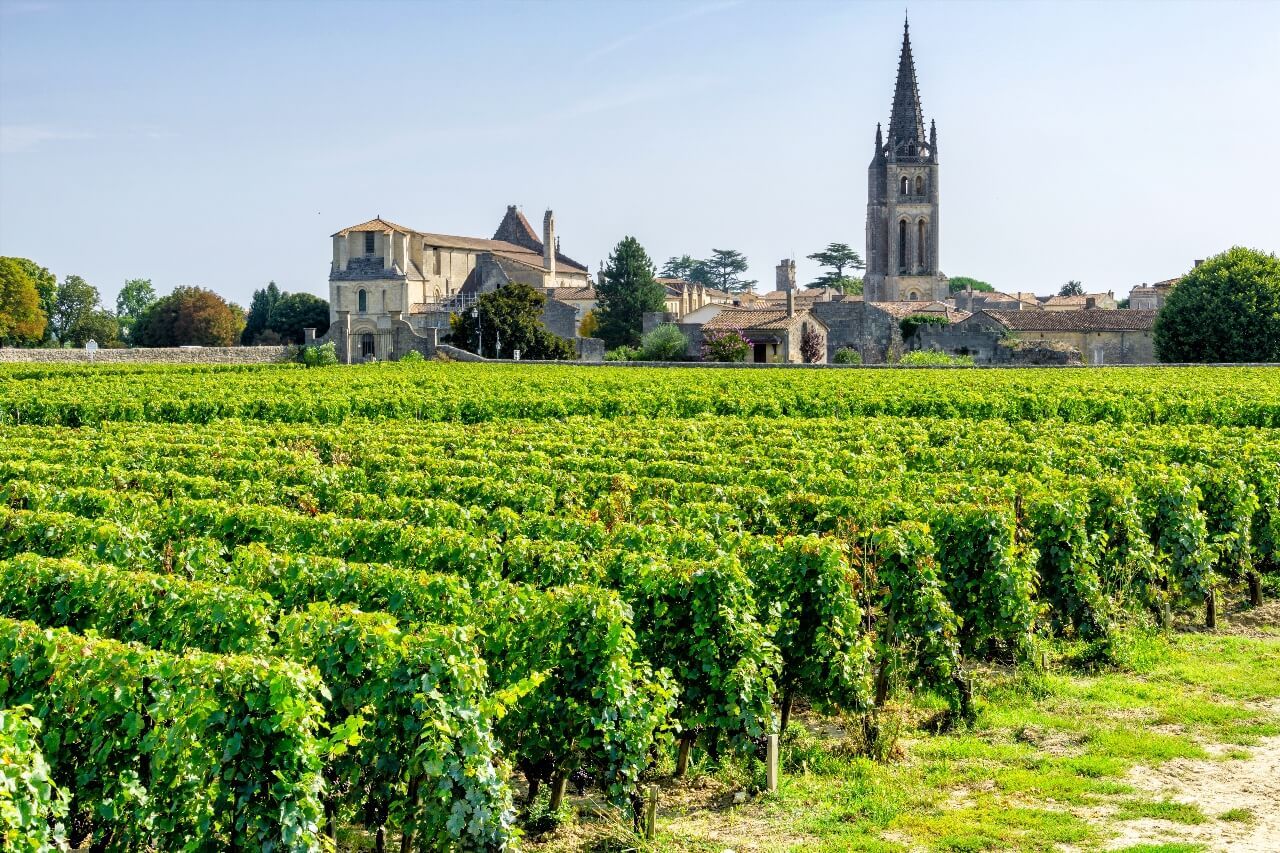
Saint-Émilion, Medieval Wine Capital 35 km Away
Saint-Émilion is not just the most famous wine village in the region: it is one of the rare towns in France where the underground is as precious as the surface. The village is carved out of soft limestone that has allowed, since the Middle Ages, the cutting of catacombs, underground chapels and wine cellars on multiple levels. The entire territory has been listed as a UNESCO World Heritage Site since 1999, a distinction awarded not only for the vines but for the cultural landscape as a whole.
Arriving along the hillside road, the silhouette of the monolithic bell tower dominates the vineyard for kilometres around. This bell tower, built between the 12th and 15th centuries, rises to nearly 68 metres and stands above a church entirely hewn out of the limestone plateau: there is no traditionally built structure beneath it, but an underground nave cut straight from the rock, 38 metres long, the largest monolithic church in Europe. It is one of the most singular monuments in the South-West. The Collegiate Church of Saint-Émilion and its Gothic cloisters occupy the plateau, while the Tour du Roy (Rue du Guadet, 33330 Saint-Émilion, rated 4.4/5 on Google from 439 reviews), a remnant of the 13th-century royal castle, offers the most complete panorama over the vineyard.
Practically speaking, Saint-Émilion is best explored on foot from the Bouquerie car park. The main street climbs up to the Place du Marché, the focal point of terrace cafés and macaroon shops. The village has also been producing almond macaroons since the 17th century, using a jealously guarded recipe. For wine, skip the shops on the main street and favour the estates on the edge of the plateau, which offer tastings without an appointment.
Saint-Macaire, a Sleeping Medieval Trading Town on the Garonne
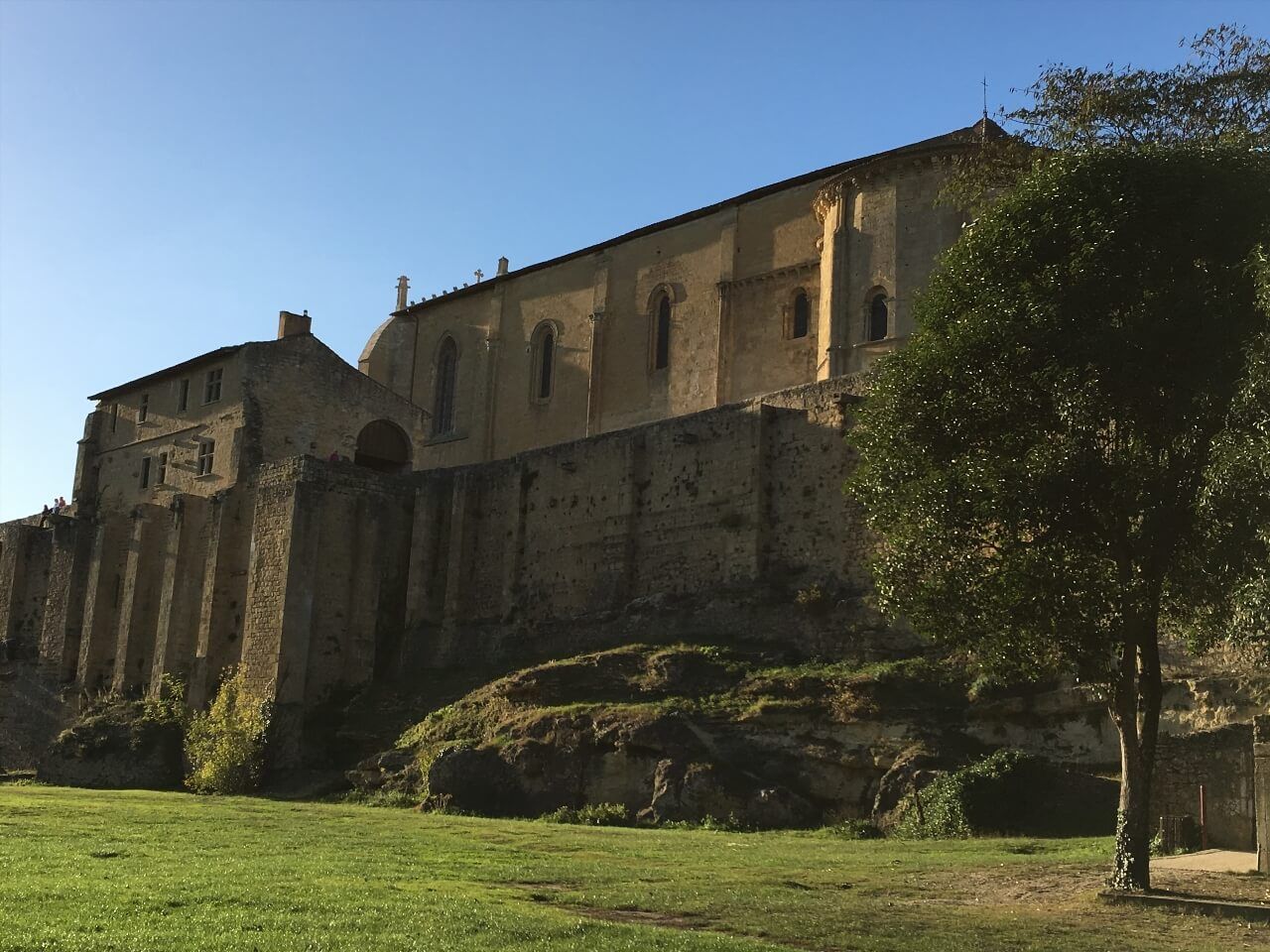
In Saint-Macaire (Place du Mercadiou, 33490 Saint-Macaire, rated 4.7/5 on Google from 12 reviews), time stopped in the 15th century, and no one seems to mind. This medieval bastide, perched on a limestone hill 45 km south-east of Bordeaux, preserves one of the best-kept urban ensembles in Gironde: near-intact ramparts, fortified ogival gateways, half-timbered townhouses and a central square surrounded by arcades.
The Place du Mercadiou is the soul of the village. Its medieval covered walkways — arcades that once sheltered merchants from rain and sun — run along three sides of the square almost without interruption. On fine days, a few tables are set up under the arches, and the atmosphere is that of northern Italy transplanted to the banks of the Garonne. Below the ramparts, the view sweeps across the river and the vines of the Premières Côtes. Saint-Macaire is also the starting point of the towpath that runs alongside the Garonne all the way to Langon: a 7 km walk along the water, ideal by bike.
Saint-Macaire has only 1,500 inhabitants but boasts an 11th-century priory church adorned with remarkable Romanesque frescoes, little known even to residents of Bordeaux. The visit takes no more than an hour, making it easy to combine Saint-Macaire with Cadillac or Rions in a single day.
Blaye, a Vauban Citadel Facing the Estuary
The Citadelle de Blaye (Allée des Remparts, 33390 Blaye, rated 4.6/5 on Google from 4,491 reviews) is listed as a UNESCO World Heritage Site alongside Vauban's other fortifications in France — a well-deserved distinction for this triangular bastion that still commands the right bank of the Gironde estuary 50 km north of Bordeaux. What strikes visitors on arrival is the scale: the citadel is not a simple fort but a fully fortified village of 38 hectares, with its own cobbled streets, inhabited houses, gardens and a youth hostel inside the ramparts.
The walk around the ramparts takes about 45 minutes and offers spectacular views over the estuary, the widest in Western Europe. Opposite, Fort Paté and Fort Médoc complete the defensive system devised by Vauban in the 17th century to protect Bordeaux from maritime attacks; this "lock of the estuary" is also a UNESCO-listed ensemble. The site organises themed guided tours (military architecture, estuary wildlife, history of the Fronde) between April and October.
The town of Blaye, below the citadel, is worth a detour for its Saturday morning market and for the oyster producers who sell directly on the quay. The Gironde is here a wild estuary, very different from the inland vineyard landscapes: a powerful, brown expanse still navigated by flat-bottomed barges. A community bar inside the citadel serves wines from the Blayais, little known but reliable.
Bourg-sur-Gironde, an Amphitheatre Village on the Estuary
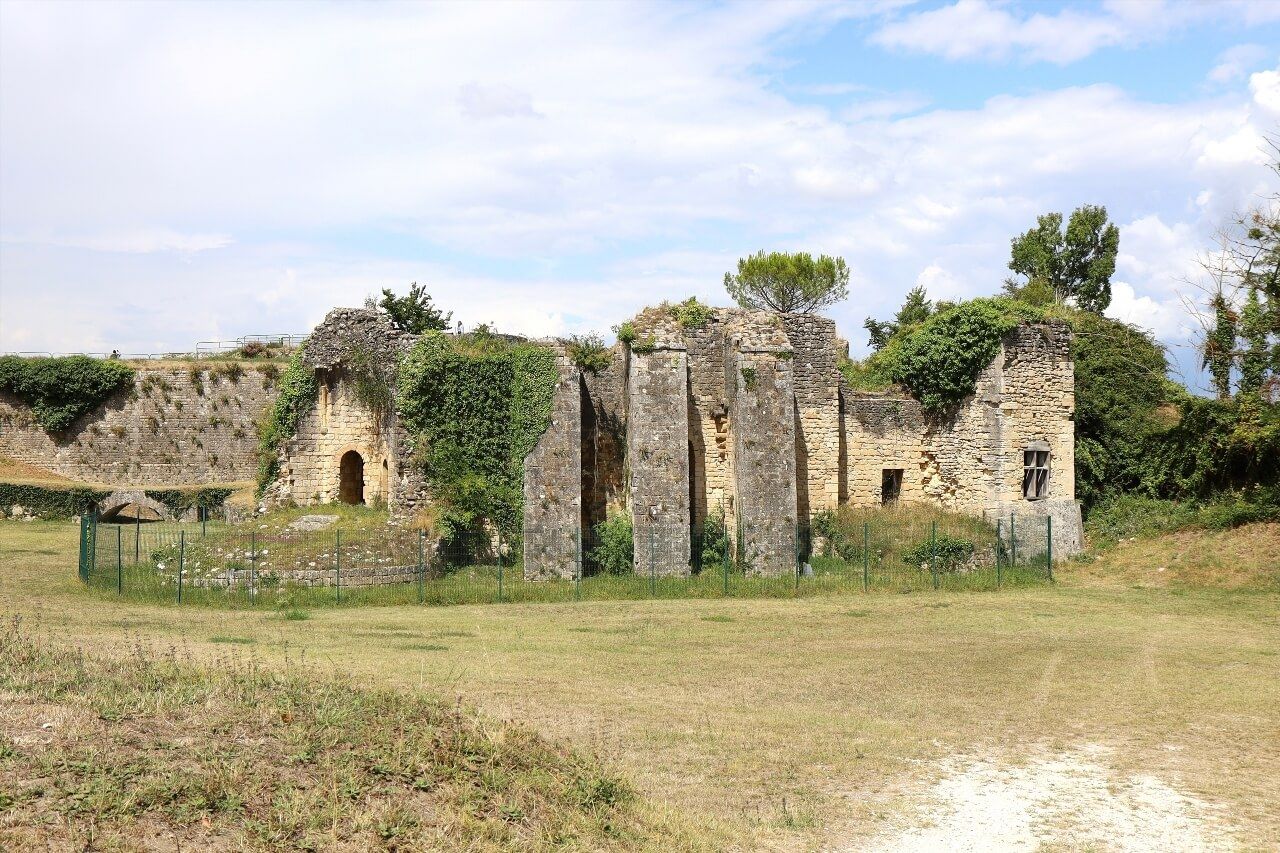
Bourg-sur-Gironde is often described as the "balcony of the Gironde". The image is apt: the old medieval town occupies a limestone promontory overlooking the confluence of the Dordogne and the Gironde, 35 km north of Bordeaux. Stepped alleyways descend to a still-active fishing harbour, and troglodyte cellars carved into the cliff face serve as wine stores for several local estates.
The château de la Citadelle, a former residence of the archbishops of Bordeaux now open to visitors with its gardens, dominates the promontory. Its terraces offer the finest viewpoint over the estuary. Nearby, the Grottes de Pair-non-Pair (Route de la Grotte, 33710 Prignac-et-Marcamps, rated 4.5/5 on Google from 585 reviews), 3 km from the town, shelter prehistoric engravings dating back approximately 30,000 years, among the oldest examples of cave art open to the public in France and the world's first decorated cave to be listed as a historic monument, in 1900. The visit is guided and places are limited: advance booking is essential, several weeks ahead during peak season.
Bourg is ideally located to follow up with a visit to Blaye in the same day: 20 km separate the two sites, and the drive follows the estuary along a scenic road.
Cadillac, a Ducal Town Between Castle and Vines
The name evokes an American car brand, and for good reason: Antoine Laumet de La Mothe, founder of Detroit in 1701, borrowed his title of "Sieur de Cadillac" from this small Gironde town, which thus indirectly gave its name to the famous automobile. The Château des Ducs d'Épernon (Place de la Libération, 33410 Cadillac, rated 4.3/5 on Google from 1,578 reviews), which dominates the town, is a ducal residence from the early 17th century, one of the most impressive in Guyenne, with its golden stone facades and monumental marble fireplaces preserved in situ.
Cadillac is located 40 km south-east of Bordeaux, in the heart of the Premières Côtes vineyard. The town retains its partially intact medieval ramparts, with two fortified gateways still standing. The weekly Saturday market is one of the most lively rural markets on the right bank: duck producers, sheep's cheese makers and local wine growers gather there every week.
The Garonne is just a few hundred metres from the castle. The towpath makes for a pleasant walk to the first vines of the Cadillac AOC, a sweet wine that is a cousin of Sauternes but far less well known and often less expensive for equivalent quality.
Rions, a Well-Preserved Medieval Bastide
Rions is the least known of the Gironde bastides, and that is perhaps its greatest quality. Just 35 km from Bordeaux, this small town of 1,800 inhabitants retains its 14th-century fortifications in exceptional condition. The Porte du Thyou (Rions, 33410 Rions, rated 5/5 on Google from 1 review), flanked by two round towers, is a masterpiece of medieval military architecture that is rarely photographed and almost always deserted.
The village also has an 11th-century Romanesque church and a network of underground cellars visible from the main street. From the ramparts: the vineyard on the right bank of the Garonne and, on a clear day, the Pyrenees on the horizon. An ideal ninety-minute stop, easily combined with Cadillac (8 km) or Sainte-Croix-du-Mont (5 km).
Sainte-Croix-du-Mont, Fossil Cliffs and Sweet Wines
This is one of the most astonishing geological sites in Gironde. The cliffs of Sainte-Croix-du-Mont (Place de l'Église, 33410 Sainte-Croix-du-Mont, rated 4.4/5 on Google from 35 reviews) are made up of millions of fossilised oysters dating from the Miocene era, approximately 20 million years ago, when a warm sea covered the entire Bordeaux region. These petrified shells, visible to the naked eye in the rock, were used to build the village walls and even to hollow out caves and wine cellars directly into the cliff face. Some strata reach twenty metres in thickness: it is one of the largest banks of fossilised oysters in Europe.
It is from the castle terrace that the view is most breathtaking: opposite, the Sauternes vineyard with its châteaux, and the Garonne below. Sainte-Croix-du-Mont produces its own sweet wines under the eponymous AOC, less celebrated than their Sauternes neighbours but crafted using the same methods of late harvest and noble rot. Several estates offer direct tastings, sometimes free outside of peak season.
The village can be visited in under an hour. Combine it with Loupiac (2 km), another village of limestone cliffs on the right bank.
Bazas, Gothic Cathedral and Gascon Markets
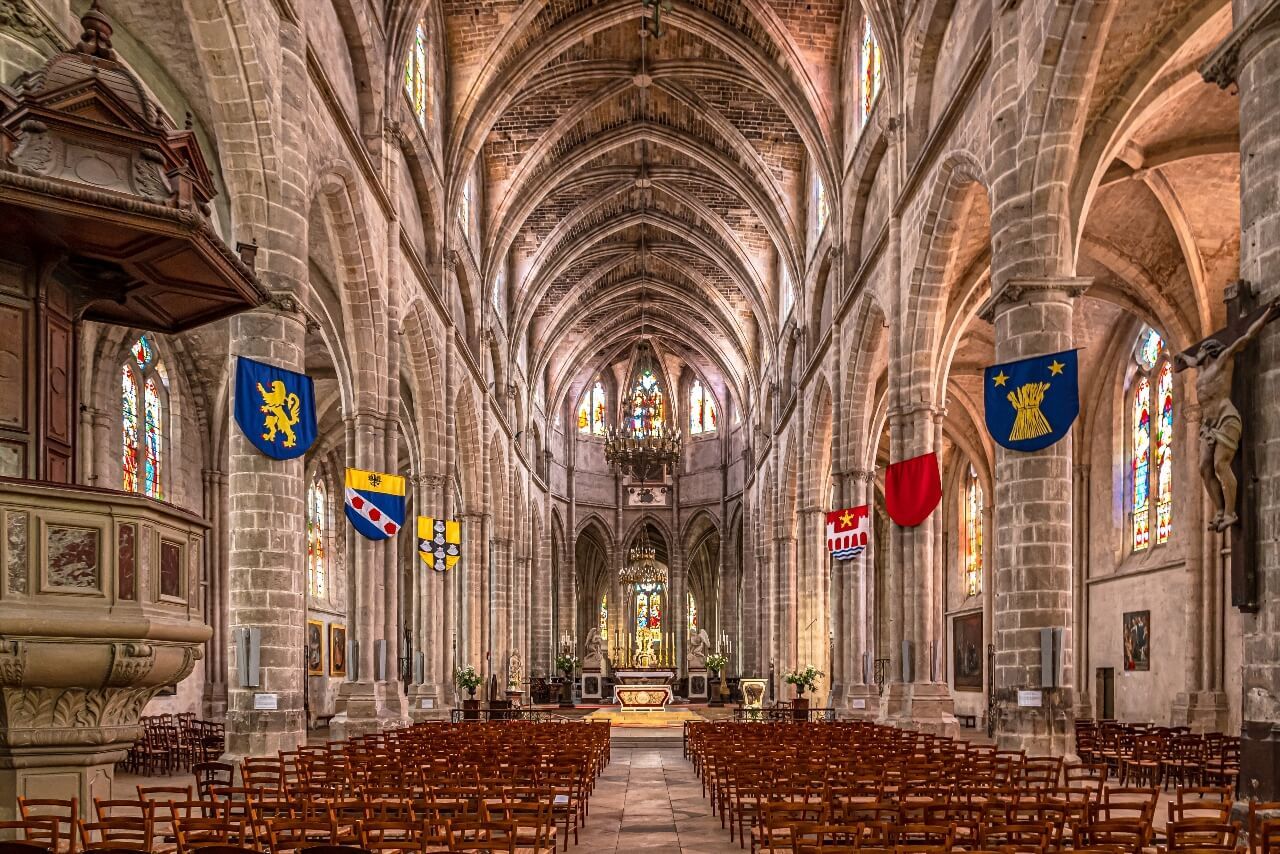
Located 60 km south of Bordeaux, Bazas surprises visitors expecting a wine village: it is a small market town in Gascony, whose central square is entirely dominated by the three-arched Gothic facade of a cathedral listed as a UNESCO World Heritage Site in 1998 as a stop on the pilgrimage routes to Santiago de Compostela.
The Place de la Cathédrale, surrounded by medieval arcades, resembles a small Tuscan town. This is where the foie gras market takes place in December, one of the most authentic markets of its kind in the South-West. Bazas beef, from the Bazadaise breed raised on the grasslands of the Landes de Gascogne, holds a Label Rouge and a PGI designation, and remains difficult to find outside the region. Butchers on the square sell it year-round, and the town celebrates it every February with its traditional Fête des Bœufs Gras.
Bazas deserves half a day. A walk around the ramparts and medieval moats rounds out a visit to the cathedral for a total stroll of around two hours.
Lège-Cap-Ferret, an Oyster Village Beneath the Pines
Cap Ferret is not a medieval village: it is a sandy peninsula tip, wedged between the Bassin d'Arcachon and the Atlantic Ocean, 70 km west of Bordeaux. But it is one of the most distinctive villages in all of Gironde, with an atmosphere that is unique in France.
The village de l'Herbe (Route du Village de l'Herbe, 33970 Lège-Cap-Ferret, rated 4.8/5 on Google from 59 reviews) and the village de la Vigne, clinging to the inner shore of the basin, are preserved oyster hamlets: colourful wooden huts, zinc-topped tables, oyster trays right on the quayside. Oyster farmers here serve dozens of fresh oysters with buttered bread and white wine between noon and 3 pm, often without a reservation. It is one of the most authentic culinary experiences in the region, and one of the most affordable: a dozen size-3 oysters typically costs between 8 and 12 euros depending on the producer.
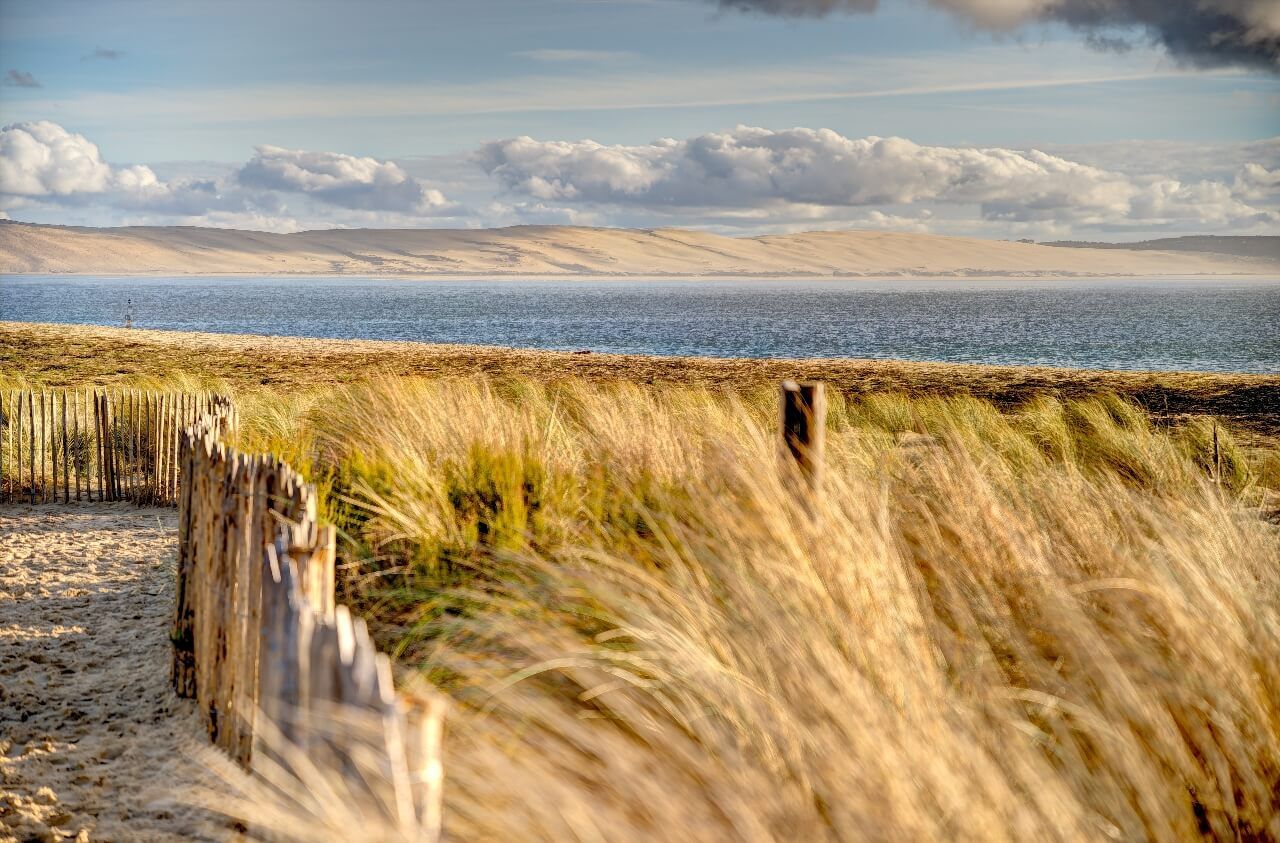
By bike from Le Canon, the cycle path follows the basin for about twenty kilometres all the way to the tip of Cap Ferret. It is the most enjoyable way to discover the peninsula, especially out of season when the roads are clear. Be sure to climb the Cap Ferret lighthouse (258 steps) for a 360° view over the Dune du Pilat and the Banc d'Arguin.
Soulac-sur-Mer, a Sand-Swallowed Belle Époque Resort
Soulac-sur-Mer (Place Amélie, 33780 Soulac-sur-Mer, rated 4.3/5 on Google from 1.4K reviews) lies 100 km north-west of Bordeaux, at the tip of the Médoc peninsula. It is a seaside resort developed in the late 19th century, and its Belle Époque villas — more than five hundred of which are listed for their heritage value — line the beach with their half-timbered facades and ornate balconies. The contrast between this romantic architecture and the relentless advance of the dunes gives the place a unique atmosphere, somewhere between a family resort and a natural site in flux.
The Basilique Notre-Dame-de-la-Fin-des-Terres is the most surprising building: a 12th-century Romanesque church that was entirely buried by sand in the 18th century, then excavated and restored in the 19th. It is now a listed historic monument and a stop on the pilgrimage routes to Santiago de Compostela.
The beaches of Soulac are among the widest on the French Atlantic coast: several hundred metres of sand separate the first dunes from the sea at low tide. In winter, the town has fewer than 3,000 inhabitants and the atmosphere is that of a very gentle end of the world.
Planning Your Day Trip: Distances and Practical Tips
Most of these villages can be reached by car from Bordeaux in 30 to 60 minutes. A few useful reference points:
- Saint-Émilion: 35 km, 40 min by car or TER from Bordeaux Saint-Jean (35 min, regular trains)
- Blaye: 50 km, 50 min, no direct train, ferry from Lamarque in season
- Cap Ferret: 70 km, 1h, or ferry from Arcachon (20 min, TER Bordeaux–Arcachon 50 min)
- Bazas: 60 km, 55 min, no direct train
- Soulac-sur-Mer: 100 km, 1h15, TER from Bordeaux via Lesparre (approx. 2h)
To make the most of your visits, combine two geographically close villages: Saint-Macaire, Cadillac and Rions form a triangle of about thirty kilometres on the right bank of the Garonne, perfect for a full day. Bourg and Blaye, 20 km apart, combine naturally along the estuary.
Before leaving Bordeaux, explore the city with the Ryo audio guide of Bordeaux, 29 stops and 2h30 of sightseeing to make the most of the historic centre. For broader day-trip ideas, our article on the must-do excursions around Bordeaux offers complete itineraries with journey times and transport options.
FAQ
What is the most beautiful village near Bordeaux?
Saint-Émilion is generally considered the most beautiful village around Bordeaux, thanks to its exceptional medieval ensemble listed by UNESCO and its world-famous vineyard. But Blaye with its Vauban citadel, Saint-Macaire with its medieval arcades, or Cap Ferret with its oyster shacks offer equally striking atmospheres depending on your interests.
Which villages around Bordeaux can be visited without a car?
Saint-Émilion is served by TER trains from Bordeaux Saint-Jean in 35 minutes, with regular services year-round. Soulac-sur-Mer is also accessible by TER via Lesparre. For Cap Ferret, a train to Arcachon followed by a ferry makes for a very pleasant car-free excursion. The other villages (Blaye, Rions, Bazas, Cadillac) require a vehicle or a taxi from the nearest town.
How far are the medieval villages from Bordeaux?
The closest medieval villages — Rions, Bourg-sur-Gironde, and Saint-Émilion — are between 30 and 40 km from Bordeaux. Blaye and Cadillac are around 45–50 km away. Bazas and Cap Ferret are 60–70 km away. Soulac is the farthest, at 100 km, but accessible by train.
Which villages can be combined in a single day?
Three combinations work particularly well: (1) Saint-Émilion in the morning then Saint-Macaire in the afternoon (40 km apart, one hour's drive); (2) Cadillac, Rions and Sainte-Croix-du-Mont, a 15 km triangle on the right bank of the Garonne; (3) Bourg-sur-Gironde and Blaye along the estuary (20 km apart). Each combination makes for a full day without too much driving.
Which village is best for a wine tasting?
Saint-Émilion is the most obvious choice, with many châteaux open for visits and wine shops throughout the village. For a less touristy experience, Sainte-Croix-du-Mont offers sweet wine tastings directly with producers, often free outside of peak season. Cadillac and its AOC are also interesting for lesser-known sweet wines. Blaye produces solid reds at reasonable prices, sold at the harbour.
Are there any villages to avoid during peak season?
Saint-Émilion is very busy in July and August, with queues for the monolithic church visit and prices to match. If you visit in summer, arrive before 9:30 am or after 5 pm to avoid the crowds. Cap Ferret is packed in July and August, but the oyster villages set back from the point (l'Herbe, la Vigne) remain calmer. Bazas and Rions are almost deserted all year round.
Discovering the Villages of Gironde
From Saint-Émilion to Soulac, from medieval bastides to the oyster shacks of Cap Ferret, the villages around Bordeaux make up a remarkably diverse territory — wine country, coastline, prehistoric heritage and architectural riches all in one. Most can be visited in half a day to a full day from Bordeaux, and no two are alike.
To prepare your stay in the Gironde capital before venturing into the surrounding area, the Ryo Bordeaux city guide leads you on foot through 29 unmissable stops: from the golden triangle to the Chartrons, from the banks of the Garonne to the Place de la Victoire. Download the Ryo app and start there — the rest of the territory will be waiting for you less than an hour's drive away.