© Shutterstock
 Votre guide Ryo
What to Do in Brantôme in 2026: 15 Experiences in the Venice of Périgord
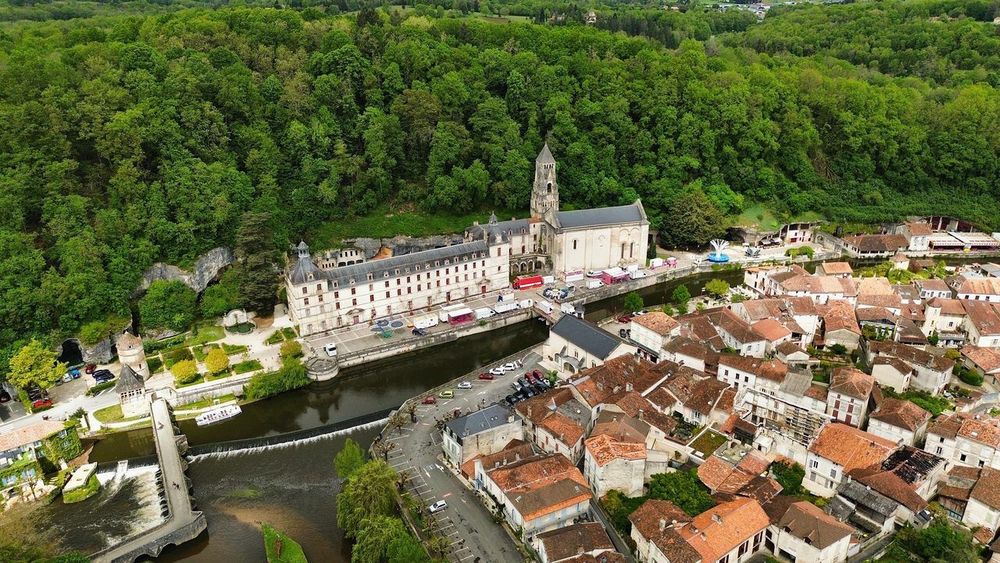
Early in the morning, a light mist still lingers over the Dronne as the first walkers stroll along the quays of Brantôme, in the Dordogne. The river almost entirely encircles the old town, forming a loop so perfect that it has been nicknamed the Venice of Périgord since the nineteenth century. For anyone wondering what to do in Brantôme, the answer lies as much in stone as in water: an abbey tucked against a cliff riddled with caves, a uniquely angled bridge found nowhere else in France, and kilometres of paths leading to châteaux and listed villages. Many visitors head straight for the abbey without knowing that a zen garden nestled in a former quarry lies just a few steps away, or that a bas-relief of the Last Judgement, carved directly into the rock nearly five centuries ago, awaits in an almost deserted cave chapel.
This guide details fifteen experiences to fill a day or a long weekend: the abbey and its bell tower, among the oldest in France, a canoe trip beneath leafy canopies, the Friday market famous throughout the Périgord vert, and four excursions into the surrounding area, from the Château de Bourdeilles to the Villars caves. Everything you need to build a tailor-made itinerary, whether you have three hours or three days, using the Ryo app to locate each stop once you arrive.
1. The Abbaye Saint-Pierre de Brantôme
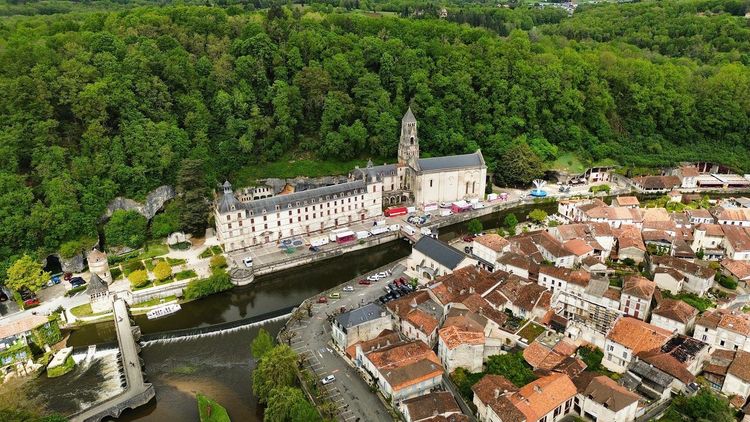
Nestled against a limestone cliff honeycombed with cavities, the Abbaye Saint-Pierre de Brantôme (1 Boulevard Charlemagne, 24310 Brantôme, rated 4.6/5 on Google from 6,866 reviews) has dominated the course of the river since its founding by Charlemagne in 769, according to local tradition. The Benedictine monks who settled there subsequently built, over the centuries, a monastery that survived the Wars of Religion before becoming, after the Revolution, the town hall and museum.
Visitors today can explore the conventual buildings, a fifteenth-century cloister with rounded arched arcades, and the Musée Fernand-Desmoulin, dedicated to a local painter associated with Symbolism and mediumistic art. The chapter house, with its almost intact Gothic vaulting, gives a fairly clear sense of monastic daily life, divided between prayer, manuscript copying and agricultural work on the surrounding land.
Allow a good hour to tour the entire site, museum included. A combined ticket with the neighbouring cave dwellings offers entry to both at a reduced rate — a tip many hurried visitors discover only after they have already left. For a first introduction to the site before your visit, the Ryo audio guide offers a commentary retracing the Carolingian founding and the main stages of monastic life.
2. The Bell Tower Keep, One of the Oldest in France
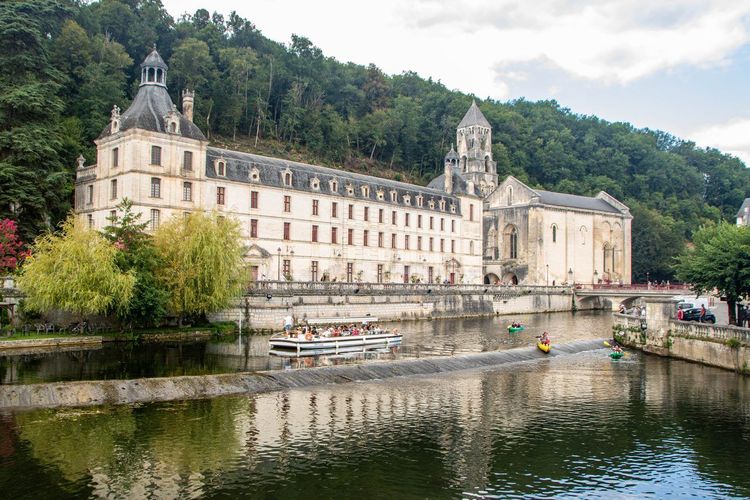
Built not on the church itself but on a rocky outcrop some twelve metres above it to the north, the Brantôme bell tower keep rises to nearly 35 metres in total height. Art historians date it to the eleventh century, making it arguably the oldest surviving Romanesque campanile in France, predating even the reconstruction of the abbey church that surrounds it. Listed as a historic monument as early as 1840, it is a perfect illustration of the Limousin Romanesque style, with its stepped setback storeys and triangular gable ends crowning wide bays.
Its isolated position, seemingly planted in the rock, is explained by the nature of the terrain: the monks built it against the cliff rather than the church in order to benefit from a more stable foundation. You can still see, at its base, traces of an ancient stairway cut into the stone that once connected the bell tower to the upper caves, now closed for safety reasons. Take the time to walk all the way around its base: each angle reveals a different reading of this stocky silhouette — at times military, at times religious — which long puzzled scholars as to its original purpose, somewhere between watchtower and monastic call bell.
3. The Cave Dwellings and the Carved Last Judgement
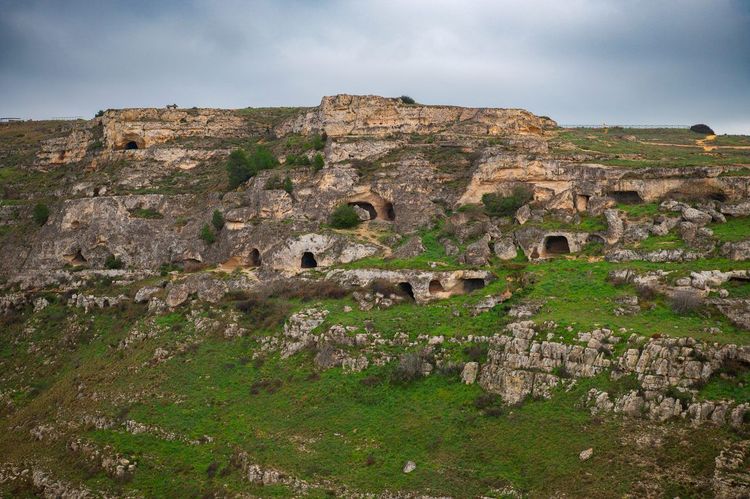
Behind the abbey, a network of cave dwellings carved into the cliff face once sheltered the monks before the stone monastery was built. You enter via a stairway cut into the rock, which leads to a series of vaulted chambers including the old communal wash house and a miraculous fountain that still flows today.
The highlight of the visit is the cave chapel known as the Last Judgement, where a bas-relief carved directly into the rock, dated to the fifteenth century, depicts a striking apocalyptic scene: angels blowing their horns, the dead rising from their tombs, the damned hurled towards a grimacing hell. Few guides mention that this work was long attributed, incorrectly, to the founding monks of the eighth century, when it actually dates from the Renaissance.
Allow around 30 to 40 minutes for the visit, often with your head bowed under ceilings as low as two metres in places. Children generally love the slightly mysterious atmosphere of the site, provided they are not too easily unsettled by the sculpted faces that seem to emerge from the stone.
4. The Pont Coudé and the Banks of the Dronne
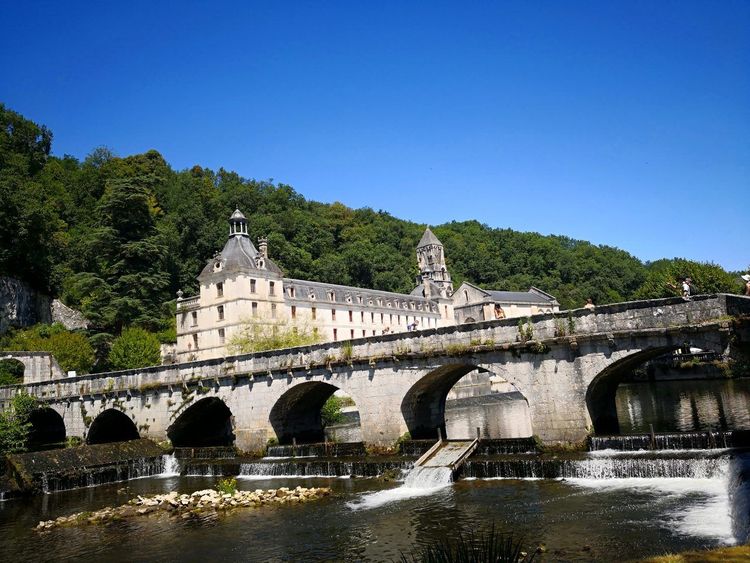
The Pont Coudé (Boulevard Charlemagne, 24310 Brantôme, rated 4.7/5 on Google from 410 reviews), which owes its name to its layout forming a sharp angle above the river, remains the most reproduced image of Brantôme on postcards and social media. Built in the sixteenth century to serve the abbey, it long served as the only vehicle-accessible route to the monastery from the opposite bank.
From its stone deck, the view takes in the bell tower keep, the abbey gardens and the façades that plunge directly into the clear waters of the Dronne. The morning light, between 8 and 10 a.m., produces the clearest reflections on the river, before the flow of visitors disturbs the surface.
A stroll along the quays, in one direction and then the other, reveals different angles on the abbey. Allow twenty minutes for a full circuit on foot, longer if you stop frequently for photos beneath the century-old plane trees lining the promenade.
5. The Jardin des Moines
Laid out in a former stone quarry at the foot of the cliff, the Jardin des Moines recreates a medieval garden inspired by Benedictine monastic practices of the Middle Ages. Aromatic, medicinal and kitchen garden plants are arranged according to the uses the monks made of them for healing, cooking or dyeing cloth.
Access, generally included in the abbey ticket, is via a small discreet path that many hurried visitors miss from the forecourt. Ten minutes is enough to walk through it, but the cool shade of the quarry makes it a welcome stop during the summer heat.
6. A Canoe-Kayak Trip on the Dronne
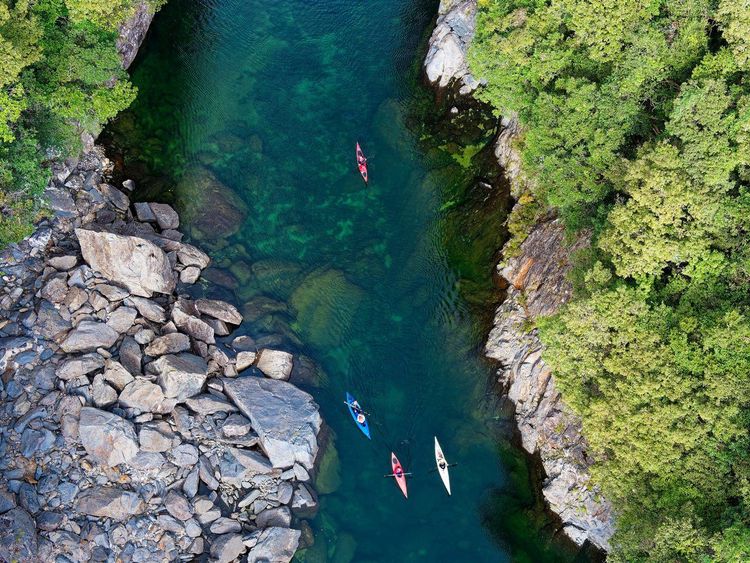
Paddling down the Dronne by canoe remains one of the gentlest ways to discover Brantôme from a different perspective — that of the river rather than the lanes. Several rental bases, set up upstream and downstream of the town, offer routes of 6 to 12 kilometres, punctuated by small rapids that present no major technical challenge.
Passing under the Pont Coudé, right at the foot of the abbey, is the highlight of the circuit: few towns offer such a close-up view of a Romanesque bell tower from the water. Allow between 1 hour 30 minutes and 3 hours depending on the route chosen, with a return shuttle included in most packages.
Come later in the morning, once the mist has lifted, to enjoy calm, clear water for most of the journey. Families with young children should opt for the shorter routes, with no portage, generally available between April and October.
7. The Back Streets and Cave Dwellings of the Town Centre
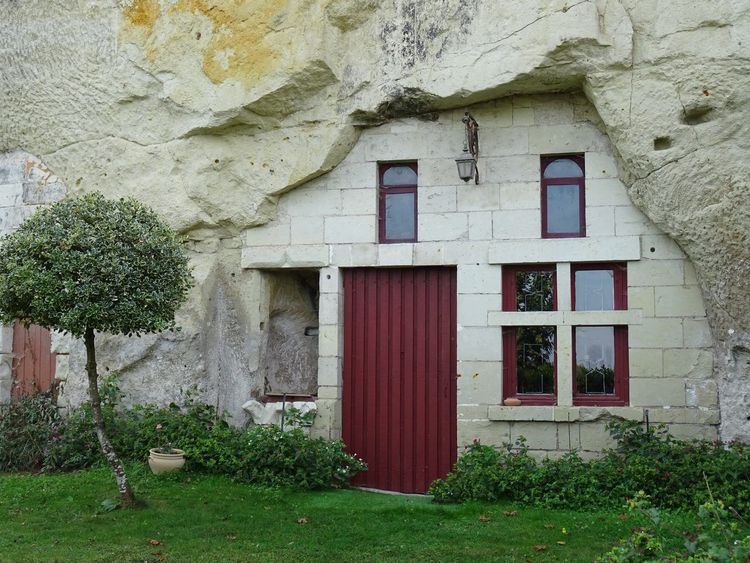
Beyond the abbey, Brantôme conceals a historic centre where several houses back directly onto the rock, their rear façades merging with the cliff itself. This cave architecture, discreet from the main street, reveals itself mainly from private gardens or the small lanes running perpendicular to Boulevard Charlemagne.
Wandering without a set route remains the best way to spot these details: a door carved into the rock, a cellar tunnelling beneath a half-timbered house, an exterior staircase climbing to a hanging garden. The fifteenth-century timber-framed houses, concentrated around the market square, complete this architectural picture — remarkably rich for a town of fewer than 2,000 inhabitants.
Set aside at least an hour for this leisurely wander, outside guided tour hours, to enjoy the relative calm of the secondary lanes.
8. The Brantôme Market, Friday Mornings
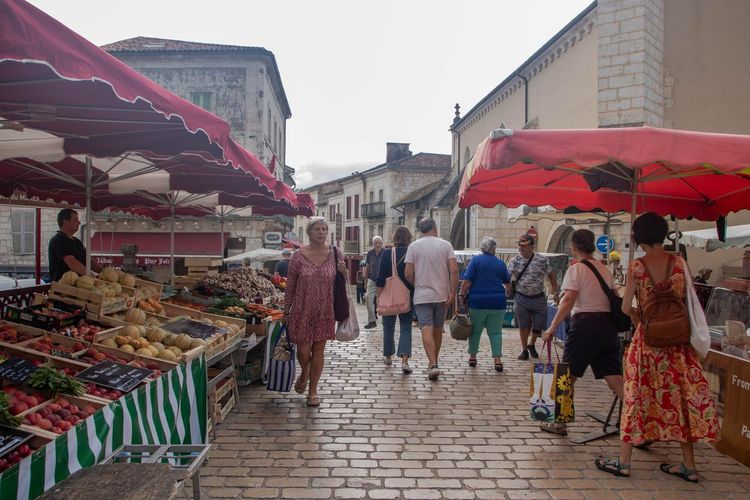
Every Friday morning, the main square and quays of Brantôme fill with stalls where local producers sell goat's cheese, Périgord walnuts, foie gras and seasonal vegetables. This weekly market, renowned well beyond the commune, draws both residents of nearby villages and passing visitors looking to fill their basket before a picnic by the water.
Arrive before 10 a.m. to avoid the summer crowds and get the best choice at the stalls, especially for the farmhouse cheeses that sell out quickly in peak season. Outside of Friday, a smaller market is held on some Sunday mornings depending on the month, mainly in summer.
9. Where to Eat Well in Brantôme
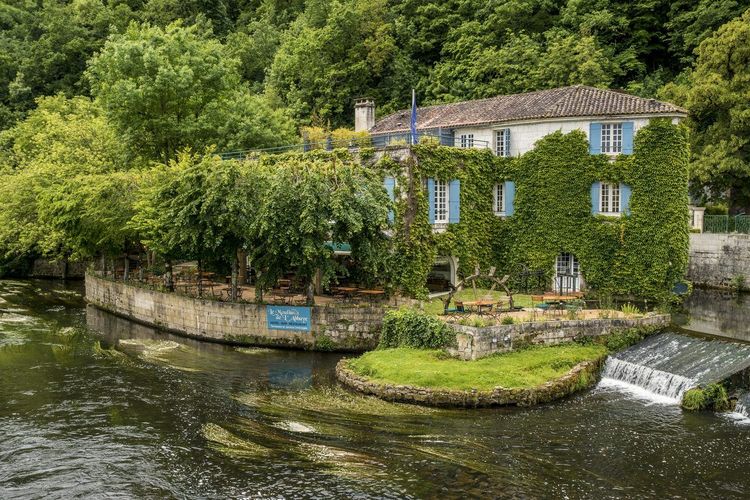
Around the square and the quays, dining in Brantôme reflects an unapologetic Périgord cuisine: duck confit, pan-fried foie gras, apple tourtières, all often served on terraces overlooking the river. Le Moulin de l'Abbaye (1 Route de Bourdeilles, 24310 Brantôme, rated 4.4/5 on Google from 954 reviews), a former watermill converted into a gastronomic hotel-restaurant, occupies one of the most photographed spots in town, positioned directly above the weir of the Dronne.
For a tighter budget, several brasseries on the square offer daily specials for under 18 euros, with a view of the bell tower keep thrown in. The crêperies and tea rooms clustered around the tourist office round out the options for a lighter break between visits.
Book ahead if possible at weekends during high season, especially for the riverside terraces, which fill up from noon between May and September. A picnic bought at the Friday market and enjoyed on the quays remains the most economical option — and often the most pleasant one in good weather.
10. Château de Bourdeilles
About ten minutes' drive south of Brantôme, the Château de Bourdeilles (24310 Bourdeilles, rated 4.4/5 on Google from 3,193 reviews) overlooks the Dronne from a rocky spur above the village of the same name, listed among the most beautiful villages in France. The site in fact combines two distinct buildings: a thirteenth-century medieval fortress erected to guard the border between the Périgord and the Angoumois, and a Renaissance château built in the sixteenth century by the Bourdeille family.
The octagonal keep offers, from its summit, one of the widest panoramas over the Dronne valley, with views of the medieval bridge and the old fortified mill below. Inside, a collection of antique furniture assembled in the twentieth century by a wealthy donor restores the atmosphere of an inhabited château rather than a static monument.
Allow an hour for the visit, longer if you extend it with a break on a riverside terrace just below the bridge, where several cafés enjoy one of the finest viewpoints in the village.
11. Château de Puyguilhem
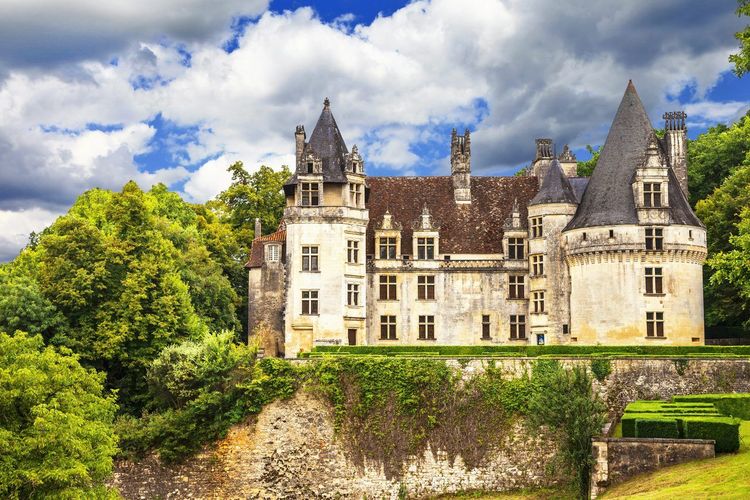
About fifteen kilometres north-east of Brantôme, the Château de Puyguilhem (Le Bourg, 24530 Villars, rated 4.6/5 on Google from 777 reviews), in Villars, exemplifies the architecture of the early French Renaissance with its slender turrets and finely carved dormers, often compared to those of the Loire Valley. Rebuilt in the early sixteenth century on the foundations of an older structure, it fell into prolonged neglect before being restored in the twentieth century by the Monuments historiques.
The interior preserves monumental sculpted fireplaces, one of which depicts the Twelve Labours of Hercules, as well as a spiral staircase serving the enfilade upper floors. The original roof timbers, reconstructed identically during the restoration, are worth the visit in themselves for anyone interested in sixteenth-century woodworking. The visit, self-guided or guided depending on the season, lasts around 45 minutes; combine it with the nearby Villars cave to make a complete half-day north of Brantôme.
12. The Villars Cave
A short distance from the Château de Puyguilhem, the Villars cave (Le Peyzac, 24530 Villars, rated 4.6/5 on Google from 3,174 reviews) combines spectacular limestone formations with cave paintings attributed to the Solutrean period, around 17,000 years old. The underground route, fitted out and lit, alternates between concretion-filled chambers and narrower galleries where silhouettes of horses and bison, traced in manganese oxide, can be made out on the rock.
The interior temperature, a steady 13 degrees all year round, contrasts sharply with the summer heat of the Périgord vert. Bring a jumper even in midsummer and allow about an hour on site, guided tour included — the tour is compulsory in order to protect the paintings.
13. Saint-Jean-de-Côle, One of the Most Beautiful Villages in France
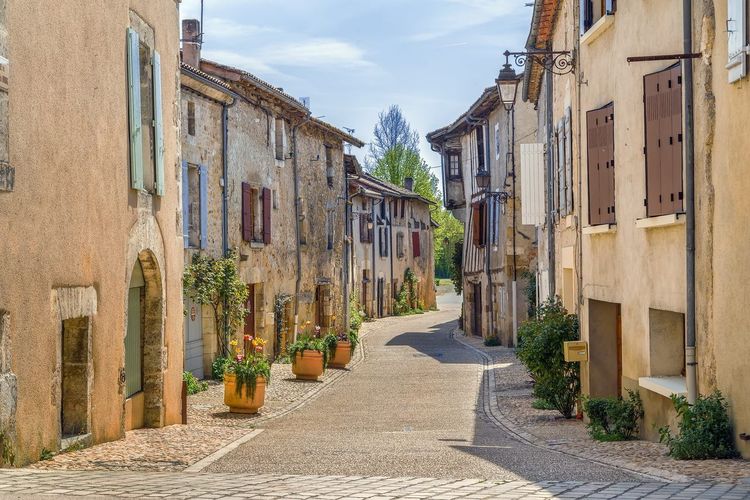
Clustered around a Romanesque priory and a Gothic humpback bridge, Saint-Jean-de-Côle (24800 Saint-Jean-de-Côle, rated 4.7/5 on Google from 890 reviews) is among the most visited listed villages in the Dordogne, about fifteen minutes by road from Brantôme. Its half-timbered houses, topped with brown tile roofs and sometimes limestone slabs, are arranged around a shaded square that has changed little since the seventeenth century.
The Prieuré Saint-Jean-Baptiste, founded in the eleventh century, retains a wall bell tower that is fairly rare in the region, and a partially collapsed cloister that hints at the building's original scale. Opposite, the Château de la Marthonie, with its eclectic façades accumulated between the fifteenth and seventeenth centuries, opens for guided visits in summer during open-day events.
A medieval market, held each year in early August, transforms the village for one weekend into a costumed setting that draws a good local following. For the rest of the year, a peaceful stroll through the cobbled lanes is more than enough to justify the detour from Brantôme.
14. Château de Richemont, in the Footsteps of the Abbé de Brantôme
A few kilometres to the north-west, the Château de Richemont has a direct connection to the town's history: this is where Pierre de Bourdeille, known as the Abbé de Brantôme, rests — a sixteenth-century chronicler famous for his accounts of life at the Valois court. Appointed commendatory abbot of Brantôme, he had this château built as his personal residence after a riding accident that ended his military career.
The funerary chapel, where his sculpted tomb stands, can be visited occasionally during Heritage Days or on request to the current owners. History and literature enthusiasts will find it a natural extension of the abbey visit, connecting the place and the man who gave it much of its fame.
Even without going inside, the approach is worth the detour: the château stands away from the main roads, in a landscape of woods and meadows typical of the Périgord vert, and its sober façade contrasts with the exuberance of nearby Puyguilhem. It is also an opportunity to appreciate the trajectory of this former soldier who became, late in life, one of the most widely read memoirists of his century, whose lively accounts of court intrigue made 'Brantôme' a writer's name before it became, for many, simply the name of a village.
15. Planning Your Day in Brantôme: Suggested Itinerary and Timings
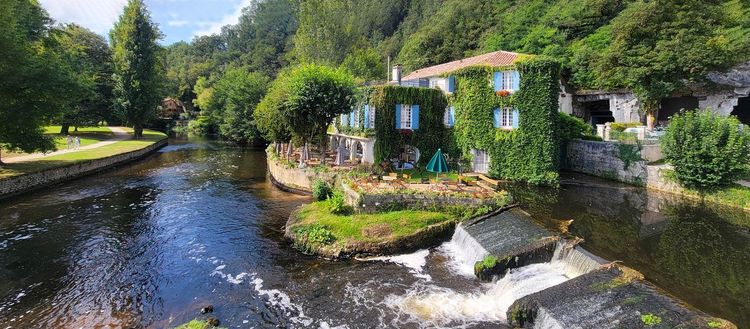
For a day in Brantôme, the most logical order starts with the abbey and its cave dwellings late in the morning, before the tour groups arrive, followed by a lunch break on the quays or on the terrace at Le Moulin de l'Abbaye. The afternoon is ideally suited to a canoe trip down the Dronne, or a more leisurely stroll through the back streets and the Jardin des Moines for those who prefer to keep their feet dry.
If you are wondering how long to visit Brantôme's historic centre alone, allow three to four hours for the abbey, the bell tower, the caves and a walk by the water, without the surrounding area. To explore one or two nearby villages as well, such as Bourdeilles or Saint-Jean-de-Côle, it is better to plan a full day, or even two to include Puyguilhem and the Villars cave without rushing.
Visitors who come for a long weekend often organise their stay around a simple map: Brantôme as a base, with 15 to 20-kilometre spokes towards each site in the Périgord vert. To plan this itinerary without endless searching, the Ryo app lets you build a route in advance and then follow an audio-guided tour on the spot, section by section, without needing a continuous data connection.
Whatever format you choose, set aside at least half a day for the historic centre itself: it is here, between the abbey and the Pont Coudé, that the essence of what makes Brantôme's reputation reach far beyond the Périgord is concentrated.
FAQ
How long does it take to visit Brantôme?
Allow three to four hours for the historic centre (abbey, caves, bell tower, quays). A full day lets you add a nearby village such as Bourdeilles, and two days are enough to include Puyguilhem and the Villars cave at a leisurely pace.
Where can you park in Brantôme?
Several free car parks line the town entrances, particularly near the tourist office and along the quays on the right bank. In high season, it is best to arrive before 10 a.m. to find a spot close to the centre.
What is the best time to visit Brantôme?
Spring and early autumn offer soft light and fewer crowds. Summer is still pleasant for canoeing and terrace dining, but the town centre fills up quickly in July and August, especially around the Friday market.
How do you get to Brantôme in the Périgord?
Brantôme is about 25 minutes from Périgueux and 1 hour 15 minutes from Bordeaux by car, via the D939 and then the D78. No direct train station serves the town, so a car remains the most practical option.
Which villages should you visit around Brantôme?
Bourdeilles and Saint-Jean-de-Côle, both listed among the most beautiful villages in France, are the most popular day trips within less than 20 minutes by road. Villars, with its château and cave, rounds off a one-day circuit nicely.
Where should you eat in Brantôme?
Le Moulin de l'Abbaye and several brasseries on the main square cover most of the dining options, from gastronomic Périgord cuisine to simpler daily specials. The Friday market also makes it easy to put together a picnic by the Dronne.
Does the Brantôme market run all year round?
Yes, the Friday morning market operates year-round, with a wider selection between April and October. A smaller Sunday market is added in certain months, mainly during the summer season.
Between the abbey set against its cliff, the Pont Coudé and the listed villages that surround it, Brantôme packs into a few square kilometres much of what makes the Périgord vert so appealing. Whether you come for a three-hour stopover or a full weekend, the historic centre and its cave dwellings should always take priority on your itinerary.
To explore each stage in depth without relying on a paper guide, the Ryo audio-guided tour of the town accompanies your visit step by step, from the abbey to the quietest back streets, with the option of extending the exploration towards Bourdeilles or Saint-Jean-de-Côle as the mood takes you.