
Créé par Romane, le 7 mai 2026
Votre guide Ryo
© Shutterstock
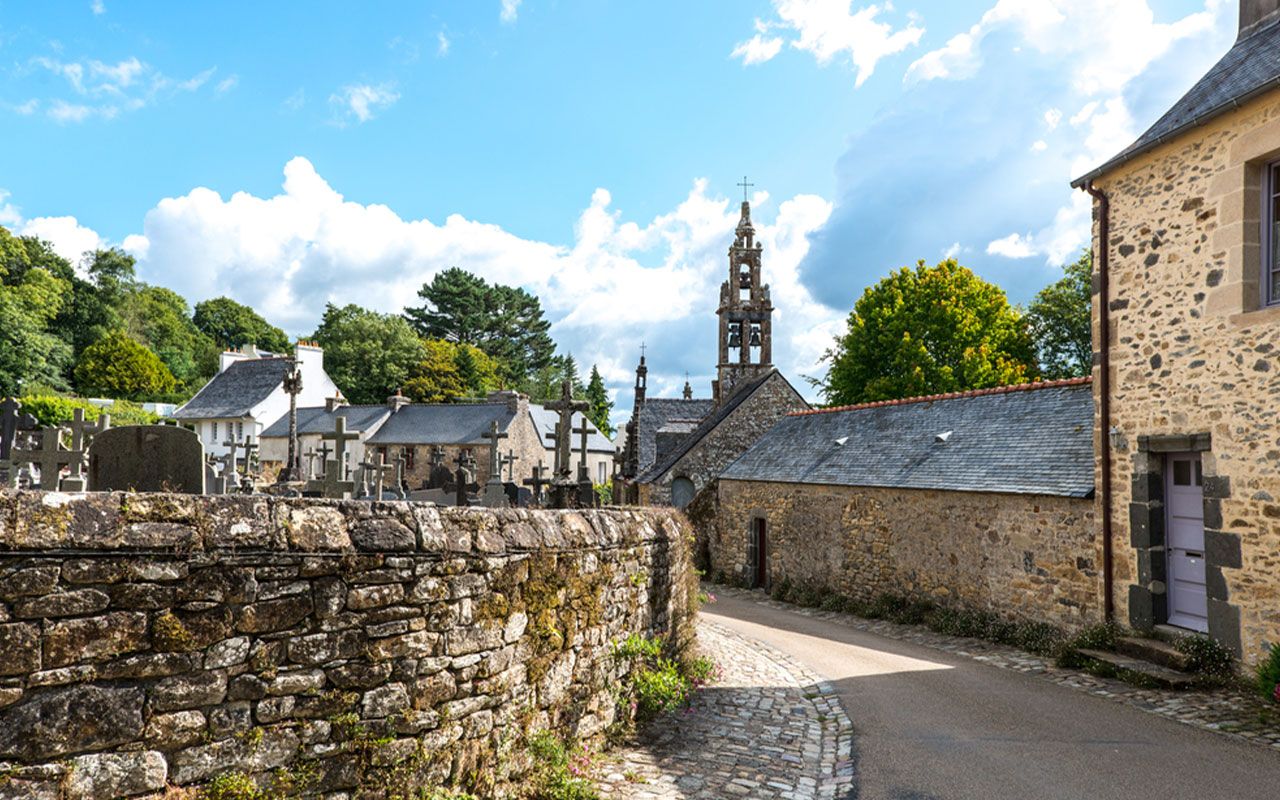
At the gates of the Atlantic Ocean, Brest, the capital of the oceans, is surrounded by a collection of authentic villages that showcase the richness of Finistère. Between land and sea, these Breton pearls offer visitors exceptional architectural heritage, grandiose landscapes and preserved Breton culture. Discover the most beautiful villages to visit around Brest, true jewels of the world's end.
1. Locronan, the city of painters and craftsmen
Classified among the most beautiful villages in France, Locronan, located about 50 km southeast of Brest, is a true journey through time. This medieval village, perched on a hill overlooking Douarnenez bay, has preserved its remarkable architectural authenticity.
The main square of Locronan, surrounded by granite Renaissance houses, constitutes one of the most homogeneous architectural ensembles in Brittany. The residences of former cloth merchants testify to the village's past prosperity through linen and hemp trade. The Saint-Ronan church, with its characteristic square tower, majestically dominates the square.
Locronan has also inspired many artists and filmmakers. The village has served as a natural setting for several historical films, notably Roman Polanski's "Tess". Today, craftsmen's workshops perpetuate local traditions: glassblowers, potters, weavers and wood sculptors offer their creations to visitors.
2. Daoulas, an open-air history book
Just 20 kilometers from Brest, Daoulas amply deserves its place among the most beautiful villages in Finistère. Located in the heart of the Armorique Regional Natural Park, this village labeled "Village en Poésie" captivates with its remarkable heritage and preserved natural setting.
The jewel of Daoulas is undoubtedly its abbey founded in the 12th century. The abbey gardens, classified as "Remarkable Garden", offer an exceptional walk through different botanical universes. The Romanesque cloister, with its elegant arcades, constitutes a unique architectural testimony in Brittany.
The parish church of Notre-Dame-des-Fontaines, with its 16th-century ossuary, perfectly illustrates Breton religious art. The ancient houses of the town, built in local schist, create an architectural harmony characteristic of Finistère.
Daoulas also benefits from an exceptional natural environment, between ria and wooded hills. The hiking trails allow visitors to discover the richness of local biodiversity, particularly the ornithological reserve of Daoulas ria.
3. Le Faou, medieval charm and Breton authenticity
Classified among the "Small Cities of Character" in Brittany, Le Faou occupies a privileged position at the bottom of Brest roads. This small medieval port, located 30 kilometers from Brest, has preserved its authentic character and exceptional architectural heritage.
The main street of Le Faou, lined with half-timbered houses from the 16th and 17th centuries, constitutes one of the most remarkable ensembles of Breton architecture. These merchant houses, with their corbels and colorful facades, testify to the village's past prosperity through maritime trade.
The Saint-Sauveur church, in flamboyant Gothic style, dominates the town with its slender silhouette. Its bell tower-porch and sculpted porch constitute masterpieces of Breton religious art. Inside, the baroque altarpieces and polychrome statues illustrate the local artistic richness.
The port of Le Faou, although modest, retains all its charm with its pleasure boats and picturesque quays. The walk along the ria offers magnificent views of Brest roads and the Arrée mountains.
4. Huelgoat, in the heart of the legendary forest
Located about 60 kilometers southeast of Brest, Huelgoat offers a unique natural setting in the heart of the Armorique forest. This village, nestled between lake and rocky chaos, constitutes an unmissable destination for lovers of nature and Breton legends.
The chaos of Huelgoat, a collection of granite rocks with spectacular forms, has fascinated visitors for centuries. The Trembling Rock, a huge 137-ton block that oscillates under the pressure of a hand, defies the laws of physics. The Devil's Cave and the Fairy Pool feed popular imagination and Arthurian legends.
Lake Huelgoat, bordered by a shaded promenade, offers a peaceful setting for relaxation and water activities. The hiking trails allow visitors to discover the richness of the Armorique forest and its many natural curiosities.
The town of Huelgoat, with its traditional granite houses, maintains an authentic atmosphere. The parish church, in Gothic style, houses remarkable works of art, notably high-quality contemporary stained glass windows.
5. Le Conquet, character port facing the islands
At the western tip of Finistère, Le Conquet occupies a strategic position facing the islands of Molène and Ouessant. This authentic port, located 25 kilometers from Brest, captivates with its preserved maritime character and grandiose landscapes.
The marina of Le Conquet, sheltered in a natural cove, constitutes the beating heart of the town. The fishermen's houses, with colorful facades, create a picturesque decor typically Breton. The Kermorvan lighthouse, accessible by a coastal path, offers spectacular views of the Iroise Sea.
The old town of Le Conquet, with its narrow streets and ancient houses, testifies to the village's maritime history. The Sainte-Croix church, in Gothic style, dominates the town with its slender silhouette. The Vauban fortifications recall the strategic importance of the site.
Le Conquet is also renowned for its wild beaches and coastal paths. The Blancs Sablons beach, one of the most beautiful in Finistère, extends for several kilometers. Hiking enthusiasts will appreciate the GR34, which runs along the wild coast to Pointe Saint-Mathieu.
6. Camaret-sur-Mer, jewel of the Crozon peninsula
Located at the western tip of the Crozon peninsula, Camaret-sur-Mer offers an exceptional setting between sea and moors. This typical port, classified as UNESCO World Heritage, constitutes a privileged destination to discover maritime Brittany.
The port of Camaret, with its colorful boats and lobster traps, evokes the maritime soul of the village. The Vauban tower, inscribed on the World Heritage list, testifies to the strategic importance of the site. The Lagatjar alignments, prehistoric megaliths, add a mysterious dimension to the landscape.
The villa district, with its Belle Époque houses, illustrates Camaret's seaside appeal from the 19th century. The Notre-Dame-de-Rocamadour church, in Gothic style, dominates the town with its characteristic square tower.
The coastal paths of Camaret offer exceptional panoramas of the Iroise Sea and the islands. Pointe de Pen-Hir, with its emblematic Tas de Pois rocks, constitutes one of the most photographed sites in Brittany.
7. Landerneau, between heritage and modernity
Landerneau, located just 20 kilometers from Brest, deserves a special place among the most beautiful villages in Finistère. This historic town, crossed by the Élorn, has successfully reconciled heritage preservation and contemporary dynamism.
The Rohan bridge, one of the last inhabited bridges in Europe, constitutes the emblem of Landerneau. This 14th-century construction, with its corbelled houses, offers a unique spectacle in Brittany. The tides that rise up the Élorn create a fascinating natural phenomenon.
The historic center of Landerneau, with its cobbled streets and ancient houses, testifies to the town's past prosperity. The Saint-Houardon church and Saint-Thomas church, both in Gothic style, illustrate the local architectural richness.
The Hélène and Édouard Leclerc Foundation, an internationally renowned contemporary art center, affirms Landerneau's cultural vocation. International-level exhibitions attract visitors from around the world.
8. Pont-Aven, the city of painters
Although located more than an hour from Brest, Pont-Aven deserves the detour to discover one of Brittany's most famous villages. This "city of painters" has inspired many artists, notably Paul Gauguin and the Pont-Aven School.
The historic center of Pont-Aven, crossed by the Aven, captivates with its picturesque charm. The old mills, transformed into art galleries, perpetuate the village's artistic tradition. The Pont-Aven museum presents an exceptional collection of works from the Pont-Aven School.
The banks of the Aven offer a romantic walk through the Bois d'Amour, source of inspiration for many painters. The tidal mills, unique in Brittany, testify to the ingenuity of former millers.
Pont-Aven is also renowned for its galettes and crêpes, local specialties that can be enjoyed in numerous authentic crêperies. Don't hesitate to be guided by the Quimper visit itinerary to discover this exceptional region.
9. Concarneau, the walled town
Concarneau, located about 90 kilometers from Brest, offers a unique spectacle with its fortified walled town. This maritime city, France's third fishing port, combines historical heritage and modern economic activity.
The walled town of Concarneau, surrounded by 14th-century ramparts, constitutes an exceptional architectural jewel. The cobbled streets, ancient houses and craftsmen's shops create a preserved medieval atmosphere. The Fishing Museum presents the maritime history of the region.
Concarneau's fishing port, one of France's most important, offers a permanent spectacle with the coming and going of trawlers. The morning auctions allow visitors to observe traditional port activity. The marina accommodates numerous yachts and sailboats.
Concarneau's beaches, notably the Sables Blancs, offer spaces for relaxation and water sports. The corniche allows visitors to discover the natural beauties of southern Finistère's coast.
In conclusion, the most beautiful villages to visit around Brest offer an exceptional diversity of landscapes, heritage and experiences. From medieval Locronan to maritime Concarneau, passing through mysterious Huelgoat, each village reveals a unique facet of Brittany. These privileged destinations allow visitors to understand the Breton soul and experience unforgettable moments at the world's end. For an optimal discovery of this extraordinary region, don't hesitate to use the audio-guided itinerary of Brest which will allow you to explore the capital of the oceans before venturing to these wonderful villages.
What is the best time to visit these villages?
The ideal period extends from May to September, with milder weather and longer days. Summer offers particular animation with festivals and local markets, while autumn reveals magnificent colors in natural landscapes.
How to organize a circuit of villages around Brest?
It is recommended to plan at least 3 to 4 days to discover the main villages. Good organization consists of grouping visits by geographical zone: Locronan and Le Faou to the south, Le Conquet and Camaret to the west, Huelgoat and Daoulas to the east.
What are the recommended means of transport?
The car remains the most practical means to explore these villages with complete freedom. However, some villages are accessible by public transport from Brest. Electric bike rental constitutes an ecological alternative for short distances.