
Créé par Emilie, le 4 juin 2026
Votre guide Ryo
The Most Beautiful Villages of Calvados to Discover
© Shutterstock
Calvados, a true jewel of Normandy, is home to some of the most beautiful villages in France. Between half-timbered houses, picturesque ports and exceptional historical heritage, these villages offer an authentic journey into the heart of Norman culture. Whether you are a lover of traditional architecture, passionate about history or simply seeking authenticity, the most beautiful villages of Calvados will seduce you with their timeless charm.
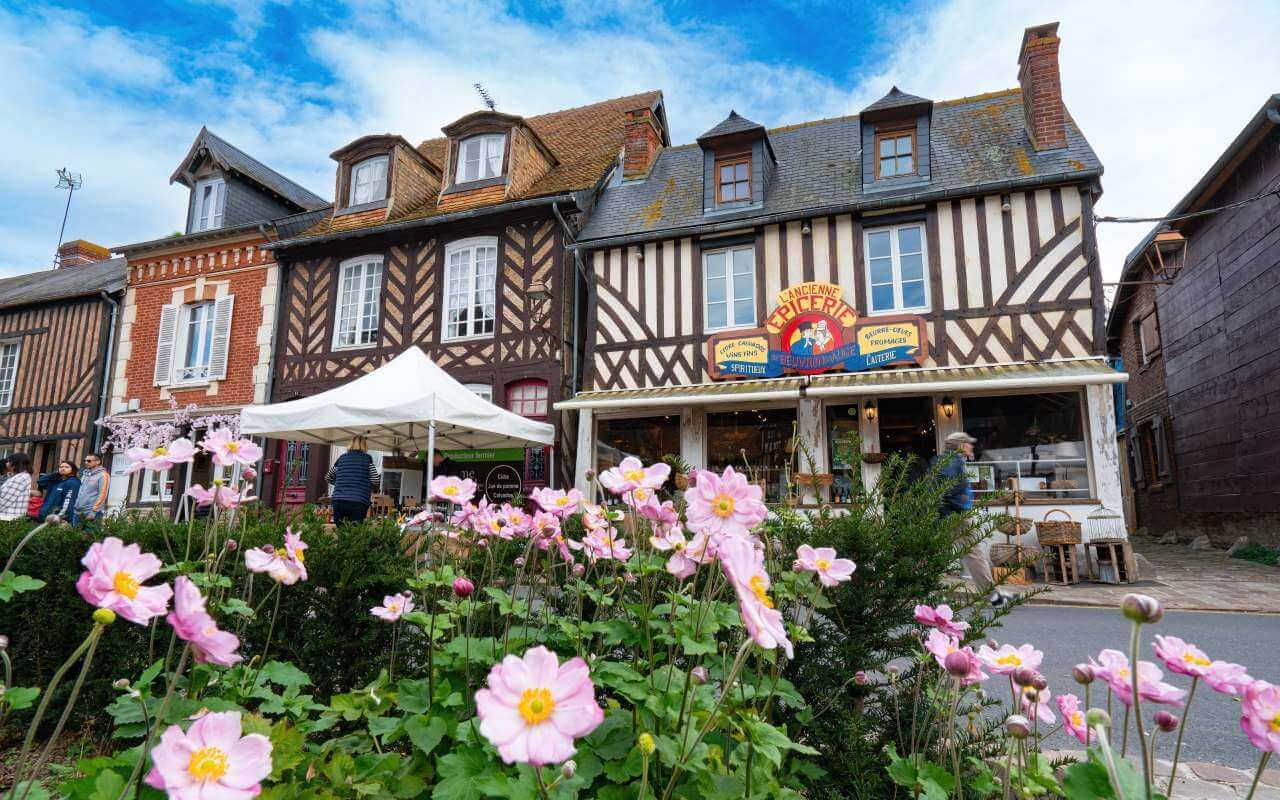
Beuvron-en-Auge: The Only Village Classified as "Most Beautiful Villages of France"
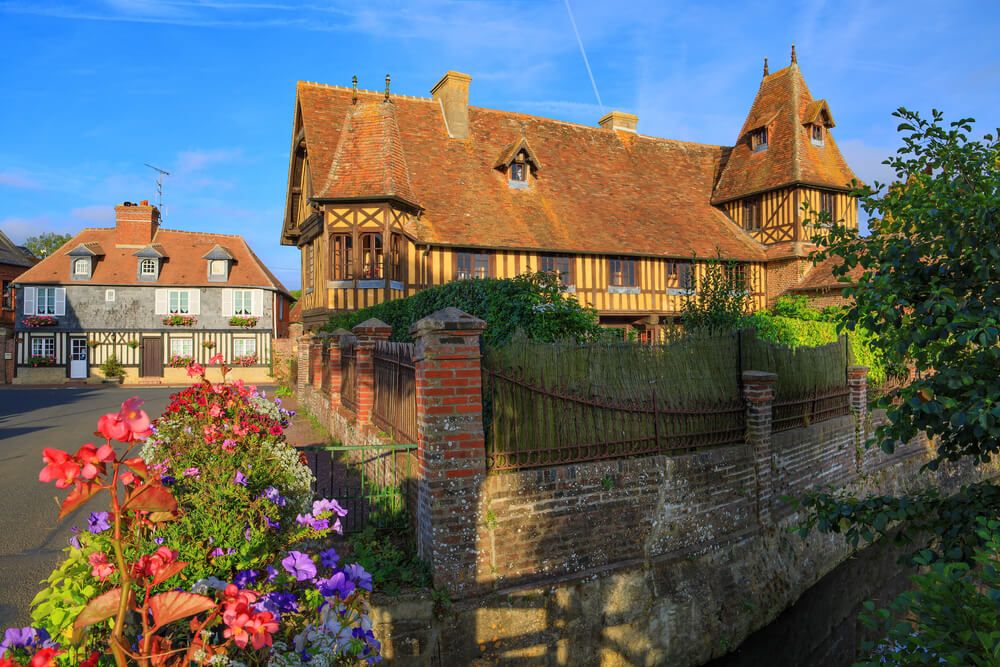
Located in the heart of Pays d'Auge, Beuvron-en-Auge holds the prestigious "Most Beautiful Villages of France" label and is one of the most photographed villages in Calvados. Its multicolored half-timbered houses, perfectly preserved, create an architectural ensemble of striking beauty. The central square, adorned with its 16th-century halls, offers an idyllic setting to stroll and admire the Norman way of life.
This flowered village of 230 inhabitants captivates with its preserved authenticity. Each facade tells a story, each cobbled street invites contemplation. Photography enthusiasts will find their happiness here, while gourmets can taste local specialties in the village's traditional establishments.
Honfleur: The City of Impressionist Painters
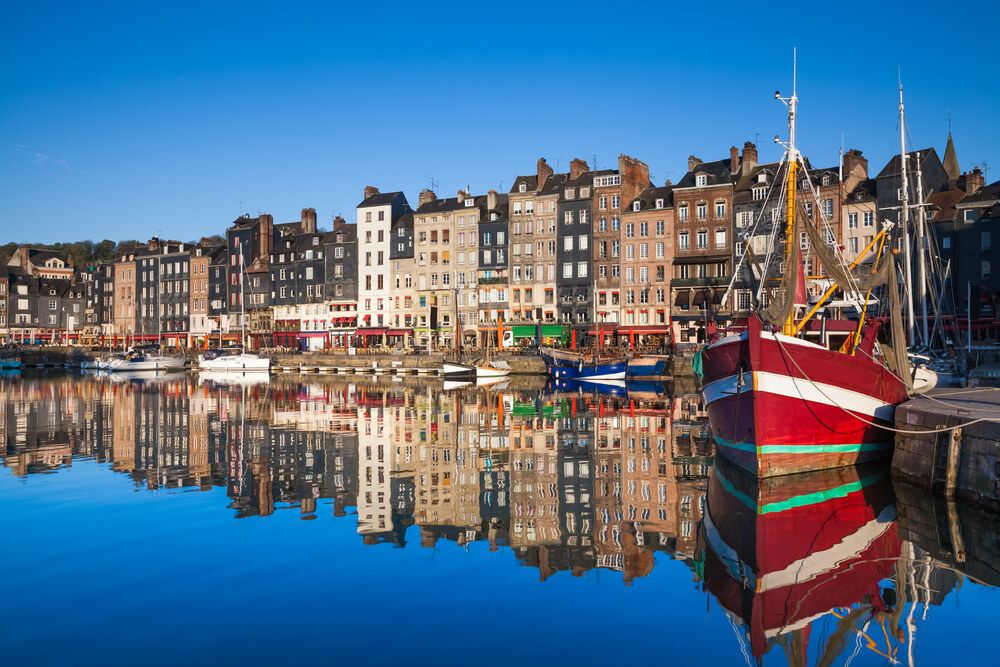
Honfleur, a true pearl of Calvados, has inspired the greatest Impressionist painters. Its Old Basin, framed by narrow houses with colored facades, is one of the most photographed ports in France. The Lieutenance, a remnant of 14th-century fortifications, testifies to the city's rich maritime past.
The Sainte-Catherine church, entirely built of wood by marine carpenters, perfectly illustrates Norman ingenuity. Its cobbled streets are full of art galleries, craft shops and gourmet restaurants. Honfleur offers a unique experience where art, history and gastronomy blend harmoniously.
Bayeux: The City of the Tapestry
Bayeux, famous for its 11th-century tapestry classified as UNESCO World Heritage, is one of the best preserved cities in Normandy. Its historic center, spared by the 1944 bombings, offers a remarkable medieval architectural ensemble. The Notre-Dame Cathedral, a masterpiece of Norman Gothic art, majestically dominates the city.
The cobbled streets of old Bayeux invite you to discover half-timbered houses, private mansions and secret gardens. The Baron Gérard Museum and the Battle of Normandy Memorial Museum perfectly complement the visit of this history-laden city.
Cabourg: The Belle Époque Seaside Resort
Cabourg, immortalized by Marcel Proust in "In Search of Lost Time," embodies the elegance of the Belle Époque. Its Marcel Proust promenade, 4 kilometers long, offers a breathtaking view of the Seine bay. The 19th-century seaside architecture, with its Norman villas and its Grand Hotel, testifies to the refinement of a bygone era.
The fine sand beach, protected by colorful beach huts, invites relaxation and seaside pleasures. The city center, organized around the avenue de la Mer, retains its old-world charm with its elegant shops and café terraces.
Villerville: The Village on the Cliffs
Perched on the cliffs between Trouville and Honfleur, Villerville offers a peaceful and authentic setting. This charming fishing village has managed to preserve its rural character while benefiting from an exceptional situation facing the sea. Its narrow streets, lined with traditional houses, descend towards a 4-kilometer beach.
The remarkable geological site of the Vaches Noires, accessible from Villerville, reveals fossils dating back 160 million years. Hiking enthusiasts will appreciate the coastal paths offering exceptional panoramas of the Seine estuary.
Clécy: The Pearl of Norman Switzerland
Clécy, nicknamed the "pearl of Norman Switzerland," stands out for its exceptional natural setting. Nestled in the meanders of the Orne, this characterful village offers a rolling landscape unique in Calvados. The Pain de Sucre, an emblematic rock dominating the village, constitutes a remarkable natural belvedere.
Outdoor activities are numerous: canoe-kayak on the Orne, hiking, via ferrata and climbing. The village, labeled "Village of Character of Calvados," has managed to preserve its traditional stone and slate architecture typical of mountain villages.
Port-en-Bessin: The Authentic Fishing Port
Port-en-Bessin-Huppain, the first fishing port of Calvados, has retained its maritime authenticity. Located between the cliffs, this small port of 2,100 inhabitants lives to the rhythm of tides and fishing. The morning fish market, where freshly caught scallops are sold, is a fascinating spectacle.
The Vauban towers, remnants of 17th-century fortifications, testify to the port's strategic past. The Underwater Wrecks Museum traces the region's turbulent maritime history. Port-en-Bessin offers an authentic experience of Norman maritime life.
Cambremer: The Cider Capital
Cambremer, the true capital of Norman cider, is located in the heart of the Cider Route. This picturesque village of Pays d'Auge, which inspired Marcel Proust, offers an idyllic setting to discover Norman cider traditions. Its orchards as far as the eye can see and its artisanal distilleries perpetuate ancestral know-how.
The typical architecture of Pays d'Auge, with its half-timbered houses and its manors, characterizes this village of 1,300 inhabitants. Cider and calvados tastings are an essential stop to understand the Norman way of life.
Blangy-le-Château: The New "Most Beautiful Village of France"
Blangy-le-Château, recently labeled "Most Beautiful Village of France," is a remarkable discovery in Pays d'Auge. Nestled in the Chaussée valley, this village of 600 inhabitants captivates with its harmonious architectural ensemble. The main street, lined with colorful half-timbered houses and brick dwellings, offers an enchanting spectacle.
The Saint-Vigor church, the remains of the medieval castle and the French gardens complete the visit of this authentic village. The surrounding wooded hills offer magnificent panoramas of the Norman countryside.
Creully-sur-Seulles: The D-Day Village
Creully-sur-Seulles, formed by the merger of several communes, houses one of the most emblematic castles of Calvados. The medieval castle of Creully, which served as a command post for the BBC during the D-Day landings, testifies to the region's turbulent history. Its Radio Museum traces this little-known chapter of history.
The village, liberated on June 6, 1944, has preserved its exceptional architectural heritage. The cobbled streets, stone houses and French gardens create a harmonious ensemble steeped in history.
What is the best time to visit the villages of Calvados?
The best period extends from May to September, with pleasant temperatures and numerous local events. Autumn also offers magnificent colors in the Norman landscapes.
How long does it take to visit the main villages?
Allow a full day for each main village like Honfleur or Bayeux. For smaller villages like Beuvron-en-Auge, half a day is enough. A week-long stay allows you to discover everything comfortably.
Can you visit these villages by public transport?
Some villages like Bayeux and Cabourg are accessible by train. For the others, the car remains the most practical means, allowing you to discover the surrounding landscapes and stop at your own pace.
Are there culinary specialties to discover in these villages?
Absolutely! Each village offers its specialties: cider and calvados in Cambremer, scallops in Port-en-Bessin, Norman local products everywhere else. Local markets and traditional restaurants are essential.