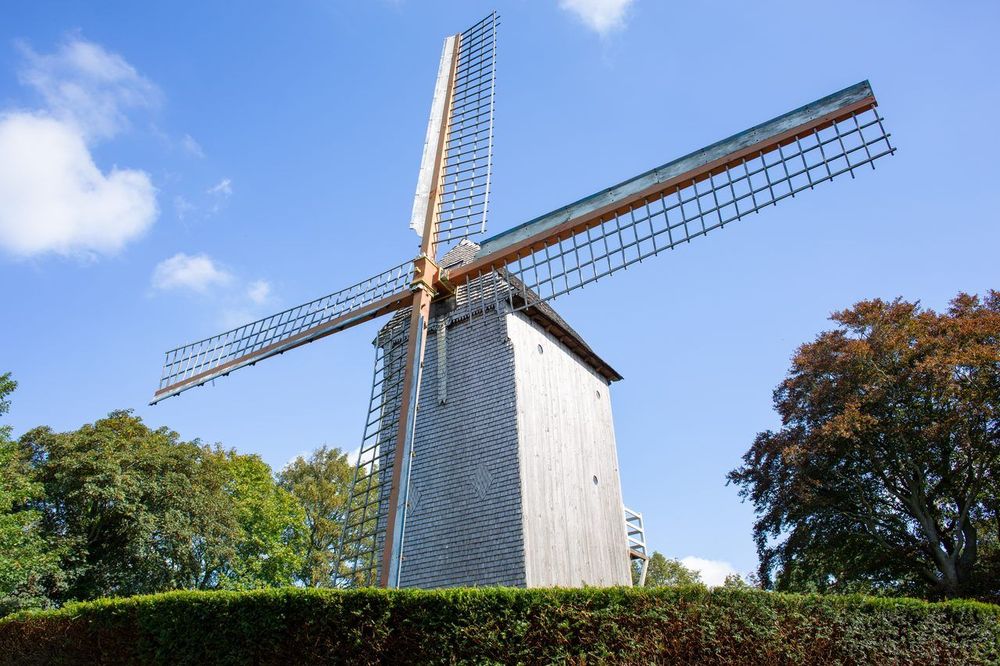
© Shutterstock
 Votre guide Ryo
Things to Do in Cassel in 2026: 15 Experiences at the Summit of Flanders
Perched at 176 metres above sea level in the middle of the Flemish plain, Cassel is one of the rare promontories visible for miles around between Lille, Dunkerque and the Belgian border. From its summit, on a clear day, the eye can reach five departments and two countries, the kind of panorama found nowhere else in the Nord. Wondering what to do in Cassel means first accepting the climb — on foot or by car — a good half-hour ascent that radically shifts your perspective on all of Flanders. Fans of Ryo audio-guided tours will find an ideal terrain for exploration here, even if Cassel does not yet have its own dedicated audio-guided tour.
The programme holds a few surprises: a windmill still in operation, a collection of Flemish primitives, half-erased medieval ramparts, and a cobbled ramp that professional riders dread every spring. You also encounter the memory of Marshal Foch, who directed the Allied armies from Cassel during the First World War, and the echo of a carnival where two wooden giants dance before thousands of spectators. History lovers, Sunday walkers or cyclists in search of elevation: Cassel can be covered in a morning, but easily deserves a full day.
1. The 360° Panorama from the Summit of Mont Cassel
The Mont Cassel (Sommet du Mont Cassel, 59670 Cassel, rated 4.6/5 on Google from 219 reviews) rises to 176 metres, which, in the heart of the Flemish plain, is enough to make it the highest point visible to the naked eye for dozens of kilometres. From the orientation table at the summit, local legend claims that on a clear day you can make out up to five French departments and part of neighbouring Belgium, from Dunkerque to Lille and across the Monts des Flandres. This is no mere tourist formula: on days with an open sky, often late morning in autumn or winter, visibility easily exceeds 40 kilometres and the wind turbines along the Belgian border stand out sharply on the horizon.
Climbing to the summit takes a little effort: allow 20 to 30 minutes on foot from the lower town along steeply sloping cobbled streets, or just a few minutes by car if you prefer to save your legs for the rest of the visit. Once at the top, the wind is almost always present, which explains the historic presence of a windmill on this same promontory since the 17th century.
The best time to enjoy the viewpoint is early in the morning, before the tourist coaches arrive, or in the late afternoon when the raking light gilds the agricultural plain. Bring a jacket even in summer: at this relative altitude, the wind blows almost continuously and the chill often catches visitors who have come from Lille or Dunkerque in a T-shirt. It is also from this belvedere that Marshal Foch chose to set up his headquarters in 1914, a strategic decision directly tied to his ability to survey the entire surrounding plain with the naked eye.
The site has retained this role as an observation post: during the Occupation, the German army in turn installed spotting positions here, and today paragliders sometimes take advantage of the updrafts to launch from the north-facing slopes of the mount. If you are travelling with children, the ascent remains pushchair-accessible on the main road, which is less steep than the cobbled lanes taken by hurrying pedestrians. Allow plenty of time: between the climb, the time spent scanning the horizon and the descent, this stop easily takes 45 minutes to an hour, without even entering the public garden or visiting the windmill a few steps away.
Local legend has it that on exceptionally clear days, some visitors claim to spot the North Sea in the distance — unverifiable, but regularly repeated by guides. The mount also owes its name to its position as a Roman castrum, an ancient fortified camp, traces of which remain buried beneath the current gardens, a reminder that the site was occupied long before the medieval era. A café-restaurant right next to the public garden allows you to extend the break with a sweeping view over the plain, a welcome option after the effort of the climb.
2. The Public Garden and Its Statues at the Summit of the Mount
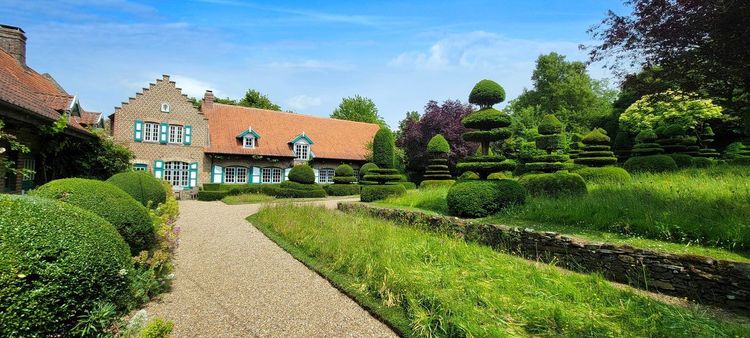
Laid out at the summit of the mount around former fortification ditches, the Jardin public de Cassel (Place du Général Vandamme, 59670 Cassel, rated 4.5/5 on Google from 657 reviews) offers a shaded break beneath century-old lime trees, between two observation circuits. The French-style trimmed box hedges recall the 19th-century origins of the garden, conceived as a belvedere promenade for the local bourgeoisie.
At its centre stands the equestrian statue of Marshal Foch (Place du Général Vandamme, 59670 Cassel, rated 5/5 on Google from 4 reviews), unveiled in 1928, keeping watch over the plain that the strategist surveyed during the Great War (more on this below). General Vandamme, another local son born in Cassel who rallied to Napoleon, is honoured by a separate monument lower down near the Grand Place. The benches arranged in a semicircle invite you to linger, especially at the end of the day when the light skims the slate rooftops of the lower town. Allow 15 to 20 minutes to walk the full circuit, a little longer if you let yourself be drawn in by the historical interpretation panels scattered along the paths.
3. The Moulin de Cassel, the Last Working Windmill
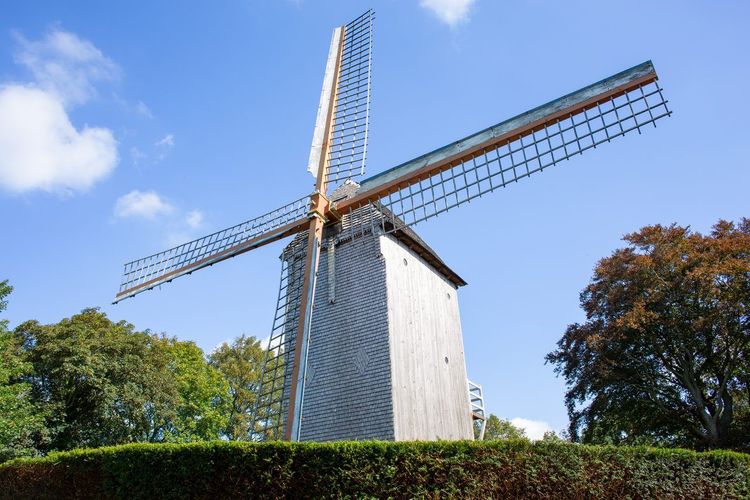
A stone's throw from the public garden, the Moulin de Cassel (Sommet du Mont Cassel, 59670 Cassel, rated 4.5/5 on Google from 83 reviews), also known as Kasteel Meulen, still turns its wooden sails in the wind that sweeps the summit of the mount. Brought from Arnèke and rebuilt at the top of the mount in the early 1980s, replacing a mill destroyed by fire in 1911, it perpetuates a milling tradition that once counted many windmills on the heights of Flanders.
The interior can be visited during animation days organised by passionate volunteers, generally in spring and summer: the oak mechanism, stone millstones and flour sacks still in use give a concrete sense of milling work before the age of electricity. Even when the doors are closed, the silhouette of the mill against the Flemish sky remains one of the most widely shared images of the town, particularly at sunset when the sails stand out as a silhouette. Check with the tourist office about the opening calendar before making a special trip for the interior visit, as opening times vary considerably from season to season.
4. Strolling Around the Grand Place and Its Flemish Facades
Back at the foot of the mount, the Grand Place de Cassel (Grand Place, 59670 Cassel, rated 4.2/5 on Google from 11 reviews) concentrates most of the local activity: terraces, independent shops and gabled facades that recall the proximity of the Belgian border, barely 25 kilometres away. The brick houses, some dating from the 16th century, alternate with facades rebuilt after the destruction of 1940, offering an architectural patchwork that reads like an open-air history book.
The Thursday morning market has animated the square for generations: local producers, Flemish cheeses and vegetables from the nearby market gardens stand side by side under the stalls. Outside market days, the square remains a mandatory stopping point, particularly to reach the museum or one of the terraces facing the old belfry. Settle on a terrace late morning, before the lunchtime rush: you will enjoy an unobstructed view of the whole square, brought to life more by residents than by organised groups. On summer evenings, some estaminets bring their tables outside until late, naturally extending the visit into a more relaxed evening.
5. The Musée de Flandre and Its Flemish Primitives
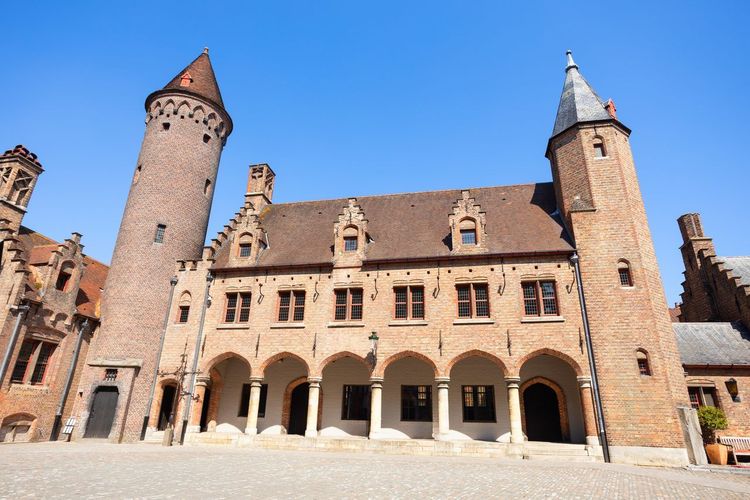
Housed in the former Hôtel de la Noble Cour, a 16th-century Renaissance mansion, the Musée de Flandre (26 Grand Place, 59670 Cassel, rated 4.5/5 on Google from 1,031 reviews) brings together one of the densest collections of Flemish painting outside Belgium and the Netherlands. The vaulted rooms house religious paintings, peasant scenes and portraits documenting four centuries of artistic exchange across both sides of the border, from Bruges to Cassel itself.
The visit typically begins with rooms devoted to 15th-century religious painting, before moving on to later genre scenes: village fairs, estaminet interiors and bustling markets that recall, in their own way, those still found today on the neighbouring Grand Place. An audio guide is available at the entrance to explore certain key works in depth, a formula close in spirit to what a Ryo audio-guided tour offers in other French cities, but focused solely on the permanent collections.
Allow an hour and a half for a full visit, two hours if a temporary exhibition occupies the ground-floor rooms, which happens roughly twice a year. The museum closes on Mondays (and does not open until 10 am the rest of the week), a weekly closure to check before planning your visit, especially if you are combining it with a return trip from Lille or Dunkerque in a single day. School groups often occupy the weekday mornings outside school holidays, a detail that leads some visitors to prefer the afternoon for a quieter experience in the rooms.
The hanging changes regularly: several works rotate with other Flemish partner institutions, meaning a second visit a few years later can reveal previously unseen paintings. Local history enthusiasts will particularly appreciate the section devoted to Cassel's craftsmen and guilds, which grounds the museum in the immediate urban fabric rather than in an art history disconnected from place. Among the artists on display, several names remain known mainly to specialists of the minor Flemish school, giving the museum more of a discovery feel than a simple confirmation of works seen elsewhere. A dedicated educational space for children completes the circuit, with occasional workshops during school holidays, an initiative that makes the visit accessible even to families unfamiliar with classical painting museums.
The ticket office offers a reduced combined rate with other heritage sites in the Flemish interior, an option worth considering if your stay extends beyond Cassel. The adjoining shop sells a number of specialist volumes on Flemish painting, difficult to find elsewhere in the region, as well as small-format reproductions for visitors who want to take home a souvenir less bulky than a framed canvas.
6. The Remains of the Ramparts and the Porte de Bergues
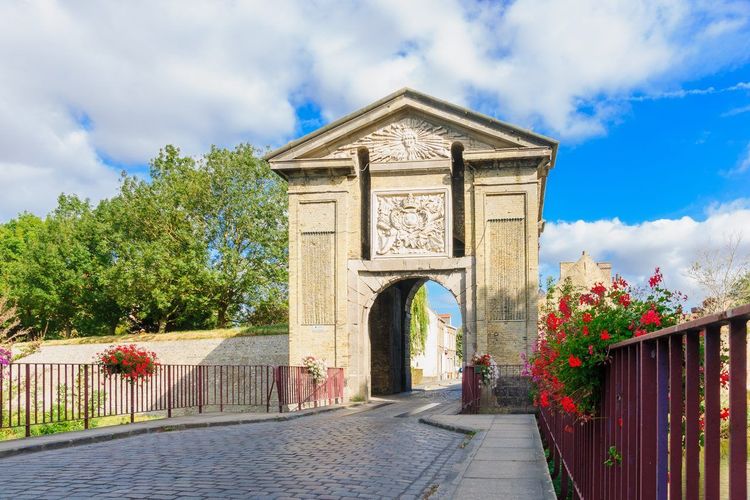
Cassel was long a fortified stronghold, controlling access to the Flemish plain from its natural promontory. Today only fragments of these medieval and bastioned ramparts remain, visible in sections along the watchpath that encircles part of the mount.
The Porte de Bergues, the best preserved, still marks one of the former entrances to the walled town and today serves as a starting point for a walk around the mount. The path running alongside the remains allows you to observe the brick and earth structure of the fortifications, without excessive reconstruction that would strip away their authentic character. Allow about twenty minutes for this partial circuit, easily combined with the climb to the public garden or the descent to the Grand Place.
7. The Collégiale Notre-Dame de Cassel
Built from the 15th century on the foundations of an older building, the Collégiale Notre-Dame (Place Notre-Dame, 59670 Cassel, rated 4.3/5 on Google from 168 reviews) dominates the Grand Place with its massive brick and stone bell tower. The plain interior preserves 17th-century liturgical furnishings and a few stained-glass windows replaced after the bombardments of 1940.
Entry is free during the day, outside services, and the cool interior offers a welcome break after climbing the mount in the height of summer. Allow a quarter of an hour for a quick visit, a little longer if you linger over the details of the antique furnishings.
8. The Hôtel de la Noble Cour, a Renaissance Gem
Even before considering the collections it houses, the Hôtel de la Noble Cour (26 Grand Place, 59670 Cassel, rated 4.5/5 on Google from 1,031 reviews) is worth a look in its own right: a 16th-century Flemish Renaissance facade, a paved inner courtyard and an original spiral staircase. The building long served as an administrative headquarters before becoming the home of the museum.
Visitors in a hurry sometimes make do with the entrance courtyard, freely accessible even outside ticketing hours, to photograph the carved facade without paying museum admission.
9. The Memorial to Marshal Foch and His Great War Headquarters
Few visitors know that between 1914 and 1915, Cassel became the military nerve centre of the Allied armies: Marshal Foch, then a general, set up his headquarters here precisely because of this dominant position over the Flemish plain, a strategic choice that allowed him to monitor troop movements for miles around.
An equestrian statue of the marshal, installed in the public garden, recalls this lesser-known historical role outside circles of military history enthusiasts. The commemorative plaques scattered around the garden outline the broad strokes of this period without turning the visit into a genuine museum circuit: it is more of a discreet reminder than a heavy-handed tourist presentation.
First World War history enthusiasts will usefully complement this stop with a visit to the tourist office, which sometimes offers thematic brochures or guided tours on the Allied military presence in the region between 1914 and 1918. The subject remains alive locally: each year, a commemorative ceremony brings together elected officials and veterans' associations at the foot of the statue, generally around 11 November.
This aspect of Cassel's history contrasts with the bucolic image of a flower-filled village that the town projects for the rest of the year, and adds further depth to the summit visit, poised between tourist panorama and military memory. Schoolchildren from the region often come on field trips to discover this page of history directly on the ground, rather than from a textbook.
Foch's choice of Cassel was no accident: the town had already hosted several command posts before him, the Flemish interior regularly serving as a rear base for troops engaged at the front, barely thirty kilometres away. This close proximity to the front lines also explains the presence, in several neighbouring communes, of British and Commonwealth military cemeteries, which some visitors combine with a stop at Cassel as part of a broader memorial itinerary dedicated to the Great War in Flanders. The municipal archives hold several pieces of correspondence exchanged from this headquarters, now accessible on request from the heritage services, for researchers or simply curious visitors wishing to explore this period in greater depth. A discreet plaque, affixed to one of the buildings in the historic centre, also recalls the passage of several Allied figures who came to meet Foch during this pivotal phase of the conflict.
10. The Alpine Ramp, the Mythical Climb of the Quatre Jours de Dunkerque
Whether you are a sports enthusiast or simply curious, do not miss the alpine ramp, this cobbled road that storms the mount with gradients exceeding 13% in places. Tackled every spring by the Quatre Jours de Dunkerque cycling race, it has earned a fearsome reputation among professional riders, compared by some sports commentators to the toughest climbs on the Belgian calendar.
On foot or by bike, the amateur ascent calls above all for steadiness: the uneven cobbles make the effort harder than a simple gradient figure suggests, and it is better to maintain a consistent pace than to push too hard in the first metres. Some weekend cyclists come specifically to test their legs on this segment, much as one ticks off a famous col on a bucket list.
For the less sporty, it is perfectly possible to observe the ramp from the bottom without attempting it, or to drive up it to appreciate from the inside just how impressive the gradient feels once you are on it. On race days, the town is completely transformed: bars and terraces set up screens, residents bring out fold-up chairs along the roadside, and the atmosphere feels more like a local village fete than a simple sporting stage.
Outside race dates, generally early May, the ramp reverts to a quiet, almost anonymous road, used mainly by residents heading up to buy bread or reach the summit by car. This contrast between everyday anonymity and the sporting excitement of spring sums up Cassel rather well — a discreet town for most of the year and briefly in the spotlight for a few days. The name alpine ramp, slightly ironic given how far the Alps actually are, was popularised by sports commentators looking for a catchy phrase to describe a challenge that is ultimately local but very real in the flatlands of Flanders. Some cycle tourists come specifically outside race dates to time their own ascent, then compare their times with friends over a beer at one of the Grand Place estaminets.
Cycling enthusiasts will also find, in the immediate vicinity, several other Monts de Flandre to chain together on a single outing: the Mont des Cats, the Mont Noir or the Mont Rouge naturally complete a half-day cycling loop for those who come specifically for the elevation rather than the heritage.
11. The Rue d'Aire, Period Facades and Cobblestones
Linking the lower town to the foot of the mount, the rue d'Aire (Rue d'Aire, 59670 Cassel) lines up brick facades and a few half-timbered houses that escaped the 20th-century reconstructions. The cobbled ascent also provides a less frequented alternative to the alpine ramp for those who want to reach the summit on foot.
The local shops lining it make it a lively street on weekdays, far from the more tourist-orientated bustle of the Grand Place. Take the time to notice the ironwork details on some of the old doorways — a more discreet heritage than the listed monuments, but no less representative of the local Flemish architecture.
12. The Cassel Carnival and the Giants Reuze Papa and Reuze Maman
Every year, generally in spring, Cassel comes alive to the rhythm of its carnival, one of the oldest in the Flanders region with origins dating back to the 16th century. Locals strike up the Reuzelied, a traditional song dedicated to the local giants, in the streets and on a Grand Place packed with crowds for the occasion.
The central figures of the celebration, Reuze Papa and Reuze Maman, are two wicker and wood giants carried by costumed residents, a tradition inscribed on UNESCO's Intangible Cultural Heritage of Humanity list alongside other giants from northern France and Belgium. Their procession through the steep lanes of the mount produces quite spectacular scenes, particularly when the carriers negotiate the narrowest passages without letting the giants sway.
If your visit does not coincide with carnival dates, the giants can still be spotted throughout the year: they are displayed outside festival periods, generally visible from outside a municipal building, and the tourist office will happily point you to their exact location depending on the calendar. Children are often struck by their sheer size — several metres tall, far more imposing than photographs suggest.
Beyond the folklore, this tradition says something about Cassel's identity, in some respects closer to the folk culture of neighbouring Belgian Flanders than to the rest of the Nord department. The residents themselves readily claim this cultural affinity with the nearby West Flanders region, just a few kilometres from the border. To extend the experience, several estaminets on the Grand Place organise themed evenings around carnival dates, with traditional songs and reinvented Flemish menus, a more informal way to keep the celebration going beyond the official parade.
13. Sitting Down in an Estaminet to Taste Flanders
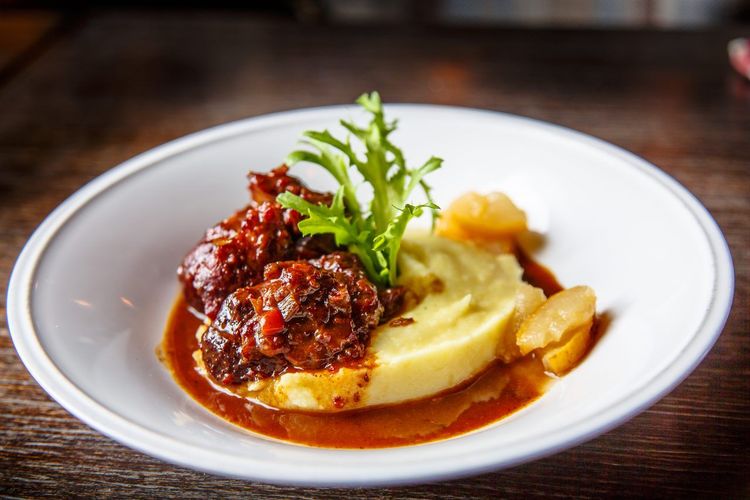
It is impossible to leave Cassel without having tried carbonnade flamande, this beef stew slow-cooked in dark beer and gingerbread, traditionally served with home-made chips in most of the Grand Place estaminets. Potjevleesch, a cold terrine of several meats in aspic, often features on the menu as a starter, a more surprising dish but representative of Flemish peasant cuisine.
Several historic estaminets line the square, recognisable by their deliberately rustic decor: exposed beams, old farm tools hung on the walls and mismatched crockery that cultivate an unashamed nostalgia. The beer list is also worth exploring: the region produces several local craft beers, often served in distinctive stemmed glasses, to be enjoyed in moderation before getting back on the road or making the ascent of the mount.
Book ahead at weekends during the tourist season: tables fill up quickly between noon and 2 pm, especially on spring Sundays when visitors flock in with families after a walk on the mount. During the week, on the other hand, you will find a place more easily, sometimes even on the terrace if the weather allows. A few estaminets also offer tasting menus including several small portions, handy for sampling more specialities without limiting yourself to a single dish. Local producers also take advantage of the Thursday market to sell cheeses and charcuterie that pair well with regional beers, an option for putting together a picnic to take up to the summit.
Those with a sweet tooth are not forgotten: several estaminets offer sugar tart or filled waffles for dessert, a generous finishing touch after an already hearty meal. Some shops on the Grand Place also sell these specialities to take away, a handy way to continue the taste discovery once you are back home.
14. Hiking the Trails That Circle the Mount
Beyond the cobbled streets of the centre, several waymarked hiking trails allow you to walk the full circuit of the mount through woods and meadows, well away from the bustle of the Grand Place. The complete loop takes about 1 hour 30 minutes, over generally easy terrain despite a few sloping sections.
These paths pass through a small protected woodland, a refuge for discreet wildlife including roe deer and birds of prey, which local residents enjoy walking early in the morning. The route joins the GR128 long-distance footpath at several points, a trail that links several Monts de Flandre together, an option for walkers who want to extend their outing beyond the commune of Cassel itself.
Wear appropriate footwear after a rainy spell: the clay soil of the region holds moisture easily and some sections become slippery. The information panels placed along the route detail the local flora and fauna, a useful educational complement for families out for a walk.
15. Extending the Discovery Towards Steenvoorde and the Flemish Interior
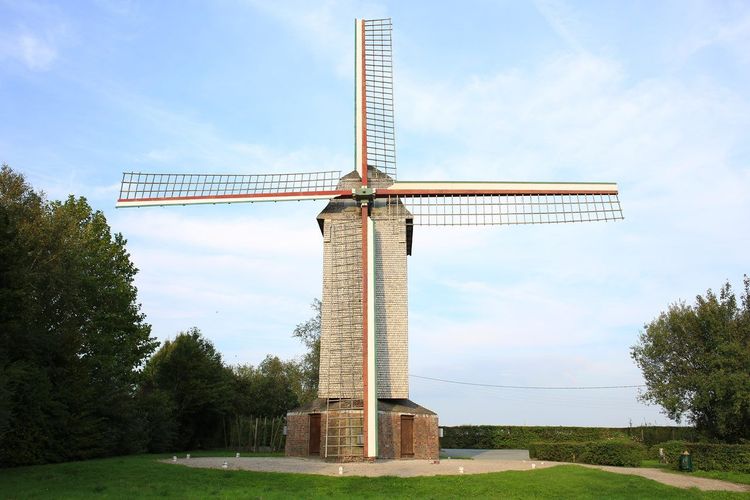
About ten minutes by road, Steenvoorde makes a pleasant complement to a day in Cassel: a well-regarded agricultural market, craft breweries and bocage landscapes typical of the Flemish interior. The commune also retains several windmills, a direct echo of the one at the summit of Cassel.
Cycling enthusiasts will happily continue to the other nearby Monts de Flandre, while families will appreciate the farm visits, plentiful in this rural area. Allow an additional half-day if you want to explore this extension properly, without rushing it between two denser stages of your stay.
FAQ
What can you do in Cassel in one day?
A full day allows you to climb to the summit of Mont Cassel, visit the Musée de Flandre, stroll around the Grand Place and try a local estaminet. The more organised can add the alpine ramp and a tour of the rampart remains, without rushing between each step of the visit.
How much time should you plan to visit Cassel?
Allow half a day for the essentials: the summit, the public garden, the Grand Place. A full day lets you add the museum, the ramparts and a leisurely stop at an estaminet, at a more relaxed pace than rushing through every attraction.
Is Cassel worth the trip from Lille or Dunkerque?
Yes: Cassel is about 45 minutes from Lille and 30 minutes from Dunkerque by car. The panorama from the summit of the mount and the Flemish atmosphere of the Grand Place more than justify this short journey, even for a simple half-day outing with friends or family.
Where can you park in Cassel?
Several free car parks exist at the foot of the town and another at the summit of the mount, the latter filling up quickly on weekends during the season. Arriving before 10:30 am is the best way to find a spot close to the centre without circling the cobbled streets for long.
What is the highest point of Cassel?
The summit of Mont Cassel reaches 176 metres above sea level, a modest figure but more than enough to dominate the surrounding Flemish plain and offer one of the widest panoramas in northern France.
Is Cassel accessible for people with reduced mobility?
The main ascent can be driven all the way to the summit, but the cobbled streets of the historic centre make getting around by wheelchair or pushchair difficult. The museum and public garden are, however, broadly accessible once you have reached the top of the mount.
What is there to see around Cassel?
Steenvoorde, the other Monts de Flandre such as the Mont des Cats or the Mont Noir, as well as several villages of the Flemish interior, usefully complement a visit to Cassel, particularly for cycling enthusiasts or lovers of rural heritage.
Conclusion
Cassel brings together, within a surprisingly compact area, one of the broadest panoramas in the Nord, a little-known military heritage and an unapologetically proud Flemish gastronomy. The town lends itself equally well to a quick getaway from Lille or Dunkerque and to a more leisurely stay taking in Steenvoorde and the neighbouring mounts.
Whether you climb to the summit for the panorama, head back down for the museum, or simply linger on the terrace of the Grand Place, each step flows naturally into the next within a radius of just a few hundred metres. Lovers of audio-guided tours will find in this diversity of urban heritage everything needed for an in-depth exploration, of the kind Ryo offers in several French cities for those who enjoy walking with an audio commentary in their pocket. Until such a tour exists for Cassel, a map, a good pair of shoes and a little curiosity are more than enough to make the most of Flanders seen from above.