© Shutterstock
 Votre guide Ryo
Douarnenez and Its Surroundings: Complete Guide for a Stay in Brittany (2026)
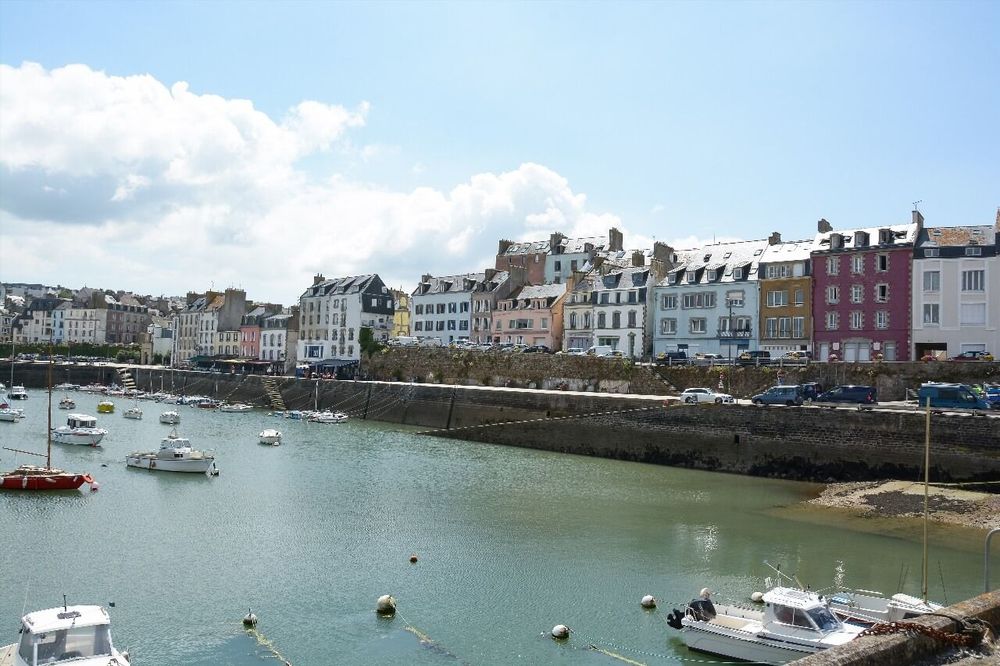
There exists in Brittany a category of towns that we always end up preferring to the most famous ones: ports that still work, quays where fish crates sit alongside terrace tables, raking light on colorful facades that descend toward the water. Douarnenez belongs to this category. At 26 kilometers northwest of Quimper, at the end of a peninsula that advances between the eponymous bay and the Brest harbor, this town of 15,000 inhabitants long lived off canned sardines before reinventing itself around maritime tourism, without transforming itself into a postcard.
This guide takes you beyond the Rosmeur port: the Port-Rhu Boat Museum, one of the rare floating museums in Europe, with fifty authentic boats moored on the estuary; the Pointe du Raz, a granite end of the world beaten by winds 45 minutes away by road; the Crozon Peninsula and its 70-meter cliffs on the Atlantic; Locronan, a medieval square classified among the most beautiful in France less than 10 kilometers away. Douarnenez is an exceptional exploration base, provided you know where to head. To explore the town step by step with anecdotes and history in your pocket, the Ryo app offers audio guides that accompany this type of discovery in several Breton cities.
Douarnenez at a Glance: Geography, History and Character
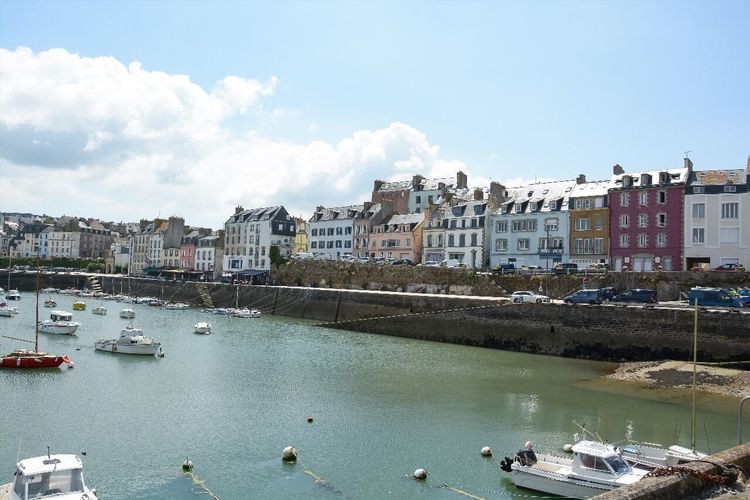
Douarnenez is not a town but an archipelago of neighborhoods welded together by topography. The peninsula on which it is built offers perspectives on the sea in three directions simultaneously. We distinguish four very different entities: the Rosmeur, old fishing port squeezed between sloping alleys; Tréboul, seaside resort built at the turn of the 20th century with its turreted villas; Ploaré, the historic elevated village with its church and market halls; and Pouldavid, on the estuary of the river of the same name.
The town's history is inseparable from sardines. At the end of the 19th century, Douarnenez had more than 50 canneries that processed millions of sardines each year, employing an essentially female workforce. This industry forged a strong and militant working-class identity, in 1921, Douarnenez was the first French town to elect a communist mayor. The canneries have almost all disappeared, but the maritime heritage survives in the Boat Museum, associations for preserving old riggings and major maritime festivals that bring together boats from around the world every two years.
The town's name itself comes from Breton "Enez Tud Ronan," the island of Saint Ronan, named after the Irish monk who evangelized the region in the 5th century. This same saint is at the origin of the Locronan pilgrimage, the medieval village nine kilometers northeast. Local geography has contributed to shaping the character of the place: between a bay 25 kilometers in diameter, cliffs that plunge into the Atlantic and bocage countryside immediately behind, Douarnenez concentrates in little space a variety of landscapes that few Breton towns can claim.
The Rosmeur Port and the Old Town Alleys
Rosmeur is Douarnenez's beating heart, and the best way to enter is to arrive on foot from downtown, via the sloping alleys that descend toward the quays. The port is still active: trawlers, sardine boats and pleasure boats coexist on the pontoons, and this promiscuity between sea work and strolling gives the place an authenticity that cannot be manufactured.
The Grand Port quay concentrates the majority of terraces, fish shops and direct sales points from fishermen. If you want to see boats returning and fish crates being unloaded on the quays, arrive before 9:30 AM. The spectacle repeats almost every morning of the week, even outside tourist season, and it's entirely free.
Behind the quay, the old town alleys deserve an hour of aimless strolling. The 18th and 19th century fishermen's houses with blue, red and ochre facades have been renovated without being denatured. Rue du Rosmeur (Rue du Rosmeur, 29100 Douarnenez) and Rue Jean-Bart are particularly narrow, facades seem to touch from one side to the other. The urban fabric dates essentially from 1880-1920, the period of cannery prosperity.
At the northern end of the quay, Sainte-Hélène Chapel (Rue de la Chapelle, 29100 Douarnenez, rated 4.4/5 on Google for 54 reviews) offers a natural viewpoint over the bay. Built in the 17th century, it overlooks Rosmeur rooftops and shows the measure of the town's rugged topography: Douarnenez constantly rises and falls, carved from coastal hill relief. On clear days, the view extends to the Crozon Peninsula cliffs across the bay.
Continue west from Rosmeur to reach Tréboul port: a pedestrian path follows the water's edge for about one kilometer, with permanent views of traditional boats. This waterfront walk takes 20 minutes without rushing.
Two practical tips: quay parking is paid in July-August but generally free the rest of the year. It's best to leave your car on Rue Anatole-France and walk down. On Friday market days, the alleys are even more lively from 8 AM.
The neighborhood has some cafés that open early and serve coffee to fishermen before bakeries have even brought out their first batches. It's one of the most direct ways to understand the real rhythm of an active Breton port.
The Boat Museum and Port-Rhu: The Memory of Sardines
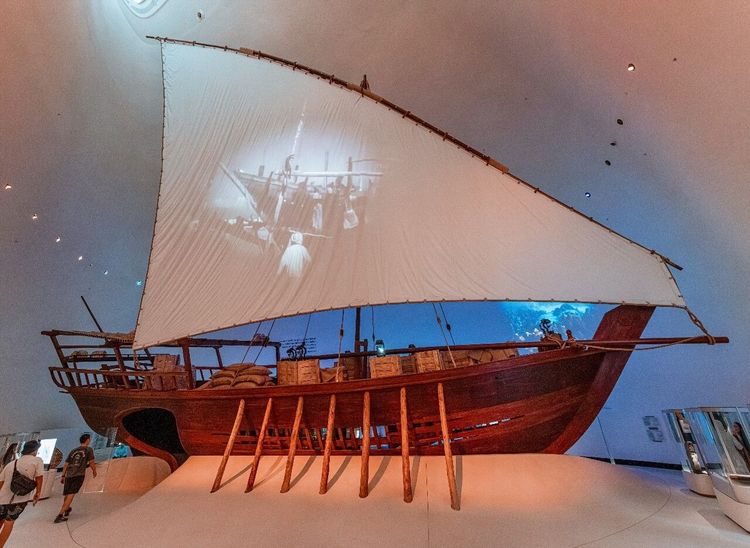
It's one of the most singular curiosities of tourist Brittany: a museum where part of the collections actually sails. The Boat Museum occupies the former Port-Rhu canneries, on the Pouldavid river estuary, and extends to a museum-port where fifty working boats are moored, all authentic, which can be visited on board.
The land collection traces the evolution of fishing techniques in Brittany since the 18th century: nets, riggings, engines, navigation equipment. But the interest goes beyond technique: photographic archives and cannery workshop reconstructions make concrete the daily life of female workers, paid by the canned box, who constituted the majority of the local workforce. We understand what a working day in a sardine factory meant around 1900.
It's the museum-port that alone justifies the trip. Among the boats: a bisquine (traditional Channel fishing sailboat), several dundees (Breton two-masted coasters), early 20th century steam boats, and a collection of river boats from all over France and Northern Europe. In summer, some boats take to the sea for demonstrations in the bay, check at reception for dates.
Practical information: the Port-Museum is open from February to November, with extended hours in July-August (10 AM-7 PM daily). Adult entry ranges from 5.50 € in low season to 7.50 € in peak season, and from 3.50 to 4.50 € for reduced rates (children 6 to 16, students, job seekers). Floating boats are closed from December to March. Allow 2 to 3 hours for a complete visit including boats. A café-restaurant with a terrace facing the museum-port allows lunch while watching old riggings sway.
Right next door, the Port-Rhu drawbridge (Port-Rhu, 29100 Douarnenez, rated 4.4/5 on Google for 559 reviews) spans the estuary and opens regularly to let boats through. You have a good chance of witnessing the maneuver late morning.
The museum also organizes temporary exhibitions in the former industrial buildings, which are sometimes worth the detour in themselves, the museography of preserved cannery spaces is impressive. Check the program before coming.
Tréboul: Sables Blancs Beach and the Marina
Tréboul is the seaside face of Douarnenez, a resort built in the early 20th century by Breton and Parisian bourgeois families who came to spend summers there. The architecture of this period is still readable in the turreted villas and manor houses that border Avenue de la Plage.
The Sables Blancs beach justifies its reputation. 600 meters long, well sheltered from northwest winds by the peninsula's relief, it features fine clear sand with almost no pebbles. The water is cold even in July, expect 16 to 18°C, but surfers and swimmers in short wetsuits manage very well.
Behind the beach, the Tréboul woods offer a cool alternative on hot afternoons. This municipal woods covers about twenty hectares on the resort's heights and offers several marked trails that follow historic villas. The Tourist Office distributes trail maps.
The Tréboul port (Quai de Tréboul, 29100 Douarnenez, rated 4.6/5 on Google for 81 reviews) is quieter than Rosmeur, mainly pleasure boats and some recreational fishing boats. It's from this port that sea excursions depart: sea kayaking, light sailing, motor boat trips. In July-August, several providers offer excursions to Tristan Island, the island that bars the entrance to Douarnenez bay, long owned by poet Jean Richepin's family before being acquired by the Conservatoire du Littoral in 1995.
Families with young children will find all expected facilities in Tréboul: supervised summer beach, bike rentals, playgrounds on the seafront. The resort is compact and safe, seaside shops remain accessible from the beach on foot in just a few minutes.
The GR34 Coastal Paths Around Douarnenez
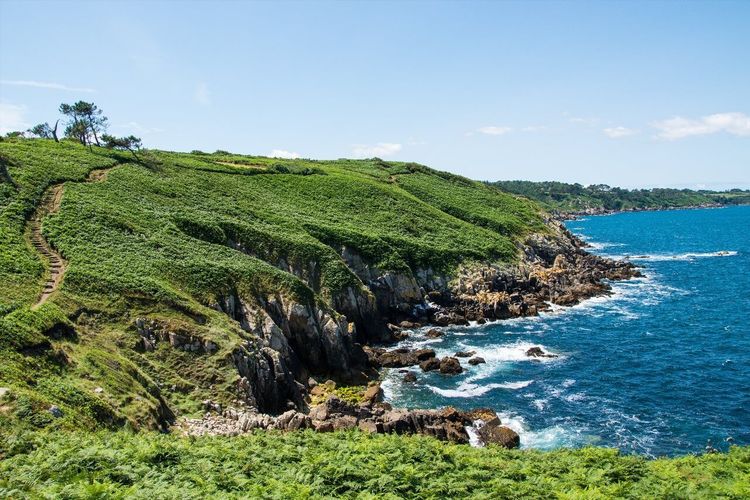
Douarnenez is a natural starting point for the GR34, the customs officers' trail that follows the entire Breton coastline for more than 2,000 kilometers. From the town, two directions offer themselves to walkers.
Northwest, toward Pointe de Leydé, the trail quickly leaves Tréboul houses to reach gorse and heather moors. After about 3 kilometers, you arrive at Pors-Poul'han beach, a wild beach accessible only on foot or by bike, practically empty even in mid-August. The panorama from the cliffs that dominate it is one of the most impressive in the bay.
Southeast, the GR34 follows the Pouldavid estuary before climbing toward Cap Sizun cliffs. This direction is less spectacular in the first kilometers but gives access to much less frequented coastline. The loop from Douarnenez to Pointe de Beuzec and back represents about 12 kilometers, or a good half-day at a leisurely pace.
For less committed hikers, the Pointe du Millier walk (Route du Millier, 29100 Beuzec-Cap-Sizun, rated 4.7/5 on Google for 890 reviews) is an easy alternative. From the D7, free parking gives access to a promontory in 20 minutes' walk that dominates the bay at 50 meters and allows, in clear weather, to distinguish the Pointe du Raz southwest and Crozon cliffs north.
A point of attention if you go down to pebble beaches at the foot of cliffs: tidal range in Douarnenez bay reaches 6 to 7 meters during spring tides. Some passages are impassable at high tide, check tide times before leaving, available free on maritime weather apps and on information boards at marked trail entrances.
Trails are passable year-round. Outside July-August, you'll have these paths to yourself, often with cows on the moors and jackdaws calling from cliff crevices.
Locronan, the Medieval Village 10 Kilometers Away
Few villages in Brittany preserve as much architectural unity as Locronan. At 9 kilometers northeast of Douarnenez, this village of fewer than 1,000 inhabitants is classified among France's Most Beautiful Villages, and the distinction is deserved. The central square, surrounded by 15th to 17th century granite mansions, is one of Europe's best-preserved medieval squares.
Locronan prospered through sailcloth trade: French Royal Navy ships used Locronan canvas in the 17th and 18th centuries. When the textile industry declined, the village froze, lacking money to rebuild. This economic "freeze" is paradoxically the reason for its current beauty: houses were neither demolished nor replaced with new construction.
The Saint-Ronan Collegiate Church (Place de l'Église, 29180 Locronan, rated 4.7/5 on Google for 205 reviews) (15th century) dominates the square and contains a polychrome recumbent effigy of the saint and remarkable Renaissance stained glass. The small Pénity chapel, attached to the collegiate church, is the site of the Troménie pilgrimage, held annually in July (small Troménie) and every six years for the great Troménie: the last was held in 2025, the next in 2031. This 12-kilometer procession around Locronan mountain, with its hundreds of Breton pardons, is one of Finistère's oldest religious gatherings.
The village has several artisan workshops open for visits: weavers, potters, wood sculptors. Prices are high but quality is generally present, nothing like Breton supermarket souvenirs. Avoid visiting between 11 AM and 3 PM in July-August: tourist buses invade the square and circulation becomes difficult.
Around Locronan, the Tour du Monde trail (3.5 km, easy) circles the mountain through moors and offers beautiful views of Douarnenez bay in clear weather. It takes less than an hour and combines well with village exploration.
Don't miss Saint Ronan's fountain below the Pénity chapel, one of the village's rare natural water sources, around which local legend has crystallized for centuries. It's one of those places that paper guides forget and that we discover while strolling. To connect Saint Ronan's story to that of Douarnenez without diving into a paper guide, the Ryo audio guide restores these stories throughout the walk.
The Pointe du Raz and Baie des Trépassés
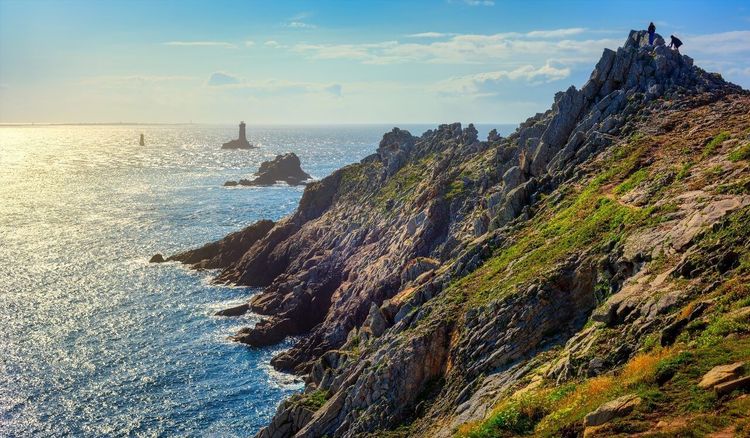
At 45 kilometers southwest of Douarnenez, the Pointe du Raz is one of Brittany's most visited natural sites, and yet one of the least disappointing once on location. This granite cape that plunges into the Atlantic at Cap Sizun's extremity has not stolen its reputation as the end of the world.
The site was requalified in the 1990s as part of a Grand Site operation: cliff-edge parking was eliminated, moors replanted and all new construction prohibited. The Pointe du Raz obtained the Grand Site de France label in 2004. Result: a landscape almost entirely returned to nature, crossed by marked trails from a large paid parking (8 €/car per day in high season) 800 meters from the point's end.
The walk to the extremity takes 25 minutes at normal pace. The trail follows cliffs with passages above 70-meter drops, where waves crash with permanent dull noise. The statue of Notre-Dame des Naufragés, at the promontory's end, was formerly the last visible landmark for sailors entering the Raz de Sein, the Breton coast's most dangerous current.
At 2 kilometers north of the point, the Baie des Trépassés (Route de la Baie des Trépassés, 29770 Plogoff, rated 4.6/5 on Google for 2.8K reviews) offers a radically different atmosphere. This crescent-shaped beach, beaten by regular waves, is popular with regional surfers. The name comes from a legend claiming that druids' and shipwrecked bodies were gathered here before transport to Île de Sein for burial. The atmosphere is indeed charged, especially in overcast weather or off-season.
In clear weather from the Pointe du Raz, Île de Sein is visible on the horizon: a flat ribbon 8 kilometers offshore, whose highest point doesn't exceed 7 meters above sea level. Boats make the crossing from Audierne (30 km east), allow an hour journey and a full day to visit this fishing village classified among France's Most Beautiful Detours. Reservation required in July-August.
Logistical tips for the Pointe du Raz: plan food, the site's only refreshment stand closes at 6 PM and surrounding villages are scattered. The parking has toilets. In July-August, arrive before 9 AM or after 6 PM to avoid lines.
The Crozon Peninsula: Morgat, Pen-Hir and Camaret
At 35 kilometers from Douarnenez by road (or accessible by boat from Rosmeur in summer), the Crozon Peninsula is one of Brittany's most spectacular destinations. It advances into the Atlantic like a hand with four cliff fingers, and geologists come from around the world to study its rock formations dating from 350 to 400 million years ago. The peninsula is classified in the Armorique Regional Natural Park and part of its core zone.
Start with Morgat, the peninsula's seaside resort, with its large semicircular beach of 1.5 kilometers. Don't miss the Morgat caves: accessible by kayak or boat from the port (guided visits in summer), they present walls colored in ochre, green and violet by ferrous and copper minerals. This natural curiosity is unique in Brittany.
From Morgat, continue to Pointe de Pen-Hir (Route de la Pointe de Pen-Hir, 29160 Camaret-sur-Mer, rated 4.8/5 on Google for 5.4K reviews), at the extremity of one of the peninsula's fingers. Parking is paid in summer (4 €/day), but the 20-minute walk to the cape's end is worth every cent: sheer 70-meter cliffs, the Tas de Pois rocks that emerge from the ocean like collapsed towers, and a 180° view of the Atlantic. On beautiful clear days, Île de Sein is visible on the horizon.
Camaret-sur-Mer deserves a one to two-hour stop. This fishing port once famous for its lobsters has a Vauban tower classified as UNESCO World Heritage, one of 12 sites in the Vauban fortifications network inscribed in 2008. The Notre-Dame de Rocamadour chapel, right next door, is a maritime pilgrimage site since the 15th century: ex-votos hung inside testify to centuries of shipwrecks and miracles.
If you have more time, Pentrez beach at the bottom of Douarnenez bay, accessible via the peninsula's isthmus, offers very fine sand over 3 kilometers of length, one of Brittany's largest beaches, little known to tourists from outside the region.
Plan a full day for the Crozon Peninsula. Outside July-August, the road network is fluid, but single-lane roads to certain points create traffic jams in high season. Leave early or late in the day.
Cap Sizun and the Goulien Ornithological Reserve
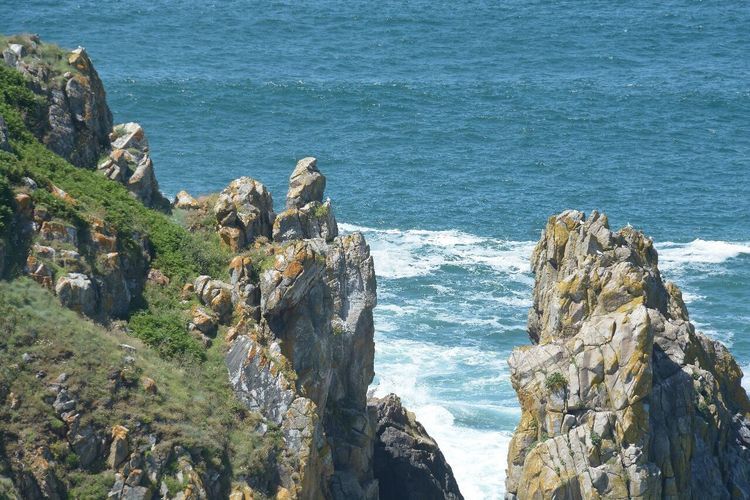
Between Douarnenez and the Pointe du Raz, Cap Sizun forms a coastal advance whose coastline is among Finistère's least disturbed. The corniche road (D7 then D43) follows the cliff edge for about twenty kilometers with permanent Atlantic views.
At Goulien, halfway between Douarnenez and the Pointe du Raz, the Cap Sizun Ornithological Reserve (Goulien, 29770 Goulien, rated 4.7/5 on Google for 738 reviews) was created in 1959 to protect important colonies of nesting seabirds. Common guillemots, northern fulmars, kittiwakes and shags frequent these cliffs. Observation points equipped with telescopes allow approaching birds without disturbing them.
May and June are the best periods: nesting is in full swing and cliffs teem with activity. Volunteer naturalists who lead guided visits are of rare competence, their commentary transforms a simple coastal walk into a living ornithology lesson.
Entry is free, but paid parking manages summer access. The reserve closes from September to February. Allow half an hour on site if you pass without a guide, an hour and a half with a guided visit.
Quimper: The Cathedral, Old Quarter and Faience
Prefecture of Finistère and historic capital of Breton Cornouaille, Quimper is 26 kilometers from Douarnenez via the N165, or 30 minutes by road. The excursion is logical for those wanting to combine wild landscapes and urban heritage.
The historic center is crossed by the Steïr and the Odet, two rivers that converge at the foot of Saint-Corentin Cathedral (Place Saint-Corentin, 29000 Quimper, rated 4.6/5 on Google for 6,680 reviews), a Gothic masterpiece whose construction began in the 13th century. Its particularity is unique in France: the nave is slightly misaligned with the choir, the explanation remains debated between topographical constraint and religious symbolism (the inclination of Christ's head on the cross).
Around the cathedral, old Quimper preserves several medieval streets with 15th and 16th century half-timbered houses: Rue Kéréon and Rue du Guéodet in particular. The density of ancient buildings in such a small area is comparable to what we find in Rennes.
The Fine Arts Museum, founded in 1872, presents an exceptional collection of Pont-Aven School paintings (Gauguin, Sérusier, Denis) and a little-known 17th century Flemish and Dutch collection. Entry at 7 € for adults.
Quimper is also the city of faience: the HB-Henriot manufactory has produced since 1690 hand-painted faience with characteristic motifs, couples in Breton costume, floral decorations. The shop and visit workshop are open Monday to Saturday.
Plan the morning for Quimper: museums open at 10 AM and pedestrian streets are pleasant from 9 AM before group arrivals.
Douarnenez Bay From the Sea: Sea Excursions
We only really understand Douarnenez geography by putting to sea. Seen from the water, the peninsula reveals its real configuration: the three intertwined ports, Cap Sizun cliffs on the southern horizon, the Crozon Peninsula profile north, a panorama that cannot be reconstructed from land.
From Tréboul port, several providers offer two-hour sea trips in July-August: bay discovery, approach to Tristan Island, observation of gray seals that frequent certain rocks on the south coast. Reservation recommended the day before.
For kayakers, the tour of Tristan Island from Tréboul port represents about 6 kilometers round trip, accessible to beginners in calm seas. The island is owned by the Conservatoire du Littoral and foot access is not authorized, but the kayak tour is free.
In July-August, a seasonal maritime connection sometimes links Rosmeur to Morgat on the Crozon Peninsula, check with the Tourist Office at the beginning of the season, the service is not always renewed each year.
Markets, Preserves and Local Gastronomy
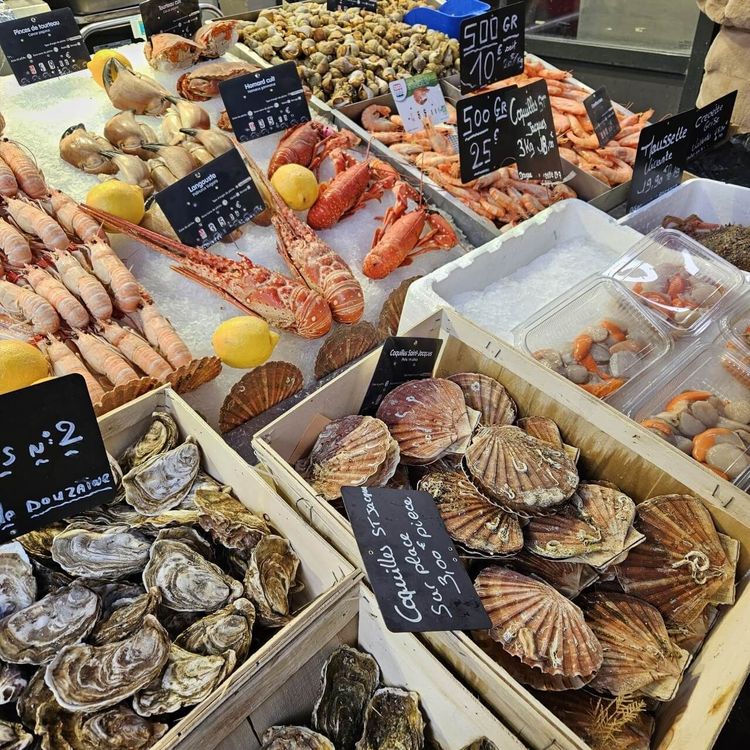
Douarnenez is not a great gastronomic city in the sense of stars or guides, but it's a city of direct products: morning fish, live seafood, Brittany semi-salted butter, buckwheat crepes from local mills.
The Friday morning market at Place des Halles (Place des Halles, 29100 Douarnenez, rated 4.2/5 on Google for 150 reviews) is the best place to stock up. Goat cheeses, artisanal tuna rillettes, old-style sardine preserves, cereal bread, Finistère producers have held stalls there for decades. Arrive before 11 AM to have choice.
On the subject of preserves: some small structures still maintain the tradition of artisanal fish preserves in Douarnenez. Workshop visits are sometimes organized in July-August by reservation, the Tourist Office centralizes contacts.
Hiking and Cycling: The Best Loops
Douarnenez is also an interesting cycling starting point. The Cap Sizun greenway connects Douarnenez to Audierne on a former decommissioned railway line, 34 kilometers in one go without automobile traffic. The track is well maintained and passable for all levels.
By electric bike, the Douarnenez, Locronan, Poullan-sur-Mer, Douarnenez loop (about 35 km) combines medieval heritage and bocage countryside. Elevations are reasonable with electric assistance, more athletic on a classic bike.
Several bike and electric bike rental shops are present in Douarnenez itself and in Tréboul. Allow 15 to 25 € per day depending on bike type. If you arrive without a bike and the greenway interests you, some rental shops offer a shuttle service for return from Audierne.
For multi-day hikers, the GR34 can be covered over several stages from Douarnenez toward Cap Sizun. Stage gites are rare on this section, plan bivouac or return to Douarnenez each evening.
The Maritime Festival: The Every-Two-Year Gathering
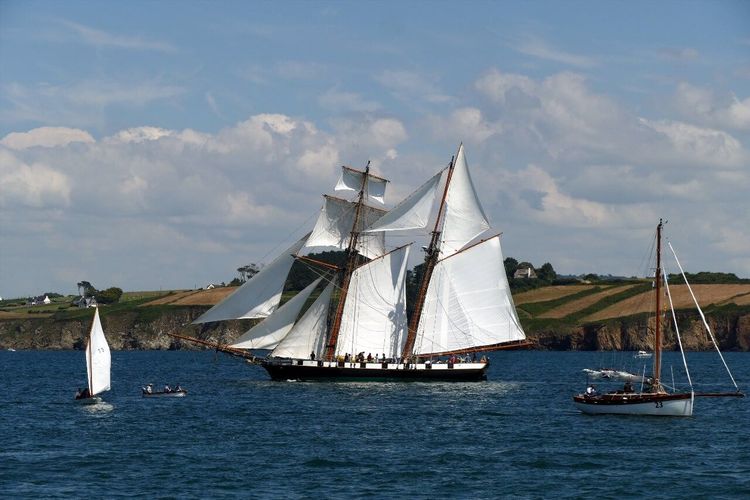
Every two years, the town transforms. The Douarnenez Maritime Festival has gathered traditional boats from around the world since 1986: old sailboats, rowing boats, steam boats, Polynesian craft. The next edition, called Temps Fête, takes place from July 23 to 26, 2026 and marks the event's 40th anniversary, making it a reason to visit in itself if you're in the region at that time.
For four days, Rosmeur port (Quai du Grand Port, 29100 Douarnenez, rated 4.4/5 on Google for 1,777 reviews) and Port-Rhu museum-port transform into a giant floating museum. Crews live on board, maneuvering demonstrations take place in the bay, concerts and evening gatherings organize on quays until night. It's one of Europe's largest maritime festivals.
Warning: during the festival, accommodation is saturated within a 40-kilometer radius. Book several months in advance if you target this period.
Where to Eat in Douarnenez: Reliable Addresses
Value for money is generally better off-season and away from the most touristy quays. A few addresses that last over time.
Le Clos de Vallombreuse (7 Rue d'Estienne d'Orves, 29100 Douarnenez, rated 3.7/5 on Google for 332 reviews) is the town's most elegant establishment, installed in a Belle Époque villa above Tréboul with bay views. The bistronomic cuisine enhances Finistère terroir products. Reservation essential in summer.
For seafood and grilled fish, addresses on Quai du Grand Port offer correct value for money weekdays off-season. In July-August, prices rise and quality can vary: prefer restaurants slightly back from the quay, less exposed to tourist flow.
Crêperies are numerous around Place des Halles and in Tréboul. Crêperie du Port and Crêperie des Halles offer buckwheat galettes made with local organic flour. The difference with industrial galettes is immediately perceptible in texture and the slightly bitter and toasted taste of buckwheat. Allow 10 to 14 € for a complete galette with a bowl of cider.
You'll also find some gourmet shops in alleys behind Rosmeur where artisanal preserves of sardines, mackerel and white tuna are sold individually. These preserves travel well and constitute a serious local souvenir.
Where to Stay in Douarnenez and Surroundings
Hotel offer is limited in Douarnenez itself, but surroundings compensate with often better quality bed and breakfasts.
Le Clos de Vallombreuse also offers 12 hotel rooms in its Belle Époque villa, doubles from 120 € in low season, with bay views for the best rooms. It's the town's most elegant address, without direct competition.
For a tighter budget, several family hotels downtown offer doubles at 55 to 75 € in low season. Bed and breakfasts around Locronan and Poullan-sur-Mer are often better located and of superior quality for equivalent prices: allow 70 to 90 € for a double room with breakfast included.
In summer, the Tréboul campsite (Rue des Mimosas, 29100 Douarnenez, rated 4.4/5 on Google for 338 reviews) (5 stars, directly on Sables Blancs beach) is fully booked several weeks in advance. Book from January if you consider July. For camper vans, several municipal areas operate around the bay: Beuzec-Cap-Sizun and Poullan-sur-Mer offer pitches with services at modest rates.
On the Crozon Peninsula, accommodation offer is wider in summer, Morgat and Camaret have decent hotels and well-equipped campsites, useful if you plan a full day on the peninsula without wanting to make the round trip from Douarnenez.
How to Get Around Between Douarnenez and Its Surroundings
Douarnenez is poorly served by public transport from major agglomerations. Quimper is the nearest TGV station, 30 minutes away by road, connected to Paris Montparnasse in 4h10. BreizhGo buses connect Quimper to Douarnenez several times daily (about 50 minutes journey, around 5 €), but schedules are designed for commuters, not tourists.
A rental car is almost indispensable for exploring surroundings: the Crozon Peninsula, Cap Sizun and Pointe du Raz are difficult to access without one. Rent from Quimper if you arrive by train.
Within Douarnenez itself, the four ports are connected by walkable pedestrian paths. A bike suffices to connect Tréboul and Rosmeur in less than 10 minutes. In July-August, tourist shuttles sometimes connect Douarnenez to Locronan and Crozon from the bus station, check with the Tourist Office upon arrival.
When to Visit Douarnenez
The best period is May-June and September: prices are lower than in July-August, attendance is reasonable, and Brittany's light, that raking and changing light that has attracted painters since the 19th century, is at its best. Rhododendrons in bloom around Locronan and in Cap Sizun gardens are spectacular in May.
July-August remains pleasant but Douarnenez, Locronan and Pointe du Raz are very busy. Plan early departures for natural sites and book accommodation well in advance.
Winter is mild for the latitude (rarely below 5°C) and coastal landscapes under Atlantic storms have incomparable character. But many shops close from November to March, and the Boat Museum is only accessible in reduced format off-season.
FAQ
Is Douarnenez Worth Visiting?
Yes, provided you don't go there solely for the town itself. Douarnenez is primarily a base for exploring one of the wildest and least touristified portions of the Breton coastline. If you're looking for a town with a dense historic center and numerous monuments, Quimper or Vannes would better meet your expectations. But if you want a living port, real coastal paths and proximity to exceptional sites like the Pointe du Raz and the Crozon Peninsula, Douarnenez is an excellent anchor point.
How Many Days Are Needed to Visit Douarnenez and Its Surroundings?
Allow 3 to 4 days for a comfortable visit: one day for Douarnenez (Rosmeur, Boat Museum, Tréboul), one day for the Crozon Peninsula (Morgat, Pen-Hir, Camaret), one day for Cap Sizun and the Pointe du Raz, and half a day for Locronan. With a week, you can add Île de Sein from Audierne and the complete tour of the bay.
How to Get to Douarnenez Without a Car?
From Paris, take the TGV to Quimper (4h10), then the BreizhGo bus line 37 to Douarnenez (50 minutes, about 5 €). The problem starts afterwards: without a car, excursions to the Pointe du Raz or Crozon Peninsula are very difficult. In July-August, tourist shuttles connect Douarnenez to Locronan and Crozon from the bus station, check with the Tourist Office upon arrival.
Is the Pointe du Raz Overcrowded in Summer?
Busy, but not overcrowded. The Grand Site manages the flow well: cars stay at the paid parking and the point itself remains accessible on foot. To enjoy the site without crowds, arrive before 9 AM or after 6 PM. The sunset at the Pointe du Raz, when the light reddens the granite rocks and the Raz de Sein blazes on the horizon, is one of the most striking experiences in Brittany.
What to Do in Douarnenez When It Rains?
The Boat Museum is the obvious answer: 2 to 3 hours visiting the former cannery buildings and covered boats. In town, several art galleries and artists' workshops open in season. In Quimper, 30 minutes away, the Fine Arts Museum and Saint-Corentin Cathedral constitute a half-day program in all weather conditions. Don't hesitate to browse the gourmet shops of Rosmeur: it's also in bad weather that we take time to find the best artisanal preserves.
Are There Activities for Children in Douarnenez?
Several. The Boat Museum offers children's workshops in July-August (model building, introduction to traditional navigation). The Sables Blancs beach in Tréboul is supervised in summer and suitable for families. Kayak trips from Tréboul are accessible from age 8 with adult supervision. In town, the Friday market and ice cream shops on the Rosmeur quay pleasantly occupy the youngest.
Conclusion
Douarnenez rewards travelers who take time to read its geography. It's not a monument-city: it's a gateway town to some of France's most intense landscapes. The Rosmeur port and Boat Museum provide essential maritime context; the Sables Blancs beach and coastal paths offer relaxation after exploration.
To prepare your stay or explore other Breton destinations with quality audio guides, the Ryo app accompanies many travelers in discovering French cities and regions. The Ryo audio guide is available on iOS and Android, without subscription for initial steps.