
Créé par Emilie, le 7 mai 2026
Votre guide Ryo
© Shutterstock
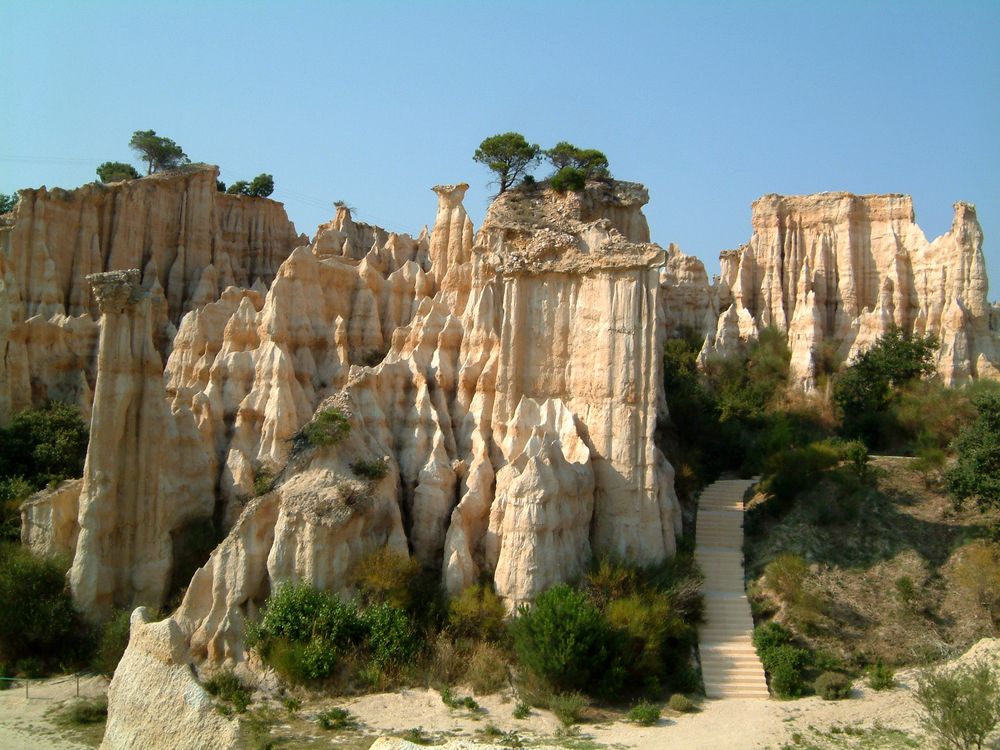
Located about thirty kilometers from Visit Perpignan, the Orgues d'Ille-sur-Têt site is a unique geological gem in France. These spectacular rock formations, shaped by erosion over millions of years, offer a landscape worthy of American canyons or Turkish Cappadocia. Classified as a protected natural site since 1981, this exceptional place fascinates visitors with its natural ochre-colored sculptures and its famous "fairy chimneys". Discover this must-see site of the Pyrénées-Orientales which is well worth the detour during your stay in French Catalonia.
Why visit the Orgues d'Ille-sur-Têt?
The Orgues d'Ille-sur-Têt constitute a remarkable geological phenomenon in the heart of the Pyrénées-Orientales. This unique mineral landscape attracts thousands of visitors each year who come to admire these sand and clay columns sculpted by natural elements. The site offers an immersive experience in an almost lunar setting, where the changing colors of the cliffs evolve throughout the day and seasons.
The fragile and ephemeral beauty of these rock formations testifies to the power of water and wind erosion. Each rain, each gust of wind imperceptibly modifies the landscape, sculpting new forms and creating a natural spectacle in perpetual evolution. This very fragility justifies the protection the site benefits from and makes each visit unique.
Beyond the purely aesthetic aspect, the Orgues site presents a major scientific interest. It allows us to understand the geological processes that have shaped Mediterranean landscapes and offers an open-air reading of the region's history. The educational panels installed along the trail enrich the walk with fascinating explanations about the formation of these fairy chimneys.
Download the audio-guided circuit to discover Perpignan on foot and independently
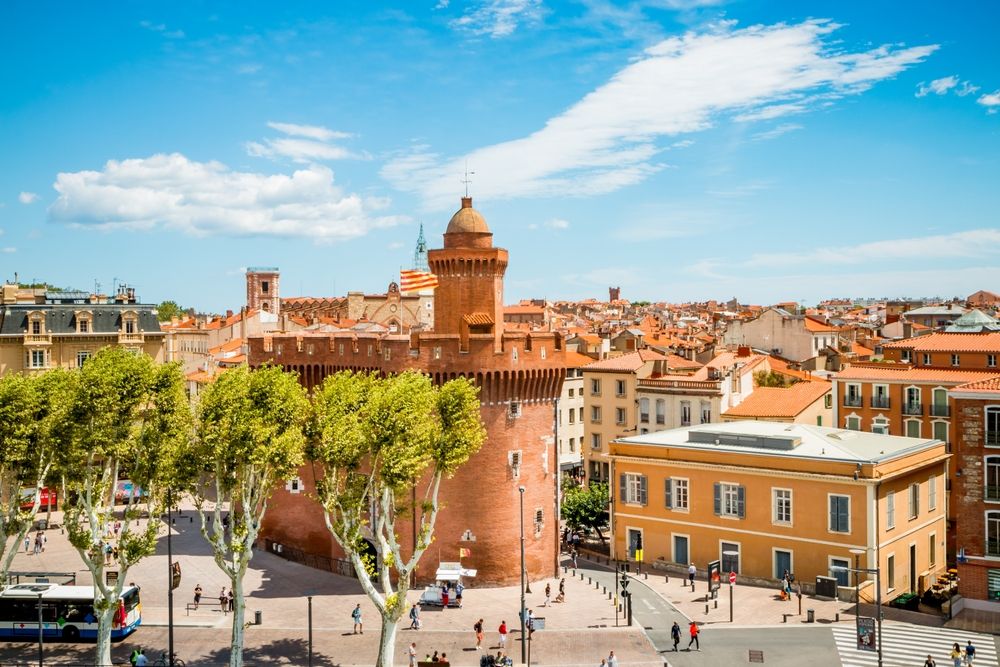
To complete your visit to the Orgues d'Ille-sur-Têt, extend your discovery of the region by exploring Perpignan with the Ryo audio-guided itinerary. This French Catalan capital is full of heritage treasures to discover at your own pace. The application accompanies you through 19 major places of interest in the historic center, from the Bassa quays to the majestic Saint-Jean-Baptiste cathedral, passing by the emblematic Castillet and the magnificent private mansions of the old quarter.
What to do and see at the Orgues d'Ille-sur-Têt?
The Orgues d'Ille-sur-Têt site offers a complete visit experience that combines natural discovery, geological learning and immersion in a breathtaking landscape. Here are the main attractions that await you during your visit.
1. The rock formations called "fairy chimneys"
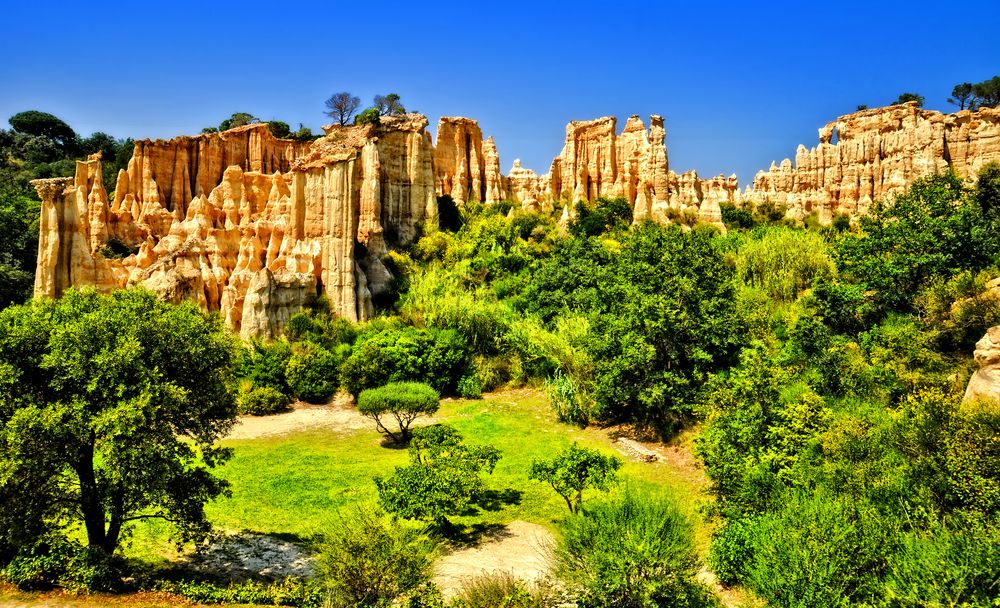
The main spectacle of the site lies in these extraordinary natural columns that sometimes rise to over ten meters in height. Nicknamed "fairy chimneys", these formations result from slow erosion work on sediments deposited over several million years. Their appearance sometimes evokes gigantic organ pipes, sometimes mysterious silhouettes sculpted by an invisible artist.
The hues varying from white to ochre red, passing through pink and yellow, create a fascinating chromatic palette that changes according to the time of day and brightness. These colors come from the mineral composition of sedimentary rocks, mixing clay, sand and pebbles. The visual effect produced recalls the desert landscapes of the American West or the karst formations of Turkey.
2. The marked trail and its information panels
A developed route of about 45 minutes to one hour allows you to discover the site safely. Explanatory panels punctuate the itinerary, offering detailed information on the geological formation of the place, the evolution of the landscape throughout the eras and the cultural importance of these formations. At each stage of the trail, you will better understand how water and wind have sculpted these natural wonders.
The route is designed to be accessible to all, with observation areas strategically placed to enjoy the best viewpoints. An explanatory booklet is provided at the entrance to enrich your visit with additional information. Amateur or professional photographers will particularly appreciate the multiple perspectives offered along the path.
3. Panoramic viewpoints over the Roussillon plain and the Canigou massif
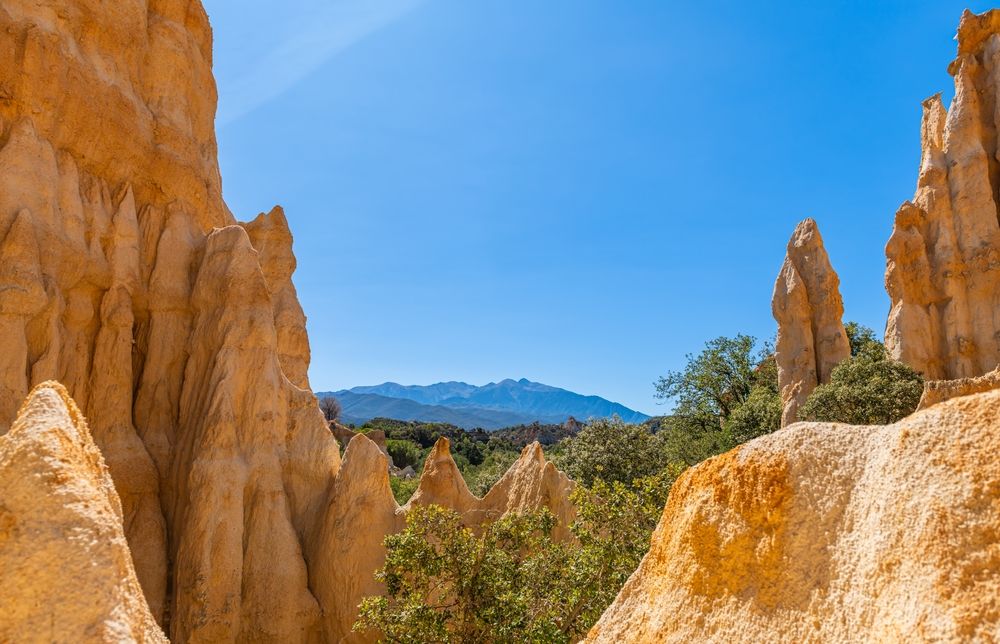
From the heights of the site, you will enjoy panoramas embracing the Roussillon plain and the Canigou massif, sacred mountain of the Catalans. Depending on the season and weather conditions, the reliefs take on changing colors, offering an ever-renewed spectacle. This breathtaking view allows you to appreciate all the natural diversity of the surroundings, between vineyards, peach orchards and rolling hills.
In clear weather, the gaze extends to the snow-capped peaks of the Pyrenees, creating a striking contrast with the warm hues of the rock formations in the foreground. These panoramas constitute a privileged moment for photography lovers and wide open spaces, who will be able to immortalize the beauty of Catalan landscapes.
4. The reception and exhibition area
At the entrance to the site, a reception area offers you practical services and an exhibition dedicated to the natural and cultural history of the Orgues d'Ille-sur-Têt. You can discover models, photographs and educational resources to better understand the genesis of the place and its role within local heritage. This space, designed to inform and raise awareness, perfectly complements the visit by offering additional reading keys before beginning the walk.
The adjoining shop offers local souvenirs, books on geology and regional heritage, as well as artisanal products from the Pyrénées-Orientales. It's an opportunity to extend your discovery and bring back a little piece of this exceptional place.
How to get to the Orgues d'Ille-sur-Têt from Perpignan?
The Orgues d'Ille-sur-Têt are located at 1 Chemin de Régleilles, 66130 Ille-sur-Têt (see on Google Maps), rated 4.5/5 on Google for more than 4,700 reviews). Several options are available to reach the site from Perpignan.
By car
From downtown Perpignan, take the N116 towards Prades. The journey takes about 30 minutes and covers a distance of 25 kilometers. Free parking is available in the immediate vicinity of the site, greatly facilitating access. The route crosses the Roussillon countryside and offers lovely views of the surroundings.
By train
Take the TER 06 line: Perpignan-Villefranche-Vernet-les-Bains-Latour-de-Carol-Enveitg from Perpignan station. The journey to Ille-sur-Têt station takes about 20 minutes. Be careful, there is no shuttle from the station to the Orgues site. Allow about 20 minutes on foot or take a taxi to cover the last kilometers.
By bus
The LIO 520 bus line (direction Prades) departs from the Perpignan Bus Station, Boulevard Saint-Assiscle, and serves the Ille-sur-Têt – Foiral stop. The journey takes about 35 to 45 minutes. This €1 regional service is an economical option for travelers without a personal vehicle. Schedules are available on the Occitanie region website.
To plan your visit to the region, don't hesitate to consult the Ryo itinerary of Perpignan which will allow you to discover all the treasures of the Catalan capital before or after your excursion to the Orgues.
Opening hours and prices for the Orgues d'Ille-sur-Têt
The Orgues site is open every day of the year, except December 25th and January 1st. Opening hours vary according to seasons to take advantage of the best lighting conditions.
Opening hours by season
From April 1st to June 30th: from 9:30 AM to 7:00 PM, last admission at 6:00 PM. From July 1st to August 31st: from 9:00 AM to 8:00 PM, last admission at 7:00 PM. From September 1st to October 31st: from 9:30 AM to 6:30 PM, last admission at 5:30 PM. From November 1st to March 31st: from 10:00 AM to 5:00 PM, last admission at 4:00 PM.
Admission prices
Adult rate: €5. Reduced rate: €4 upon presentation of proof (discovery pass, teenagers 14-18 years old, students, people with disabilities, job seekers). Child rate from 10 to 13 years old: €3.50. Free for under 10s. Special rates are offered for adult and school groups upon reservation.
It is recommended to buy your tickets online to avoid waiting at the ticket office, particularly during high season. The self-guided visit lasts on average between 45 minutes and 1h30 depending on your pace and your interest in geological explanations.
History and geological formation of the Orgues d'Ille-sur-Têt
The history of the Orgues d'Ille-sur-Têt goes back several million years and testifies to the titanic forces that shaped Mediterranean landscapes. Understanding their formation allows you to fully appreciate the rarity and fragility of this exceptional site.
A millennial geological formation
About 5 million years ago, during the Pliocene era, sediments from the Têt river gradually accumulated in the Roussillon plain. These successive deposits of sand, clay and pebbles formed rock layers of different hardness. The combined action of water erosion caused by torrential rains and wind erosion then sculpted these spectacular formations.
The phenomenon of differential erosion explains the characteristic appearance of fairy chimneys. Water infiltrates the less dense rock layers and gradually carves vertical ravines, leaving intact the most resistant parts that form the columns. This process continues today, imperceptibly modifying the landscape with each storm.
A site protected since the 20th century
Recognizing the natural and geological importance of the Orgues, local authorities classified the site in 1981 under the law of May 2, 1930 relating to the protection of natural monuments and sites of artistic, historical, scientific, legendary or picturesque character. This legal protection aims to preserve this exceptional heritage for future generations.
The site management is ensured by the municipality of Ille-sur-Têt which ensures compliance with regulations and visitor awareness. Strict measures have been put in place to limit human impact on these fragile formations, notably the prohibition to touch rock walls and the obligation to stay on marked trails.
Legends and popular imagination
In local imagination, the mysterious silhouettes of fairy chimneys have nourished many legends. It is said that supernatural creatures once wandered the site after nightfall. These stories, transmitted from generation to generation through oral tradition, add a magical dimension to the discovery of the Orgues and contribute to their singular reputation.
Practical tips for your visit
To fully enjoy your discovery of the Orgues d'Ille-sur-Têt, here are some recommendations that will optimize your experience.
1. Favor morning or end of day
The early hours of the morning and late afternoon offer the best visiting conditions. The low-angled light enhances the reliefs and colors of the rock formations, creating spectacular plays of shadow and light. Moreover, these time slots allow you to avoid strong summer heat and tourist crowds.
2. Equip yourself properly
Provide comfortable and closed walking shoes, as the terrain can be irregular. In summer, a hat or cap is essential to protect yourself from the Mediterranean sun. Don't forget to bring sufficient water, especially during the summer period, as the site offers few shaded areas.
3. Respect the fragility of the site
The Orgues d'Ille-sur-Têt are extremely fragile geological formations that constantly evolve under the effect of erosion. It is strictly forbidden to touch rock walls, climb on formations or stray from marked trails. Your responsibility as a visitor contributes to the preservation of this exceptional natural heritage.
4. Allow enough time
Allow between 45 minutes and 1h30 for the complete visit of the site, depending on your pace and your interest in geological aspects. If you want to fully benefit from the educational explanations and take time to photograph the different viewpoints, allow rather two hours.
5. Accessibility
The main trail has some irregularities that can make access difficult for people with reduced mobility or strollers. Contact the reception for information on partial access possibilities. Families with young children will prefer using a baby carrier rather than a stroller.
What to do around the Orgues d'Ille-sur-Têt?
The Pyrénées-Orientales are full of remarkable sites to discover around the Orgues. Here is a selection of the best excursions to complete your day or stay in the region. Don't forget that the Ryo itinerary of Perpignan will allow you to discover the Catalan capital in complete autonomy.
1. Castelnou, one of the Most Beautiful Villages in France
Just 15 kilometers from the Orgues, Castelnou (see on Google Maps) is a medieval village perched at the foot of the Aspres, with Canigou as a backdrop. Its cobbled streets, schist houses and imposing vicomtal castle dating from the 10th century make it an unmissable stop. The village also houses many art craft workshops and small shops offering local products.
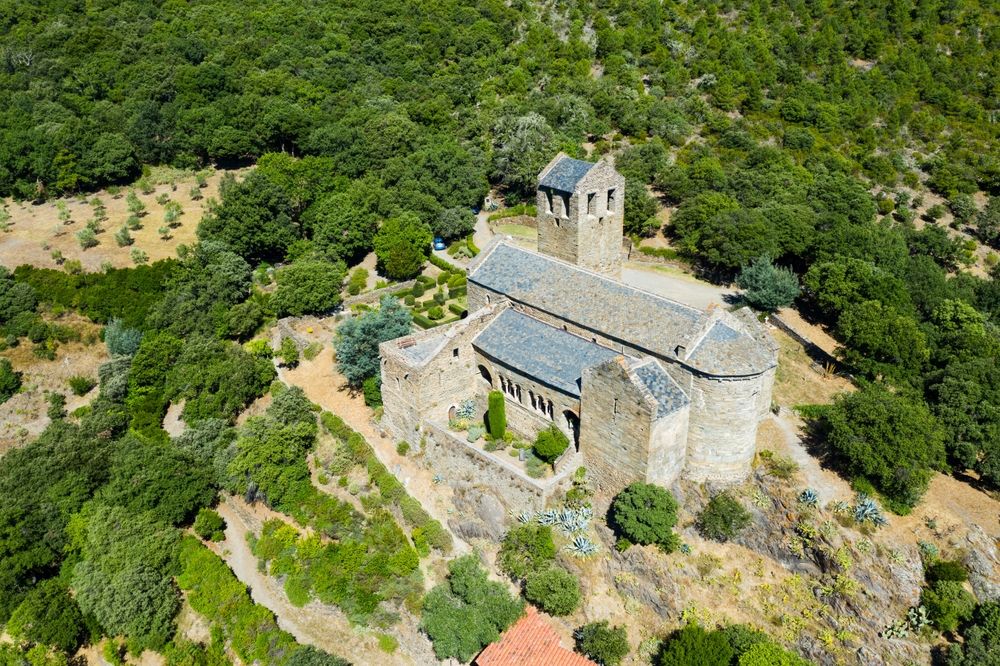
2. The Priory of Serrabone
About 20 kilometers away, this jewel of Catalan Romanesque art (see on Google Maps), rated 4.6/5 on Google for 1,500 reviews) nestles in a setting of wild greenery. Built in the 12th century, the priory is famous for its tribune carved in pink marble, considered one of the masterpieces of Romanesque sculpture. The site also offers magnificent views of the surrounding mountains.
3. Eus, classified perched village
At 15 kilometers, Eus (see on Google Maps) is another jewel of the Most Beautiful Villages in France. Perched at 400 meters altitude on a rocky peak, this sunny village dominates the Têt valley. Its golden stone houses, baroque church and terraced gardens compose a particularly photogenic picturesque scene.
4. Villefranche-de-Conflent
At 25 kilometers, this city fortified by Vauban (see on Google Maps), rated 4.6/5 on Google for 3,200 reviews) is classified as UNESCO World Heritage. Its perfectly preserved ramparts, medieval streets and Fort Libéria accessible by an underground staircase of 1,000 steps make it a memorable visit. It is also the starting point of the famous Yellow Train that climbs into the Pyrenees.
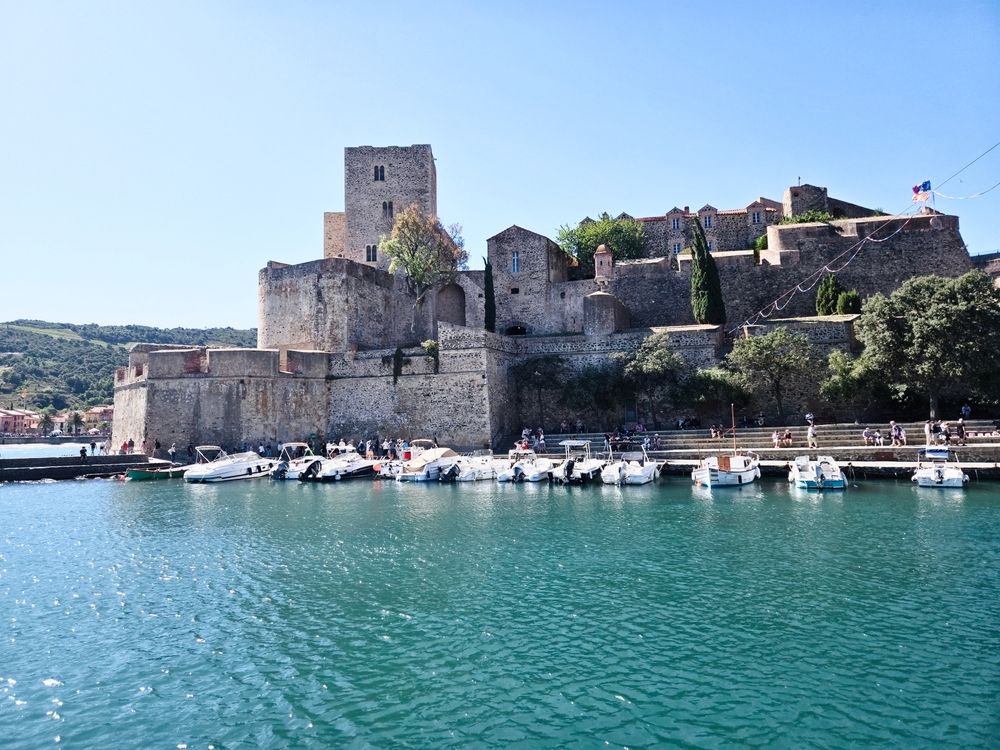
5. Collioure, the pearl of the Côte Vermeille
45 minutes by car away, Collioure (see on Google Maps, rated 4.6/5 on Google for 8,500 reviews) is a seaside village that inspired Matisse and Derain. Its colorful fishing port, royal castle, church with emblematic bell tower and coves with turquoise waters make it a destination of choice for combining heritage and Mediterranean relaxation.
To best organize your discovery of the region, remember to consult the Perpignan visit itinerary which constitutes an excellent base for exploring the Pyrénées-Orientales.
Where to eat near the Orgues d'Ille-sur-Têt?
The village of Ille-sur-Têt and its surroundings offer several restaurant options to pleasantly extend your visit. You will find traditional Catalan restaurants, pizzerias and cafés in the center of Ille-sur-Têt, just a few minutes by car from the Orgues site.
If you prefer a picnic, areas are arranged near the site, allowing you to enjoy the natural setting while savoring your provisions. Don't forget to respect the cleanliness of the places and take your waste with you. After your visit, you can also reach Perpignan in 30 minutes to discover its rich Catalan gastronomic offer.
In conclusion, the Orgues d'Ille-sur-Têt constitute an unmissable stop during a stay in the Pyrénées-Orientales. This unique geological site offers a remarkable visual and educational experience, accessible to all audiences. Between the spectacular rock formations, panoramas over Roussillon and the Canigou massif, and the richness of the surrounding villages, you will have all the ingredients for an unforgettable day of discovery. Take advantage of your visit to the region to also explore Perpignan with the Ryo itinerary, which will reveal all the treasures of the French Catalan capital. This combination between natural and cultural heritage will allow you to apprehend all the richness of this so endearing Catalan territory.
Frequently asked questions
How much time should you plan to visit the Orgues d'Ille-sur-Têt?
The visit to the Orgues site generally takes between 45 minutes and 1h30, depending on your pace and your interest in geological aspects. If you want to fully benefit from the explanatory panels and take time to photograph the different viewpoints, allow rather two hours on site.
Can you visit the Orgues d'Ille-sur-Têt with children?
Yes, the site is accessible to families with children. The trail is generally practicable, although some sections can be irregular. Children under 10 benefit from free admission. For toddlers, it is preferable to use a baby carrier rather than a stroller due to the sometimes rough terrain. The educational panels can also interest children curious about nature.
Are pets accepted?
Pets on a leash are generally accepted on the trail. However, it is recommended to verify this information at the reception upon your arrival. Owners must collect their animals' droppings to preserve the cleanliness of the natural site.
What is the best period to visit the Orgues?
The site can be visited all year round, each season offering a different face. Spring (April-May) and autumn (September-October) are particularly pleasant with mild temperatures and ideal brightness for photography. Summer allows you to enjoy long days, but temperatures can be high. Then favor a morning visit. Winter offers reduced attendance and magnificent low-angled light, although days are shorter.
Can you take photos on the site?
Photographs and videos are authorized for personal use. The site offers many exceptional photographic opportunities, particularly at sunrise and sunset. For any commercial or professional use, prior authorization is necessary. Photographers will particularly appreciate the light effects on rock formations at different times of the day.
Are guided tours available?
Guided tours are offered upon reservation, in French, English and Spanish. They generally last between 1h15 and 1h30 and allow you to deepen your knowledge of the site's geological formation, its history and protection. Rates and schedules for guided tours are available on the official website or directly at reception. For school or adult groups, specific services can be organized.
Is the site accessible to people with reduced mobility?
The main trail has irregularities that can make the visit difficult for people in wheelchairs or with reduced mobility. Some portions of the route are nevertheless accessible. It is recommended to contact reception before your visit to know the possibilities of partial access and best organize your discovery of the site.
Can you combine the visit with other sites in the day?
Absolutely! The visit to the Orgues lends itself perfectly to a day of discovery combined with other sites in the Pyrénées-Orientales. You can easily associate the Orgues with a visit to Castelnou, the Priory of Serrabone or the village of Eus, all located less than 30 minutes by car. For a complete discovery of the region, don't forget to also visit Perpignan with the Ryo audio-guided itinerary.