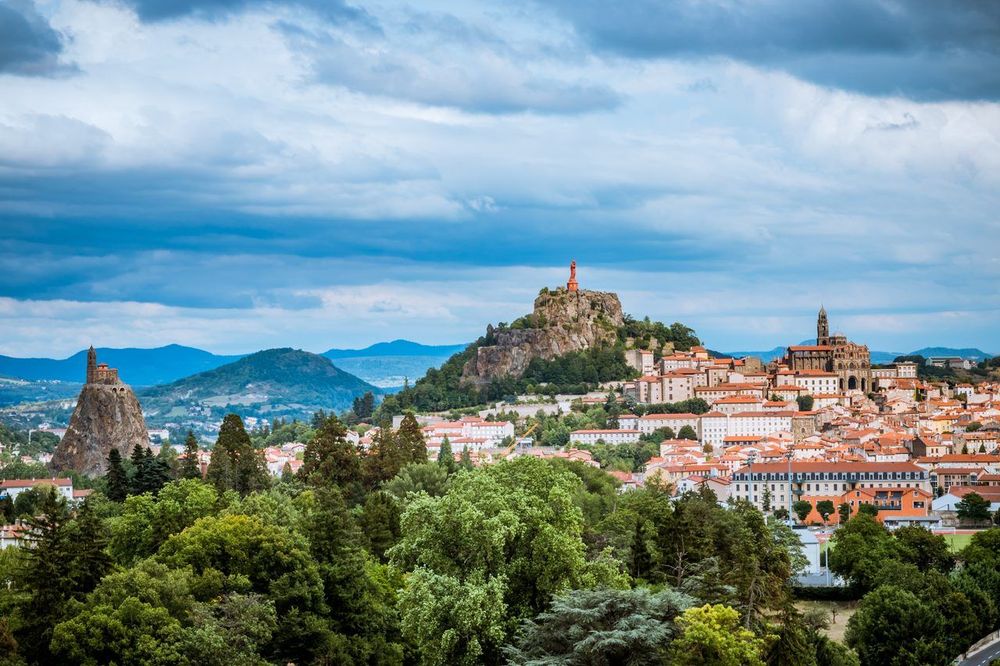
© Shutterstock
 Votre guide Ryo
Visiting Haute-Loire: The 22 Must-See Highlights of the Department (2026)
Visiting Haute-Loire means accepting a wager: that of a department which rarely tops the lists of French destinations, and that is precisely what makes it one of the most unspoiled territories of the Massif central. From the cobbled lanes of Le Puy-en-Velay to the wild gorges of the Allier, visiting Haute-Loire means discovering a region where major sites follow one after another without ever encountering the crowds of well-known destinations. To visit Haute-Loire, you have to be willing to take a winding departmental road, pass through villages of a hundred inhabitants and sometimes search for the entrance to a site with no bilingual sign — the trade-off being landscapes and monuments that others have not yet discovered.
A few facts that may surprise you: Le Puy-en-Velay, inscribed on the UNESCO World Heritage List, welcomes every year more than 70,000 pilgrims who pass through the doors of the Notre-Dame cathedral before embarking on the 1,500 km of the Chemin de Saint-Jacques. The department is home to 5 villages listed as "Most Beautiful Villages of France" within a 120 km radius. The gorges of the Allier, carved vertically over 35 km into the volcanic plateau, offer canyon panoramas that few visitors know about. And the Massif du Mézenc peaks at 1,753 metres, with views on a clear day stretching to Mont-Blanc, the Alps and the Ventoux simultaneously.
This guide covers the 22 sites and experiences to remember in Haute-Loire, from the spiritual capital of Le Puy-en-Velay to the wild reaches of the Margeride. Before you leave, note that the Ryo app supports explorations on foot in historic towns and major sites of the Massif central, useful for planning your cultural stops.
Le Puy-en-Velay, an Extraordinary City
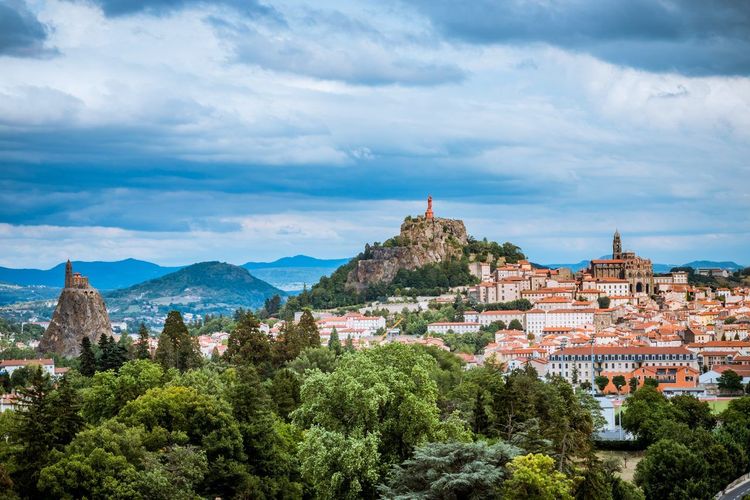
From the motorway or the main road, you can already make out the volcanic needles piercing the morning mist — a silhouette so distinctive that it was drawn on medieval maps long before tourism existed. Le Puy-en-Velay is built in a basin surrounded by sucs (volcanic peaks in the Auvergne dialect), and this landscape shapes every view, every street, every photographic angle. The city surprises at every turn: here a staircase carved into basalt, there a chapel perched sixty metres above the rooftops, further on a red cast-iron statue visible from twenty kilometres away.
Le Puy-en-Velay is the official starting point of the Chemin de Saint-Jacques-de-Compostelle along the Via Podiensis, the most travelled route in France. More than 70,000 pilgrims pass through each year to receive the blessing at the cathedral before setting out on a journey of several weeks. Outside pilgrimage season, the city can comfortably be visited in a day and a half. The historic centre is explored on foot: allow 3 to 4 hours to connect the cathedral, the Rocher Corneille, the Chapelle Saint-Michel d'Aiguilhe (Rocher Saint-Michel, 43000 Le Puy-en-Velay, rated 4.6/5 on Google based on 3,126 reviews) and the medieval streets of the Quartier des Consuls.
Two local specialities deserve your attention. The green lentil of Le Puy-en-Velay was the first French legume to receive a PDO designation, in 1996; its thin skin and nutty flavour set it radically apart from supermarket lentils. The Verveine du Velay, a liqueur produced since 1859 by the Pagès distillery using 32 plants, comes in a green version (40°, mild) and a yellow version (55°, more intense). You will find it in all the grocery shops in the centre and in several bars in the old quarter that serve cocktails made with verveine.
Le Puy-en-Velay is also a culturally lively city for its size (20,000 inhabitants). The Renaissance du Roi de l'Oiseau festival, every third weekend of September, transforms the city into a full-scale 16th-century theatre: 800 costumed volunteers parade through the streets for four days, re-enacting the splendours of the Renaissance with impressive historical accuracy. It is one of the most spectacular historical re-enactment events in the Massif central. Book your accommodation at least six months in advance if you wish to attend.
The Saturday morning market on the Place du Breuil is worth an early rise. Green AOP lentil producers, farmhouse cheesemakers, Puy lace craftspeople and local market gardeners gather from 7am. This is where you will understand why Puy lace has a worldwide reputation: some of the pieces on display represent several hundred hours of handwork.
To explore the city at your own pace, our Ryo app offers audio content on the major historical highlights of this city and the sites that surround it.
The Notre-Dame Cathedral of Le Puy-en-Velay
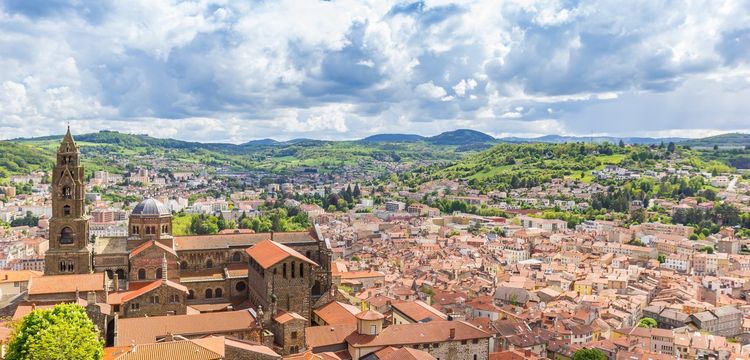
The Notre-Dame cathedral of Le Puy-en-Velay (Place du For, 43000 Le Puy-en-Velay, rated 4.7/5 on Google based on 4,328 reviews) is the most iconic monument in the department and one of the masterpieces of Auvergne Romanesque architecture. Built from the 11th century on a rocky spur at 840 metres above sea level, it incorporates Moorish influences visible in the black-and-white bichromatic arches of the porch and façade. Entry is via a staircase of 134 steps that pilgrims sometimes climb on their knees — a practice still very much alive.
The interior houses the Black Virgin, a 13th-century cedarwood statue whose dark colour comes from centuries of incense and candles. The cathedral is surrounded by a remarkable architectural ensemble: the 12th-century Romanesque cloister with its polychrome colonnettes, the Treasury room (medieval goldsmithery, cloisonné enamels) and the Chapel of Relics. Allow an hour and a half to visit the whole complex without rushing.
Opening hours: open every day, 7:30am–7pm in summer, 8am–6pm in winter. Entry to the nave is free. Access to the cloister: €5 per adult (€3 reduced). The pilgrim mass takes place every morning at 7am — a short ceremony with a rare atmosphere, even for non-believers.
The Chapelle Saint-Michel d'Aiguilhe
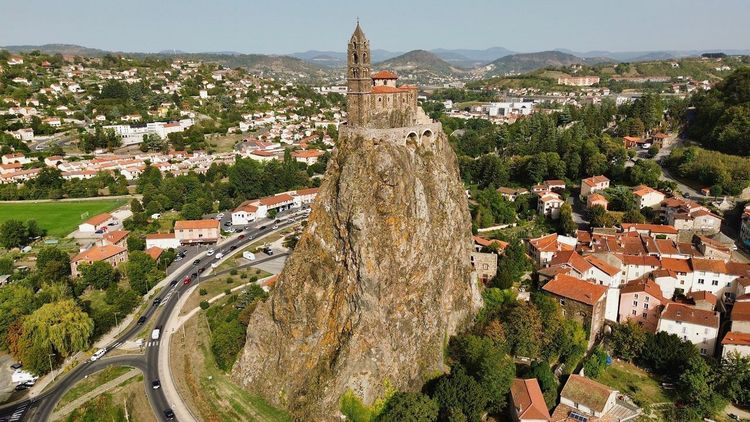
The most photographed image of Haute-Loire is not a cathedral or a château: it is a Romanesque chapel perched since the year 962 at the top of a volcanic pinnacle 82 metres high, right in the middle of the city. The Rocher Saint-Michel d'Aiguilhe rises from the ground like a basalt needle (hence its name), and the chapel that crowns it seems to defy gravity.
The ascent involves 268 steps carved directly into the rock. At the top, the panorama over Le Puy-en-Velay and the volcanic organs is worth the climb on its own. The chapel measures barely 200 m² and adapts its elliptical shape to that of the rock; its acoustics are as surprising as its geometry. The polychrome mosaics and the Romanesque capitals of the portal are listed as historical monuments. Duration of the visit: 30 to 45 minutes.
Admission: €4.50 per adult, free for children under 8. Open from 9am to 6:30pm in summer, reduced hours off-season. Can be combined with the Notre-Dame cathedral in the same half-day; the two sites are 10 minutes apart on foot.
The Rocher Corneille and the Vierge de France
Overlooking Le Puy-en-Velay from 757 metres above sea level, the Rocher Corneille (Chemin de la Croix, 43000 Le Puy-en-Velay, rated 4.6/5 on Google based on 1,951 reviews) has been topped since 1860 by a red cast-iron statue of the Virgin 16 metres tall and weighing 110 tonnes. The raw material came from 213 cannons recovered after the Crimean War — a historical detail that invariably surprises visitors. The statue is visible from more than 20 km away on a clear day.
The ascent (270 steps from the cathedral) rewards with a 360° view over the Puy basin and the volcanic sucs. Inside the hollow statue, a 16-step staircase leads up to the head, offering an unusual bird's-eye view over the city. Admission: €3.50 per adult. Not to be missed at sunset, when the golden light reveals the texture of the basalt.
The Forteresse de Polignac
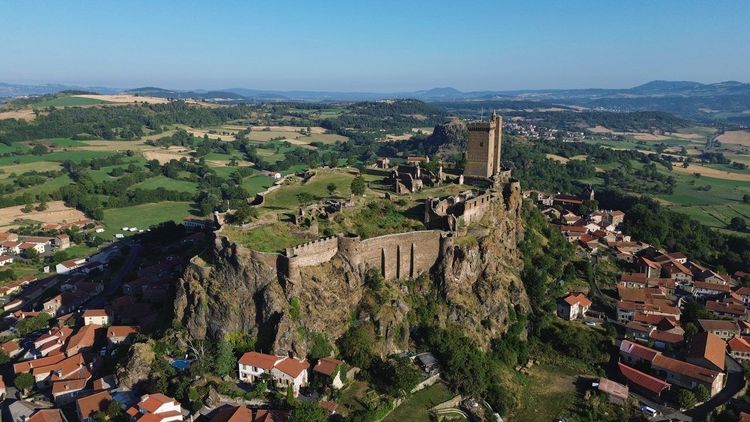
5 km north of Le Puy-en-Velay, the Forteresse de Polignac (Polignac, 43000 Polignac, rated 4.6/5 on Google based on 3,042 reviews) sits on a basalt organ 65 metres high and 800 metres long — a natural platform that has hosted defensive structures since Gallo-Roman times. The Polignac family, one of the most powerful in medieval France, held sway here for several centuries before Richelieu had the fortifications razed in the 17th century.
The site is partially ruined, but the panorama from the ramparts over the Puy plain and the Mézenc in the background is well worth the detour. The visit includes the 12th-century square keep, an underground chamber carved into the basalt and the remains of the seigneurial palace. Medieval entertainment is organised on certain weekends in July and August. Admission: €4 per adult, open from April to November.
The Musée Crozatier
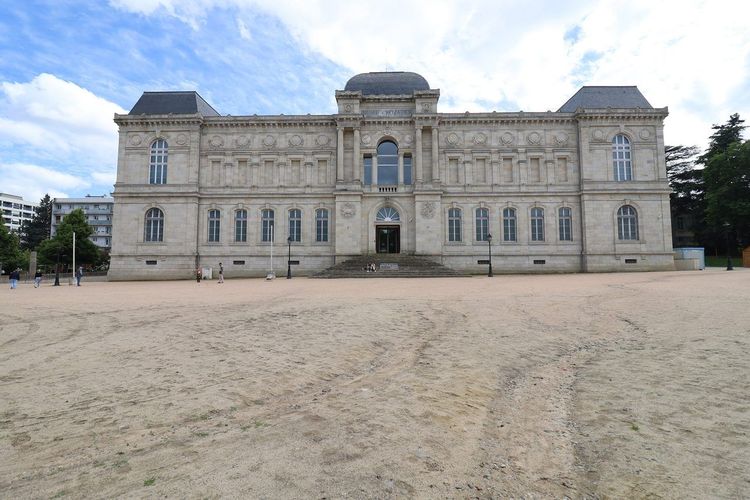
Located in the Jardin Henri Vinay of Le Puy-en-Velay, the Musée Crozatier (Jardin Henri Vinay, 43000 Le Puy-en-Velay, rated 4.6/5 on Google based on 1,336 reviews) is one of the richest regional museums in France for the diversity of its collections: Gallo-Roman archaeology, Puy lace (16th–20th centuries), fine arts and natural sciences sit side by side in a well-preserved 19th-century building.
The Puy lace collection is one of the most important in the world; Le Puy-en-Velay was historically the world's leading centre of handmade lace production, a tradition dating back to the 16th century. Admission: €5 per adult, free on the first Sunday of the month. Closed on Mondays.
Brioude and Its Romanesque Basilica
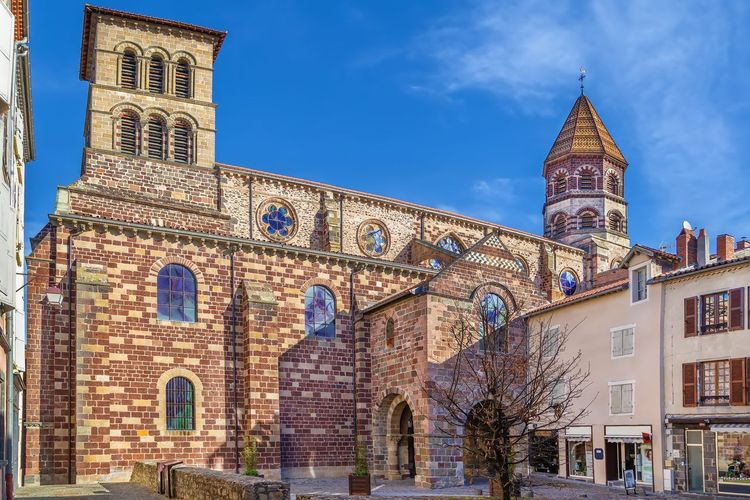
45 km north-east of Le Puy-en-Velay, Brioude is the second largest town in the department with 6,500 inhabitants and a monument that overshadows everything else: the Basilique Saint-Julien, the largest Romanesque church in Auvergne. Built between the 11th and 14th centuries, it measures 71 metres long with a vault height of 22 metres. Its absolute singularity: a floor entirely paved with 12th-century river pebbles, unique in France.
The interior is fascinating for its medieval frescoes preserved in the side niches and its historiated capitals — some depicting hunting scenes, demons or grotesque figures far removed from the usual sobriety of Auvergne Romanesque. Light filters through plain Romanesque windows, creating an atmosphere of contemplation that large Gothic cathedrals do not always achieve. The visit is free and takes 45 minutes to an hour.
Brioude deserves a half-day. The old town in pink sandstone hides Renaissance townhouses and some solid restaurants. The Saturday morning market draws producers from across the Limagne plain, with farmhouse cheeses and the first lentils of the season from July onwards.
Lavaudieu, a "Most Beautiful Village of France"
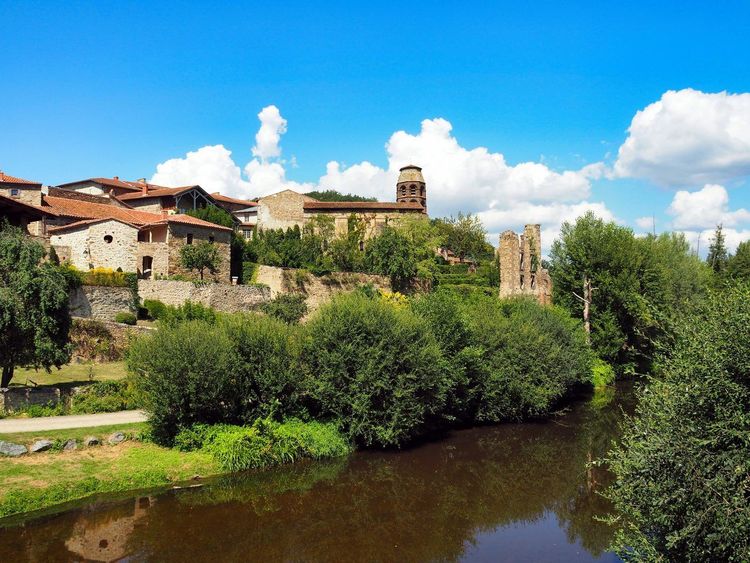
Lavaudieu (43100 Lavaudieu, rated 4.6/5 on Google based on 420 reviews) is the village you want to find and that nobody tells you about: a single main street, an 11th-century Benedictine abbey founded by Saint Robert de Turlande, a Romanesque cloister with its red marble columns and a view over the Senouire valley. Listed as a "Most Beautiful Village of France", it has around 180 permanent inhabitants and not a single tourist sign in five languages.
The Abbaye Saint-André (founded in 1057) houses the only intact Romanesque cloister in the region, with its paired columns and frescoes from the same era. The medieval refectory preserves a 12th-century fresco of the Virgin and Child in an exceptional state of conservation. Admission to the cloister and frescoes: €3 per adult. Just 5 km from Brioude, Lavaudieu can be visited on the same day. Allow 1h30 on site, coffee included on the terrace of the village's only bar.
Blesle, a Medieval Village on the Allier
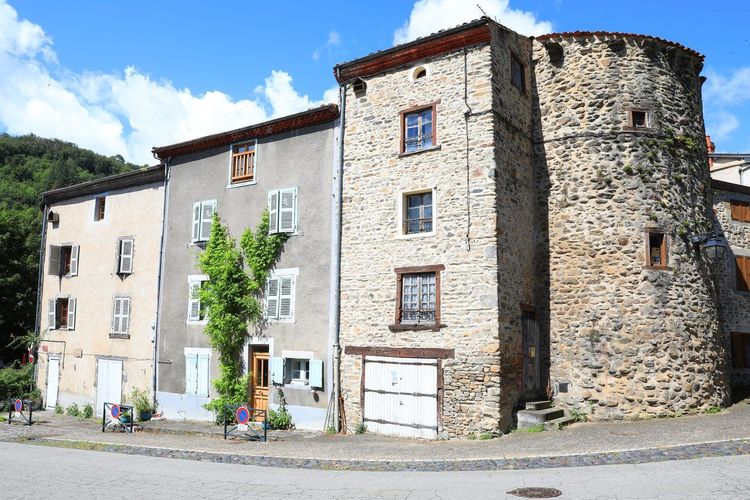
Blesle (Place de la République, 43450 Blesle, rated 4.6/5 on Google based on 23 reviews) is perhaps the most surprising of Haute-Loire's listed villages. An ancient medieval town founded in the 7th century by a Benedictine monastery, it retains a network of staircase lanes, a 13th-century clock tower and half-timbered houses that seem frozen in time. Listed as a "Most Beautiful Village of France", it has around 620 inhabitants and no paid parking — a rare luxury.
The medieval keep of Beauclair (11th century), perched above the village, offers an unobstructed view over the Voireze valley and the first volcanic foothills. The former abbey church of Saint-Pierre preserves a remarkable liturgical treasury — ask for the key at the tourist office if the door is closed. A discreet village, free of queues, reachable from Brioude in 20 minutes via the D588. Allow 2 hours for the village and its immediate surroundings.
The Gorges de l'Allier
The gorges de l'Allier (D585, 43300 Langeac, rated 4.8/5 on Google based on 114 reviews) are the great natural surprise of Haute-Loire. Over 35 km between Langeac and Brioude, the Allier river has carved a trench 300 metres deep into the volcanic plateau, creating canyon landscapes with vertical basalt walls and a spectacular railway line suspended between rock and precipice.
The road that runs alongside the gorges is an experience in itself: narrow and winding, it follows the river from one viewpoint to the next. The village of Prades clings to a cliff 80 metres above the Allier. That of Saint-Julien-des-Chazes, on the right bank, is reflected in a loop of the river that photographers love. The Clermont-Ferrand to Nîmes railway line crosses the gorges via tunnels and vertiginous viaducts; the "Cévenol" train (€20–30 in second class) makes it an attraction in its own right — check timetables in advance as the line is sometimes suspended for maintenance works.
Kayaking or canoeing between Monistrol-d'Allier and Langeac is one of the most spectacular descents in the Massif central. Allow 2 days for the full descent with portages on the faster sections. Local providers offer canoe hire and transport from Langeac. For beginners, the Langeac–Brioude section, which is calmer, is well suited.
The gorges de l'Allier are also one of the last refuges of the wild Atlantic salmon in France. The population has been rebuilt since the 1980s following the partial destruction of dams that blocked migration. Between May and July, you can watch salmon leap up the rapids from the roadside viewpoints — a rare natural spectacle on the continent.
For hikers, the GR 40 (Tour du Velay) follows the gorges along some magnificent sections. The Langeac–Prades–Saint-Julien-des-Chazes stretch covers 22 km with 650 metres of elevation gain and plunging views over the river throughout the day. Moderate level.
The Gorges de la Loire and the Château d'Arlempdes
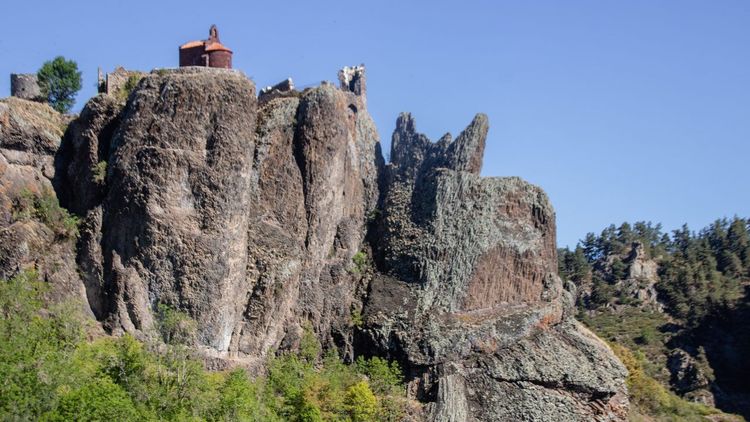
The Loire rises on the Ardèche side of the Mézenc plateau (Gerbier de Jonc, 10 km from the Haute-Loire border) and enters the department already carving its own gorges from Arlempdes onwards. This first stretch of the river, far less known than the Auvergne gorges, offers landscapes of austere beauty: black basalt, clear water, castles perched on volcanic dykes.
Arlempdes is the first major site of these gorges. The village, one of the department's "Most Beautiful Villages of France", is dominated by the ruins of the Château d'Arlempdes set on an 80-metre basalt dyke above a spectacular meander of the nascent Loire.
The ruins can be visited freely (access via a steep staircase from the lower village, 45 minutes). The village of Arlempdes has around ten permanent inhabitants, making it one of the smallest in France to hold this label. A few kilometres away, the Lac du Bouchet (Lac du Bouchet, 43580 Cayres, rated 4.7/5 on Google based on 769 reviews) is a circular volcanic lake of 45 hectares perched at 1,208 metres altitude inside a crater, surrounded by centuries-old beech trees. Swimming is permitted in summer and the water, fed by springs, remains cool even in August.
Further downstream along the Loire, the Voie Verte Via Fluvia offers 62 km of cycle path between Retournac and Chamalières-sur-Loire, along a former converted railway line. Entirely flat, with no motor traffic, it is suitable for families with children from age 6. Bike hire is available at Retournac and Bas-en-Basset.
The Abbaye de la Chaise-Dieu
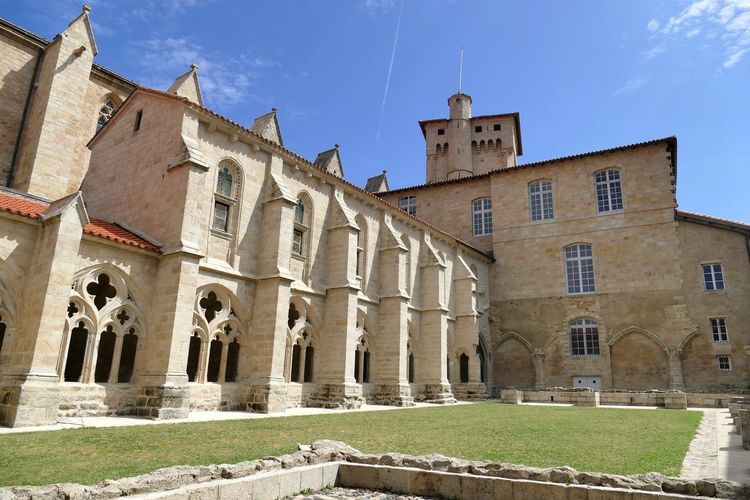
74 km north of Le Puy-en-Velay, on a plateau at 1,082 metres altitude, La Chaise-Dieu is a small town of 700 inhabitants that possesses one of the most important abbeys of the medieval Western world. Founded in 1043 by Saint Robert de Turlande — the same man who founded Lavaudieu — the abbey reached its peak in the 14th century under Pope Clement VI, a native of the region, who turned it into a monastic complex rivalling the great Gothic constructions of the era.
The abbatial church of Saint-Robert measures 50 metres high under its vault and preserves three treasures that justify a visit on their own. The 144 carved oak choir stalls from the 15th century are among the finest in France according to art historians; each stall is a miniature portrait of monastic life. The Flemish tapestries from the 15th and 16th centuries, now restored, depict scenes from the Old and New Testaments with a breathtaking level of textile precision. The Danse Macabre, a 26-metre-long 15th-century fresco, shows Death drawing all levels of society into its dance, from pope to peasant.
The Salle de l'Écho is one of the strangest architectural curiosities in France: two people standing in the opposite corners of an elliptical room, several dozen metres apart, can speak in a whisper and hear each other perfectly, while anyone standing in the centre hears nothing at all. The acoustics depend on the shape of the vault — a demonstration systematically arranged during guided tours.
Every late August, the Festival de Musique de la Chaise-Dieu (Place de l'Écho, 43160 La Chaise-Dieu, rated 4.5/5 on Google based on 984 reviews) takes over the abbey for 10 days of classical and Baroque music concerts. It is one of the most acclaimed classical music festivals in France outside the major cities. Tickets go on sale in spring. Abbey admission: €7.50 per adult (€5 reduced).
The Lac de Lavalette
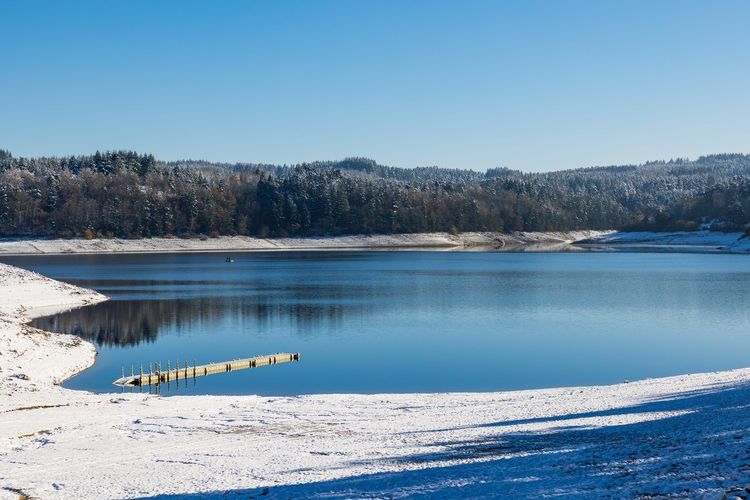
The Lac de Lavalette (Vorey-sur-Arzon, 43800 Vorey-sur-Arzon, rated 4.2/5 on Google based on 972 reviews) is one of the best free swimming spots in the Massif central. This artificial lake of 344 hectares, formed by a dam on the Lignon du Velay, stretches about twenty kilometres south-east of Le Puy-en-Velay, in the commune of Vorey-sur-Arzon. The waters are supervised in summer on two developed beaches, with a marked swimming area and lifeguards on duty from mid-June to the end of August.
Beyond swimming, the lake offers pedalo and kayak hire, pike and trout fishing routes and a 12 km walking trail that circles the entire lake in 3h30 at a relaxed pace. Several viewpoints over the mirror of water and the pine forests that border it punctuate the loop.
Accessible from Le Puy-en-Velay in 25 minutes via the D15, direction Vorey. Free parking. In July and August, the site is very busy with local families at weekends, but the lake circuit remains peaceful on weekdays.
The Massif du Mézenc and Its Panoramas
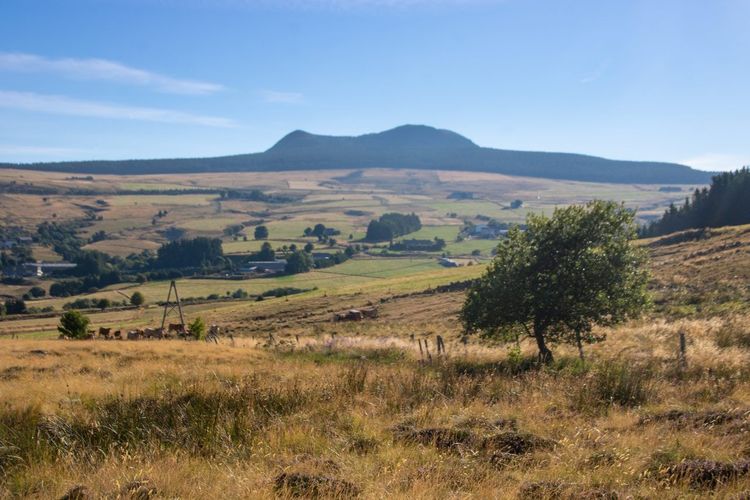
The Massif du Mézenc is the rooftop of Haute-Loire. At 1,753 metres altitude, the summit of Mont Mézenc (Route du Mézenc, 43430 Chaudeyrolles, rated 4.8/5 on Google based on 367 reviews) is the highest point in the department and one of the most impressive observation points in the Massif central. The walk from the Col de la Croix de Boutières takes just 30 minutes for 200 metres of elevation gain — accessible to walkers of all levels.
On a clear day, the panorama from the summit stretches to Mont-Blanc to the north-east, the Alps to the east and the Puy de Dôme to the north. The spectacle is particularly striking at sunrise (the road is driveable up to the col) or in autumn, when the beech forests turn russet and gold. In winter, the massif is snow-covered from December to March, with cross-country skiing and snowshoe hikes organised by local providers.
The flora of the Mézenc is remarkable in its own right. In June, the high-altitude meadows are covered with arnica montana and wild narcissus, alongside the yellow gentians characteristic of these heights. The massif is part of the Hautes-Chaumes du Velay nature reserve. Herds of the Fin-Gras du Mézenc breed (PDO since 2006, exceptional grass-fed beef raised without industrial supplements) have grazed these uplands for centuries; you can buy this meat directly from local farmers.
To explore the trails of the Mézenc and the Pic du Lizieux (1,407 m, a few kilometres away, accessible from the Mézenc viewpoint), the Ryo app lists points of interest across the Massif central with contextualised audio content.
The Cratère du Mont-Bar
8 km from Le Puy-en-Velay, the Cratère du Mont-Bar (Allègre, 43270 Allègre, rated 5/5 on Google based on 1 review) is a maar (a volcanic crater formed by a phreatic explosion) 650 metres in diameter, whose central depression is occupied by a forest and a pond. It is one of the most accessible volcanic sites in the department, with a 2.5 km discovery trail — a 45-minute walk — that circles the entire crater.
The crater dates back around 40,000 years — a geological youth that explains why its shape is still perfectly preserved. Educational panels on volcanology punctuate the trail. Access is free, open all year round. Can be combined with the medieval fortress of Allègre a 5-minute drive away, which overlooks the eponymous village from a basalt promontory.
The Cascade de la Beaume and the Wild Gorges
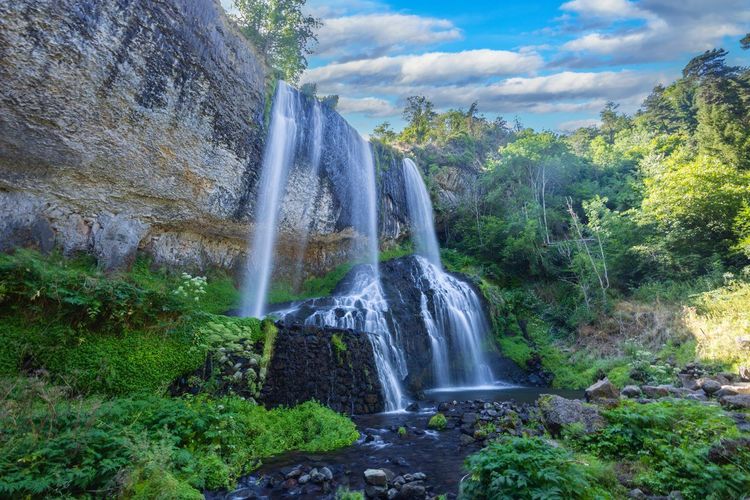
In the foothills of the Massif du Mézenc, the Cascade de la Beaume plunges into a rocky pool surrounded by basalt columns, with a drop of around fifteen metres. The site is accessible on foot via a 2 km round-trip path from the village of Beaulieu, in a forest setting that tourism has not yet shaped.
More off the beaten track, the Ravin de Corbeuf (Saint-Paulien, 43350 Saint-Paulien, rated 4.6/5 on Google based on 254 reviews) is a spectacular volcanic geology site at Saint-Paulien, 15 km north of Le Puy-en-Velay: a canyon of natural basalt organs 30 metres high, carved by a tributary of the Loire. Access is via a forest track from the village — no tourist signs, no refreshment stand. Walking boots are essential.
Both sites reward walkers who venture off marked itineraries. Allow a half-day for each.
Saugues and the Beast of Gévaudan
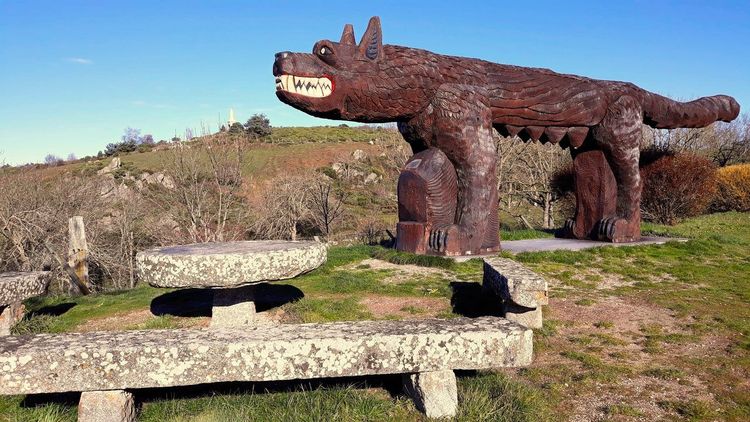
Saugues (Place du Marché, 43170 Saugues, rated 4.6/5 on Google based on 34 reviews) is a town of 1,800 inhabitants 44 km south-west of Le Puy-en-Velay, a gateway to the Margeride and an unmissable stop on the Via Podiensis. It is also the setting of the most terrifying legend of 18th-century France: the Beast of Gévaudan, an unidentified animal that killed 102 people between 1764 and 1767, terrorising the countryside to such an extent that Louis XV sent his finest hunters to deal with it.
The true identity of the Beast — a large wolf, an escaped hyena, a wild dog or a hybrid creature — has never been established with certainty. The Musée de la Bête du Gévaudan et de la Résistance, housed in a former bourgeois residence in Saugues, soberly unravels historical fact from popular legend. The exhibition documents contemporary accounts, hunting reports sent to Versailles and the theories of modern historians. Admission: €4 per adult.
Saugues is also a starting point for exploring the Margeride, a granite plateau that contrasts sharply with the volcanic basalt of the rest of Haute-Loire. Yurts and guesthouses offer immersive stays in this landscape of bocage, forests and peat bogs. The GR 65 (Chemin de Saint-Jacques) passes through Saugues heading east towards Le Puy-en-Velay; the village has several pilgrim gîtes.
Hiking and Outdoor Activities in Haute-Loire
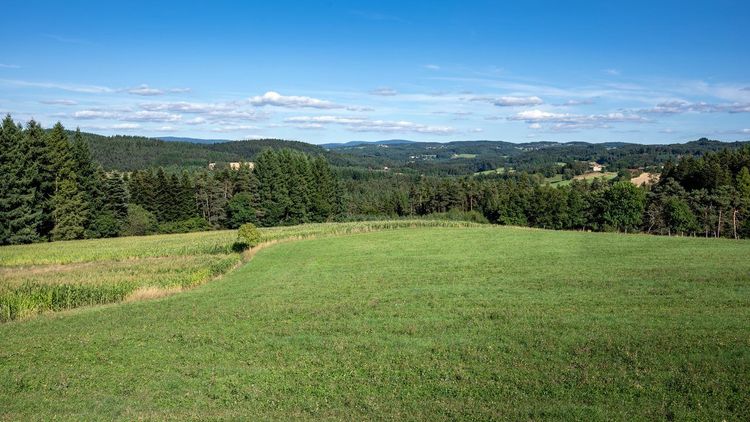
Haute-Loire is a top-tier outdoor department. With 3,000 km of marked trails, two mountain massifs (Mézenc and Margeride), three wild rivers (Loire, Allier, Senouire) and an average altitude of 870 metres, the playground is exceptional for outdoor enthusiasts.
Hiking: three national GR trails cross the department. The GR 65 (Via Podiensis, Chemin de Saint-Jacques) enters from Saint-Privat-d'Allier and reaches Le Puy-en-Velay in one 25 km stage for experienced walkers. The GR 40 (Tour du Velay) loops around the Puy basin in 9 stages, covering 220 km of trail with 7,800 metres of cumulative elevation gain — a week of touring hikes through constantly varied landscapes. The GR 700 (Régordane) crosses the Margeride from north to south.
Cycling and Mountain Biking: the Voie Verte Via Fluvia (62 km, Retournac–Chamalières) is the reference family cycling route. For mountain bikers, the slopes of the Mézenc and the forests of the Margeride offer marked single tracks. The tour of the Lac du Bouchet (5 km) is suitable for younger children.
Water Sports: the Allier is one of the last major wild rivers in France undammed over much of its course. The canoe descent through the gorges (Monistrol-d'Allier–Langeac, 2 days, grade 2–3) is intended for paddlers with a minimum of experience. The Langeac–Brioude section, calmer, suits beginners. Introductory courses are offered by several local associations based in Langeac.
Rock Climbing: the basalt organs and dykes make for original climbing terrain. The Pertuis site, near Vals-près-Le Puy, gathers around a hundred routes graded from 4 to 7b. The Lavoûte-Chilhac sector offers multi-pitch routes above the Loire.
Fishing: virtually all rivers in Haute-Loire are classified as "first category" (salmonid waters). Atlantic salmon in the Allier, brown trout in the Ance and the upper Loire, pike in the lakes — the department draws anglers from across Europe. A fishing permit is compulsory and available at tourist offices and newsagents.
When to Visit Haute-Loire?
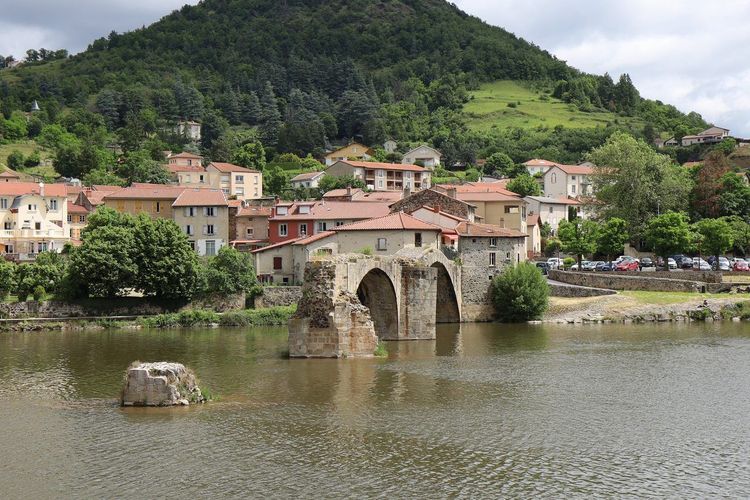
Haute-Loire can be visited year-round, with very different characteristics depending on the season. The department's average altitude (870 m) tempers the summers and hardens the winters.
Spring (April–June): the best season for hikers. The meadows of the Mézenc fill with wildflowers, rivers run high and are photogenic, and pilgrims on the Chemin de Saint-Jacques begin arriving from late March. Temperatures: 8 to 18°C depending on altitude.
Summer (July–August): high season. The Lac de Lavalette and the Loire's swimming spots are very busy. Festivals animate Le Puy-en-Velay (Roi de l'Oiseau in September) and La Chaise-Dieu (classical music festival in late August). Temperatures: 20 to 28°C on the plains, cool above 1,400 m.
Autumn (September–October): the beech forests of the Mézenc turn red and gold, the gorges are less crowded, and the light is magnificent. The Musique de La Chaise-Dieu festival takes place in late August and early September. Temperatures: 5 to 16°C.
Winter (December–March): the Mézenc and the Margeride receive regular snowfall — cross-country skiing and snowshoeing for the active, more authentic historic towns for everyone else. Museums (Crozatier, Bête du Gévaudan) remain open.
How to Get to and Around Haute-Loire?
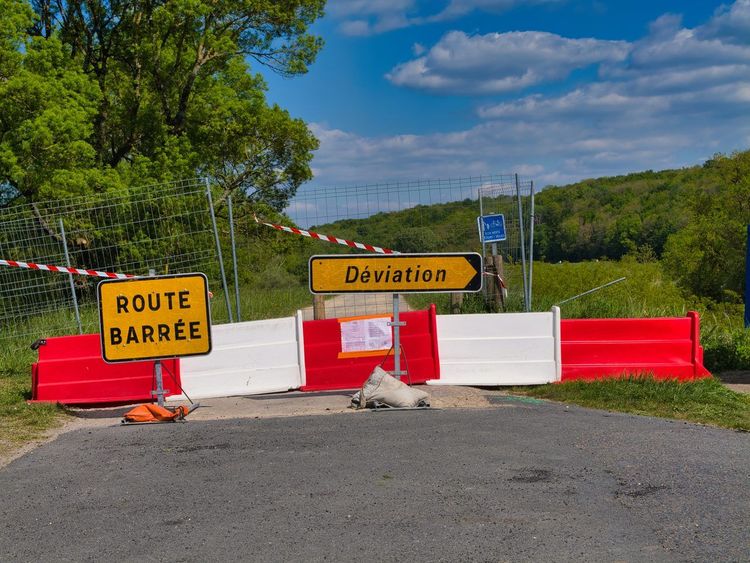
To visit Haute-Loire, you first have to get there: it is one of the few French departments without a direct motorway from Paris, which contributes to its relative tourist tranquillity.
By train: from Paris Gare de Lyon, TGV to Clermont-Ferrand (3h10), then Intercités to Brioude (45 min) or Le Puy-en-Velay (1h30 from Clermont via Brioude). From Lyon, Le Puy-en-Velay is 2h30 by train with a connection in Clermont.
By car: from Paris (450 km), allow 4h30 via the A71 towards Clermont-Ferrand, then the A75 to Brioude, then the N102 towards Le Puy-en-Velay. From Lyon (140 km), 1h45 via the A47 and N88.
On the ground: a car is essential for exploring the gorges, villages and massifs. Inter-municipal transport (Alto network) covers the Le Puy-en-Velay–Brioude route, but frequencies are limited. Car hire agencies are available in Le Puy-en-Velay.
Where to Stay in Haute-Loire?
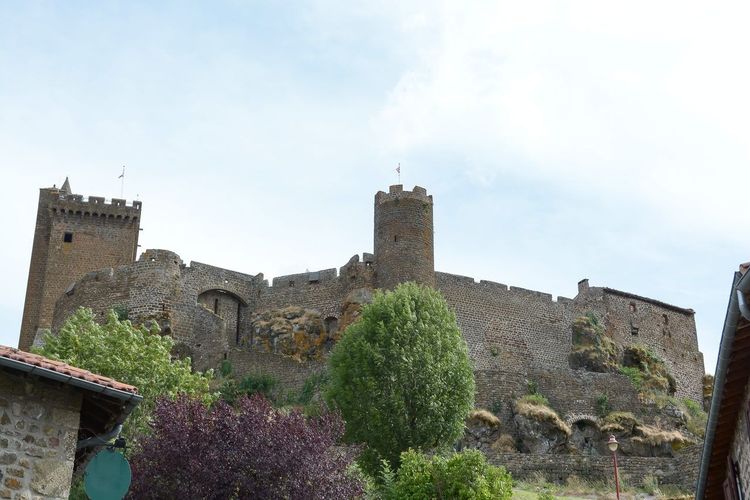
Le Puy-en-Velay remains the main logistical base. The city offers around thirty hotels, gîtes, bed-and-breakfasts and pilgrim hostels (dormitory gîtes from €18/night). In high season, book 3 months in advance at minimum for the period from mid-June to mid-September; the Roi de l'Oiseau weekend (3rd weekend of September) fills local accommodation from January onwards.
In Brioude: a few chain hotels and bed-and-breakfasts in town. In the gorges and massifs: accommodation is scattered across guesthouses and rural gîtes. The Arlempdes, Saugues and Mézenc plateau areas have a few quality addresses, often run by people with a deep passion for the territory. Book well in advance for summer.
The department has around forty campsites, several of them on riverbanks. The municipal campsite at Langeac (beside the Allier, €12/night for a tent pitch) is one of the best located for gorge and canoe enthusiasts.
FAQ
What is the best season to visit Haute-Loire?
Spring (April–June) and autumn (September–October) are the best times to visit Haute-Loire. In spring, the meadows of the Mézenc are in bloom, rivers run high and the gorges of the Allier are particularly spectacular. In autumn, the beech forests display exceptional colours and tourist sites are less crowded. Summer is pleasant thanks to the altitude but busier around the Lac de Lavalette and during festivals.
What are the most beautiful villages to visit in Haute-Loire?
Haute-Loire has 5 villages listed as "Most Beautiful Villages of France": Lavaudieu (11th-century Romanesque abbey and the only Romanesque cloister in Auvergne), Blesle (medieval keep and staircase lanes), Arlempdes (castle perched on a volcanic dyke above the nascent Loire), Lavoûte-Chilhac (village in a loop of the Allier, built around its Benedictine priory) and Pradelles (a transit town on the plateau, a historic stopping point for pilgrims and merchants). Other villages are worth visiting without this official label: Prades (clinging above the Allier gorges), Auzon (intact medieval ramparts) and Saint-Vidal (well-preserved Renaissance château 10 km from Le Puy-en-Velay).
What can families do in Haute-Loire?
The department is well suited for families with children. In summer, the Lac de Lavalette (free supervised swimming, pedalo hire) is the unmissable gathering spot. The Voie Verte Via Fluvia (62 km of cycle path along the Loire) is suitable for children from age 6. Sites such as the Cratère du Mont-Bar (a 45-minute discovery trail) or the Chapelle Saint-Michel d'Aiguilhe (268 steps to climb) easily capture the attention of younger visitors. The Musée de la Bête du Gévaudan in Saugues works well for children aged 8 and over.
Which châteaux should you visit in Haute-Loire?
The must-sees are the Château d'Arlempdes (spectacular ruins on a volcanic dyke above the nascent Loire), the Forteresse de Polignac (medieval castle on a basalt organ 5 km from Le Puy-en-Velay, admission €4) and the Château de Lavoûte-Polignac (still-inhabited medieval château on the banks of the Loire, open for summer visits). If you plan to extend your stay by travelling up the Loire towards its famous royal residences, Ryo's road trip Les Châteaux de la Loire will guide you between Chambord, Chenonceau and the châteaux of the Touraine.
How can you get around Haute-Loire without a car?
Without a car, getting around remains limited. The train serves Le Puy-en-Velay and Brioude from Clermont-Ferrand. Summer shuttles connect Le Puy-en-Velay to a few major tourist sites in July and August. The Voie Verte Via Fluvia (cycling) and the Chemin de Saint-Jacques (hiking) allow you to cross the department without a motor, but for the gorges, the massifs and isolated villages, a car or an electric bicycle remains essential.
How much time do you need to visit Haute-Loire?
A weekend (2 days) allows you to cover Le Puy-en-Velay and its immediate surroundings: the cathedral, the Chapelle d'Aiguilhe, the Forteresse de Polignac, the Musée Crozatier and possibly Lavaudieu or Brioude if you push a little further. To cover the entire department — the Allier gorges, La Chaise-Dieu, the massifs, Saugues and the southern villages — allow a minimum of 5 to 6 days. A full week lets you alternate cultural sites and outdoor activities at a relaxed pace.
Conclusion
Visiting Haute-Loire is not the easiest destination to reach in France, and that is precisely what makes this department so precious. Taking the time to visit Haute-Loire means reconnecting with a France without queues or automatic audio guides. The gorges of the Allier without a pay-and-display car park at the edge of the precipice, medieval villages without automatic audio guides at the ticket desk, the cathedral of Le Puy-en-Velay visited alongside the morning pilgrims rather than with tour coaches: the experience remains authentic.
For your explorations of the major cultural highlights of the Massif central, the Ryo app accompanies you with audio content on the historical sites of the region. And if you extend your journey by travelling up the Loire towards its royal residences, Ryo's road trip Les Châteaux de la Loire awaits you at the other end of the river.