
Créé par Romane, le 20 juin 2026
Votre guide Ryo
Croix Rousse District in Lyon: what to do and visit?
© Shutterstock
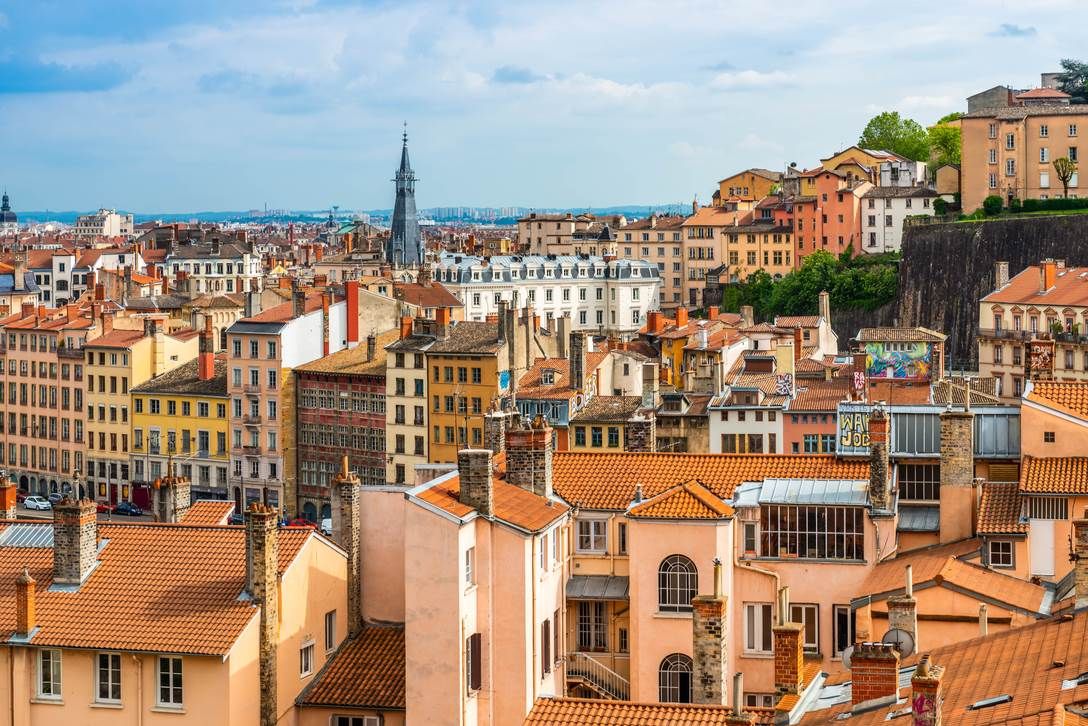
In the 19th century, you would have walked the streets of Croix Rousse to the sound of bistanclaques, those looms whose name comes from the very particular noise they produced. The silk industry, which sustained this district for more than 5 centuries, is still present, but on a smaller scale. The Maison des Canuts (name given to silk workers) is a must-see during your visit to this legendary district. You will fall under the charm of the village spirit of this district between slopes, street art stairs, traboules, trompe l'oeil and its immense plateau which offers you a magnificent viewpoint of Fourvière basilica, old Lyon and its peninsula.
Croix Rousse, an artists' district
Parisians have Montmartre, Lyon residents have Croix Rousse! Art galleries, arts and crafts, creators, café theaters, trompe l'oeil, are all opportunities to discover this facet of Croix Rousse.
Street art, graffiti and murals
An ephemeral art, for the most part, when they haven't been created voluntarily, some more permanent ones can remain for several years. The most famous is the Canuts wall which covers the entire facade of a building. The particularity of this fresco, apart from its size, is that the characters represented actually live in the Croix-Rousse district. Other interesting points:
- The Mermet passage and its "blue staircase",
- David Bowie's mismatched eyes on Neyret street,
- The stairs on Prunelle street...
The creators' village
At Passage Thiaffait, 75 fashion, decoration and design artists present their creations year-round.
Place des Terreaux
This square, developed in the 17th century, is the political heart of Lyon city. It's also a cultural space that occupies a place of honor during the Festival of Lights. Lyon residents love this square for its beauty, to meet in one of the many restaurants, or on a terrace to have coffee. Place des Terreaux is reached by the Grande Côte climb. Points of interest:
- The Town Hall built in the 17th century and restored in the 19th century following bombardments.
- The Palais Saint-Pierre, this former abbey now houses the Fine Arts Museum, the 17th-century refectory and grand staircase decorations are absolutely magnificent, as are the cloister and gardens.
- Bartholdi's fountain, from the 19th century, was originally made for the city of Bordeaux, which is why it represents the Garonne and its 4 tributaries.
Did you know? It was from the town hall balcony in 1944 that General de Gaulle proclaimed Lyon, "capital of the Resistance".
The traboules
How to visit Croix Rousse without going through the famous traboules! Traboules are passages between buildings allowing to reach parallel streets. This pedestrian passage connects courtyards and buildings together and looks, to all appearances, like a secret passage...
Cour des Voraces
This traboule owes its fame to the Canuts revolt in 1848, it then served as their refuge. These silk workers, who lived in great poverty, had to hide from soldiers in charge of suppressing these workers' revolts. During World War II, the Cour des Voraces was a secret passage used to avoid German surveillance, it's an emblematic place of the Croix-Rousse slopes.
The monumental staircase covers 6 floors of the building and serves as a link between 3 distinct spaces (Place Colbert, Montée de Saint-Sébastien and Rue Imbert-Colomés).
Other traboules
Traboule Imbert Colomès, Traboule des Capucins, Traboule de Thou and its magnificent staircase...
The Croix-Rousse plateau
From the large esplanade, you can see the Tête d'Or park.
The Gros Caillou
It attracts and intrigues passing tourists, this big rock, its history is quite original. While workers were in charge of drilling the ficelle that would connect Lyon center and Croix Rousse thanks to the funicular, they found themselves facing this huge block of particularly hard rock. They had no choice but to extract it to finish the work and that's how the big rock naturally found its place on these green spaces, to the great delight of little Lyon children who have fun climbing on it.
Enjoy the typical atmosphere of Lyon bistros and their specialties: Café Jutard, Café de la Soierie...
The market
Every day, except Monday, a large market bringing together local producers who offer you fresh products on the boulevard.
Place de la Croix Rousse
Jacquard's statue
Joseph Jacquard is the Lyon inventor of the semi-automatic loom, his invention aimed to compensate for the lack of manpower within Lyon industry. A system that made workers' jobs easier.
Place des Tapis
The public crier
On Sundays at 11 a.m., a public crier reads the little notes left by residents in the mailboxes installed in various places.
The cocoons
Benches shaped like silkworm cocoons in the silk district, what could be more logical!
The statue "Le Chant des Canuts"
Tribute to the worker couples who worked on the looms.
Maison des Canuts
A must-see visit when visiting Croix Rousse, the canuts are the very soul of this district. You will discover all the details of Lyon silk industry history, its evolution, workers' conditions, silkworm cultivation... through a particularly interesting guided tour, with, notably, a weaving demonstration on an old hand loom. Family visits, adapted for children, are also offered.
Soierie Vivante
This association is located in a canuts workshop-home, you will discover a passementerie workshop as well as a weaving workshop. Creative activities for children as well as adults, the goal of this collective is to save the silk heritage of the beautiful city of Lyon.
Place Joannes Ambre
It's at this location that there is a cross made of Couzon stone, recognizable by its ochre, slightly golden color, which gave the name Croix Rousse to this district of Lyon city center.
The Amphitheater of the Three Gauls
In ancient times when Lyon was part of the Celtic kingdom, 60 Gallic nations met once a year in this amphitheater.
The churches
- Church of Saint-Bruno des Chartreux, baroque style, you will discover one of the most beautiful baldachins with its gilt wood volutes.
- Church of Saint-Augustin, Roman-Byzantine style built in the 19th century for the canuts.
- Church of Saint-Polycarpe, with its facade featuring Corinthian order capitals, its triangular pediment and its organ classified as a historic monument.