
Créé par Romane, le 4 juin 2026
Votre guide Ryo
The 15 culinary specialties of Auvergne-Rhône-Alpes
© Shutterstock
From Auvergne-style potée to ravioles de Romans, including AOC cheeses and prestigious wines, the Auvergne-Rhône-Alpes region offers an incomparable palette of flavors. Between the Savoyard mountains and the volcanoes of Auvergne, this territory shaped by history and geography has given birth to culinary specialties recognized worldwide. Distinctive cheeses, generous dishes and gourmet desserts make up a gastronomic heritage that delights the palates of the finest gourmets. Prepare yourself for an exceptional taste journey through 15 emblematic specialties that make this region proud.
1. Truffade, a generous dish
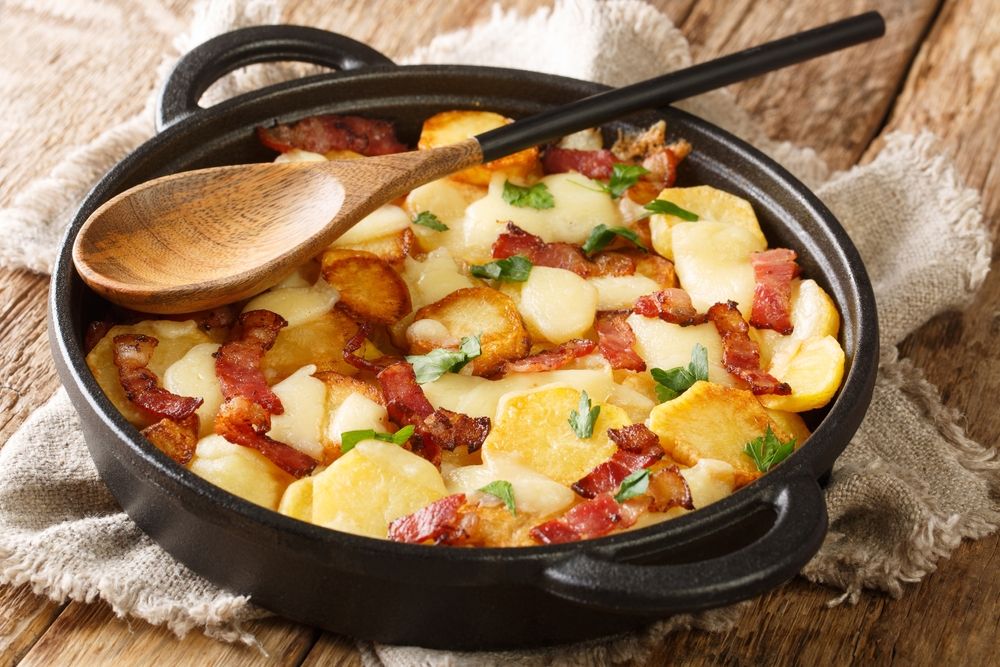
Don't miss trying truffade, an authentic dish from Auvergne. It skillfully combines sautéed potatoes, bacon and Cantal cheese. This Auvergne-Rhône-Alpes specialty is distinguished by its melting texture and comforting taste. Usually accompanied by a green salad and farm-fresh ham, it's a very generous dish that is shared convivially. Truffade perfectly embodies the spirit of mountain meals, where generosity and sharing are paramount.
2. Pounti, for a sweet-savory harmony
Originating from Cantal, pounti is a surprising savory cake that mixes prunes, ham, bacon and green vegetables, all wrapped in a delicious batter made from flour and eggs. Its slow cooking achieves a perfect balance between sweet and savory in every bite. This culinary specialty from Auvergne-Rhône-Alpes draws its origins from ingredients commonly used in the region, representing the culinary genius of Auvergne cooks who knew how to use leftovers. Pounti is now a true symbol of Auvergne's gastronomic identity.
3. Saint-Marcellin, a small cheese full of finesse
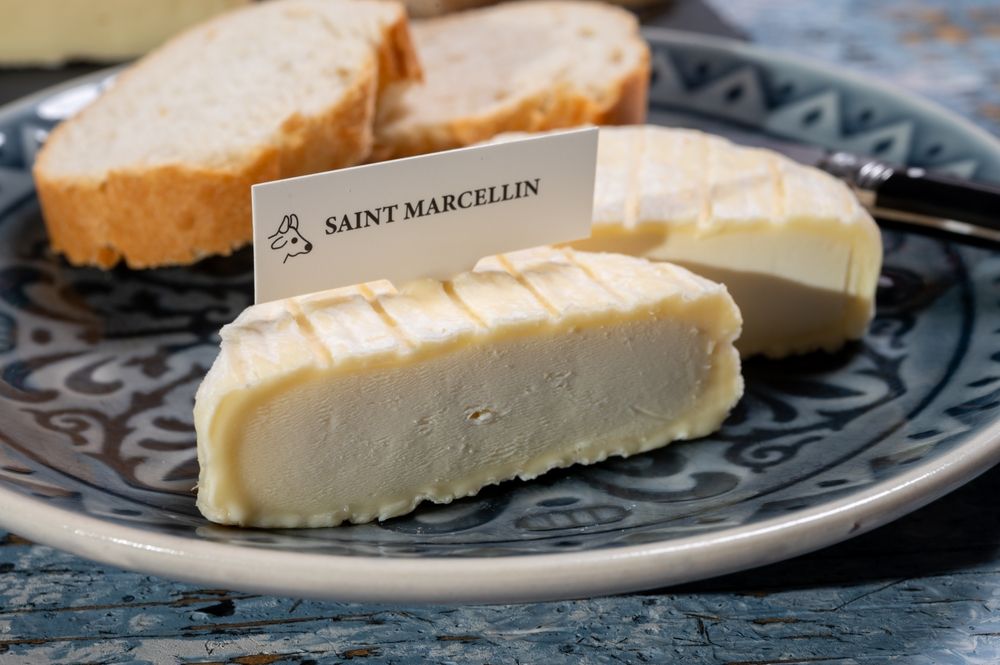
Saint-Marcellin is a small round cow's cheese with a soft paste and creamy texture. Appreciated for the delicacy of its bloomy rind, it pairs perfectly with fresh bread that brings out all its finesse. Originally from Isère and Drôme, it was initially produced by monks for their own consumption. Today, this culinary specialty from Auvergne-Rhône-Alpes benefits from a PGI (Protected Geographical Indication) and has become essential, appreciated well beyond the monasteries where it was born.
4. Auvergne potée, to warm up in winter
Originating from Haute-Loire and Puy-de-Dôme, Auvergne potée is a traditional dish that comforts during harsh winters. Prepared with pork, cabbage, carrots and potatoes, this rustic specialty develops its flavors after simmering for several hours. Its simplicity and authenticity make it an emblematic dish of the Auvergne-Rhône-Alpes region. This generous dish perfectly embodies the convivial spirit of Auvergne cuisine, where meals are shared around the family table.
Download the audio-guided circuit to discover Clermont-Ferrand on foot and independently
To complete your exploration of the volcanoes of Auvergne, don't miss visiting Clermont-Ferrand, the Auvergne capital that serves as an ideal starting point for your excursions. Thanks to the Ryo app, discover the city at your own pace with an audio-guided circuit of Clermont-Ferrand that will take you through the 21 major points of interest in the city. Let yourself be guided in your urban exploration before setting off to conquer the volcanic giants that surround the city.
5. Savoyard fondue, a convivial dish to share
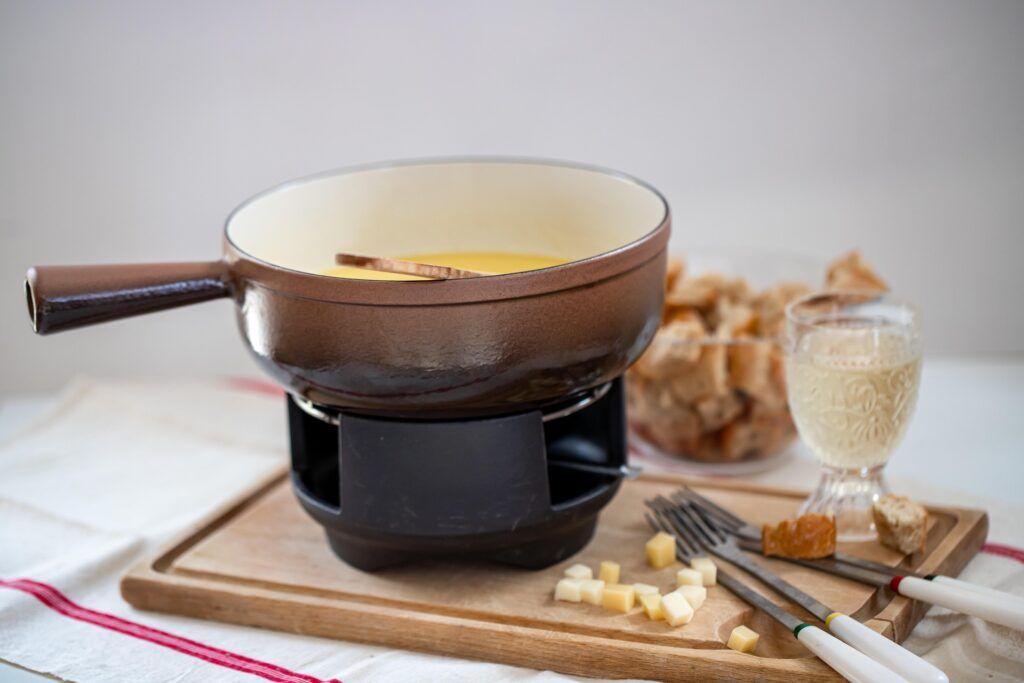
The famous Savoyard fondue, originating from Savoie, dates back to the 18th century, when shepherds used cheese to prepare hot dishes during their mountain stays. Prepared by melting a mixture of three cheeses (Beaufort, Comté and Emmental) with garlic and white wine, this culinary specialty from Auvergne-Rhône-Alpes is above all a convivial moment to share with family or friends. The ritual of bread dipped in melted cheese creates a warm atmosphere typically Savoyard. Don't forget the tradition: whoever loses their piece of bread in the caquelon pays for the round!
6. Gratin dauphinois, potatoes in the spotlight
Originating from Dauphiné in Rhône-Alpes, this dish appeared between the 16th and 17th centuries, a time when potatoes were a novelty in Europe. Prepared with thin slices of potatoes accompanied by a creamy garlic sauce, it is then gratinéed in the oven to obtain a texture that is both melting and crispy. Its creation, often claimed by the peasants of Dauphiné, would be linked to the Duke of Clermont-Tonnerre during a meal he served to his officers in 1788. Gratin dauphinois quickly gained popularity until it appeared in Parisian inns. Today, it's a common side dish in restaurants, testifying to the exceptional culinary know-how of the Auvergne-Rhône-Alpes region.
7. Bresse chicken, the king of the farmyard
Since 1957, the famous Bresse chicken has benefited from Protected Designation of Origin (PDO) which guarantees its origin and exceptional quality. Recognizable by their red crest, blue feet and white feathers, they are raised free-range and outdoors, thus favoring their natural development. These emblematic poultry from Auvergne-Rhône-Alpes are recognized worldwide for their exceptional flavor and are classified among the best global products. Their fine and tender meat is the pride of the greatest starred tables in France and elsewhere.
8. Green lentils from Puy-en-Velay, green gold
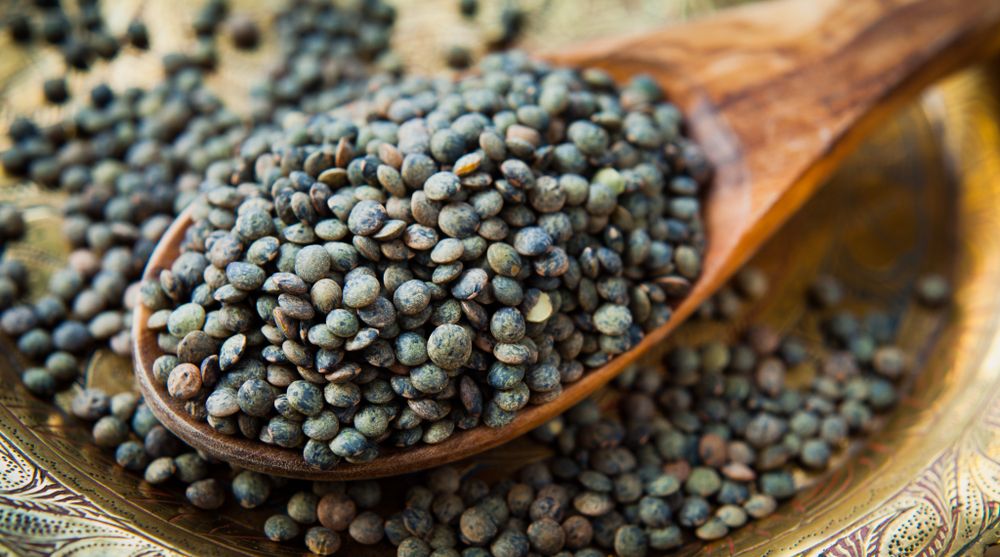
Cultivated on the high plateaus of Velay, between 600 and 1200 meters altitude, green lentils benefit from a Controlled Designation of Origin and a Protected Designation of Origin. Their delicate skin and non-floury kernel allow them to cook quickly, thus offering a flavorful texture. With their diameter ranging from 3.25 to 5.75 mm and their characteristic green-blue marbling, the green lentils from Puy-en-Velay are an essential culinary specialty of the Auvergne-Rhône-Alpes region. They accompany meats wonderfully well and can also be enjoyed in salads.
9. Savoie cake, gourmandise in complete lightness
The Savoie cake, also known as Savoie biscuit, was created in Chambéry in 1358 by Amadeus VI, Count of Savoie, to delight Prince Charles IV of Luxembourg during his visit. Its preparation is based on a flavorful mixture of eggs and potato starch, which gives it an incomparable light and fluffy texture. The secret of its lightness lies in the meticulous incorporation of beaten egg whites during its preparation. This emblematic dessert from Auvergne-Rhône-Alpes is a true cloud of gourmandise that melts deliciously in the mouth.
10. Ravioles from Romans-sur-Isère, to delight your taste buds
The ravioles from Romans-sur-Isère, in Drôme, are delicate thin pasta, usually stuffed with aged Comté, herbs and a delicious creamy sauce. Their creation goes back several centuries, when local nuns had the ingenious idea of using leftovers to make these little culinary wonders. The recipe was then passed down from generation to generation to become today an essential specialty of the Auvergne-Rhône-Alpes region. These small squares of pasta can be enjoyed poached in broth, gratinéed or simply sautéed in butter.
11. Quenelle with Nantua sauce, the emblem of Lyon
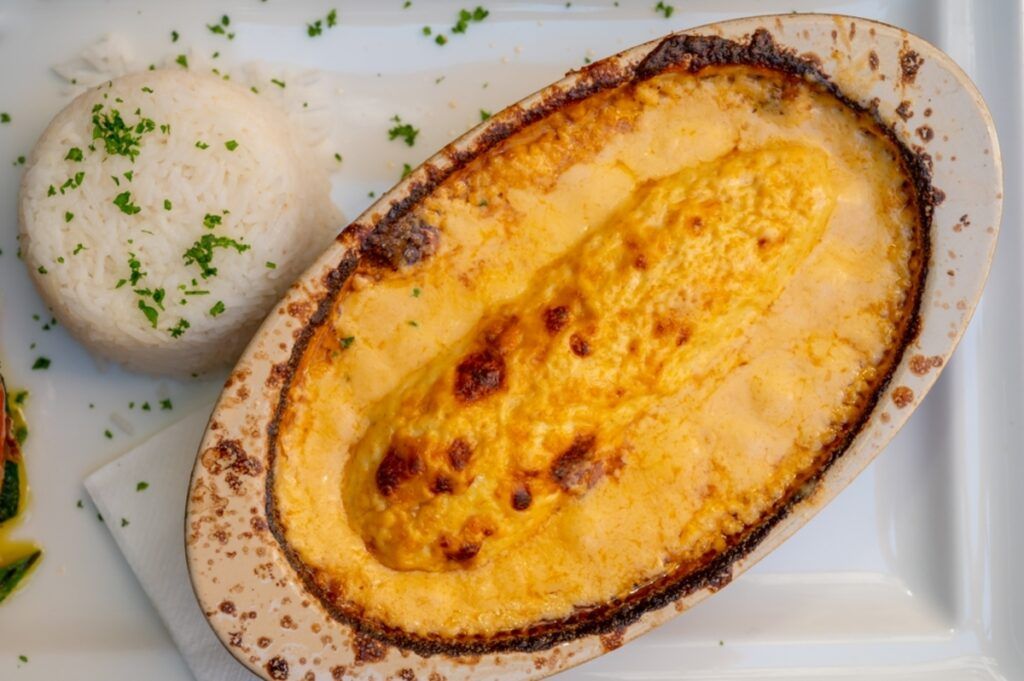
Originating from Lyon, the famous quenelles are dumplings made from flour, butter and eggs. Accompanied by a flavorful Nantua sauce with crayfish, they harmoniously combine their creamy texture and pike flesh. The people of Lyon are so proud of them that a local author declared: "Quenelles are an art of good taste and gourmandise." To discover this specialty in its birthplace, let yourself be guided during your visit of Lyon and make a gourmet stop at the Halles Bocuse, temple of Lyon gastronomy. Quenelles are among the emblematic dishes that every visitor must taste in the gastronomic capital of France.
12. Saint-Nectaire, for its incomparable taste
Cantal, Salers, Bleu d'Auvergne and Fourme d'Ambert are part of the emblematic cheeses of the Auvergne-Rhône-Alpes region, all benefiting from Controlled Designation of Origin which guarantees their authenticity. Among these prestigious cheeses, Saint-Nectaire is probably one of the most famous. Made in the monts Dore region, in Auvergne, in the heart of the Massif Central, this farm cheese is aged in caves for at least 28 days to develop all its flavor. The verdant pastures and abundant aromatic herbs of the region ensure quality feed for milk-producing cows, which gives Saint-Nectaire its unique and incomparable taste.
13. Chestnut cream, the gourmets' delight
The chestnut, emblem of Ardèche, benefits from double certification: Controlled Designation of Origin and Protected Designation of Origin. Whether fresh, candied, glacéed or creamed, this Ardèche variety offers multiple culinary possibilities. Created in 1885, chestnut cream, a traditional recipe of sweetened chestnut purée, has not changed since and its quality has remained unequaled. It is delicious as a garnish on light crêpes, grilled bread or fluffy brioche. This sweet delicacy perfectly embodies the artisanal know-how of Ardèche.
14. Côtes du Rhône, wines with worldwide reputation
Produced in the Rhône valley, the famous Côtes du Rhône red wines come from grape varieties such as Syrah, Grenache and Mourvèdre. This gives them a flavor that is both fruity and spicy, highly appreciated by wine lovers worldwide. Extending from Vienne to Avignon, the valley has varied soils and an ideal Mediterranean climate for vine cultivation. These favorable conditions have favored the development of a unique terroir, allowing wines of exceptional quality with worldwide reputation to be obtained. Côtes du Rhône represent the viticultural excellence of the Auvergne-Rhône-Alpes region.
15. Condrieu, a floral and fruity white wine
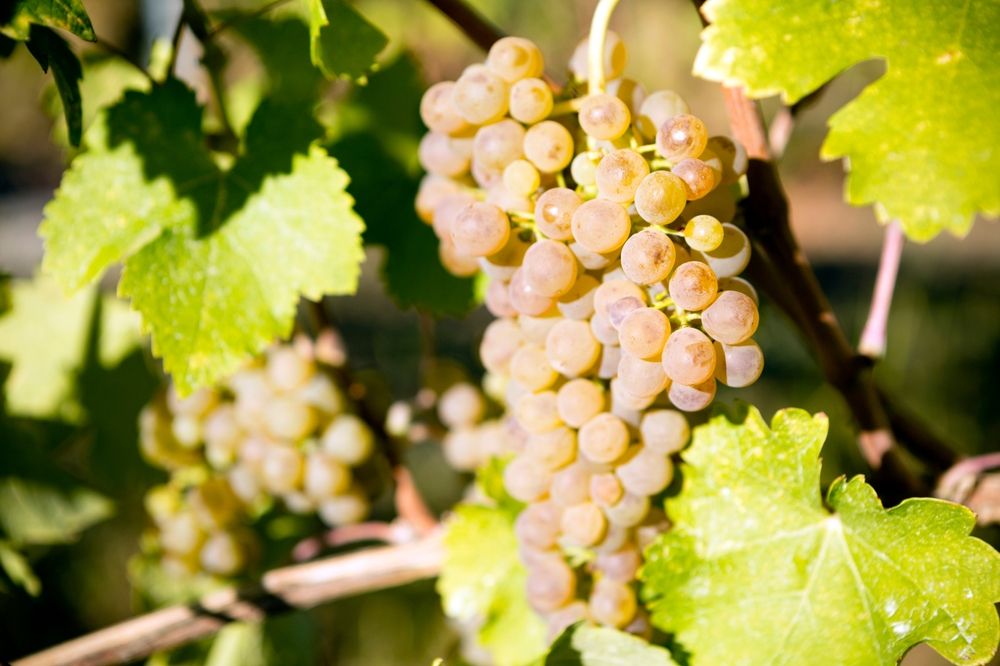
Condrieu is a white wine produced in the Rhône valley, from the Viognier grape variety. Renowned for its floral and fruity taste, its rich and smooth texture is adorned with a pale gold robe with green reflections. Its nose gives off aromas of fresh fruits such as peach, mango and apricot, creating an exceptional aromatic palette. This wine draws its typicity from a unique terroir, characterized by granitic soils, steep slopes, as well as exceptional minerality and freshness. Since 1940, Condrieu has benefited from Controlled Designation of Origin, which guarantees its geographical origin and traditional production method.
In conclusion, the culinary specialties of Auvergne-Rhône-Alpes reflect the richness and diversity of this exceptional territory. From AOC cheeses to comforting mountain dishes, including prestigious wines and sweet delicacies, each specialty tells a story, that of a preserved terroir and know-how transmitted from generation to generation. Whether you are a fan of rustic cuisine or refined gastronomy, this region promises you unforgettable taste discoveries. Don't hesitate to extend your culinary exploration by visiting Lyon and its famous bouchons, true temples of French gastronomy.
Frequently asked questions
What are the culinary specialties to absolutely taste in Auvergne-Rhône-Alpes?
Among the unmissable specialties, we find truffade, Saint-Nectaire, Savoyard fondue, quenelles with Nantua sauce, ravioles from Romans and Bresse chicken. These emblematic dishes represent the gastronomic excellence of the region.
What AOC cheeses can be found in Auvergne-Rhône-Alpes?
The region has many prestigious AOC cheeses: Saint-Nectaire, Cantal, Salers, Bleu d'Auvergne, Fourme d'Ambert, Beaufort, Reblochon, Abondance and Saint-Marcellin PGI. These cheeses benefit from protected appellations guaranteeing their quality and origin.
Where can you taste the best Lyon specialties?
The Halles Bocuse in Lyon are the ideal place to discover authentic Lyon specialties. You can also visit the labeled Lyon bouchons, mainly located in Vieux-Lyon and on the Presqu'île, to taste quenelles, cervelle de canut and other local delights.
What is the best period to visit Auvergne-Rhône-Alpes from a gastronomic perspective?
Each season offers its specialties: winter for comforting mountain dishes (fondue, raclette, truffade), autumn for chestnuts and mushrooms, spring for young cheeses, and summer for fresh market products. The region can therefore be visited all year round according to your culinary desires.
Here's the complete article optimized for SEO with all the requested elements: WordPress tags, links to Ryo circuits, H2/H3 structure, and rich and natural content!