
Créé par Emilie, le 7 mai 2026
Votre guide Ryo
© Shutterstock
Every year in early December, Lyon transforms into a veritable open-air art gallery. The Festival of Lights illuminates the capital of Gaul for four magical days, attracting millions of visitors from around the world. This free and spectacular event blends secular tradition with contemporary creations to offer an unforgettable spectacle. Whether you're an art lover, history enthusiast, or simply curious, Lyon's Festival of Lights promises a unique experience that transforms the city into a theater of fairy-tale lights.
What is the Festival of Lights in Lyon?
The Lyon Festival of Lights is much more than a simple festival: it's an ancestral Lyon tradition that has become an artistic event of international renown. Every year, for four days around December 8th, the city adorns itself with thousands of lights and hosts spectacular artistic installations that transform its monuments, squares, and neighborhoods into veritable luminous works of art.
This free event, accessible to all, attracts nearly 2 million visitors who stroll through Lyon's streets to admire the creations of French and international artists. From monumental projections to interactive installations, including drone shows, the Festival of Lights offers an artistic diversity that amazes young and old alike. To make the most of your visit and not miss any of the city's wonders, don't hesitate to visit Lyon with an audio-guided itinerary that will allow you to discover all the secrets of the capital of Gaul.
History and origins of the Festival of Lights
1. A religious tradition rooted since the 17th century
The history of the Festival of Lights dates back to 1643, when a terrible plague epidemic threatened to strike Lyon. Faced with this imminent danger, the city's aldermen and religious dignitaries went on pilgrimage to the hill of Fourvière, a high place of devotion to the Virgin Mary. They then made the solemn vow to pay tribute to her every year if the city was spared from the scourge.
Their prayer was answered: Lyon miraculously escaped the epidemic. True to their promise, the people of Lyon established an annual tribute to the Virgin Mary, initially celebrated on September 8th. This tradition continues to this day, testifying to the deep spirituality that permeates Lyon's identity.
2. December 8, 1852: birth of spontaneous illuminations
The decisive event that gave birth to the illuminations as we know them today occurred on December 8, 1852. That day was supposed to see the inauguration of the golden statue of the Virgin Mary at the top of the Fourvière chapel. Unfortunately, a devastating flood of the Saône inundated sculptor Fabisch's workshop, forcing the postponement of the inauguration from September 8th to December 8th, the day of the Feast of the Immaculate Conception.
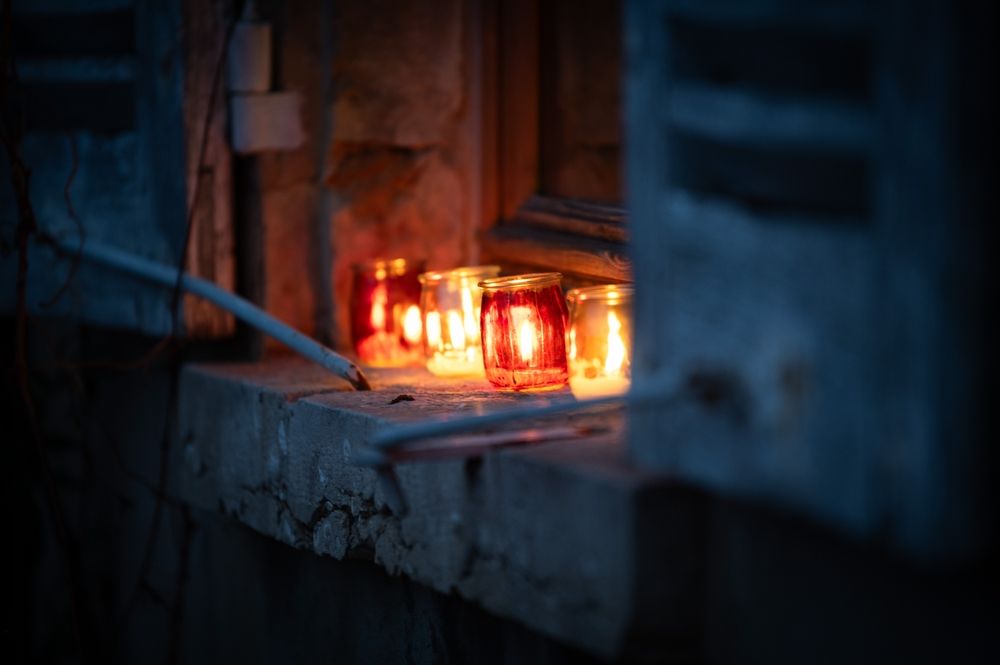
On the long-awaited day, bad weather threatened to cancel the festivities. But suddenly, the clouds dispersed and a magnificent starry sky appeared. Spontaneously, the people of Lyon placed lumignons (small candles) at their windows to celebrate what they considered a new miracle. This December 8th tradition still persists today throughout the Lyon region, where residents illuminate their windows in tribute to the Virgin.
3. From popular tradition to modern festival
For more than a century, the December 8th illuminations remained a family and intimate tradition. It wasn't until 1989 that the city of Lyon launched its first Light Plan, enhancing the architectural heritage with permanent and artistic lighting. Ten years later, in 1999, the municipality decided to create a four-day event, transforming the secular tradition into an international contemporary art festival.
Today, the Lyon Festival of Lights has become a world reference in the field of light art, inspiring numerous cities around the globe. Despite its evolution, it retains its deep soul and continues to celebrate this unique Lyon tradition that unites spirituality, history, and artistic creativity.
Download the audio-guided circuit to discover Lyon on foot and independently
To make the most of your stay in Lyon during the Festival of Lights, nothing beats an audio-guided circuit that takes you to discover the most beautiful neighborhoods of the city. This 7.9 km route takes you across Lyon's two emblematic hills, from Fourvière to Croix-Rousse, passing through Vieux Lyon and the Presqu'île. Thanks to 26 fun and interactive audio guides, you'll discover not only the sites illuminated during the Festival of Lights, but also the fascinating history of the capital of Gaul, its secret traboules and its UNESCO heritage.
Dates and times of the 2025 Festival of Lights
The next edition of the Festival of Lights will take place from Friday, December 5th to Monday, December 8th, 2025. This particularity of starting on a Friday evening offers the advantage of a complete weekend to enjoy the illuminations, with the bonus of Monday, December 8th, the traditional and historical day of the festival.
The illumination schedules are as follows:
On Friday 5th, Saturday 6th and Monday 8th December: from 7pm to 11pm
On Sunday, December 7th: from 6pm to 10pm
Note that some sites may have specific schedules. For example, the Basilica of Fourvière and the Manufacture des Tabacs may close earlier or open at different times depending on the technical constraints of the installations. It is recommended to consult the official Festival of Lights website before your visit to know the precise schedules of each installation.
To move around Lyon easily during the Festival of Lights, know that the city center is entirely pedestrianized from 5pm (4pm on Sunday). Public transport is reinforced and often free during the event. Don't hesitate to let yourself be guided in your discovery of the city thanks to the Ryo itinerary to visit Lyon, which will allow you to easily locate the main Festival of Lights venues.
Must-see places at the Festival of Lights
1. Place Bellecour: the beating heart of the festival
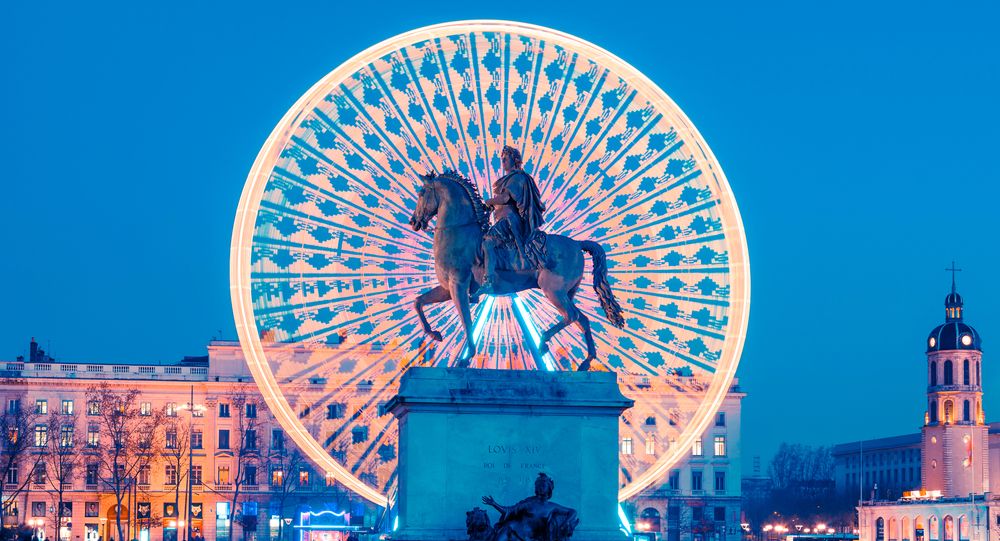
With its 62,000 m², Place Bellecour (Place Bellecour, 69002 Lyon) is not only Lyon's largest square, but also one of the epicenters of the Festival of Lights. Every year, this immense red sand esplanade hosts grandiose installations that completely transform the space. From monumental projections to interactive luminous structures, including the traditional Ferris wheel that lights up with a thousand lights, Place Bellecour always offers a breathtaking spectacle.
The creations presented on this iconic square are often among the most ambitious of the festival, using the immensity of the space to create fantastic universes. In 2018, for example, visitors were immersed in a giant child's bedroom, while other editions have offered cosmic journeys or choreographed light ballets. Place Bellecour is generally the ideal starting point to begin your evening at the Festival of Lights.
2. Saint-Jean Cathedral: a sublimated Gothic masterpiece
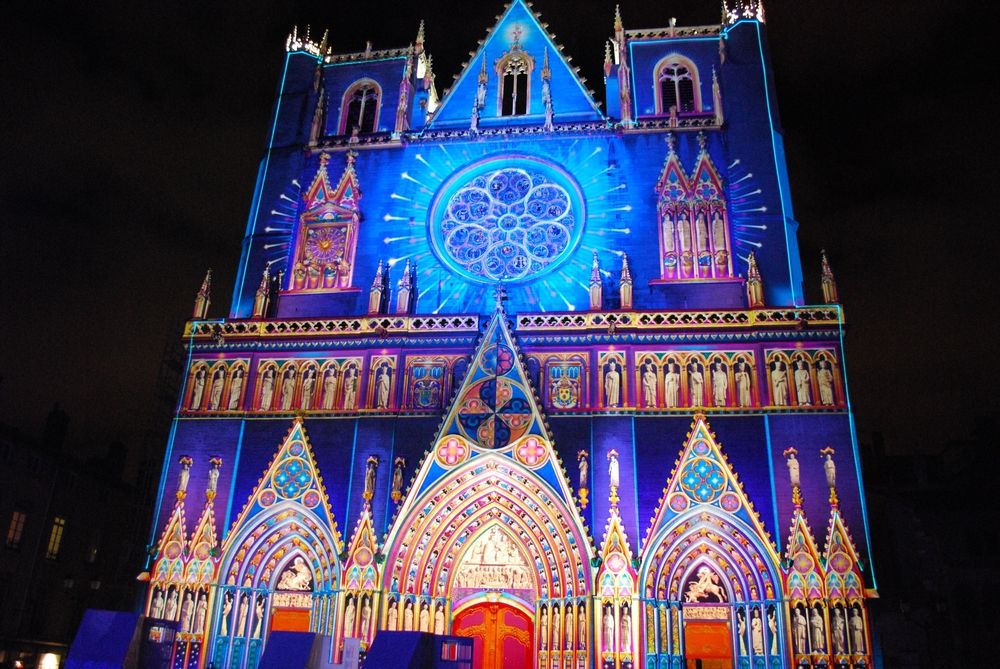
The Saint-Jean Cathedral (8 place Saint-Jean, 69005 Lyon), also called Primatiale des Gaules, is undoubtedly one of the most spectacular places at the Festival of Lights. This majestic cathedral blending Romanesque and Gothic styles, built between 1175 and 1481, offers a monumental facade that serves as a canvas for the most talented artists.
The projections on Saint-Jean Cathedral are always a highlight of the event. The facade comes alive, the walls seem to collapse and then rebuild themselves, fantastic characters come to life on the centuries-old stones. Video mapping uses Gothic architecture with millimetric precision to create breathtaking optical illusions that leave spectators speechless. It's an unmissable appointment that often requires arriving early to get a good spot, as the crowd is so dense.
3. Basilica Notre-Dame de Fourvière: the illuminated symbol of Lyon
Perched on the hill overlooking Lyon, the Basilica Notre-Dame de Fourvière (8 place de Fourvière, 69005 Lyon) is the symbol par excellence of the city and the birthplace of the illumination tradition. During the Festival of Lights, this emblematic monument adorns itself in its most beautiful luminous attire, visible from almost everywhere in Lyon.
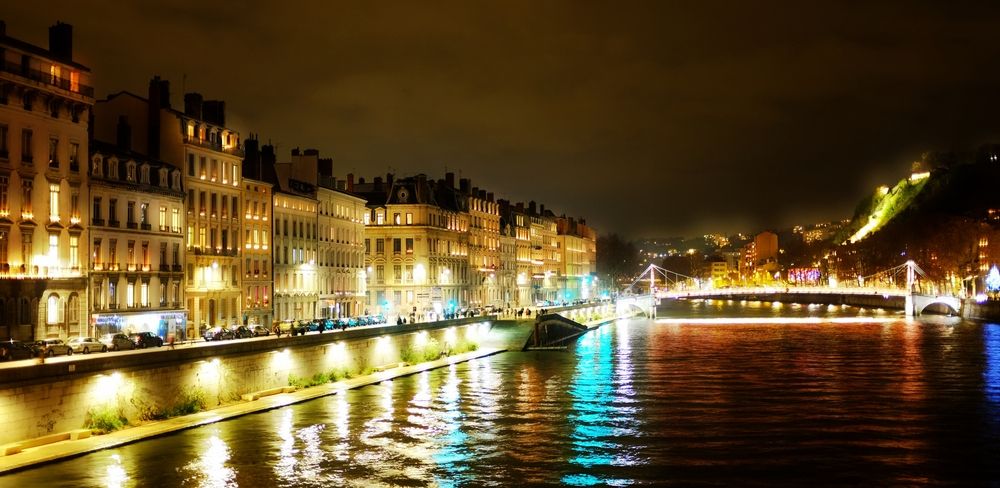
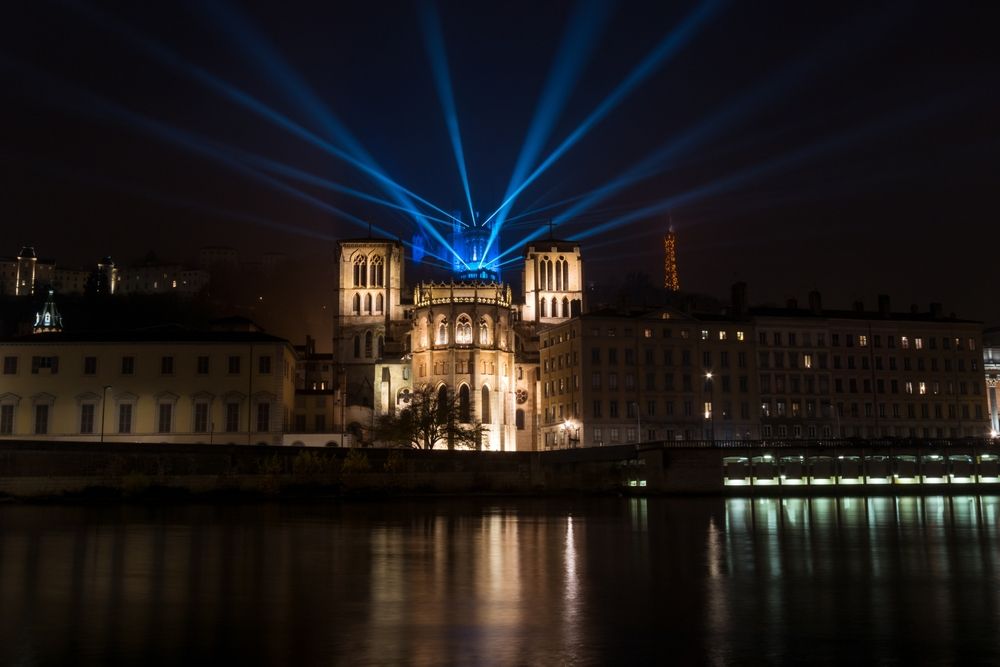
One of the most magical shows is visible from the Saône quays: from there, you can simultaneously admire the illuminations of the Basilica of Fourvière in height, the Saint-Jean Cathedral below, the Metallic Tower and several Vieux Lyon buildings. This exceptional panorama creates a visual symphony that embodies all the magic of the Festival of Lights. The basilica itself often offers light installations on its forecourt and inside, accessible by taking the funicular from Vieux Lyon.
4. Place des Terreaux and the Town Hall
The Place des Terreaux, located behind the Town Hall in the 1st arrondissement, is another emblematic location of the Festival of Lights. This historic square, redesigned by artist Daniel Buren with his famous aligned fountains, offers an ideal setting for spectacular artistic creations. The majestic facade of the Town Hall regularly serves as a support for monumental projections that tell fairy tales and transport spectators to fantastic universes.
The installations at Place des Terreaux often blend lights, water and sounds to create immersive experiences that play with the elements of the place. Buren's fountains light up and seem to dance to the rhythm of the music, while the Town Hall facade transforms into a giant screen where captivating visual stories unfold. The atmosphere that reigns on this square during the Festival of Lights is simply magical.
5. Parc de la Tête d'Or: nature and lights
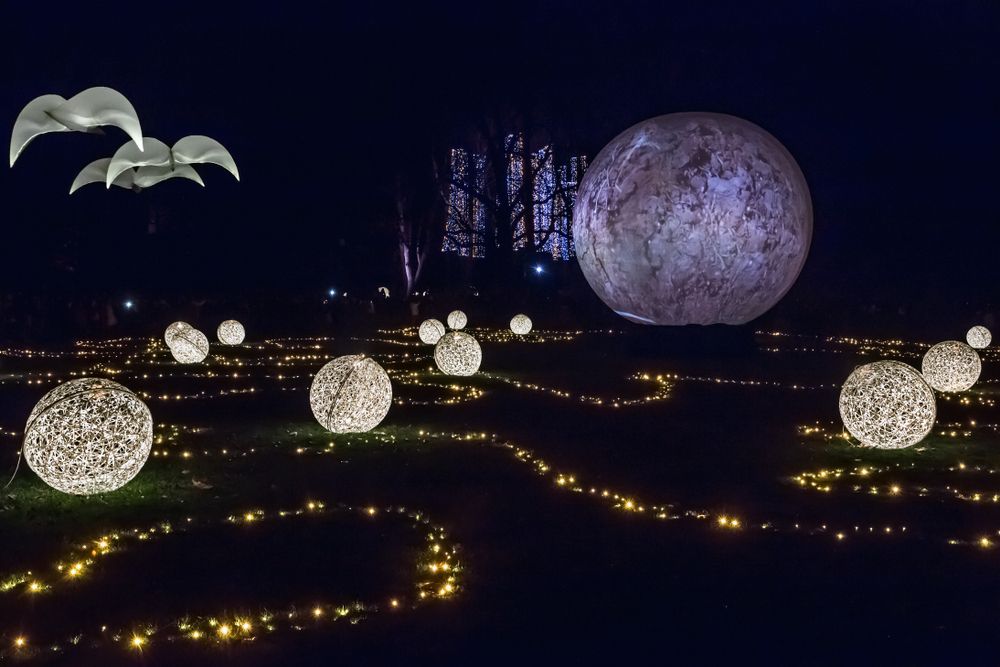
In recent years, Parc de la Tête d'Or, Lyon's green lung, has become an integral part of the Festival of Lights route. This magnificent 117-hectare park offers an exceptional natural setting for light installations that dialogue with trees, the lake and the paths. The drone shows are particularly impressive there, with aerial choreographies that illuminate the night sky above the park.
The installations at Parc de la Tête d'Or often offer a more poetic and contemplative experience than those in the city center. Nighttime walks in this enchanting setting offer a soothing contrast to the hustle and bustle of the historic center. It's the ideal place to end your evening beautifully, in a fairy-tale atmosphere where nature and light marry harmoniously.
6. The Saône quays and the Presqu'île
The Saône quays offer one of the most beautiful panoramas of the Festival of Lights. While walking along the river, you benefit from an unobstructed view of the entire illuminated Vieux Lyon, with the Basilica of Fourvière majestically dominating the hill in the background. Many light installations also line the quays, creating an enchanting route that connects Lyon's different neighborhoods.
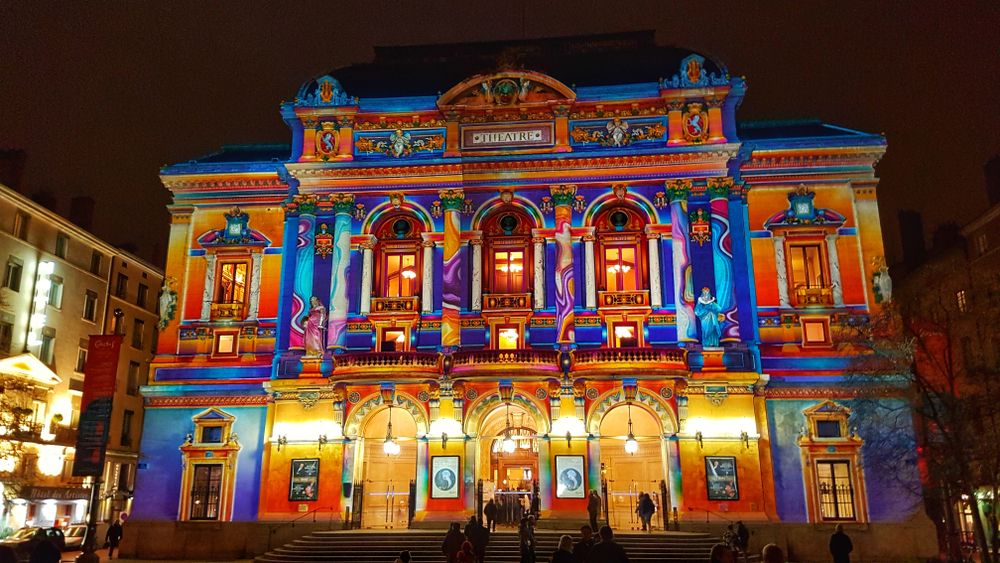
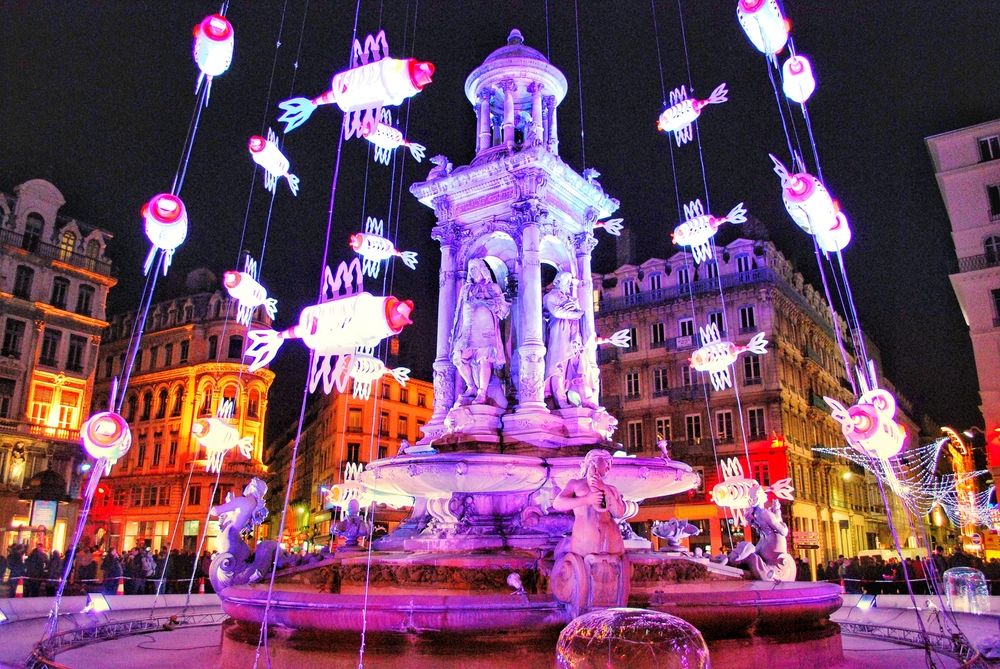
The Presqu'île, this district located between the Rhône and Saône, is the commercial and cultural heart of Lyon. During the Festival of Lights, rue de la République and the squares that line it (Place des Jacobins, Place des Célestins) adorn themselves with a thousand lights. The facades of Haussmannian buildings serve as supports for artistic projections, while ground installations invite passersby to interact with light. Let yourself be carried by the crowd and enjoy this unique luminous walk in the world.
To not miss any of these extraordinary places and discover all the secrets of Lyon, don't hesitate to follow the Ryo circuit to visit Lyon, which will guide you through the emblematic neighborhoods of the city and allow you to better understand the history and heritage hidden behind these fairy-tale illuminations.
Practical tips to make the most of the Festival of Lights
1. How to get to Lyon for the Festival of Lights?
By train: Lyon is particularly well served by TGV. The city has two main stations: Lyon Part-Dieu and Lyon Perrache. From Paris, Marseille, Bordeaux or Lille, you'll reach Lyon in just a few hours. Lyon Part-Dieu station is the most important, but it's slightly away from the historic center. From Part-Dieu, take metro line B to Saxe-Gambetta, then line D direction Vieux Lyon-Cathédrale Saint-Jean, or tram T1 direction Debourg to Perrache.
By plane: Lyon-Saint-Exupéry airport is located about 25 km from the city center. The Rhônexpress, an express tram, takes you to Lyon Part-Dieu station in about 30 minutes (fare: €16.10 one way). From there, reach the city center by metro or tram.
By car: If you come by car, know that Lyon's city center is entirely pedestrianized during the Festival of Lights. It is strongly advised against using your vehicle in Lyon during the event. A practical solution is to park for free in the university city of La Doua, slightly off-center and close to the northern ring road, then reach the center by tram T1 (25 minutes to Perrache).
2. Getting around Lyon during the Festival of Lights
The best way to discover the Festival of Lights is undeniably on foot. The historic center is entirely pedestrianized from 5pm (4pm on Sunday), allowing free wandering between the different installations. Wear comfortable shoes, as you'll be walking: easily count 10 kilometers to see the essential illuminations!
The public transport (TCL) is reinforced during the event and often free. The metro and trams run late into the night to allow everyone to get home safely. The most useful lines are:
Metro line D (green) which serves Vieux Lyon-Cathédrale Saint-Jean, Bellecour and connects east to west Lyon
Metro line A (red) which crosses the entire Presqu'île with Bellecour, Hôtel de Ville and Perrache stations
Tram T1 which connects Parc de la Tête d'Or to Perrache passing through the Auditorium
A Pass TCL en Fête is generally offered at €3.70, valid all day in all zones. Convenient for moving around without constraints!
3. Where to stay during the Festival of Lights?
The Festival of Lights is one of the most sought-after events of the year in Lyon. Accommodations fill up very quickly, often several months in advance. It is therefore imperative to book your hotel or apartment as soon as possible.
The best neighborhoods to stay:
The Vieux Lyon (Saint-Jean, Saint-Georges, Saint-Paul): you'll be in the heart of the action, in immediate proximity to Saint-Jean Cathedral and the Saône quays. The medieval atmosphere of the neighborhood adds to the charm of your stay. Be careful though: as the neighborhood is closed to traffic during the event, plan to park elsewhere.
The Presqu'île: ideal for being at the center of everything, between Place Bellecour, Place des Terreaux and rue de la République. You can easily reach all the illuminated sites.
Fourvière and the heights: for a breathtaking view of the illuminated city, opt for accommodation on the heights of Fourvière. The funicular will allow you to easily go down to the center.
Neighborhoods well served by metro (lines A and D) and tram (T1) are also good options if the city center is full. The neighborhoods of Guillotière, Croix-Rousse or Part-Dieu offer many accommodations with quick access to the historic center.
4. What to plan for your visit?
Essential warm clothing: in early December, temperatures in Lyon can be cool, especially in the evening. Plan warm clothing, a hat, scarf and gloves. A good waterproof coat is also recommended, as rain is not uncommon in this season. Avoid umbrellas which would obstruct other visitors' view and favor a raincoat or windbreaker.
Comfortable shoes: you'll walk a lot! Comfortable shoes suitable for urban walking are essential. The cobblestones of Vieux Lyon can be slippery in wet weather, choose shoes with good grip.
Food and drinks: you can bring your own sandwiches and snacks, but alcohol bottles are strictly forbidden. Many food stalls are present on the sites, offering Lyon specialties and hot drinks. Traditional mulled wine is available everywhere, but its quality varies: Lyon bouchons in the surroundings often offer better options.
With children: the Festival of Lights is a magnificent family event, but you must be vigilant. The crowd can be very dense, especially at peak times and on the most popular sites. Children under 6-7 years old might have trouble keeping up and tire quickly. Strollers are strongly discouraged due to the crowd. If you come as a family, favor a baby carrier and hold your children's hands tightly.
Pets: it is advised against coming with your dog, even on a leash. The dense crowd and noise can stress the animal, and you risk losing it in the crowd.
5. Organization and security
Since the 2015 attacks, which led to the event's cancellation (the only interruption since 1643), security measures have been considerably reinforced. A security perimeter is set up with entrance controls. Large bags, suitcases and bulky objects are prohibited. Be patient during controls and plan a little extra time to access the sites.
More than 1,500 people are mobilized for the organization of the Festival of Lights, including security teams, mediators and first aid. Three monitored restrooms are open from 8am to 11:30pm during the four days of the event (Place Bellecour, Saint-Jean and République). Welcome points are installed at Place Bellecour, at the entrance of Parc de la Tête d'Or and Place Pradel next to the Opera to inform and guide you.
6. Good tips to avoid crowds
Favor off-peak hours: the first hours after opening (7pm-8pm) and the last hours before closing (10pm-11pm) are generally less crowded than the peak of 8:30pm-9:30pm.
Friday and Monday less crowded: Saturday evening is traditionally the busiest day. If you have the choice, favor Friday evening or Monday for a more comfortable experience.
Start with outlying sites: everyone rushes to Bellecour and Saint-Jean Cathedral at the start of the evening. Instead, start with Parc de la Tête d'Or or peripheral installations, then come back to the center at the end of the evening when the crowd disperses.
Scout routes in advance: consult the official Festival of Lights map and plan your route. The official mobile app is very useful for locating installations and estimating travel times. You can also rely on Lyon's Ryo itinerary to easily find your way around the city and discover the neighborhoods between the different light installations.
The Festival of Lights: a free and accessible event
One of the most remarkable characteristics of Lyon's Festival of Lights is that it is totally free. All installations, projections and shows are freely accessible, without reservation or entrance ticket. This free access is part of the event's DNA and reflects the spirit of openness and sharing that animates Lyon.
Beware of scams: never pay to access a Festival of Lights installation. If someone asks you for money to enter a site, it's a scam. All official shows are free and freely accessible to the public.
The Festival of Lights is financed 50% by private funds (sponsors and patrons) and 50% by the City of Lyon. This economic model allows maintaining free access while offering very high quality artistic creations, signed by renowned artists from around the world.
The Festival of Lights is also designed to be accessible to people with reduced mobility. Most installations are designed to be visible and accessible in wheelchairs. Adapted routes are available on the official website, and welcome teams can inform you about the best access conditions to each site.
Beyond the Festival of Lights: discovering Lyon
If you come to Lyon for the Festival of Lights, take advantage of it to discover this magnificent city even outside the event. Lyon is France's third city and is full of heritage, cultural and gastronomic treasures that deserve attention.
The Vieux Lyon and its famous traboules (secret passages that cross buildings) constitute a unique Renaissance quarter in Europe. The Presqu'île, the city's commercial heart, houses majestic squares and lively streets. The hill of Fourvière offers not only its emblematic basilica but also exceptional Roman remains, including two perfectly preserved ancient theaters.
The Croix-Rousse neighborhood, former hill of the canuts (silk workers), offers a village atmosphere with its slopes, covered passages and colorful market. The Rhône banks have been redesigned into a magnificent promenade and relaxation space, while Parc de la Tête d'Or is one of Europe's most beautiful urban parks.
Lyon is also the world capital of gastronomy. Don't miss tasting Lyon specialties in one of the city's authentic bouchons: quenelles, cervelle de canut, rosette, tarte aux pralines... A real treat for the taste buds! For a more modern gastronomic experience, explore the Halles de Lyon Paul Bocuse, temple of Lyon gastronomy where sixty exceptional merchants offer you the best of the region.
To best organize your stay and not miss any of Lyon's must-sees, let yourself be guided by the Ryo audio-guided circuit. This 3h30 walk takes you to discover Lyon's two emblematic hills, from medieval and Renaissance Vieux Lyon, to the Presqu'île and its majestic squares. The 26 audio guides tell you the fascinating history of the city, its secrets and anecdotes, for a visit as enriching as it is entertaining.
Did you know? Unusual facts about the Festival of Lights
Every year, between 300 and 400 artistic projects are submitted to the Festival of Lights organizers. Only about thirty of them are selected to be presented to the public. The selection process is demanding and favors originality, technical quality and adequacy with implementation sites.
Lyon's Festival of Lights has inspired many cities around the world to create their own light festival. Similar events have emerged in Berlin (Festival of Lights), Jerusalem (Jerusalem Light Festival), Sydney (Vivid Sydney) and many other metropolises. Lyon remains however the world reference in light art and monumental installations.
During the most attended editions, notably in 2012, nearly 4 million visitors walked through Lyon's streets during the four days of the event. Since the reinforcement of security measures and the concentration of installations in a more restricted perimeter, attendance is around 2 million visitors, which remains considerable and makes the Festival of Lights one of the most important cultural events in France.
A few days before the official opening, it is sometimes possible to glimpse the light installation tests. Technical teams proceed with final adjustments and tests, offering lucky passersby a preview of the magic that is about to illuminate the city. Some Lyon residents take advantage of these rehearsals to discover the installations in a calmer atmosphere, before the public crowd.
The tradition of December 8th extends far beyond Lyon's borders. Throughout the Auvergne-Rhône-Alpes region, and even beyond, many families perpetuate the custom of placing lumignons at their windows that evening. This family and intimate tradition has been maintained for more than 170 years, testifying to the inhabitants' deep attachment to this unique cultural and spiritual heritage.
In conclusion, Lyon's Festival of Lights is much more than a simple festival: it's a unique celebration that blends secular tradition, contemporary creativity and spirit of sharing. For four magical days, the city transforms into a gigantic open-air art gallery, freely accessible to all. Whether you're an art lover, history enthusiast or simply curious, this exceptional early December appointment promises unforgettable moments and luminous memories that will remain engraved in your memory. To make the most of your Lyon stay and discover all the treasures of this fascinating city beyond the event, don't hesitate to follow the Ryo audio-guided itinerary which will reveal the secrets and history of the capital of Gaul. So prepare your visit, book your accommodation now, and let yourself be enchanted by the magic of Lyon's Festival of Lights!
FAQ: Frequently asked questions about Lyon's Festival of Lights
When does the Festival of Lights take place in Lyon?
The Festival of Lights takes place every year around December 8th, for four consecutive days. The 2025 edition will take place from Friday, December 5th to Monday, December 8th, with opening hours from 7pm to 11pm (except Sunday from 6pm to 10pm).
Is the Festival of Lights really free?
Yes, the entire Festival of Lights is totally free and accessible to all, without reservation or entrance ticket. All installations, projections and shows are freely accessible. Never pay to access a Festival of Lights installation: if someone asks you to, it's a scam.
How long does it take to see the Festival of Lights?
To see the essential main installations (Place Bellecour, Saint-Jean Cathedral, Fourvière, Place des Terreaux, Parc de la Tête d'Or), count a full evening of 4 to 5 hours. For a more thorough discovery of all sites, two evenings are ideal. Plan to walk about 10 kilometers.
Can we come with children to the Festival of Lights?
Yes, the Festival of Lights is a family event. However, it is advised against coming with children under 6-7 years old due to the dense crowd and length of the route. Strollers are strongly discouraged: favor a baby carrier and hold your children's hands tightly. Be vigilant and avoid peak hours.
What is the best day to visit the Festival of Lights?
Saturday evening is traditionally the busiest. To avoid crowds, favor Friday evening (opening day) or Monday, December 8th (traditional festival day). The first hours (7pm-8pm) and last hours (10pm-11pm) are also less crowded than the peak attendance between 8:30pm and 9:30pm.
How to get around during the Festival of Lights?
The best way is to get around on foot, as the city center is entirely pedestrianized. Public transport (metro, tram) is reinforced and often free during the event. The most useful lines are metro D (Vieux Lyon-Bellecour), metro A (Presqu'île) and tram T1 (Parc de la Tête d'Or-Perrache). Absolutely avoid coming by car in the center.
Where to stay during the Festival of Lights?
Book your accommodation as early as possible, several months in advance. The best neighborhoods are Vieux Lyon, the Presqu'île and the heights of Fourvière. If the city center is full, opt for a neighborhood well served by metro (lines A or D) or tram T1, like Croix-Rousse, Guillotière or Part-Dieu.
What is the origin of the Festival of Lights?
The Festival of Lights finds its origin in a religious tradition dating back to 1643, when Lyon was spared from a plague epidemic after a vow made to the Virgin Mary. The illuminations as we know them today began on December 8, 1852, when Lyon residents spontaneously placed lumignons at their windows to celebrate the inauguration of the Virgin's statue at Fourvière. The modern festival was created in 1999.
What can we bring to the Festival of Lights?
You can bring food (sandwiches, snacks), non-alcoholic drinks and warm clothes. However, alcohol bottles, large bags, suitcases and bulky objects are prohibited. Umbrellas are discouraged as they obstruct others' view: favor a raincoat. Don't forget comfortable shoes, a hat, scarf and gloves.
Is public transport free during the Festival of Lights?
Public transport is often free during the Festival of Lights, but this may vary by year. A Pass TCL en Fête is generally offered at €3.70, valid all day in all zones. Check the TCL website before your visit to know the exact terms for the current year.