

Créé par Romane, le 20 juin 2026
Votre guide Ryo
Perched Castles in Auvergne-Rhône-Alpes: 13 Gems to Visit
© Shutterstock
Auvergne-Rhône-Alpes is full of architectural treasures that proudly overlook valleys and mountains. Between volcanic peaks and rocky spurs, 13 perched castles invite you on an exceptional journey through time. Medieval fortresses, Renaissance palaces and seigneurial residences reveal themselves in the heart of breathtaking landscapes. Discover these heritage gems that tell the fascinating history of this exceptional region.
1. The Murol Castle, perched on a volcanic peak
Majestically overlooking the commune of Murol in Puy-de-Dôme, this medieval castle rises to 1050 meters altitude on a spectacular basalt peak. Built in the 12th century, it testifies to the power of the lords of Auvergne and their ability to build impregnable fortresses. Listed as a Historic Monument since 1889, Murol castle (Rue du Château, 63790 Murol, rated 4.6/5 on Google for over 8000 reviews) has survived centuries by resisting the Hundred Years' War and epidemics.
The immersive visit transports you to the 15th century with a theatrical welcome by lord Guillaume II himself. Walk through the curtain walls, explore the defensive towers and admire the exceptional panoramic view from the walkway. Regular medieval animations, with combat demonstrations and period crafts, enchant young and old. The castle is open year-round (except July 14th) with hours varying by season.
2. The Val Castle and its Gothic chapel
With its six imposing towers reflected in the waters of Bort-les-Orgues lake, Val castle (Les Fontilles, 15270 Lanobre, rated 4.3/5 on Google for 295 reviews) offers a magical spectacle. Built in the 15th century by Guillaume IV d'Estaing, this fortress miraculously escaped drowning during the construction of the nearby dam in the 1950s. Its waterside location gives it a unique romantic atmosphere in Cantal.
In the main courtyard stands a charming Gothic chapel dedicated to Saint-Blaise, built in the 15th century. Inside the castle, the three large first-floor halls present authentic furniture typical of the 19th century. The second floor regularly hosts contemporary art exhibitions. Val castle also offers various cultural activities: classical music concerts, outdoor theater performances and treasure hunts for children during the summer period.
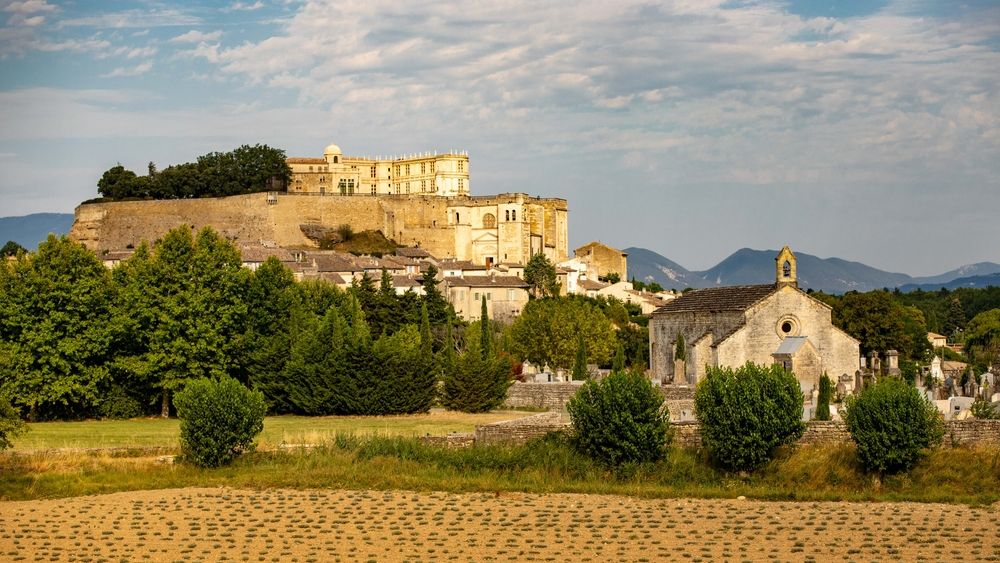
3. The Grignan Castle, jewel of Drôme
In the heart of Provençal Drôme, Grignan castle (23 Rue Montant au Château, 26230 Grignan, rated 4.3/5 on Google for 1241 reviews) overlooks the perched village from atop its Renaissance towers. Transformed into a pleasure residence by the Adhémar family, it welcomed the famous Marquise de Sévigné who stayed there several times to visit her daughter. This emblematic monument, rich with over 1000 years of history, now belongs to the department of Drôme.
The visit reveals the castle's exceptional Renaissance and classical architecture, with its sumptuous apartments and portrait gallery. From the terrace, the panorama is grandiose: Mont Ventoux, the Dentelles de Montmirail and lavender fields unfold before your eyes. The castle offers a rich cultural program throughout the year, with theatrical performances, concerts and the famous nocturnal festivities that recreate the elegant atmosphere of the Grand Siècle.
4. The Billy fortress, for a touch of magic
Built between the 12th and 13th centuries, Billy fortress (Rue du Château, 03260 Billy, rated 4.6/5 on Google for 509 reviews) stands proudly on a limestone peak overlooking the Allier valley. This impressive fortress testifies to the historical heritage of the Bourbons and presents typical architecture of closed-court castles. It consists of three successive enclosures whose remains are still visible from the medieval dwellings built against the ramparts.
The village of Billy, classified as a Small City of Character, has preserved all its medieval charm with its cobbled streets and stone houses. During your visit, discover the masterfully restored defensive towers and the remains of the castle chapel. The originality of this site lies in its regular thematic activities inspired by the Harry Potter universe, which delight visitors of all ages and add a magical dimension to this history-laden fortress.
5. The Menthon-Saint-Bernard Castle, the rough diamond of Haute-Savoie
Nestled in a forest setting with stunning views over Lake Annecy, Menthon-Saint-Bernard castle (Allée du Château, 74290 Menthon-Saint-Bernard, rated 4.1/5 on Google for 536 reviews) is a Savoyard architectural jewel. Restored in a neo-Gothic style in the 19th century, this thousand-year-old castle impresses with its three high towers connected by a walkway. Inhabited since the 10th century by the same family, the Saint Bernard de Menthon, it embodies a thousand years of Savoyard history.
The interior reveals sumptuous furniture, a remarkable half-timbered gallery, an impressive library and magnificent Aubusson tapestries. The meticulously maintained French gardens have earned the castle the nickname "Rough Diamond of Haute-Savoie". Guided tours allow you to discover the private apartments, the armory and the chapel. According to legend, this castle inspired Walt Disney to create the Sleeping Beauty castle.
Download the audio-guided circuit to discover Annecy on foot and independently
Just a few kilometers from the castle, visiting Annecy will allow you to discover the Venice of the Alps with its romantic canals, its crystal-clear lake and its medieval old town. The Ryo itinerary guides you through the cobbled streets, along the flowered quays and to the most beautiful viewpoints over the lake. Let yourself be guided by the audio guides for an enriching and completely independent visit.
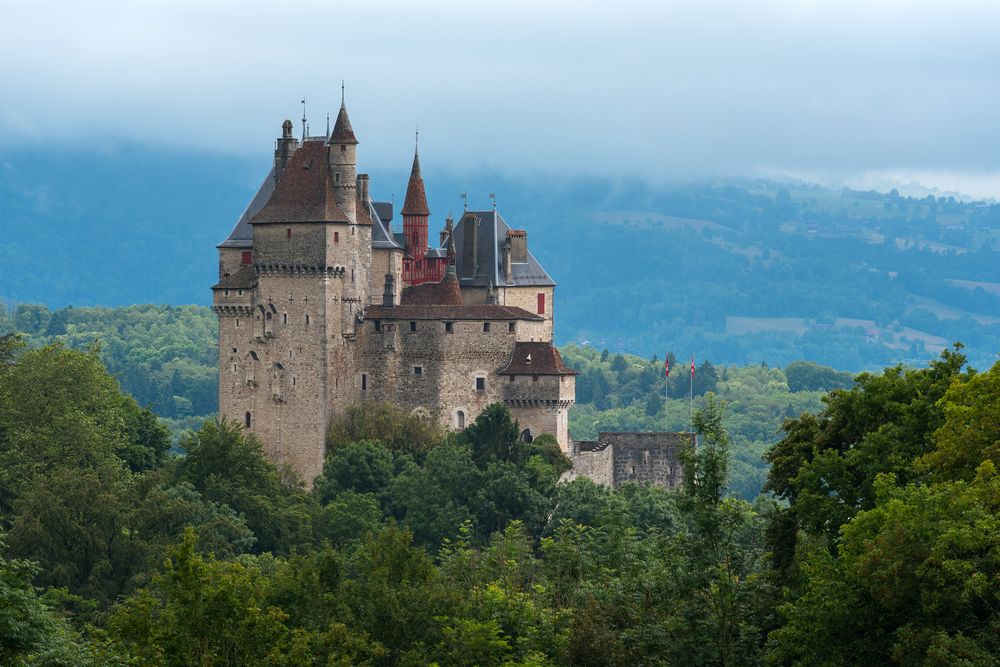
6. The Pesteils Castle and its impressive keep
The Pesteils castle (15400 Polminhac, rated 4.7/5 on Google for 344 reviews) majestically overlooks the village of Polminhac and the Cère valley from its rocky spur. Its 40-meter-high keep, visible for miles around, impresses with its stature and remarkable conservation. This former medieval fortress plunges visitors into an authentic atmosphere of medieval Cantal.
The vaulted hall of the second floor houses wall paintings dating from the 15th century, precious witnesses to medieval Auvergnat art. The kitchens, designed in 1900 by the Marquis de Miramon, present typically Auvergnat architecture with their cantou (large fireplace), their salt chests and their andirons. The visit is animated by 20 wax figures created by the Grévin Museum, which realistically recount the history of a great Cantal family through the centuries.
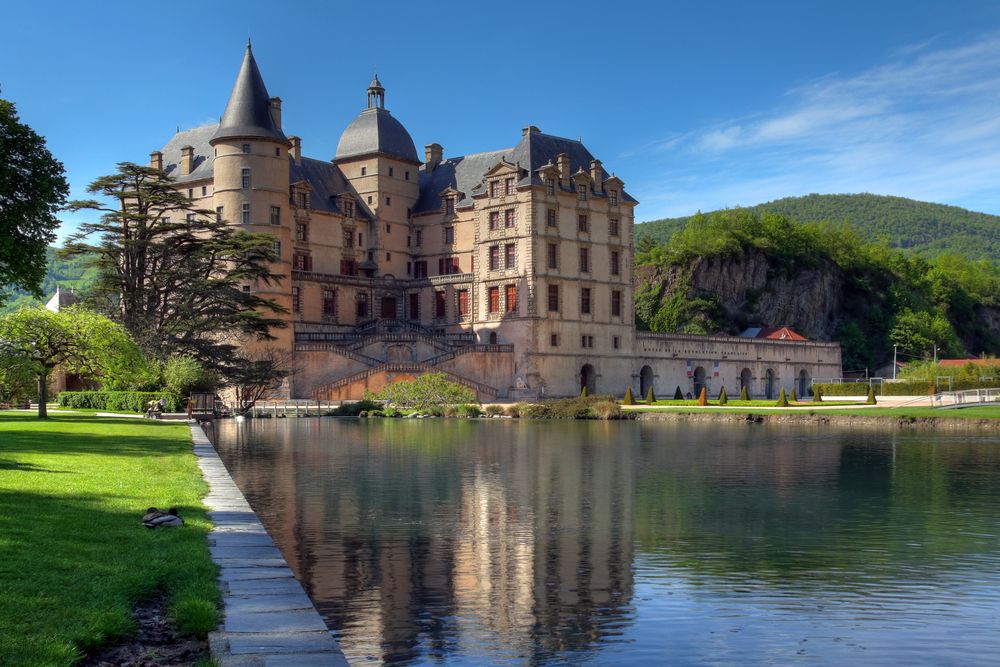
7. The Vizille Domain and the famous Jeu de Paume hall
The Vizille Domain (Place du Château, 38220 Vizille, rated 4.6/5 on Google for 5628 reviews) is a must-see for history and heritage enthusiasts in Isère. Former residence of the Dukes of Lesdiguières and Presidents of the Third and Fourth Republics, this domain holds a major place in French history. It was here that the Assembly of the three orders of Dauphiné took place in July 1788, in the famous Jeu de Paume hall, an event that preceded the French Revolution.
The domain extends over 100 hectares of parks and gardens labeled "Remarkable Garden", offering bucolic walks by the water. The fauna and flora are abundant, with the presence of geese, swans and deer that roam freely. Today, the castle houses the Museum of the French Revolution as well as a documentation-library center dedicated to this major event, allowing total immersion in this pivotal period of our history.
8. The Montmelas Castle and its atypical architecture
Built between the 10th and 12th centuries, Montmelas fortress (285 Route du Château, 69640 Montmelas-Saint-Sorlin, rated 4.4/5 on Google for 153 reviews) is closely linked to the history of Beaujolais. Once belonging to the Lords of Beaujeu, it served as a garrison until 1566. Renovated in a neo-Gothic style in the 19th century by architect Louis Dupasquier, contemporary of Viollet-le-Duc, the castle is today a family property managed by the descendants of Count and Countess Henri d'Harcourt.
The panorama from the castle is exceptional: on clear days, one can see the Rhône valley to the foothills of Mont-Blanc. The charming French garden invites strolling and contemplation. Inside, the 12 richly decorated rooms testify to the refinement of the place. The exterior architecture is distinguished by its unique polygonal shape and its perfectly preserved machicolated keep, rare characteristics in the region.
9. The Villeneuve-Lembron Castle and its portico gallery
Built at the end of the Middle Ages, Villeneuve-Lembron castle (Rue du Château, 63340 Villeneuve-Lembron, rated 4.5/5 on Google for 168 reviews) is a remarkable witness to the transition between medieval and Renaissance architecture. A family property, Gaspard de Montmorin contributed to its embellishment with magnificent painted decorations still visible in the ceremonial hall and the great stables, precious testimonies to the decorative art of the period.
In 1643, Isaac Dufour, treasurer of France, undertook important transformations including the development of the inner courtyard and the creation of an elegant portico gallery that characterizes the castle today. Managed by the Center of National Monuments, the castle offers thematic guided tours that allow you to discover the architectural evolution of the building and the daily life of its occupants through the centuries.
10. The Crussol Castle, at the summit of Ardèche
Perched at 400 meters altitude above the Rhône valley, Crussol castle (Quartier Beauséjour, 07130 Saint-Péray, rated 4.5/5 on Google for 280 reviews) offers a spectacular panorama over Valence and surroundings. Nestled in a site classified Natura 2000, its majestic ruins extend over three hectares with ramparts in excellent state of conservation. Built from the 10th century, this castle underwent multiple transformations over the centuries.
In the 12th century, Gérold Bastet de Crussol built a stone and wood castle that did not resist the ravages of religious wars, violent storms and natural collapses. Despite these vicissitudes, the fortress maintains an imposing presence, protected by a rocky ascent of 250 meters that makes access spectacular. Regular guided tours allow you to dive into the turbulent history of this majestic fortress of Ardèche.
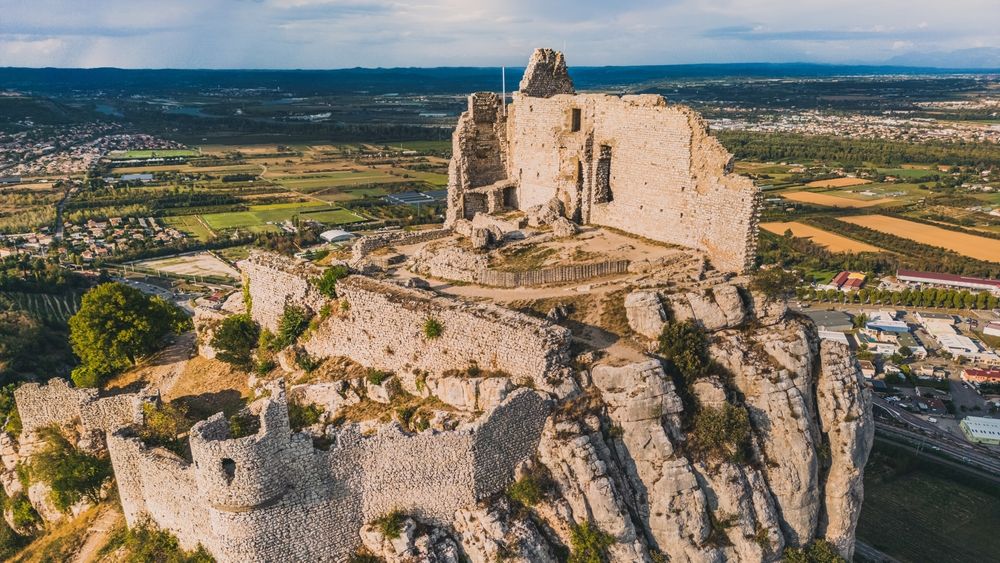
11. The Rochelambert Castle, inspiration for art
The Rochelambert castle (43800 Saint-Paulien, rated 4.7/5 on Google for 118 reviews) in Haute-Loire is a former medieval castle that proudly preserves the marks of its glorious past. Built in the 11th century, it features imposing towers and a still-functional drawbridge. Restored during the Renaissance, it first belonged to knight Pierre de la Rochelambert. Perched on a volcanic rock cliff with characteristic pink tones, it blends harmoniously into the Auvergnat landscape.
The castle's remarkable architecture did not escape filmmaker Jean Cocteau, who used its facade and majestic staircase as sets for his film "Beauty and the Beast" in 1946. In 1859, writer George Sand stayed there during her second trip to Auvergne. Fascinated by this romantic and mysterious residence, she chose the castle as the setting for her novel "Jean de la Roche", thus contributing to the literary renown of this exceptional place.
12. The Sailhant Castle and its lauze stone roofs
Nestled atop a rocky spur over 30 meters high, Sailhant castle (15590 Sailhant, rated 4.7/5 on Google for 84 reviews) is surrounded by a natural waterfall and a volcanic lake dating from prehistoric times. Access to the castle is via a picturesque bridge that spans the medieval moats, on the north side of the fortress, offering a theatrical entrance worthy of France's most beautiful castles.
Admire its black volcanic stone walls and seven towers crowned with lauze roofs, which have undergone numerous transformations over the centuries. During the Hundred Years' War, it was the scene of fierce battles between the English and French, whose scars are still visible on certain walls. Recognizable by its perfectly preserved medieval fortifications, Sailhant castle is today an emblem of the perched castles of Auvergne-Rhône-Alpes.
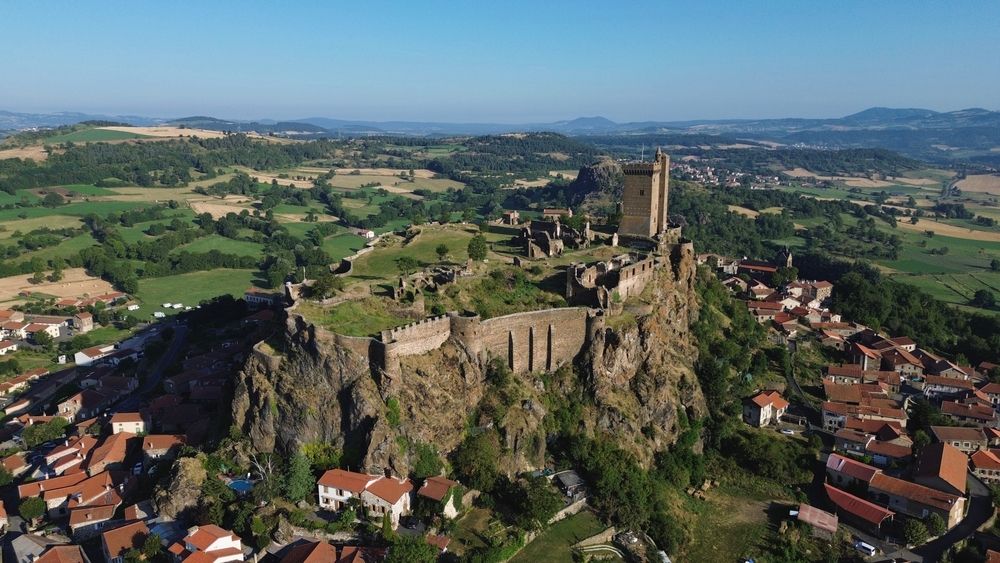
13. The Polignac fortress, an open-air museum
Built over a millennium ago, the imposing Polignac fortress (1 Place Saint-Joseph, 43000 Polignac, rated 4.6/5 on Google for 562 reviews) stands on a spectacular volcanic chimney in Haute-Loire. Belonging to the Polignac family since its construction, this emblematic castle is a true open-air museum that testifies to the turbulent history of the region. Fascinating guided tours allow you to discover the secrets of this unique historical site.
With its 32-meter-high keep dominating the landscape, Polignac fortress presents a remarkable defensive system literally suspended between water and lava from ancient volcanic eruptions. This exceptional geological configuration constitutes a fascinating testimony to medieval ingenuity. Each year, a grandiose medieval spectacle transports you on a journey through time, with knight combats, craft demonstrations and period banquets.
In conclusion, Auvergne-Rhône-Alpes reveals itself to be an exceptional territory for heritage and medieval history enthusiasts. These 13 perched castles embody the architectural and cultural richness of this fascinating region. Each fortress tells a unique story, offering spectacular panoramas over volcanic landscapes, green valleys or shimmering lakes. Whether you are passionate about history, hiking enthusiast or simply seeking authentic discoveries, these perched castles promise unforgettable visits. Don't hesitate to extend your stay by exploring visit Lyon, the gastronomic capital of the region, to complete your immersion in the exceptional heritage of Auvergne-Rhône-Alpes.
FAQ
What is the most visited perched castle in Auvergne-Rhône-Alpes?
Grignan castle in Drôme is one of the most visited thanks to its link with the Marquise de Sévigné and its rich cultural program. Murol castle in Puy-de-Dôme also attracts many visitors with its immersive medieval activities.
Can you visit the perched castles year-round?
Most castles are open year-round with hours varying by season. Some like Murol castle are closed only on July 14th. It is recommended to check opening hours before your visit, particularly during winter period.
Which perched castles are suitable for families with children?
Murol castle and Billy fortress offer activities specially designed for children, with treasure hunts, theatrical visits and medieval workshops. Val castle also offers playful activities adapted to the youngest during the summer period.
How much time should you plan to visit a perched castle?
Plan on average 1h30 to 2h for a complete visit including exteriors, interior and panoramic viewpoints. Some castles like Grignan or the Vizille Domain require a half-day to fully enjoy the gardens and museums.
Are there perched castles accessible to people with reduced mobility?
Accessibility varies by castle. The Vizille Domain and Grignan castle offer adapted routes. Due to their medieval architecture and perched situation, some castles like Crussol or Polignac present significant access difficulties. It is advisable to inquire directly with each site.