
Créé par Romane, le 7 mai 2026
Votre guide Ryo
© Shutterstock
In the heart of the Phocaean City, stands a place steeped in history and memory: the Marseille History Museum. A true journey through time within France's oldest city, this exceptional museum traces over 26 centuries of urban evolution, from the Greek founding of Massalia to the present day. Located in Centre Bourse, just steps from the Vieux-Port, it offers a fascinating dive into the Mediterranean past through its unique collections of ancient wrecks, archaeological remains and everyday objects. Whether you're passionate about archaeology, a history enthusiast or simply curious, the Marseille History Museum promises an enriching cultural experience at the heart of the Ancient Port archaeological site.
What is the Marseille History Museum?
The Marseille History Museum is much more than a simple museum: it's a real time machine. Founded in 1983, it stands today as one of the largest urban history museums in Europe. Its particularity? It's built around the Ancient Port archaeological site, discovered during excavations conducted in the 1960s during the construction of Centre Bourse. This unique configuration allows visitors to admire directly the authentic vestiges of ancient Massalia, the Greek city founded around 600 BCE.
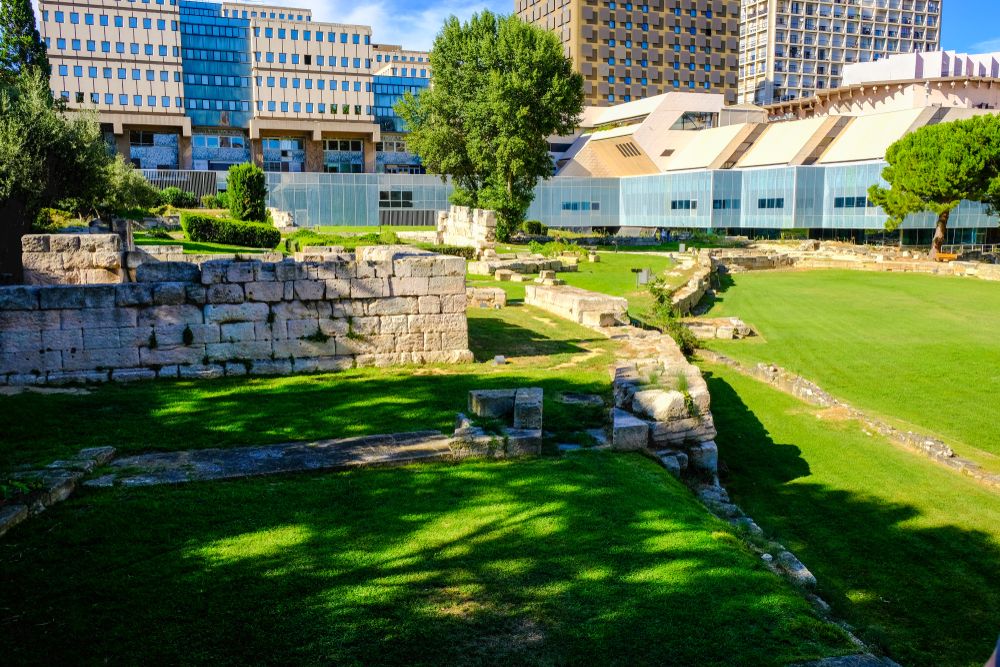
Renovated in 2013 during the year when Marseille was European Capital of Culture, the museum today displays an exhibition space of 3,500 m² where nearly 4,000 collection pieces are presented. Its permanent route, organized in 13 chronological sequences, offers a captivating immersion into the city's evolution, from Greek and Roman antiquity to the contemporary era. The modern facade with screen-printed glass offers an exceptional view of the Garden of Vestiges, creating a permanent dialogue between past and present.
Access to the Marseille History Museum's permanent collections is completely free all year round, a strong cultural policy of the city that allows everyone to discover this exceptional heritage. The museum also houses a 200-seat auditorium, spaces dedicated to temporary exhibitions and educational workshops for young audiences.
1. The Garden of Vestiges and the Ancient Port archaeological site
The Ancient Port archaeological site, accessible directly from the museum, constitutes the historical heart of Marseille. Discovered in 1967 during urban development works, this exceptional site testifies to the original Greek settlement and reveals the foundations of the ancient port of Massalia. Today designed as a landscaped garden by architect Joël-Louis Martin, the Garden of Vestiges offers a unique walk through the layers of Marseille history.
You'll discover the impressive Greek and Hellenistic ramparts dating from the 3rd century BCE, true witnesses to the ancient city's defensive power. These massive fortifications allow you to visualize the scale of the enclosure that then protected Massalia from invasions. The site also reveals the vestiges of an ancient Roman paved road, foundations of port buildings, as well as the remains of a Paleochristian necropolis that attest to the continuity of occupation of the place.
The landscaping respects the archaeological integrity of the site while allowing fluid circulation of visitors. Explanatory panels line the route and allow understanding of the urban organization of ancient Massalia. The visit to the Garden of Vestiges is included in the free access to the museum, making this place a must-visit for all archaeology enthusiasts. This site classified as Historic Monument represents one of the most precious testimonies of Marseille's foundation and its ancient development.
2. Ship wrecks: treasures of maritime archaeology
The Marseille History Museum houses one of the most important collections of ancient wrecks in the Mediterranean. The masterpiece is undoubtedly the Roman wreck of la Bourse, discovered in 1974 during the last excavations of the site. This merchant ship, dating from the 3rd century CE, measures about 23 meters long and constitutes the largest ancient ship currently presented in a museum in France. Its remarkably preserved hull allows studying Roman shipbuilding techniques and imagining the intense commercial activity of Marseille's port at that time.
Alongside this major wreck, the museum also exhibits several Greek boats discovered at place Jules-Verne. These vessels, dating from the 6th to 4th century BCE, offer unique testimony about navigation at the time of Massalia's foundation. Their presentation allows comparing technical evolutions between the Greek and Roman periods, thus revealing the progress of Mediterranean naval architecture through the centuries.
Around these wrecks, a rich collection of maritime archaeological objects completes the discovery: transport amphorae, stone and lead anchors, navigation equipment, ceramics and various cargoes. These elements illustrate the strategic importance of Marseille as a commercial crossroads between East and West. Interactive models and 3D reconstructions provide better understanding of the ancient port's functioning and the trade routes that made the Phocaean city prosperous.
3. Permanent collections and chronological route
The permanent route of the Marseille History Museum unfolds according to chronological logic that allows following the city's evolution through the ages. Organized in 13 thematic sequences, the exhibition presents nearly 4,000 objects that tell the Marseille story from Prehistory to the 20th century. Each sequence benefits from modern and immersive scenography, mixing authentic objects, reconstructions, multimedia devices and projections.
The Greek and Roman period naturally occupies an important place in the route. You'll discover Attic ceramics, funerary stelae, mosaics, sculptures and everyday objects that testify to life in Massalia then Massilia. The medieval section presents the city's evolution in the Middle Ages, notably with architectural elements from disappeared buildings, religious objects and traces of medieval port activity.
The modern and contemporary periods are not left behind. The museum traces Marseille's commercial boom in the 17th and 18th centuries, colonial expansion, 19th-century industrialization and 20th-century urban transformations. Archival documents, old photographs, advertising posters and industrial objects allow grasping the profound changes that the Phocaean city has undergone. The exhibition ends with contemporary Marseille, evoking current urban and social challenges while celebrating the city's cultural vitality.
4. Models and reconstructions of the city
One of the major attractions of the Marseille History Museum lies in its spectacular models that illustrate the city's urban evolution through the centuries. These meticulous reconstructions, made from archaeological data and historical sources, allow visualizing concretely the transformations of Marseille's urban fabric since Antiquity. The model of Massalia in the Greek era shows the original establishment of the Phocaean colony, with its fortifications, primitive port and urban organization characteristic of Greek cities.
Other models represent Marseille at different key periods: the Roman era with port extension and integration into the Empire, the Middle Ages with neighborhood development around the Vieux-Port, the Renaissance with city enlargement under Louis XIV, and finally the great Haussmannian works of the 19th century that profoundly reconfigured the city center. These models are accompanied by projections and digital animations that make reading urban evolution even more vivid and educational.
These mediation tools are particularly appreciated by visitors as they allow contextualizing archaeological vestiges and exhibited objects. By comparing the models with the current city, visible from the museum's large bay windows, one fully realizes Marseille's historical depth and the urban continuity that links ancient Massalia to the contemporary Mediterranean metropolis.
5. Opening hours and days
The Marseille History Museum welcomes visitors from Tuesday to Sunday, from 9am to 6pm. The museum is closed on Mondays, except on Easter Monday and Whit Monday when it remains exceptionally open. The ticket office closes 30 minutes before the museum's closing time, at 5:30pm. It's therefore recommended to plan your arrival early enough to fully enjoy the richness of the collections.
The museum also observes annual closures on the following public holidays: January 1st, May 1st and December 25th. Outside these dates, the establishment is open all year round, including during school holidays, thus offering great flexibility to organize your visit. Opening hours may be subject to modifications during particular events or works, so it's advised to consult the museum's official website before your trip.
For an optimal visit, plan about 2 to 3 hours to tour the entire permanent collections and the Garden of Vestiges. If you also wish to visit a temporary exhibition or participate in a guided tour, it's preferable to dedicate a complete half-day to your discovery of the Marseille History Museum.
6. Prices and free admission
One of the remarkable features of the Marseille History Museum is the total free access to its permanent collections. This cultural policy, implemented by the City of Marseille, allows all audiences to discover the Phocaean city's exceptional historical heritage without financial barrier. Whether you're from Marseille or a passing visitor, adult or child, entry to the permanent collections and the Garden of Vestiges is free all year round.
Temporary exhibitions may be fee-paying. Prices vary according to the exhibitions presented, but know that access is generally free on the first Sunday of each month, as well as on the first day of the exhibition presentation. For paying exhibitions, reduced rates are offered to students, job seekers and beneficiaries of social minimums upon presentation of proof.
The museum also offers thematic guided tours for groups and individuals. These commented visits, lasting 1 to 1.5 hours, are fee-paying. The adult rate is generally 3 euros, while the reduced rate for 12-18 year olds is 1.50 euros. Children under 12 benefit from free admission. These guided tours allow deepening certain aspects of the collections and benefiting from the expertise of the museum's cultural mediators.
7. How to get to the Marseille History Museum?
The Marseille History Museum benefits from an ideal location in the heart of the city, within Centre Bourse, just a few minutes' walk from the Vieux-Port (2 Rue Henri Barbusse, 13001 Marseille, rated 4.4/5 on Google for over 1700 reviews). This central location makes it easily accessible by all means of transport, whether you come from the city center or Marseille's peripheral neighborhoods.
Download the audio-guided circuit to discover Marseille on foot and independently
For a complete and immersive discovery of the city, let yourself be guided in Visit Marseille with the Ryo audio-guided circuit. This 7.3 km itinerary takes you to meet 24 major points of interest of the Phocaean City, including the Ancient Port archaeological site, the Quartier du Panier, the Vieux-Port and many other Marseille treasures. Available on smartphone, this autonomous visit of about 3 hours allows you to explore Marseille at your own pace, with enriching historical commentary and captivating anecdotes about each point of interest. Perfect to complement your museum visit with a walk through the city's historic streets!
By metro
The metro is the most convenient way to reach the museum. Vieux-Port – Hôtel de Ville station (line M1) is about 300 meters away, a 5-minute walk. Upon exiting the station, simply follow the signs indicating Centre Bourse. You can also get off at Colbert station (line M1), located at equivalent distance. These two stations perfectly serve the historic center and offer quick connection from all Marseille neighborhoods.
By tramway
Tramway lines T2 and T3 drop you at Belsunce Alcazar stop, a few minutes' walk from the museum. From there, head towards Centre Bourse following the tourist signage. The tramway is particularly convenient if you come from Marseille's northern neighborhoods or from Saint-Charles station.
By bus
Several bus lines serve Centre Bourse and the Vieux-Port. Lines 49, 55, 60, 82 and 82S stop in the immediate vicinity of the museum. Belsunce Alcazar stop or Vieux-Port stop are your best options depending on your departure point. Consult the RTM network map to identify the line best suited to your journey.
By car
If you come by car, Centre Bourse underground parking, located right next to the museum, offers numerous parking spaces. The entrance is via rue Henri Barbusse. Other public parking lots are also available around the Vieux-Port, notably Vieux-Port Hôtel de Ville parking. Be careful however: surface parking in the city center is regulated and fee-paying, with different tariff zones (yellow, orange, red) according to the maximum authorized duration.
From Saint-Charles station
From Marseille Saint-Charles SNCF station, take metro line M1 towards La Fourragère and get off at Vieux-Port – Hôtel de Ville (4 stations, about 7 minutes journey). You can also take bus 82S which will drop you at Centre Bourse in about fifteen minutes. On foot, count about 20 to 25 minutes walk going down La Canebière, which will allow you to discover Marseille's main artery.
By bicycle
Several bike-sharing stations (Le Vélo) are located in the immediate vicinity of the museum, notably Belsunce station. Marseille is actively developing its cycle path network, making access to the city center increasingly pleasant by bike. Bike parking arches are available around Centre Bourse.
8. Guided tours and events
The Marseille History Museum offers a rich program of guided tours and cultural events that considerably enrich the visit experience. Commented tours of the permanent collections are organized regularly for individual visitors, generally on weekends. Lasting about 1.5 hours, these tours allow deepening certain themes like ancient navigation, urban planning through the ages, or daily life in Massalia. Cultural mediators, true enthusiasts of history and archaeology, share their knowledge and anecdotes to make the visit lively and accessible to all.
For constituted groups (associations, company committees, school groups), tailor-made visits can be organized by reservation. These tours can be adapted to the level and interests of the audience, with specific themes developed according to demand. The museum's public service also offers educational workshops for schools, allowing young students to discover history in a fun and interactive way, notably through archaeology or ancient ceramics workshops.
The museum regularly organizes conferences, documentary screenings and meetings with archaeologists and historians. These events, often free, are an opportunity to deepen certain aspects of Marseille history or discover the results of the latest archaeological excavations conducted in the region. The events program is available on the museum's website and on the establishment's social networks. Don't hesitate to check the cultural calendar before your visit to not miss any event!
9. Temporary exhibitions
In addition to its permanent route, the Marseille History Museum hosts temporary exhibitions throughout the year that deepen certain aspects of Marseille or Mediterranean history. These exhibitions, generally presented for 3 to 6 months, allow highlighting little-known collections, presenting results of recent archaeological excavations, or exploring transversal themes related to Marseille's urban, maritime or social history.
Spaces dedicated to temporary exhibitions benefit from modern and immersive scenography, adapted to each presented theme. These exhibitions often involve loans of works from other French or European museum institutions, thus offering the opportunity to discover exceptional pieces usually preserved elsewhere. Partnerships are regularly established with universities, archaeological research centers, or other museums to enrich the scientific content of these presentations.
As mentioned earlier, access to temporary exhibitions may be fee-paying, but remains free on the first Sunday of the month and during opening night. An events program generally accompanies these exhibitions: thematic commented tours, workshops related to the presented theme, documentary film screenings, or meetings with exhibition curators. To know the current programming during your visit, consult the museum's official website or directly contact the public service.
10. Practical advice for your visit
To fully enjoy your discovery of the Marseille History Museum, here are some practical tips that will help you organize your visit as well as possible. First, allow enough time: count at least 2 hours to tour the permanent collections and the Garden of Vestiges without rushing. If a temporary exhibition interests you or if you participate in a guided tour, plan rather 3 hours, or even a complete half-day.
The museum is fully accessible to people with reduced mobility. Elevators provide access to all levels, and exhibition spaces are designed to facilitate wheelchair circulation. If you come with children, know that free activity booklets are available at reception to make the visit more fun and interactive for young visitors. The museum also has a free cloakroom to deposit your bulky personal belongings.
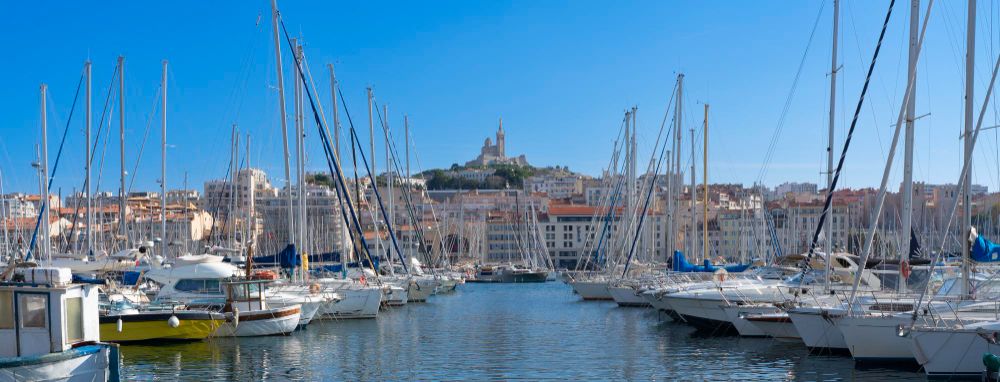
To complete your cultural day in Marseille, don't hesitate to combine the museum visit with other historic sites in the city center. The Quartier du Panier, Marseille's oldest neighborhood, is just 10 minutes walk away. You can also easily reach the Cathédrale de la Major, the Centre de la Vieille Charité or the MuCEM, all located nearby. Many restaurants and cafés border the Vieux-Port and Centre Bourse, allowing you to take a gourmet break between two cultural visits. Let yourself be guided in your discovery of the city thanks to the Ryo itinerary that will make you discover all the must-sees of the Phocaean City.
Finally, if you plan to visit several Marseille museums during your stay, inquire about the Museum Pass or Marseille City Pass which offer group access to many cultural sites in the city with advantageous rates. These formulas are particularly interesting if you stay several days in Marseille and wish to explore in depth the cultural heritage of the Phocaean city.
In conclusion, the Marseille History Museum represents much more than a simple tourist stop: it's a true gateway to understanding France's oldest city. By touring its exceptional collections of ancient wrecks, wandering in the Garden of Vestiges among Greek ramparts, and discovering the 26 centuries of urban evolution traced in the exhibition halls, you will touch the very essence of Marseille identity. Free access to permanent collections testifies to the city's desire to share this exceptional heritage with as many people as possible. Whether you're passionate about archaeology, Mediterranean history enthusiast or simply curious, the Marseille History Museum reserves fascinating discoveries that will enrich your view of the Phocaean City. Don't wait any longer to dive into Marseille's millennial history and let yourself be guided through the city streets thanks to the Ryo audio-guided circuit that will extend your temporal journey to the heart of the oldest French city.
FAQ
Is the Marseille History Museum free?
Yes, access to the Marseille History Museum's permanent collections is entirely free all year round for all visitors. Only certain temporary exhibitions may be fee-paying, but they remain free on the first Sunday of each month as well as on opening day. This free policy is part of the City of Marseille's desire to make its exceptional cultural heritage accessible to all.
How much time should I plan to visit the museum?
For a complete visit of the permanent collections and the Garden of Vestiges, plan about 2 to 3 hours. If you also wish to discover a temporary exhibition or participate in a guided tour, it's preferable to dedicate a complete half-day to your discovery of the museum. Archaeology and history enthusiasts can easily spend more time there as the collections are rich and varied.
Can you visit the Garden of Vestiges separately?
The Garden of Vestiges is an integral part of the Marseille History Museum. Its access is through the museum, and the visit is included in the discovery route. Since entry is free, you can freely access the Ancient Port archaeological site during the museum's opening hours, Tuesday to Sunday from 9am to 6pm. This exceptional site, classified as Historic Monument, is worth the visit on its own.
Is the museum accessible to people with reduced mobility?
Yes, the Marseille History Museum is fully accessible to people with reduced mobility. Elevators provide access to all museum levels, and exhibition spaces are arranged to facilitate wheelchair circulation. The Garden of Vestiges also has amenities allowing visitors with disabilities to enjoy it fully. The museum benefits from the Tourism & Handicap label.
Are guided tours available?
Yes, the museum regularly offers commented tours of the permanent collections, generally on weekends. These visits of about 1.5 hours are fee-paying (3€ for adults, 1.50€ reduced rate for 12-18 year olds, free for under 12s). Thematic visits can also be organized for groups by reservation. Consult the museum's official website or contact the public service to know the programming and reserve your guided tour.
Where to park to visit the museum?
Centre Bourse underground parking, located right next to the museum with an entrance on rue Henri Barbusse, is the most convenient option. Other public parking lots are available around the Vieux-Port, notably Vieux-Port Hôtel de Ville parking. Surface parking in the city center is regulated and fee-paying, with different tariff zones. To avoid parking constraints, favor public transport if possible, as the museum is very well served by metro, tramway and buses.
What are the must-see masterpieces?
Among the museum's treasures, don't miss the Roman wreck of la Bourse, the largest ancient ship exhibited in France, the Greek wrecks from place Jules-Verne testifying to Massalia's early times, the impressive 3rd century BCE Greek ramparts visible in the Garden of Vestiges, spectacular models illustrating the city's urban evolution, as well as the rich collection of ceramics, amphorae and everyday objects that allow understanding life in Marseille through the ages.