
Créé par Romane, le 7 mai 2026
Votre guide Ryo
© Shutterstock
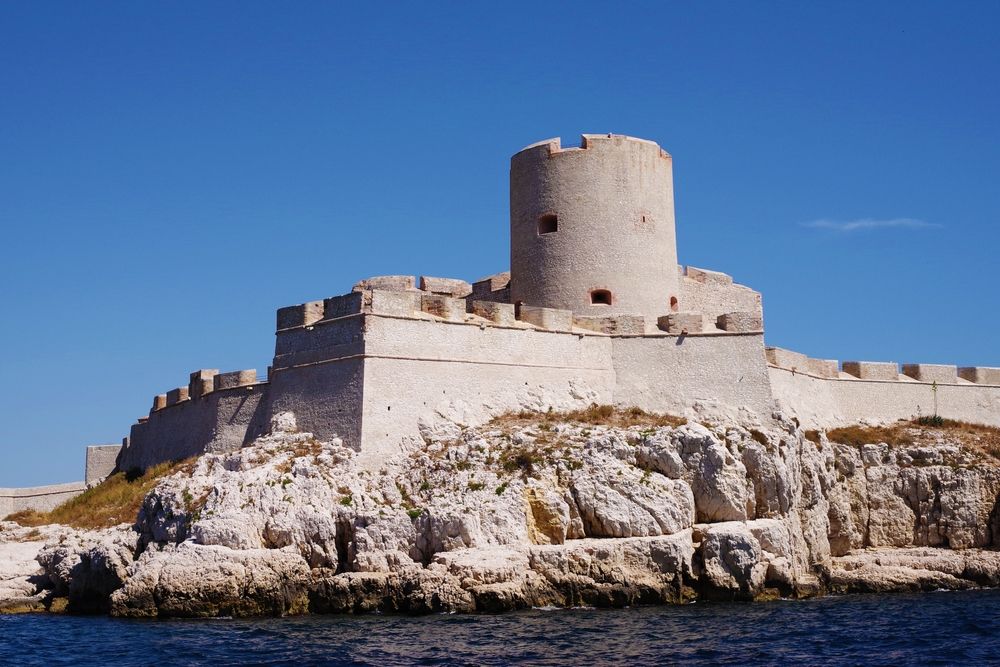
Perched on a rocky island off the coast of Visiting Marseille, Château d'If has fascinated visitors from around the world for centuries. This iconic fortress, made famous by Alexandre Dumas in his novel "The Count of Monte Cristo," offers much more than a simple historical visit. Between its austere cells, impressive ramparts and breathtaking panoramas over the Mediterranean, Château d'If represents one of the must-see attractions of the Phocaean city. Whether you're passionate about history, a literature lover, or simply seeking an original maritime getaway, this national monument will captivate you with its unique atmosphere and rich heritage. Get ready to embark on a journey through time, just twenty minutes by boat from the Vieux-Port.
How to get to Château d'If?
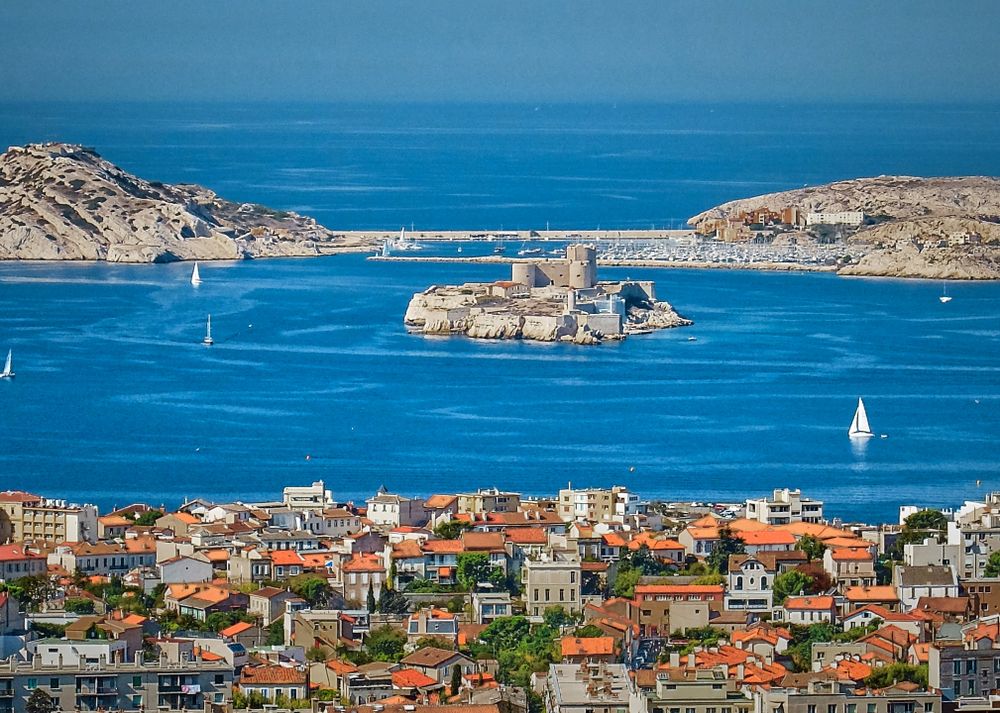
To reach Château d'If from Marseille, you must take a maritime shuttle from the Vieux-Port. The pier is located at the bottom of the Canebière, on quai des Belges, easily accessible from the city center. Two companies operate the route year-round: Frioul If Express (RTM) and Calanques If. The crossing takes about twenty minutes and already offers magnificent views of Marseille's harbor. Plan to arrive about fifteen minutes before departure to buy your tickets if you haven't booked them online. Note that the maritime crossing is not included in the castle entrance fee and costs about €11 round trip. In case of bad weather or rough seas, crossings may be canceled for safety reasons, so remember to check weather conditions before departure.
Public transport access
Marseille's Vieux-Port is perfectly served by public transport. The metro station "Vieux-Port – Hôtel de Ville" on line M1 drops you a few minutes' walk from the pier. From Saint-Charles station, allow about 10 minutes by metro. Several bus lines also serve the area, notably lines 49, 55, 60, 81 and 83. If you use the tramway, lines T2 and T3 stop at "République – Dames" station, located 10 minutes' walk from the embarkation point. To facilitate your journeys, you can opt for an RTM day pass that allows unlimited use of all Marseille public transport, including to reach other tourist sites in the city at the end of the day.
Parking and car access
If you come by car, know that parking in the Vieux-Port area is complex and often saturated. Several paid parking lots are available near the pier, notably the Centre Bourse parking, the Hôtel de Ville parking and the République parking. Rates generally vary between €15 and €25 for the day. A more economical alternative is to park your vehicle in a relay parking lot on the outskirts and reach the city center by metro. The La Rose relay parking (line M1) offers for example an advantageous rate including round-trip metro journeys for all vehicle passengers. If you're staying in a Marseille hotel, inquire about possible partnerships with parking lots that could offer you preferential rates.
Château d'If schedules and rates
Château d'If is open every day except Mondays in winter period. From April 1st to September 30th, the monument welcomes visitors from 10am to 6pm without interruption. From October 1st to March 31st, hours are slightly reduced with closing at 5pm, and the site remains closed all Mondays. The castle also closes on January 1st, May 1st and December 25th. Attention, in case of bad weather or strong swells, access to the island may be prohibited for safety reasons, even if opening hours are normally scheduled. It's therefore recommended to check weather conditions before planning your visit, particularly in autumn and winter. The last departure to Château d'If from the Vieux-Port generally takes place an hour and a half before the monument closes.
Château d'If entrance fees
The full rate to visit Château d'If is €7. Admission is free for under-18s accompanied by their family (excluding school groups), as well as for 18-25 year olds who are EU nationals or regular residents in France. People with disabilities also benefit from free admission, as well as their companion. Job seekers can access the monument for free upon presentation of a certificate less than six months old. A reduced rate of €5.50 is offered for groups of more than 20 people, as well as for TGV inOUI ticket holders of less than 5 days. Grand Voyageur SNCF card holders benefit from a preferential rate of €4. Finally, admission is free on the first Sundays of each month between November and March, an excellent opportunity to discover the monument if your budget is tight.
Passes and combined tickets
To optimize your visit to Marseille, several combined ticket options are available. The Marseille City Pass, available in 24h, 48h or 72h formulas, includes access to Château d'If as well as numerous museums and monuments in the city, plus unlimited public transport. This pass represents substantial savings if you plan to visit several sites during your stay. A combined formula also exists with the Marseille Citadel: by presenting your full-price ticket for one of the two monuments, you benefit from a reduced rate to visit the other site, the offer being valid for one month. Some maritime companies offer combined tickets including crossing and castle entrance, which can also save you time at the on-site ticket office. Remember to inquire when booking your shuttle.
Download the audio-guided circuit to discover Marseille on foot and independently
Want to explore Marseille in an original and enriching way? The Ryo app offers you an audio-guided itinerary of Marseille specially designed to help you discover the treasures of the Phocaean city. While walking through the alleys of Le Panier, along the Vieux-Port or admiring the Bonne Mère, you'll enjoy historical commentary and captivating anecdotes that bring each emblematic place to life. This autonomous visit allows you to advance at your own pace, take breaks when you want and experience a personalized discovery of the city. Before or after your escapade to Château d'If, let yourself be guided through Marseille thanks to this Ryo itinerary that will transform your stroll into a true cultural adventure.
History of Château d'If
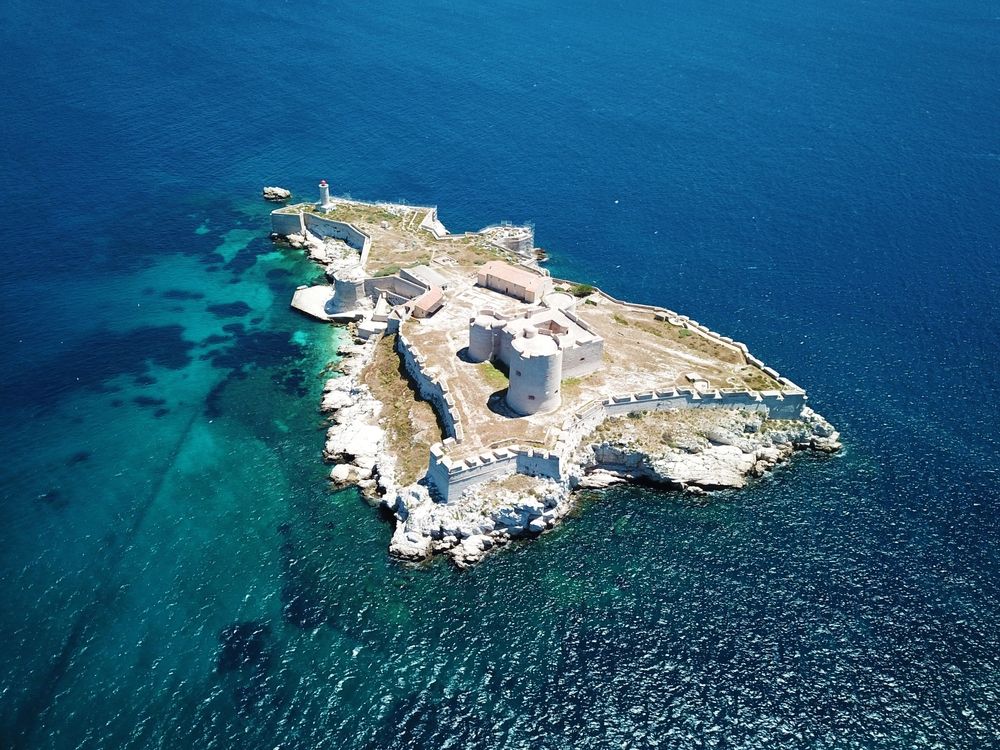
The history of Château d'If begins in the 16th century when François I ordered its construction between 1524 and 1531. Built on a three-hectare rocky islet located about 3.5 kilometers off the Vieux-Port, this fort was meant to protect Marseille from possible attacks from the sea. Its strategic location allowed surveillance of the harbor entrance and control of ships approaching the city. Construction mobilized significant financial and human resources, with the transportation of all materials from the mainland. Paradoxically, despite its initial defensive vocation and impressive cannons pointed seaward, the castle almost never had to repel attacks. Its dissuasive reputation was enough to discourage potential assailants during the centuries following its construction.
From fortress to state prison
From the early 17th century, Château d'If gradually changed function to become a state prison. This transformation was logical: isolated in the middle of the sea, surrounded by dangerous currents and constantly monitored, the building lent itself perfectly to imprisoning detainees whose escape was to be prevented. The fortress welcomed prisoners of all conditions, but detention conditions varied considerably according to social status and prisoner wealth. Wealthy prisoners could rent spacious cells on upper floors, equipped with fireplaces and windows offering sea views. In contrast, the poorest detainees rotted in dark and humid dungeons at the lower level, in deplorable sanitary conditions that often caused their premature death.
Famous prisoners
Among the many detainees who knew the jails of Château d'If, some left a particular mark in history. Count de Mirabeau, future great figure of the French Revolution, was imprisoned there for a year on his father's orders. Jean-Baptiste Chataud, captain of the Grand-Saint-Antoine, was locked up from 1720 to 1723, accused of spreading the terrible plague that decimated Marseille. Many political and religious opponents, notably Protestants after the revocation of the Edict of Nantes, were also incarcerated within these walls. The prison also served during revolutionary periods to intern political prisoners. Each of these cells today tells a story of captivity, injustice or repression, witnessing the different troubled times France went through.
Château d'If and the Count of Monte Cristo
It was in 1844 that Alexandre Dumas immortalized Château d'If in his famous novel "The Count of Monte Cristo," transforming this real prison into the setting for a legendary fiction. In the story, Edmond Dantès, a young Marseille sailor unjustly accused of Bonapartism, is imprisoned in the castle for fourteen long years. During his captivity, he meets Abbé Faria, an erudite fellow prisoner who reveals to him the existence of a fabulous treasure hidden on Monte Cristo island. After the abbé's death, Dantès achieves a spectacular escape by slipping into the mortuary sack intended for his cellmate. Thrown into the sea from the ramparts, he manages to free himself and swim to freedom, before setting off in search of his revenge and fortune.
Fiction and reality
Although Edmond Dantès is a purely fictional character, Alexandre Dumas was inspired by the authentic atmosphere of Château d'If to create his captivating story. The cells you visit today, notably the one called "Edmond Dantès' cell," never housed Dumas' hero, but they correspond to the description made in the novel. The writer had himself visited the castle before writing his work and was impressed by the detention conditions he discovered. The legendary tunnel supposedly linking Dantès' and Faria's cells never existed, but this poetic license doesn't detract from the evocative power of the place. Even today, thousands of visitors come seeking traces of this imaginary prisoner, proof that fiction can sometimes create a tourist and emotional reality stronger than history itself.
Cultural impact of the novel
The worldwide success of "The Count of Monte Cristo" radically transformed the perception and visitation of Château d'If. From a simple historical monument, it became a literary pilgrimage site attracting readers from around the world. The novel was adapted many times for cinema, theater and television, further reinforcing the site's notoriety. This romantic dimension is now an integral part of the visit experience, to the point that some tourists are disappointed to learn that Edmond Dantès never really existed. The castle's history thus merges with that of its most famous but fictional prisoner, perfectly illustrating the power of literature to shape our relationship with places and history.
What to see during the visit to Château d'If?
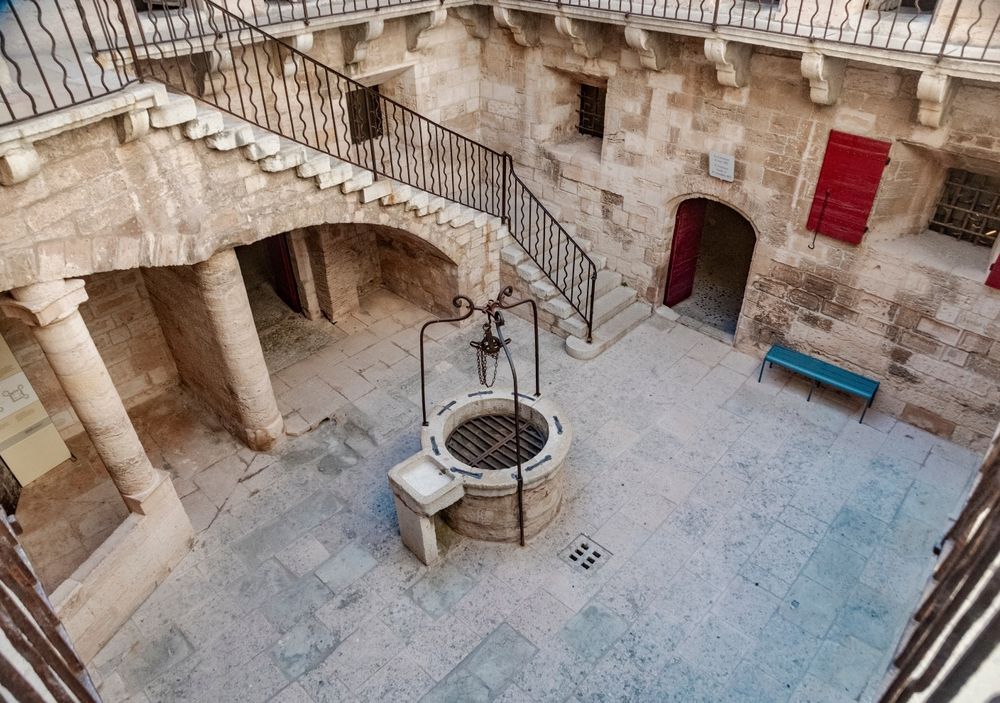
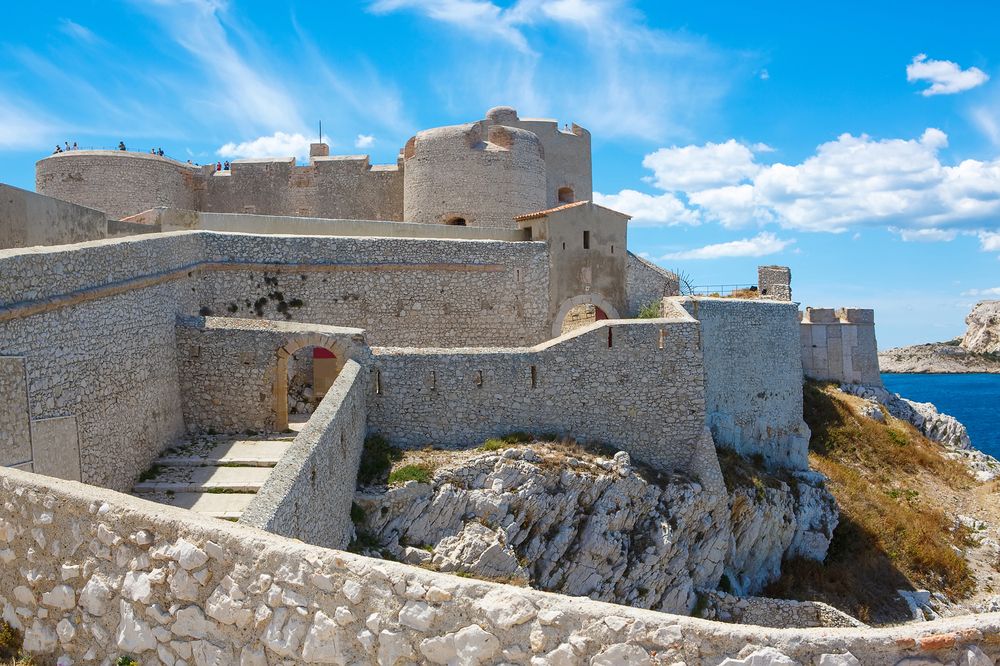
As soon as you arrive on If island, you'll be struck by the imposing silhouette of the castle rising before you. The visit generally begins with the fortified entrance, an austere vaulted passage that immediately plunges the visitor into the prison atmosphere of the place. Once through this monumental gate, you'll discover the interior courtyard, the central space once animated by the daily life of guards and prisoners. The thick walls still bear the stigmata of time and testify to the harshness of living conditions at the time. Don't forget to look up to admire the 16th-century military architecture, with its watchtowers and perfectly preserved battlements. The visit then continues through the different levels of the castle, each revealing a particular aspect of the monument's history.
Cells and dungeons
The heart of the visit undoubtedly lies in discovering the cells and dungeons that created Château d'If's sinister reputation. You can enter several of these detention spaces, including the famous "Edmond Dantès' cell," arranged as a tribute to Dumas' character. The cells on upper floors, intended for wealthy prisoners, surprise with their relative "comfort" with their fireplaces, windows and breathable space. In contrast, the dungeons on the lower level, carved into the rock itself, offer a striking contrast with their darkness, humidity and cramped conditions. Explanatory panels trace the history of certain real prisoners who lived in these jails. The oppressive atmosphere of these places will help you better understand what it meant to be imprisoned at Château d'If in different eras.
Ramparts and panoramas
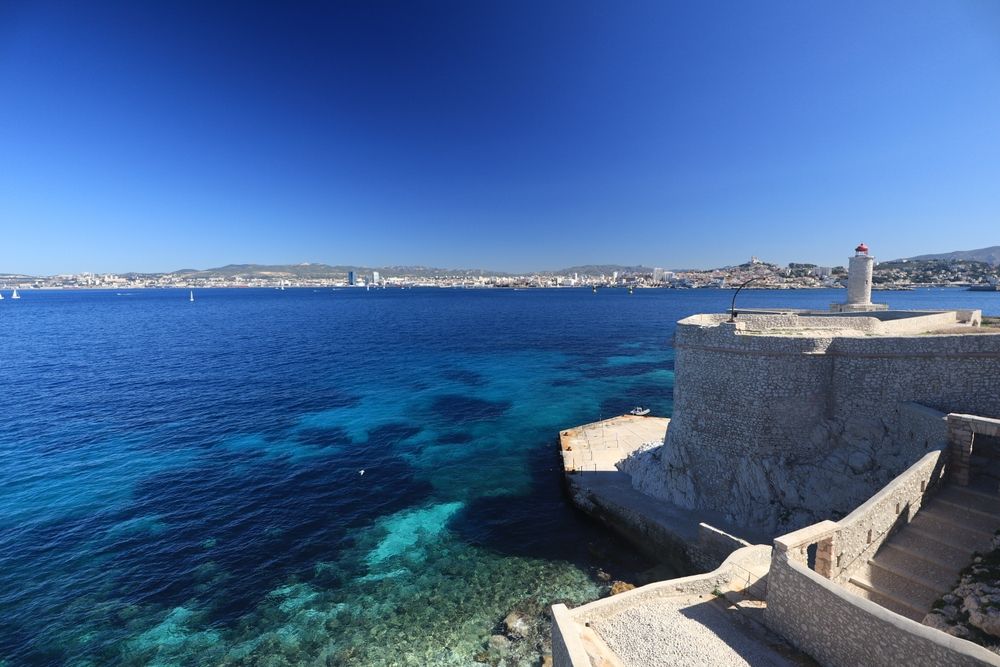
The walk along the ramparts is undoubtedly one of the highlights of the visit. From the top of the fortifications, you'll enjoy an exceptional 360-degree panoramic view of Marseille, the Frioul archipelago and the Mediterranean. On clear days, you'll clearly distinguish the Notre-Dame de la Garde basilica dominating the city, the bustling Vieux-Port, and the calanques extending eastward. The old firing positions and cannon emplacements recall the castle's initial defensive vocation. The walkway allows you to go around the entire fortress while admiring different perspectives on the coastline. Don't forget your camera, as opportunities for spectacular shots are numerous, particularly at sunset when golden light sets the city's ochre facade ablaze.
Exhibition rooms
Several castle rooms host permanent and temporary exhibitions that enrich understanding of the site. You'll discover archive documents relating to famous prisoners, models illustrating the monument's architectural evolution over the centuries, and objects found during archaeological excavations. One section is devoted to Marseille's maritime history and the castle's strategic role in port defense. Another part of the exhibition explores the links between the monument and literature, notably through "The Count of Monte Cristo." Bilingual French-English didactic panels allow all visitors to fully benefit from the information presented. These museographic spaces intelligently complement the visit to the castle's historical parts and offer appreciable cultural perspective.
Practical advice for your visit
To fully enjoy your visit to Château d'If, some recommendations are essential. First, absolutely check the weather before departure, as in case of rough seas, access to the island may be prohibited even if the monument is officially open. Plan comfortable and non-slip shoes, as the ground is sometimes irregular and slippery, particularly after rain. In summer, the sun beats down hard on the shadeless island, so remember to bring water (a water point is available on site), a hat and sunscreen. Suitcases and large backpacks are prohibited, as there's no luggage storage on the island. Plan your visit preferably in the morning to avoid crowds of tourist groups that generally arrive mid-day. Allow about an hour and a half to two hours for a complete and peaceful visit.
Accessibility and services
It's important to note that Château d'If is unfortunately not accessible to people with reduced mobility due to the rough terrain, numerous steps and absence of elevators. Strollers are also not allowed in the monument for the same safety and site configuration reasons. Toilets are available on site, as well as some benches to rest during the visit. However, there's no restaurant or shop on the island, so remember to bring a snack if necessary. As the site is classified within the Calanques National Park, it's strictly forbidden to throw waste on the island, smoke (including outdoors), feed seagulls or throw stones. Only service dogs are allowed to enter the monument.
Booking and ticketing
Although buying tickets on site is possible, it's strongly recommended to book online your castle entrance ticket as well as your maritime crossing, particularly during high tourist season. This precaution will save you long queues at the ticket office and guarantee you a place on the boat at desired times. Some maritime companies offer combined tickets including crossing and monument entrance, which simplifies procedures. If you use a Marseille City Pass or another combined ticket, check the specific booking procedures. For groups of more than twenty people, advance booking is mandatory. During work periods or special events, route modifications may occur, so consult the monument's official website before your visit to stay informed of any disruptions.
Combining the visit with the Frioul islands
If you have half a day or a full day, it would be a shame to visit only Château d'If without exploring the nearby Frioul archipelago. This set of wild and preserved islands offers total escape just a few cables from Marseille. Maritime shuttles generally offer combined formulas allowing you to visit the castle then continue to the Frioul islands, or vice versa. On site, you'll discover authentic Mediterranean landscapes, turquoise-water coves, and remarkable fauna and flora protected by the Calanques National Park. Ratonneau island's small port hosts some restaurants and cafés where you can lunch while admiring the sea view. Marked hiking trails allow exploration of the islands on foot and access to spectacular viewpoints.
Activities on the Frioul islands
The Frioul archipelago lends itself to numerous outdoor activities that will delight nature lovers and thrill seekers. Swimming is possible in several sheltered coves, although water remains cool even in summer. The exceptional marine depths attract divers and snorkeling enthusiasts who can observe preserved marine biodiversity. Several Marseille diving clubs organize trips to the archipelago. Hikers will appreciate the pedestrian circuits winding between miniature calanques, old military batteries and panoramic viewpoints. Sea kayaking also allows exploration of the archipelago's rugged coasts from a different angle. While visiting the islands, let yourself be guided once again by the Ryo app to discover Marseille and its surroundings, which will enrich your exploration with fascinating commentary on this exceptional natural heritage.
What to do around Château d'If in Marseille?
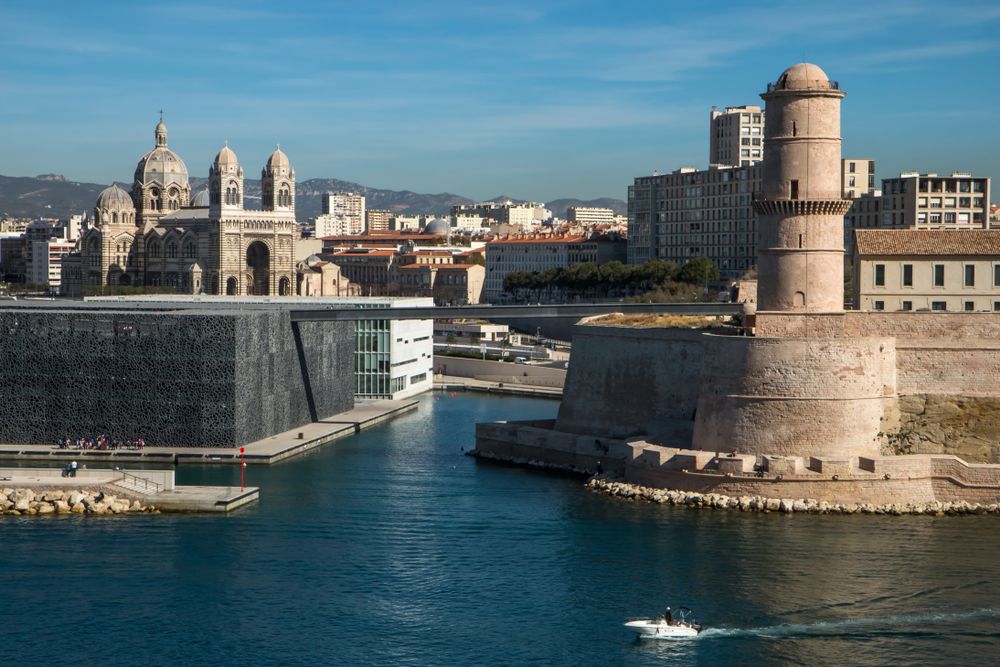
After your return from Château d'If, take advantage of your presence in the Vieux-Port area to extend your discovery of Marseille. A few steps from the pier, Fort Saint-Jean and MuCEM (Museum of European and Mediterranean Civilizations) are well worth a visit. These two sites are connected by a spectacular footbridge offering stunning views of the port entrance. Le Panier district, France's oldest neighborhood, is also in the immediate vicinity. Its colorful alleys, shaded squares and dilapidated facades contain authentic charm that you'll discover wandering randomly through the stairs. Many artists' workshops, craft shops and typical restaurants animate this popular neighborhood that has managed to preserve its Marseille soul despite growing tourist pressure.
Other must-see monuments
To complete your Marseille day, several emblematic monuments of the Phocaean city deserve a detour. Notre-Dame de la Garde basilica, nicknamed "la Bonne Mère" by Marseille residents, dominates the city from its hill and offers exceptional panorama over the entire agglomeration. The ascent can be done on foot for the bravest or by tourist train. Palais Longchamp, a 19th-century architectural masterpiece, houses the Fine Arts Museum and Natural History Museum in a refreshing green setting. Nature lovers won't miss an excursion to the calanques of Marseille and Cassis, true jewels of the Mediterranean coast accessible by boat or on foot for hikers. The Ryo itinerary of Marseille will guide you through all these emblematic places with enriching audio commentary that will bring your urban walk to life.
In conclusion, visiting Château d'If represents much more than a simple tourist excursion: it's a journey through time that will plunge you into Marseille's maritime and prison history, while offering breathtaking panoramas over the Mediterranean. Between literary legends born from Alexandre Dumas' pen and the historical reality of this state prison, the monument contains multiple facets that fascinate young and old. The castle's unique situation on its rocky islet, accessible only by boat, adds an adventurous dimension to the visit that will permanently mark your Marseille stay. Whether you're passionate about history, a literature lover, a photographer seeking spectacular shots, or simply curious to discover this emblematic site, Château d'If won't disappoint you. Don't hesitate to dedicate a full half-day to this island escapade by possibly combining it with discovering the neighboring Frioul islands. To best prepare your visit and then explore Marseille thoroughly, download the Ryo application that will accompany you step by step in your discovery of the Phocaean city and its hidden treasures.
FAQ: Everything you need to know about visiting Château d'If
1. How long does the visit to Château d'If last?
The visit to Château d'If lasts on average between 1h and 1h30, depending on your pace and interest in the monument's history. You need to add about 40 minutes of round-trip maritime crossing from Marseille's Vieux-Port. In total, therefore plan about 2h30 to 3h for the entire excursion, more if you want to fully enjoy the panoramas and take time to read all the explanatory panels.
2. Is Château d'If accessible to people with reduced mobility?
Unfortunately, Château d'If is not accessible to people with reduced mobility due to very rough terrain, numerous stairs and the absence of elevators. The site also has several levels connected only by sometimes narrow steps. Strollers are also not allowed in the monument for the same safety and site configuration reasons.
3. Can you swim on If island?
No, swimming is strictly forbidden around If island due to dangerous marine currents and heavy maritime traffic. If you want to swim during your sea outing, opt instead for a stopover at the Frioul islands where several coves allow swimming in safer conditions, although water remains cool even in summer.
4. Is there a restaurant or café on If island?
No, there's no catering point on If island. You'll only find a drinking water point to quench your thirst. It's therefore recommended to bring water and possibly a snack if you think you'll be hungry during the visit. However, Marseille's Vieux-Port abounds with restaurants and cafés where you can eat before or after your excursion.
5. Can you visit Château d'If in winter?
Yes, Château d'If is open year-round except Mondays during winter period (from October 1st to March 31st) and holidays of January 1st, May 1st and December 25th. However, winter weather conditions can lead to cancellation of maritime crossings in case of rough seas or violent mistral. It's therefore essential to check weather conditions and shuttle availability before traveling in winter.
6. Was the Count of Monte Cristo really imprisoned at Château d'If?
No, Edmond Dantès, the hero of Alexandre Dumas' novel "The Count of Monte Cristo," is an entirely fictional character who never existed. The cell bearing his name in the castle is a later arrangement created as tribute to the novel that made the monument famous worldwide. However, many real prisoners stayed in the castle's jails between the 17th and 19th centuries.
7. Do you need to book in advance to visit Château d'If?
Although booking is not mandatory, it's strongly recommended, particularly during high tourist season (from May to September). Booking online your entrance ticket and maritime crossing will allow you to avoid queues at ticket offices and ensure you a place on the boat at desired times. Some companies offer very practical combined tickets including crossing and monument entrance.
8. Can you take photos at Château d'If?
Yes, photography is allowed throughout the castle for personal use. It's even recommended given how spectacular the panoramas from the ramparts are! However, using professional tripods or commercial photography requires prior authorization. Drones are prohibited from flying over the entire site which is located in the Calanques National Park.
9. What's the best period to visit Château d'If?
The ideal period to visit Château d'If extends from April to June and from September to October. During these months, you'll benefit from generally pleasant weather, lower tourist crowds than in midsummer, and sometimes more advantageous rates for Marseille accommodations. Spring also offers particularly beautiful light for photographers, while autumn allows you to enjoy a sea that's still relatively warm.
10. Can you combine the visit to Château d'If with other sites in one day?
Absolutely! The visit to Château d'If taking about 2h30 to 3h total (crossing included), you'll have enough time to discover other Marseille attractions in the same day. MuCEM and Fort Saint-Jean, located near the pier, constitute perfect complements. You can also opt for a combined formula including the Frioul islands, or dedicate your afternoon to exploring Le Panier district and the Vieux-Port by following the Ryo audio-guided itinerary of Marseille.