
Créé par Romane, le 7 mai 2026
Votre guide Ryo
© Shutterstock
Every year, the city of Menton adorns itself with thousands of lemons to celebrate its emblematic fruit during a spectacular event recognized worldwide. The Lemon Festival transforms the pearl of the French Riviera into an open-air theater where monumental sculptures, colorful parades and Mediterranean traditions intertwine in an explosion of colors and creativity. More than just an event, it's a true celebration of Menton's heritage that attracts over 200,000 visitors each year who come to admire these ephemeral creations made with tons of citrus fruits.
A century-old tradition in the heart of the Riviera
The history of the Lemon Festival dates back to the late 19th century, when Menton hoteliers sought to enliven the city during the winter season. As early as 1875, they organized a first parade that was an immediate success, attracting a prestigious clientele including Queen Victoria herself in 1882. But it wasn't until 1934 that the Lemon Festival as we know it today was truly born, under the impetus of a visionary hotelier who proposed to showcase lemons, of which Menton was then Europe's leading producer.
Since then, the event has continued to grow. From simple carts decorated with citrus fruits in the 1930s, we have moved to truly monumental sculptures requiring between 140 and 180 tons of citrus fruits today. In 2026, the 92nd edition celebrates the theme of "Wonders of Life," thus perpetuating a tradition that makes the pride of Menton residents and the joy of visitors from around the world.
The Menton lemon, a protected treasure
Before being a festival, the lemon is the very soul of Menton. Cultivated since 1341 on the sunny terraces that stretch between sea and mountain, the Menton lemon has benefited since 2015 from a Protected Geographical Indication (PGI). This official recognition crowns centuries of know-how and passion transmitted from generation to generation.
What distinguishes the Menton lemon is above all its unique taste. Less acidic than its cousins, it has a sweet and fragrant flavor, with a thick and particularly aromatic peel. The exceptional microclimate of the region, protected from northern winds and bathed in Mediterranean sun, allows citrus fruits to ripen slowly on the tree, thus developing all their aromas. Today, with an annual production of about 200 tons, Menton citrus growers proudly perpetuate this exceptional agricultural heritage.
The highlights of the Lemon Festival
From February 14 to March 1, 2026, Menton lives to the rhythm of its emblematic festival. The program is structured around several major events that punctuate these two weeks of festivities.
Citrus fruit displays at Biovès Gardens
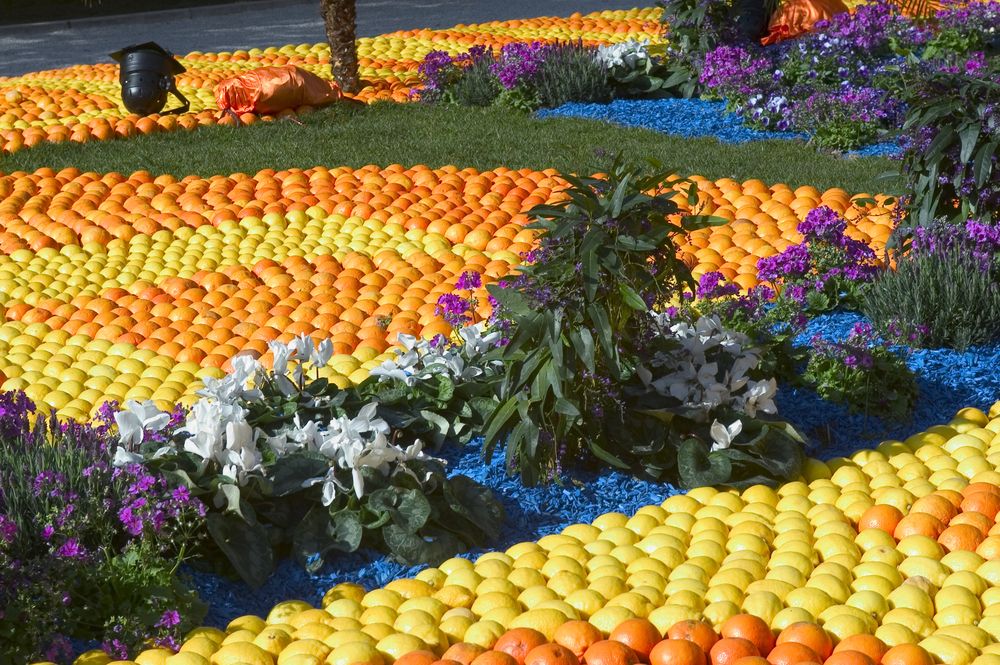
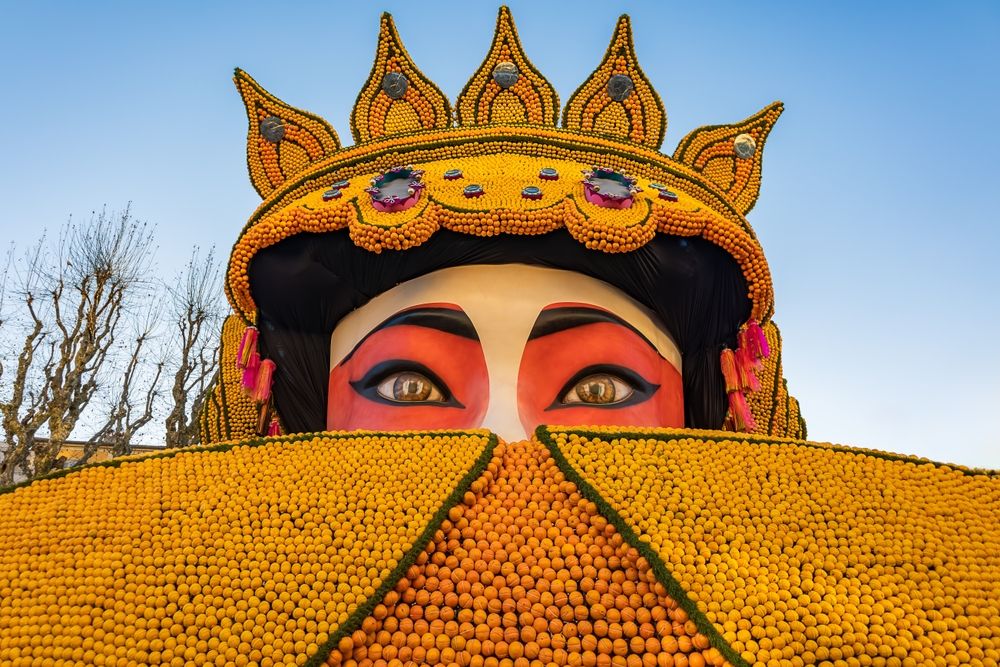
The heart of the Lemon Festival beats at the Biovès Gardens, located in the city center. This is where the monumental sculptures that make the event's reputation take place. These true ephemeral works of art, some of which require nearly 15 tons of citrus fruits, are created by a team of professionals who work for several weeks on their design and assembly. Each lemon and each orange is individually fixed on metal structures, creating giant tableaux that illustrate the edition's theme.
Access to Biovès Gardens is free and open all day long, from 9am to 11pm, allowing visitors to admire these creations under different lights. When evening comes, special lighting enhances the sculptures, offering a magical spectacle where the citrus fruits seem to shine with a thousand lights.
The Golden Fruit Parades
On Sundays February 15 and 22, as well as March 1, 2026, the Promenade du Soleil comes alive to host the famous Golden Fruit Parades. These spectacular parades, which take place from 2:30pm to 4pm, constitute the most anticipated moment of the festival. About ten monumental floats, entirely decorated with lemons and oranges, parade along the seafront, accompanied by musical groups, dancers in colorful costumes and a shower of confetti.
Each float is a technical and artistic feat, requiring weeks of preparation. Spectators, seated in stands or standing on the promenade, applaud these ephemeral creations that parade in a festive and warm atmosphere typically Mediterranean.
The nocturnal parades, gardens of light
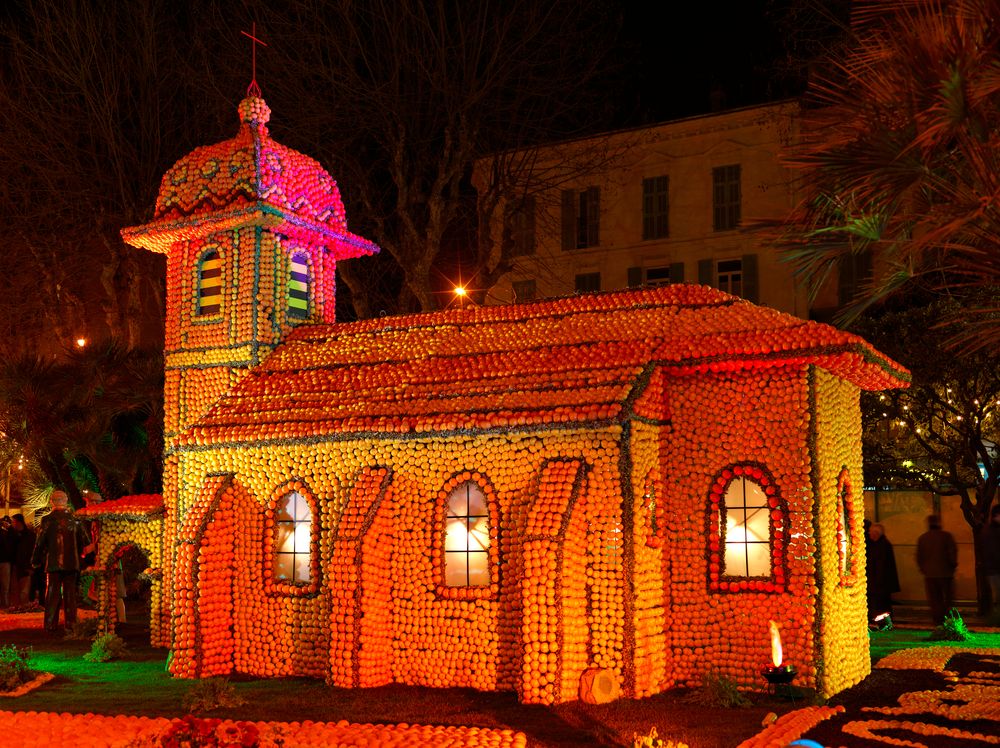
On Thursdays February 19 and 26, 2026, magic happens at nightfall with the Nocturnal Parades. From 9pm to 10:30pm, the same floats parade under the spotlights, transforming the promenade into a true garden of lights. The specially designed lighting enhances the citrus sculptures, creating plays of shadow and light that give a completely different dimension to the spectacle. The atmosphere is even more magical, with an audience often won over by this unique ambiance.
Complementary events
Beyond the parades and exhibitions, the Lemon Festival offers a whole range of activities that enrich visitors' experience. The Orchid and Winter Garden Exhibition, installed at the Palais de l'Europe, allows visitors to admire hundreds of orchid varieties in an enchanting setting. The craft market, meanwhile, offers the opportunity to discover local products and creations by regional artisans. Themed guided tours through the streets of Menton's history are also offered, allowing visitors to discover the city's heritage from a new angle.
Download the audio-guided tour to discover Menton on foot and independently
Your visit to the Lemon Festival is the ideal opportunity to discover Menton's hidden treasures. Beyond the festivities, the city is full of architectural, historical and natural riches that are worth the detour. From the colorful streets of the old town to the splendid Saint-Michel-Archange Basilica, through the hanging gardens and panoramic viewpoints, Menton reveals its charm at every street corner.
To make the most of your stay, why not explore Menton with an audio-guided tour? Ryo offers you a complete route of 22 points of interest, accompanied by audio commentary that immerses you in the history and anecdotes of the Riviera pearl. You can thus discover at your own pace the Place aux Herbes, the Jean Cocteau Museum or the Old Castle Cemetery which offers a breathtaking view of the bay.
Practical information to prepare your visit
Dates and times
The 92nd Lemon Festival takes place from February 14 to March 1, 2026. The Biovès Gardens are accessible daily from 9am to 11pm. The Golden Fruit Parades take place on Sundays from 2:30pm to 4pm, and the Nocturnal Parades on Thursdays from 9pm to 10:30pm. For the detailed day-by-day program, consult the official Lemon Festival website.
Prices and ticketing
Access to the Biovès Gardens and citrus fruit displays is free. However, the Parades are paid. For the Golden Fruit Parades, expect around €30 for a seated place in the stands and €16 for a standing place on the promenade (adult prices). Reduced rates are offered for groups and children. It is strongly advised to book your tickets in advance on the online ticketing, as tickets sell out quickly.
How to get to Menton?
Menton is easily accessible by different means of transport. By car, the city is located a few minutes from Italy via the A8 motorway. By train, Menton station is served by regional TER trains from Nice (about 35 minutes journey) and by direct connections from several French and Italian cities. For those coming from further away, Nice Côte d'Azur airport is located about 30 kilometers away.
Parking in Menton during the Lemon Festival
During parade days, traffic is heavily disrupted in the city center. The city of Menton provides free parking at the city entrances, with a shuttle service to reach the center. It is recommended to arrive before 11am on parade Sundays to avoid traffic jams and easily find a parking space. Signage panels indicate available parking areas.
Our advice to make the most of the festival
To live an optimal experience during the Lemon Festival, some practical advice is essential. First, anticipate your visit: book your accommodation and your parade tickets as early as possible, as Menton is fully booked during this period. If you attend the Nocturnal Parades, bring warm clothing as February evenings can be cool by the sea.
For families, know that the atmosphere is very friendly and children are welcome. The Biovès Gardens offer an ideal space to wander between the giant sculptures that will surely amaze them. Also think about discovering Menton lemon-derived products: jams, limoncello, scented oils... The shops and craft market are full of delicious specialties to take home as souvenirs.
Take advantage of your stay to visit Menton outside of crowded hours. Early in the morning or late in the day, the city reveals all its Mediterranean way of life. Stroll along the Promenade du Soleil, get lost in the old town streets, and don't hesitate to be guided by the Ryo itinerary which will make you discover the most beautiful corners of the pearl of France.
Behind the scenes of creation
Behind the grandiose spectacle of the Lemon Festival lies colossal work that mobilizes dozens of people for several months. From autumn, technical and artistic teams work on models and metal structures that will receive the citrus fruits. The lemons and oranges, supplied by Spain due to low local production, arrive a few weeks before the festival opening.
Then begins the patient work of attachment: each citrus fruit is individually tied to the structures using rubber bands, according to an ancestral technique that guarantees the stability of the whole. It takes about 300 mobilized professionals, including a dozen people dedicated solely to the daily replacement of damaged fruits. Goldsmith work that testifies to the passion and know-how of Menton residents for their emblematic festival.
What happens to the citrus fruits after the festival?
A question often asked: what happens to the tons of citrus fruits used for the Lemon Festival? Concerned about limiting waste, the city of Menton has set up a valorization system. At the end of the event, the fruits are recovered and part is distributed free to the public. Citrus fruits still in good condition are also transformed into compost or used for biogas production. An ecological approach that fits into a desire for environmental responsibility.
In conclusion, Menton's Lemon Festival is much more than just a citrus carnival. It's a living celebration of Mediterranean heritage, an event that brings together visitors from around the world each year around a shared passion for beauty, creativity and the French way of life. Between secular traditions and contemporary creations, between grandiose spectacle and authentic conviviality, the Lemon Festival offers a unique experience that is well worth the detour. And to extend the magic, don't forget to discover Menton through its Ryo audio-guided tour, an original and enriching way to immerse yourself in the soul of this pearl of the French Riviera.
FAQ – Frequently asked questions about the Lemon Festival
When does the Menton Lemon Festival take place?
The Lemon Festival traditionally takes place each year at the end of winter, for about two weeks. The 2026 edition runs from February 14 to March 1.
Do you need to book tickets in advance?
Yes, it is strongly recommended to book your seats for the Parades (float processions) in advance, as they quickly sell out. However, access to Biovès Gardens to see the sculptures is free and does not require reservation.
How long does the visit to the exhibition at Biovès Gardens last?
Allow about 45 minutes to 1 hour to peacefully admire the giant citrus sculptures in Biovès Gardens. The site is open from 9am to 11pm every day during the festival.
Can you come with children?
Absolutely! The Lemon Festival is a family event where children are welcome. The colorful sculptures and parades with their animated floats will delight the youngest. Reduced rates are also offered for children during the Parades.
Where to park during the Lemon Festival?
The city provides free parking on the outskirts with shuttles to reach the center. It is advisable to arrive early, especially on parade days (before 11am on Sunday), to avoid traffic jams and easily find a parking space.
What is the difference between the Golden Fruit Parade and the Nocturnal Parade?
The Golden Fruit Parade takes place during the day (2:30pm-4pm) on Sundays, while the Nocturnal Parade takes place in the evening (9pm-10:30pm) on Thursdays. The same floats parade, but the nighttime atmosphere with its light effects offers an even more magical spectacle.