
Créé par Emilie, le 7 mai 2026
Votre guide Ryo
© Shutterstock
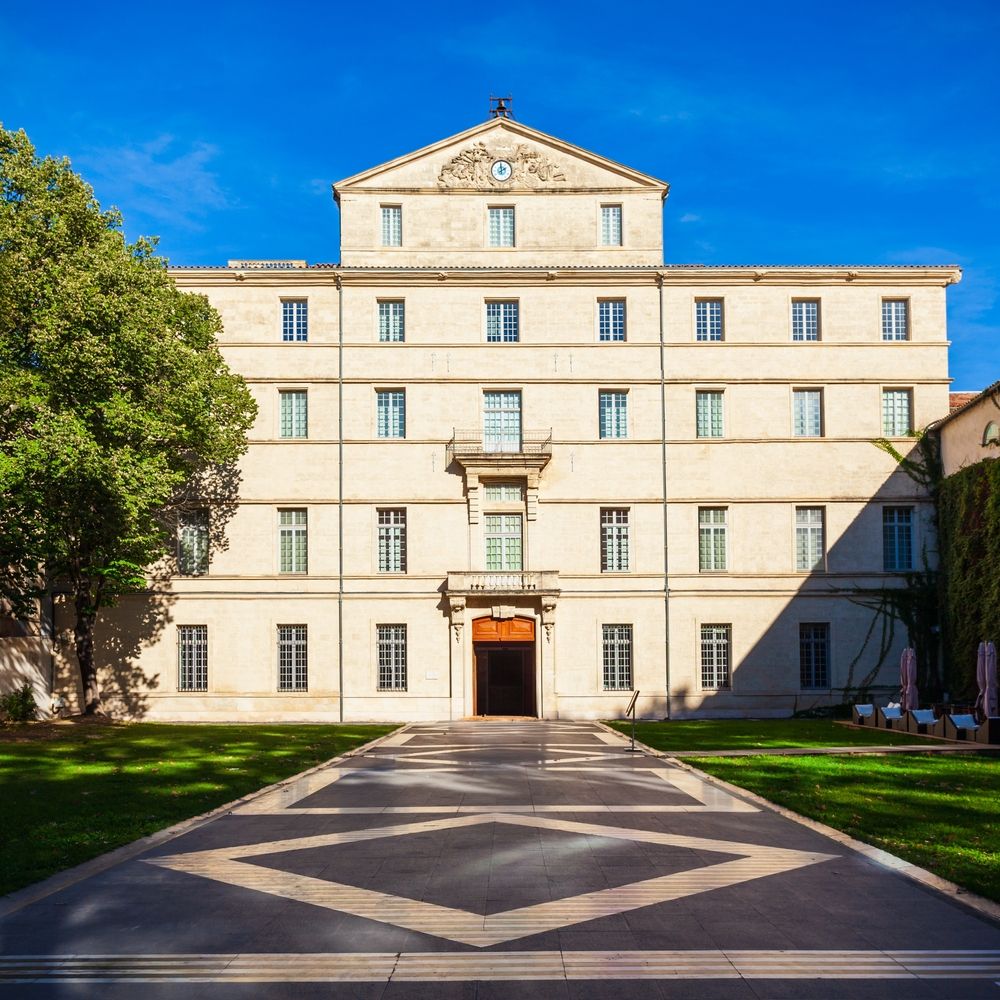
At the heart of Montpellier, on the Charles-de-Gaulle esplanade, stands one of the most important fine arts museums in France outside Paris: the Fabre Museum (39 boulevard Bonne Nouvelle, 34000 Montpellier, rated 4.5/5 on Google). Founded in 1828 thanks to the generous donation of the Montpellier painter François-Xavier Fabre, this exceptional cultural establishment now houses more than 700 works spread over 9,200 m², covering seven centuries of European art history, from the 14th to the 21st century.
Visiting the Fabre Museum in Montpellier means embarking on a journey through time that leads from Italian primitives to contemporary abstractions by Pierre Soulages, through the great realist canvases of Gustave Courbet and the luminous works of Frédéric Bazille, a local artist. It's also an opportunity to discover rooms with careful museography, renovated between 2003 and 2007, which gives each painting, sculpture, or drawing a setting worthy of its importance.
Whether you're passionate about art, simply curious, or visiting with family, this article guides you step by step in your visit to the Fabre Museum: permanent collections, temporary exhibitions, hours, prices, and practical advice. And if you want to extend your day exploring the streets of Visit Montpellier at your own pace, don't miss our audio-guided circuit designed to discover the "Gifted One" in complete autonomy.
Why visiting the Fabre Museum is essential in Montpellier
It's hard to pass through Montpellier without pushing through the doors of the Fabre Museum. A flagship of the city's cultural heritage, it attracts several hundred thousand visitors from around the world each year. Its permanent collection is one of the richest in France outside the capital, thanks particularly to two exceptional donations that shaped its identity: that of painter François-Xavier Fabre from its foundation, and especially that of collector Alfred Bruyas in the 19th century, which enabled the acquisition of masterpieces signed by Delacroix, Courbet, Géricault, or Ingres.
Beyond the intrinsic quality of its collections, the Fabre Museum seduces with its architecture blending an 18th-century mansion with a bright contemporary extension. Its geographical position, five minutes walk from the Place de la Comédie, makes it a natural stop in any visit to the city. Do you want to explore Montpellier in depth? The Ryo audio-guided circuit takes you to discover 19 emblematic places in the historic center, some of which are just steps from the museum.
A bit of history: from François-Xavier Fabre to today
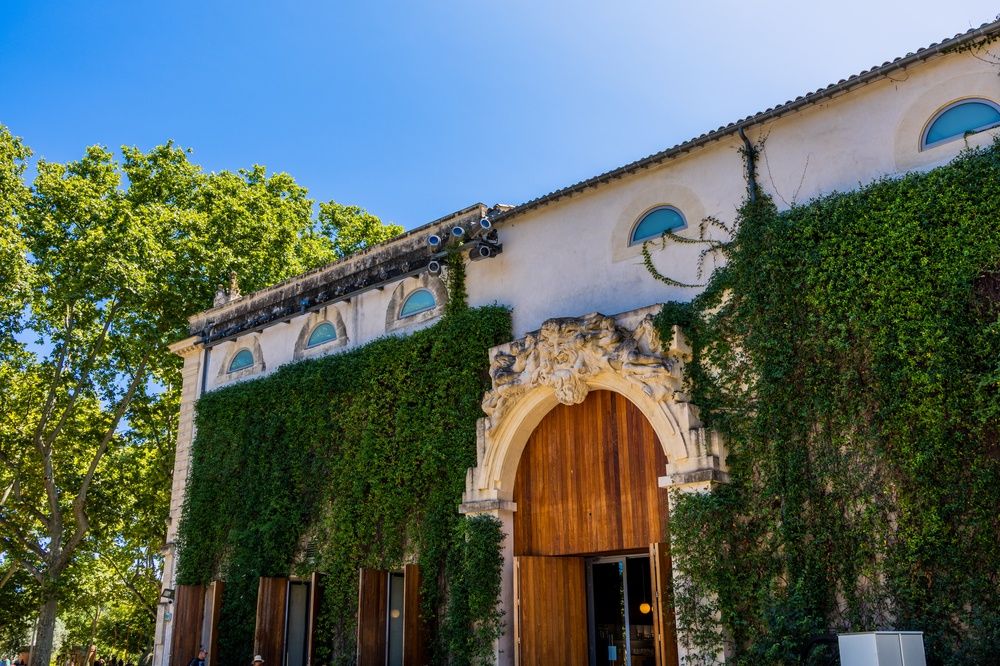
The history of the Fabre Museum begins in 1825, when painter François-Xavier Fabre, born in Montpellier in 1766, decided to bequeath his personal collection to his hometown. A student of David and friend of the Countess of Albany, Fabre had assembled throughout his career a remarkable collection of paintings, drawings, and sculptures acquired during his stays in Italy and France. His donation, completed by the collections of the Montpellier Society of Fine Arts, enabled the museum's opening in 1828, within the walls of the Massilian mansion, an 18th-century building classified as a historical monument.
The 19th century marked a decisive turning point for the institution, thanks to the exceptional patronage of Alfred Bruyas (1821-1877). This passionate collector, from a wealthy Montpellier banking family, forged privileged ties with the most avant-garde artists of his time. His 1868 donation brought the museum masterpieces by Courbet, Delacroix, Géricault, Ingres, and Cabanel, elevating Montpellier to the rank of the great European places of 19th-century art. The most famous painting in this collection, Hello, Mr. Courbet!, representing the painter meeting his patron on a Montpellier road, has become one of the emblematic works of French realism.
After several successive expansions during the 20th century, the museum began a vast renovation campaign between 2003 and 2007 that doubled its exhibition space to 9,200 m². The architectural intervention, sober and luminous, highlights the collections while harmoniously integrating the different periods of the building. Since its reopening in 2007, the Fabre Museum has established itself as one of the most visited regional museums in France, welcoming several hundred thousand visitors each year.
1. The ancient paintings collection (14th to 18th century)
The galleries devoted to ancient paintings constitute the ideal starting point for a visit to the Fabre Museum in Montpellier. From the 14th to the 18th century, they offer a striking panorama of the evolution of European art through its great schools: Italian, Flemish, Dutch, and French. Italian primitives with golden backgrounds, mythological scenes from the Renaissance, Flemish still lifes of dazzling precision, aristocratic portraits from the Grand Siècle... each room tells an era and its aesthetic challenges.
Here you'll encounter works by Rubens, Veronese, Nicolas Poussin, Sébastien Bourdon, and Jean Raoux, a Montpellier painter from the early 18th century of whom the museum possesses a representative collection. The scenography, designed to facilitate chronological and thematic reading of the works, invites you to take time to stop before each painting. Planning at least one hour for this section alone is a good idea if you want to savor all its richness.
2. The 19th-century masterpieces and the Bruyas collection
This is undoubtedly the most famous and most visited section of the Fabre Museum. The rooms dedicated to the 19th century house the exceptional Bruyas collection, this unique ensemble assembled by Alfred Bruyas, a visionary patron who made Montpellier a major artistic crossroads of romantic and realist France. Nearly a hundred major works testify to the singular relationship between this collector and the artists of his time, some of whom stayed directly in his city.
Gustave Courbet occupies a predominant place: the Fabre Museum possesses one of the world's largest collections of paintings by this artist, notably including Hello, Mr. Courbet! (1854), The Meeting and several portraits of the patron. The room dedicated to Courbet, inaugurated in 1868, constitutes in itself a reason to visit. Eugène Delacroix is also well represented, alongside Théodore Géricault, Jean-Auguste-Dominique Ingres, and Alexandre Cabanel.
The museum also honors Frédéric Bazille, a Montpellier painter who was a precursor of Impressionism, who died tragically at 28 during the Franco-Prussian War. His Village View (1868) is one of the masterpieces of the collection and testifies to his exceptional talent for capturing the light of the South. This section of the Fabre Museum in Montpellier is truly a gem for lovers of 19th-century French art.
3. Modern and contemporary art, the Pierre Soulages room
The permanent tour of the Fabre Museum doesn't stop at the 19th century: it embraces the 20th and 21st centuries with the same ambition. The modern and contemporary galleries unfold a history of abstraction and French avant-garde, with works by Simon Hantaï, Germaine Richier, Olivier Debré, and the Support/Surface group, a movement born precisely in Languedoc in the 1970s.
But the masterpiece of this department remains undoubtedly the Pierre Soulages room. In 2005, the painter from Aveyron, world-famous for his black canvases — which he himself calls "outrenoir" — donated twenty works to the museum, wishing this part of his heritage to remain anchored in the region that saw him grow up. His large canvases, with striated or polished textures that capture and redistribute light spectacularly, impose respectful silence. A major retrospective was dedicated to him in 2025, marking the twenty years of this exceptional donation.
If you want to extend your immersion in contemporary Montpellier art after your visit to the Fabre Museum, know that the MO.CO (Montpellier Contemporain), an innovative art center located in the Écusson district, regularly offers complementary exhibitions to discover during your tour of the city.
4. The Visitation Chapel integrated into the tour
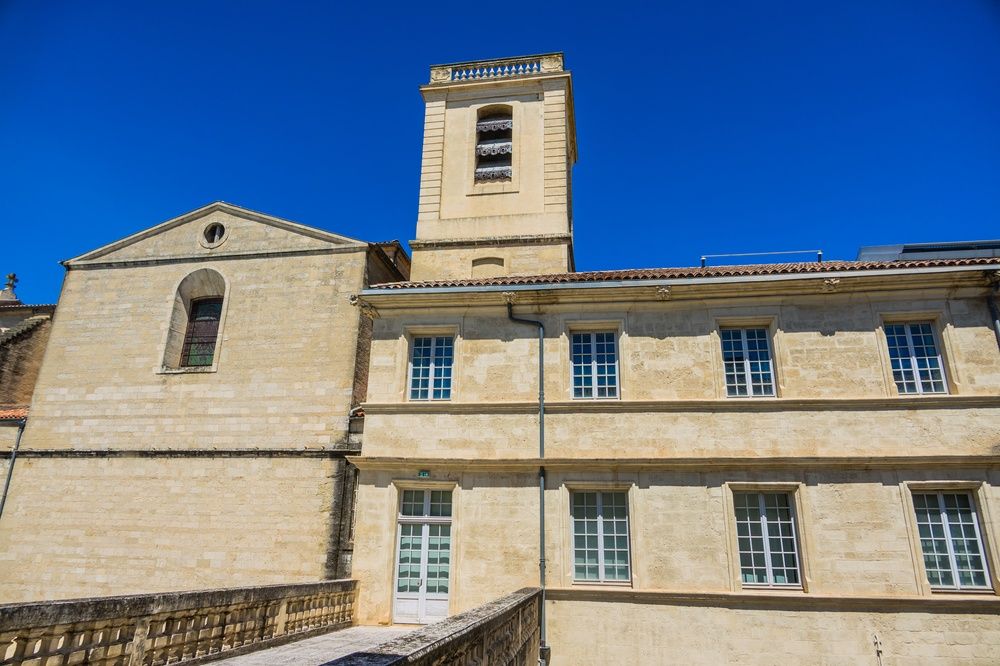
Nestled in the heart of the Fabre Museum, the Visitation Chapel is one of the most pleasant surprises of the visit. Built in the 17th century for the Visitation sisters, it was cleverly integrated into the museum tour during renovation work in the early 2000s. Its original religious architecture — vaulted nave, large windows, singular acoustics — has been preserved, and the space now hosts large-scale works that find a decidedly unexpected setting.
The Visitation Chapel is a place conducive to contemplation and immersion. Its particular atmosphere, between sacred and profane, creates a striking contrast with the museum's classical exhibition rooms. It's one of those spaces you don't expect to find in a fine arts museum and that leaves a lasting impression. Plan to linger there for a few moments.
5. The graphic arts cabinet
Less known than the great painting galleries, the graphic arts cabinet of the Fabre Museum nevertheless deserves special attention. It houses a remarkable collection of drawings, prints, engravings, and watercolors, often unknown to the general public because these works on paper, fragile and sensitive to light, cannot be permanently exhibited. The museum proceeds with regular rotations to present rarely visible pieces, thus offering the opportunity to discover artists in the intimacy of their creative process.
The graphic collection of the Fabre Museum covers several centuries and many European schools. Certain sheets by Italian or French masters of the Renaissance and 17th century are found alongside preparatory works by painters represented in the permanent galleries. A section often reserved for enlightened amateurs, but which reserves beautiful revelations for all those who take the time to venture there.
The Cabrières-Sabatier d'Espeyran mansion: the decorative arts department
A few steps from the main building of the Fabre Museum, the Cabrières-Sabatier d'Espeyran mansion (6 rue Montpelliéret, 34000 Montpellier, rated 4.2/5 on Google) houses the museum's decorative arts department. Built between 1873 and 1874 for the Cabrières family, this Belle Époque mansion was bequeathed to the museum in 1967 by Mrs. Frédéric Sabatier d'Espeyran, who had preserved it in its original state with remarkable care. It constitutes today one of the rare preserved period ensembles in Montpellier.
Upon entering its doors, the visitor penetrates into a 19th-century bourgeois residence that has remained practically intact. The reception rooms are filled with precious furniture, period hangings, European ceramics from the 16th to 18th century, earthenware, porcelain, and art objects carefully selected by their owners. The ground floor notably reveals an impressive collection of earthenware, while the upper floors recreate the atmosphere of private apartments. Each room constitutes a lesson in the history of taste and style of Montpellier elites.
The Cabrières-Sabatier d'Espeyran mansion is open Wednesdays, Saturdays, and Sundays from 11am to 6pm (and certain additional days during temporary exhibitions). Its entrance is included in the general Fabre Museum ticket. The visit to this place, often overshadowed by the painting collections of the main building, is nevertheless an experience in itself, which reveals an unknown and endearing facet of Montpellier heritage.
Temporary exhibitions at the Fabre Museum
In addition to its rich permanent collections, the Fabre Museum offers throughout the year a dynamic program of temporary exhibitions that contribute greatly to its national and international reputation. A dedicated room of nearly 1,000 m² allows hosting ambitious projects, sometimes including exceptional loans from major European institutions or private collections rarely accessible to the public.
The themes addressed are deliberately varied: artist monographs, dialogues between periods or styles, focus on specific techniques, collaborations with other museums or cultural institutions... These exhibitions regularly allow rediscovering permanent collections in a new light, by proposing unexpected connections between usually distant works. Among notable recent events, an important Pierre Soulages retrospective was organized in 2025, and an exhibition devoted to the Montpellier School of Fine Arts runs until May 2026.
Think about checking the exhibition calendar on the museum's official website (museefabre.fr) before your visit, so as not to miss an event likely to enrich your stay in Montpellier. And if you want to enjoy a complete cultural day in the "Gifted One," the Ryo audio-guided circuit for Montpellier will allow you to combine the museum visit with discovering the historic sites of downtown.
Download the audio-guided circuit to discover Montpellier on foot and independently
Before or after your visit to the Fabre Museum, extend the cultural adventure by letting yourself be guided through the most beautiful neighborhoods of Montpellier thanks to the Ryo audio-guided circuit. In 3.5 km and 1h30 of walking, you'll discover 19 emblematic places of the city — from the Place de la Comédie to the Saint-Pierre Cathedral, passing through the Peyrou promenade, the Arc de Triomphe and the Botanical Garden, the oldest botanical garden in France. All with historical commentary, unusual anecdotes, and completely autonomous navigation from your smartphone. The itinerary ideally starts facing the Arc de Triomphe, a few minutes walk from the Fabre Museum.
Hours and prices of the Fabre Museum
Opening hours
The Fabre Museum is open Tuesday to Sunday from 11am to 6pm (ticket office closes at 5:30pm, rooms evacuated at 5:45pm). It is closed every Monday, as well as on the following holidays: January 1, May 1, May 8, November 11, and December 25. The Cabrières-Sabatier d'Espeyran mansion opens on Wednesdays, Saturdays, and Sundays from 11am to 6pm.
Prices
Entry to the Fabre Museum is offered at full price of €9 for adults. A reduced rate of €6 applies to students, 18-25 year-olds, people with disabilities, and Métropole Pass holders. The audioguide is available for an additional €3. Children under 18 benefit from free admission, as do all visitors on the first Sunday of each month, for access to permanent collections. The admission ticket for permanent collections is valid for one year from its purchase date, with unlimited access on the day of use. Accepted payment types include cash, checks, credit cards, and ANCV paper vacation checks.
How to get to the Fabre Museum in Montpellier
The Fabre Museum benefits from an ideal central location, just five minutes walk from the Place de la Comédie, the downtown nerve center. From Saint-Roch station, it's accessible in about fifteen minutes on foot or by taking the tram. Here are the main transport options to get there:
By tram: lines 1 and 2 stop at Comédie station, five minutes walk from the museum. Line 1 also serves Corum station, even closer.
By bus: several TAM (Montpellier transport network) lines have stops near the Charles-de-Gaulle esplanade.
By car: Montpellier's city center is largely pedestrian. Park at Corum or Comédie parking, located a few minutes walk away. Park-and-ride lots on the periphery also allow reaching the center by tram.
By bike: Vélomagg' bike-sharing stations are scattered throughout the city center. The Charles-de-Gaulle esplanade has several nearby stations. If you want to discover the surroundings of Montpellier by bike, check out our guide to the most beautiful bike rides around Montpellier.
From the airport: take shuttle 120 to Place de l'Europe, then tram line 1 to Comédie stop.
Practical tips to prepare your visit well
Visiting the Fabre Museum requires good organization to enjoy it fully. Here are some tips from our experience to optimize your visit to this essential Montpellier museum.
Book your tickets in advance. During high season (spring, summer, school holidays) or during popular temporary exhibitions, queues can be long. Buying tickets online on the museum website avoids this inconvenience. Also think about checking if a temporary exhibition is running during your visit, as this can influence the price and visit duration.
Allow enough time. For a complete visit of permanent collections and a temporary exhibition, count between two and a half to four hours. If you want to include the Cabrières-Sabatier d'Espeyran mansion, add an additional hour. Visitors in a hurry can focus on the 19th-century galleries and the Soulages room for a tour of about one and a half hours.
Prepare your bag. Only small bags are allowed in the exhibition rooms. A free cloakroom is available at the entrance to store your bulky items. Photography without flash is generally allowed in permanent spaces, but check at the reception for temporary exhibitions.
Enjoy the museum bistro. The bistro is open Tuesday to Sunday from 10am to 7pm and offers quality cuisine indoors or on the terrace. A pleasant break between two sections of the visit, or at the end of your tour, before leaving to explore the rest of Montpellier.
Choose the first Sunday of the month. If your schedule allows, come on the first Sunday of each month: access to permanent collections is completely free. A good opportunity to extend your visit without worrying about budget, and then spend the afternoon letting yourself be guided through the streets of Montpellier with our audio-guided circuit.
What to do around the Fabre Museum? Our ideas to extend the day
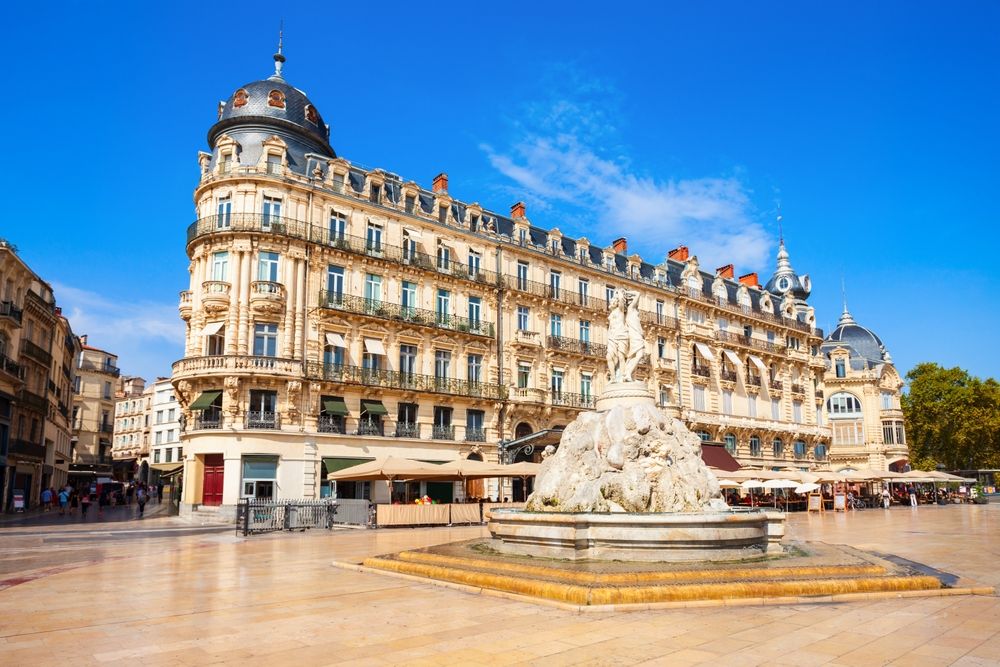
The Fabre Museum is ideally placed to constitute the starting point of a complete cultural and urban day in Montpellier. Five minutes walk away, the Place de la Comédie and its Opera animate the heart of the city. Going north, you quickly reach the Peyrou promenade and its water tower, with its terraced gardens offering panoramic views of the Hérault hinterland and the Cevennes. Going southeast, the streets of l'Écusson, Montpellier's medieval historic district, invite strolling between mansions and artisan shops.
For lovers of green spaces, the Botanical Garden, founded in 1593 and the oldest botanical garden in France, is located ten minutes walk from the museum. And if you want to discover other unusual or gourmet addresses to complete your stay, find our selections in our articles on the best activities in Montpellier and excursions to do in the surroundings.
For those who want to go further in exploring the region, weekend ideas around Montpellier are not lacking: Languedoc vineyards, medieval villages, Hérault gorges, or the beaches of Palavas-les-Flots just 15 minutes by car.
In conclusion, visiting the Fabre Museum in Montpellier is a cultural experience of rare richness, which reserves emotions for both neophytes and confirmed art lovers. Its collections, among the most important in France outside Paris, testify to centuries of European artistic history through works of exceptional quality. The depth of the permanent tour, the generosity of the space, the quality of the scenography, and the diversity of the offerings — from Flemish paintings to Soulages' outrenoir, through the decorative arts of the Cabrières-Sabatier d'Espeyran mansion — make the Fabre Museum a destination in itself when visiting Montpellier. Once your visit is over, let yourself be carried by the Ryo audio-guided circuit to discover the rest of the treasures of the "Gifted One" at your own pace, along the streets and squares that also tell the soul of an exceptional city.
FAQ — Fabre Museum in Montpellier
What are the opening hours of the Fabre Museum in Montpellier?
The Fabre Museum is open Tuesday to Sunday from 11am to 6pm. It is closed on Mondays, as well as on January 1, May 1, May 8, November 11, and December 25. The Cabrières-Sabatier d'Espeyran mansion (decorative arts department) is open Wednesdays, Saturdays, and Sundays from 11am to 6pm.
What is the admission price to the Fabre Museum?
The full price is €9 and the reduced rate is €6 (students, 18-25 years old, people with disabilities, Métropole Pass). The audioguide is available for an additional €3. Entry to permanent collections is free on the first Sunday of each month. Children under 18 enter free.
How much time should I plan to visit the Fabre Museum?
Plan between 1h30 and 2h30 for a visit to the permanent collections, and 3 to 4 hours if you want to include a temporary exhibition and the Cabrières-Sabatier d'Espeyran mansion. For an express tour focused on 19th-century masterpieces and the Soulages room, one hour may be enough.
How to access the Fabre Museum from downtown Montpellier?
The Fabre Museum is located on the Charles-de-Gaulle esplanade, five minutes walk from Place de la Comédie. It is accessible by tram (lines 1 and 2, Comédie or Corum stops) or by bus via the TAM network. By car, park at Corum or Comédie parking.
Is there an audioguide available at the Fabre Museum?
Yes, the Fabre Museum offers audioguides for rent for €3, available at the reception. They cover both permanent collections and temporary exhibitions. Group guided tours are also offered by reservation, as well as educational workshops for children and families.
Can you photograph at the Fabre Museum in Montpellier?
Photography without flash is generally allowed in permanent collection spaces, for personal use. Restrictions may apply in temporary exhibitions, particularly for works loaned by other institutions. Check with reception during your visit.
What is the Bruyas collection at the Fabre Museum?
The Bruyas collection is an exceptional ensemble of works assembled in the 19th century by Alfred Bruyas, a passionate Montpellier patron. It includes nearly a hundred major works by Courbet, Delacroix, Géricault, Ingres, Cabanel, and other artists of the romantic and realist period. It was thanks to his donation in 1868 that the Fabre Museum became one of the most important museum institutions in France.
Is the Fabre Museum suitable for families with children?
Yes, the Fabre Museum offers tours and educational workshops specially designed for children and families. Children under 18 enter free. Mediation materials (youth audioguides, room sheets) are available at reception to make the visit accessible and fun for the youngest. A visit to the Fabre Museum can thus constitute an excellent introduction to art history for the whole family.