
Créé par Emilie, le 20 juin 2026
Votre guide Ryo
What to do and discover in the Nice hinterland?
© Shutterstock
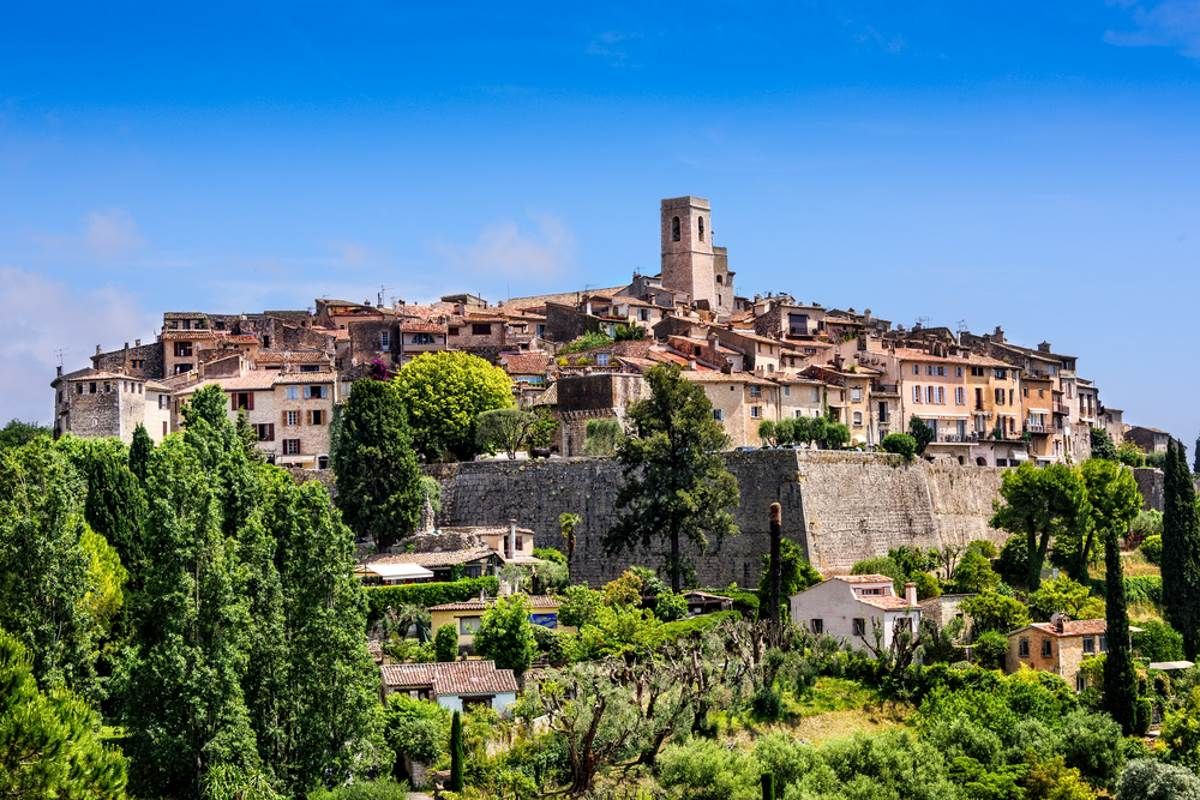
If you want to spend a stay outside the city of Nice, while staying nearby, the Nice hinterland is the place for you. Away from the hustle and bustle of the city, between mountain and sea, discover breathtaking landscapes and characterful villages built in medieval times.
The small steep and charming streets will certainly not leave you indifferent. Many artists have settled in the Nice hinterland: painters, sculptors, or ceramicists, following in the footsteps of great painters like Braque, Modigliani or Matisse who had already been inspired by the landscapes of the Nice hinterland in their time.
Grasse and its perfumes famous worldwide, the Mercantour National Park, the Pignes steam train, kilometers of marked trails, medieval cities... The French Riviera is not just beaches and sunshine, it has much more to offer. To discover it and help you prepare your itinerary with complete peace of mind, here is a small guide that will reveal the must-sees of the Nice hinterland.
What are the most beautiful villages of the Nice Hinterland?
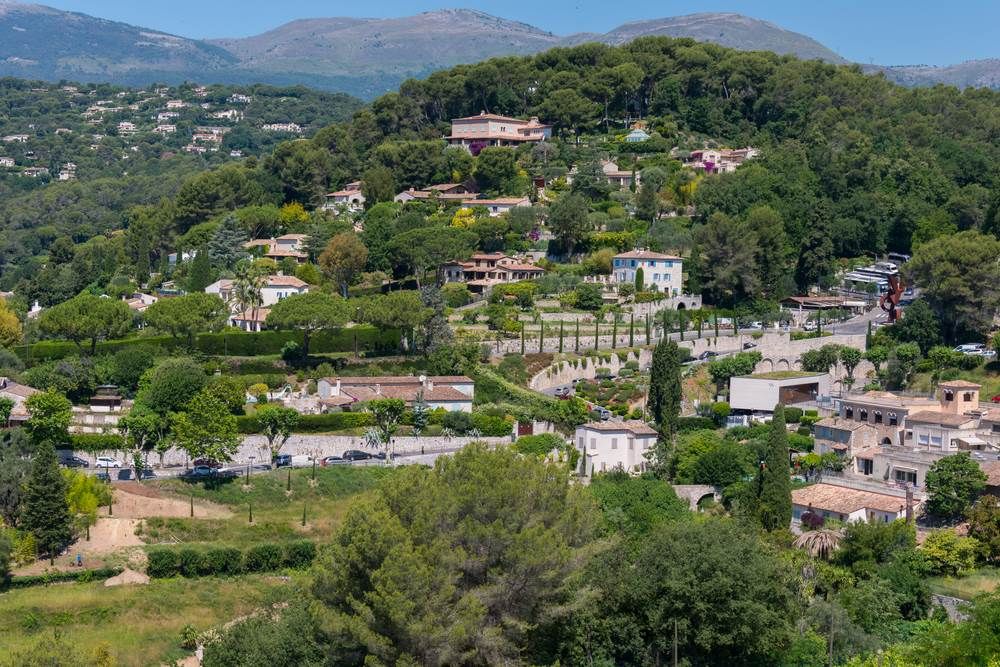
Beautiful villages are not lacking in the Nice hinterland, but you have to make a choice, so here is a selection of villages not to be missed if you are passing through this region:
1 – Vence
This city, fortified by ramparts, has a rich historical heritage. A Roman city, then bishopric, the ramparts appeared in the Middle Ages. It is still possible to admire the Porte du Signadour and the Levis portal from the 13th century. The cobbled streets, the vaulted passages that will provide you with welcome coolness in the hottest summer, the famous fountain on Place du Peyra, Place Godeau and its Gothic house, or the ash tree that would have been planted by King François 1st himself in 1538, are all points of interest not to be missed when you are in Vence.
Not to mention that the historic city of Vence was a real source of inspiration for many painters like Matisse, Chagall, Dubuffet, Carzou, or writers like D.H. Lawrence (Lady Chatterley's Lover)... Even today, many artists are present, don't hesitate to push the door of their galleries. Art exhibitions, literary events, theater plays and music concerts complete the village's artistic offering.
Every Friday morning, a market of artisans and creators displays their know-how on Place Clémenceau. But there is also a book market on Wednesday mornings, food on Friday mornings, organic on Saturday mornings...
Built in the 11th century, the cathedral is the smallest in France, however, its architecture and furniture leave no one indifferent: a 5th century Gallo-Roman sarcophagus, Carolingian sculpted plaques, very rare polychrome wooden statues, stalls, a baptistery decorated with a mosaic by Marc Chagall (1979) representing Moses saved from the waters... Are all reasons to visit it.
Built in the 17th century next to the 12th century watchtower, it was once the residence of the Counts of Provence and lords of Vence. It now houses thematic exhibitions.
At the request of Sister Jacques-Marie who had cared for him between 1942 and 1943, Matisse undertook to renovate this chapel in its entirety: the stained glass windows, the architecture, and the wall decor. He began in 1946 and finished in 1951.
Its polychrome tile dome is particularly original, you will also find temporary exhibitions there.
This Romanesque chapel, built towards the end of the 13th century, is one of the oldest rural chapels in the region. Its magnificent frescoes date from the 15th century.
Also to see in Vence: the Neolithic burial site of Baou-des-Blancs and important prehistoric and ancient remains.
2 – Grasse
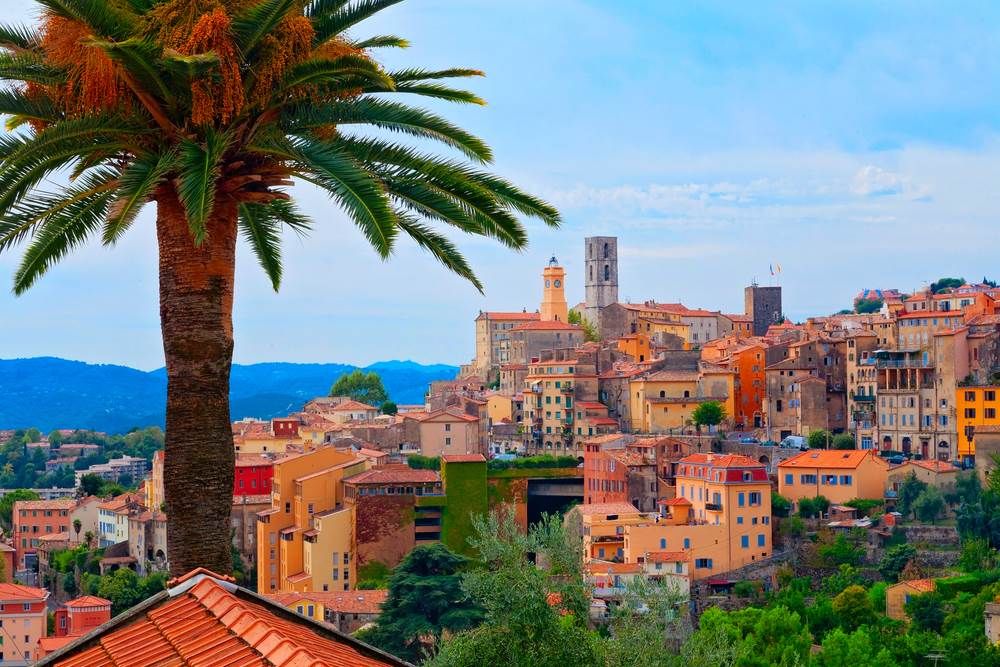
Since the 17th century, the city of Grasse has been renowned for its perfumes, it has even become the world capital of perfumes. Fragonard, Galimard, Molinard are the 3 best known houses in Grasse.
Good tip: the guided tour of these perfumeries is free! Discover the different stages of perfume making.
A large collection of Provençal clothing as well as typical jewelry from the region in a beautiful private mansion that was once the former residence of the Marquise de Cabris.
This museum presents a very large collection devoted to daily life in Provence since Prehistory, but also to Fine Arts and decorative arts from the 17th century to the first half of the 20th century.
Engravings and 30 ship models are exhibited in this museum, Admiral de Grasse victor of the naval battle of Chesapeake on September 5, 1781 put an end to the American War of Independence.
This unique museum in the world takes you to discover the history of perfume and the different aspects of the profession: raw materials, manufacturing, industry, innovation, trade, design... Used by industrialists and luxury perfume houses.
A superb 13th century cathedral in Alpine Romanesque style, the chapel of the Holy Sacrament dates from 1738, the pillars inside still bear traces of the fire caused when revolutionaries had transformed the cathedral into a grain loft. The paintings are true masterpieces.
- The chapel of Saint-Thomas in Provençal baroque style, the chapel of the penitents Saint-Michel 18th/19th century, the rural chapels.
- The jasmine festival in August and the rose exhibition in May are also worth noting in your agenda.
3 – Saint-Paul-de-Vence
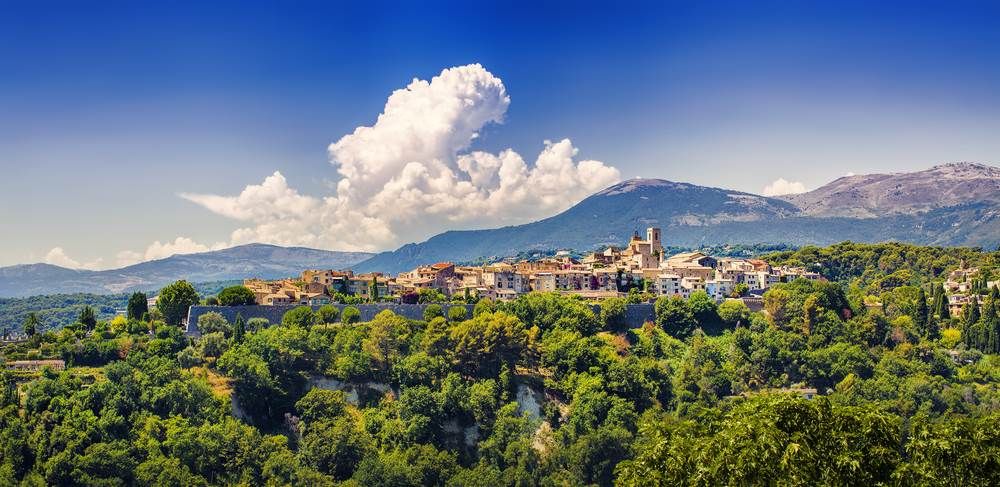
This village stands on 2 rocky spurs surrounded by fortifications built at the request of King François 1st. Many artists have been touched by the luminosity, history, architecture and landscapes of this village. Go back in time by strolling through the narrow streets of Saint-Paul-de-Vence from the Royal Gate to the South Gate making a small detour through Rue Grande, where you can admire the stone facades from the 16th and 18th centuries. Flowering gardens, small squares, period fountains, elegant porches, not to mention the art craftsmen workshops, galleries, museums and Provençal shops, there is so much to discover in this village where, from the ramparts, you will have an unparalleled view of the surrounding hills.
Built between the 14th and 18th centuries, this church multiplies architectural styles. First Romanesque, the Saint-Clément chapel built in 1680 is baroque style, it contains relics from the Roman catacombs, finally, Counter-Reformation art was added with rich decoration of stucco and fresco paintings.
Paintings, sculptures, drawings and ceramics are exhibited.
Explore local history through wax figures made by the Grévin museum and photos of celebrities who visited the village.
4 – Tourrettes-sur-Loup
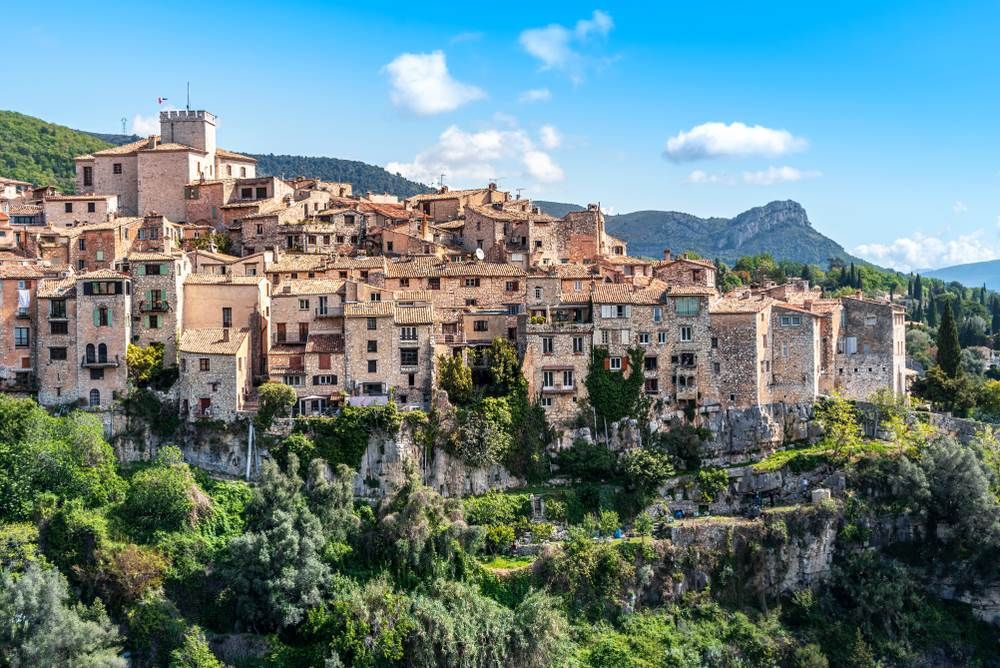
This medieval village, at the top of a rocky spur, is nestled in the middle of lush vegetation composed of aloe and prickly pear cacti that grow naturally. But it is also known for the production of a very particular flower: the violet, it is also nicknamed the city of violets since the cultivation of this flower became one of the main activities of the commune last century. Strolling through the old golden stone streets admiring the facades, the vaulted passages, discovering the artists' galleries and craftsmen's shops is really very pleasant.
- A flower parade and flower battles are organized every year in March (violet festival).
- Saint-Grégoire church: Built in the 12th century, it is composed of a Romano-Renaissance style entrance, the remarkable furniture includes paintings, sculptures and altars.
- Local products festival.
5 – Gourdon
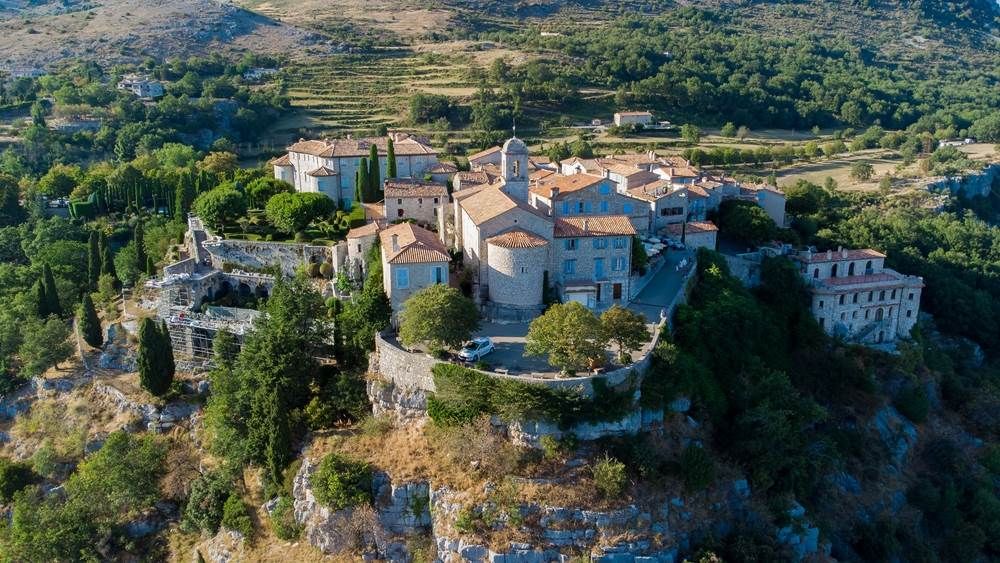
To reach the village of Gourdon, you have to pass through the Gorges du Loup, the Saut du Loup waterfall is worth a small stop before arriving at the village. You will also appreciate the surrounding vegetation: the cultivation of orange trees, olive trees and perfume plants in the hamlet of Loup before arriving at Gourdon. Because this village perched on the cliff face at a height of 700 m is a real eagle's nest. It's enough to make you dizzy, but the view is breathtaking. The most athletic can take the Paradis path whose elevation gain of more than 500 meters to reach Gourdon is not within reach of Sunday athletes! There, you will discover the medieval white stone houses, a panoramic view of Nice, the feudal castle...
Built in the 12th century by the Counts of Provence to better control their borders, they built a real fortress. Destroyed during the wars of religion, it was rebuilt in the 16th century under Henri IV with its current asymmetrical trapezoid architecture. Round and square towers, loopholes and Renaissance entrance door, gargoyles, well, vaulted rooms, and 14th century fireplace are still present. Also to see: the honor terrace and its century-old lime trees, its garden designed by Le Nôtre, and temporary exhibitions.
- The Saint Pons chapel
- The remains of a Roman camp with double enclosure and oppidum.
- The prehistoric caves of Garagaï, Grasse road.
- A fortified rock shelter in the fortress cliff.
6 – Seillans
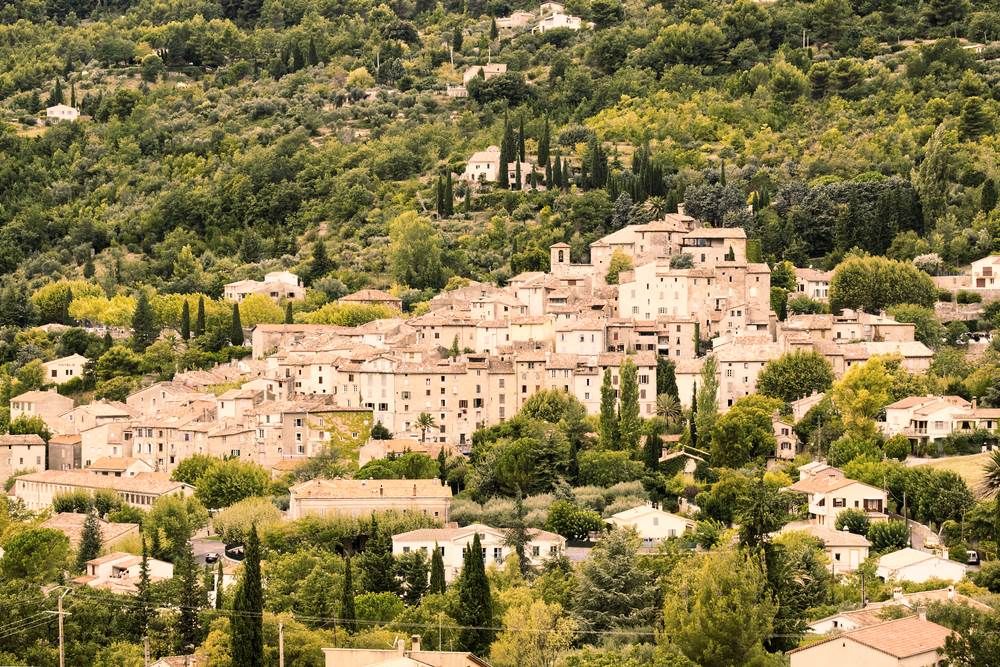
This medieval village has a rich historical and architectural heritage with a feudal castle, a 12th century church, cobbled streets, as well as numerous fountains on squares shaded by century-old plane trees.
- Place du Thouron and its magnificent fountain.
- The Rayol viaduct built by the Eiffel factories.
- The George washhouse, built in 1864 in cut stone is the only vestige of the village of Boves.
Where to walk around Nice?
1 – Mercantour National Park
The park extends over nearly 1801 km2 thus connecting 28 communes. Its goal is to preserve rich biodiversity with more than 2,000 plant species and 78 mammal species including wolves and 199 bird species. The park aims to protect and enhance natural environments, to raise tourist awareness of site protection so that human and environmental activities are not incompatible. The park must preserve this beauty that characterizes it and which you will be delighted to enjoy during your stay.
2 – Gorges du Daluis
How about a little tour in the French Colorado? The Gorges du Daluis have this specific red color of pelite, a rock that was formed in the Permian period (between -299 and -251 million years BC) over nearly 1 km.
3 – Pignes Train
Go back in time with the Pignes train by boarding a small train whose steam locomotive dates from 1923. Many activities are offered in the high season: chestnut festival, journey around the Puget-Théniers olive, musical journey, steam training course...
4 – Saint-Cézaire Caves
Plunge 40 meters underground on a 200 m developed path at a temperature of 15°C: immense stalactites, star-shaped concretions, luminous jellyfish with sound show background on musical stalactites. A tree climbing course as well as a 5 ha wooded park are also present on the site, the restaurant serves, at lunch only, local products.
Where to sleep and eat in the Nice hinterland?
The Nice hinterland includes a wide choice of accommodation between hotels and bed and breakfasts, here are some of them:
Vence
This hotel restaurant located in the village of Vence has an outdoor pool and air-conditioned rooms, standard or comfort double room from 109 €.
Rental of double room or equipped family studio, pool, terrace, garden. From 90 € for the room and 112 € for the studio.
In the village of Vence, this hotel offers double rooms, quadruple rooms and studios, an outdoor pool and parking with charging station for electric vehicles. From 113 € per night.
Grasse
This 16th century house has, in addition to incredible charm, double rooms with children's bed loan, a bar and snack bar, a breathtaking view of the valley or sea from the terrace and rooms. All the charm of the old with modern comfort from 103 € per night.
A fully equipped studio for 4 people in the center of Grasse with private parking, sea view, from 139 € per night for 2 people.
Independent studios equipped for 2 people, air-conditioned, with balcony, pool, garden, and sea or mountain view. From 91 € per night.
Saint-Paul-de-Vence
This homestay accommodation offers double rooms, studios equipped for 2 and 4 people with terrace and outdoor pool, quiet garden, view of the village. From 103 € for the double room.
This hotel offers double rooms and suites with double bed and sofa bed of 40 m2, a restaurant, a bar, an outdoor pool, a wellness center with hammam, sauna and hot tub. From 136 € per night for a double room.
Tourrettes-sur-Loup
25 m2 studio in the middle of an olive grove in peace, near the village, fully equipped for 2 people, with bicycle loan, from 85 € per night.
In the heart of the village, this inn with restaurant offers double rooms with extra bed for additional charge, outdoor pool, bar, private parking and a beautiful view. From 148 € per night.
These 25 m2 caravans offer family rooms for 4 people with equipped kitchen, a lounge area, 1 bathroom and a well-exposed terrace. This guest house has a garden and playground for children, a hot tub and a river nearby. From 134 € per night.
Gourdon
4 large gites with a capacity of 4 to 10 people, sea view, garden and shared pool.
Seillans
Hôtel des 2 rocs
A typically Provençal bastide with refined comfort with restaurant, terrace and parking in the heart of the village. Double room from 75 € to 195 € per night.
In conclusion
Discover the heights of the French Riviera, its medieval villages, the Provençal way of life, traditions and local products of the Nice hinterland. Escapades that will not fail to dazzle you between the panoramas and the rich and preserved heritage. Delights for the eyes and taste buds guaranteed!