
Créé par Romane, le 20 juin 2026
Votre guide Ryo
What are the most beautiful villages to discover in the Alpes-Maritimes?
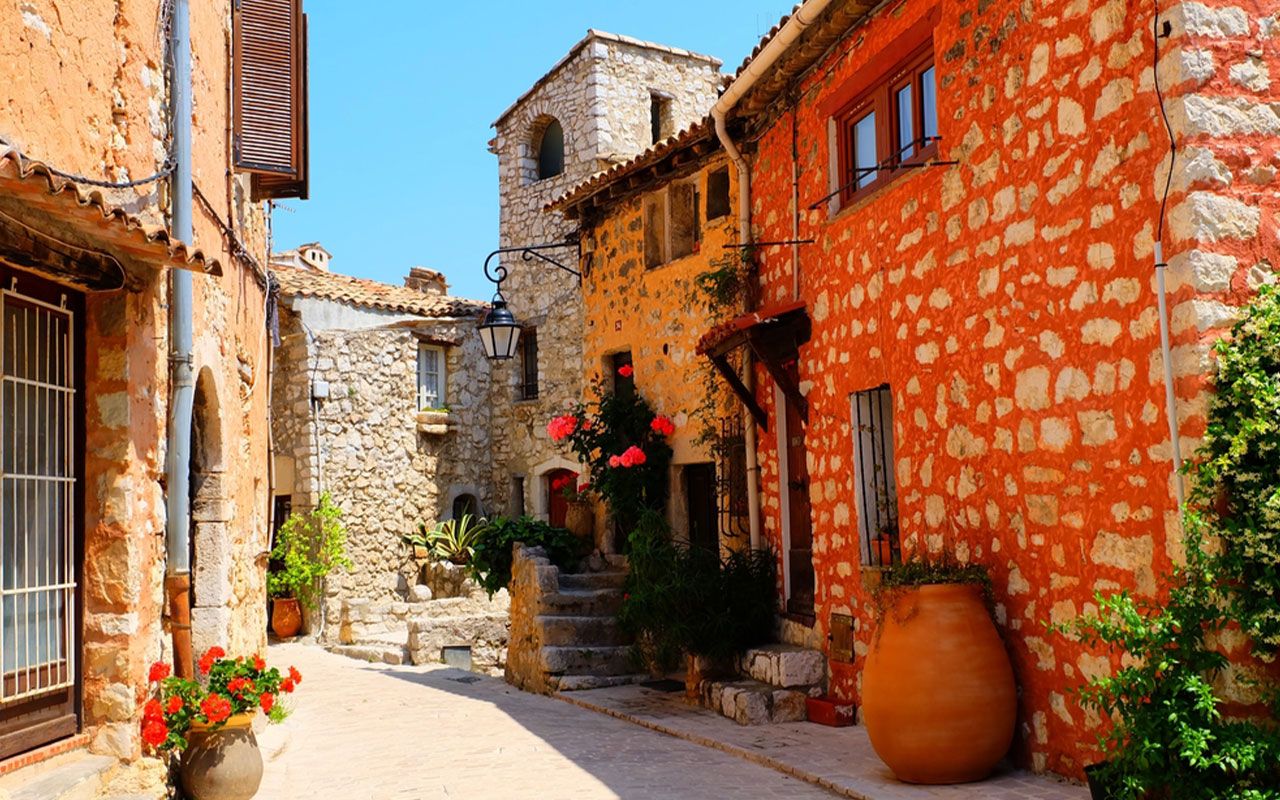
© Shutterstock

The Alpes-Maritimes, this exceptional department between sea and mountains, contains a collection of perched villages among the most spectacular in France. Between Provençal traditions and medieval heritage, these architectural gems offer breathtaking panoramas over the Côte d'Azur and the Nice hinterland. Discover our selection of the most beautiful villages to discover in the Alpes-Maritimes, true jewels that invite strolling and wonder.
Tourrettes-sur-Loup, the violet city
Dominated by its feudal castle, Tourrettes-sur-Loup stands on a cliff overlooking the Loup valley. This medieval village is famous for its violet cultivation, celebrated every year in March during a colorful traditional festival.
Explore the winding alleys lined with stone houses with colorful shutters and discover the many art workshops that have taken up residence in this inspiring setting. The panoramic view from the castle embraces the entire valley and surrounding mountains.
Gourdon, the eagle's nest of the Alpes-Maritimes
Nicknamed "the eagle's nest," Gourdon (06620 Gourdon) stands majestically at 760 meters altitude on a rocky spur overlooking the Loup valley. This medieval village, also classified among the Most Beautiful Villages of France, offers a panoramic view over more than 80 kilometers of Mediterranean coast.
Admire the stone houses with pink tile roofs that nestle around the 11th-century fortress. Craft lovers will appreciate the art workshops and traditional perfumery that perpetuates the secrets of floral essence production.

Cabris, the terrace of the Côte d'Azur
Perched on a rocky spur, Cabris offers a stunning view over the Mediterranean Sea and surrounding mountains. This typical small Provençal village seduces with its flowered alleys and peaceful atmosphere.
The 16th-century Sainte-Marie-Madeleine church and the 18th-century Cabris castle testify to the rich architectural heritage. The numerous hiking trails that start from the village allow you to discover the wild beauty of the Provençal hinterland.
Le Haut-de-Cagnes, the painters' refuge
Perched on a hill overlooking Cagnes-sur-Mer, le Haut-de-Cagnes has preserved its medieval charm that has attracted many artists over the centuries. Auguste Renoir notably spent the last years of his life in this inspiring village.
Visit the Renoir museum installed in the villa Les Collettes and admire the works created by the master in this unique Mediterranean light. The Grimaldi castle, with its imposing Renaissance facade, houses a local history museum and offers a remarkable view over the Baie des Anges.
Saint-Paul-de-Vence, the artists' village
Saint-Paul-de-Vence remains undoubtedly one of the most famous villages in the Alpes-Maritimes. This fortified medieval city has attracted many artists and celebrities, from Picasso to Yves Montand, earning it international renown.
Walk along the perfectly preserved ramparts and stroll through the cobbled alleys lined with art galleries, artists' workshops and luxury boutiques. The Maeght Foundation, one of Europe's most important contemporary art museums, is a must-see for modern art lovers.
La Roquette-sur-Var, Provençal nativity scene appearance
La Roquette-sur-Var reveals the appearance of a Provençal nativity scene with its stone houses with colorful shutters terraced on a hill overlooking the Var valley. This small typically Provençal village offers preserved authenticity.
The 17th-century Saint-Pierre church and winding alleys invite contemplative strolling. Hiking enthusiasts will appreciate the numerous trails that allow exploration of the hinterland in a preserved natural setting.
Peillon, the eagle's nest village
Perched on a rocky spur at 376 meters altitude, Peillon constitutes a true eagle's nest in the Paillons valley. Only 20 kilometers from Nice, this preserved medieval village offers total change of scenery with its narrow alleys and perfectly preserved stone houses.
Visit the Sainte-Marie church with remarkable frescoes and contemplate the exceptional panorama from the village terraces. Peillon's authenticity makes it a privileged destination to discover the soul of the Nice hinterland away from tourist agitation.
Coaraze, the village of the sun
At 650 meters altitude, Coaraze (6 Place du Portal, 06390 Coaraze) fully deserves its nickname as "village of the sun" thanks to its exceptional sunshine. Classified among the Most Beautiful Villages of France, this small Provençal village nestled in the mountains reveals authentic charm.
Discover the contemporary artworks scattered throughout the village, created by renowned artists like Jean Cocteau and Pablo Picasso. The 17th-century Saint-Jean-Baptiste church and colorful houses with painted shutters create a unique atmosphere.
Èze-Village, the pearl of the Côte d'Azur
Perched on a rocky spur at 427 meters altitude, Èze-Village (Place du Général de Gaulle, 06360 Èze) constitutes one of the most spectacular villages in the Alpes-Maritimes. This medieval village, classified among the region's most visited sites, offers a breathtaking panoramic view over the Mediterranean Sea, from Théoule-sur-Mer to Italy.
Stroll through the narrow and steep alleys paved with stones, lined with art shops and luxurious galleries. Don't miss the famous Exotic Garden that crowns the village, a true green setting suspended above the Grande Bleue. Perfume lovers can also visit the local perfumery that perpetuates Grasse traditions.
Sainte-Agnès, the highest coastal village in Europe
At 800 meters altitude, Sainte-Agnès (06500 Sainte-Agnès) holds the prestigious title of highest coastal village in Europe. Classified among the Most Beautiful Villages of France, this medieval village nicknamed the "balcony of the Côte d'Azur" reveals an exceptional panorama over Menton and Italy.
Explore the cobbled alleys lined with stone houses with colorful shutters, visit the 11th-century Romanesque church and discover the remains of the fortress. The Maginot Fort, built between 1932 and 1938, testifies to the region's military history.
Gorbio, the village of olive trees
Nestled in a valley surrounded by century-old olive trees, Gorbio perpetuates the Provençal art of living in a preserved natural setting. This small authentic village has preserved its old-world charm away from tourist crowds.
The 12th-century Saint-Barthélemy church and the 15th-century Gorbio castle testify to the rich past of this medieval village. Hiking trails allow discovery of the olive tree landscapes and surrounding garrigue.
Lucéram, the village with 450 nativity scenes
Lucéram transforms every winter into a true giant nativity scene with more than 450 nativity scenes scattered throughout the medieval village. From December 1st to January 5th, this nativity scene circuit attracts thousands of visitors who come to admire these representations of the Nativity in an authentic setting.
Year-round, the village reveals its treasures: the 13th-century Sainte-Marguerite church with remarkable altarpieces, the 14th-century Clock Tower and cobbled alleys lined with stone houses. The Nativity Scene Museum perpetuates this unique Provençal tradition.
Saint-Martin-Vésubie, the little Swiss of Nice
Located in the heart of the Mercantour National Park, Saint-Martin-Vésubie deserves its nickname as "little Swiss of Nice" thanks to its exceptional mountain setting. This village constitutes a privileged gateway to the natural wonders of the Mercantour.
The 17th-century Saint-Martin church and the 15th-century Château de la Palud punctuate the discovery of this alpine village. Nature and hiking enthusiasts find here an ideal starting point to explore the glacial valleys and surrounding peaks.
Saorge, the natural amphitheater
Perched in an amphitheater on a rocky spur, Saorge majestically dominates the Roya valley. This medieval village classified among the Most Beautiful Villages of France reveals remarkably preserved architecture.
The 17th-century Saint-Sauveur church and the Saorge monastery constitute the heritage jewels of this border village. The stepped alleys and terraced houses create an architectural ensemble of striking harmony.
Biot-Village, the birthplace of art glassmaking
Biot-Village has forged an international reputation thanks to its art glassmaking workshops. This medieval village nestled in a green setting perpetuates artisanal traditions with the famous vases and blown glass objects of Biot.
Discover the manufacturing secrets in the master glassmakers' workshops and visit the Fernand Léger National Museum which houses an important collection of works by this major 20th-century artist. The cobbled alleys and colorful houses complete the charm of this artistic destination.
In conclusion, the most beautiful villages to discover in the Alpes-Maritimes offer remarkable diversity between perched villages, medieval villages and artists' towns. Each village reveals its unique character, preserved traditions and exceptional panoramas over the Côte d'Azur. Whether you are a lover of history, art, nature or simply seeking authenticity, these gems of the Nice hinterland will seduce you. To optimize your discovery of these architectural jewels, don't hesitate to let yourself be guided by Ryo itineraries which will enrich your visit experience.
What is the most beautiful perched village in the Alpes-Maritimes?
Èze-Village is often considered the most spectacular of the perched villages in the Alpes-Maritimes, with its position at 427 meters altitude and its panoramic view over the Mediterranean. Sainte-Agnès, the highest coastal village in Europe at 800 meters, and Gourdon, nicknamed the "eagle's nest," also compete for this prestigious title.
How many villages in the Alpes-Maritimes are classified as "Most Beautiful Villages of France"?
Four villages in the Alpes-Maritimes benefit from the "Most Beautiful Villages of France" label: Coaraze, Gourdon, Sainte-Agnès and Saorge. This distinction rewards their exceptional architectural heritage and preserved authenticity.
What is the best time to visit the villages of the Alpes-Maritimes?
Spring (April-May) and autumn (September-October) offer ideal conditions to discover the villages of the Alpes-Maritimes. Temperatures are pleasant, luminosity exceptional and tourist influx more moderate. Winter allows discovering Lucéram and its famous nativity scene circuit.
How to access the perched villages of the Alpes-Maritimes?
Most perched villages are accessible by car via winding mountain roads. From Nice, allow between 30 minutes and 1 hour depending on destination. Some villages like Èze have an SNCF station below. Departmental public transport also serves several of these destinations.