
Créé par Romane, le 20 juin 2026
Votre guide Ryo
Christmas Traditions Around the World: 11 Magical Customs
© Shutterstock
Christmas is a universal celebration, but each country celebrates this magical period in its own way. From roller skating in Venezuela to British Christmas crackers, from Japanese KFC to Iceland's thirteen trolls, Christmas traditions around the world reveal fascinating cultural diversity. Embark on a festive journey to the four corners of the planet and discover how different cultures reinvent the magic of Christmas with their unique and sometimes surprising customs.
1. United Kingdom: crackers, pudding and secret Santa
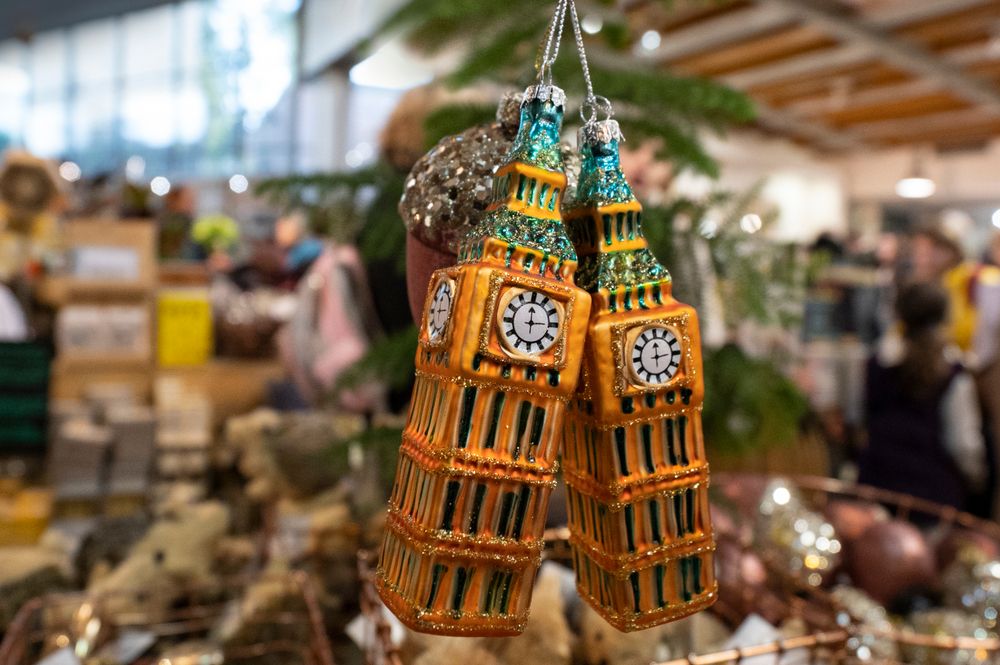
Our British neighbors have transformed Christmas into a true celebration of originality. Throughout December, families exchange Christmas crackers, these shiny candies shaped like party favors that make a little "pop" when you pull them. Tradition dictates that they be broken during meals to discover the little surprises they contain: a colored paper crown, a joke to tell and a small gift.
Speaking of meals, the undisputed star of British festivities remains the Christmas pudding. This dense and rich cake is prepared weeks in advance and contains all sorts of ingredients with sometimes surprising associations: dried fruits, spices, brandy and even a silver coin for good luck. Another very popular tradition: Secret Santa. This famous draw among friends, colleagues or family, where everyone becomes the secret Santa of a randomly drawn person, is taken very seriously across the Channel.
Download the audio-guided circuit to discover London on foot and independently
If you wish to discover the British capital and its authentic Christmas traditions, let yourself be guided by the London visit itinerary. This 8km audio-guided route takes you through the city's emblematic neighborhoods, from Buckingham Palace to Tower Bridge, passing by traditional Christmas markets. With 20 commented points of interest, you'll explore the places that make this royal city's heart beat, particularly magical during the holiday season
2. Venezuela: rollers and baby Jesus
In Caracas, the Venezuelan capital, Christmas morning mass looks like any other mass... with one exception: you have to put on roller skates to get there! Las patinatas count among the most fun Christmas traditions around the world. From December 16 to 24, the city streets are closed to traffic from dawn to allow residents to roller skate to the Misa de Aguinaldo, the dawn mass.
This tradition dates back to the 1950s, when families gathered after mass and children received their gifts, including roller skates. Why not kill two birds with one stone? A legend even tells that children tie a string to their toe before going to bed, letting the other end hang out the window, so that skaters can pull on it as they pass and wake them up. In Venezuela, also know that the children's star is not the bearded man dressed in red, but baby Jesus himself who brings the gifts.
3. Greece: children's songs and feast of the dead
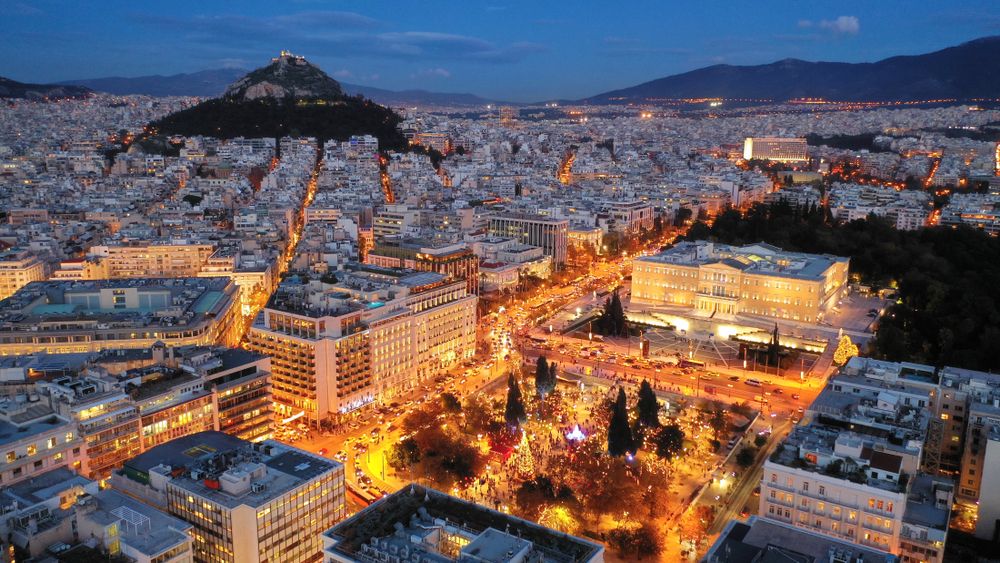
On the morning of December 24, Greek children go from house to house singing the Calanda, traditional songs that tell the story of the Nativity. In exchange for their melodies, they receive typically Greek sweets: kourabiedes (almond cookies sprinkled with powdered sugar) and melomakarona (honey and nut cookies). In the evening, families go together to midnight mass and taste Christopsomo, another traditional walnut cake decorated with a cross.
December 25 takes a more solemn turn, as the deceased are honored. Greeks go to the cemetery to pay their respects at the graves of their departed loved ones. It's only on January 1st, Saint Basil's Day, that children finally open their gifts, brought not by Santa Claus but by Saint Basil, represented as a learned beggar revered in Orthodox tradition.
4. Colombia: cities on fire
In Colombia, Christmas rhymes with much more than simple light decorations. The country celebrates one of the most beautiful Christmas traditions around the world: the day of little candles (Día de las Velitas). December 8 marks the official beginning of the year-end festivities, and on this day, all inhabitants place candles and lanterns in front of their houses, on balconies, in gardens and even on sidewalks.
This tradition honors the Virgin Mary and the Immaculate Conception, but also gives Colombian cities an incomparable fairytale charm. Over the years, the custom has amplified: Colombians now light thousands of candles in parks, under porches and along streets. When you walk through these glowing streets, traditional music accompanies your steps, making this stroll through what looks like a carpet of earthly stars even more intoxicating.
5. Italy: a witch as the star
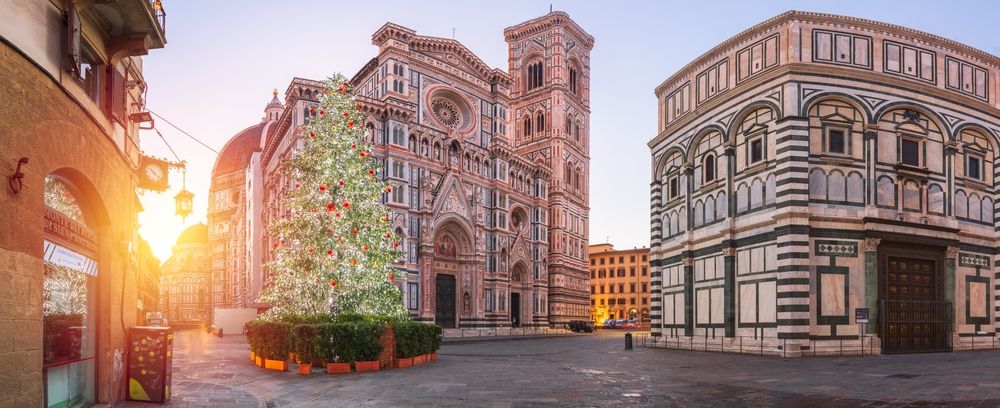
Italy, a very practicing country, doesn't skimp on the tradition of the Christmas tree and the Christian nativity scene. Naples is actually considered the birthplace of this tradition and you can admire the world's most beautiful nativity scenes there. However, in the south of the country, there's no Santa Claus or baby Jesus to bring gifts to children. This mission falls to a very particular character: the Befana.
On January 6, Epiphany day, this old witch goes from chimney to chimney on her flying broom to distribute gifts to good children and coal to the most turbulent ones. Dressed in rags and covered in soot, the Befana has become an emblematic figure of Italian tradition. According to legend, she refused to accompany the Wise Men to Bethlehem and has since wandered the rooftops searching for the baby Jesus, leaving presents for the children she encounters. While the delights of Italian gastronomy need no introduction, their traditional Christmas dessert, Panettone, is also an integral part of the festivities.
To discover the magical Christmas atmosphere in Italy, don't hesitate to visit Rome during the holidays, where traditions blend with the millenary history of the Eternal City.
6. Mexico: radishes and piñatas
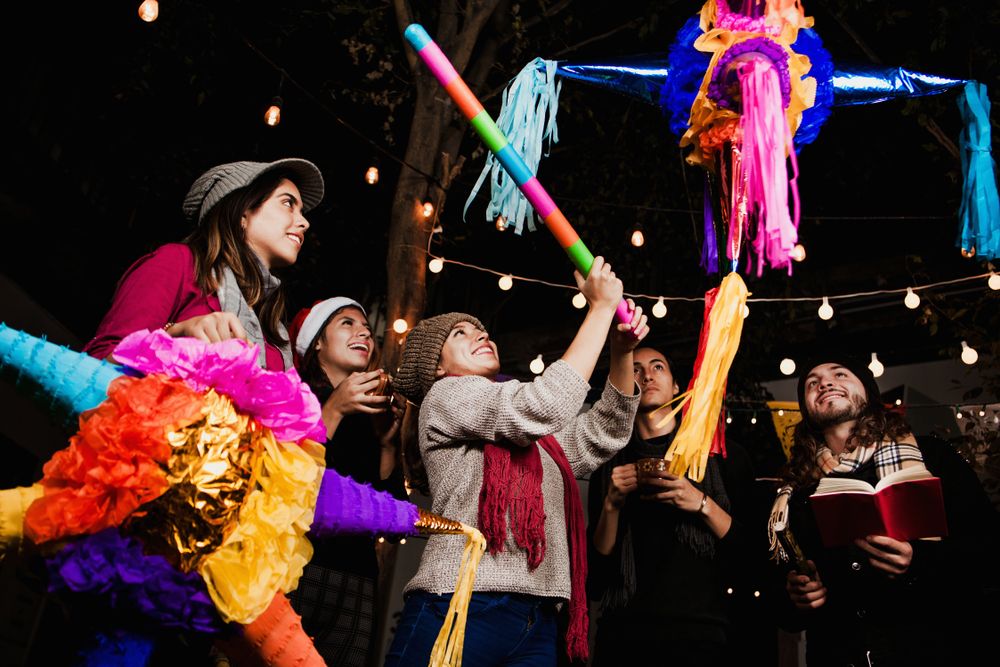
Here are two of the most original Christmas traditions around the world! In Mexico, Christmas celebrations begin on December 16 with Las Posadas, a reenactment of Mary and Joseph's search for shelter. Residents frolic from home to home, searching for a place to "give birth" to their Jesus. They are sometimes invited into houses to break a piñata filled with nuts, oranges and candy canes.
But the most surprising tradition remains the radish sculpture contest (Noche de Rábanos) held on December 23 in Oaxaca. Artisans transform these vegetables into true ephemeral works of art representing Nativity scenes, historical monuments or traditional characters. These sculptures end up as decorations in homes. For Mexican children, however, they must wait until January 6 and the arrival of the Wise Men to open their gifts, while enjoying the traditional Rosca de Reyes, a crown-shaped brioche.
7. Germany: two opposite friends
Throughout December, Advent wreaths illuminate German homes, with their four candles lit progressively each Sunday. On December 6, as in many countries on our list of Christmas traditions around the world, good children receive their gifts from Saint Nicholas (Sankt Nikolaus), who goes from house to house riding his donkey.
Just like his counterpart Santa Claus, he meets children and distributes candy. But beware of naughty children! Saint Nicholas is accompanied by his unsettling sidekick: Knecht Ruprecht or père Fouettard (Krampus in some regions). This character, a monk dressed in dark clothes with a demonic face and armed with a stick, is responsible for reprimanding bad children. This duality between benevolence and threat is an integral part of Germanic folklore and aims to encourage good behavior in children.
The famous German Christmas markets (Weihnachtsmärkte) are also unmissable, notably the one in Munich, which attracts millions of visitors each year with its stalls of mulled wine, gingerbread and traditional crafts.
8. Russia: grandfather Frost and grandmother Babushka
In Russia, Christmas is celebrated on January 6 according to the Orthodox calendar (Julian calendar). However, Russian children receive their gifts on December 31 during New Year's Eve, thus distributing festivities over a longer period. The characters who bring presents are none other than Ded Moroz (Grandfather Frost or Father Frost) and Babushka (grandmother).
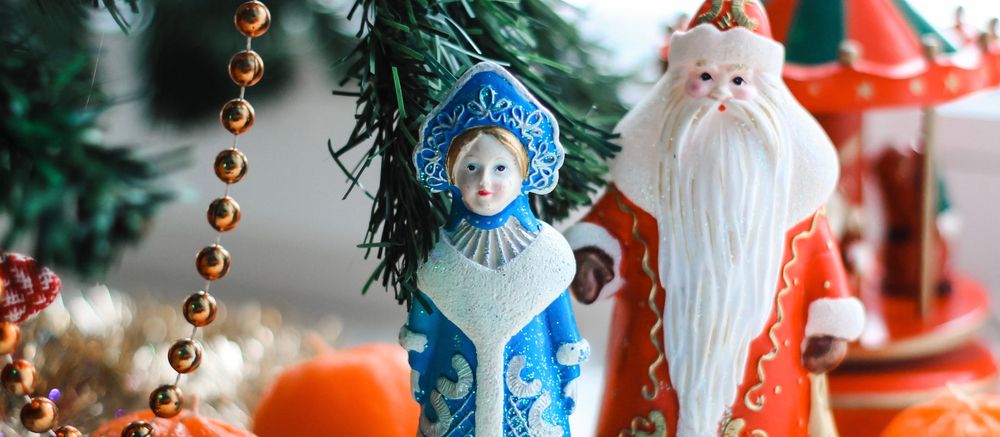
Ded Moroz, cousin of the flying reindeer sleigh driver, wears a long blue or silver coat and carries a magic staff. He is accompanied by his granddaughter Snegurochka (the Snow Maiden), who helps him distribute gifts. As for Babushka, according to legend, she refused to follow the Wise Men and has since been searching for the baby Jesus, leaving gifts for the children she encounters. Custom therefore dictates that the New Year be spent with family around a hearty meal, while January 6 is devoted to religious celebrations.
9. Wales: the mysterious Mari Lwyd
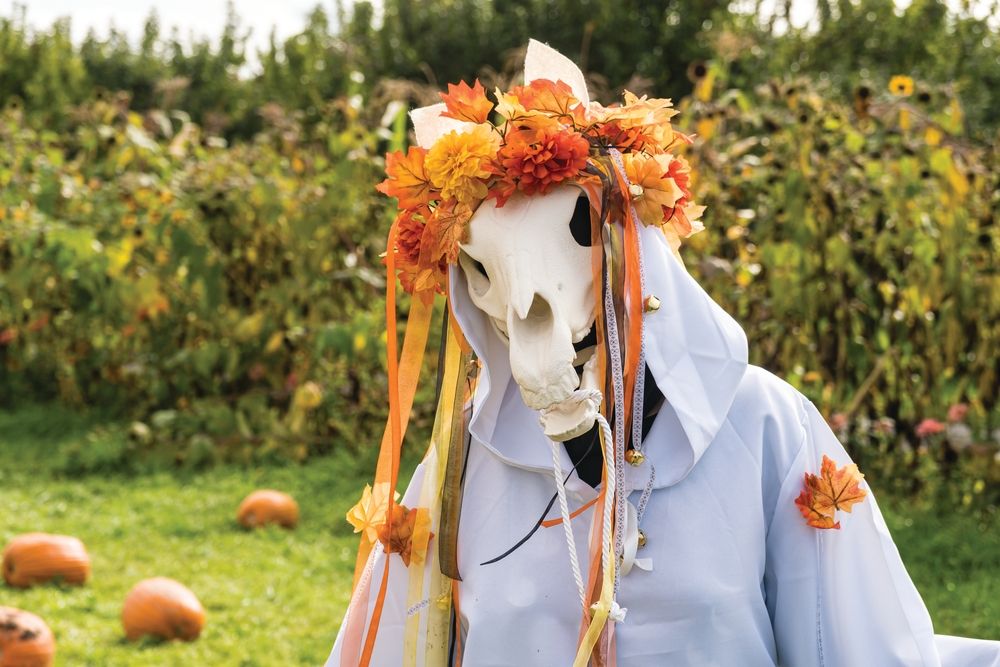
Wales has one of Europe's most fascinating and mysterious Christmas traditions: the Mari Lwyd, which means "grey mare." Between Christmas and Twelfth Night (Epiphany), a group of singers travels through Welsh villages carrying a horse skull mounted on a long stick. The skull is decorated with colored ribbons, bells, rosettes and fitted with fake eyes made from bottle glass. The lower jaw is articulated, allowing the person hidden under the white sheet to make it snap menacingly.
This spectral creature stops in front of house and pub doors, and a true poetic duel (pwnco) then ensues between the group accompanying the Mari Lwyd and the occupants of the dwelling. Both parties exchange rhyming verses, often humorous or slightly mocking, until one side runs out of inspiration. If the Mari Lwyd bearers win, they are invited in and the ghost-horse begins to prance around the house neighing, snapping its jaws and chasing guests, particularly young women, in an atmosphere of joyful mayhem.
A pre-Christian tradition probably dating back to Celtic times, the Mari Lwyd is supposed to bring good luck for the new year. Once inside, visitors are rewarded with food and drinks, notably wassail, a traditional spiced hot beverage. This custom, which had almost disappeared in the early 20th century, is now experiencing a revival in several regions of south Wales, thus perpetuating one of Europe's strangest and most bewitching winter rituals.
10. Iceland: the visit of mischievous trolls
Icelandic Christmas rhymes with the visit of the Yule Lads (Jólasveinar), thirteen joyful trolls full of mischief. This cheerful band of rogues parades through the streets thirteen days before and thirteen days after Christmas. Each night, from December 12 to 24, a new Yule Lad descends from his mountain to visit children who have taken care to leave their shoes in front of their door or on the window sill.
The little mischievous trolls then leave a gift for good children, or in the opposite case, a rotten potato. Each of the thirteen companions has a descriptive name and a well-defined role once they arrive in homes: Stekkjarstaur (sheep-cote clod), Giljagaur (gully gawk), Stúfur (stubby), Þvörusleikir (spoon-licker), Pottaskefill (pot-scraper), Askasleikir (bowl-licker), Hurðaskellir (door-slammer), Skyrgámur (skyr-gobbler), Bjúgnakrækir (sausage-swiper), Gluggagægir (window-peeper), Gáttaþefur (doorway-sniffer), Ketkrókur (meat-hook), and Kertasníkir (candle-stealer). Quite a racket and a good dose of pranks guaranteed!
According to legend, they are the sons of the terrible Grýla, an ogress who eats disobedient children, and Leppalúði. The family is completed by the Christmas Cat (Jólakötturinn), a giant feline who devours those who don't receive new clothes for Christmas.
11. Japan: a bucket at KFC
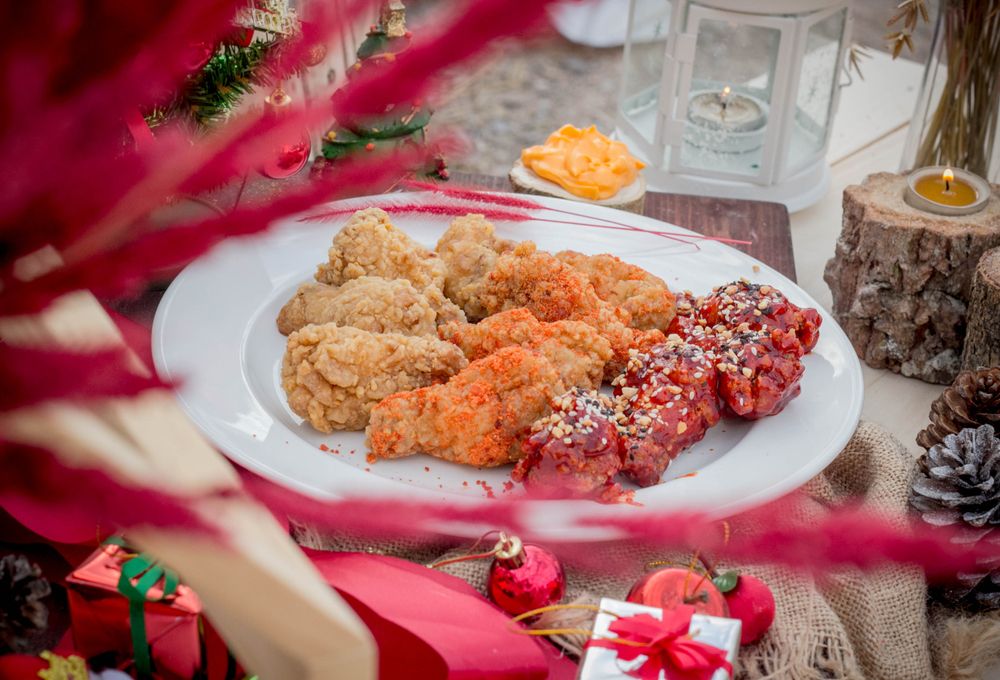
Here's number one of the most bewildering Christmas traditions around the world! You're at Christmas in Japan and you see loads of families arriving at KFC for the meal? Perfectly normal! Eating Kentucky fried chicken has become the most popular Christmas tradition in the Land of the Rising Sun, to the point that the Kentucky Fried Chicken chain receives orders months in advance and welcomes endless queues on Christmas Day.
This surprising tradition dates back to the 1970s, when KFC launched a brilliant marketing campaign with the slogan "Kurisumasu ni wa kentakkii!" (Kentucky for Christmas!). The story goes that a KFC manager in Tokyo, Takeshi Okawara, had this idea after hearing Western expatriates complain about not being able to find turkey for Christmas. He then proposed fried chicken as an alternative and dressed a Colonel Sanders as Santa Claus. The success was immediate and the tradition has lasted for more than fifty years.
Today, Christmas sales represent about a third of KFC's annual revenue in Japan. For dessert, Japanese tradition dictates that one enjoys a Christmas cake, a sponge cake covered with whipped cream and strawberries, in the colors of the Japanese flag. This American-style cake has become a must-have for celebrations, reminiscent of the post-war era when Americans helped the Japanese rebuild their country and brought their traditional pastries.
In conclusion, these eleven Christmas traditions around the world remind us that the magic of the holidays comes in a thousand colors and flavors. From Japanese fried chicken to Icelandic trolls, through Venezuelan roller skates and the Italian Befana, each country reinvents Christmas in its own way, creating unique rituals that bring families together and perpetuate local cultures. These customs, sometimes surprising to foreigners, are a reflection of the history, beliefs and creativity of each people. Whether you prefer British Christmas crackers or Philippine giant lanterns, the spirit of Christmas remains universal: sharing moments of joy, generosity and conviviality with those we love. If you wish to experience these traditions in situ, don't hesitate to discover the Ryo audio-guided circuits to explore these destinations during the holiday season and immerse yourself in their authentic festive customs.
FAQ: Christmas Traditions Around the World
Which country celebrates Christmas by eating KFC?
Japan celebrates Christmas with KFC fried chicken since the 1970s. This tradition born from a marketing campaign has become so popular that Japanese families order their meals months in advance and queue for hours on December 25th.
Who is the Befana in Italy?
The Befana is a benevolent witch from Italian folklore who brings gifts to children on January 6th, Epiphany Day. She flies on her broom from chimney to chimney, leaving presents for good children and coal for the most turbulent ones.
Why do Venezuelans go to mass on roller skates?
In Caracas, Venezuela, the patinatas tradition dates back to the 1950s. Streets are closed to traffic to allow residents to roller skate to dawn mass (Misa de Aguinaldo) from December 16th to 24th, creating a unique festive atmosphere.
How many Yule Lads are there in Iceland?
Iceland has thirteen Yule Lads (Jólasveinar), mischievous trolls who come down one by one from the mountains from December 12th to 24th. Each has their own name and specialty: stealing pots, licking spoons, slamming doors, etc.
What is a British Christmas cracker?
A Christmas cracker is a typically British surprise favor that makes a popping sound when pulled. It traditionally contains a paper crown, a joke and a small gift. Crackers are a must-have on Christmas tables in the United Kingdom.
What is special about Colombian Christmas?
Colombia celebrates Día de las Velitas (day of little candles) on December 8th, marking the beginning of festivities. Thousands of candles and lanterns illuminate streets, houses and parks, creating a fairytale atmosphere in honor of the Virgin Mary.