
Créé par Emilie, le 7 mai 2026
Votre guide Ryo
© Shutterstock
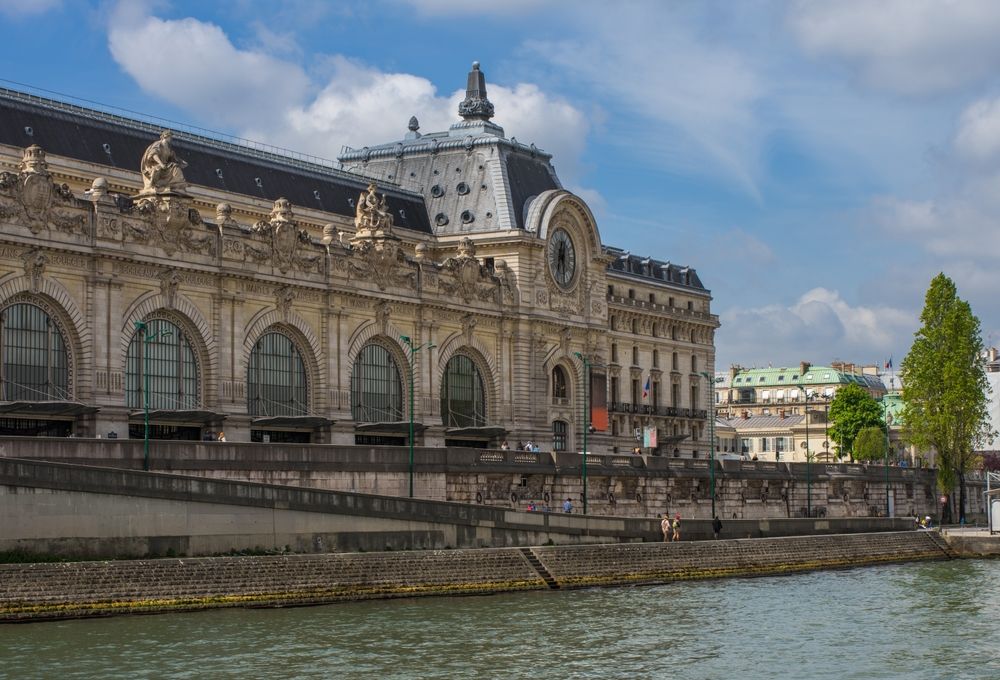
Musée d'Orsay is among the most emblematic museums in Paris. A former railway station transformed into a temple of Impressionism, this spectacular venue houses the world's largest collection of Impressionist and Post-Impressionist works. Between Beaux-Arts architecture and masterpieces by Monet, Renoir or Van Gogh, a visit to Musée d'Orsay is an essential stop for anyone wishing to Visit Paris.
The fascinating history of Musée d'Orsay
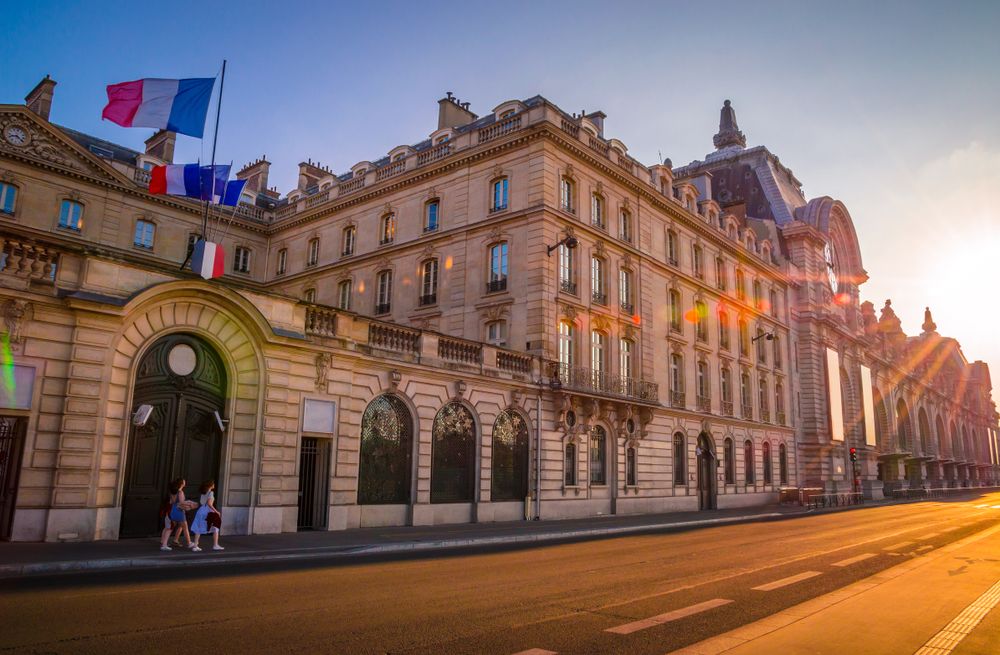
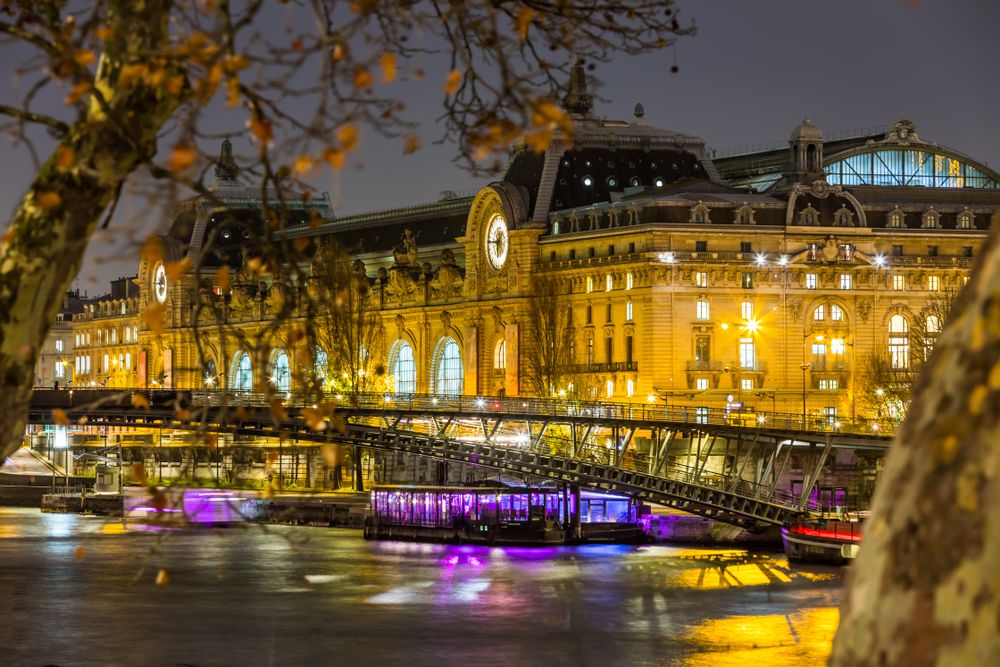
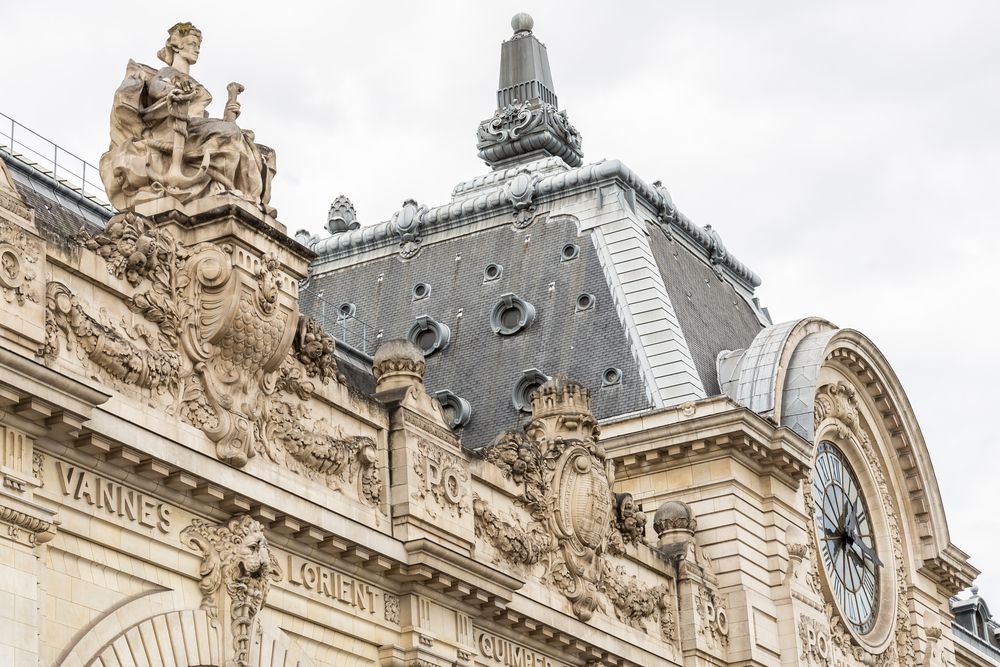
Before housing one of the most prestigious collections in the world, the Musée d'Orsay building had an eventful destiny. Designed by architect Victor Laloux for the 1900 Universal Exhibition, Gare d'Orsay represented a remarkable architectural feat at the time. Its metal framework hidden under a stone facade, its immense glass canopies and its modern installations made it one of the most innovative stations of its era.
However, as early as 1939, the station closed its doors due to platforms too short to accommodate modern trains. The building then served as a parcel dispatch center for prisoners of war during World War II, before being used as a film set, notably for Orson Welles' "The Trial" in 1962. In the 1970s, threatened with demolition, the building narrowly escaped bulldozers thanks to its classification as a Historic Monument.
The transformation into a museum began in 1979 under the impetus of President Valéry Giscard d'Estaing. Architects Renaud Bardon, Pierre Colboc and Jean-Paul Philippon from the ACT Architecture group won the competition, while Italian architect Gae Aulenti redesigned the interior spaces. On December 9, 1986, Musée d'Orsay finally opened its doors to the public, offering an exceptional setting for works dating from 1848 to 1914.
1. Opening hours and closing days
Musée d'Orsay welcomes visitors from Tuesday to Sunday, from 9:30 am to 6 pm. Last admission is at 5 pm, while rooms begin to close progressively from 5:30 pm. For temporary exhibitions, access is allowed until 5:15 pm. On Thursdays, the museum extends its opening with a late night until 9:45 pm, offering a special atmosphere to admire the collections under different lighting.
Please note, the museum closes its doors every Monday, as well as May 1st and December 25th. You should therefore plan your visit taking into account these weekly and exceptional closures.
2. Entrance fees and free admission
To discover Musée d'Orsay, several pricing options are available to visitors. The full-price ticket costs €14 on-site and €16 online, giving access to permanent collections and temporary exhibitions. The reduced rate, available under conditions, amounts to €11 on-site. On Thursday evenings, during the late night from 6 pm, a preferential rate of €10 is offered (€12 online).
Free admission applies to under-18s, EU residents aged 18 to 25, as well as all visitors on the first Sunday of each month. Pass Education holders and job seekers also benefit from free admission upon presentation of proof.
3. Must-see works to discover
Musée d'Orsay brings together more than 3,000 exhibited works, including an exceptional concentration of Impressionist and Post-Impressionist paintings. Among the absolute masterpieces is Auguste Renoir's "Bal du moulin de la Galette" (1876), famous for its shimmering light and joyful atmosphere. Édouard Manet's "Le Déjeuner sur l'herbe" caused a scandal when presented in 1863 and remains one of the museum's most emblematic paintings.
Vincent van Gogh occupies a place of honor with several major works, notably "Starry Night Over the Rhône" (1888), "Van Gogh's Bedroom in Arles" (1889) and his moving "Self-Portrait" (1889). Claude Monet enchants visitors with his "Water Lilies" series, "La Gare Saint-Lazare" (1877) and "La Cathédrale de Rouen" which perfectly illustrate the Impressionist quest for light.
Don't miss Gustave Courbet's "L'Origine du monde", a bold and disturbing work, Gustave Caillebotte's "Les Raboteurs de parquet" for its striking realism, or Edgar Degas' delicate sculpture "Petite Danseuse de quatorze ans". Paul Cézanne, Paul Gauguin, Georges Seurat and Henri de Toulouse-Lautrec complete this pantheon of great masters.
4. How to get to Musée d'Orsay
Located at 1 rue de la Légion d'Honneur in the 7th arrondissement of Paris (75007 Paris, rated 4.6/5 on Google for over 45,000 reviews), Musée d'Orsay benefits from remarkable accessibility. The RER C station "Musée d'Orsay" drops visitors directly in front of the museum entrance. By metro, line 12 serves Solférino station, located a few minutes' walk away.
Several bus lines stop nearby: lines 63, 68, 69, 73, 83 and 94. For cycling enthusiasts, Vélib' stations are installed on Quai Anatole France and Boulevard Saint-Germain. If you come by car, several paid parking lots are located in the neighborhood, although we strongly recommend public transport to discover the capital.
5. The spectacular architecture of the former station
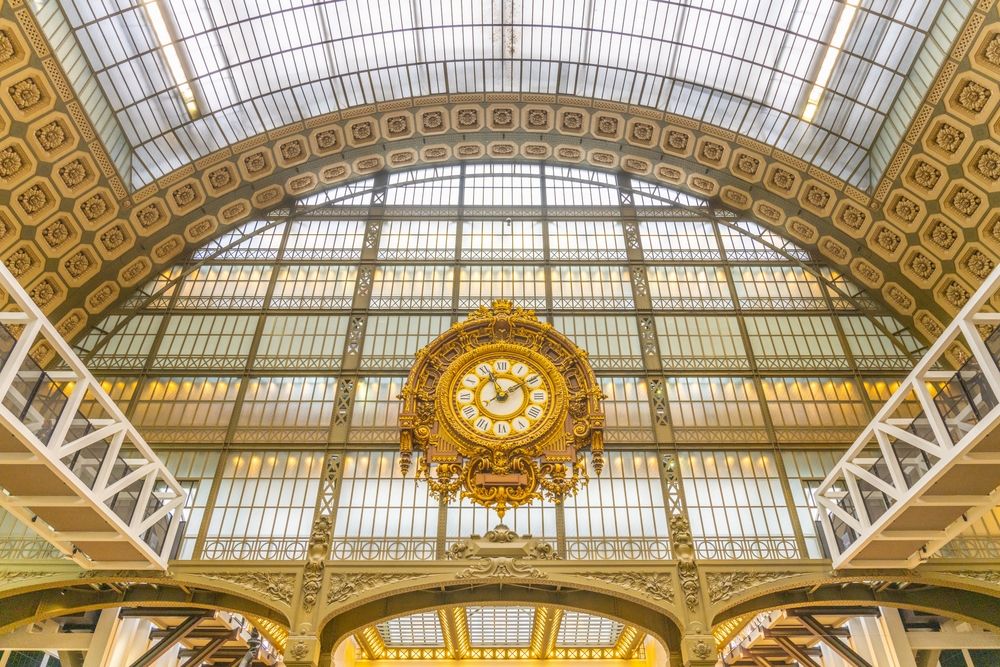
The architecture of Musée d'Orsay is itself a work of art. The central nave, 138 meters long, rises majestically under an immense glass canopy that floods the space with natural light. The original large clocks, the most famous of which overlooks the main hall, bear witness to the railway past of the place and offer an exceptional photographic setting.
The Salle des Fêtes, located on the upper floor, illustrates the splendor of the Belle Époque with its gilding, mirrors and sumptuous chandeliers. This former reception room of the hotel adjacent to the station has retained all its splendor and now hosts cultural events. The panoramic terrace on the fifth floor, accessible near the monumental clock, reveals a breathtaking view of the Seine and its emblematic monuments.
6. The Impressionist and Post-Impressionist collections
The fifth floor of the museum houses the world's largest collection of Impressionist works. This gallery brings together nearly 140 paintings including Monet's "Le Pont d'Argenteuil", Pissarro's "Paysage à Éragny" or Seurat's "L'île de la grande Jatte". The chronological and thematic presentation allows us to understand the evolution of this revolutionary movement that shook 19th-century academicism.
Post-Impressionists also occupy a major place with Gauguin's colorful canvases, Cézanne's structured compositions and Van Gogh's expressive works. This section demonstrates how these artists freed themselves from Impressionism to explore new pictorial paths, paving the way for 20th-century modern art.
Download the audio-guided circuit to discover Paris on foot and independently
To complete your cultural visit of the capital, let yourself be guided through the most beautiful Parisian neighborhoods thanks to the Ryo audio-guided itinerary. This 6.2 km circuit takes you from the Champs-Élysées to the Hôtel des Invalides, passing by the Eiffel Tower, with 18 enriching audio commentaries on the history and architecture of the city of lights.
7. The monumental sculptures under the glass canopy
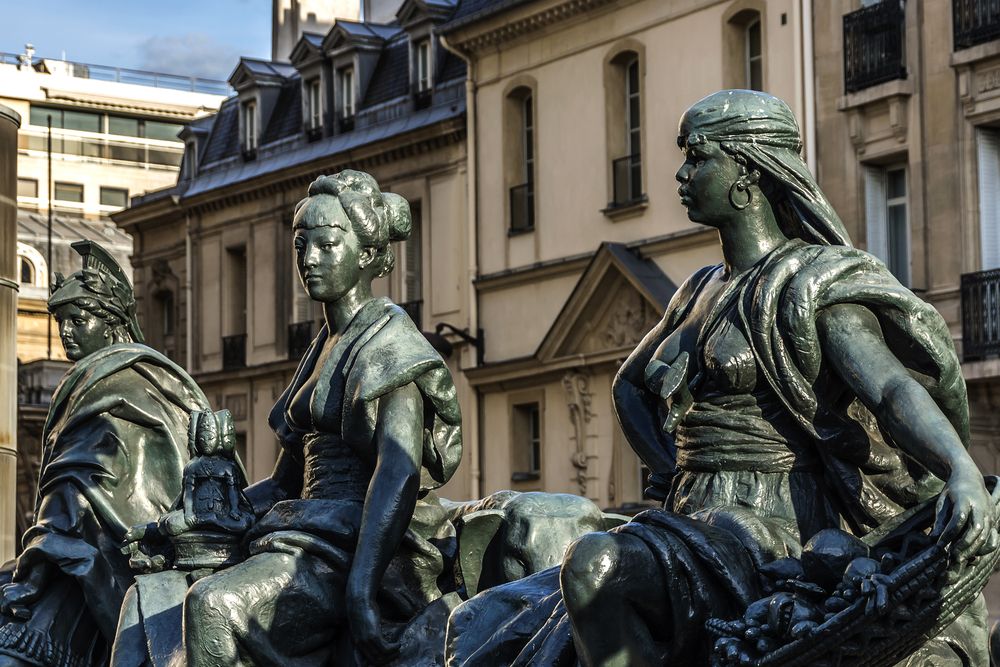
The central nave of the museum houses more than 1,500 sculptures displayed in a setting of natural light. These monumental works dating from the second half of the 19th century illustrate the evolution of French sculpture, from romanticism to symbolism. Auguste Rodin, Jean-Baptiste Carpeaux and Camille Claudel are among the most represented artists.
Carpeaux's "Ugolin" impresses with its dramatic power, while Claudel's creations, such as "L'Âge mûr", touch with their sensitivity. François Pompon's animal sculptures, including the famous "Ours blanc", seduce with their purity and modernity. This spectacular staging under the glass canopy allows you to appreciate every detail of the works while enjoying the exceptional architectural setting.
8. Decorative arts and Art Nouveau furniture
Musée d'Orsay possesses a remarkable collection of decorative arts covering the period from the Second Empire to Art Nouveau. The dedicated galleries present furniture signed by the great names of the era: Louis Majorelle, Hector Guimard and Émile Gallé. These creations bear witness to the inventiveness of artist-craftsmen who revolutionized applied arts.
The masterpieces include Guimard's "Banquette de fumoir" with its characteristic vegetal curves, as well as Gallé's "La Main aux algues et aux coquillages", a masterpiece of Art Nouveau glassware. This section allows us to understand how Art Nouveau transformed daily life by integrating art into every object, from furniture to lighting fixtures to tableware.
9. Temporary exhibitions
Musée d'Orsay regularly enriches its cultural offering with high-quality temporary exhibitions. These events highlight a specific artist, an artistic movement or a particular theme, relying on exceptional loans from international collections. Exhibition curators create stimulating dialogues between works, allowing us to deepen our understanding of art history.
These exhibitions unfold in dedicated spaces and generally benefit from careful scenography. You should book your ticket in advance for these events which often meet with great success. Consult the museum's official website to discover current and upcoming programming.
10. Practical tips to optimize your visit
To fully enjoy your discovery of Musée d'Orsay, favor a visit early in the morning from opening at 9:30 am or late in the afternoon after 4 pm. Tuesdays, when the Louvre is closed, attract more crowds, as do Sundays. Definitely book your ticket online to avoid queues which can be very long in high season.
Start your tour with the fifth floor to admire the Impressionists, generally the most popular section, before gradually going down. Plan about 2 to 3 hours for a complete visit, more if you wish to explore certain sections in depth. Audio guides, available for rent, considerably enrich the visit by providing detailed explanations of major works.
The museum provides free cloakrooms to store your bulky items. A restaurant and café allow you to take a break during the visit. For an optimal experience, the Ryo app also offers you to discover other audio-guided circuits in Paris, allowing you to continue your exploration of the capital in an autonomous and fun way.
11. Museum services and amenities
Musée d'Orsay was designed to comfortably welcome its visitors. Free and mandatory cloakrooms for bulky items are located on the ground floor. The museum is accessible to people with reduced mobility via entrance C, with elevators serving all levels and wheelchairs available on request.
The Restaurant du musée d'Orsay, classified as a Historic Monument, occupies the former dining room of the hotel. Its Belle Époque decor makes it an exceptional place to have lunch in the heart of the museum. Café Campana, on the fifth floor, offers a lighter formula with a breathtaking view of Paris. A bookshop allows you to purchase catalogs, reproductions and souvenirs related to the collections.
12. Combining the visit with Musée de l'Orangerie
The combined Musée d'Orsay / Musée de l'Orangerie ticket represents an advantageous formula for Impressionism lovers. Located in the Tuileries garden, Musée de l'Orangerie houses Monet's famous "Water Lilies" in two oval rooms specially designed by the artist. This complementary collection allows you to deepen your understanding of the Impressionist movement.
Musée de l'Orangerie also presents the Walter-Guillaume collection with works by Renoir, Cézanne, Matisse, Picasso and Modigliani. These two Parisian institutions form a coherent journey through art from the second half of the 19th century and the beginning of the 20th century. Allow an additional half-day to visit l'Orangerie serenely.
13. Photography and graphic arts
Musée d'Orsay conserves one of the most important collections of antique photographs in the world, with nearly 45,000 shots. This section, sometimes unknown to visitors, traces the history of photography from its origins to the beginning of the 20th century. Pioneers like Nadar, Gustave Le Gray or Julia Margaret Cameron are represented.
The graphic arts rooms exhibit drawings, pastels and watercolors on rotation for conservation reasons. Edgar Degas, with his pastel dancer scenes, is among the most appreciated artists in this section. These works on paper, more fragile than paintings, benefit from limited exposure over time but offer an intimate approach to the artists' work.
14. Musée d'Orsay for families
Musée d'Orsay offers specific programming for young audiences. Visit-workshops adapted for children aged 6 to 12 allow them to discover the collections in a fun and interactive way. These "À petites touches" activities combine observation of works and artistic practice, favoring a creative approach to art.
Free game booklets, available at reception, transform the visit into a pedagogical adventure. Junior audio guides, specially designed for children, tell stories around major works. During school holidays, the "Vacances à Orsay" program offers creative and fun activities allowing families to fully enjoy the museum together.
15. The history of the collection
The Musée d'Orsay collection has its origins in the works of the Musée du Luxembourg, created in the 19th century to present contemporary art. After World War II, these works were transferred to the Louvre, but it quickly became evident that a place dedicated to the 1848-1914 period was necessary. The Musée d'Orsay project responded to this need by bringing together national collections from this pivotal period.
Today, the museum conserves approximately 480 Impressionist paintings and 600 Post-Impressionist canvases, making it the world's leading institution in this field. Permanent enrichments, thanks to donations and acquisitions, allow the collections to be regularly completed and certain gaps to be filled. This dynamic policy ensures the vitality of the museum and the quality of its cultural offering.
In conclusion, discovering Musée d'Orsay is a major step in any Parisian stay. This temple of Impressionism combines spectacular architecture and unmissable masterpieces in a unique setting. Between Monet's luminous canvases, Renoir's vibrant scenes and Van Gogh's intense works, every visitor finds reason to marvel. To extend your discovery of the capital, don't hesitate to follow the Ryo audio-guided circuits in Paris, which take you through the most beautiful neighborhoods of the city of lights with fascinating commentary on its history and heritage.
FAQ: your questions about Musée d'Orsay
Should you book your ticket in advance for Musée d'Orsay?
Online booking is strongly recommended to avoid long queues, particularly during high tourist season and weekends. The skip-the-line ticket purchased on the official website or via partner platforms guarantees quick access to the museum. Visitors benefiting from free admission can enter without reservation upon presentation of their proof.
How much time should you plan to visit Musée d'Orsay?
A complete visit requires between 2 and 3 hours minimum. For art lovers wishing to explore certain sections in depth or enjoy temporary exhibitions, plan rather a half-day. If you have little time, concentrate on the Impressionist collections on the fifth floor, then go down gradually according to your interests.
Can you take photos in Musée d'Orsay?
Photography without flash is authorized in the permanent collections for personal use. However, selfie sticks and tripods are prohibited. Certain temporary exhibitions may be subject to specific photographic restrictions, indicated at the entrance of the concerned rooms. Respect for other visitors and works remains paramount.
Is Musée d'Orsay accessible to people with reduced mobility?
Musée d'Orsay is fully accessible to people with reduced mobility via entrance C, located on quai Anatole France. Elevators serve all exhibition levels. Wheelchairs are available free of charge at reception upon request. Reserved parking spaces are located near the accessible entrance. The entire route has been designed to facilitate visits for all audiences.
When is Musée d'Orsay free?
Entry is free for all visitors on the first Sunday of each month. Under-18s and EU residents aged 18 to 25 benefit from free admission year-round upon presentation of proof. Job seekers and Pass Education holders also have free access to collections upon presentation of required documents.