
Créé par Emilie, le 7 mai 2026
Votre guide Ryo
© Shutterstock
Paris, the City of Light, fascinates the world with its exceptional architectural heritage. Between iconic monuments and gems of French history, the capital is full of treasures that tell more than 2000 years of history. This page presents you with a complete guide to the 15 essential historical monuments that make Paris a unique destination in the world. Each building reveals part of Parisian cultural richness, from places of power to artistic masterpieces.
1. The Eiffel Tower, eternal symbol of Paris
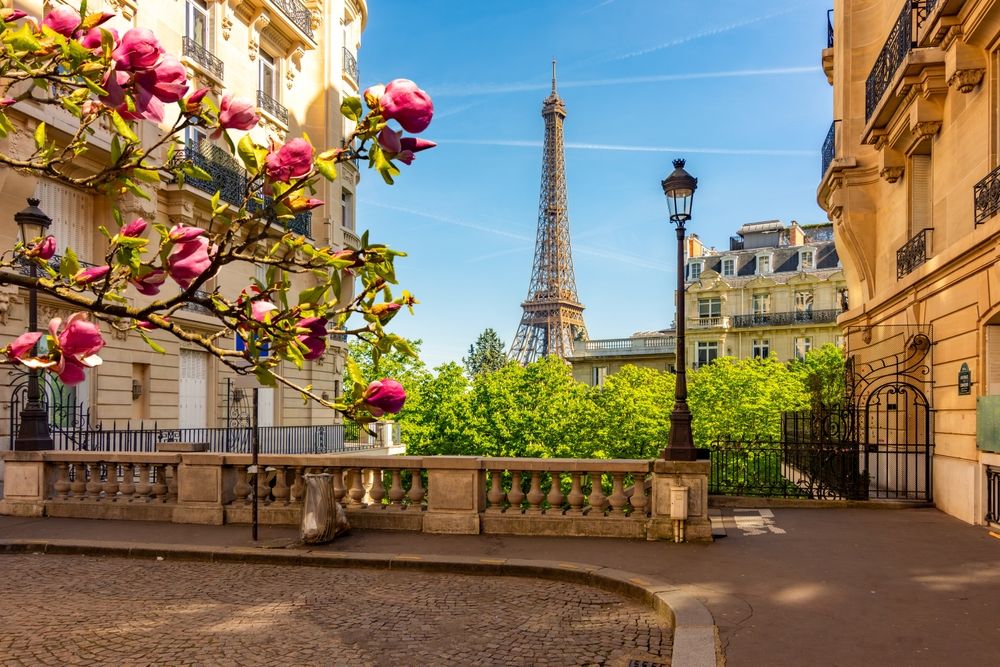
It's impossible to mention Parisian historical monuments without starting with the Iron Lady. Built by Gustave Eiffel for the 1889 Universal Exhibition, the Eiffel Tower stands as the global icon of Paris. From its 330-meter height, it offers a breathtaking panoramic view of the capital.
History and construction of the Parisian emblem
This historical monument was first controversial before becoming France's emblem. Gustave Eiffel designed this wrought iron tower in just two years, revolutionizing the architecture of the era. Each floor tells part of its history, from initial projects to the significant events that took place there.
Practical information for your visit
Its three floors welcome nearly 7 million visitors each year, confirming its status as the world's most visited monument. Booking is essential to avoid crowds, particularly during summer months. The Google reviews show an exceptional rating of 4.6/5 for more than 143,000 evaluations.
Champ de Mars, 5 Av. Anatole France, 75007 Paris
2. Notre-Dame de Paris, the resurrected Gothic jewel
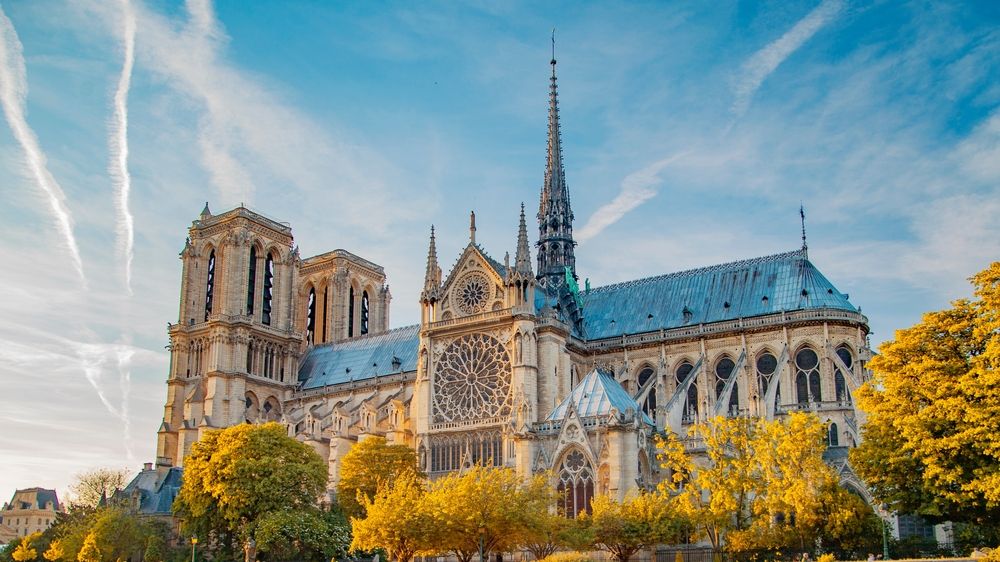
A masterpiece of French Gothic architecture, Notre-Dame de Paris embodies 850 years of religious and artistic history. Built between 1163 and 1345, this iconic cathedral crossed the centuries before experiencing the tragedy of the April 2019 fire.
The renaissance after the fire: a historic construction site
After five years of meticulous restoration, Notre-Dame reopens its doors in December 2024, more beautiful than ever. This titanic construction site mobilized artists, craftsmen, and heritage experts. The conservation mission saved the most precious elements, notably the exceptional stained glass windows and facade sculptures.
Gothic architecture and artistic treasures
Its majestic vaults, extraordinary rose windows, and iconic towers continue to dazzle visitors from around the world. The interior reveals restored frescoes and art objects miraculously preserved. Victor Hugo greatly contributed to its preservation in the 19th century, making this Notre-Dame cathedral a symbol of French literature.
6 Parvis Notre-Dame, Place Jean-Paul II, 75004 Paris – Rating: 4.4/5 on Google for more than 72,000 reviews
3. The Arc de Triomphe, guardian of the Champs-Élysées
Commissioned by Napoleon I in 1806 to commemorate the victories of the Grande Armée, the Arc de Triomphe majestically dominates Place de l'Étoile. This 50-meter-high historical monument houses the Tomb of the Unknown Soldier and its eternal flame, rekindled every evening since 1923.
An exceptional viewpoint over the capital
The climb to the top of the Arc de Triomphe rewards visitors with a spectacular view of the twelve avenues radiating from the square, notably the Champs-Élysées and the Eiffel Tower. The 284 steps offer a unique experience to discover Paris from another angle.
Symbol of national memory
Each official ceremony honors the memory of French soldiers. François Rude's sculptures, notably "The Departure of Volunteers," testify to French artistic genius. This living piece of history regularly hosts major commemorative events.
Place Charles de Gaulle, 75008 Paris – Rating: 4.5/5 on Google for more than 46,000 reviews
4. The Louvre Museum, palace of the arts
The world's largest art museum, the Louvre brings together within its walls 35,000 works covering 9,000 years of art and civilizations. A former royal residence transformed into a museum in 1793, this Parisian historical monument houses essential masterpieces like Leonardo da Vinci's Mona Lisa and the Venus de Milo.
From royal residence to temple of art
This former residence of French kings testifies to centuries of history. The interior courtyards reveal classical French architecture, while the state rooms preserve their opulence from bygone days. Each of its departments presents exceptional thematic collections.
The glass pyramid: symbol of modernity
Its glass pyramid, the work of architect Ieoh Ming Pei inaugurated in 1989, has become a modern architectural symbol of Paris. This alliance between tradition and modernity perfectly illustrates the evolution of Parisian heritage over the centuries.
Rue de Rivoli, 75001 Paris – Rating: 4.5/5 on Google for more than 104,000 reviews
5. Sainte-Chapelle, a Gothic jewel box of light
Commissioned by Saint Louis (Louis IX) around 1241 to house the relics of Christ's Passion, Sainte-Chapelle represents the pinnacle of Rayonnant Gothic art.
A jewel of Gothic art
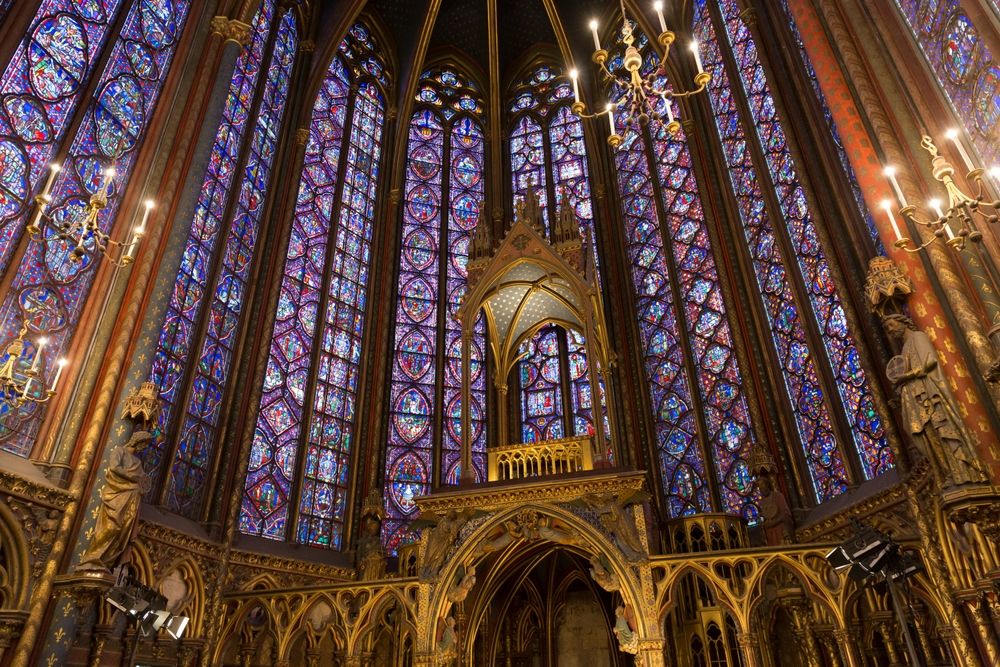
Its 15 exceptional stained glass windows, 15 meters high, tell 1,113 scenes from the Old and New Testament in a dazzling kaleidoscope of colors. These stained glass windows constitute one of the most remarkable ensembles of French medieval art.
World heritage and conservation
This Parisian historical monument, listed as UNESCO World Heritage, offers a unique spiritual and artistic experience. Conservation work preserves the richness of these stained glass windows for future generations.
8 Boulevard du Palais, 75001 Paris – Rating: 4.5/5 on Google for more than 25,000 reviews
Download the audio-guided circuit to discover Paris on foot and independently
Explore the essential historical monuments of Paris with our audio-guided circuit specially designed for an independent and enriching visit. This Paris visit itinerary takes you to discover the most beautiful architectural treasures of the capital.
6. Sacré-Cœur, basilica with fairytale airs
Perched atop Montmartre hill, the Sacré-Cœur basilica rises 83 meters above Paris. Built between 1875 and 1914, this white stone marvel in Romano-Byzantine style attracts with its recognizable silhouette and majestic dome.
Exceptional architecture and mosaics
Inside, admire one of France's largest mosaics (480 m²) representing the Sacred Heart of Jesus. This artistic richness testifies to the craftsmanship of the period's artists. The climb to the dome offers one of the most beautiful panoramas of Paris.
A place of spirituality in the heart of Montmartre
This picturesque district welcomes daily crowds of visitors who come to discover this unique artistic territory. The basilica's steps offer a privileged observation point over the capital, particularly appreciated at sunset.
35 Rue du Chevalier de la Barre, 75018 Paris – Rating: 4.5/5 on Google for more than 50,000 reviews
7. The Panthéon, temple of national memory
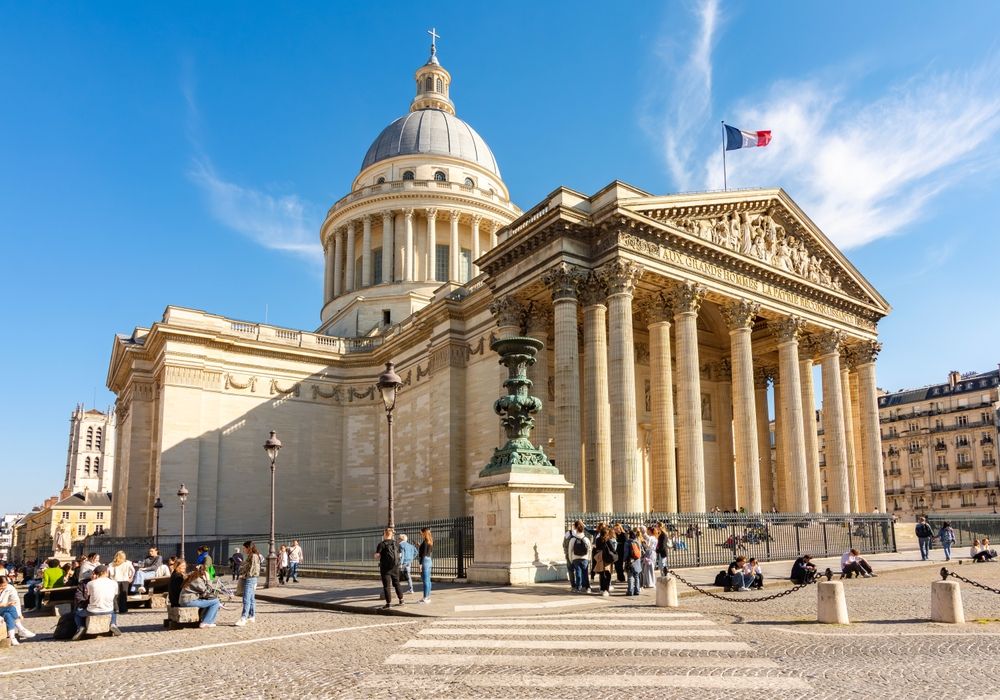
Initially conceived as the Sainte-Geneviève church by architect Soufflot, the Panthéon became during the French Revolution the secular temple destined to honor the great men and women of the nation.
Necropolis of illustrious personalities
This neoclassical-style historical monument houses the remains of illustrious personalities such as Voltaire, Rousseau, Marie Curie, Émile Zola, Simone Veil, and many others. Each tomb tells part of French history and its great figures.
Neoclassical architecture and scientific heritage
Located in the Latin Quarter, this edifice presents remarkable architecture inspired by the Roman Panthéon. Its Foucault pendulum spectacularly demonstrates the Earth's rotation, combining historical heritage and scientific culture.
Place du Panthéon, 75005 Paris – Rating: 4.4/5 on Google for more than 18,000 reviews
8. Les Invalides and Napoleon's tomb
Created by Louis XIV in 1670 to house disabled soldiers, the Hôtel des Invalides constitutes one of Paris's most beautiful classical architectural ensembles. Its golden dome has housed since 1861 the sumptuous tomb of Napoleon I, in a red porphyry sarcophagus placed at the center of a circular crypt.
Museums and military collections
The site also houses the Army Museum, one of the world's richest collections of military art. These museums present a faithful reconstruction of French military life across the centuries. The courtyards of honor regularly host official ceremonies.
Classical architecture and emblematic dome
The interior reveals the opulence of French classical architecture. The majestic facade and surrounding gardens offer a perfect example of Grand Siècle urbanism.
129 Rue de Grenelle, 75007 Paris – Rating: 4.4/5 on Google for more than 30,000 reviews
9. Opéra Garnier, palace of all arts
Inaugurated in 1875 under Napoleon III, the Opéra Garnier represents the pinnacle of Second Empire eclectic architecture. This Parisian historical monument seduces with its decorative splendor: grand staircase in polychrome marble, richly decorated foyer, ceiling painted by Marc Chagall, and eight-ton chandelier.
Opulence of salons and theatrical architecture
This "National Academy of Music" continues to host ballets and operas in a sumptuous setting that inspired Gaston Leroux for his "Phantom of the Opera." The reception rooms testify to the period's refinement, mixing gold, marble, and sculptures.
Architectural fashion and artistic influences
The interior presents a unique mix of styles, revealing 19th-century architectural fashion. The frescoes and sculptures create an exceptional theatrical atmosphere, worthy of the greatest cultural events.
8 Rue Scribe, 75009 Paris – Rating: 4.6/5 on Google for more than 15,000 reviews
10. La Conciergerie, royal prison turned revolutionary symbol
A former royal palace of the Cité transformed into a prison under the Old Regime, the Conciergerie preserves remarkable vestiges of 14th-century civil Gothic architecture. This Parisian historical monument is especially known for having imprisoned Marie-Antoinette before her execution in 1793.
Medieval vestiges and Gothic halls
Its vaulted halls, notably the 64-meter-long Hall of Men-at-Arms, testify to the grandeur of the medieval royal palace. These history-laden places reveal court life before becoming the theater of dramatic events.
Revolutionary memory and judicial heritage
This former royal residence became the symbol of revolutionary justice. Historical reconstructions help understand this dark but essential page of French history.
2 Boulevard du Palais, 75001 Paris – Rating: 4.2/5 on Google for more than 8,000 reviews
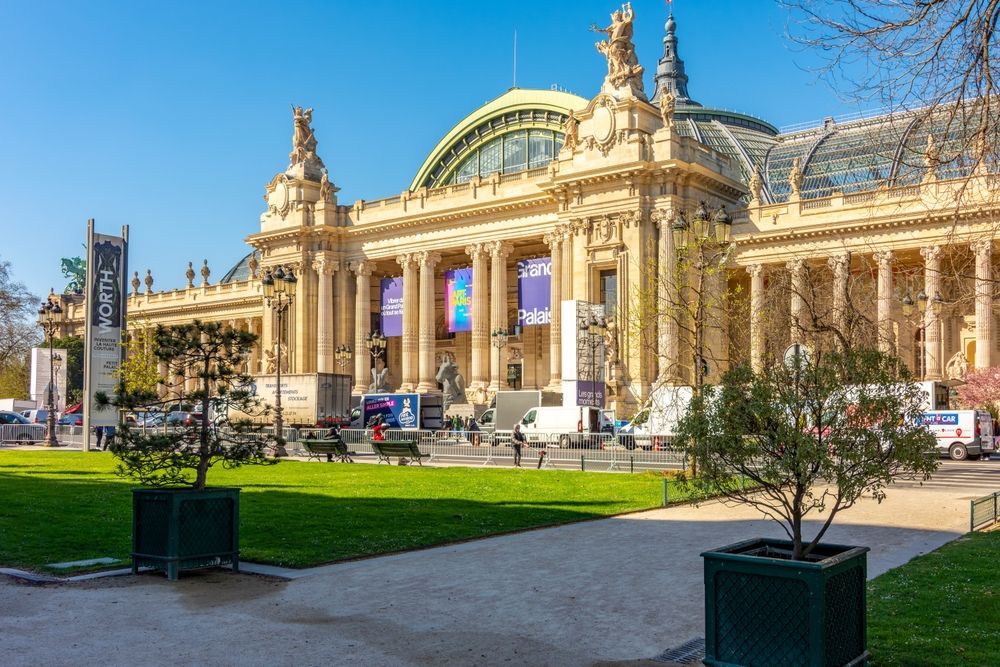
11. Grand Palais, temple of Art Nouveau
Built for the 1900 Universal Exhibition, the Grand Palais fascinates with its bold architecture mixing stone, steel, and glass. Its spectacular nave, topped by a 13,500 m² glass roof, hosts Paris's greatest temporary exhibitions.
Architectural renaissance and reopening
This emblematic historical monument of the Champs-Élysées reopens its doors after major renovation work, revealing all the splendor of this palace dedicated "to the glory of French art." The restoration project mobilized many trades specialized in heritage.
Contemporary culture and prestigious events
Temporary exhibitions attract a wide audience of art and culture lovers. This diverse programming makes the Grand Palais an unmissable venue in Parisian cultural life, hosting internationally renowned events.
3 Avenue du Général Eisenhower, 75008 Paris – Rating: 4.3/5 on Google for more than 12,000 reviews
12. Pont Alexandre III, Art Nouveau masterpiece
Inaugurated for the 1900 Universal Exhibition, Pont Alexandre III is considered Paris's most elegant bridge. This 152-meter-long historical monument symbolizes Franco-Russian friendship and bears the name of Tsar Alexander III.
Sculpted decoration and renowned artists
Its four pylons adorned with golden Pegasi, its Belle Époque lampposts, and its sculptural decorations make it a true open-air museum. The artists of the era created a unique decorative ensemble, mixing sculptures and architectural elements.
Parisian panorama and photography
The view it offers of Les Invalides and the Eiffel Tower is one of Paris's most photographed. This bridge constitutes an excellent example of Belle Époque French decorative art, combining functionality and beauty.
Pont Alexandre III, 75007 Paris – Rating: 4.6/5 on Google for more than 12,000 reviews
13. Palais du Luxembourg and its gardens
Commissioned by Marie de Médicis at the beginning of the 17th century, the Palais du Luxembourg represents a jewel of French architecture. Home to the Senate since 1879, this Parisian historical monument can be visited during Heritage Days or by reservation.
French gardens and landscape heritage
Its French gardens, redesigned by André Le Nôtre, offer a 25-hectare green haven in the heart of Paris. Stroll among the flower beds, statues, and the famous octagonal basin where miniature boats sail.
Historical residence and republican institutions
This former royal residence testifies to French institutional evolution. The architectural courtyards and reception rooms reveal the refinement of French decorative art across the centuries.
15 Rue de Vaugirard, 75006 Paris – Rating: 4.5/5 on Google for more than 28,000 reviews
14. The Concorde Obelisk, testimony of ancient Egypt
3,300 years old, this pink granite obelisk comes from the Louxor temple and was offered to France by Egypt's viceroy Mehemet Ali in 1830. Erected at Place de la Concorde in 1836, this unique historical monument in Paris measures 23 meters high and weighs 230 tons.
Hieroglyphs and ancient civilization
Its hieroglyphs tell the exploits of pharaohs Ramses II and Ramses III. This living map of Egyptian history testifies to the richness of this millennial civilization. Recently restored, it has displayed since 2018 a golden pyramidion that restores its ancient appearance.
Historical square and significant events
Place de la Concorde, theater of major events of the French Revolution, offers a remarkable perspective on the Champs-Élysées and the Louvre. This history-laden place hosted numerous events that marked French political life.
Place de la Concorde, 75001 Paris
15. Tour Saint-Jacques, last survivor of medieval Paris
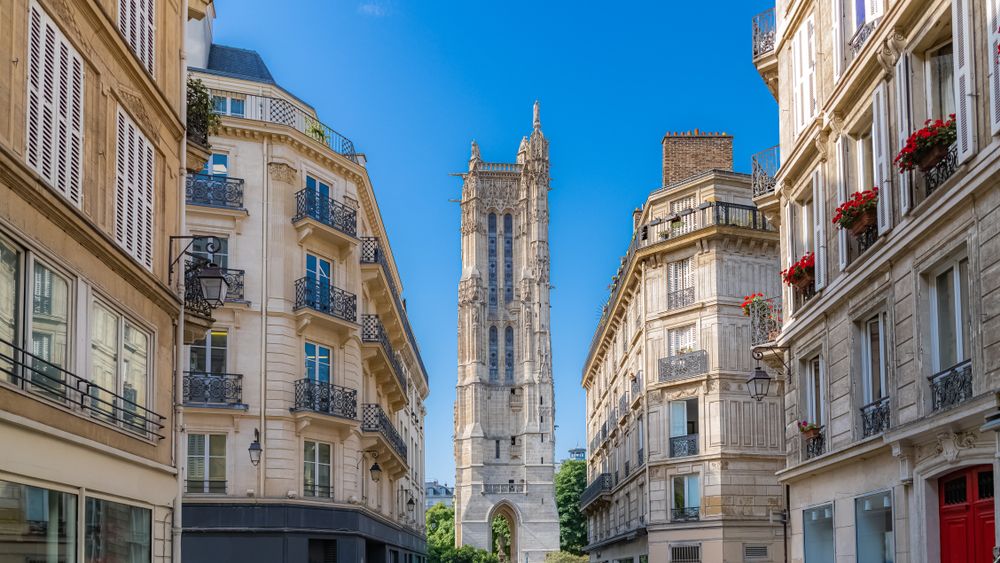
The only vestige of the former Saint-Jacques-de-la-Boucherie church destroyed in 1797, this 52-meter Gothic tower constitutes one of Paris's most unknown historical monuments.
Medieval heritage and pilgrimage
Built in the 16th century, it served as a starting point for pilgrims heading to Saint-Jacques-de-Compostelle. This tower testifies to the importance of pilgrimages in medieval religious life and the architectural richness of the era.
Flamboyant Gothic architecture
Listed as a historical monument in 1862, the tower today houses a meteorological station. Its slender silhouette and sculpted gargoyles testify to the refinement of Flamboyant Gothic art. The sculptures and architectural details reveal the skill of medieval artists.
Square de la Tour Saint-Jacques, 75004 Paris – Rating: 4.2/5 on Google for more than 3,000 reviews
Practical advice for visiting Paris's historical monuments
Planning and booking
Visiting Parisian historical monuments requires meticulous preparation. Book your tickets online to avoid queues, particularly during peak season. Many monuments offer evening visit slots, providing a different and often less crowded experience.
Best period and crowds
The choice of visit date greatly influences your experience. Spring (April-May) and autumn (September-October) offer optimal conditions with less tourist crowds. Avoid the July-August period to fully enjoy each monument. Weekdays generally have fewer crowds than weekends.
Thematic circuits and itineraries
Organize your visit by district to optimize your travel. The Latin Quarter groups several major monuments, while the Champs-Élysées offers another thematic route. A detailed map will help you plan your itineraries and discover surrounding areas.
Passes and pricing
Several passes allow priority access to Parisian monuments. Inquire about preferential rates for students, seniors, and groups. Some monuments offer free admission on the first Sunday of the month or during Heritage Days.
These 15 essential historical monuments offer an exceptional panorama of Parisian art and history, from Gallo-Roman vestiges to contemporary creations. Each stone tells an era, each architectural detail reveals the evolution of taste and techniques across the centuries.
Paris awaits you for a journey through time, where each historical monument reveals the secrets of the City of Light. The richness of this heritage testifies to the exceptional cultural life of the French capital. For an optimal discovery of these heritage jewels, don't hesitate to follow the Paris visit itinerary that will take you from monument to monument with enriching audio commentary.
Each of these buildings contributes to making Paris a unique cultural destination, where history and modernity blend harmoniously. The conservation of this exceptional heritage guarantees future generations the possibility of discovering these architectural treasures that make the French capital's worldwide reputation.
Frequently asked questions about Paris's historical monuments
Which Parisian monuments are free to visit?
Several Parisian historical monuments offer free access: the Sacré-Cœur basilica, Notre-Dame de Paris (exterior), the Luxembourg gardens, as well as numerous churches like Saint-Sulpice or Saint-Germain-des-Prés. Heritage Days also offer the opportunity to visit usually paid monuments for free. This occasion allows discovering exceptional places without budget constraints.
How much time should be planned to visit Paris's main monuments?
For a complete visit of the 15 essential historical monuments, count at least 4 to 5 days. Each major monument (Louvre, Eiffel Tower, Arc de Triomphe) requires between 2 to 4 hours of visit. The Ryo audio-guided itinerary optimizes your route to discover the essentials in 3 well-organized days. This planning allows fully appreciating the richness of each place without rushing.
What is the best period to visit Parisian monuments?
Spring (April-May) and autumn (September-October) offer the best conditions: mild weather, less tourist crowds, and ideal light for photos. Avoid the very busy months of July-August. Winter allows discovering Paris in another light, with illuminated monuments and shorter queues at entrances. These intermediate seasons guarantee a more authentic and comfortable experience.
How to optimize your visit to Parisian historical monuments?
Book your tickets online in advance, visit early in the morning or late in the day, and prefer weekdays. The Monuments Pass allows skip-the-line access to many sites. Some monuments offer evening visit slots that are less crowded but just as magical. Advance preparation and flexibility in schedules are the keys to a successful visit to these Parisian jewels.