
Créé par Emilie, le 4 juin 2026
Votre guide Ryo
Top 5 Largest Airports in the World
© Shutterstock
Transit points for hours or more, airports often form the essential gateway to distant travels. Increasingly large to accommodate the flow of passengers in transit, some are even real cities, with everything you need within the premises! Hotels, luxury shops and souvenir stores, restaurants... A whole range of services to make waiting hours between flights as pleasant as possible.
These modern infrastructures constitute the real hubs of global air transport. Each year, hundreds of millions of passengers transit through these giants of the sky, transforming these spaces into essential crossroads for intercontinental connections. From the Middle East to North America, through Europe and Asia, these air hubs compete in innovation to offer ever more comfort and efficiency.
Are you interested in these immense buildings, marvels of modern technology? Come discover our ranking established with 2022 figures of the world's busiest airports in terms of traffic, in cities or in the desert, which seemed to us to be the most significant criterion when talking about large airports rather than in terms of surface area. This approach allows us to measure the real importance of these infrastructures in the global air network and their role as major players in managing passenger flows.

What are the largest airports in the world?
1. Atlanta H. Jackson International Airport in Georgia, USA (93.70 million passengers)
Both the largest airport in the world and the most emblematic of the United States, Atlanta International Airport (Hartsfield Jackson International Airport) is the most important in the world in terms of number of passengers, welcoming nearly 94 million people in 2022. It takes its name from two mayors of the city who contributed to the airport. With more than 100 million passengers per year during peak periods, this American hub has maintained its world leadership rank for decades.
The world's largest airport is equipped with a train that connects the terminals, and has a geographical position that easily gives it this first place in the ranking: it is estimated to be located within reach of about 80% of the entire American population! It is therefore well positioned for domestic flights as well as international flights for every traveler.
This exceptional infrastructure extends over several square kilometers and constitutes a true showcase of American efficiency in air transport. The ultra-modern boarding halls and connection areas allow managing intense air traffic while maintaining exemplary safety standards. The organization of this airport makes it an example of excellence in passenger flow management.
2. Dallas-Fort Worth International Airport, USA (73.36 million passengers)

Located halfway between the city of Dallas and Fort Worth, the international airport handled more than 73 million passengers in 2022, and is one of the largest cargo transport airports in the United States. It is the largest airport in Texas and has a high-speed tram called Skylink that serves all 5 terminals of the airport every two minutes.
This intercontinental DFW airport represents an essential link in the North American air network. Its impressive size and modern infrastructure make it one of the most important hubs for connections to Latin America and Europe. Passengers particularly appreciate the quality of services offered and the efficiency of the connection system.
DFW airport also plays a crucial role in air freight, with facilities dedicated to cargo transport that rival the largest global logistics centers. This dual passenger-cargo function strengthens its strategic position in the Texan and American economy.
3. Denver International Airport, USA (69.29 million passengers)
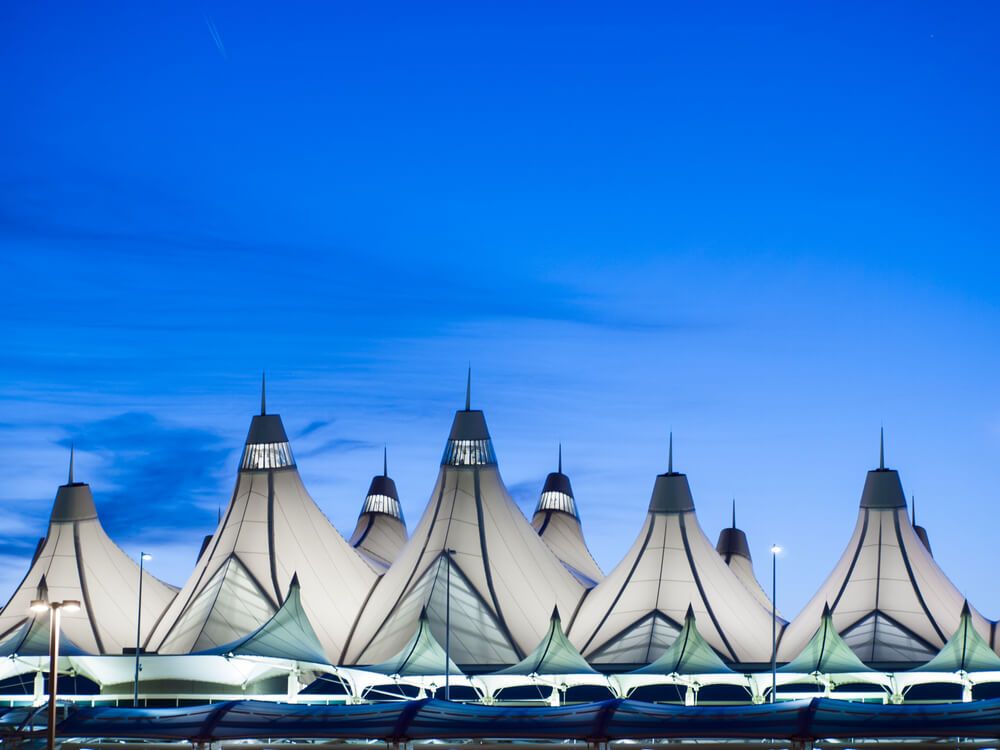
This international airport is the largest airport in the United States by surface area, with a total land area of 137.8 km2 located northeast of the city of Denver. Its architecture and size make it one of the best known in the United States, with its roof made of white fiberglass designed to recall the snowy peaks of the Rocky Mountains. Its 100m high control tower is one of the tallest in North America!
DIA (Denver International Airport) stands out for its unique design and vast spaces. Located in the state of Colorado, this infrastructure benefits from a privileged geographical location at the heart of the American continent. Travelers discover a spacious environment where modernity and references to local nature blend harmoniously.
This airport platform constitutes a major hub for American domestic flights and progressively develops its international connections. The excellence of its infrastructure and the quality of its organization make it a model for future airport projects worldwide.
4. Chicago O'Hare International Airport, USA (68.34 million passengers)
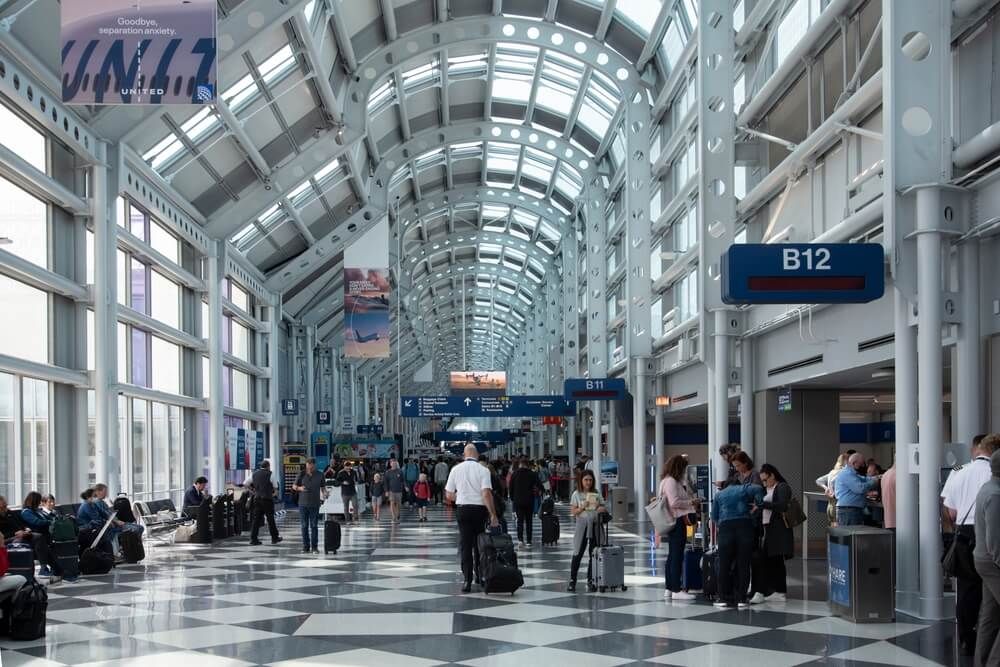
This international airport received its name upon inauguration in honor of the first ace pilot of the United States Navy, Edward O'Hare, who died in combat for his nation. This international airport was originally a factory during World War II, and served as a storage place for rare or experimental aircraft, and later, these aircraft were transferred to the United States Air Force National Museum.
ORD airport constitutes one of the main gateways to the United States for international travelers. Its position at the heart of the country makes it an essential connection point for numerous domestic and intercontinental routes. The modern terminals offer a quality traveler experience with numerous commercial and dining areas.
Chicago International Airport is also the filming location for the famous movie "Home Alone!", one of families' favorite films during Christmas time! This cultural notoriety adds to its attractiveness and makes it a symbol of American civil aviation.
5. Dubai International Airport, United Arab Emirates (66.07 million passengers)
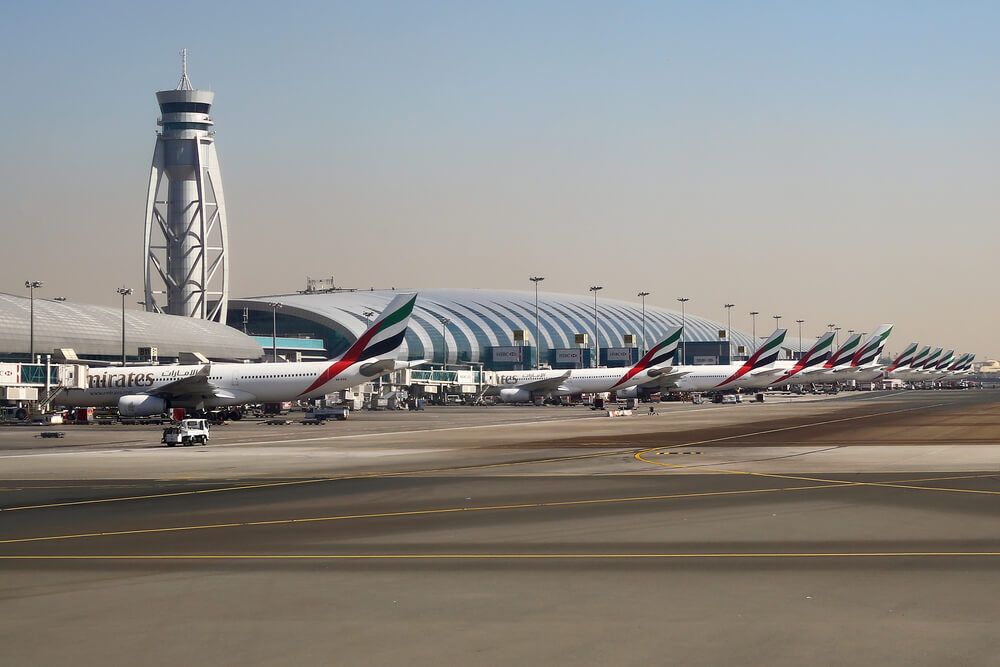
Main entry point to visit the city of Dubai, this airport constitutes a real introduction to the city that combines megalomania and shopping paradise! Indeed, you will find at Terminal 3 a huge shopping center, with play areas, hotels and even a "Zen Garden"... This terminal is the latest to have been inaugurated in 2008 and adopts the shape of an airplane wing, and with one kilometer long and 1,500,000 m2, it is part of the largest buildings in the world.
This Middle East hub perfectly illustrates the modern evolution of airport infrastructure. With nearly 90 million passengers during high activity periods, Dubai International rivals the world's largest airports. The experience offered to travelers goes far beyond simple transit, transforming waiting time into a real moment of relaxation and well-being.
The luxurious commercial spaces, premium rest areas and high-end services make this airport a destination in itself. This innovative approach now inspires numerous airport projects worldwide, particularly in Asia and the Middle East.
Important mentions of other global giants
King Fahd International Airport in Saudi Arabia is the largest in terms of surface area with its 780 square kilometers of land. This colossal infrastructure illustrates the Saudi kingdom's ambitions in the air transport sector. Despite its impressive size, its traffic remains moderate with about 11 million passengers per year, testifying to the future development potential of this region.
In France, it is Charles de Gaulle International Airport that is the most important with several dozen airlines that appear in the list of planes landing and taking off every day. Paris Charles de Gaulle (CDG) welcomes more than 70 million passengers annually and constitutes the main air gateway to continental Europe. This French platform plays an essential role in exchanges between Europe and other continents.
Beijing International Airport, the most important in Asia, testifies to the spectacular rise of air transport in China. Beijing Capital International Airport manages traffic of more than 100 million passengers per year, directly rivaling Atlanta for the title of world's largest airport in terms of passenger traffic. The new Beijing Daxing, recently inaugurated, comes to reinforce the reception capacity of the Chinese capital.
The challenges of these air transport giants
These exceptional infrastructures face complex challenges in terms of security, environment and flow management. Queues at checkpoints, organization of connections and fluidity of routes constitute daily challenges for the managers of these platforms.
Technological evolution and environmental concerns push these airports to constantly innovate. From sustainable development to improving the traveler experience, through energy optimization, every aspect of their operation receives particular attention to maintain their rank in global competition.