
Créé par Romane, le 7 mai 2026
Votre guide Ryo
© Shutterstock
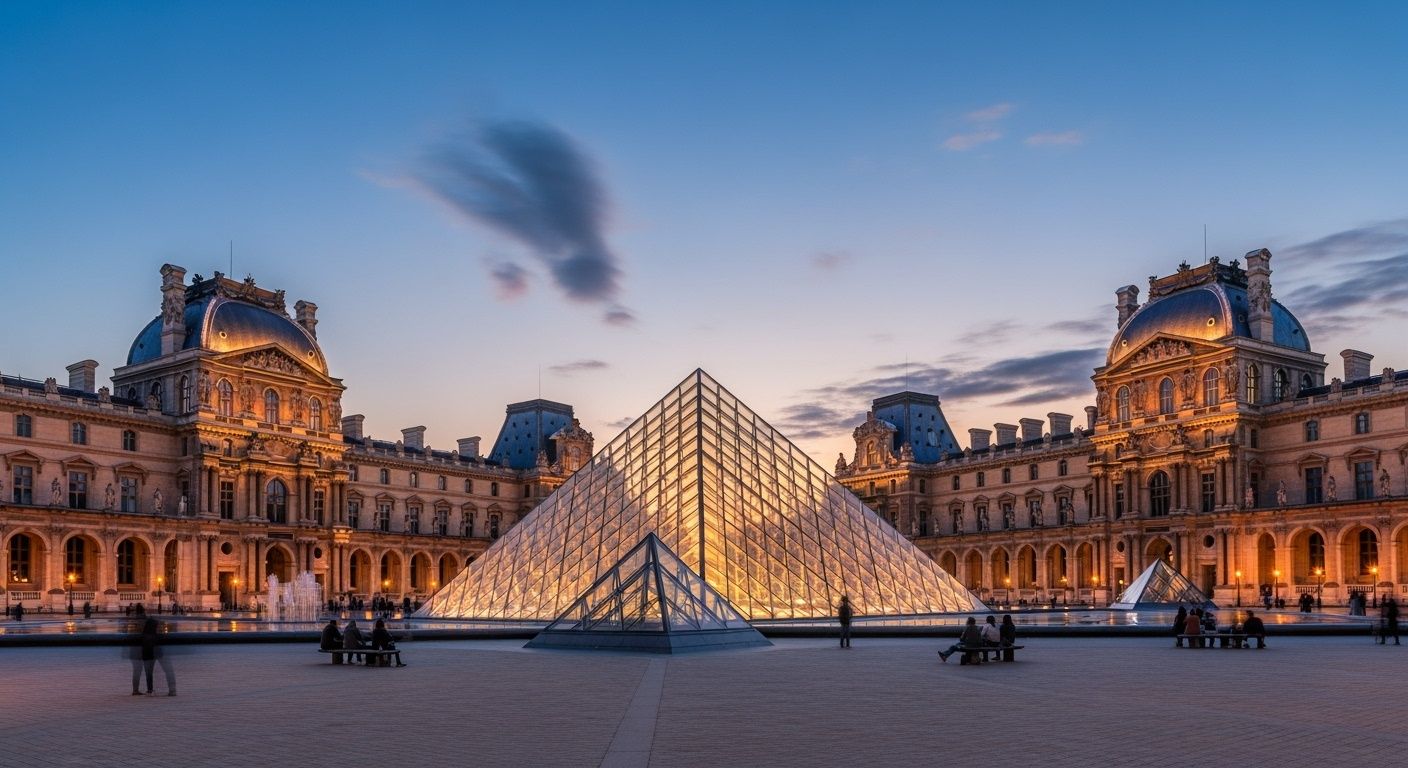
The Louvre Museum ranks among the world's most iconic cultural destinations. With its 35,000 artworks on display across 210,000 m², this former royal palace transformed into a national museum attracts nearly 10 million visitors each year. From the famous Mona Lisa to the majestic Venus de Milo, including the Winged Victory of Samothrace, the Louvre brings together masterpieces that have marked art history. This comprehensive guide accompanies you in preparing your visit to the Louvre Museum, discovering its unmissable works and fully enjoying this unique experience while visiting Paris.
History and architecture of the Louvre Museum
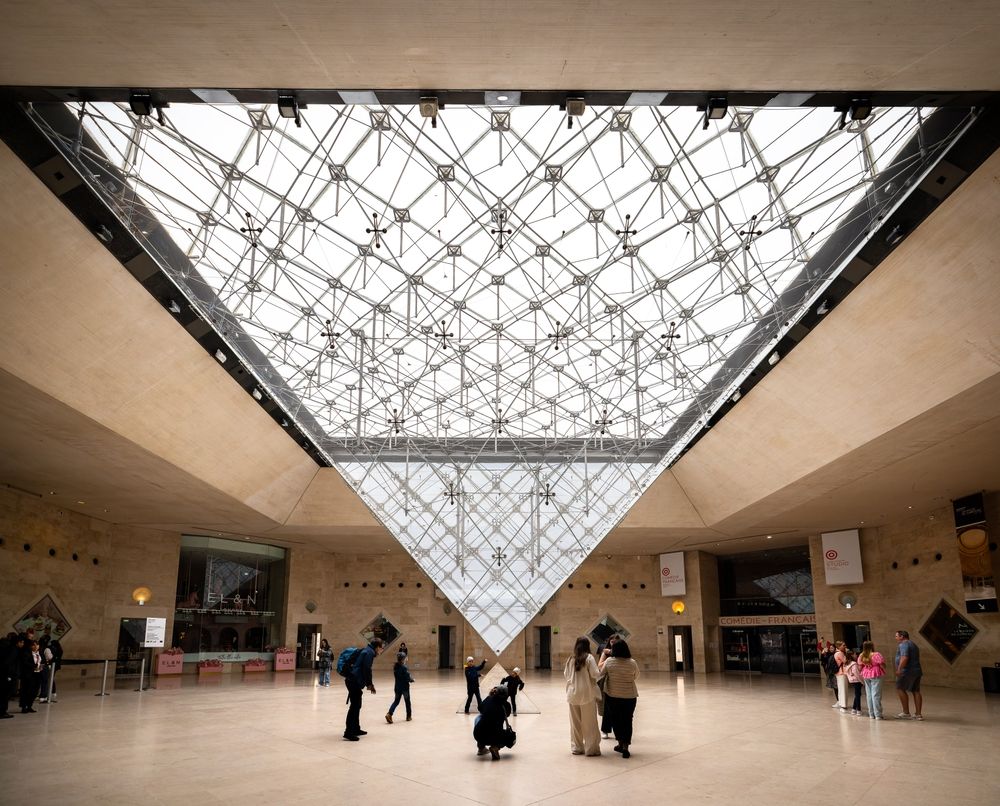
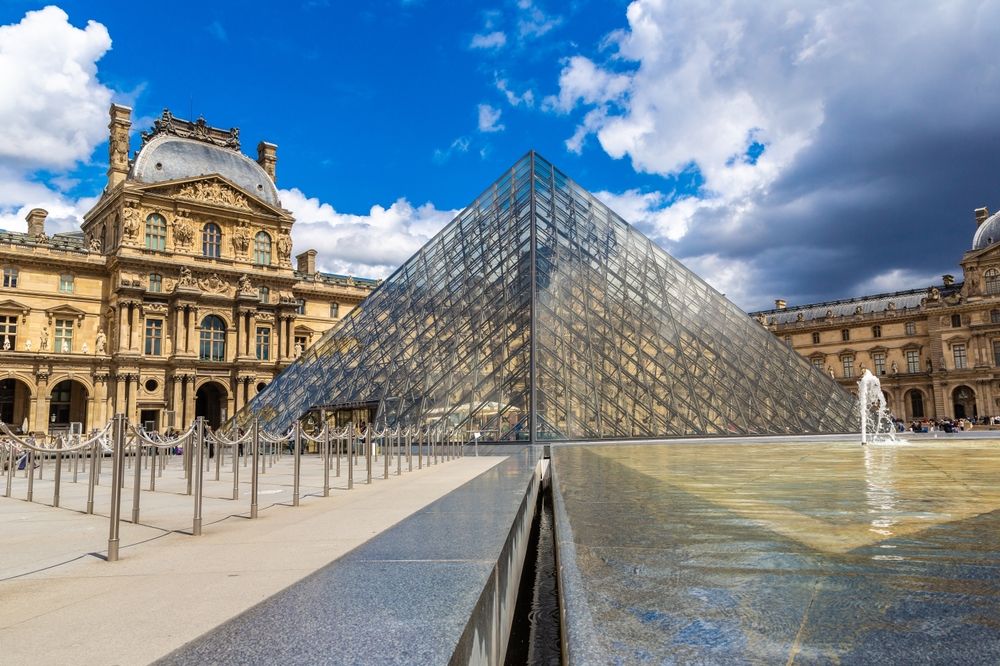
The Louvre's history begins in the 12th century with Philippe Auguste who built a fortress to defend Paris. This medieval fortress evolved over the centuries to become a royal residence under François I in the 16th century. The palace's current architecture reflects this long history, blending Renaissance, classical and contemporary styles with the addition of Ieoh Ming Pei's Glass Pyramid in 1989. In 1793, during the French Revolution, the Louvre opened its doors to the public as a national museum, democratizing access to artistic treasures once reserved for royalty. Today, the building extends over 73,000 m² of exhibition space distributed across three wings: Richelieu, Sully and Denon.
Louvre opening hours and admission prices
The Louvre Museum is open every day except Tuesday. The opening hours are 9am to 6pm on Monday, Thursday, Saturday and Sunday, with late opening until 9pm on Wednesday and Friday. Last admission is 1 hour before closing and gallery evacuation begins 30 minutes before. The museum exceptionally closes on January 1st, May 1st and December 25th.
The admission price to the Louvre Museum is €22 for adults. Entry is free for under 18s and under 26s who are residents of the European Economic Area. The entrance ticket gives access to the permanent collections, temporary exhibitions and the Eugène-Delacroix national museum on the day of your visit and the following day. It is strongly recommended to book your ticket in advance on the official website to avoid queues and ensure entry, as the number of daily visitors is limited.
Must-see artworks at the Louvre Museum
1. Leonardo da Vinci's Mona Lisa
The Mona Lisa, painted by Leonardo da Vinci between 1503 and 1506, remains the most famous artwork in the Louvre and probably in the entire world. This portrait of Lisa Gherardini, wife of Francesco del Giocondo, fascinates with its enigmatic smile and the revolutionary sfumato technique. Displayed in the Grande Galerie behind protective glass, it attracts thousands of visitors daily. The work measures only 77 x 53 cm, which often surprises visitors who expect a more imposing format.
2. The Venus de Milo
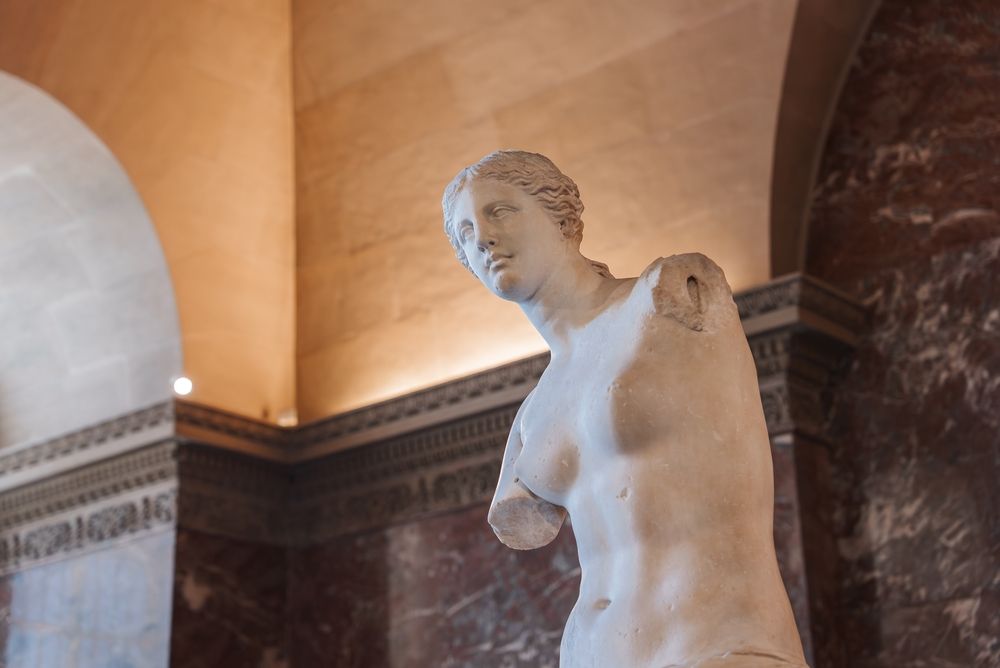
The Venus de Milo, sculpted around 100 BC and attributed to Alexandros of Antioch, represents the ideal of ancient Greek beauty. Discovered on the island of Milos in 1820, this 2.04-meter marble statue fascinates despite its missing arms, a mystery that still fuels debates. Displayed in the Greek Antiquities gallery, it symbolizes Aphrodite, goddess of love and beauty. Its harmonious proportions and the fineness of its drapery make it one of the museum's most admired works.
3. The Winged Victory of Samothrace
The Winged Victory of Samothrace, dating from around 200 BC, majestically stands at the top of the Daru staircase. This 5.57-meter marble statue with its base represents the winged goddess Nike celebrating a naval victory. Discovered in 1863 on the island of Samothrace, it impresses with its dynamism and the movement effect created by its veils flowing in the wind. Its strategic position in the museum makes it a mandatory passage point and one of the first works visitors discover.
4. Théodore Géricault's The Raft of the Medusa
The Raft of the Medusa (1819) by Théodore Géricault marks a turning point in French art toward romanticism. This monumental canvas of 491 x 716 cm depicts the real drama of the frigate Medusa's shipwreck in 1816. Géricault conducted a true journalistic investigation, meeting survivors and studying anatomy to represent this tragedy with striking realism. The work overwhelms with its dramatic composition and implicit political message about the incompetence of the authorities of the time.
5. Eugène Delacroix's Liberty Leading the People
Liberty Leading the People (1830) by Eugène Delacroix immortalizes the French revolutionary spirit. This allegory of the July 1830 revolution features Marianne, figure of the Republic, guiding the Parisian people toward freedom. The French tricolor flies at the center of the dynamic composition, symbol of democratic aspiration. This emblematic work has inspired many representations of the French Republic and even appeared on former 100-franc banknotes.
Download the audio guide circuit to discover Paris on foot and independently
Our Paris audio guide itinerary accompanies you in discovering the French capital, including a passage in front of the Louvre Museum and its surroundings. This 8.9 km circuit with 18 audio guides takes you through Paris's iconic monuments, offering an enriching perspective on the history of this exceptional city and its architectural treasures.
Louvre departments and collections
1. Near Eastern Antiquities
The Near Eastern Antiquities department brings together exceptional witnesses of ancient Near and Middle Eastern civilizations. Among the masterpieces are the Code of Hammurabi (around 1750 BC), one of the oldest known written legislations, and the imposing winged bulls from Khorsabad that guarded Assyrian palaces. These collections cover more than 8,000 years of history, from prehistory to the advent of Islam, illustrating the art of Mesopotamia, ancient Iran and the Levant.
2. Egyptian Antiquities
The Louvre's Egyptian Antiquities count among the world's richest collections with more than 50,000 works. The Seated Scribe (around 2600-2350 BC), a masterpiece of Egyptian art, captivates with its striking realism. Sarcophagi, mummies, jewelry and papyri trace 4,000 years of pharaonic civilization. The Osiris crypt recreates the mystical atmosphere of Egyptian temples, while the galleries present works ranging from the Old Kingdom to the Coptic period.
3. Islamic Art
The Islamic Art department, inaugurated in 2012, displays in a modern architectural setting more than 1,000 works covering 13 centuries and three continents. From illuminated manuscripts to lustered ceramics, from precious carpets to scientific objects, this collection testifies to the richness and diversity of Islamic civilization. The Baptistery of Saint Louis, a 14th-century masterpiece of metalwork, perfectly illustrates artistic exchanges between East and West.
4. French Sculptures
The French Sculptures department traces the evolution of this art from the Middle Ages to the 19th century. The Marly courtyard houses the famous Marly Horses by Guillaume Coustou, commissioned by Louis XV to adorn the Château de Marly. These monumental works, bathed in natural light, illustrate the virtuosity of French sculptors. From medieval recumbent figures to works by Houdon and Rude, this collection reveals the evolution of French sculptural styles and techniques through the centuries.
Practical tips for visiting the Louvre
1. Best times to avoid crowds
To optimize your Louvre Museum visit, choose less crowded time slots. Opening at 9am, particularly on Monday and Thursday, offers a more serene experience. Late openings on Wednesday and Friday after 6pm also constitute an excellent option with a more intimate atmosphere. Avoid weekends, school holidays and afternoons which experience the highest attendance. Thursday is generally the least busy day of the week.
2. Planning your visit route
Given the museum's immensity, it's essential to plan your route before visiting. The Louvre offers several thematic routes: "Louvre Masterpieces" (1h30), "The Louvre for Families" or routes by department. Download the official Louvre app or pick up a map at the entrance. Focus on 2-3 departments maximum for a first visit of 3-4 hours. Don't hesitate to use the Ryo itinerary to discover the museum's surroundings and extend your Parisian exploration.
3. Services and amenities
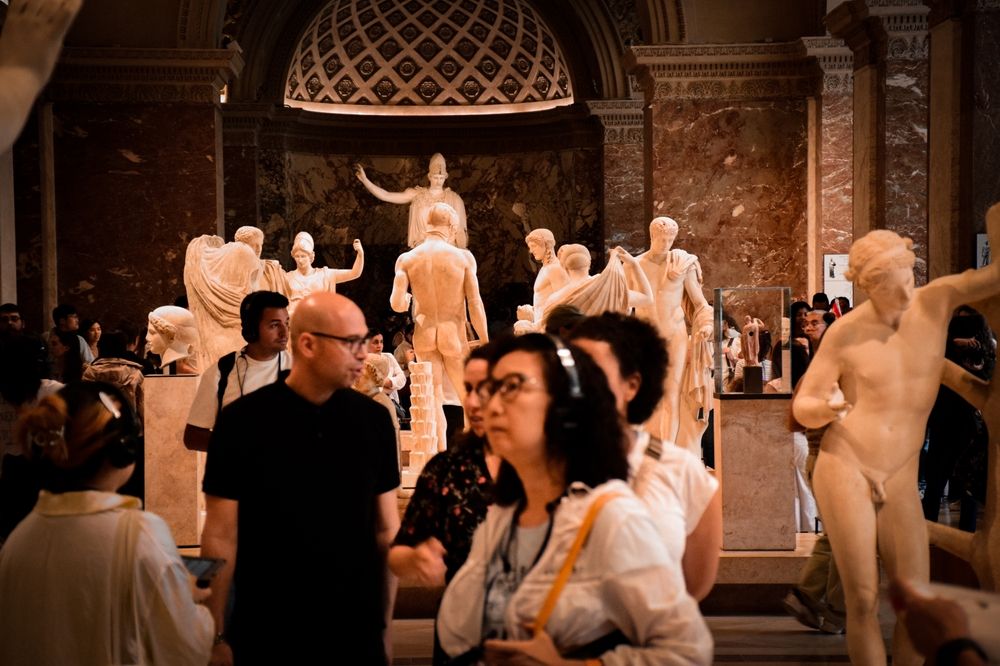
The Louvre provides numerous services to enhance your experience. Audio guides (€6) are available in several languages and offer age-appropriate commentary. The free cloakroom allows you to leave coats and large bags. Several cafes and restaurants are located in the museum, including Café Marly with a view of the Pyramid. Shops offer books, reproductions and souvenirs. For families, strollers are available and baby spaces facilitate visits with young children.
4. Access and transportation
The Louvre Museum (Rue de Rivoli, 75001 Paris, rated 4.5/5 on Google for more than 150,000 reviews) is easily accessible by public transport. The "Palais Royal – Musée du Louvre" metro station (lines 1 and 7) takes you directly to the entrance. RER A, B or D brings you to Châtelet-Les Halles, a 10-minute walk from the museum. Several bus lines (21, 24, 27, 39, 68, 69, 72, 81, 95) serve the surrounding area. For those coming by car, the Carrousel du Louvre parking offers 605 paid spaces.
Additional information for the visit
1. Recommended visit duration
For a first visit to the Louvre, allow a minimum of 3 hours to discover the must-see works. A complete visit of the permanent collections would require several days. Art enthusiasts can spend an entire day there by combining the visit to the collections with temporary exhibitions. It's recommended to take regular breaks to avoid museum fatigue and fully enjoy each work.
2. Guided tours and activities
The Louvre offers various guided tour options (€31 with admission, €12 without admission). Thematic tours explore specific subjects like "The Art of Living at Versailles in the 18th Century" or "Louvre Masterpieces". Workshops for children and families make the visit interactive and educational. Lectures and shows enrich the cultural experience with prices ranging from €5 to €49 depending on the program. Advance booking is strongly recommended for all these activities.
3. Rules and recommendations
Certain visit rules must be respected at the Louvre. Photography is allowed without flash in the permanent collections, but prohibited in front of certain works like the Mona Lisa. Large bags must be deposited at the cloakroom. It's forbidden to touch artworks and run in the galleries. Phones must be in silent mode. Plan comfortable shoes as the visit involves a lot of walking on marble floors.
In conclusion, visiting the Louvre Museum represents an exceptional cultural experience that deserves careful preparation. Between its legendary works, grandiose architecture and universal collections, the world's largest museum offers a journey through art history and civilizations. Thanks to this guide's advice and the Ryo audio guide itinerary, you are now ready to discover this temple of culture in the best conditions. Don't hesitate to extend your cultural discovery by exploring the architectural and historical wonders that Paris has to offer.
FAQ
How long does it take to visit the Louvre?
A first visit to the Louvre requires at least 3 hours to see the must-see works. For a more thorough visit, plan a full day. It's impossible to see everything in one visit, as the museum has more than 35,000 works on display.
Should I book my ticket in advance?
Yes, it's strongly recommended to book your ticket in advance on the official Louvre website. This booking guarantees your entry at the chosen time and saves you from long queues, particularly during high tourist season.
What's the best time to visit the Louvre?
The best time slots are opening at 9am (especially Monday and Thursday) and late openings on Wednesday and Friday after 6pm. Avoid weekends and school holidays for a more peaceful visit.
Can you take photos in the Louvre?
Photography without flash is allowed in most permanent collections, but prohibited in front of certain works like the Mona Lisa. Always check the signage before photographing an artwork.
Is the Louvre accessible to people with reduced mobility?
Yes, the Louvre is accessible to people with reduced mobility. Elevators, ramps and wheelchairs are available. The main entrance under the Pyramid is the most suitable. It's advisable to contact the museum before your visit to best organize your route.