
Créé par Romane, le 7 mai 2026
Votre guide Ryo
© Shutterstock
Descending into the depths of Paris means plunging into the heart of a fascinating and mysterious universe. The Paris Catacombs, the world's largest underground ossuary, constitute one of the most unusual and impressive visits in the capital. 20 meters underground, a 1.5 km route awaits you, where the remains of nearly six million Parisians rest. This place steeped in history, open to the public since 1809, offers a unique experience that leaves no one indifferent.
1. Why visit the Paris Catacombs?
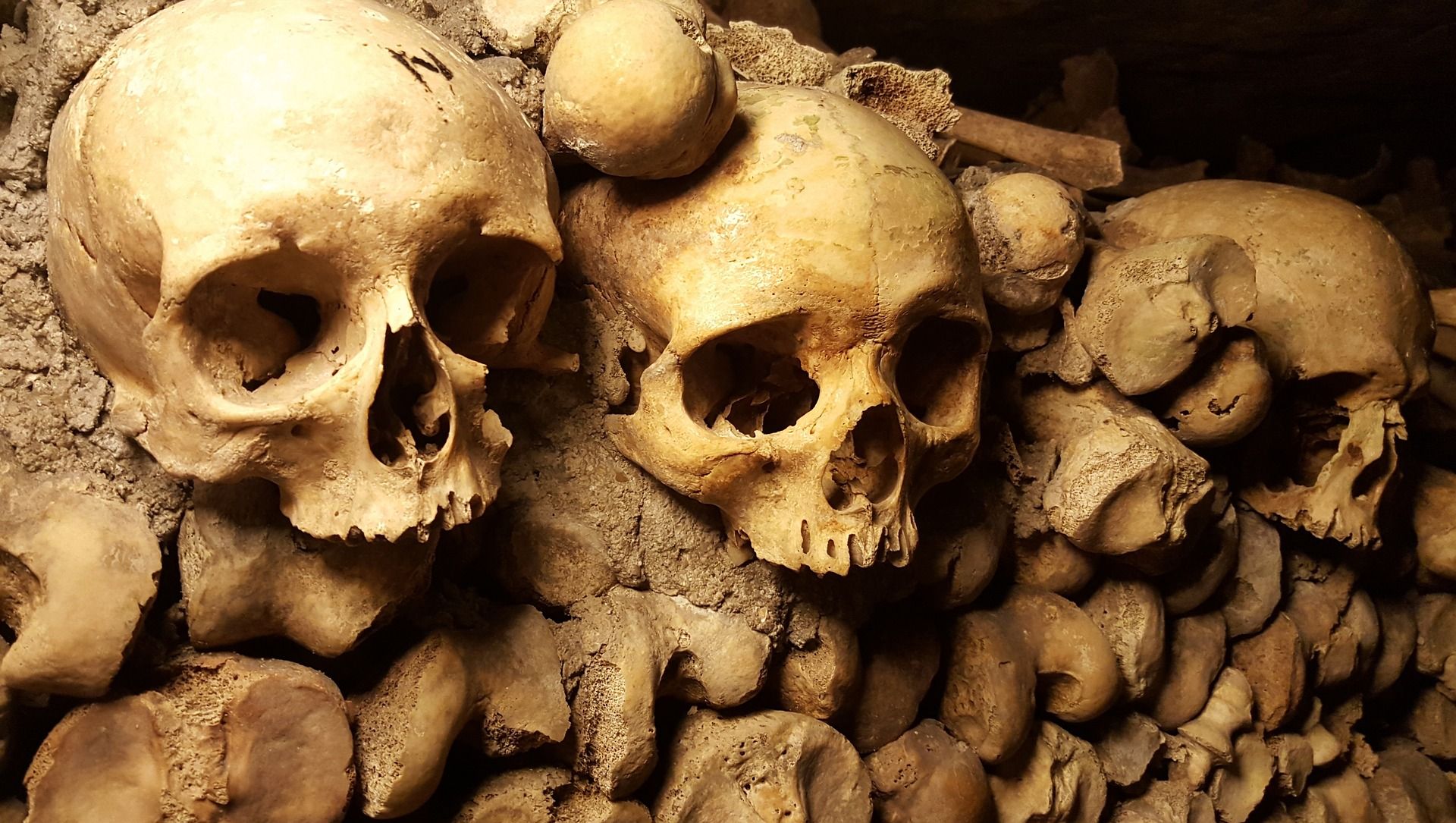
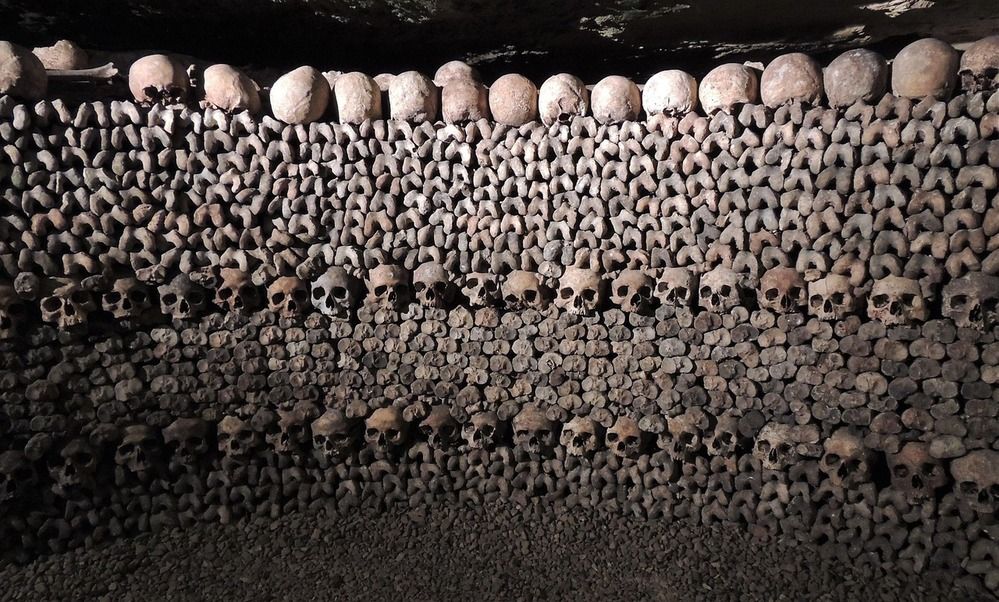
Visiting the Paris Catacombs represents a truly unique experience in the French capital. This exceptional site transports you into a mysterious underground universe, where history and architecture meet in a striking way. The underground route, built in former limestone quarries, reveals a spectacular display of perfectly aligned bones over 800 meters of galleries.
The particular atmosphere of the catacombs fascinates visitors from around the world. The constant temperature of 14°C, dim lighting and almost religious silence create an atmosphere conducive to meditation on our mortal condition. This place of memory pays tribute to millions of anonymous Parisians, whose remains were transferred here between 1785 and 1860.
Beyond the macabre aspect, the catacombs constitute a true journey through time. You will discover how Paris managed its public health problems in the 18th century, while admiring the titanic work carried out to transform these quarries into an ossuary. The carved inscriptions, sculptures made in stone and different themed rooms considerably enrich the visit.
2. Practical information for visiting the Paris Catacombs
Opening hours
The Paris Catacombs are open Tuesday to Sunday, from 9:45 AM to 8:30 PM. Last admission is at 7:30 PM, giving you a full hour to explore the underground galleries. The site is closed every Monday as well as certain public holidays: January 1st, May 1st and December 25th. It's important to note that these hours may be modified during special events or maintenance work.
2025 Prices
The full rate is €31 and includes access to the site as well as an audioguide. A reduced rate of €25 is offered to people aged 18 to 26, with audioguide included. Children aged 5 to 17 benefit from a preferential rate of €12, but the audioguide is not included in this price. Entry is free for children under 5, who can present themselves directly at reception without prior reservation.
Given the current high attendance, online reservation with time slot is strongly recommended. People with disabilities benefit from free access upon presentation of proof, without needing to reserve in advance.
How to get there
The entrance to the catacombs is located at 1 avenue du Colonel Henri Rol-Tanguy, in the 14th arrondissement of Paris. The simplest way to get there is to take the metro to Denfert-Rochereau station, served by lines 4 and 6. This station actually bears the name of the square where the site entrance is located. The RER B also stops at Denfert-Rochereau, offering a practical alternative from the airports or suburbs.
To discover the neighborhood before your visit, we recommend using the Ryo audioguide itinerary to visit Paris. This app will allow you to immerse yourself in Parisian history while guiding you to the catacombs.
Download the audioguide circuit to discover Paris on foot and independently
For a complete experience of the capital, nothing beats an audioguided circuit in Paris. The Ryo app offers several thematic itineraries that take you to discover the most beautiful Parisian monuments, with fascinating audio commentary on the history and anecdotes of each place. Before or after your visit to the catacombs, let yourself be guided through the streets of the capital thanks to this practical and enriching solution.
Visit duration
Plan about an hour to visit the Paris Catacombs. The route extends over 1.5 km of underground galleries, 20 meters deep. This duration may vary according to your walking pace and interest in architectural and historical details. The audioguide, included in the entrance fee, considerably enriches the experience and may slightly extend the visit.
3. What to see in the Paris Catacombs?
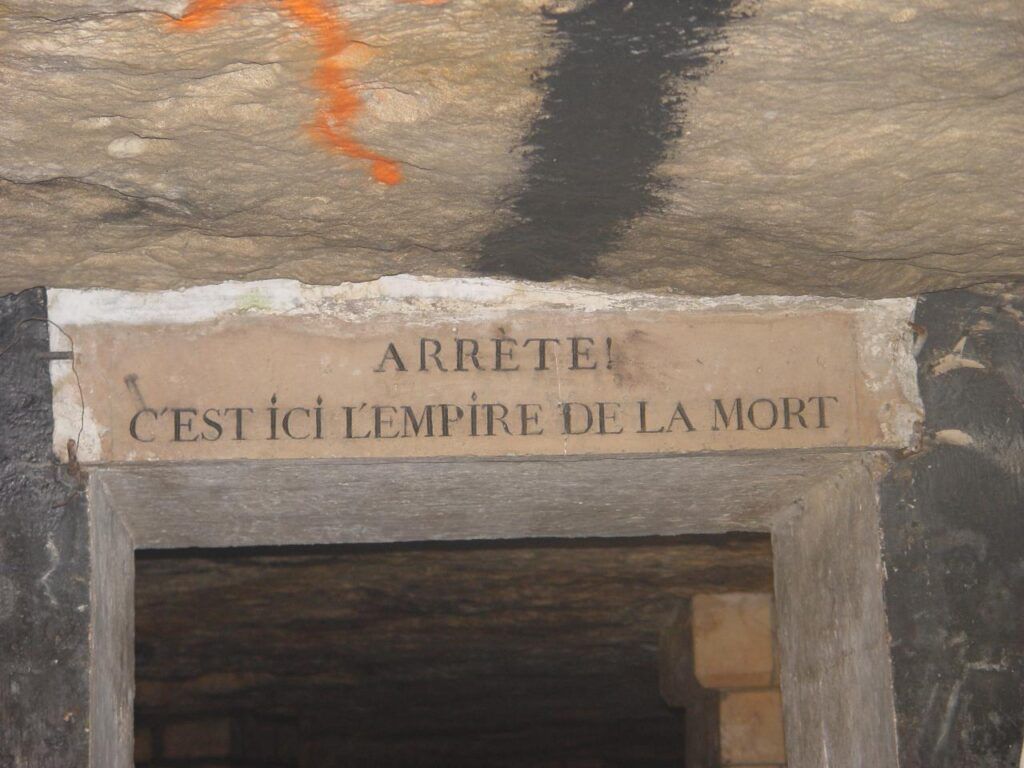
The plaque "Stop! This is the empire of death"
From your descent into the Parisian depths, you are welcomed by this striking inscription carved on the pediment of the municipal ossuary. This phrase, placed in the 18th century, solemnly marks the entrance into a world apart. It testifies to the respect accorded to this place of memory and psychologically prepares visitors for the unique atmosphere of the galleries. This emblematic plaque has become one of the most photographed symbols of the Paris Catacombs.
The underground galleries of the municipal ossuary
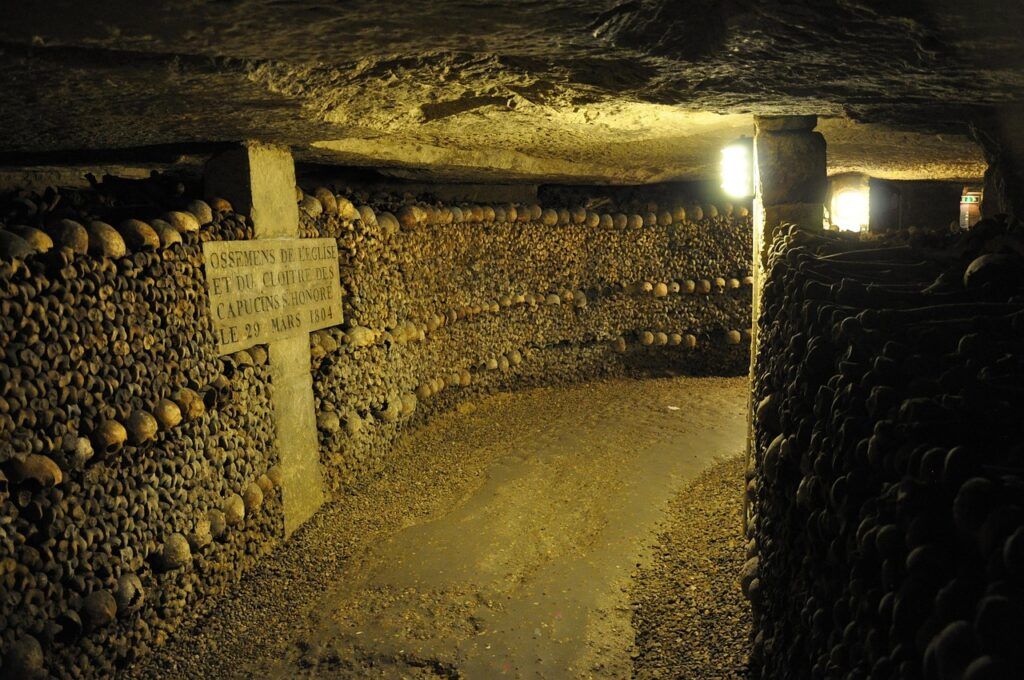
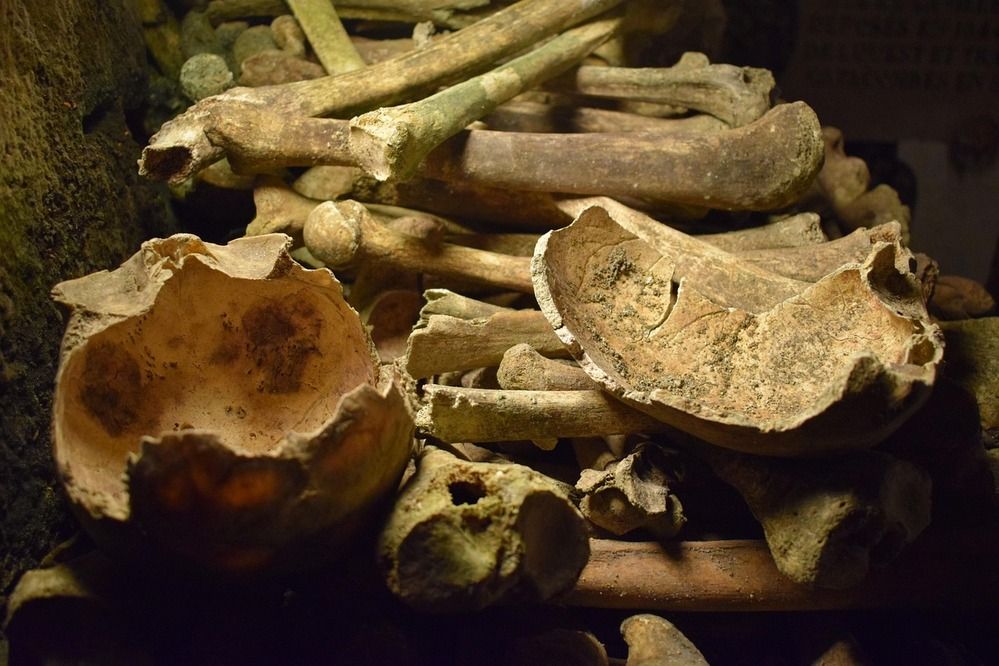
The heart of the visit lies in these galleries fitted out from 1785 to accommodate bones from saturated Parisian cemeteries. Over 800 meters, you discover a meticulous staging where skulls and tibias form impressive geometric patterns. The bones, transferred from the Cemetery of the Innocents and other Parisian necropolises, are arranged with remarkable care. This methodical organization allows you to observe the evolution of funeral practices and offers a fascinating perspective on the urban history of Paris.
The Passion Crypt
Located in the heart of the underground route, the Passion Crypt constitutes a particularly moving space of recollection. This oratory, built in 1777 in the former quarries, is consecrated to the memory of thousands of anonymous people who rest in these places. The sober architecture, punctuated by religious elements evoking suffering and sacrifice, adds a spiritual dimension to the visit. This place of contemplation allows you to measure the historical and emotional scope of the ossuary.
The Port-Mahon sculptures
In a discrete gallery of the catacombs, you discover an exceptional artistic testimony: the Port-Mahon sculptures. Made by a former quarryman in the 18th century, these miniatures represent scenes of fortresses and fortified islands. Sculpted directly into the stone of the quarries, they testify to the talent and patience of their creator. These works offer a unique glimpse into the life of quarry workers and their creativity in this underground world.
The Samaritan fountain
Built around 1810, the Samaritan fountain represents a rare vestige of hydraulic development in these dark corridors. Designed to drain underground water, it also served as a supply point for workers working in the quarries. Its name refers to the biblical meeting between Jesus and the Samaritan woman, symbolizing living water. This fountain illustrates the crucial role played by water management during quarry exploitation, ensuring safety and subsistence for workers.
To prepare for your visit and explore other emblematic places of the capital, don't forget to consult the guide to visit Paris, which will accompany you in your Parisian discoveries.
4. The fascinating history of the Paris Catacombs
From ancient quarries to underground galleries
The history of the Paris Catacombs begins well before their transformation into an ossuary. From the Gallo-Roman period, the Parisian subsoil was exploited to extract limestone necessary for the construction of the city. These quarries gradually extended under the capital, forming a network of nearly 300 kilometers of galleries. Over the centuries, intensive exploitation gave way to abandoned tunnels, progressively forgotten until their rediscovery in the 18th century.
The transformation into a municipal ossuary
Faced with the dramatic overpopulation of Parisian cemeteries, particularly that of the Innocents, the authorities decided in 1785 to transfer the bones to the former quarries. The Cemetery of the Innocents, used for nearly ten centuries, posed serious sanitary problems with its overflowing mass graves. From 1786, bones began to be transported at night to the quarries of the Montrouge plain. This titanic operation would extend over several decades and concern about six million Parisians.
The quarry workers methodically organized the bones, creating these impressive alignments that characterize the catacombs today. In 1809, the site partially opened to the public, quickly becoming a major attraction for visitors curious to discover this unique place. In 1874, the catacombs officially obtained museum status, consolidating their cultural and historical importance.
Little-known historical anecdotes
The history of the catacombs is full of fascinating anecdotes. In 1787, the Count of Artois, future Charles X, made a visit that marked spirits and reinforced the fame of this still unknown place. In the 19th century, groups of intrepid Parisians secretly organized parties in the depths, taking advantage of the mysterious atmosphere and dark corridors for secret celebrations.
More recently, in 2004, police discovered an astonishing installation: a clandestine cinema room fully equipped with screen, projector and seats. This discovery illustrates the permanent attraction these underground galleries have on bold explorers. These stories testify to the continued fascination with this underground world, regularly occupied by cataphiles in search of adventures.
5. Practical tips to prepare your visit well
Book in advance
Online reservation is highly recommended, particularly during high tourist season. The number of visitors is limited to 200 people simultaneously in the galleries for safety and comfort reasons. Booking your time slot on the official website will save you from long queues and guarantee your access on the desired day and time.
Dress accordingly
Bring warm clothes, as the temperature in the catacombs remains constant around 14°C all year round. Even in the height of summer, this underground coolness requires a light sweater or cardigan. Also favor closed and comfortable shoes, as the ground can be damp and slippery in places. Flat shoes with good grip are ideal for safely covering the 1.5 km of galleries.
Anticipate the stairs
Visiting the catacombs involves going down then back up 243 steps in total. There is no elevator or alternative to access the underground galleries. This constraint unfortunately makes the site inaccessible to people with reduced mobility. The visit is also strongly discouraged for people suffering from cardiac or respiratory insufficiency, as well as claustrophobic people due to the confined spaces.
Travel light
A security check is performed at the entrance to the catacombs. Large bags, suitcases and bulky luggage are not authorized in the galleries due to the narrowness of the passages. There is no cloakroom on site to deposit your belongings. Limit yourself to a small backpack containing the essentials: camera, water bottle and warm clothing.
During your stay in the capital, take the opportunity to visit Paris with Ryo audioguide circuits, which will make you discover the secrets and history of the most beautiful Parisian neighborhoods.
6. Rules to respect during the visit
Respect for the place and its solemnity is paramount during your visit to the Paris Catacombs. It is strictly forbidden to touch the bones, which constitute a fragile historical heritage that must be preserved. Photography without flash is authorized for personal purposes, but the use of tripods or professional equipment requires prior authorization.
Consumption of food and alcoholic beverages is prohibited in the underground galleries. As the site is a place of memory, respectful behavior and appropriate attitude are expected from all visitors. Children must remain under the constant supervision of their companions. Carefully follow staff instructions and respect the visiting direction to guarantee the safety and comfort of all.
7. What to do after visiting the catacombs?
After your immersion in the Parisian depths, several options are available to continue your discovery of the neighborhood. The 14th arrondissement is full of interesting places to explore. You can head to Montparnasse, located about 15 minutes on foot, where the famous tower offers a spectacular panoramic view of Paris.
The Luxembourg Gardens, accessible in a 20-minute walk, offer an ideal green break after the confined atmosphere of the catacombs. This magnificent French garden invites you to stroll and relax. For art lovers, the Montparnasse district houses numerous artist studios and contemporary art galleries.
If you wish to continue your exploration of Paris independently and enrichingly, the Ryo app will accompany you through the most beautiful neighborhoods of the capital. The audioguide circuits allow you to discover the history and anecdotes of Parisian monuments while leaving you free to set your own pace.
In conclusion, visiting the Paris Catacombs constitutes an unforgettable experience that plunges you into the bowels of Parisian history. This underground journey, both fascinating and moving, offers a unique perspective on the capital's past and our relationship to death. Whether you are passionate about history, lover of unusual places or simply curious to discover a little-known facet of Paris, the catacombs promise you a memorable visit. Don't forget to book in advance and equip yourself properly to fully enjoy this exceptional underground adventure. To complete your Parisian stay, let yourself be guided by the Ryo itineraries in Paris, which will reveal all the secrets of the City of Light.
FAQ
Is it possible to visit the catacombs without reservation?
People eligible for free admission (under 5 years old, people with disabilities) can present themselves directly at the entrance without reservation. For all other visitors, online reservation with time slot is strongly recommended due to high attendance, especially during weekends and school holidays.
How long does the visit to the Paris Catacombs last?
The complete visit to the catacombs lasts about an hour to cover the 1.5 km of underground galleries. This duration may vary according to your pace and interest in historical and architectural details. The included audioguide considerably enriches the experience.
Are the catacombs suitable for children?
The visit may impress some children due to the underground atmosphere and the presence of human bones. It is advisable to assess your children's sensitivity before the visit. Children under 5 benefit from free entry, and those aged 5 to 17 from a reduced rate of €12.
Can you take photos in the catacombs?
Photography without flash is authorized for personal purposes. The use of tripods, professional equipment or flash requires prior authorization. Respect for the place and other visitors must guide your photographic behavior.
Are the catacombs accessible to people with reduced mobility?
Unfortunately, the route is not suitable for wheelchairs or people with significant mobility difficulties. Access requires going down and back up 243 steps, with no elevator alternative. There is currently no disabled access for this underground site.
What temperature is it in the catacombs?
The temperature in the catacombs remains constant around 14°C throughout the year. It is therefore essential to bring warm clothing, even in summer, to comfortably enjoy the visit.
Is there an audioguide available?
The audioguide is included in the full rate (€31) and reduced rate (€25). It is offered in several languages and considerably enriches your understanding of the history and particularities of the site. For children aged 5 to 17 (€12 rate), the audioguide is not included but can be rented separately for €5.