
Créé par Emilie, le 20 juin 2026
Votre guide Ryo
Swimming in the Pyrénées-Orientales: the Best Natural Spots in 2026
© Shutterstock
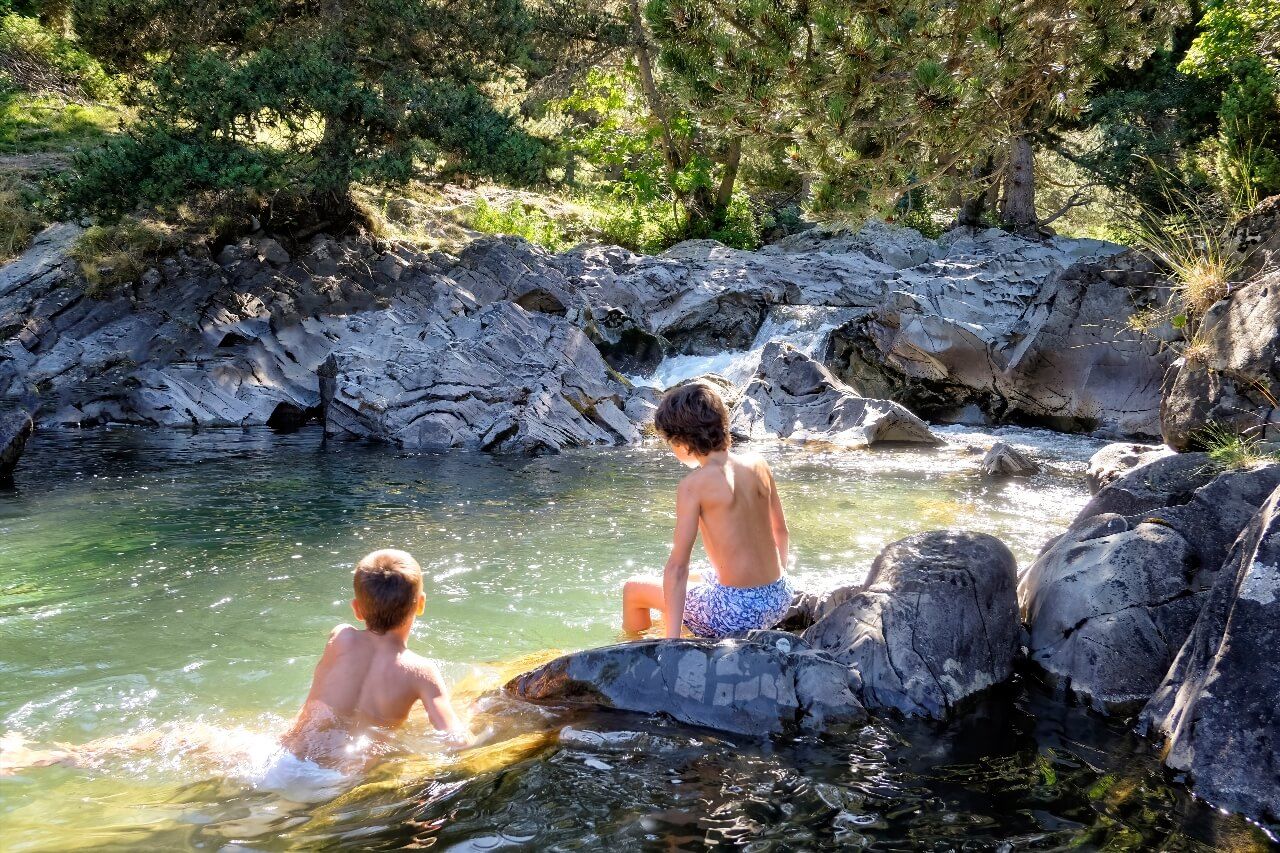
It's 38 °C in Perpignan in July, yet the water in the Galamus gorges, less than an hour away, stays below 16 °C even in midsummer. This is the paradox of the Pyrénées-Orientales: a scorching Mediterranean department that hides, as soon as you climb toward the massifs, icy rivers, turquoise rock pools and waterfalls tumbling dozens of metres. Swimming in the Pyrénées-Orientales is an experience unlike any other: it has nothing to do with crowded coastal beaches, but everything to do with fast-flowing waters framed by pink marble cliffs, chestnut forests or granite slopes at 1,800 metres above sea level.
This guide covers the best natural swimming spots in the department: vertiginous gorges such as Galamus and Gouleyrous, high-altitude lakes reachable in a day, the thermal springs of Molitg-les-Bains, the Têt and Tech rivers, and the Cascade des Anglais. For each location you will find practical information on access, depth and safety, so you can plan your escape with complete peace of mind. The Ryo app also lists many points of interest in the Catalan region: to explore the heritage of the surrounding villages, check out our selection of the most beautiful villages of the Pyrénées-Orientales.
The Galamus Gorges: the Iconic Swimming Spot of the Pyrénées-Orientales
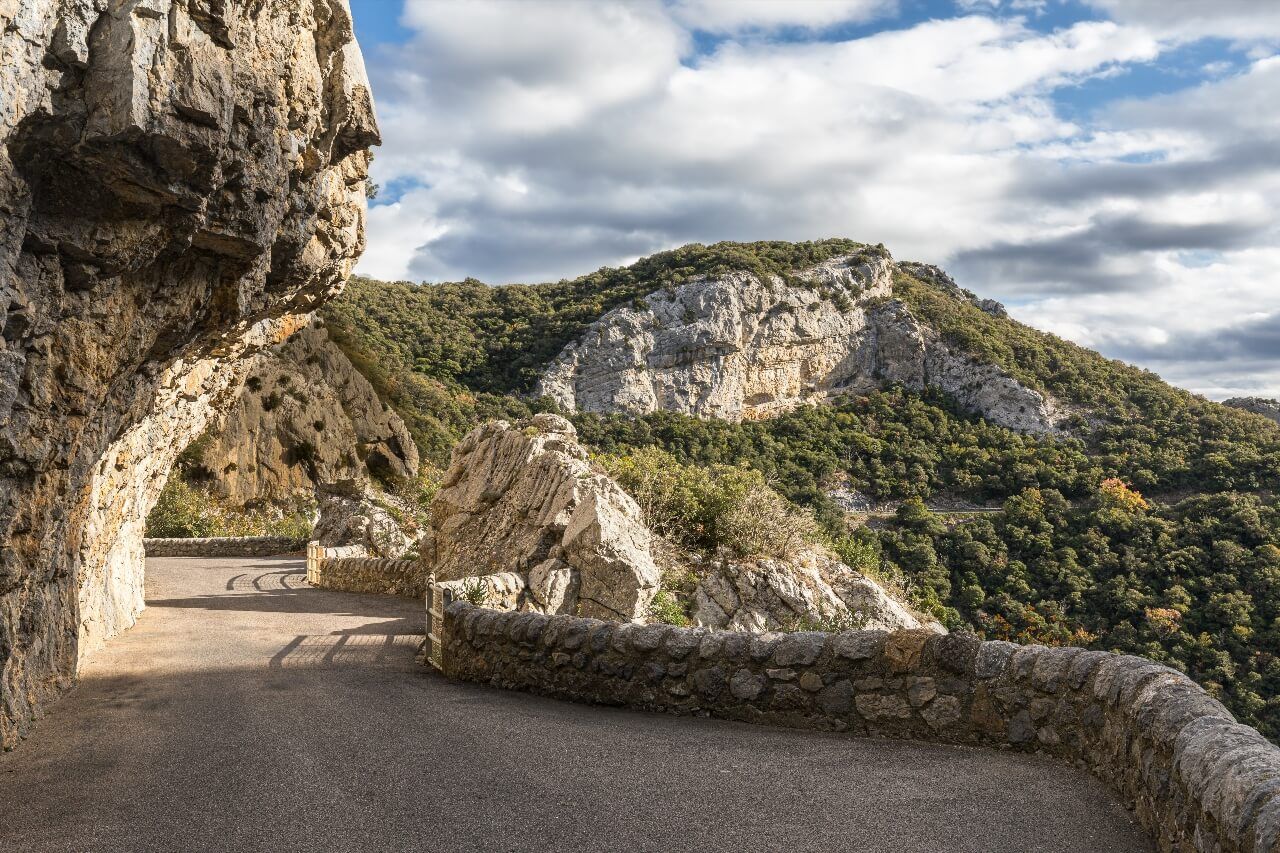
No swimming spot in the Pyrénées-Orientales has the reputation of the Galamus gorges (D7, 11500 Saint-Paul-de-Fenouillet, rated 4.8/5 on Google from 5,075 reviews). Carved by the Agly over nearly 2 kilometres through white and pink limestone, these gorges form a spectacular canyon whose walls reach nearly 300 metres in height in places. The road that runs through them, a corniche cut into the rock barely wide enough for two cars, is an attraction in itself.
Swimming takes place in the rock pools formed by the Agly upstream of the gorge, on the Saint-Paul-de-Fenouillet side. The water there is particularly cool — expect 14 to 17 °C depending on the season — and remarkably clear. Several natural ledges allow you to progress safely, and children can splash around in the shallower areas while adults explore the narrower passages.
You need to arrive early — very early in season. The gorge road car park fills up before 10 a.m. on July and August weekends, and the gendarmerie sometimes regulates access when crowds are high. The solution: leave before 8:30 a.m., or opt for a weekday visit. Another option is to descend from the village of Cubières-sur-Cinoble on the Aude side, which offers a quieter approach and a different angle on the cliffs.
Around Galamus, the Chapelle Saint-Antoine, a troglodyte hermitage clinging to the cliff face halfway through the gorge, is worth a visit if you have the energy for the climb. The view over the canyon entrance is breathtaking. Allow a full day to combine swimming with exploring the gorges.
The Cascade des Anglais: Cool Waters on the Catalan Side of the Canigou
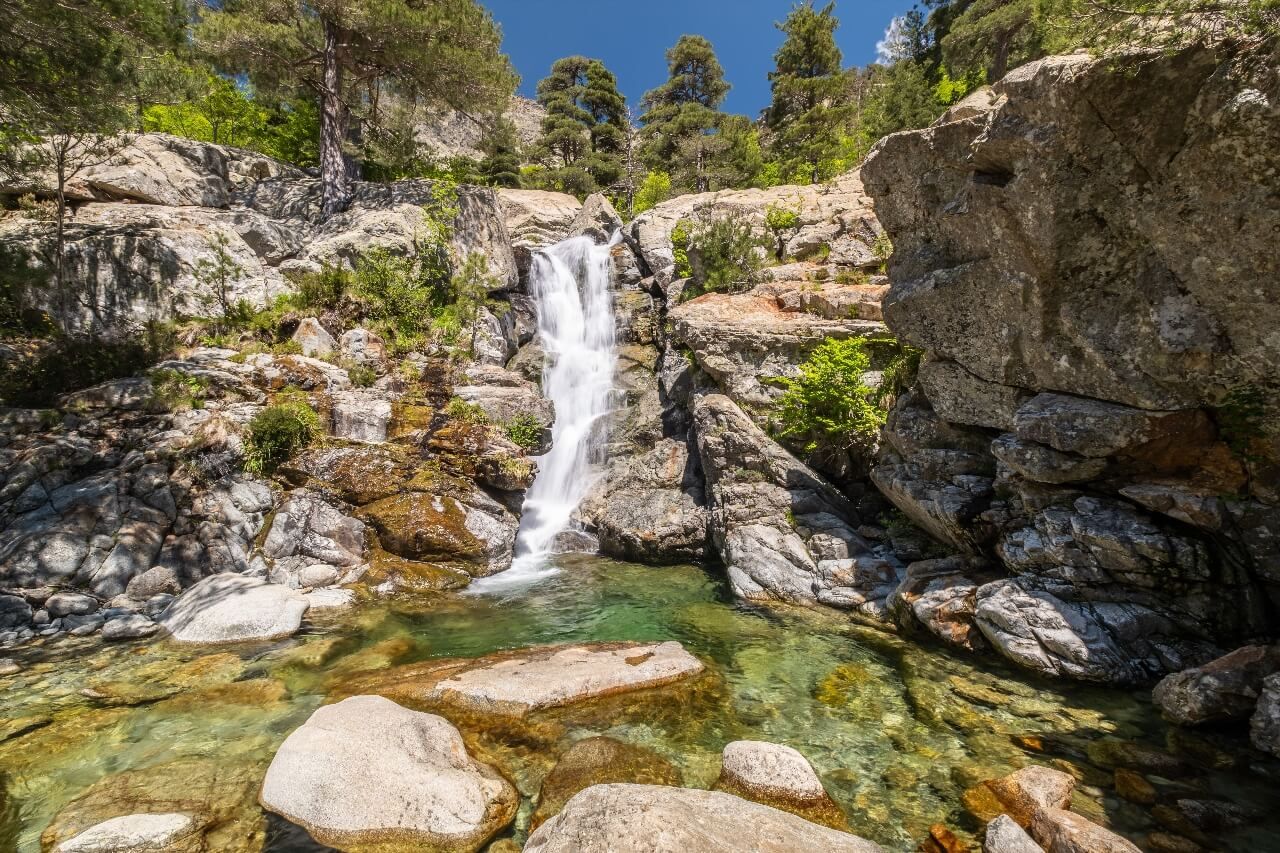
The Canigou is the sacred mountain of the Catalans, and its slopes shelter several swimming spots, of which the Cascade des Anglais (Casteil, 66820 Casteil, rated 4.8/5 on Google from 291 reviews) is arguably the most accessible from the plain. Perched at around 900 metres above sea level in the commune of Casteil, it tumbles in several successive drops through a forest setting that contrasts sharply with the dry landscapes of the foothills.
Access is from the village of Casteil via a well-marked trail of around 2 kilometres (40 minutes one way, moderate elevation gain). A forest track also allows you to drive to the water intake car park, reducing the walk to about twenty minutes for families with young children. Check the trail conditions with the Vernet-les-Bains tourist office before you leave: rockfalls occasionally close access.
At the base of the falls, a natural pool allows swimming, but the water is cold even in August: 10 to 13 °C only. This is not the place to laze in the water for hours, but for an invigorating plunge after a hike. If you head higher along the Cady gorge trail, you will find other rock pools that are less well known and often deserted.
A practical tip: the village of Casteil is also the starting point for visiting the abbey of Saint-Martin-du-Canigou, perched at 1,094 metres, making it possible to combine culture and nature in a single day. Waterfall and mountain swimming enthusiasts will find comparable spots in our Ryo guide on waterfalls and swimming in Occitanie elsewhere in the region.
The Gouleyrous Gorges: the Best-Kept Secret of the Agly
About ten kilometres downstream from the Galamus gorges, the Agly cuts through a second, far less well-known canyon: the Gouleyrous gorges (D117, 66310 Estagel, rated 4.3/5 on Google from 2,481 reviews). Stretching 3 kilometres between Estagel and Maury, these gorges are one of the most authentic and least-visited swimming spots in the Pyrénées-Orientales.
Access is via the D117: several paths descend to the river from the road. The water forms wide natural basins here, calmer than in the Galamus gorges, with pebble beaches that allow you to settle comfortably. Depth remains manageable — 1 to 3 metres depending on the section — making it a particularly family-friendly spot.
The canyon walls, coloured red and ochre by iron oxides, provide an exceptional photographic backdrop. In the late afternoon, when the raking light illuminates the cliffs, the reflections in the water are spectacular. Few hikers make the detour here while Galamus is packed, which remains, in 2026, one of the concrete advantages of knowing about Gouleyrous.
The Cave de Maury is just a stone's throw away — if you're passing through, the naturally sweet wines of the Roussillon deserve a stop. The Gouleyrous gorges pair naturally with a half-day among the surrounding vineyards.
The Rotja: Wild River and Cool Swimming in the Conflent
The Rotja is one of the last truly wild waterways in the Pyrénées-Orientales. It descends from the Madres massif to join the Têt in the Conflent, passing through almost untouched wooded gorges along the way. The absence of a road running parallel to the river is precisely what makes it so special: only walkers can reach it, and visitor numbers remain low even in midsummer. It is one of the most under-the-radar swimming spots in the Pyrénées-Orientales.
The main access point is the village of Campôme, from where a hiking trail follows the river upstream through the gorges. Allow 1.5 to 2 hours one way from the bottom of the valley to reach the first deep pools, with a gradual elevation gain. The effort is rewarded: the Rotja's rock pools are of rare beauty, framed by grey boulders and dense Mediterranean vegetation — ferns, alders and cork oaks.
The Rotja's water is even colder than the Agly's, flowing directly from ridges above 2,000 metres in altitude. Even in mid-July, 12 to 15 °C is a realistic estimate. Those who have tried it often describe it as the most intense swimming experience in the department — the kind of cold that makes you gasp as you enter the water and smile for the hour that follows.
Be alert to flash floods if a storm threatens on the heights: the Rotja rises very quickly after rainfall. A clear sky in the morning over the Madres massif is the best indicator. Avoid the river if a storm is forecast within 24 hours upstream.
The Verdouble Gorges: between the Corbières and the Fenouillèdes
At the northern edge of the department, the Verdouble carves its gorges between the Corbières and the Fenouillèdes before joining the Agly. Less well known than Galamus, this river offers several swimming spots in a typical limestone-garrigue environment, very different from the high-altitude Pyrenean rivers.
The easiest access is from Tautavel, the prehistoric village where the Tautavel Man was discovered, by following the D14 northward. The river is easily reached on foot from several points along the road, and the natural pools here are warmer than in the high-mountain gorges: 18 to 22 °C in summer, making it a spot well suited to families and children less accustomed to icy water.
The setting is more mineral than forested: white limestone cliffs, fragrant garrigue, vineyards on the surrounding hillsides. By combining a swim with a visit to the Tautavel Museum, one of the most important prehistoric museums in Europe, you get a full and varied day out.
Curiosity: the Verdouble runs dry some years in summer downstream, but the gorges upstream generally retain water until mid-August. Check local conditions before making the trip.
Lac des Escoumes in Vinça: Supervised Swimming and Family Relaxation
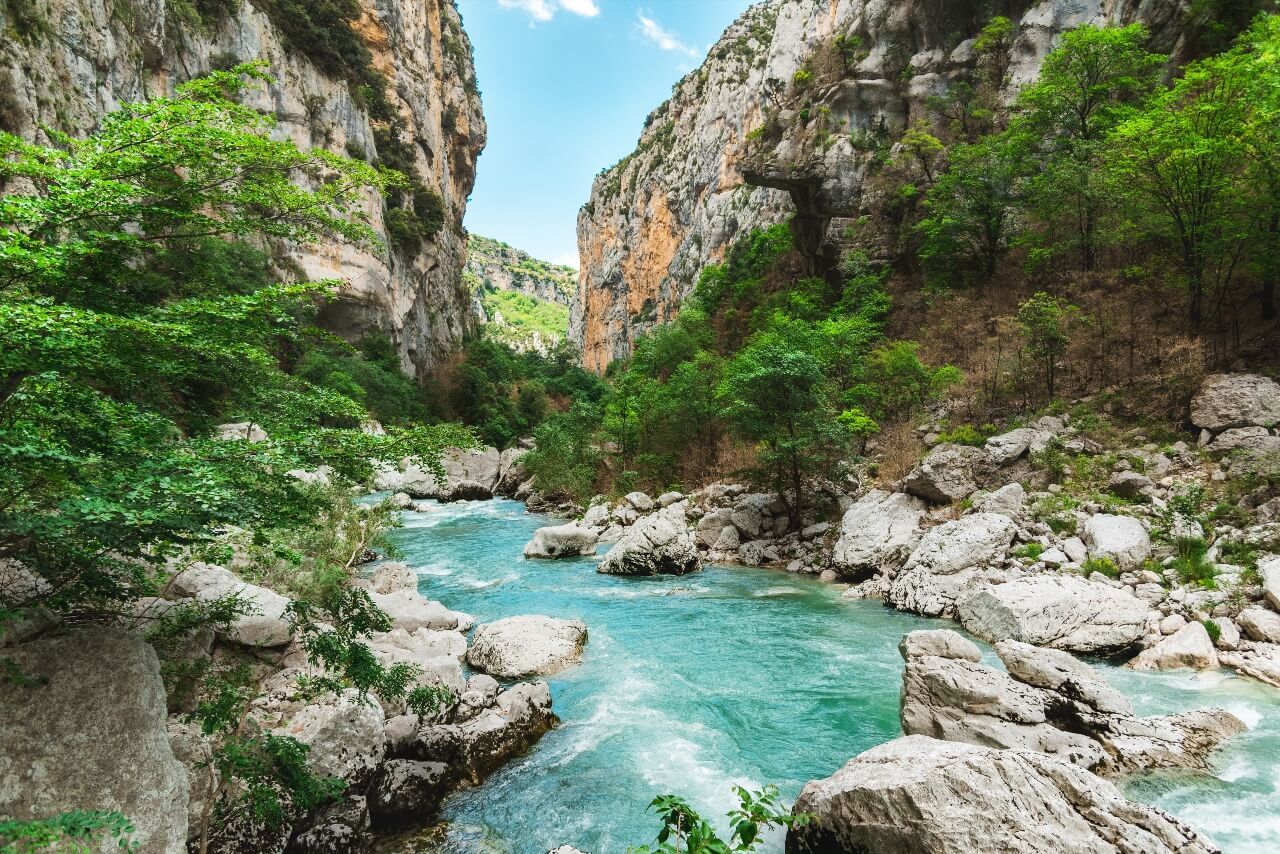
If wild gorges and rivers require a certain commitment, Lac des Escoumes (Route du Lac, 66320 Vinça, rated 4.4/5 on Google from 650 reviews) offers an entirely different experience: a managed body of water, lifeguarded in season, with a pebble beach and facilities that make it ideal for families with young children. It is undoubtedly the most accessible swimming spot in the Pyrénées-Orientales for those travelling with young ones.
Located less than 10 km from Prades, on the edge of the village of Vinça, this reservoir stretches across several hectares at the foot of the first Pyrenean foothills. Depth in the swimming areas remains manageable — 1 to 2 metres — and lifeguard supervision is provided in July and August. Picnic areas, toilets and car access make family logistics straightforward.
The water is noticeably warmer than in the mountain rivers — 22 to 25 °C in July — which explains its popularity with people from the plain. On weekdays, even in high season, it is still possible to find a spot. On August weekends, that's another matter: arrive before 10 a.m. or have a backup plan.
The walk around the lake (about 3 km) is pleasant in the late afternoon, when the golden light illuminates the Pyrenees in the background. A few spots allow fishing outside the swimming zones.
Molitg-les-Bains and Saint-Thomas-les-Bains: Warm-Water Swimming in the Pyrénées-Orientales
The Pyrénées-Orientales have a characteristic that few departments share: they are home to several thermal springs open to the public, two of which allow swimming in naturally warm water. This is a different kind of bathing — more relaxing than sporting — but equally rooted in the thermal identity of the Pyrenean foothills.
Molitg-les-Bains is the better known of the two sites. The spa offers medicalised treatments, but a wellness area with a thermal pool is open to day visitors who are not taking a cure. The sulphurous water emerges warm from the ground and is brought to usable temperatures. The outdoor pool, surrounded by a tree-lined park, creates a very different atmosphere from river swimming.
Saint-Thomas-les-Bains (Route de la Font Romeu, 66820 Fontpédrouse, rated 4.4/5 on Google from 4,285 reviews), in the Têt valley above Prades, offers outdoor pools heated to around 36 °C, open all year round (around 34–35 °C in summer). The pools are in the open air, facing the snow-capped peaks of the Canigou — a striking combination in winter or spring. Entry is paid but reasonable, and the experience of bathing in warm water beneath the snowy ridges is worth the detour even outside the summer season.
The Têt and the Tech: River Swimming in the Plain and Foothills
The department's two great rivers offer, between their source and the sea, a succession of natural swimming spots accessible without any particular hiking. The Têt crosses the Conflent and the Roussillon plain from the high mountains to the Mediterranean; the Tech descends from the Vallespir to meet the sea near Le Boulou.
On the Têt, the best spots are concentrated between Villefranche-de-Conflent and Prades: several roadside pebble beaches allow for spontaneous stops. The water is cool (15–18 °C) and the current varies by month — stronger in June during snowmelt, calmer in August.
On the Tech, the area around Arles-sur-Tech and the Vallespir concentrates the best river swimming zones. The Gorges de la Fou (Arles-sur-Tech, 66150 Arles-sur-Tech, rated 3.8/5 on Google from 166 reviews), just above Arles, form a spectacular narrow canyon accessible via footbridges; rock pools remain reachable at low water both upstream and downstream. Further down toward Le Boulou, the river widens and managed areas allow for more relaxed bathing.
Beware of flash floods on both rivers: after a storm on the heights, the flow can rise very quickly in under an hour. Warning signs and the Vigicrues app are your best allies in uncertain weather. Swimming is regularly prohibited on certain stretches after rainfall — respect these bans; they exist for good reasons.
Freshwater swimming enthusiasts will also appreciate our Ryo selection of the best places to swim around Toulouse, a neighbour of this department.
High-Altitude Lakes in the Catalan Pyrenees
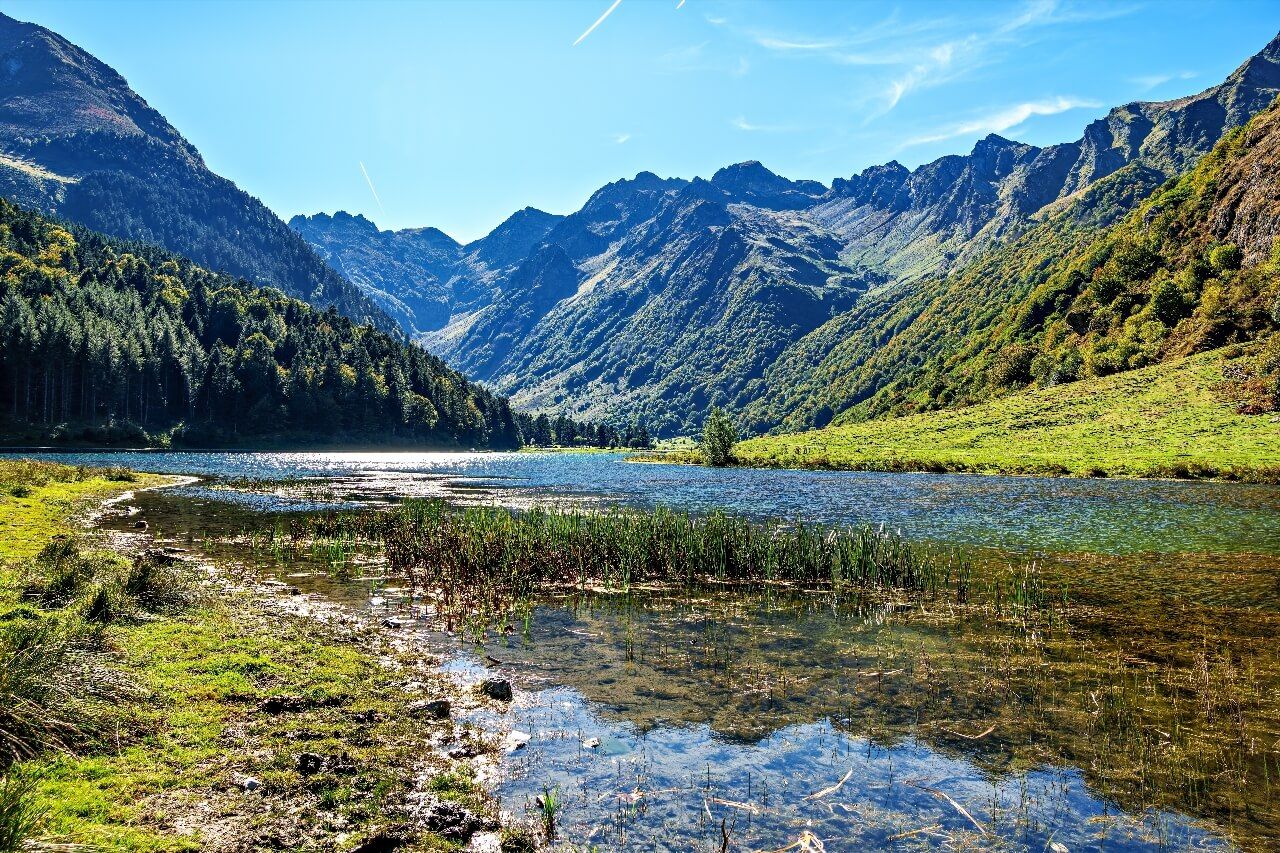
The Pyrénées-Orientales massif contains several dozen high-altitude lakes, almost all formed by glacial erosion. While most require a full day's hiking to reach, a few remain accessible to a wider public and offer a swimming experience very different from that of the foothill gorges.
The Lac des Bouillouses (Route des Bouillouses, 66210 Mont-Louis, rated 4.7/5 on Google from 1,021 reviews) is the easiest to reach: at 2,016 metres above sea level, in the commune of Mont-Louis, it is accessible by car from Bolquère (with mandatory parking in high season). It is one of the largest lakes in the department, and its waters — cool at around 14 °C even in summer — attract brave swimmers and bathers. The surroundings are typical of the Pyrenean moorlands: peat bogs, gentians and summits rising above 2,800 metres.
For experienced hikers, the Carlit lakes (around 2,700–2,800 m) offer a high-mountain experience: glacial water, near-total solitude, panoramic views over the Cerdagne and the Carlit massif. Swimming is technically possible but reserved for the most dedicated — water temperatures do not exceed 8–10 °C in August.
Around Les Bouillouses, the trail network links several smaller lakes — Pradella, Llat, Long — in a loop of 10–15 km. A full day's hiking punctuated by swimming stops is an excellent option.
The Pyrénées-Orientales also boast 148 kilometres of Mediterranean coastline with water that reaches 26–28 °C in midsummer. The Côte Vermeille to the south, with its rocky coves between Collioure, Banyuls-sur-Mer and Cerbère, offers exceptional swimming and snorkelling conditions in crystal-clear water.
The Cerbère-Banyuls Marine Nature Reserve, established in 1974, is the oldest marine reserve in France; swimming is permitted but fishing and scuba diving are regulated. The seabed, protected for fifty years, is home to grouper, starfish and remarkable underwater vegetation that can easily be observed with a simple mask and snorkel.
Further north, the beaches of Canet-en-Roussillon, Saint-Cyprien and Argelès-sur-Mer offer full seaside facilities — lifeguarded, well-equipped, sometimes crowded. Water quality there is regularly rated "excellent" by health authorities.
Practical Tips for Safe Swimming in the Pyrénées-Orientales
Swimming in natural settings in the Pyrénées-Orientales requires a few basic rules before diving into any spot in the department.
Check the weather upstream, not just on the spot. Fine weather in Perpignan does not guarantee safety on the rivers: a storm over the Pyrenees is enough to trigger a flash flood kilometres downstream. Check Météo-France bulletins for the massifs, not just the plain, and use the Vigicrues app to monitor river levels.
Cold mountain water can catch you off guard. Even experienced swimmers can suffer cold shock if they enter the water too abruptly. Wade in gradually, wet the back of your neck and wrists first, and avoid diving headfirst into an unrecognised spot.
No-swimming zones exist for good reasons. Certain river stretches are permanently off-limits for swimming (pollution, dangerous currents) or temporarily closed after rain. Signs are there to be read.
The buddy rule. Never swim alone in a mountain river, especially in narrow gorges where an accident may be invisible from the bank.
Finally, to combine your aquatic days with the discovery of regional heritage, our Ryo guide on the most beautiful villages of the Pyrénées-Orientales will give you plenty of excursion ideas. For sea swimming enthusiasts, the best swimming spots on the Côte d'Azur offer a fine Mediterranean extension.
FAQ
Where can you swim in the Pyrénées-Orientales with children?
The Lac des Escoumes in Vinça is the best choice for families with young children: lifeguarded water in season (July–August), marked swimming zones, water at 22–25 °C, parking and restrooms on site. The Verdouble gorges near Tautavel are also suitable, with warmer water than in the high-mountain gorges (18–22 °C) and easy access from the road.
Can you swim in the Galamus gorges?
Yes, swimming is possible in the Agly rock pools upstream of the gorges. The water is cold (14–17 °C) and the shallow areas allow for safe swimming. Crowds are very high in July–August: arrive before 9 a.m. or visit on a weekday. Swimming inside the narrow gorge itself is inadvisable due to the current.
What is the best time to swim in the Pyrénées-Orientales?
For mountain rivers and gorges: July and August offer the best conditions, with moderate flow after snowmelt and water temperatures at their annual peak. Avoid June (frequent flooding) and September (water cools quickly). For the Mediterranean coast, the season runs from June to October.
Is Lac des Bouillouses accessible by car?
Yes, by road from Bolquère, but a mandatory paid parking scheme is in effect from mid-June to mid-September, with regulated road access. A shuttle service runs to Les Bouillouses from the bottom. Outside regulated periods, driving up to the dam is free. Plan to leave early as shuttles fill up quickly in high season.
Are the Gorges de la Fou accessible for swimming?
The Gorges de la Fou (Arles-sur-Tech) can be visited via a trail with suspended footbridges, but swimming inside the gorge itself is not officially provided for. Accessible rock pools exist upstream and downstream of the main gorge. Entry to the gorges is paid.
Conclusion
From the Galamus gorges to the high-altitude Carlit lakes, taking in the thermal baths of Saint-Thomas-les-Bains and the coves of the Côte Vermeille, swimming in the Pyrénées-Orientales offers a range that few French departments can match. Each spot has its own personality: the intense chill of the Rotja, the family warmth of Lac des Escoumes, the mineral beauty of the Verdouble.
The key is to choose according to your profile: seasoned hikers should head for the Carlit lakes and the Rotja, families with children for Vinça and Tautavel, lovers of dramatic scenery for Galamus and Gouleyrous. Whatever your destination, always set out with the mountain weather forecast, not just that of the plain. To organise your stay, the Ryo app and our local guides are with you at every stage of your exploration of the Roussillon and the Catalan Pyrenees.