
Créé par Romane, le 20 juin 2026
Votre guide Ryo
Côte Vermeille 2026: Complete Guide to Discovering Sites, Cruises and Flavors of an Extraordinary Coastline
© Shutterstock
There is something slightly disconcerting about the first view of the Côte Vermeille from the sea: you expect a beach, and these are rust-colored cliffs that surge from the water, as if the Pyrenees had decided to continue their descent to the bottom of the Mediterranean. These 35 kilometers of rocky coastline, squeezed between Argelès-sur-Mer and the Spanish border in the Pyrénées-Orientales, concentrate a density of heritage, flavors and landscapes that has no equivalent on the Languedoc coast. The Côte Vermeille owes its name to the coppery tint of the purple schist that forms its cliffs, not a brochure formula, but a geological reality visible to the naked eye from the exit of the port of Collioure.
This guide takes you beyond the marked trails. You'll find Collioure seen from its ramparts and from the sea, Port-Vendres and its fish market that tourist guides neglect, Banyuls and its terraced vineyards that plunge into the Mediterranean, Cerbère and its discreet end of the world before the Spanish border. You'll know which sea trips to choose according to your budget, from glass-bottom boats to autonomous kayaking in the coves, how to dive in France's oldest marine reserve, and which sections of the GR92 make the effort worthwhile. The Ryo app lets you explore some of these territories with an audio guide: a way to go further than the interpretation panel planted at the edge of the path. But first, the terrain.
Collioure: The Catalan Jewel of the Côte Vermeille
Collioure is the most photographed town in the Pyrénées-Orientales, and probably the most misunderstood. It's reduced to its canvases: Matisse set up his easel there in June 1905, Derain joined him, and together they invented Fauvism in this little Catalan port. But this reduction does a disservice to a town that is first a medieval stronghold, a fishing community, a gastronomic laboratory, and only then an open-air museum.
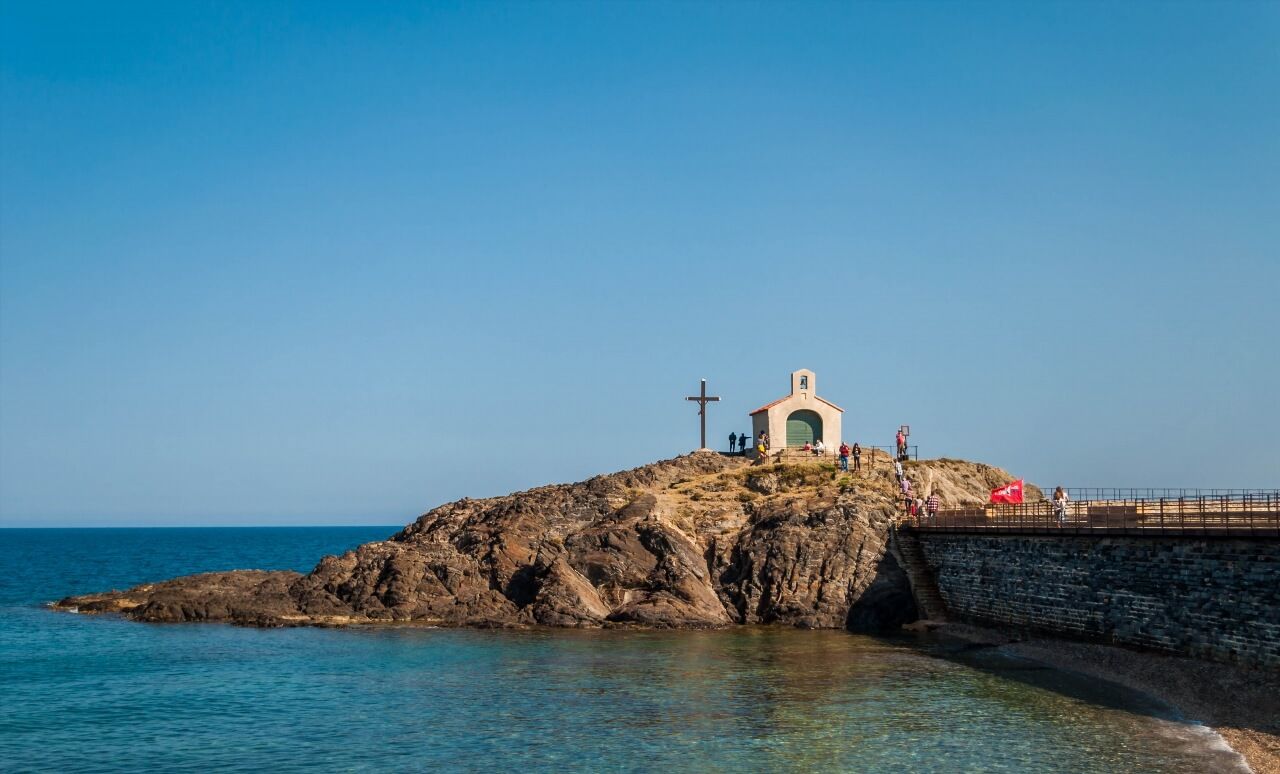
The Royal Castle of Collioure is the first thing you see from the train or from the sea: a mass of schist and granite that has dominated the entrance to the port since the 12th century. Built by the Kings of Majorca, enlarged by the Kings of Aragon, transformed into a Vauban citadel after the Treaty of the Pyrenees in 1659, it alone condenses five hundred years of disputes between crowns. The visit lasts 1h30 and provides access to the ramparts, with a direct view of the double bay. Entrance: 7 € full price (free the first Sunday of the month from October to June). The Chapel of Saint-Vincent, whose baroque bell tower serves as a lighthouse for the port, is one of the most original architectural configurations on the French Mediterranean coast.
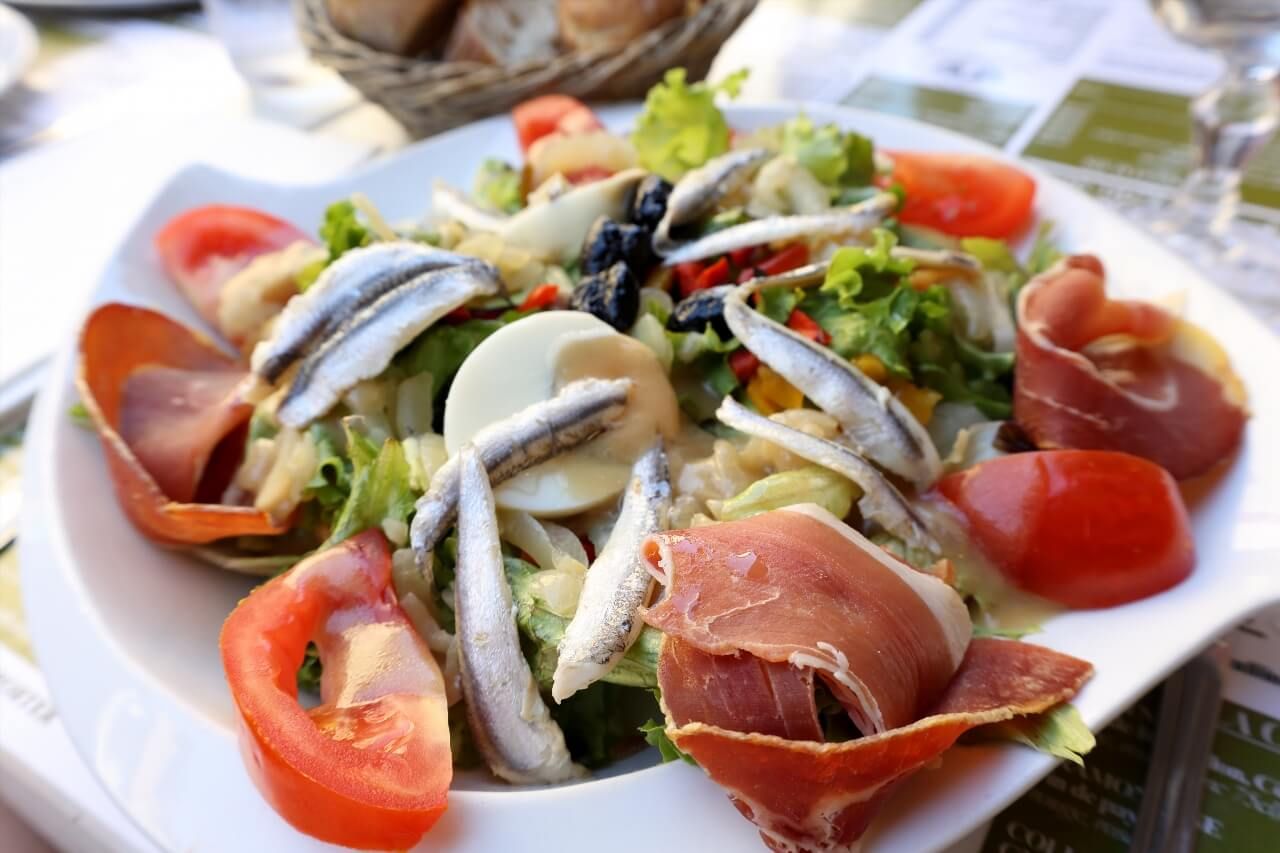
Below the castle, the colorful Catalan boats, the flat-bottomed 'barques de Collioure', recall that this port was above all an anchovy fishing port. Collioure Anchovies have had protected geographical indication since 2004, one of the few French PGIs for a sea product. Several anchovy houses open their workshops for visits (allow 45 minutes): you'll see the salting and maturation process, which lasts at least three months before canning. The anchovies sold on site bear no resemblance to supermarket ones, firm texture, iodized taste without bitterness.
The old village deserves an hour of wandering without imposed itinerary. The alleys climb from the port to the Church of Notre-Dame-des-Anges, a 17th-century construction whose baroque gilded wood altarpieces are listed as historical monuments. The terrace overlooking the bay is worth the climb alone. If you have an additional half-day, the climb to Fort Saint-Elme, a 16th-century watchtower at 197 meters altitude, 40 minutes on foot from the port, offers a view over Collioure, Port-Vendres and, in clear weather, over the Catalan coasts to Cap de Creus on the Spanish side.
The Modern Art Museum of Collioure (Route de Port-Vendres, 66190 Collioure, rated 4/5 on Google for 359 reviews) (about 4 €, free the first Sunday of the month) presents about 350 works by Matisse, Picasso, Dufy and painters who stayed here throughout the 20th century. The collection is coherent and well explained, without claiming to be exhaustive. Just opposite, the Fauve space recreates the working conditions of summer 1905 with annotated reproductions and archival documents.
The seabed between the two beaches of Collioure, the north beach (Boramar) and the south beach, merit snorkeling. Outside of July and August, the water transparency is remarkable: bream, wrasse and octopus at less than 5 meters depth, without wetsuit from May to October.
The Path of Fauvism: Matisse, Derain and the Summer of 1905
When Matisse arrived in Collioure in June 1905, he was a recognized but not yet revolutionary painter. The light of Roussillon, brutal, vertical, without the nuances of the north, would change everything. Derain joined him. The two men worked side by side all summer, producing canvases with pure unmixed colors, applied directly to the canvas. When they arrived at the Paris Autumn Salon in October 1905, critic Louis Vauxcelles observed the room with amazement and said 'Donatello among the wild beasts'. The Fauve movement was born in this Catalan port.
The Path of Fauvism today retraces this journey with about twenty reproductions installed at the exact locations where the two painters set up their easels. The route is free, signaled by metal panels fixed to walls or ground. It starts at the port and climbs to the heights of the village, passing through the castle, the church and the alleys of the back-port. Allow 1 hour for a leisurely route, 1h30 if you read all the explanatory notices.
What strikes you following this path is the stability of the landscape. The red tile roofs, the lighthouse-bell tower, the boats in the port, everything is still recognizable in the paintings hanging in museums in New York or Copenhagen. Collioure has changed, obviously: tourists have replaced fishermen on the quays, and sea-view restaurants have multiplied their terraces. But the light has remained the same. Matisse wouldn't get lost.
The Fauve Space, in the historic center, offers a guided tour of about 45 minutes that puts the paintings in their historical and biographical context. It's useful if you don't have training in art history, and honestly instructive even if you do. The Modern Art Museum, a few hundred meters away, complements the visit with originals.
Port-Vendres: The Forgotten Fishing Port of Tourist Itineraries
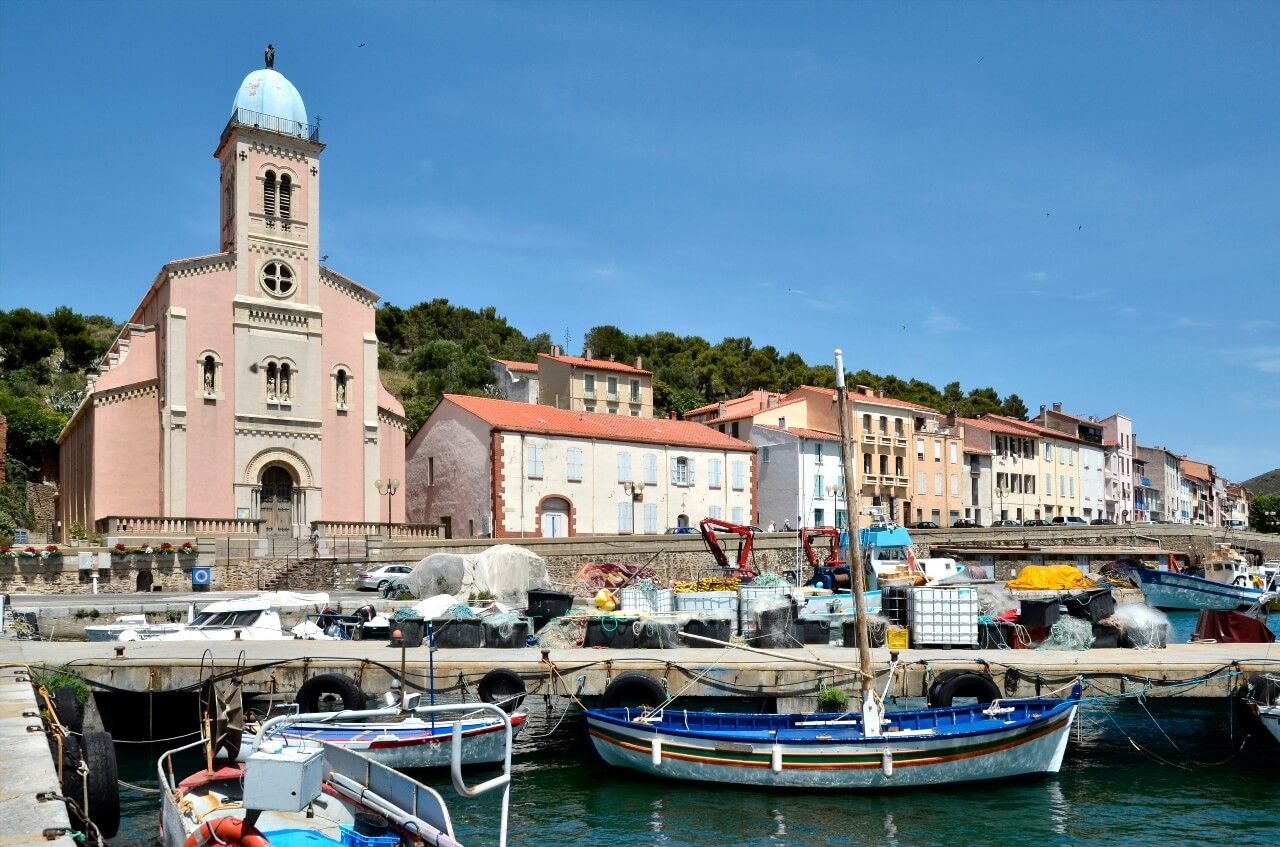
Port-Vendres is the great absentee from classic Côte Vermeille circuits. At 4 kilometers south of Collioure by road (or 1h15 on foot via the coastal path), this town of 5,000 inhabitants is the only natural deep-water port on the coastline. The Romans had named it 'Portus Veneris', the port of Venus, for the natural protection offered by its harbor enclosed between schist hills. Today, Port-Vendres is above all an active fishing and commercial port, which gives it a radically different atmosphere from touristy neighboring Collioure.
The fish market is held every morning on the quay. The trawlers return between 6am and 8am, and the fish auction supplies fishmongers and restaurants in the region. If you're passing by in the morning, the spectacle is worth the trip even without buying: crates of scorpion fish, sea breams and Mediterranean sea bass unload directly on the quay, restaurateurs make their choice before 9am. Port-Vendres concentrates a significant part of the Pyrénées-Orientales fishing fleet.
The Port-Vendres War Memorial (Place de l'Obélisque, 66660 Port-Vendres, rated 4.3/5 on Google for 12 reviews), inaugurated in 1923, is a sculpture by Aristide Maillol, the Catalan sculptor born in Banyuls, whom we'll discuss further below. The reclining woman holding a laurel branch has the sober and sensual style characteristic of Maillol: no heroic posture, no arms raised to the sky, just a heavy and living body placed on the stone. Port-Vendres was the head of the maritime link with Algeria until 1962, and this colonial memory remains present in the port's architecture.
For lunch, the restaurants on Quai Fanal serve fish caught that morning. The Catalan Bourride, white fish stew with aioli in a saffron broth, and seasonal sea urchins (from November to April) are the two must-tries. Prices are significantly lower than those in Collioure for comparable, sometimes superior quality. Reserve if you come in July or August: the reputation of local cuisine is starting to spread.
From Port-Vendres, the coastal path to Collioure runs along the corniche for 4 kilometers and offers plunging views over the sea and both villages. Allow 1h15 in the Port-Vendres → Collioure direction (main climbing direction) or 55 minutes in the opposite direction. This section is the most frequented of the GR92 and the most accessible, even for hikers without great experience.
Banyuls-sur-Mer: Vineyards Suspended Above the Mediterranean
Banyuls-sur-Mer is 8 kilometers south of Port-Vendres. It's the southernmost town in continental France, and one of the most unique on the Mediterranean rim. It concentrates in a restricted perimeter one of the best-preserved marine reserves in the Mediterranean, a vineyard planted vertically on schist terraces, and a museum dedicated to the greatest Catalan sculptor of the 20th century, a local son.
The Maillol Museum occupies the villa of sculptor Aristide Maillol, who died in 1944. The permanent collection brings together bronzes, terracottas and preparatory drawings rarely exhibited. The workshop is preserved in its original state, with tools, sketches pinned to the wall, the smell of clay and old wood. Maillol spent most of his life in Banyuls; the round and massive forms of his sculptures respond to the bodies of Catalan women who surrounded him, to the curved landscapes of the surrounding hills. Entrance: 5 €.
The Cave de l'Abbé Rous, also known as Cellier des Templiers, vinifies about 60% of the production of AOC Banyuls and Collioure. The guided tour of the cellars (duration 45 minutes) includes a tasting of four wines: a Banyuls Rimage (non-oxidative vinification, intense red fruit aromas), an amber Banyuls aged in glass carboys in the sun (aromas of walnut, coffee, dried fig), a white Banyuls and a dry red Collioure. The shop offers prices lower than supermarkets. Plan 15 to 20 € to leave with a decent entry-level bottle.
The aquarium of Arago Laboratory (Avenue Fontaulé, 66650 Banyuls-sur-Mer, rated 4.4/5 on Google for 121 reviews), one of Europe's oldest marine biology laboratories, founded in 1882, is open to the public. The tanks present species from the northwestern Mediterranean in their research environment, not in that of entertainment. Mediterranean seahorses, brown groupers, stingrays, cephalopods rarely exhibited elsewhere: the visit lasts 45 minutes to 1 hour and is worth its 4 € (free for under 12s).
Banyuls beach forms a semicircle protected by two jetties, with water quality regularly awarded the Blue Flag. The Elmes cove, 1 kilometer north of the center, is quieter and offers good seabeds for snorkeling. For day trips, bus line 400 connects Banyuls to Collioure in 25 minutes for 2 € per journey.
Cerbère: The End of France Before Spain
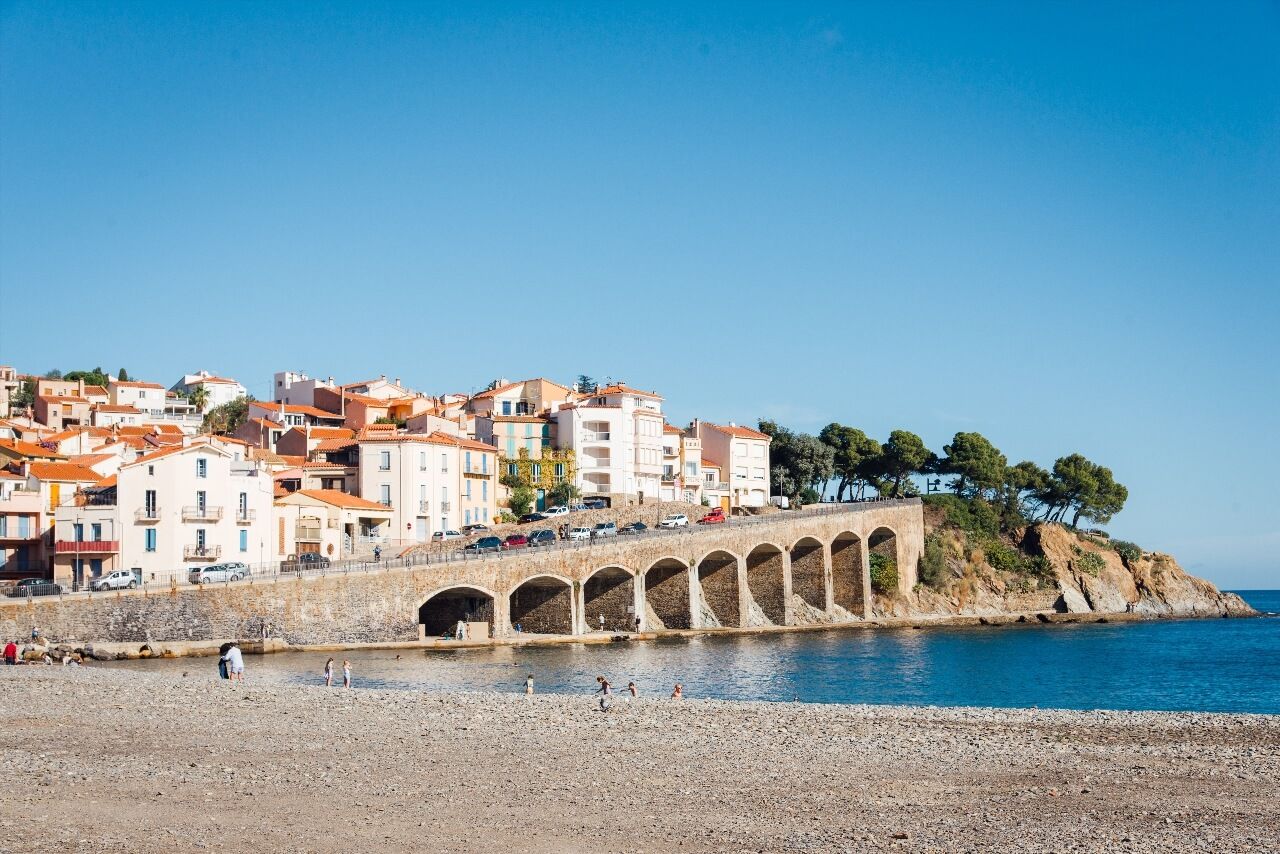
Cerbère (Place du Général de Gaulle, 66290 Cerbère, rated 4.2/5 on Google for 1,900 reviews) is the last village before the Spanish border, 3 kilometers from Portbou on the Spanish Catalan side. The village of 1,500 inhabitants is built in an amphitheater on a schist hill, facing a well-protected harbor. No large beach, no hourly kayak rentals, no seafront crêperie. This is precisely what makes it a destination apart on this coast.
The beach is small and mixed, sand and pebbles. What it's not is crowded, even in August. The integral reserve zone is marked by yellow buoys clearly visible from the beach: groupers there are so unafraid that they rise to the surface when they detect divers. The main attraction is underwater, and we return to this in the diving section.
Cerbère's architecture has a notable peculiarity: the International Station. Built in the 1920s, it's one of Europe's last active axle-changing stations, Spanish railways have a different gauge from French ones, and this technical specificity gave Cerbère a strategic function for more than a century. The Art Deco building is now partially disused but listed; a rehabilitation project into an artist residence is slowly progressing.
From Cerbère, a 25-minute walk on the coastal path northward leads to the Paulilles cove. To the south, the GR92 crosses the border in 1h15 on foot to reach Portbou, on the Spanish side, the same path used by Spanish Republican refugees in 1939 in the other direction. This border crossing on foot is one of the most unique in Europe, traced on pink schists between sea and sky.
Cruises and Sea Trips on the Côte Vermeille
From the sea, the Côte Vermeille shows its true face. The red schist cliffs appear even steeper than on land, the coves open before the bow like theater wings, and Collioure, seen from the water, reveals itself in its original configuration, the one that Matisse and Derain discovered when arriving by boat at the beginning of the 20th century. Navigation is the ideal prism for understanding why this coastline so fascinated painters.
Several options exist depending on your level of expectation and budget.
Sightseeing boats depart several times daily from June to September from Collioure port. The Côte Vermeille tour generally lasts 3 hours and passes Port-Vendres, the corniche coves, Cap Rederis and the marine reserve peripheral zone. Expect 25 to 35 € per adult. Some trips include a swimming stop in a cove inaccessible on foot, this is the main argument for choosing the boat over the trail. Operators also work from Banyuls, with itineraries centered on the marine reserve.
Cruises with Collioure stop are offered from Perpignan, Canet-en-Roussillon or Port-Barcarès by operators organizing half-days combining navigation and pedestrian village visit. Convenient if you're staying on Roussillon beach, but less spectacular in terms of landscapes than navigation from Collioure itself.
Rigid inflatable boat rental without license is available in Collioure and Banyuls for those who want to explore coves autonomously. A 4 to 6 person RIB rents for around 180 to 250 € per half-day depending on season. You need to be comfortable with coastal navigation and scrupulously respect prohibited anchoring zones around the marine reserve. Coves accessible only by sea, those of Cerbère, the coves between Port-Vendres and Banyuls, are the most requested destinations by renters.
Sea kayaking allows exploring the coast closest to the cliffs, in spaces where sightseeing boats cannot enter. Local guides offer supervised half-day trips (about 45 € per person) or full day with cove picnic (70 to 85 €). Required level is beginner for coastal trips. In July and August, the tramontane can make conditions difficult in the afternoon: best trips depart at 8:30am and return before 1pm.
Glass-bottom boats (semi-submersibles) are offered from Banyuls above the marine reserve. Perfect for families and people who don't dive: the glass window under the hull allows observing seabeds at 5 to 8 meters depth with visibility of 15 to 20 meters in good weather. Duration: 1 hour. Rate: 15 to 18 € per adult.
If you wish to prepare your visit in advance, the Ryo audio guide can help you contextualize each site before boarding, a way to arrive at the cruise with historical and geological landmarks already in mind.
In numbers: 35 km of coast, less than 10 sandy beaches, a dozen coves accessible only by sea, a marine reserve of 650 hectares in total, including 65 hectares in integral protection zone.
The Coastal Path GR92: Hiking Between Cliffs and Coves
The GR92 runs along the entire Côte Vermeille coastline from Argelès-sur-Mer to Cerbère, about 56 kilometers. It's one of France's most demanding coastal paths in terms of elevation gain, 2,500 meters cumulative elevation gain on the complete route, and one of the wildest on its central sections. Hiker density decreases significantly south of Collioure, which is paradoxical for a trail of this scenic quality.
Collioure → Port-Vendres section (4 km, 1h15, elevation +150 m / -150 m): the most accessible and most traveled. The path runs along the corniche with plunging views over the sea and both villages. Good for children from age 8 if avoiding hot hours.
Port-Vendres → Banyuls section (8 km, 2h30, elevation +350 m / -350 m): the wildest. Fragrant garrigue, thyme, rosemary, spring-flowering cistus, old abandoned wine terraces, several rocky coves for swimming stops. No supply points on this section: plan 2 liters of water per person in summer. Hikers regularly report kestrels and marsh harriers nesting on the cliffs.
Banyuls → Cerbère section (6 km, 2 hours, elevation +280 m / -280 m): runs along the marine reserve with views of buoys marking the integral zone. The final descent to Cerbère, by a zigzag path above the harbor, is one of the most beautiful trail arrivals you can make in southern France.
The entire trail can be covered in 3 days from Argelès with stops at Collioure and Banyuls. If you have only one day, the best effort/quality ratio is the Port-Vendres → Banyuls section with return by bus (line 400, about 2 € per journey). This section combines landscape wildness, absence of cars and the reward of arriving in Banyuls for lunch.
Practical note: the GR92 is marked in red and white. Hiking shoes with gripping soles are essential on wet schist. Outside July and August, the trail is almost deserted from the Port-Vendres → Banyuls section onward.
Diving and Snorkeling in the Cerbère-Banyuls Marine Reserve
The Cerbère-Banyuls Marine Nature Reserve was created in 1974: it's the first marine reserve in metropolitan France, and one of Europe's oldest. It covers 650 hectares between Banyuls and Cerbère, including 65 hectares of integral protection zone where all human activity is forbidden (except scientific research). The Arago laboratory has monitored marine populations for more than 50 years, making it one of the best-documented sites in the Mediterranean.
The monitoring data speak for themselves. Since the reserve's creation, brown grouper populations have increased by 400% in the zone. Fan mussels (Pinna nobilis), almost extinct elsewhere in the Mediterranean due to a parasite that appeared in 2016, still survive in some protected coves. Sea urchins maintain stable densities, classic indicators of seagrass health.
Scuba diving. Several centers operate in Banyuls and Cerbère. The most frequented sites include Roche Verte (from 18 meters, gorgonians and groupers), the Cova de la Vaca drop-off (from 25 meters, barracudas and corbs in schools), and the Jument plateau (from 12 meters, bream, dentex and posidonia seagrass beds). For an introductory dive, expect 55 to 70 €, no certification required, supervision by a state-certified instructor. A supervised dive for certified divers: 35 to 45 € depending on depth.
For experienced divers, two wrecks enrich exploration: the wreck of the Collioure Washhouse, work boat sunk at 18 meters, and especially the Donnay wreck, Belgian cargo sunk in 1917 off Banyuls, resting at 42 meters. This last site is reserved for Level 2 divers minimum and absolutely requires a local guide: currents on the drop-off are unpredictable.
Snorkeling. In the reserve's peripheral zone, freely accessible from the coast, snorkeling reveals remarkable fauna at shallow depth. Elmes beach in Banyuls and Cerbère rocks are preferred entries. Mask, snorkel and short fins suffice. Avoid tramontane days: visibility can drop to 2 or 3 meters on sandy bottoms stirred by waves. Complete equipment rental (mask, snorkel, fins) costs 8 to 12 € per day in Banyuls.
To prepare your underwater exploration, the Ryo app offers content on the Mediterranean ecosystem and reserve history, a useful complement to the instructor's briefing.
The Banyuls and Collioure Vineyard: The Terraced Feixes
The Côte Vermeille vineyards are among the most difficult to cultivate in France. Planted on schist terraces, the 'feixes' in Catalan, with slopes that can exceed 50%, they cannot be worked mechanically. Everything is done by hand or with monorails attached to hillsides. Production cost is 3 to 4 times higher than a plain vineyard. And yet, the winegrowers remain.
Two AOCs coexist on this territory. AOC Banyuls produces natural sweet wines, red, amber or white, fortified with alcohol to stop fermentation. Banyuls 'Rimage' is vinified without oxidation, like table wine, with intense red fruit aromas. Traditional or amber Banyuls is aged several years in glass carboys exposed to the sun, producing voluntary oxidation and aromas of walnut, roasted coffee, dark chocolate and dried fig. To be served slightly chambered with roquefort, foie gras or dark chocolate dessert. AOC Collioure, on the same terraces, produces dry red, white and rosé wines from the same grape varieties: grenache noir, grenache gris, syrah, mourvèdre.
The Cellier des Templiers in Banyuls and Caves du Mas Blanc (high-end private estate) are the two references. Mas Blanc notably produces a Banyuls 'Old Vines' aged 18 months in oak barrels, regularly cited among the world's best natural sweet wines in specialized guides.
Winemakers offer commented walks in the terraces, on foot or by 4×4, which allow understanding schist geology and seeing monorails work. These outings (20 to 30 € per person) are booked directly with estates or via Banyuls tourist office. The ideal period is September, during harvest: winemakers are in the rows and available to explain picking. It's also the month when vineyard colors, dark green leaves, red ripe grapes, pinkish-grey schist, are at maximum contrast.
Paulilles Cove: From Dynamite to Coastal Conservatory
Paulilles cove (RD 914, 66660 Port-Vendres, rated 4.6/5 on Google for 545 reviews) is a unique case on the Côte Vermeille. From 1870 to 1984, a dynamite factory manufactured up to 4,000 tons of explosives per year for Nobel company. Industrial buildings occupied the entire valley between Port-Vendres and Banyuls. When the factory closed, the site almost became a concrete tourist complex. Local associations fought for years, and in 1998, the Coastal Conservatory bought the 32 hectares to restore nature.
Since 2008, the site is open free to the public. Former workshops have been partially restored and transformed into museographic space: tools of female workers who handled nitroglycerin bare-handed, period photographs, oral testimonies from last employees. It's a dive into industrial history that the coast's tourist facade completely conceals.
The rest of the site is a landscape park with two fine sand beaches framed by maritime pines. It's one of the few places on the Côte Vermeille where you can put your towel on sand without crowds, even in August. The cove's seabeds are accessible for snorkeling from the beach, with good visibility outside windy episodes.
The Catalan Flavors of the Côte Vermeille
Côte Vermeille cuisine is Catalan before being French. Some dishes you'll find here don't exist in Montpellier or Marseille. Catalan Bourride is the signature dish of Port-Vendres and Banyuls: a white fish stew, monkfish, gurnard, john dory according to the day's catch, bound with aioli and served in a saffron-scented broth. Each restaurant has its version, and discussions about the best recipe occupy late afternoons on terraces.
The Collioure Anchovies are tasted as olive oil fillets, in tapenade, or simply on tomato-rubbed bread, the Catalan tartine 'pa amb tomàquet'. Three anchovy houses open their workshops for visits in Collioure. The salting process lasts at least three months: fresh anchovies are put in barrels with sea salt, turned regularly, before being hand-filleted for canning. What they sell on site bears no resemblance to industrial products.
Coastal sea urchins are harvested from November to April. Local fishermen sell them on Port-Vendres quay in the morning. Traditional Catalan usage is to open them on the quay with a knife, collect the orange tongues with a small spoon and accompany them with a glass of semi-dry white Banyuls. The contrast between the sea urchin's iodized salt and wine's sweetness is a combination this coast has practiced for generations.
If you want to take some bottles of Banyuls or Collioure, cellars sell directly at prices lower than supermarkets. Avoid Collioure port souvenir shops, whose selections are often disappointing.
Wild Coves and Beaches of the Côte Vermeille
The Côte Vermeille is not a beach coast. Its 35 kilometers of coastline are 90% rocky: cliffs, promontories, pebble coves. This is precisely what distinguishes it from Roussillon's sand beaches that frame it to the north. If you're looking for a kilometer of white sand, you need to go to Canet or Argelès-sur-Mer. If you're looking for a cove sheltered from view, accessible by swimming or kayak, this coast has no equivalent in the region.
Between Banyuls and Cerbère, Ouille Cove and Bernardi Cove are accessible on foot from the coastal path or by kayak. Ouille cove is one of the coast's few with a partially sandy bottom, making it accessible for children. The seabeds, bordering the marine reserve, are rich even at shallow depth.
Cerbère coves, notably Peyrefite Cove, are only accessible by sea. No road serves them. Some boaters anchor there for the night in a protected harbor. Line fishing is permitted outside the integral reserve zone.
For families with children, the most practical beaches are those of Collioure and Banyuls: sand, seasonal supervision, direct access to villages. Wild coves require higher mobility and minimal equipment: water shoes on pebbles, sun protection, sufficient water.
When to Go and How to Organize Your Stay on the Côte Vermeille
The best period is from mid-May to end of June or from mid-September to end of October. The sea is already warm, trails and coves are accessible without July-August crowds, and accommodations are available without reserving six months ahead. May is particularly pleasant for hiking: garrigue is in bloom, temperatures don't exceed 22°C during the day, and GR92 is almost deserted south of Collioure.
July and August are the busiest months. Collioure reaches maximum capacity the third week of August: saturated parking, restaurants full from noon, trails traveled by hundreds of people. The sea is at 24-26°C and cruises often sell out on weekends. If you come in high season, reserve sea trips and restaurants at least a week in advance.
Accommodation. Collioure concentrates the main offer: 15 to 20 hotels from 1 to 4 stars. Rooms overlooking the bay reach 150 to 280 € per night in high season. Port-Vendres and Banyuls offer cheaper accommodation for identical coastline quality. For tight budgets, Argelès-sur-Mer campgrounds (more than 50 establishments, Europe's largest camping concentration) are 20 minutes from Collioure by road.
Budget for a full day (Royal Castle of Collioure entrance + cruise + restaurant lunch + snorkeling): expect 80 to 110 € per adult. In economy mode, coastal trail + picnic + free snorkeling from beach, the day costs 15 to 20 € per person.
For a 3-day stay, the ideal logistics base is Banyuls or Port-Vendres, cheaper than Collioure and well connected to the rest of the coast by train and bus. Devote one day to Collioure, one day to cruise or GR92 (Port-Vendres → Banyuls section), one day to diving or Banyuls cellars.
Practical organization. The intermunicipal tourist office covers the entire Côte Vermeille. Cruise and diving operators often accept online reservations until the evening before. For scuba diving, reserve at least 48 hours in advance in high season. You can also prepare your itinerary via the Ryo app, which offers audio content on the coast's main sites.
Getting Around the Côte Vermeille Without a Car
The TER Perpignan-Cerbère is the best way to connect the four Côte Vermeille villages. The line serves Collioure, Port-Vendres, Banyuls and Cerbère with 1 to 2 trains per hour in season. The Perpignan-Collioure journey takes 25 minutes; Collioure station is 8 minutes walk from the port. Cars du Roussillon bus line 400 complements service between villages for 2 € per journey and runs year-round.
By car, D914 from Perpignan is the only road access. Allow 45 to 60 minutes for 30 km in July-August. Parking in Collioure is paid from mid-June to mid-September (1.50 to 2 € per hour) and saturated before 9am in high season. The combination train Perpignan → Collioure + bus for local travel is not only cheaper, but more comfortable and faster than car in season.
For cyclists, the coastal bike path connects Argelès to Collioure on a flat section (6 km). Beyond, D914 is the only option, with significant elevation gain and heavy traffic in summer: not recommended for families.
FAQ
What is the Côte Vermeille?
The Côte Vermeille is a 35-kilometer stretch of French Mediterranean coastline, located between Argelès-sur-Mer and the Spanish border in the Pyrénées-Orientales. It owes its name to the reddish color of the schist that forms its cliffs, a hue that varies according to the light between dark burgundy and coppery orange. The main towns are Collioure, Port-Vendres, Banyuls-sur-Mer and Cerbère. The landscape is radically different from the sandy beaches of Roussillon to the north: here, the Pyrenees end their descent into the Mediterranean, and it's rocky cliffs, not sand, that make up most of the coastline.
What's the Best Way to Visit the Côte Vermeille?
The most effective combination is to stay in Collioure or Banyuls and travel by train to avoid parking problems in season. The TER Perpignan-Cerbère serves all the towns on the coast. The typical day: morning on foot in the village, afternoon cruise or hike on the coastal path GR92, evening at table with the day's fish. For a stay of 3 days or more, alternate between the different towns rather than concentrating on Collioure alone.
Can You Dive on the Côte Vermeille Without Certification?
Yes. The diving centers in Banyuls and Cerbère offer introductory dives without any level or prior certification, supervised by a state-certified instructor. The diving takes place in the peripheral zone of the marine reserve, at depths of 5 to 8 meters. The introduction lasts about 1h30 on the water for an actual immersion of 20 to 30 minutes. Usual rate: 55 to 70 €. Surface snorkeling, free from public coves, is accessible to all with just a mask and snorkel.
Can You Visit the Côte Vermeille in Winter?
Yes, and Collioure off-season has fewer than 3,000 inhabitants and regains its fishing village character. Many restaurants are closed from November to March, but those that remain are frequented by locals. Hiking on the GR92 is ideal in winter (temperatures 8 to 15°C, clear trails, views without heat haze). Diving is possible but the water drops to 13-14°C: a 5mm wetsuit is essential. Banyuls cellars offer tastings year-round.
How Many Days Are Needed to Visit the Côte Vermeille?
A minimum of 3 days covers the essentials: one day in Collioure (castle, old village, Fort Saint-Elme, path of Fauvism), one day between Port-Vendres and Banyuls (fish market, Maillol museum, wine cellar), one day for a cruise or Port-Vendres → Banyuls hike. To go further, diving in Cerbère, complete Banyuls → Cerbère trail, secondary cellar visits, Paulilles cove, plan 5 to 6 days.
Can Children Enjoy the Côte Vermeille?
Absolutely. The Arago laboratory aquarium in Banyuls is suitable from age 6 (entry 4 €). Collioure and Banyuls beaches have sand, seasonal supervision and calm waters. Glass-bottom boat trips above the marine reserve are accessible from age 5. The Collioure-Port-Vendres coastal path can be done with children 8 years and older avoiding hot hours. Provide non-slip shoes for rocky coves.
What Are the Gastronomic Specialties of the Côte Vermeille?
The Catalan bourride (white fish stew with aioli) in Port-Vendres or Banyuls, Collioure anchovies in olive oil fillets, and fresh sea urchins on Port-Vendres quay from November to April. For wines, Banyuls 'Rimage' (fruity red, non-oxidative) and amber Banyuls (oxidative, walnut and coffee aromas) are to be tasted directly in Banyuls cellars, at prices lower than supermarkets.
Conclusion
The Côte Vermeille is a compact but dense territory: 35 kilometers that concentrate four villages of character, a 50-year-old marine reserve, a terraced vineyard on the cliffs, one of France's wildest coastal paths and a Catalan gastronomic tradition that few French coasts can rival. It's not a mass destination, even though Collioure can give this impression in August. Take the train from Perpignan, put your things down in Banyuls or Port-Vendres, and take time to see what brochures don't show: anchovies drying in workshops, winemakers working by hand on the feixes, groupers rising to the surface in the marine reserve.
The Côte Vermeille deserves a bit of effort. It rewards what you give it. The Ryocity of this coast, the Ryo audio-guided tour covering the main sites, lets you extend the experience with stories and historical contexts that the roadside doesn't provide. And when you get off the train in Collioure for the first time, you'll understand in two minutes why Matisse didn't leave before autumn.