
Créé par Romane, le 4 juin 2026
Votre guide Ryo
The Most Beautiful Villages of Brittany
© Shutterstock
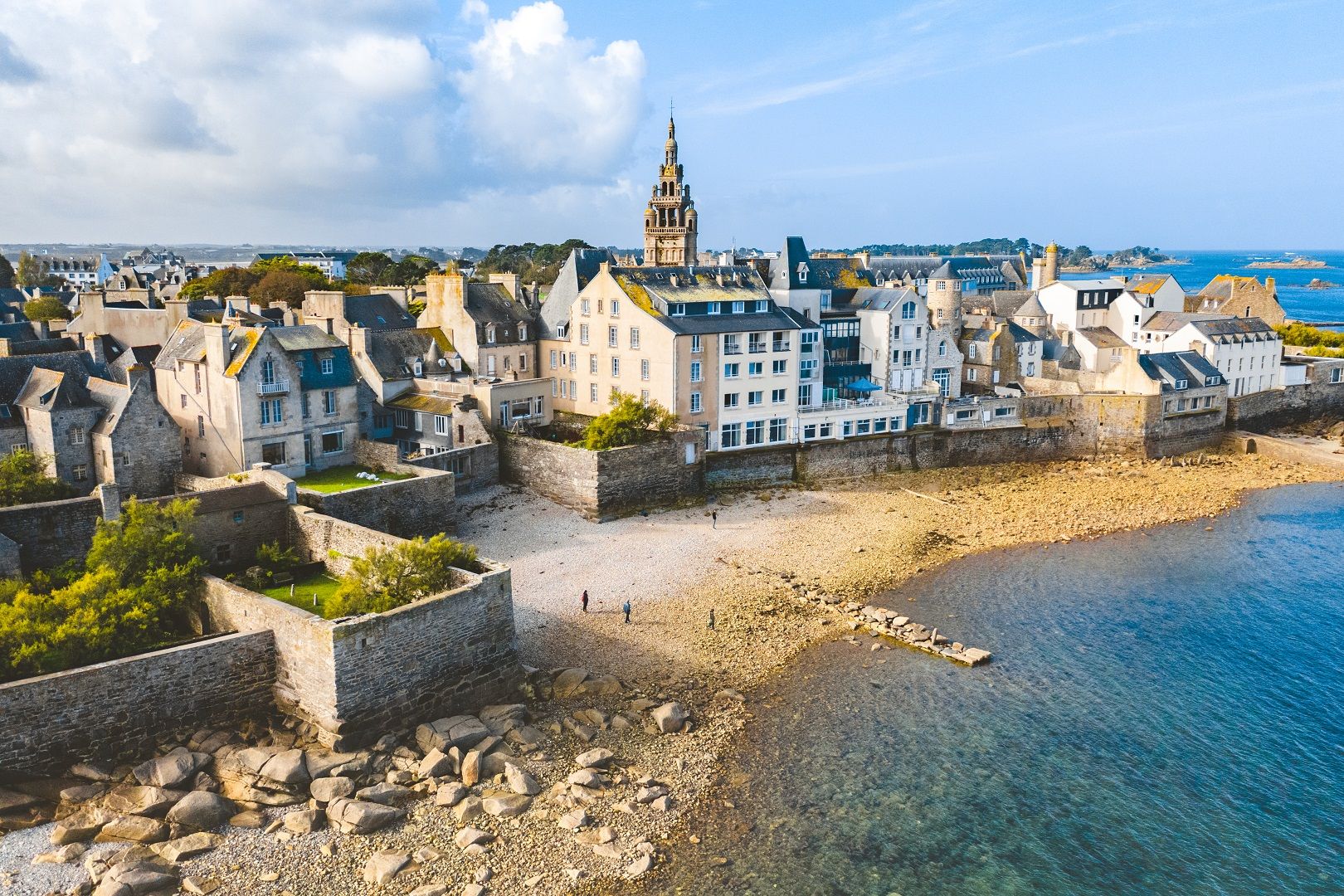
Brittany, land of legends and traditions, reveals its treasures along every departmental road. Off the beaten path, its authentic villages offer a journey through time where history blends with natural beauty. From the rugged coasts of Finistère to the green valleys of Morbihan, passing through the moors of Côtes-d'Armor and the forests of Ille-et-Vilaine, the most beautiful villages of Brittany tell the soul of a region proud of its roots.
Between granite houses with slate roofs, preserved fishing ports and medieval towns, these villages classified among the most beautiful in France or labeled "Petites Cités de Caractère" constitute exceptional heritage. Each village of Brittany reveals its unique personality: here the art of living of former corsairs, there the heritage of weavers and merchants, elsewhere the imprint of painters who came seeking inspiration.
Locronan, the preserved jewel of Finistère
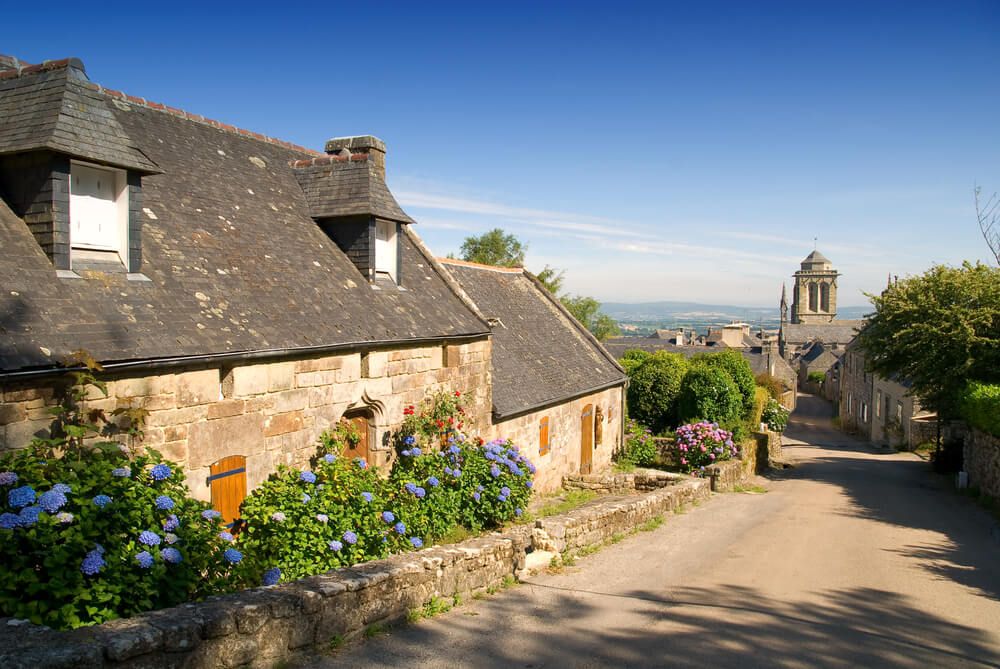
A true journey through time, Locronan embodies the very essence of the most beautiful villages of Brittany. Located a few kilometers from Quimper, this village in Finistère has preserved its authentic character thanks to the vision of its inhabitants. Its Renaissance houses in gray granite, its cobbled streets and its central square form a remarkable architectural ensemble that has seduced many filmmakers.
The church of Saint-Ronan, a 15th-century Gothic jewel, dominates the village square where imposing merchant houses stand. These buildings testify to the past prosperity of Locronan, which was an important center for sail cloth production. The village still perpetuates its traditions with the Grande Troménie, a religious procession organized every six years.
Strolling through the streets of this Breton village, you will discover many craftsmen's shops perpetuating local know-how. The mountain of Locronan, accessible by a hiking trail, offers exceptional panorama over the bay of Douarnenez and the peninsula of Crozon.
Rochefort-en-Terre, the flowered village of Morbihan
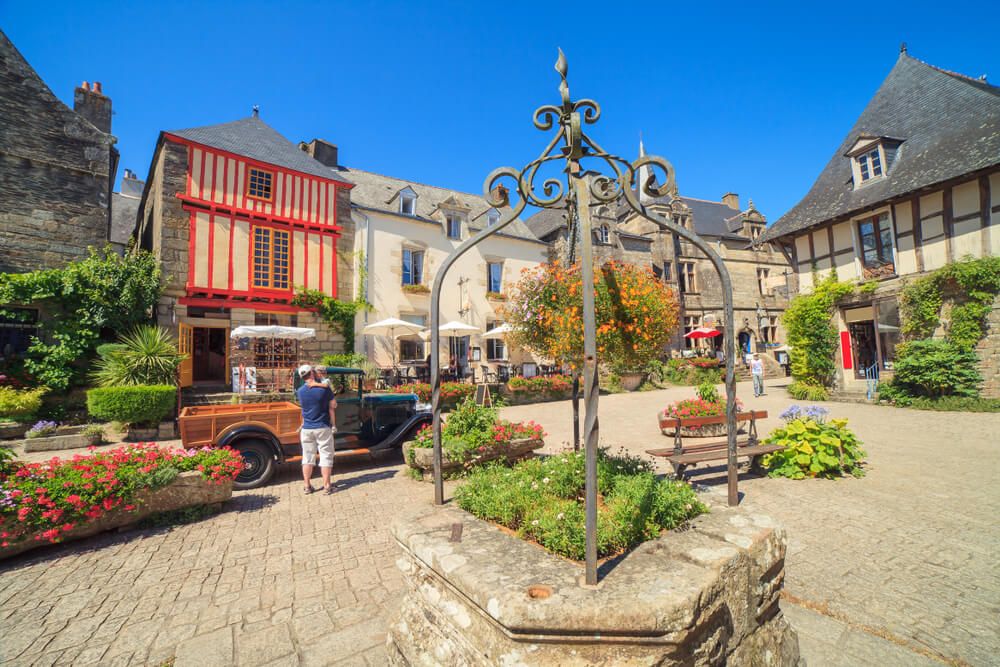
Elected "French People's Favorite Village" in 2016, Rochefort-en-Terre amply deserves its reputation as one of the most beautiful villages of Brittany. Perched on a rocky promontory overlooking the Gueuzon valley, this village in Morbihan enchants with its bucolic setting and exceptional architectural heritage.
Geraniums cascade from the windows of half-timbered houses, creating a living tableau that changes with the seasons. The castle of Rochefort-en-Terre, rebuilt at the beginning of the 20th century, now houses temporary exhibitions and offers a remarkable landscape park nicknamed "the painters' garden".
The church of Notre-Dame-de-la-Tronchaye preserves a mysterious stained glass window representing the Virgin nursing the infant Jesus, a unique work in Brittany. The village streets are full of art galleries and craft shops that perpetuate local traditions.

Moncontour, the smallest of the most beautiful
With its 48 hectares, Moncontour holds the record as the smallest municipality among the most beautiful villages of France. This medieval town of Côtes-d'Armor, former stronghold of the duchy of Penthièvre, has preserved its 13th-century ramparts and its original urban plan.
The church of Saint-Mathurin houses six remarkable stained glass windows that tell the story of the village and its inhabitants. The bourgeois houses of the 15th and 16th centuries testify to the past prosperity of Moncontour, enriched by the trade of flax and hemp.
The House of Chouannerie and the Revolution traces the tumultuous history of this region during the Western Wars. The Rue Dell'Arte festival, organized each summer, brings street art back to life in the cobbled streets of the village.
Saint-Suliac, the fishing village on the Rance
Classified among the most beautiful villages of France, Saint-Suliac charms with its preserved authenticity. This fishing village of Ille-et-Vilaine, located on the Rance estuary, has preserved its maritime character with its granite houses with evocative names and its facades decorated with fishing nets.
The narrow streets of the village, practicable only on foot, wind between traditional houses to the parish church that overlooks the estuary. The menhir of Gargantua's Tooth, a prehistoric vestige, testifies to the ancient occupation of the site.
The banks of the Rance offer magnificent viewpoints over the estuary and invite contemplative walks. Mont Garrot, which overlooks the village, preserves the remains of an old Viking camp and offers exceptional panorama over the Rance valley.

Ploumanac'h, the village with pink rocks
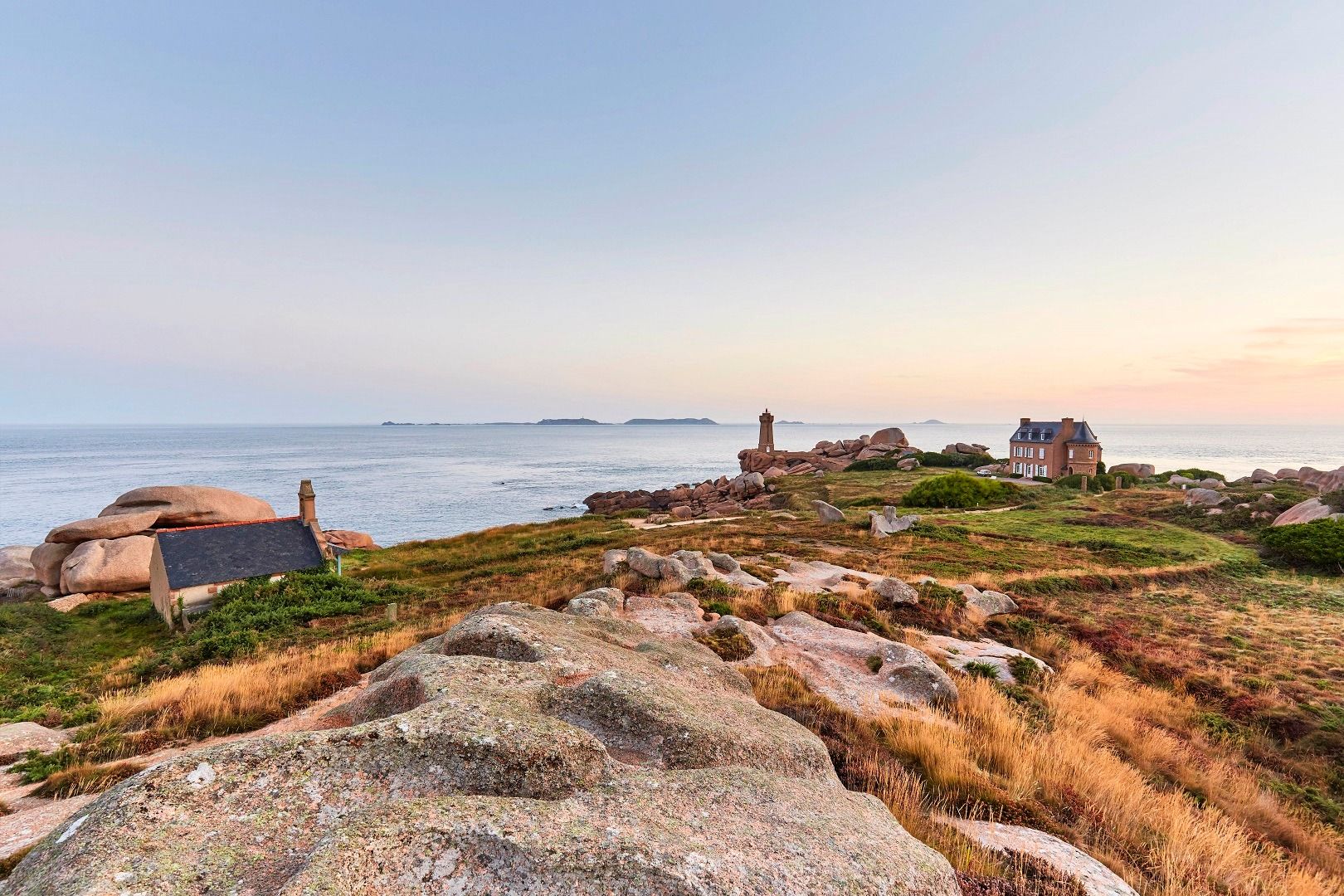
Elected "French People's Favorite Village" in 2015, Ploumanac'h seduces with its extraordinary landscapes of pink granite. This hamlet of Côtes-d'Armor, integrated into the municipality of Perros-Guirec, offers a unique geological spectacle in the world.
The pink granite rocks, shaped by 300 million years of erosion, create a surreal landscape that changes color according to the light. The customs officers' path allows discovery of these spectacular rock formations by following the coastline.
The chapel of Saint-Guirec, nestled between the rocks, watches over this exceptional landscape. The Ploumanac'h lighthouse, built in pink granite, integrates harmoniously into this unique natural setting that makes the reputation of this Breton village.
Pont-Aven, the city of painters
Immortalized by Paul Gauguin and the School of Pont-Aven, this village of Finistère counts among the most beautiful villages of Brittany for its exceptional artistic heritage. Nestled in the Aven estuary, Pont-Aven has attracted many painters who came seeking inspiration in its bucolic landscapes.
The Bois d'Amour, the artists' favorite walking place, still preserves today this poetic atmosphere that seduced the impressionists. The old water mills, once numbering fourteen according to local saying, still punctuate the course of the Aven.
The Museum of Pont-Aven traces the history of the School of Pont-Aven and presents works by artists who marked the history of modern art. The contemporary art galleries, numbering about sixty, perpetuate the village's artistic tradition.

Bécherel, the city of books
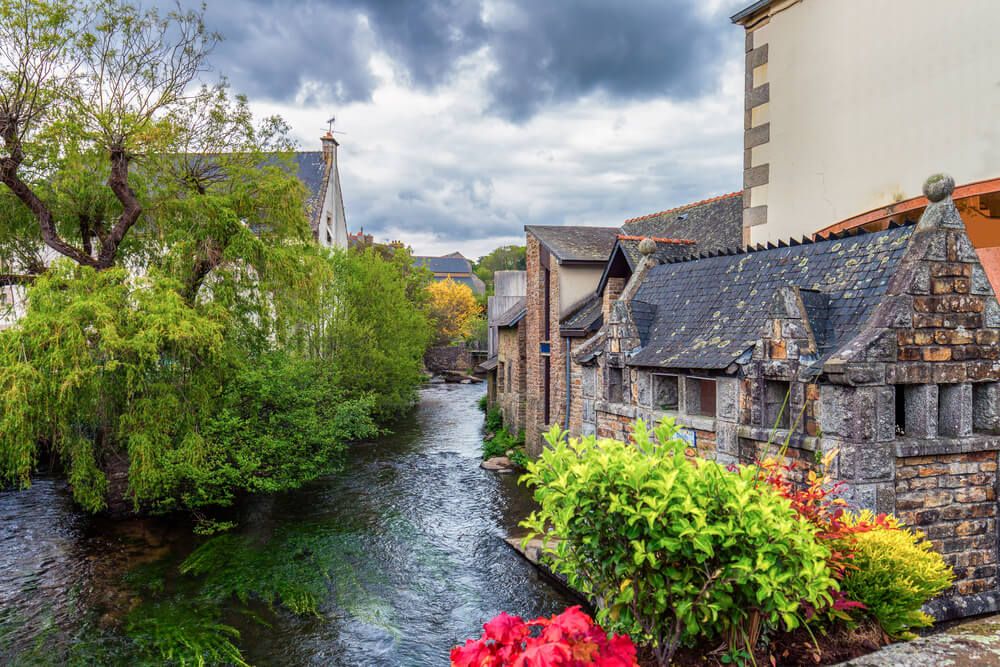
France's first book-city since 1989, Bécherel occupies a special place among the most beautiful villages of Brittany. Perched on a promontory overlooking the Rance valley, this small city of Ille-et-Vilaine has about ten bookstores for less than 800 inhabitants.
The granite houses of the historic center house literary treasures in specialized bookstores, classified by color according to their domain. The Donjon bookstore, installed in a medieval tower, offers a unique experience to lovers of old books.
The church of Notre-Dame, a 15th-century building, dominates the village and offers panorama over the surrounding countryside. The Book Festival, organized each year in spring, transforms the village into a huge open-air literary salon.
Roscoff, the port of the Johnnies
Built on a peninsula open to the English Channel, Roscoff figures among the most beautiful villages of Brittany for its exceptional maritime heritage. This city of Finistère, cradle of thalassotherapy, has preserved its character as a 16th-century merchant port.
The shipowners' houses, built in Kersanton granite, testify to the past prosperity of Roscoff. The port, from where the famous "Johnnies" departed to sell their pink onions in England, preserves this commercial tradition with ferry connections to Great Britain.
The church of Notre-Dame de Kroa-Baz, with its Renaissance bell tower, overlooks the port and offers panorama over the Batz archipelago. The exotic garden of Roscoff, created thanks to the mildness of the oceanic climate, houses a unique plant collection in Brittany.
La Gacilly, the village of Yves Rocher
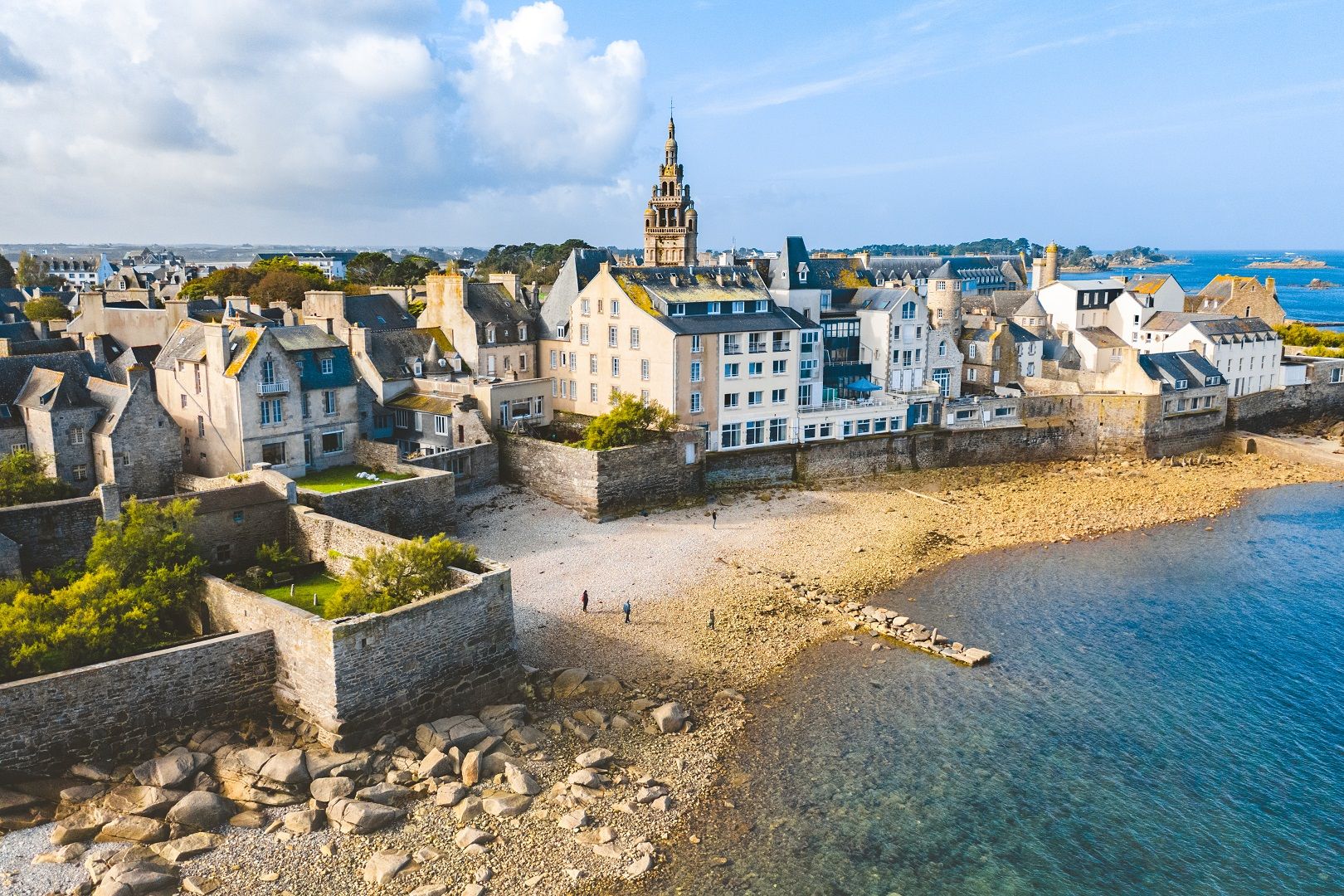
Located in the green valley of the Aff, La Gacilly counts among the most beautiful villages of Brittany for its preserved natural setting. This village of Morbihan, birthplace of the Yves Rocher brand, has successfully reconciled economic development and environmental preservation.
The historic center, with its half-timbered houses and flowered gardens, reflects the Breton art of living. The annual photo festival transforms the village into an open-air art gallery, attracting visitors from around the world.
The Yves Rocher House and its immersive museum tell the story of the company born in this village in 1959. The botanical gardens and production greenhouses testify to the ecological commitment of this pioneering municipality in sustainable development.
Malestroit, the pearl of the Oust
Nicknamed "the pearl of the Oust", Malestroit figures among the most beautiful villages of Brittany for its remarkable architectural heritage. This village of Morbihan, stage on the canal from Nantes to Brest, reveals fifteen centuries of history through its cobbled streets.
The half-timbered houses of the historic center, numbering fifty-seven, create an authentic medieval setting. The church of Saint-Gilles, with its flamboyant Gothic architecture, dominates the Bouffay square where markets were once held.
The marina, built on the old commercial port, allows discovery of the village from the waters of the Oust. The gardens of Kerdalo, located on the river banks, offer an exceptional botanical walk in a romantic setting.
Josselin, the castle of the Rohans
Dominated by its millennial castle, Josselin counts among the most beautiful villages of Brittany for the majesty of its architectural heritage. This city of Morbihan, property of the Rohan family for more than a thousand years, offers a journey into the history of Breton nobility.
The castle of Josselin, with its three imposing towers reflecting in the waters of the Oust, constitutes one of the most beautiful castles of Brittany. Its Renaissance facades, adorned with elaborate dormers, contrast with the austerity of the medieval towers.
The historic center, with its half-timbered houses and cobbled streets, invites discovery of local traditions. The basilica of Notre-Dame-du-Roncier, a pilgrimage site since the 11th century, preserves a miraculous statue venerated by Bretons.
Dinan, the medieval city with millennial ramparts
Dominated by its 14th-century castle, Dinan figures among the most beautiful villages of Brittany for the richness of its medieval heritage. Its ramparts of nearly three kilometers, the longest in Brittany, encircle a remarkably preserved historic center.
The rue du Jerzual, with its half-timbered houses and cobblestones, descends toward the marina on the banks of the Rance. This picturesque neighborhood houses many art craftsmen who perpetuate local traditions. The basilica of Saint-Sauveur harmoniously blends Romanesque and Gothic styles, while the Place des Merciers reveals magnificent medieval houses.
The port of Dinan, connected to the sea by the Rance, offers a bucolic walk along the banks. History enthusiasts will appreciate the numerous guided tours that tell the epic of this ducal city, theater of many episodes of Breton history.
By exploring these exceptional villages, you will discover that the most beautiful villages of Brittany do not content themselves with being postcards frozen in time. They live, breathe and perpetuate Breton traditions while adapting to contemporary challenges. Each village tells a unique story, that of the men and women who have shaped these landscapes over the centuries.
These Breton villages, whether classified among the most beautiful villages of France or labeled "Petites Cités de Caractère", constitute living heritage that deserves to be discovered and preserved. Their authenticity, their beauty and their capacity to move make them unmissable destinations for all lovers of authentic Brittany.
In conclusion, the most beautiful villages of Brittany offer an initiatory journey to the heart of the Breton soul. From Locronan to Roscoff, passing through Rochefort-en-Terre and Saint-Suliac, these exceptional villages reveal the richness of preserved heritage transmitted with passion. Let yourself be guided by Ryo itineraries to discover these Breton treasures and live an authentic experience in the land of legends and traditions.
What is the best period to visit the most beautiful villages of Brittany?
Brittany can be visited year-round, but the period from May to September offers the best weather conditions. Summer allows full enjoyment of local festivals and nautical activities, while autumn reveals the shimmering colors of Breton landscapes. Winter, quieter, is perfectly suited to heritage enthusiasts wanting to visit villages without tourist crowds.
How to organize a discovery circuit of the most beautiful villages of Brittany?
To discover the most beautiful villages of Brittany, plan at least one week. Start with Finistère with Locronan and Pont-Aven, then head to Côtes-d'Armor for Moncontour and Ploumanac'h. Continue with Ille-et-Vilaine with Dinan, Saint-Suliac and Bécherel, before finishing with Morbihan with Rochefort-en-Terre, Malestroit and Josselin. This organization allows limiting travel while discovering the diversity of Breton terroirs.
Which Breton villages are most easily accessible from Paris?
From Paris, the most accessible Breton villages are those located in Ille-et-Vilaine like Dinan, Saint-Suliac and Bécherel, easily reachable via Rennes by TGV. Rochefort-en-Terre and Malestroit in Morbihan are also well served from Vannes station. For Finistère villages like Locronan or Pont-Aven, you must count an additional journey from Quimper or Brest.