
Créé par Romane, le 7 mai 2026
Votre guide Ryo
© Shutterstock
Roanne often presents itself as a transit town, a stop on the A72 between Lyon and Clermont-Ferrand. Those who truly stop discover something else: a territory of gorges, lakes, medieval villages suspended above the Loire and vineyards that produce one of France's most confidential wines. Among the must-see places to visit around Roanne, Château de la Roche literally emerges from the water like a fairy-tale image, Pêt d'Âne offers one of the most striking panoramas of the Massif Central, and Charlieu abbey conceals Romanesque sculptures that even regular pilgrims on the Santiago routes don't expect to find here. To explore Roanne itself before exploring its surroundings, the audio-guided circuit Visit Roanne on Ryo traces in 1h15 the working and textile past of the city on the Loire banks, with 20 commented stops.
This guide covers natural sites, character villages, architectural heritage, gastronomy and outdoor activities to discover in the Roannais. Whether you spend a weekend or a week in the region, you'll find here enough to compose a rich and varied stay.
Château de la Roche: the fortress on water
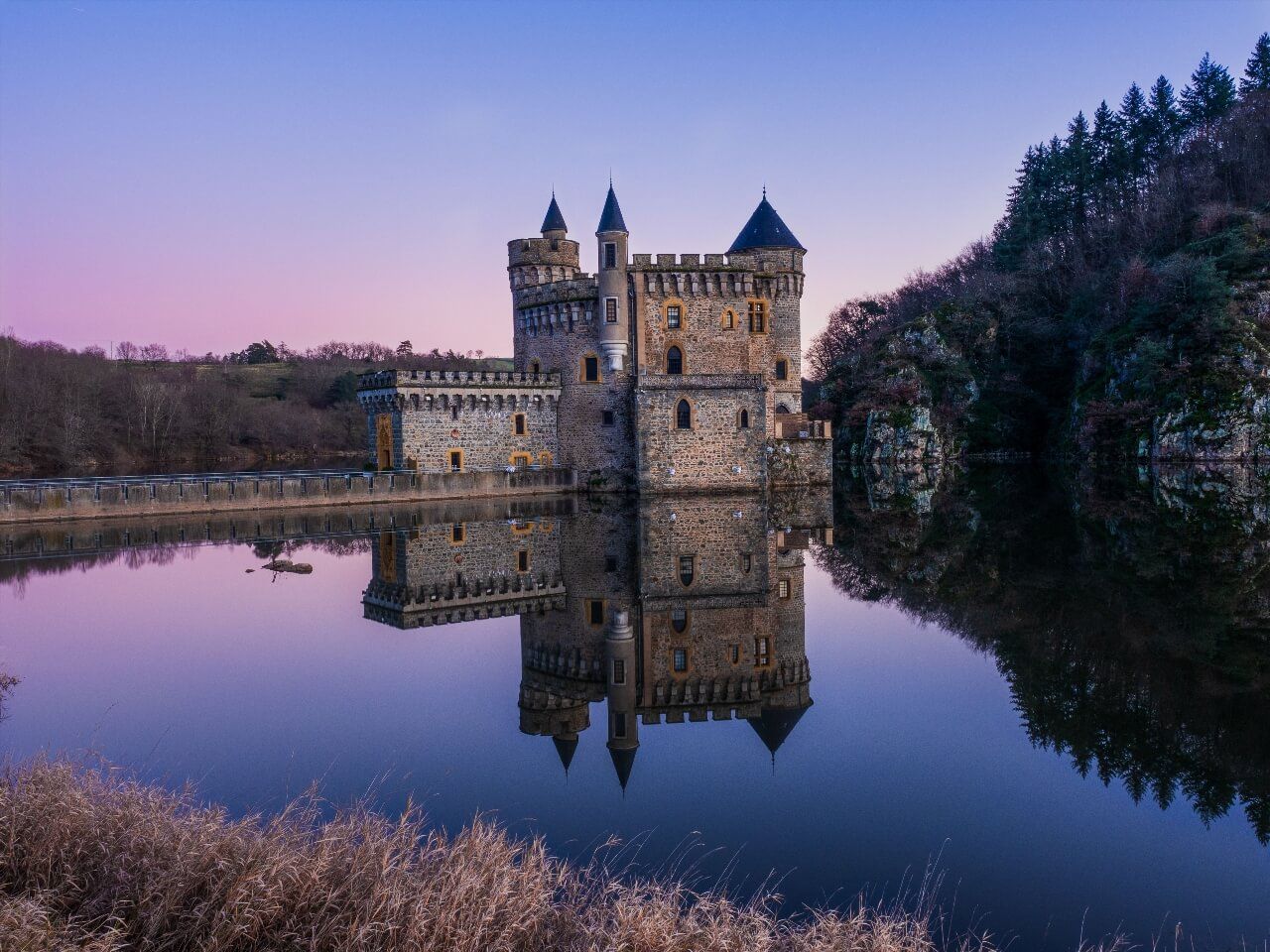
There are views you don't expect to find in France. Château de la Roche (Saint-Priest-la-Roche, 42610 Saint-Priest-la-Roche, rated 4.6/5 on Google for 3,238 reviews), in the commune of Saint-Priest-la-Roche, is one of them: a medieval tower springs from a rocky islet in the middle of the turquoise waters of Villerest lake, accessible by a footbridge depending on seasons and water levels. The effect is spectacular, almost unreal, and photographers return at all hours of the day to capture the tower's reflection in the calm water.
The first written traces of the fortress date back to 1260. Built to control navigation on the Loire, it survived the Wars of Religion, the Revolution, then the flooding of the Villerest dam in 1984 which definitively transformed its setting. Where an enclosed gorge once flowed, water created an artificial lake of 770 hectares, and the castle found itself on an islet, as if placed there by accident. Bought back for one symbolic franc by the commune, it was completely restored in 1996.
The interior is open to visitors from April to October, with theatrical guided tours that tell the history of the fortification and territory during the Belle Époque era. What's truly worth the detour is the exterior: walking around the islet, the view over the lake from the heights, and the promenade along the shore before or after the visit.
Allow 1h30 on site including the walk around the islet. Parking is free. If you come on a July or August weekend, arrive before 10am, the site is very busy with families, and morning light is much better for photos.
The Pêt d'Âne site: vertiginous panorama over the Loire
The name makes you smile, but the view leaves you speechless. Pêt d'Âne is a natural belvedere perched at 625 meters altitude on the heights of the commune of Villerest, about ten kilometers south of Roanne. From the summit, the Loire draws wide meanders in the plain below, and on clear days you can see the Forez reliefs to the east and the first foothills of the Massif Central to the west.
The site is accessible by car to a parking lot a few hundred meters from the belvedere, then on foot on a marked path. The hike from Villerest allows connecting Pêt d'Âne to the village in 2h30 round trip, along wooded ridges with regular openings onto the valley. The elevation gain is moderate, about 200 meters, and the trail is walkable in all weather except in case of ice.
Avoid misty days, the view disappears completely. Conditions are generally better in the morning in summer and autumn. Autumn, by the way, is the most beautiful season here: the chestnut forests on the slopes turn russet and gold, and the low evening light gives the panorama remarkable depth.
Villerest Lake: the Roannais water body
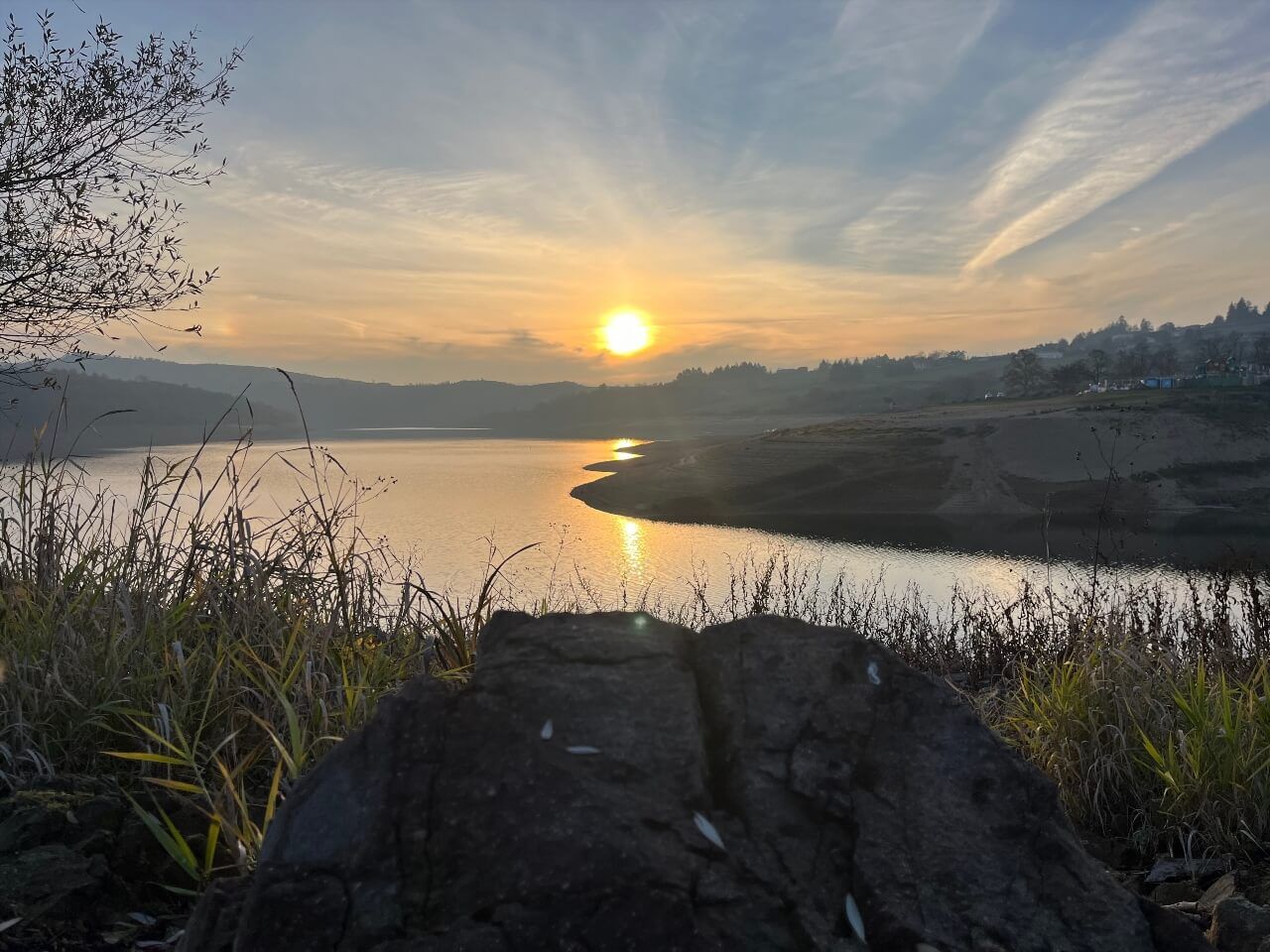
With 770 hectares of surface area and 32 kilometers of length, Villerest lake (Base de loisirs de Villerest, 42300 Villerest, rated 4/5 on Google for 626 reviews) is the largest body of water in the Loire. Created in 1984 by the dam flooding, it profoundly transformed the valley's geography: several villages were relocated, farms flooded, roads erased. Today, the lake has become one of the most frequented recreational spaces in the department, with nautical bases and cycling routes that run along its shores.
The Villerest leisure base is the main entry point: rental of kayaks, pedal boats and windsurfers from June to September, supervised sand beach in July-August, children's playground. Renting a kayak for two hours costs around 15 euros, enough to reach the Château de la Roche islet from the base and go around it. It's one of the most original ways to discover the castle, seen from the water.
For those who prefer walking, marked sections run along the shores from the villages of Villerest and Bully. Anglers appreciate the north shore banks, renowned for carp and pike-perch fishing. Off season, the lake takes on a more tranquil face: morning mists over the water, motionless herons on the shores and reflections of wooded hills make it a peaceful walking place even in November.
A tip: park at the Croix Régnaud belvedere for a sweeping view over the entire lake before going down. Good food lovers note several restaurants on the shore with direct views, terraces are much in demand on summer evenings. To complete your discovery of the territory, the audio-guided circuit Visit Roanne accompanies you in the city itself, 20 minutes from the lake.
The Renaison dams: water and wild nature
15 kilometers west of Roanne, the Renaison dams constitute a set of water reservoirs nested in a landscape of green hills. The place is less known than Villerest lake but equally appealing, with a wilder and less crowded atmosphere.
The discovery trail that connects the water bodies is about 12 kilometers and can be covered in 3h30 without particular effort. The vegetation is dense, oaks, chestnuts, ferns, and the shores are wild, without excessive tourist amenities. The dams supply drinking water to part of the Roannais, which explains the absence of swimming. Fishing is authorized on open parts. In spring, flowering meadows and the first appearances of grey herons make the hike particularly lively.
Charlieu and its Benedictine abbey
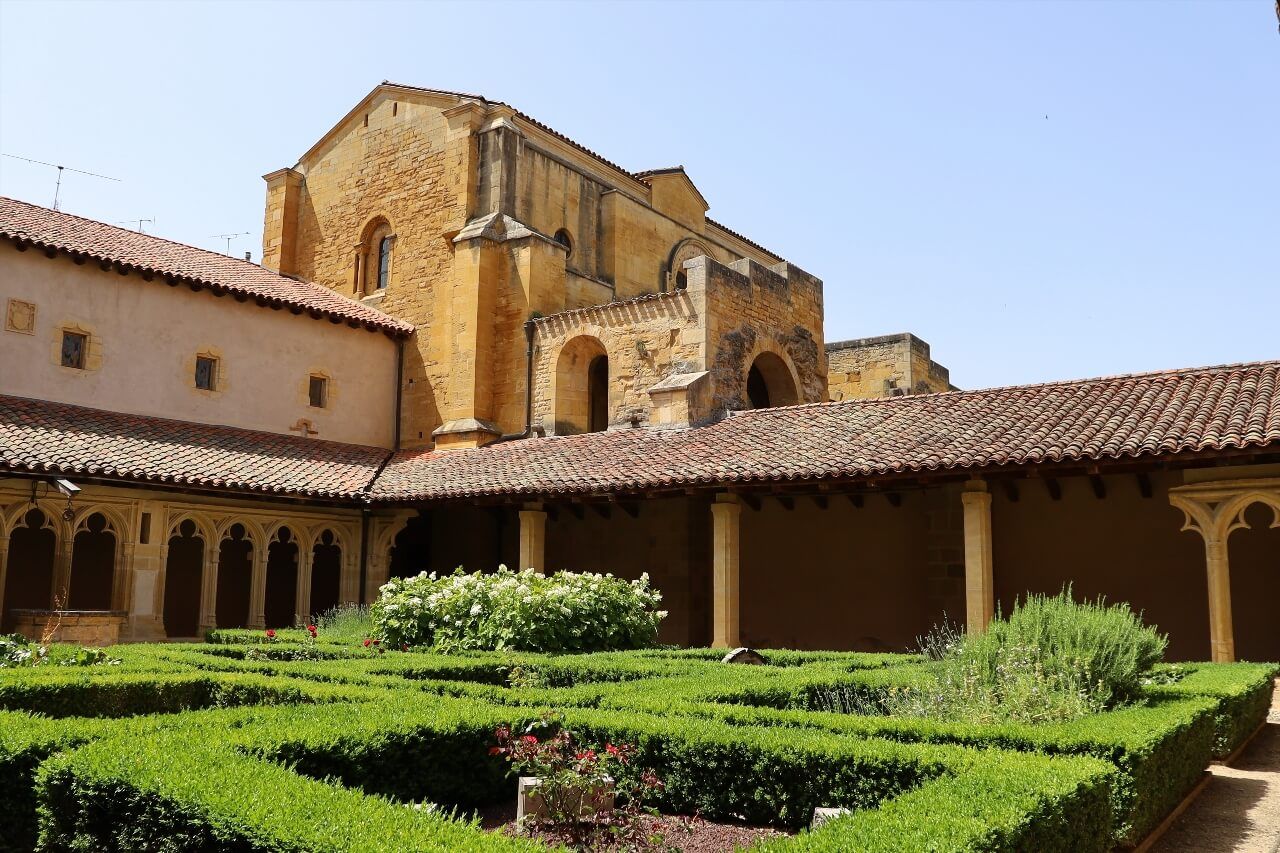
Charlieu is located 25 kilometers north of Roanne, in the Sornin plain. A fortified medieval town, it owes its reputation to an architectural gem often ignored by regional tourist circuits: Saint-Fortunat Benedictine abbey, founded in the 9th century and considered one of the most important Romanesque sites in the Loire.
The abbey's narthex, the still-standing structure, houses 12th-century carved tympanums of exceptional quality. The scenes of the Transfiguration and Christ in Majesty reach a level of plastic finesse comparable to the masterpieces of Vézelay or Autun, which in itself is a strong statement. Romanesque art specialists make the journey from Lyon or Clermont to study them. If you have minimal interest in medieval sculpture, this site alone is worth the trip from Roanne.
The rest of the town also deserves an hour of strolling: the 15th-century halls, the half-timbered houses of the historic center, and the Cordeliers convent, another medieval ensemble with a Gothic cloister open for visits. Charlieu is also known for its silk tradition, and a few workshops still perpetuate this know-how. Saturday morning market brings together local producers and artisans in a village fair spirit that hasn't changed for decades.
The abbey is open year-round except in January (closed on Tuesdays off-season). Full price 5 euros, reduced 4 euros. Guided tours are offered from May to September, with cultural mediators who decode the iconography of the tympanums.
Saint-Jean-Saint-Maurice-sur-Loire: medieval village by the water
The commune of Saint-Jean-Saint-Maurice-sur-Loire (Place du Village, 42155 Saint-Jean-Saint-Maurice-sur-Loire, rated 5/5 on Google for 5 reviews) was born from the merger of two villages perched on the cliffs overlooking the Loire, about twenty kilometers northwest of Roanne. The dry stone houses are tiered in steps down to the river, alleys climb in hairpins toward the church and the remains of the medieval enclosure.
The village is part of the Loire department's « Villages de caractère ». The title is deserved: few recent constructions, no invasive commercial signs, an atmosphere out of time. From the belvedere above the church, the view extends over several kilometers of valley. The village regularly hosts exhibitions by local craftsmen and artists in its vaulted cellars. Allow 1h30 to 2h for a leisurely visit.
Saint-Haon-le-Châtel: ramparts and terraces
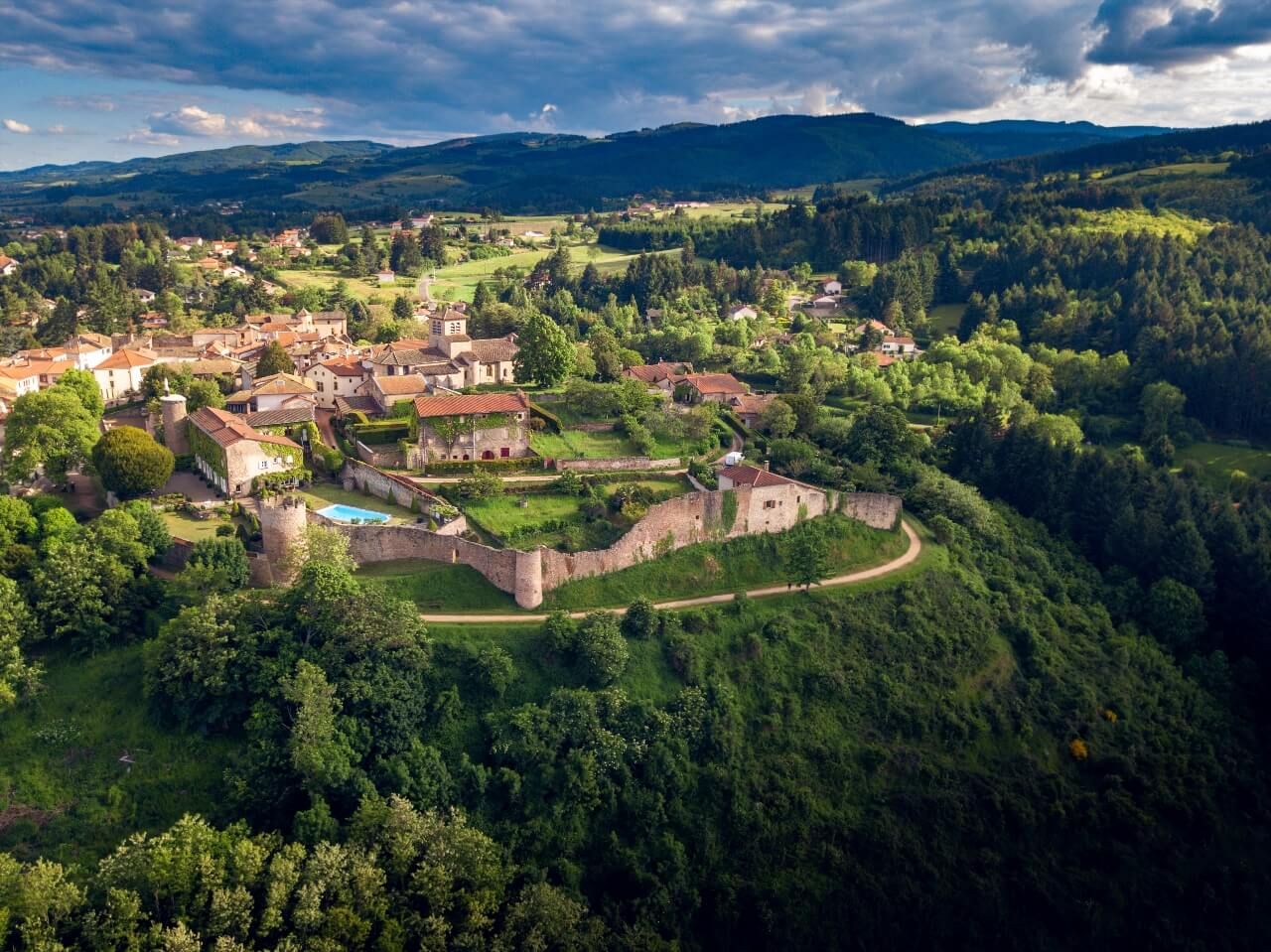
Saint-Haon-le-Châtel (Village médiéval, 42370 Saint-Haon-le-Châtel, rated 4.7/5 on Google for 35 reviews) is probably the most confidential village on this list, and perhaps one of the most endearing. Perched on a rocky spur in the Roannais mountains, it preserves the entirety of its medieval ramparts, a 12th-century Romanesque church and a network of alleys that weave between granite houses covered with Virginia creeper.
What differentiates Saint-Haon from other medieval villages in the Roannais is the state of preservation of its defenses: the towers and enclosure gates are almost intact. The interior is calm, inhabited, living, not a museum village but a village where people reside and maintain their houses. The terraced cultivations in steps produce vegetables and fruits. Saint-Haon is part of the Côte Roannaise wine zone, a few small estates in the surroundings offer tastings by appointment.
Le Crozet: medieval city between vine and forest
17 kilometers southwest of Roanne, Le Crozet presents itself as one of the department's best-preserved medieval villages. Almost complete 14th-century enclosure, noble houses with turrets, Gothic church, Renaissance well in the center of the main square: the village has kept its medieval structure without compromise.
The visit can be done in less than an hour, but the heritage density is real for a village of this size. The Crozet museum, housed in a 15th-century noble house, traces local history since the Middle Ages with some rooms devoted to Côte Roannaise viticulture. Le Crozet (Village médiéval du Crozet, 42310 Le Crozet, rated 4.8/5 on Google for 16 reviews) can easily be combined with Saint-Haon-le-Châtel, about ten kilometers away, the road between them crosses landscapes of bocage hills typical of western Forez.
Château de la Bâtie d'Urfé: l'Astrée in the land of stone
In the heart of the Monts du Forez, about fifty kilometers southeast of Roanne, Château de la Bâtie d'Urfé (Saint-Étienne-le-Molard, 42130 Saint-Étienne-le-Molard, rated 4.5/5 on Google for 986 reviews) in Saint-Étienne-le-Molard occupies a special position in regional heritage. It is associated with Honoré d'Urfé, author of L'Astrée, that pastoral novel from the early 17th century that made the Val de Lignon the setting for a love story known throughout lettered Europe of its time. It was in this castle that the writer spent part of his youth and drew inspiration for his work, considered the first great novel in French prose.
The 15th and 16th-century seigneurial residence features a Renaissance inner courtyard and partially restored French gardens. The interior is visited with a guide, and explanations mix architectural history and literary context. Around the castle, the landscape of meadows and woods that Honoré d'Urfé transposed into L'Astrée is still there, barely disturbed. A marked walk starting from the castle allows following the Lignon du Forez for two kilometers.
Visits are open from April to October. Allow 1h30 with the guide and walk in the gardens. Don't confuse this castle with the ruins of the Cornes d'Urfé in Champoly, original cradle of the d'Urfé family, perched at 930 meters altitude: the ruins can be visited freely year-round and offer an exceptional panorama over the Roannais plain.
Côte Roannaise: wine route on the heights
Those who make French wine routes their travel guide generally ignore the Côte Roannaise. It's both their loss and your advantage: the Roannais cru estates work in relative tranquility, without the tourist influx that saturates some more famous appellations. Côte Roannaise has been a controlled designation of origin since 1994, and its gamays vinified as whole clusters by a handful of independent winemakers have devoted fans among natural wine enthusiasts.
The vineyard extends over about twenty communes north and west of Roanne, between 300 and 500 meters altitude, on granitic soils that give the wines a characteristic minerality. Reds dominate, light, fruity, with supple tannins. The planted surface is around 170 hectares, a confidential production compared to neighboring appellations.
To explore the vineyard, the Côte Roannaise Wine Route crosses villages like Saint-André-d'Apchon, Ambierle and Saint-Alban-les-Eaux. Ambierle deserves a stop for its Cluniac priory which houses a 15th-century Flemish polyptych of unexpected quality, a total surprise for first-time village visitors.
Several estates open their cellars for tasting without appointment on Saturday mornings: Domaine Sérol, Domaine des Pothiers and Domaine de la Croix Saint-Laurent are among the most renowned. Prices are reasonable, a top-level bottle costs around 8 to 12 euros. If you're looking for other must-sees to visit around Roanne, combining the wine route with medieval villages makes a perfect day.
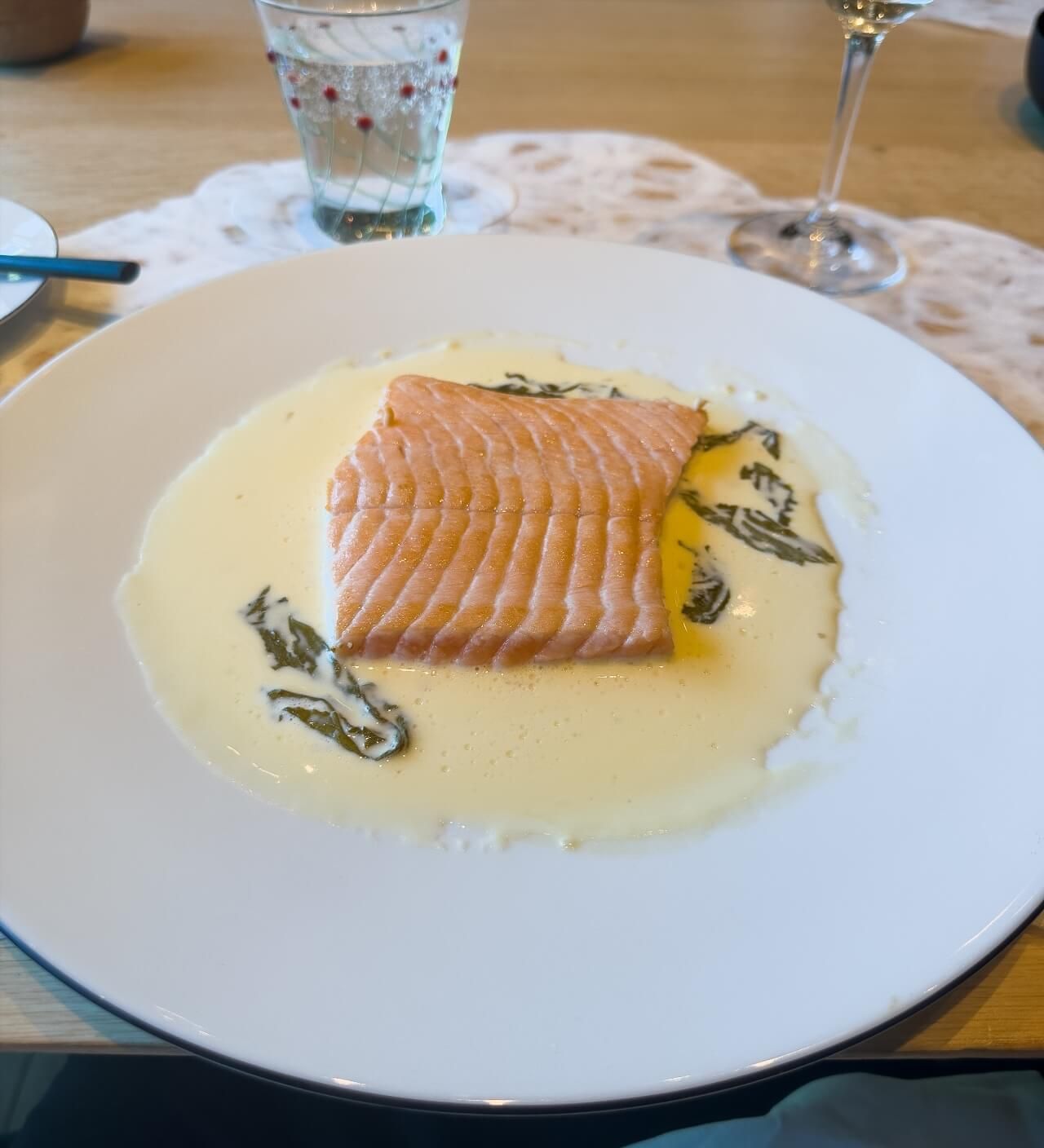
Maison Troisgros: gastronomy at its peak
The Troisgros restaurant is one of France's most famous gastronomic addresses, three Michelin stars since 1968, over 55 years of uninterrupted distinction. The Troisgros family left downtown Roanne in 2017 to settle in Ouches, 5 kilometers from the city, in a 17-hectare forest estate with rooms, permaculture vegetable garden and a table centered on local products. César Troisgros, 2026 chef of the year for Gault et Millau, represents the fourth generation in command.
A reservation requires anticipation, several weeks minimum, several months for weekends. Le Bois sans Feuilles, the estate's gastronomic restaurant, offers a lunch menu around 200 euros per person excluding drinks. For those who simply want to observe, the estate organizes some events open to the public in season.
The Véloire: cycling along the Loire
The Véloire (Départ Roanne, Quai du Canal, 42300 Roanne, rated 4.8/5 on Google for 6 reviews) is a cycling route of about 140 kilometers that runs along the Loire and the Roanne to Digoin canal from Roanne to Paray-le-Monial, connecting to the EuroVelo 6 network at Iguerande.
The departure from Roanne follows the Loire quays for about twenty kilometers before joining the canal at Briennon. The canal then offers an almost flat track. The Roanne-Briennon section (20 km) can be done in 1h30 at a leisurely pace and constitutes an excellent preview of the route.
Along the route, several villages offer stops: Briennon and its marina, Charlieu and its abbey, Digoin with its halls and pottery. Bike-friendly accommodations (gîtes d'étape, campsites with bike storage) dot the route, and bike rental companies are present in Roanne for those who come without equipment.
Viaduc de Juré: thrills above the valley
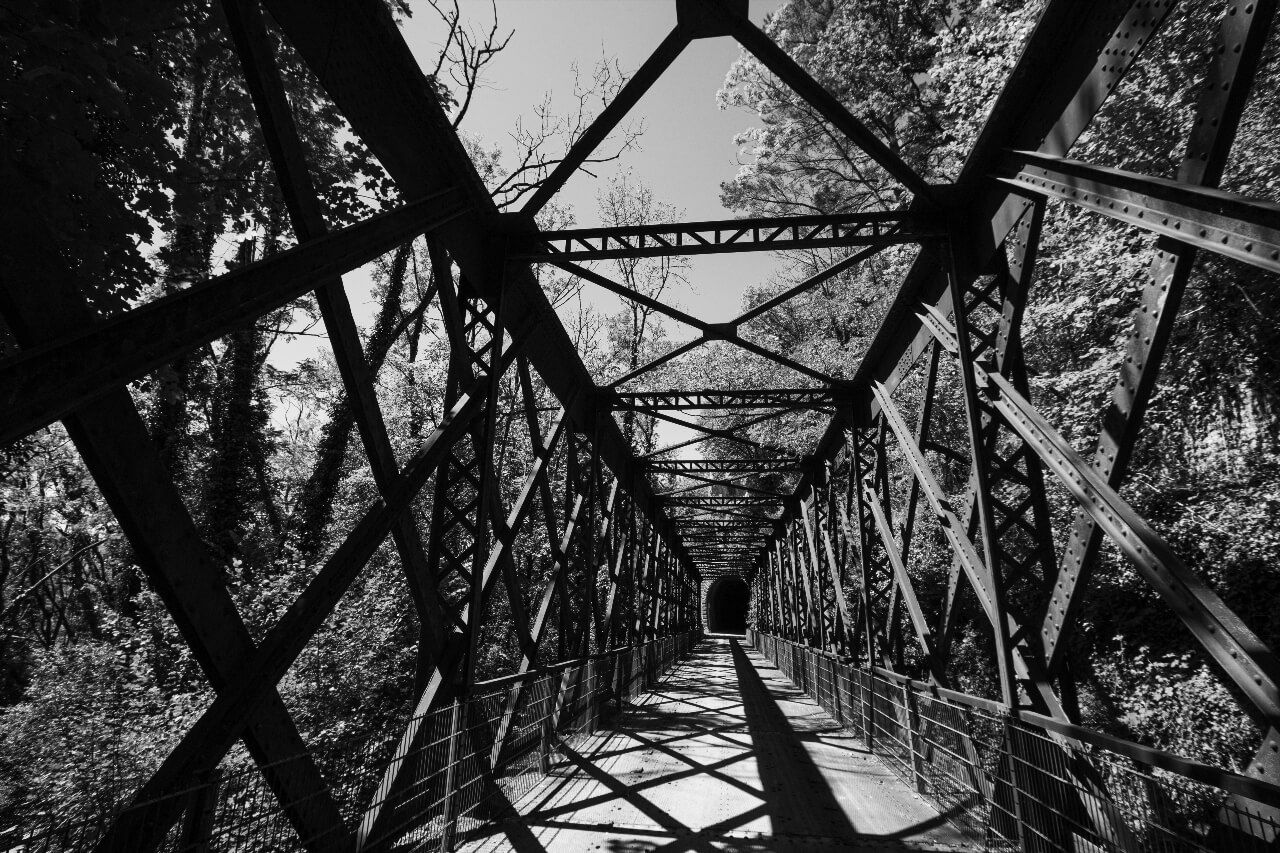
35 kilometers north of Roanne towards Lapalisse, the Viaduc de Juré (D59, 42440 Juré, rated 4.6/5 on Google for 74 reviews) spans an isolated valley. Pink granite structure from the early 20th century, the viaduct served for a small train passage between Roanne and Vichy from 1912 to 1939 before being converted into a bungee jumping point.
The jump from 36 meters height is organized by a local operator from April to October, weekends and holidays. Price around 55 euros per jump, advance reservation recommended in high season. For those who aren't tempted by bungee jumping, the viaduct can be crossed freely on foot and the view over the wooded valley below is already breathtaking. Hiking trails around the viaduct follow the river at the bottom of the valley, through mountain bocage landscapes with a few preserved hamlets.
Gravière aux oiseaux: nature within binocular range
On the outskirts of Roanne, in the Loire alluvial plain, the Gravière aux oiseaux (Zone humide de la Loire, 42300 Roanne, rated 4.5/5 on Google for 258 reviews) is a former gravel quarry converted into a protected wetland. The water bodies resulting from extraction have attracted remarkable avian fauna: diving ducks, purple herons, terns, kingfishers, and during migration season species uncommon for inland France.
The site is managed by the League for Bird Protection (LPO) and freely accessible on marked trails. Observation hides allow discreet approach without disturbing nesting birds. Bring binoculars. The Gravière is less than 10 minutes from downtown Roanne: a natural parenthesis accessible even for a short stay, ideal in early morning or late afternoon.
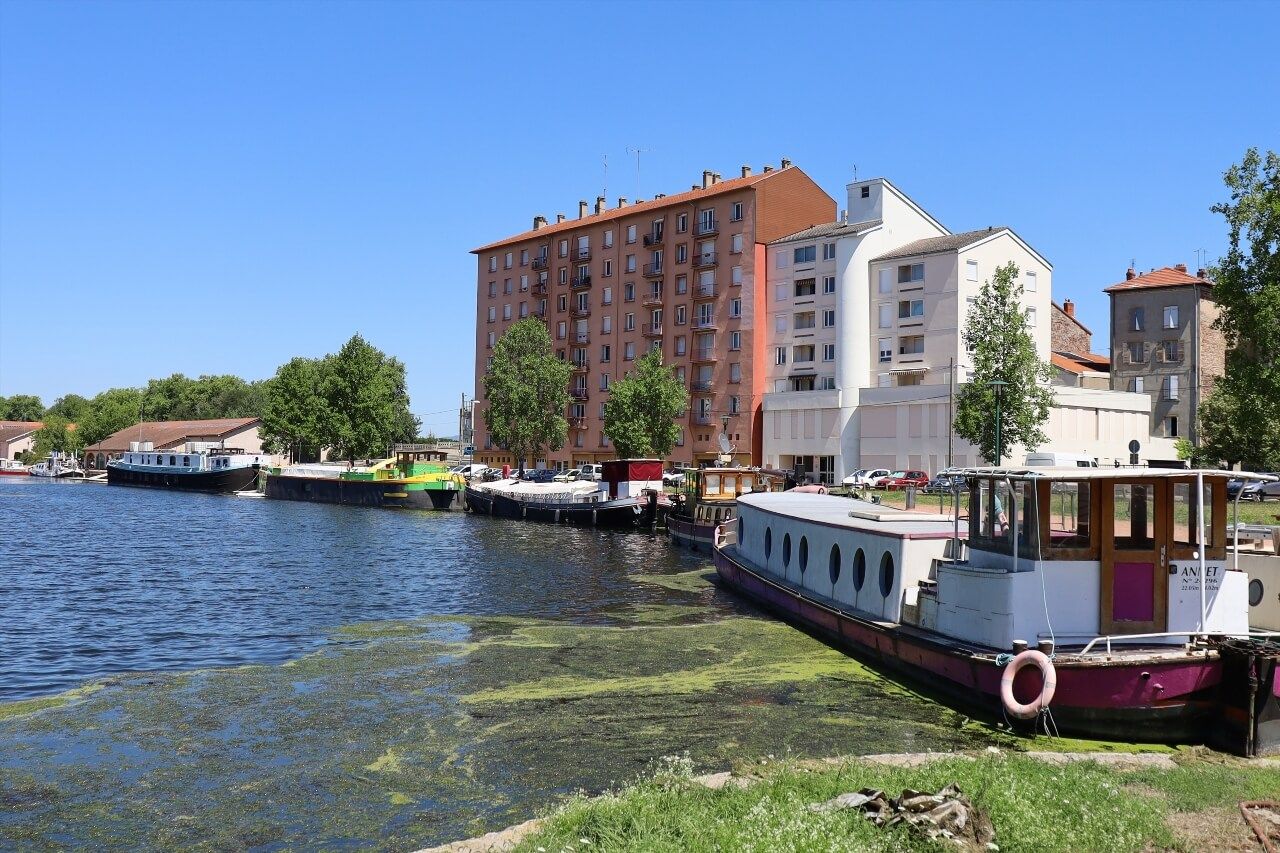
The Roanne to Digoin canal: Briennon and the greenway
The Roanne to Digoin canal (Port de Briennon, 42720 Briennon, rated 4.4/5 on Google for 148 reviews), completed in 1838, connects the Loire to the Saône crossing 56 kilometers of Roannais and Brionnais countryside. Transformed into a greenway along its entire length, it constitutes a perfectly tranquil walking or cycling route, punctuated by 10 locks, lockkeepers' houses and stone bridges.
Briennon, 15 kilometers north of Roanne, is the first natural stop from the city. The village's marina is an active river stopover in season with barges going up towards Digoin. The nautical halt offers bike and canoe rentals to explore the canal and adjacent Loire banks. The greenway is walkable year-round. The willows and poplars that border the canal provide shade in summer and turn golden in autumn.
Practical advice for organizing your stay
How to get to the Roannais
Roanne is 1h10 from Lyon via A89 and A72, 1h30 from Clermont-Ferrand and 3h from Paris by TGV via Lyon (connection at Lyon Part-Dieu). Roanne station is well connected to Lyon with direct trains every hour during peak times. However, sites around Roanne almost all require a car.
When to come
Spring (April-June) offers fresh vegetation, optimal water levels and still reasonable visitor numbers. Summer (July-August) is the busiest period around Villerest lake and Château de la Roche: arrive early morning at popular sites. Autumn is the season of vines and russet forests, the Côte Roannaise Wine Route is particularly beautiful from late September to November. Winter is mild in the plain but can be snowy on the Monts du Forez.
Where to stay
Roanne offers a range of accommodations in the city center: two and three-star hotels, bed & breakfasts. The Troisgros domain in Ouches offers exceptional rooms for those who want the complete gastronomic experience. Rural gîtes are available in Côte Roannaise villages, ideal for vineyard immersion. For cyclists, bike-friendly accommodations dot the Véloire between Roanne and Briennon.
Indicative budget
A weekend in the Roannais is reasonable: most villages can be visited for free. The main paid visits are Château de la Roche (about 8 euros), Charlieu abbey (5 euros) and Château de la Bâtie d'Urfé (about 6 euros). Bungee jumping at Viaduc de Juré is 55 euros. Kayak rental at Villerest lake costs around 15 euros for 2 hours. Count 60 to 80 euros per day for standard accommodation, excluding gastronomy.
FAQ
What is the best time to visit the Roanne region?
Spring (April to June) and autumn (September to November) are the best periods. In spring, vegetation is fresh, water levels in lakes and dams are optimal, and medieval villages are not yet overrun by summer tourists. In autumn, the Côte Roannaise vineyards turn golden, forests take on color, and the atmosphere is more serene. Summer remains pleasant but Villerest lake and Château de la Roche attract many crowds in July-August, prefer morning hours.
How to get around Roanne without a car?
This is the main challenge of this territory: public transport is limited outside the Lyon-Roanne railway connection. For the closest sites (Gravière aux oiseaux, Véloire departure), cycling from Roanne is the best option. Rental companies offer city bikes and mountain bikes in the city center. For Charlieu, a departmental bus line connects from Roanne on weekdays. For other sites (Château de la Roche, Bâtie d'Urfé, Renaison dams), a car is almost essential.
What are the most beautiful villages around Roanne?
Several villages in the Roannais are part of the Loire's « Villages de caractère »: Saint-Jean-Saint-Maurice-sur-Loire, perched above the Loire with its medieval alleys; Ambierle, wine village with its priory featuring Flemish painted panels; Saint-Haon-le-Châtel, with its almost intact ramparts; and Le Crozet, complete medieval enclosure on a rocky spur. Charlieu, although a larger town, has preserved a remarkable medieval heart with its Benedictine abbey.
What to do with children around Roanne?
Villerest lake is the ultimate family destination: supervised beach, kayak and pedal boat rentals, playgrounds, picnic areas. Château de la Roche fascinates children with its island and medieval tower. Bungee jumping at Viaduc de Juré appeals to teenagers (minimum age generally 14 years). The Véloire offers a flat and secure route ### How long does it take to visit the surroundings of Roanne?
A weekend (2 days) allows covering the closest must-sees: Château de la Roche, Pêt d'Âne, Villerest lake and one or two medieval villages. To include Charlieu, Côte Roannaise, Bâtie d'Urfé and Renaison dams, count 3 to 4 days. A full week allows leisurely exploration of the entire region, with gastronomic stops and longer hikes.
Where to taste Côte Roannaise wine?
Several estates open their cellars without appointment on Saturday mornings: Domaine Sérol in Ouches (one of the most renowned in the appellation, with highly appreciated natural cuvées), Domaine des Pothiers in Renaison and Domaine de la Croix Saint-Laurent in Saint-André-d'Apchon. Starred restaurants in the region serve Côte Roannaise wines. The Saturday market in Charlieu also has a wine merchant specialized in departmental wines.
Conclusion
From the water fortress of Château de la Roche to the Romanesque sculptures of Charlieu, from the confidential vines of Côte Roannaise to the thrills of Viaduc de Juré, the territory around Roanne accumulates discoveries without ever being saturated with tourists. This is precisely what makes it a destination apart: dense heritage, preserved nature, exceptional gastronomy, in a setting that hasn't yet been formatted for mass tourism. Before exploring the surroundings, take time to discover Roanne itself with the Ryo audio-guided circuit, 20 commented points, 1h15 walk along the Loire, to understand where this singular city comes from before exploring everything that surrounds it.