
Créé par Romane, le 20 juin 2026
Votre guide Ryo
Castles to Visit in Normandy: The Complete Guide (2026)
© Shutterstock
Castles to visit in Normandy may be what surprises most in a region known first for its D-Day beaches and cheeses. Among these castles to visit in Normandy, we go from William the Conqueror's castle in Caen, foundation of an entire Norman mythology, to Renaissance manors lost in the bocages of Pays de Caux: the region accumulates several centuries of defensive and seigneurial architecture. Some buildings have been classified as historical monuments for over a century. Others only open to the public a few weekends a year. And some, like Ango Manor, remain under-visited despite exceptional heritage interest. To explore Caen or Rouen beyond their fortresses, the Ryo audio-guided tour of Caen (22 audios, 4.6 km) and the Ryocity of Rouen (27 audios, 4 km) naturally extend each visit.
This guide lists the castles and manors to visit in Normandy, from Calvados to Seine-Maritime including Eure and Manche. You'll find the must-sees, architectural surprises and practical advice for organizing a coherent itinerary: which season to choose, how to combine several visits in the same day, which sites allow linking castle and historic town.
Caen Castle: William the Conqueror's Fortress
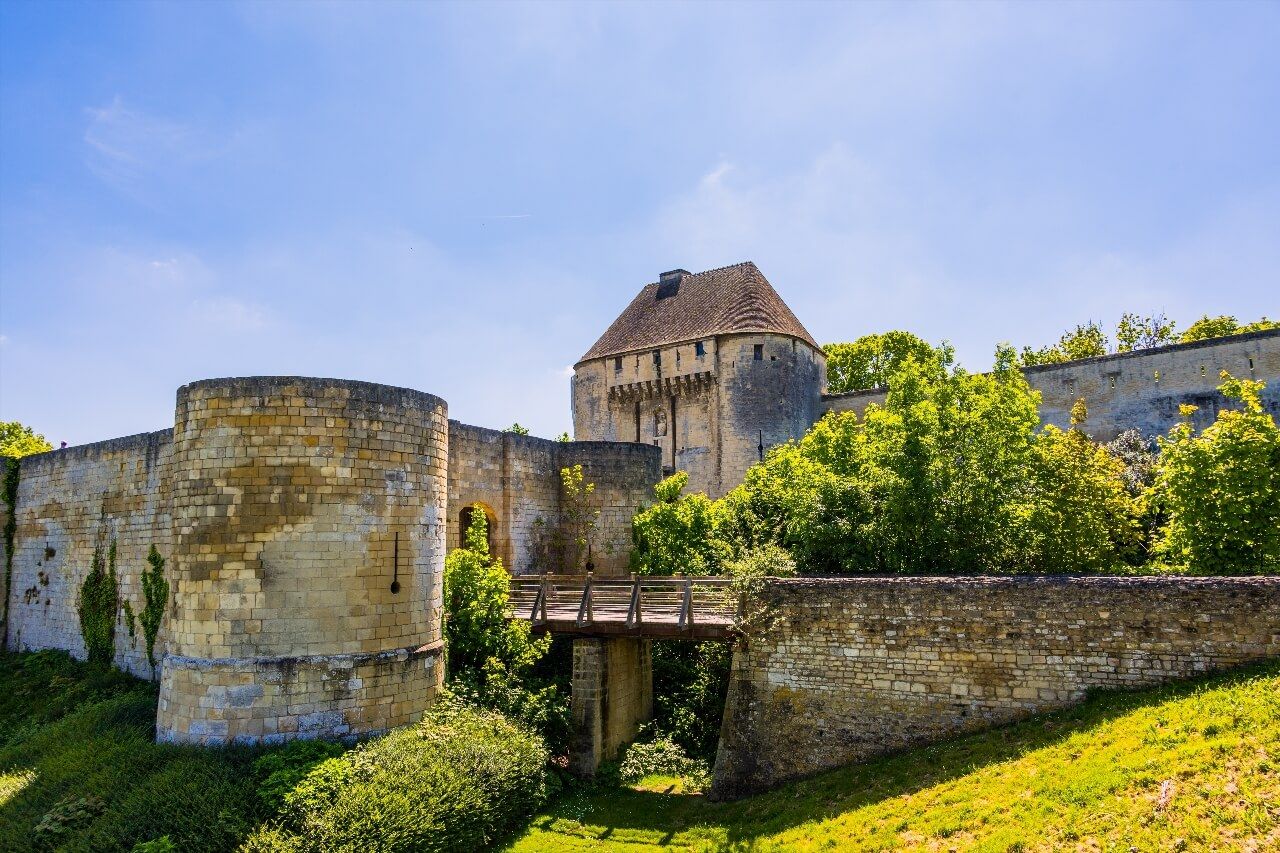
It's impossible to talk about castles in Normandy without starting with Caen. The ducal castle, founded by William the Bastard before 1066, the year of the conquest of England, is one of the largest medieval fortresses in Europe still standing. The fortified enclosure extends over 5 hectares: enough to spend a good hour just walking along the ramparts.
The interior now houses two distinct museums. The Caen Museum of Fine Arts is one of the ten richest in France in ancient paintings, Rubens, Veronese, Poussin, and its hanging, redone in 2019, is remarkably clear pedagogically. The Normandy Museum traces the region's history from prehistory to the 20th century, with particular attention to both world wars and the Viking period. Access to the castle enclosure is free, and museum entry is free for those under 26 as well as the first weekend of each month.
The Exchequer, a 12th-century hall long attributed to ducal finances, can be visited freely. Its proportions, a 30-meter-long nave, barrel vaults, give a precise idea of Norman palatial architecture before the great Gothic cathedrals. Allow 2 to 3 hours for a complete visit including both museums and ramparts. The site is open year-round except January 1st and December 25th. Museums are paid (€5 to 7 depending on exhibitions). To then explore the rest of the city, the Ryo audio guide of Caen covers the Men's Abbey, Women's Abbey and memorial in 22 audio-guided stages.
Falaise Castle: The Conqueror's Birthplace
Falaise, in Calvados, is a town that bears its history in its name: it was here, around 1027, that William was born, illegitimate son of Duke Robert and a young woman named Arlette, the future conqueror of England. The castle occupying the rocky spur above the town was founded by his father and enlarged by him. The visit is therefore as much a historical experience as an architectural journey.
Falaise Castle (Boulevard de la Libération, 14700 Falaise, rated 4.5/5 on Google for 5,383 reviews) stands out for careful museum work that goes far beyond a simple 'empty castle'. A digital tablet provided at the entrance superimposes computer-generated images and reconstructions on the bare architecture, restoring 11th-century court life without falling into tourist kitsch. The Talbot Keep, added in the 13th century by the Plantagenets, is accessible to the top for a breathtaking view of the Ante valley.
The town of Falaise itself deserves a stop. The medieval streets around Trinity Church, rebuilt after 1944 bombings, testify to remarkable architectural resurrection. The equestrian statue of William the Conqueror on the Town Hall square is one of the most reproduced photos in Normandy.
Allow 2 to 2.5 hours for a complete castle visit. Open year-round (except Christmas holidays). Rate: €9.50 adult, reduced for 6-16 year-olds. A thematic guided tour is offered on weekends and in summer.
Château Gaillard: Richard the Lionheart's Impregnable Fortress
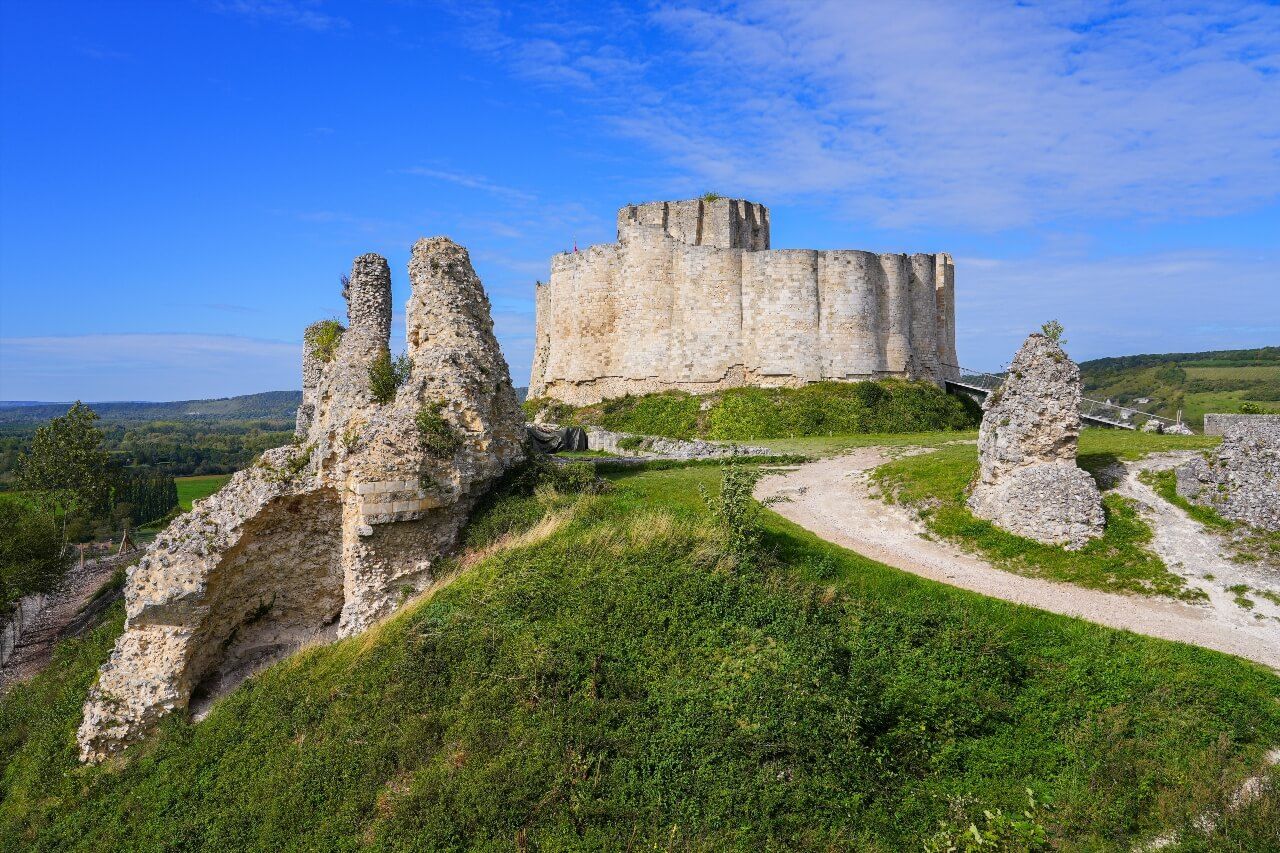
On a limestone spur 90 meters above the Seine, Château Gaillard (Château Gaillard, 27700 Les Andelys, rated 4.5/5 on Google for 4,800 reviews) is one of the most impressive medieval ruins in France. Richard the Lionheart had it built in record time, between 1196 and 1198, to protect Normandy from the appetites of the French king Philip Augustus. He boasted it would hold even if its walls were made of butter.
It only held for seven years. In 1204, Philip Augustus took the fortress after a siege of several months, and Normandy definitively passed into the kingdom of France's fold. This castle is therefore also a chronological marker: the date of 1204 closes the era of Norman dukes.
Access to the exteriors is free year-round. Guided tours of the interior (the Upper Court) are offered in season (mid-March to mid-November), daily except Tuesday. The view from the esplanade over the Seine meanders is worth the trip in itself. Les Andelys, at the foot of the castle, preserves several half-timbered houses from the 16th and 17th centuries, a pleasant stop for lunch.
Arques-la-Bataille Castle: The Fortress Where Henry IV Defeated the League
About ten kilometers from Dieppe, on a rocky spur dominating the Arques valley, stands a medieval fortress whose silhouette commands respect even in ruins. Arques-la-Bataille Castle (Rue du Château, 76880 Arques-la-Bataille, rated 4.3/5 on Google for 376 reviews) was founded in the 11th century by Guillaume d'Arques, William the Conqueror's uncle, then enlarged over the following centuries. Its name comes from the battle that took place there on September 21, 1589: Henry IV, with an inferior army in number, defeated the Catholic League troops led by the Duke of Mayenne.
The ruins are spectacular: the Romanesque keep, the 16th-century royal residence and the bastioned towers form a coherent ensemble on which vegetation has gained ground without ever crushing the architecture. The visit is free and free, making it an ideal stop when passing through Dieppe. From the top of the ramparts, the view of the green valley justifies the detour alone.
If you're passing through Dieppe, extend the day by exploring the port and old center with the Ryo audio-guided tour of Dieppe: 22 audios in 2 hours for an 'against wind and tide' itinerary that goes up to the castle-museum dominating the cliff.
Robert the Devil's Castle: A Name, a Legend, a View of the Seine
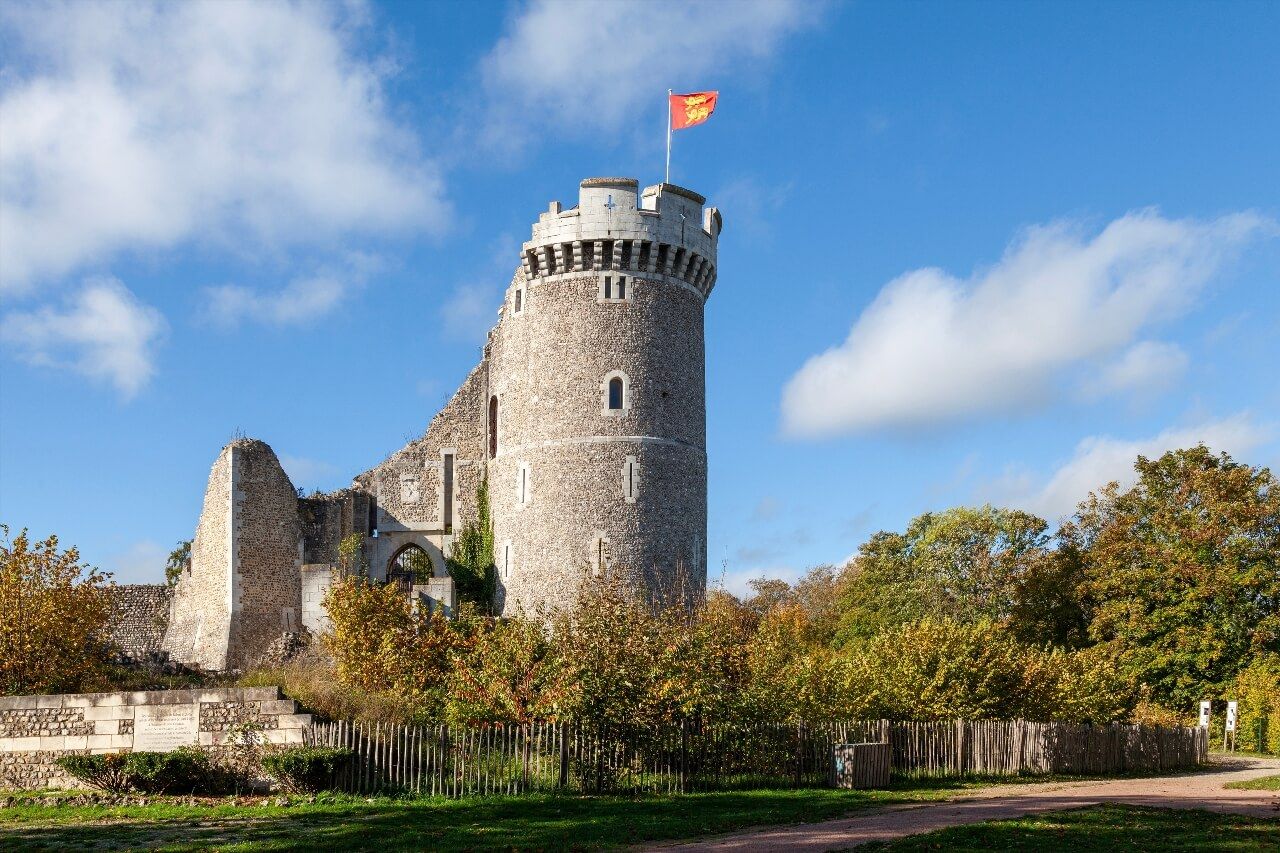
Many Normans have heard of Robert the Devil, William the Conqueror's father, a lord mythologized to the point that a medieval chanson de geste is dedicated to him. The castle bearing his name, perched on a rocky spur above the Seine between Rouen and Caudebec-en-Caux, may not have been occupied by him directly - historians debate this - but its Gothic silhouette in the Norman landscape gives real substance to the legend.
Property of the Rouen Normandy metropolis, the site long housed a museum on the arrival of the Normans (the 'men of the North') on the Seine coasts. Today, the park is open year-round and free, while the ruins themselves can only be discovered during specific events: Viking camp reconstructions, family exploration games, Heritage Days. Better to check the event calendar before coming.
The view from the spur over the Seine loop below is worth the trip alone. Park access from 10am to 4:30pm in winter, until 6:30pm in summer. An ideal half-day to combine with Rouen's historic center, which the Ryo audio guide of Rouen allows exploring in 27 commented stages.
Miromesnil Castle: In Maupassant's Footsteps
Writer Guy de Maupassant was born in 1850 at Miromesnil Castle (Hameau de Miromesnil, 76550 Tourville-sur-Arques, rated 4.5/5 on Google for 1,062 reviews), in Pays de Caux, a few kilometers from Dieppe. At least, that's what he liked to tell - his mother, on holiday, supposedly gave birth there. The story may be embellished, but the castle amply merits a visit.
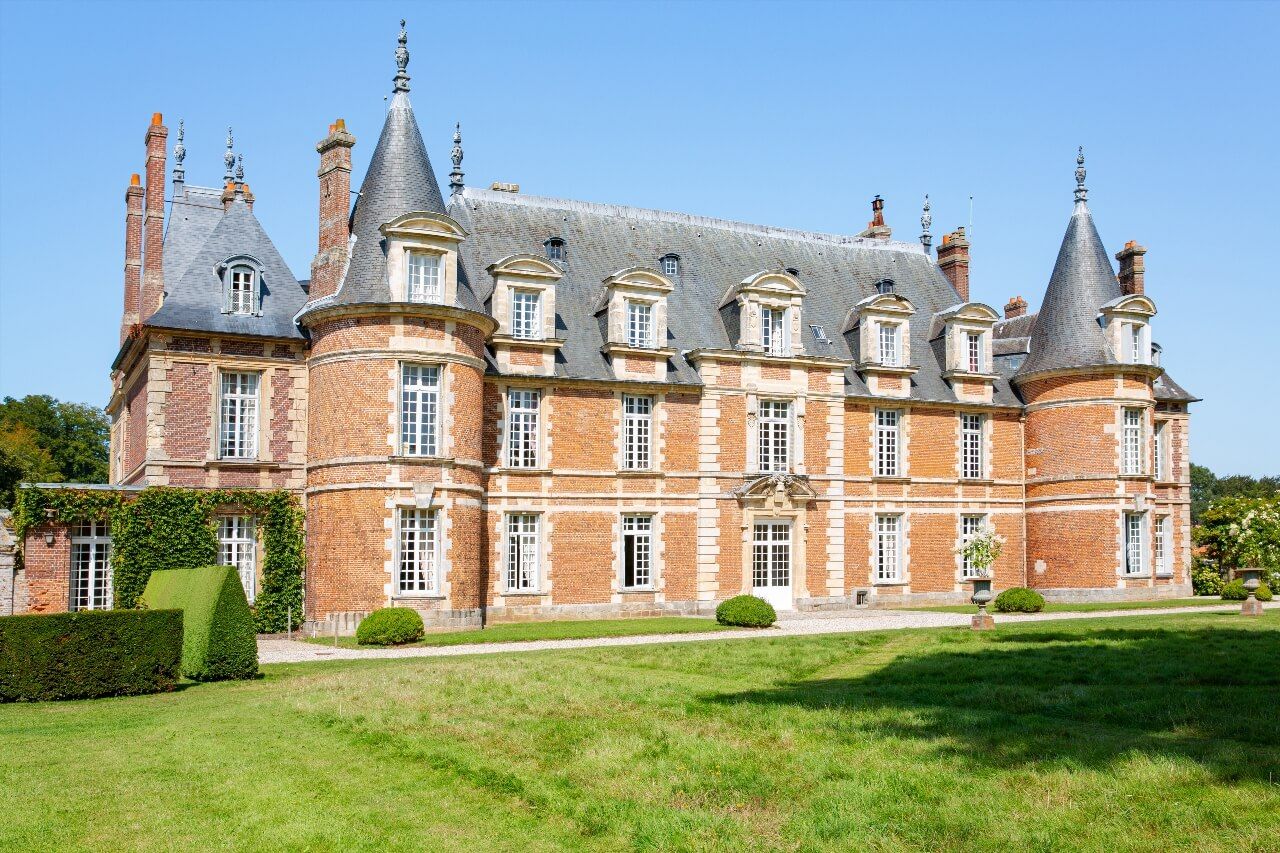
Built in the 16th and 17th centuries, Miromesnil Castle presents a red brick and white stone facade characteristic of Norman Louis XIII style. The interior, still inhabited by the Vogüé family, is furnished with period pieces with particular care, including a room dedicated to Maupassant's memory (manuscript letters, family objects, rare editions). The park, planted with centuries-old beeches, has an active vegetable garden.
The guided tour (mandatory for the interior) lasts about 1.5 hours and tells both the place's history and Maupassant's life. Open daily April to October. Rate: €15 adult, free for children under 12. A discreet but endearing castle, far from the bustle of the great D-Day sites.
Saint-Germain-de-Livet Castle: The Pearl of Pays d'Auge
If you only visit one Norman manor during your stay, choose Saint-Germain-de-Livet (Château de Saint-Germain-de-Livet, 14100 Saint-Germain-de-Livet, rated 4.5/5 on Google for 860 reviews). This 15th-16th century castle, 8 kilometers southeast of Lisieux, combines all the attributes of the ideal Norman residence: moats with swans, medieval stone tower, Renaissance wing in white stone and green flint checkerboard, apple trees in the inner courtyard.
The interior is furnished as in the 19th century, with a guard room decorated with Renaissance frescoes and rooms of romantic atmosphere. The castle has belonged to the city of Lisieux since 1958 and is open to the public from April to October. Adult rate: about €6.
The surrounding Pays d'Auge, with its cider routes, orchards and half-timbered farms, is ideally visited by bike or car. Saint-Germain-de-Livet makes an excellent stop between Lisieux and Honfleur, two towns only 30 kilometers apart. If you pass through Honfleur, the Ryo audio-guided tour of Honfleur (20 audios, 2.6 km) allows discovering the old port and its 17th-century houses.
Fontaine-Henry Castle: France's Highest Roof
Not far from Caen, Fontaine-Henry Castle (Château de Fontaine-Henry, 14610 Fontaine-Henry, rated 4.3/5 on Google for 997 reviews) is one of Normandy's most original monuments. Its slate roof, whose height reaches nearly 16 meters and exceeds that of the walls it covers, is reputed to be one of France's highest for a civil building. The ensemble mixes flamboyant Gothic and Renaissance in a fragile balance that was constituted from the 13th to 16th centuries.
The interior, still furnished and inhabited by the same family for eight centuries, can be visited on guided tours. You'll see Flemish tapestries, ancient portraits and ceremonial rooms that give an idea of the lifestyle of a great Norman Renaissance family. The French garden, recently restored, adds a welcome touch of geometry.
Open April to October, depending on days. In July-August, the last Sunday of the month, a special visit leads up to the timber framing. Rate: around €9 adult on guided tour. An ideal stop to combine with Caen Castle (Esplanade du Château, 14000 Caen, rated 4.3/5 on Google for 13,265 reviews), about fifteen kilometers away.
Ango Manor: Italian Renaissance in Normandy
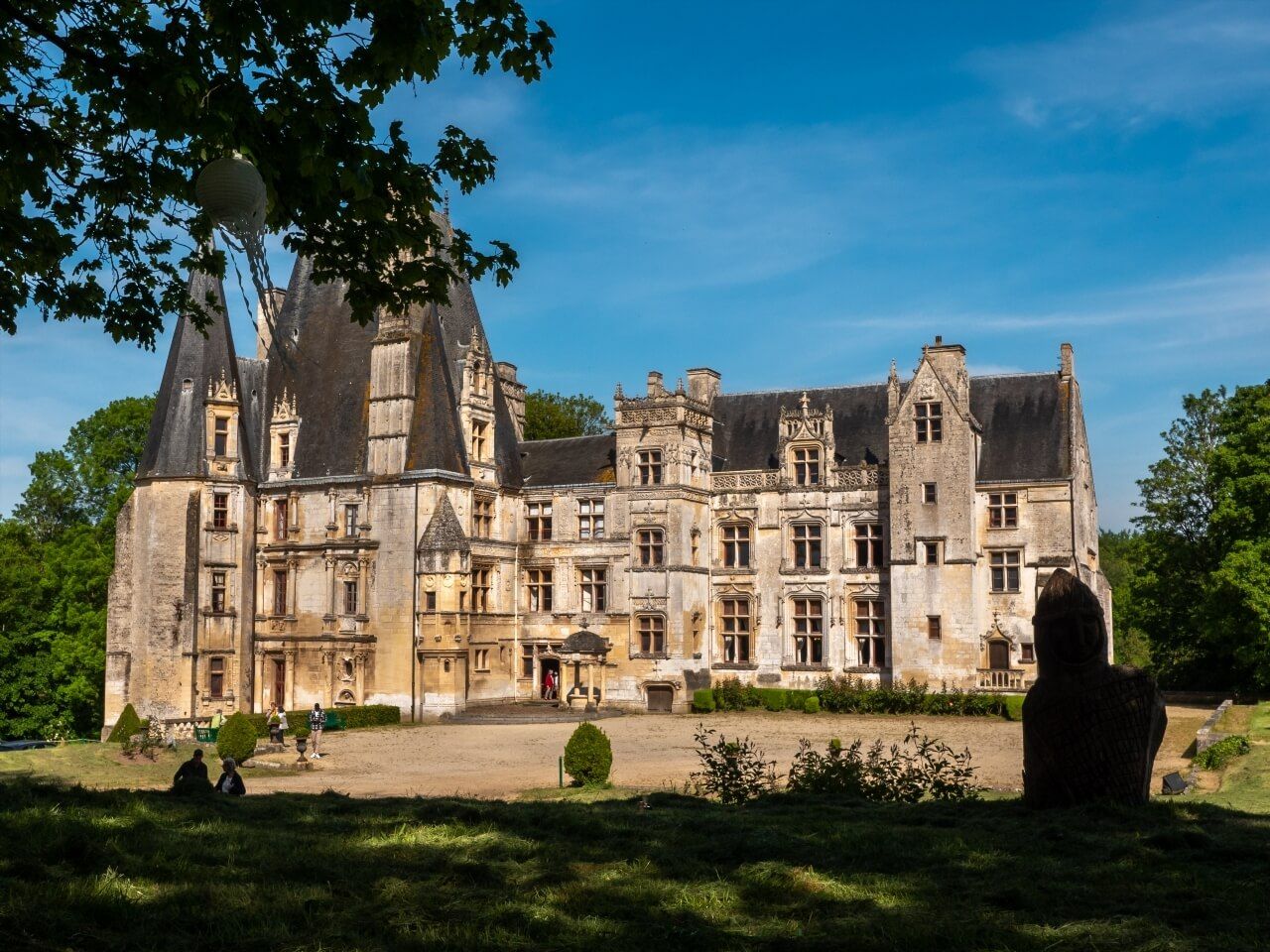
The story of Jean Ango is one of the most romantic in 16th-century Normandy. A Dieppe shipowner who had made his fortune through privateering, nicknamed the 'Norman Medici', he had built in the early 16th century a manor that resembles nothing else in the region: an Italian-inspired loggia gallery, a monumental brick dovecote capable of housing more than 3,000 pigeons, terracotta medallions evoking Florentine Renaissance portraits. Francis I himself came, it is said, to stay here.
Ango Manor (Varengeville-sur-Mer, 76119 Varengeville-sur-Mer, rated 4.3/5 on Google for 366 reviews), located in Varengeville-sur-Mer about ten kilometers west of Dieppe, is still in private hands. The owner family opens it to the public from Easter to All Saints, with free exterior and inner courtyard visits, guided interior visits depending on days. The hexagonal dovecote, one of France's largest, is the most often photographed element.
It's a place that surprises with each visit: you don't expect to find this level of Renaissance refinement in a rural Norman manor. Rate: €5.50 adult, free for children under 11. Allow 1.5 hours for a complete visit. Access from Dieppe takes less than 15 minutes by car.
Bénouville Castle: Ledoux by the Canal
A few kilometers east of Caen, on the bank of the Orne canal, Bénouville Castle (Route du Château, 14970 Bénouville, rated 4.4/5 on Google for 238 reviews) is one of the rare Norman achievements by Claude-Nicolas Ledoux, the visionary Enlightenment architect who designed the royal saltworks of Arc-et-Senans. Conceived in 1769 and built in the 1770s-1780s, it presents a neoclassical facade of absolute rigor: Doric columns, triangular pediment, horizontal lines devoid of superfluous ornament. Its main staircase is considered a masterpiece of French neoclassical architecture.
Classified as a historical monument, the castle is undergoing a vast restoration campaign led by the Calvados department. Its reopening to the public is announced for 2027: it will then house the department's cultural services, with exhibitions and visits. Meanwhile, access to the interiors is not possible, but the English park along the canal remains a pleasant walk.
An architectural curiosity that will particularly interest lovers of Enlightenment architecture. The walk around the estate can be combined with a visit to the nearby Pégasus Bridge Memorial, one of the most evocative D-Day sites.
Carrouges Castle: National Monument in Normandy-Maine
At the border of Perche and the Normandy-Maine Regional Natural Park, Carrouges Castle (Route du Château, 61320 Carrouges, rated 4.6/5 on Google for 1,421 reviews) is one of the rare castles in the region managed by the Centre des monuments nationaux, which translates into restoration and museum displays of consistently professional level.
This red brick and granite castle, built between the 14th and 17th centuries, reflects in its moats with classic elegance. Its Renaissance gatehouse is considered one of the first testimonies of this style in Normandy. The interior apartments are furnished and decorated as in the 18th and 19th centuries. Open year-round except January. Adult rate: €7 (free the first Sunday of the month except July-August). A tree-lined park surrounds the castle, allow an extra hour for the walk.
Filières Castle: Beeches and Classical Architecture in Pays de Caux
Filières Castle (Route du Château de Filières, 76430 Gommerville, rated 4.4/5 on Google for 540 reviews), in Gommerville, is less known than Miromesnil but equally charming. Built in the 18th century in a sober classical style, it draws its uniqueness from its extraordinary park: a grove of centuries-old beeches, trimmed in arches, forming a two-hundred-meter vegetal corridor, one of the most impressive in Normandy. This park alone justifies the trip in the fine season.
The castle interior, occupied by the same family for several generations, can be visited on guided tours. The Empire furniture and family portraits create an atmosphere of 19th-century Norman bourgeois house, far from the pomp of great royal residences.
Open April to November, weekends and holidays. Allow 1 to 1.5 hours for park and castle. Park-only rate: €5; with castle: €9. A stop to plan if you're touring Pays de Caux between Dieppe and Le Havre.
Seaside Castles: From Dieppe to Cotentin
Normandy has an exceptional concentration of defensive sites on its coastline.
The Dieppe Castle-Museum (Rue de Chastes, 76200 Dieppe, rated 4.3/5 on Google for 3,782 reviews) sits on the chalk cliffs above the large pebble beach. This 14th-15th century medieval fortress houses a collection of 17th-century ivory sculptures unique in Europe - Dieppe was then the world's premier ivory working center - as well as maps and ship models that tell the town's maritime history. Entry: about €4 for adults.
In Granville, the fortified upper town occupies a rocky promontory on the English Channel. The 17th-century ramparts, reinforced in the 18th century to resist English attacks, enclose an ensemble of granite houses of great architectural coherence. The view of the Chausey Islands in clear weather is one of the most beautiful on the Norman coast.
On the Calvados coast, between Deauville and Honfleur, 19th-century seaside villas display turrets and slate roofs that give them the appearance of small castles. The Ryo audio-guided tour of Deauville explores this seaside architecture in 19 stages, revealing the stories of commissioners, actors, aristocrats and Second Empire industrialists.
Sleeping in a Castle in Normandy
About twenty Norman castles and manors offer overnight stays as bed and breakfasts or gîtes. Quality varies considerably, from manor with antique furniture and breakfast served in the historic dining room to gîte fitted out in an outbuilding with park views.
Among the most reputed addresses in 2026: Bénéauville Castle, in Calvados (guest rooms in a 17th-century manor, tree-lined park), and several manors labeled by Gîtes de France Normandy referenced on their official website. Count between €120 and €250 per night for a double room depending on service and season. Book several weeks in advance for spring weekends.
If Deauville is your base for exploring Pays d'Auge, the article on best cheap hotels in Deauville lists more affordable alternatives at good distance from castle sites.
Organizing Your Circuit: Practical Advice for 2026
Normandy extends over five departments and represents about 250 kilometers from east to west. A stay dedicated to castles to visit in Normandy supposes choosing a concentration zone rather than trying to cover everything.
Caen - Falaise - Fontaine-Henry Zone (central Calvados): the densest in medieval castles linked to William the Conqueror. To do in two days from Caen, starting with the ducal castle then radiating towards Falaise and Fontaine-Henry.
Pays d'Auge Zone (Lisieux, Honfleur, Deauville): half-timbered manors, Saint-Germain-de-Livet castle, Vendeuvre castle. Ideal in two days with a base in Lisieux or Honfleur.
Seine - Pays de Caux Zone (Les Andelys, Rouen, Dieppe, Varengeville): Château Gaillard, Robert the Devil's castle (Route de Robert le Diable, 76530 Moulineaux, rated 4/5 on Google for 1,014 reviews), Ango manor, Miromesnil castle. Two to three days for this circuit that follows the estuary.
Cotentin - Manche Zone: Pirou castle, Granville upper town, Fort du Roule in Cherbourg. To integrate into a three to four-day circuit.
Some practical points:
- Most castles are closed on Monday or Tuesday, always check before departing.
- European Heritage Days (third weekend of September) allow free access to many usually paid or closed sites, including some private castles rarely open to the public.
- For families with children, Falaise (interactive digital tablet) and Vendeuvre (surprise fountains in gardens) are the most engaging sites.
- A personal vehicle is essential to reach the majority of sites. Only Caen castle is accessible by train (station 1 km away). GPS often underestimates travel times in Normandy due to small bocage roads.
- From Paris, count about 1.5 hours for Les Andelys or Rouen, 2h15 for Caen.
FAQ
Which castle to visit in Normandy in one day?
If you only have one day, Falaise Castle is the most coherent choice: refined museum displays, accessible keep, foundational history of Normandy (birthplace of William the Conqueror). If you're based in Caen, the Ducal Castle of Caen is more imposing and allows including two museums in the same visit. Both are less than 40 minutes from each other.
Which Norman castles are free?
Arques-la-Bataille Castle (free exterior visit) is completely free. The enclosure of Caen Castle (ramparts and courtyard) is freely accessible, only the two interior museums are paid. Robert the Devil's Castle park is freely accessible. European Heritage Days in September provide free access to most usually paid monuments.
Is there a map of castles in Normandy?
The Normandy tourism office offers an online interactive map listing castles and manors open to the public, classified by department. The Normandy region also publishes a paper guide 'Castles and Manors' available at local tourism offices. On site, tourist signage panels (brown background) mark the main sites.
Which Norman castles are by the sea?
The Dieppe Castle-Museum is most directly positioned facing the English Channel, on the chalk cliffs above the beach. Granville's fortified upper town is a defensive complex on a coastal promontory, with views of the Chausey Islands. On the Channel coast, Fort du Roule in Cherbourg dominates the harbor from the cliff.
Can you sleep in a castle in Normandy?
Yes, about twenty establishments offer overnight stays in Norman historic castles or manors. Prices vary between €90 and €300 per night depending on service and season. Some are labeled by Gîtes de France, others function as prestigious guest houses. It's advisable to book several weeks in advance for weekends from May to September.
Are there manors in Normandy open to the public?
Yes. Ango Manor (Varengeville-sur-Mer) is the most remarkable, with its Italian Renaissance-inspired architecture and hexagonal dovecote. Miromesnil Castle (Pays de Caux) is accessible by guided tour from April to October. Many half-timbered manors in the Norman bocage open during Heritage Days, consult the DRAC Normandy website for the complete list.
Can you combine castles and D-Day beaches in one stay?
Absolutely. Caen Castle and Bénouville Castle (next to Pégasus Bridge) are less than 20 minutes from Calvados beaches. Falaise Castle is 35 km south of Caen. A three to four-day stay based in Caen or Bayeux allows combining both themes without dispersing.
A Heritage Waiting to Be Discovered
Normandy offers a variety of castles and manors that few French regions can equal: from the medieval fortress of Caen to the Renaissance extravagances of Ango manor, from the neoclassical rigor of Bénouville to the garden-poems of Canon. Each site tells a different period and a particular relationship to Norman territory.
To extend each stage of this journey and explore the towns that punctuate these circuits, the Ryo audio-guided tours cover the main Norman cities: Rouen, Caen, Dieppe and Le Havre. Between 18 and 27 commented stops per city, to understand what the castles have shaped beyond their ramparts.